Dealing with repopulation of bad bacteria

In earlier post I cited the mouth as a possible source of bad bacteria repopulating the gut. Taking oral probiotic lozenges and Spezzata candy(pure licorice) , especially if you have dry mouth could help.

On CFS Remission facebook page (feel free to Like it!), a reader asked about using essential oils (neem, tulsi) on the skin and whether it would impact the gut microbiome? My answer was yes, because the microbiome on the skin (anywhere) is touched by the hands which are then brought into direct contact with food (sandwiches, apples, buns, candies) — unless, perhaps, you are very formal Swedes (I was in a MacDonald’s in Stockholm and saw some parents and children eating fries and hamburgers with forks and knives….).

So, your response may be “but I shower everyday!! No way!!!” As always, let us look at what PubMed says…

  • “Human skin is the first line of defense against pathogens, while simultaneously harboring a diverse milieu of commensals, including bacteria, fungi, and viruses. These symbiotic organisms play essential roles in lipid metabolism, colonization resistance to transient organisms, and education of the immune system (Belkaid and Segre, 2014; Grice, 2015; Scharschmidt and Fischbach, 2013). “[2016]
  • “Despite regular washing and contact with bacteria-laden objects, our personal milieu of skin microbes remains highly stable over time, reports a metagenomics study published May 5 in Cell. The authors say this knowledge could be applied to better understand a wide range of human skin disorders through the development of prebiotic, probiotic, and microbial transplantation approaches.” [2016]

A recent article found that dandruff may result from over abundance of Staphylococcus and undergrowth of  Propionibacterium. People shampoo every day and still have dandruff which appears to confirm that the skin microbes maintain themselves. It also begs the question, do you CFS/FM/IBS sufferers have a higher incidence of dandruff (which has a prevalence of 19% in the general population)?

So fixing the microbiome drags all of the way back to the skin surface! My suggestion to the reader was consider using Neem and Tulsi (and… ) soap as a starting point. These are available on Amazon (search there) as well as Neem and/or Tulsi toothpaste. Rotating to different (true) herbal soaps would also be rational! BEWARE of herbal scented soaps — often they lack the herbs and are made with chemical synthetics.


As always, it may not be needed for some and essential for others.
 

Cortisol, CFS and Microbiome

Issues with cortisol occur in some CFS patients but is not a frequent condition. To me this implies that it is either DNA related or microbiome related.

  • Mild hypocortisolism (low cortisol) with attenuated diurnal variation has also been reported in some patients with CFS [2011].
  • especially prone in women to support chronically depressed cortisol levels and a persistent inflammatory signature consistent in some CFS populations [2014].
  • We concluded that depressed salivary cortisol may be an uncommon factor in CFS as even in those cases where it might play a role it did not persist despite persistence of symptoms [2013].

So which is it — or is it both? The literature indicates that it is influence by stress and has impact on the microbiome.

“Endocrine pathways such as the hypothalamic-pituitary-adrenal (HPA) axis act as links between the nervous and the immune system via cortisol. In turn, the nervous system is linked to the gut by the vagus nerve as a feedback system for the autonomous gut innervation. In addition, cytokine patterns might play a crucial role in the psychoneuroimmunlogical interplay between gut and brain. These patterns might be altered by cortisol shifts as observed under chronic stress conditions. The immunosuppressive effect of cortisol might also affect the conditions at the gut epithelium as well as gut bacterial composition [2013].”

Reviewing the literature finds that adaptogens appears to be the herbs of choice for dealing with high cortisol issues. Thus by inference, they should be avoided with low cortisol. This inference may be wrong — their may be normalizer which work on both side of cortisol shifts. For one, Licorice, it doubles the half-life of cortisol (i.e. keep it around longer which implies that it may raise the level).

Wikipedia lists the following:

“There is dispute in the herbal community regarding whether certain plants qualify as adaptogens. However, certain plants are generally believed to qualify:

I have high lighted in red the items that I have cited on this blog.

Bottom Line

Traditionally low cortisol was associated with mycobacterium tuberculosis infections, thus the microbiome seen with such patients may hint at the bacteria associated with low cortisol.

  • “Phylum-level analysis showed that the relative abundance of Firmicutes and Actinobacteria was significantly higher in TB samples and Neisseria and Veillonella were two dominant genera after Streptococcus.”[2016]
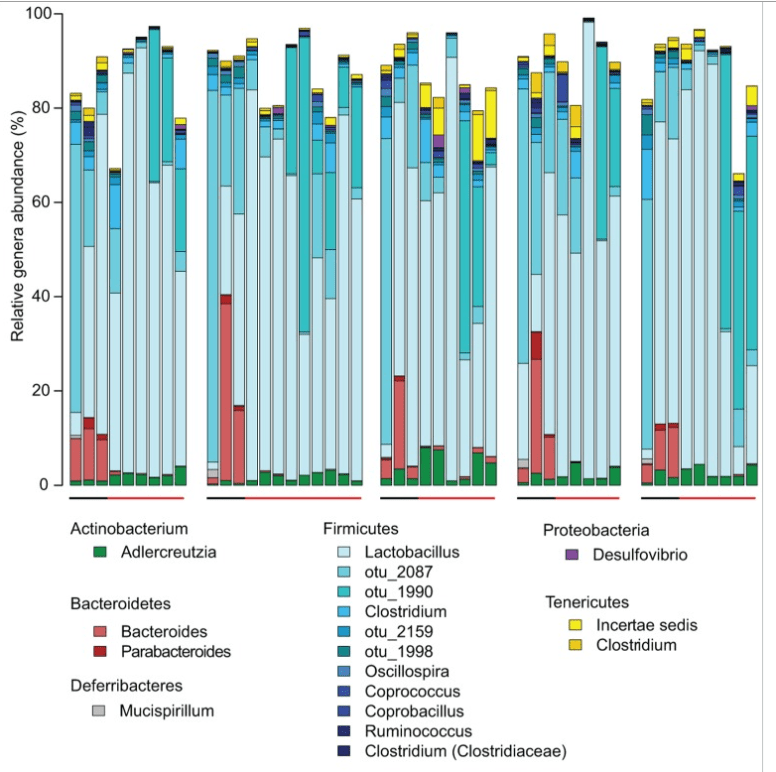
  • Aerosol Mycobacterium tuberculosis infection causes rapid loss of diversity in gut microbiota [2014]. [Full Text] Below is a chart showing how bacteria shifted during the course of TB
  • trend
  • Treatment addressing the root cause is largely unknown except that the root cause appears to be largely due to a bacteria shift, a specific subset of bacteria that is not common across CFS patients.

What is really needed is a good study of the microbiome of patients with low cortisol levels. Until then, my best suggestion is: GeneralBiotics Equilibrium, Prescript Assist and Bifidobacteria probiotics.


Blood Type, Serotonin and CFS

A reader left a comment on my site this week and asked a few question.

“THANK YOU KEN!!!

I have had great success with your diet/probiotic information and I cannot thank you enough for sharing your story with the world.

I have something that took my health to the next level and I wanted to share it.
Note: This was before I found your blog and had made no other changes to my diet or lifestyle. I have had CFS for 7 years.

For depression, my doctor prescribed Sertraline, a serotonin reuptake inhibitor (SSRI). The first 3 weeks I had a terrible reaction but persevered and after about 12 weeks, I experienced a HUGE reduction in symptoms.

In regards to people with CFS having low E.coli, I have found links between E.coli and Serotonin.
1. “Escherichia coli Nissle 1917 [Mutaflor Probiotics] enhances bioavailability of serotonin in gut tissues through modulation of synthesis and clearance.”http://www.nature.com/articles/srep17324
2. http://www.ncbi.nlm.nih.gov/pubmed/21080162

Maybe low serotonin (low E.coli) resulted in exacerbated pain sensitivity and other symptoms? I believe Sertraline also lowered my stress levels which allowed my immune system to get back on its feet and heal my body.

I also wanted to throw in this little gem about blood type and intestinal microbiota composition, I thought it could be an important piece of information for the overall puzzle.
http://www.ncbi.nlm.nih.gov/pmc/articles/PMC3485159/
I was hoping your PubMed skills could interpret for us? I struggle to understand scientific papers and would love to understand more about this link to our health. My blood type is 0 positive.

Thank you again, Ken! Your work is so appreciated.”

Blood Types

Since blood type is connected to DNA, and your microbiome is connected with your DNA, I am not surprised. I suspect that in time we will find many conditions deemed to be inherited is not inherited by DNA proper, but inherited by microbiome. I include one of the diagrams from the article that you cited. I could not find any studies on fibromyalgia, CFS, IBS and blood types — it would be interesting to see a study on it!

For other microbiome dysfunction associated diseases,

  • “[Crohn’s disease] Patients with blood type AB had a better response to Infliximab [IFX] while those with blood type A appeared to have a risk of losing response to IFX.”[2016]
  • “Subjects with blood group “B” are at high risk while individuals with blood group “O” are at low peril of evolving type 2 diabetes.” [2016]
  • “The frequency of AB blood group was significantly higher in type-1 diabetics; and Ablood group was significantly higher in type-2 diabetics. Furthermore, Rh negativity were significantly more frequent in type-2 diabetics.” [2016]
  • ABO histo-blood group might modulate predisposition to Crohn’s disease and affect diseasebehavior.[2014]

Example of how strains varied according to blood type

Serotonin And Probiotics

Many probiotics help with serotonin, they tend to be the same ones that I suggest. “serotonin receptor modulators are used to treat IBS,”[2015]  I did a post on DNA and serotonin earlier this year that may interest some.

Not good:

  • “mice treated with either F. prausnitzii strain A2-165 and its culture supernatant (SN) exhibited significant decreases in intestinal permeability, tissue cytokines and serotonin levels.” [2015]

Genistein – A herb potenator

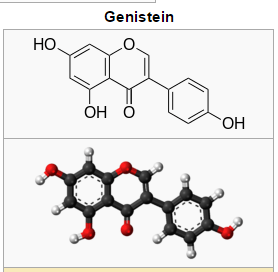
In my last post I learnt about how some bacteria defends themselves against herbal and spices. In this post, I will look at one that is easily available as a supplement Genistein, an isoflavone and antioxidant. There are some risks from high dosages (see wikipedia)

gen

Multidrug pump inhibitors uncover remarkable activity of plant antimicrobials.[2002] “It is possible that the apparent ineffectiveness of plant antimicrobials is largely due to the permeability barrier. ….The results show that the activities of the majority of plant antimicrobials were considerably greater against the gram-positive bacteria Staphylococcus aureus and Bacillus megaterium and that disabling of the MDRs in gram-negative species leads to a striking increase in antimicrobial activity. Thus, the activity of rhein, the principal antimicrobial from rhubarb, was potentiated 100- to 2,000-fold (depending on the bacterial species) by disabling the MDRs.”
[Full Text]

  • More on multidrug pump inhibitors: Bacterial multidrug efflux pumps: Mechanisms, physiology and pharmacological exploitations [2014] “Another group of EPIs is called the quinoline derivatives, because of their structural similarity with quinolones [143].”  – interesting because Jadin’s protocol includes the concurrent use of quinolones with other antibiotics.
  • “In Gram-positive bacteria, EPIs against the NorA system in S. aureus has been intensively studied. A large number of both synthetic and natural compounds have been found to be EPIs against S. aureus NorA, especially those of natural origins such as genistein isolated from Lupinus argenteus, spinosan A isolated from Dalea spinosa and Tiliroside isolated from Herissantia tiubae”  Genistein is available as a supplement.

So what does PubMed say about it?

  • “After 6 and 12 months (of 54mg Genistein daily), our results indicate a strong correlation and a significant effect of genistein in reducing both Hot Flashes and visfatin in women with metabolic syndrome ” [2016]
  • “significant reductions in CFUs were found for S. aureus and B. anthracis when cultured in the presence of 100 muM genistein. …However, L. reuteri, E. coli, S. sonnei, and K. pneumoniae were not altered by in vitro culturing in the presence of 100 muM genistein… the use of genistein in combination with probiotics may augment the effectiveness of antimicrobial therapies currently used in the management of infections” [2006]
  • Genistein inhibits pro‑inflammatory cytokines in human mast cell activation through the inhibition of the ERK pathway.[2014] “Genistein significantly decreased IL-6 and IL-1β mRNA levels, as well as IL-6 production in PMA/A23187-induced mast cells activation. In addition, genistein inhibited the phosphorylation of ERK 1/2 in PMA/A23187-induced mast cell activation. However, phosphorylation of p38 was not altered. Thus, these findings indicate that genistein inhibited the inflammatory status of mast cells through inhibition of the ERK pathway.”

Bottom Line

There is a lot of articles on this, my main take away is that it appears to have no impact on families that are undergrowths in CFS and does impact overgrowth. It should help with mast-cell/histamine issues (for that subset), and may have additional benefits.

More research is needed, but this looks like a very promising supplement.