Roundup and food grown with roundup

Very low levels of some chemicals can cause serious, potentially fatal, for example 0.43 mg or even 0.000 001 gm. In some cases, only some people are sensitive (for example, 0.5 – 1% for Celiac Disease). In general most safety testing is done on normal healthy individuals and not a representative cross section of society.

This too often results in MDs’ saying it’s in your head until such time as testing is developed and accepted. This was the case for Ulcers for almost 30 years after a MD discovered that a bacteria was involved.

Glyphosate (N-(phosphonomethyl)glycine) is a broad-spectrum systemic herbicide used to killweeds, commonly known as RoundUp.

A friend forward this:
“Monsanto’s glyphosate-based herbicide Roundup is an endocrine (hormone) disruptor in adult male rats, a new study shows.The lowest dose tested of 10 mg/kg bw/d (bodyweight per day) was found to reduce levels of corticosterone, a steroid hormone produced in the adrenal glands. … a 2012 study detected a 35% testosterone down-regulation in rats at a concentration of 1 part per million.” [Source]

“The presented results evidence that the highly pathogenic bacteria as Salmonella Entritidis, Salmonella Gallinarum, Salmonella Typhimurium, Clostridium perfringens and Clostridium botulinum are highly resistant to glyphosate. However, most of beneficial bacteria as Enterococcus faecalis, Enterococcus faecium, Bacillus badius, Bifidobacterium adolescentis and Lactobacillus spp. were found to be moderate to highly susceptible. Also Campylobacter spp. were found to be susceptible to glyphosate. A reduction of beneficial bacteria in the gastrointestinal tract microbiota by ingestion of glyphosate could disturb the normal gut bacterial community. Also, the toxicity of glyphosate to the most prevalent Enterococcus spp. could be a significant predisposing factor that is associated with the increase in C. botulinum-mediated diseases by suppressing the antagonistic effect of these bacteria on clostridia.” [2013]

  • “Glyphosate has antibiotic properties. Monsanto filed for a respective patent in 2003 and received it in 2010.[41]” Wikipedia

“Celiac disease, and, more generally, gluten intolerance, is a growing problem worldwide, but especially in North America and Europe…we propose that glyphosate, the active ingredient in the herbicide, Roundup(®), is the most important causal factor in this epidemic.” [2013]

“Chronically ill humans showed significantly higher glyphosate residues in urine than healthy population” [2014]

“Glyphosate was significantly higher (P<0.0002) in humans feed conventional feed[diet] compared with predominantly organic feed[diet] humans… Interestingly, the glyphosate concentration in German dairy cows kept in a GM free region excreted much less glyphosate than conventionallymanaged cows. Thus, the prohibition of GM grains and soy prevent these animals from consuming glyphosate with their feed.” [2014]

” There is a reasonable correlation between the amount ingested and the likelihood of serious systemic sequelae or death. Advancing age is also associated with a less favourable prognosis.” Glyphosate Poisoning [2014]

” Although glyphosate is only slightly toxic to rats, ingestion of GlySH may lead to severe effects, including death, in humans.” [2009]

” In March 2015 theWorld Health Organization‘s International Agency for Research on Cancer published a summary of its forthcoming monograph on glyphosate, and classified it as “probably carcinogenic in humans” (category 2A) based on epidemiological studies, animal studies, and in vitro studies.[5][11][12]“wikipedia

Crops likely to contain residue Roundup or equivalent

Some people could naively claim that it is not a problem because stuff is washed and so it is washed off. If you apply something to the surface (in a sticky manner), a percentage will be merged into the organism. Why do you think that roundup resistant plants had to be developed?

See  http://www.isaaa.org/gmapprovaldatabase/ for a list of GM crops

  • Soybean [source] “In 2011–2012, soybeans were planted on about 30 million hectares in the USA, with Roundup Ready GM soy contributing 93–94% of the production” [2014] EPA allows up to 40 ppm [source]
  • Canola
  • Carrots EPA allows up to 5 ppm [source]
  • Chicory
  • Sesame Flax – EPA allows up to 40 ppm [source]
  • Maize / Corn [source]
  • Wheat
  • Sunflowers [source]
  • sugar beets [source]
  • potato [GM]
  • sweetpotatoes   EPA allows up to 3 ppm [source]
  • rice [GM]
  • sugarcane
  • Drinking Water  0.7 mg/L

Possibly Safe

  • Rice (roundup damages rice crops)
  • Potatoes (roundup damages source]
  • Rye [“Cereal rye is easily killed with glyphosate and can be controlled at any growth stage” source]
  • Most ORGANIC root vegetables [Roundup is suggested for many of them for weed control thus conventional root vegetables are a risk, source]
  • Crops grown in the El Salvador and  Sri Lanka (be careful, some countries have banned retail sales but not commercial use)

Current EPA Allowed Limits

The following was likely based on tests of what was actually seen, and thus likely a guide to what is expected.

Needless to say, you want food with the lowest levels

Commodity Parts per million
Acerola 0.2
Alfalfa, seed 0.5
Almond, hulls 25
Aloe vera 0.5
Ambarella 0.2
Animal feed, nongrass, group 18 400
Artichoke, globe 0.2
Asparagus 0.5
Atemoya 0.2
Avocado 0.2
Bamboo, shoots 0.2
Banana 0.2
Barley, bran 30
Beet, sugar, dried pulp 25
Beet, sugar, roots 10
Beet, sugar, tops 10
Berry and small fruit, group 13-07 0.20
Betelnut 1.0
Biriba 0.2
Blimbe 0.2
Breadfruit 0.2
Cacao bean, bean 0.2
Cactus, fruit 0.5
Cactus, pads 0.5
Canistel 0.2
Carrot 5.0
Chaya 1.0
Cherimoya 0.2
Citrus, dried pulp 1.5
Coconut 0.1
Coffee, bean, green 1.0
Corn, pop, grain 0.1
Corn, sweet, kernel plus cob with husk removed 3.5
Cotton, gin byproducts 210
Custard apple 0.2
Date, dried fruit 0.2
Dokudami 2.0
Durian 0.2
Epazote 1.3
Feijoa 0.2
Fig 0.2
Fish 0.25
Fruit, citrus, group 10-10 0.50
Fruit, pome, group 11-10 0.20
Fruit, stone, group 12 0.2
Galangal, roots 0.2
Ginger, white, flower 0.2
Gourd, buffalo, seed 0.1
Governor’s plum 0.2
Gow kee, leaves 0.2
Grain, cereal, forage, fodder and straw, group 16, except field corn, forage and field corn, stover 100
Grain, cereal, group 15 except field corn, popcorn, rice, sweet corn, and wild rice 30
Grass, forage, fodder and hay, group 17 300
Guava 0.2
Herbs subgroup 19A 0.2
Hop, dried cones 7.0
Ilama 0.2
Imbe 0.2
Imbu 0.2
Jaboticaba 0.2
Jackfruit 0.2
Kava, roots 0.2
Kenaf, forage 200
Leucaena, forage 200
Longan 0.2
Lychee 0.2
Mamey apple 0.2
Mango 0.2
Mangosteen 0.2
Marmaladebox 0.2
Mioga, flower 0.2
Noni 0.20
Nut, pine 1.0
Nut, tree, group 14 1.0
Oilseeds, group 20, except canola 40
Okra 0.5
Olive 0.2
Oregano, Mexican, leaves 2.0
Palm heart 0.2
Palm heart, leaves 0.2
Palm, oil 0.1
Papaya 0.2
Papaya, mountain 0.2
Passionfruit 0.2
Pawpaw 0.2
Pea, dry 8.0
Peanut 0.1
Peanut, hay 0.5
Pepper leaf, fresh leaves 0.2
Peppermint, tops 200
Perilla, tops 1.8
Persimmon 0.2
Pineapple 0.1
Pistachio 1.0
Pomegranate 0.2
Pulasan 0.2
Quinoa, grain 5.0
Rambutan 0.2
Rice, grain 0.1
Rice, wild, grain 0.1
Rose apple 0.2
Sapodilla 0.2
Sapote, black 0.2
Sapote, mamey 0.2
Sapote, white 0.2
Shellfish 3.0
Soursop 0.2
Spanish lime 0.2
Spearmint, tops 200
Spice subgroup 19B 7.0
Star apple 0.2
Starfruit 0.2
Stevia, dried leaves 1.0
Sugar apple 0.2
Sugarcane, cane 2.0
Sugarcane, molasses 30
Surinam cherry 0.2
Sweet potato 3.0
Tamarind 0.2
Tea, dried 1.0
Tea, instant 7.0
Teff, forage 100
Teff, grain 5.0
Teff, hay 100
Ti, leaves 0.2
Ti, roots 0.2
Ugli fruit 0.5
Vegetable, bulb, group 3-07 0.20
Vegetable, cucurbit, group 9 0.5
Vegetable, foliage of legume, subgroup 7A, except soybean 0.2
Vegetable, fruiting, group 8-10 (except okra) 0.10
Vegetable, leafy, brassica, group 5 0.2
Vegetable, leafy, except brassica, group 4 0.2
Vegetable, leaves of root and tuber, group 2, except sugar beet tops 0.2
Vegetable, legume, group 6 except soybean and dry pea 5.0
Vegetables, root and tuber, group 1, except carrot, sweet potato, and sugar beet 0.20
Wasabi, roots 0.2
Water spinach, tops 0.2
Watercress, upland 0.2
Wax jambu 0.2
Yacon, tuber 0.2
Commodity Parts per Million
Canola, seed 20
Cattle, meat byproducts 5.0
Corn, field, forage 13
Corn, field, grain 5.0
Corn, field, stover 100
Egg 0.05
Goat, meat byproducts 5.0
Grain aspirated fractions 310.0
Hog, meat byproducts 5.0
Horse, meat byproducts 5.0
Poultry, meat 0.10
Poultry, meat byproducts 1.0
Sheep, meat byproducts 5.0
Soybean, forage 100.0
Soybean, hay 200.0
Soybean, hulls 120.0
Soybean, seed 20.0

Bottom Line

  • Organic food with a preference for rice instead of wheat
  • 100% Rye Bread instead of wheat (ideally 100% Organic non GMO Rye Bread)
  • NO SUGAR or sugar substitutes added — say good bye to that sweet tooth!
    • Honey is NOT safe, the bees gather pollen from sprayed crops and many organic honey had high levels. [2014]
    • Organic Maple Syrup appears to be the exception [cannot find any evidence of significant level, plus the trees not co-cohabiting with crops likely to be sprayed]
      • Non-organic may have roundup sprayed along the roads.

“Tropical Traditions has sold organic grains for years. After reading new research about the issue of “crop desiccation” done by using glyphosate on wheat and other grains just prior to harvest, Tropical Traditions decided to first test some commercial wheat products with wheat grown in Montana, North Dakota, and Canada…All tested positive for glyphosate residue. The range was from 0.07 mg/kg to 0.09 mg/kg….. For a GMO crop such as GMO soybeans, which are sprayed heavily with glyphosate, the range is typically between 3.3 and 5.7 mg/kg. (Source.)

…. the presence of glyphosate residue was found in organic wheat and other organic grains, including organic barley, oats, spelt, and einkorn. The range was from 0.03 to 0.06 mg/kg, just slightly lower than the conventional grains that were tested.

The only organic grains that tested clean were organic rye and organic millet. There was also one variety of organic wheat from small-scale farmers in Wisconsin that tested clean from glyphosate.”[Source]

Mannitol

In my last post I mentioned Mannitol which is also used in food and supplements. It has a number of positive medical benefits — however, what is good for one condition can be bad for another condition. This “naive alternative medicine belief” that if it is good for one condition it is good for all conditions is something to be very wary of. It is simplistic logic being applied to very complex situations.

  • “Clostridium difficile.. can exploit specific metabolites that become more abundant in the mouse gut after antibiotics, including … carbon sources such as mannitol, fructose, sorbitol, raffinose and stachyose for growth.”  [2014]
  • Increase in serum potassium resulting from the administration of hypertonic mannitol and other solutions. [1969]
  • “Xylitol at 10 and 20 per cent disturbed gastro-intestinal function but was tolerated better than sorbitol or mannitol” [1983]
  • “the severity of such gastro-intestinal disturbances, induced by large doses of polyols, decrease in the following order: mannitol, sorbitol, xylitol…The available clinical data generally suggest that moderate consumption of the above polyols is not harmful to human metabolism.” [1984]
    • Based on people without gut dysfunction
  • “all three polyols[ galactitol, mannitol or xylitol] retarded the growth rate of the animals, the polyols were well tolerated.” [1985]
  • “Airway hyperresponsiveness (AHR) to inhaled mannitol is associated with indirect markers of mast cell activation and eosinophilic airway inflammation” [2015]

I was unable to find any studies specific to how it impacts the microbiome apart from disturbing normal health guts.

The quest for a safe B-12 Supplement

Sorbitol,Stevia,(and likely mannitol) and xylitol are known to worsen some autoimmune conditions by altering the gut in the wrong way[Early Post, Stevia Post,Another Post]. Frequently they are incorrectly listed as “inactive”. While B-12 supplementation is needed/recommended for many autoimmune conditions, the indigestion of these additives with such conditions have not be tested and there is evidence suggesting significant risk. A related post elsewhere

These additives may be why B-12 injections work better than supplements — because these additives contribute to gut bacteria dysfunction.

So, which B12’s are not safe from this perspective? Well, the following are IMHO, not safe.

The following appears to be safe:

Literature on Gut Alternations

  • Dietary supplementation with sorbitol results in selective enrichment of lactobacilli in rat intestine. [2007]
    • This results in E.Coli (low or none in CFS) being further reduced.
  • Xylitol affects the intestinal microbiota and metabolism of daidzein in adult male mice. [2013]
  • xylitol feeding caused a clear shift in the rodent faecal microbial population from Gram-negative to Gram-positive bacteria. In human volunteers a similar shift was observed even after a single 30-g oral dose of xylitol.” [1985]
  • “While sugar alcohols …are also notorious for causing digestive distress. Because sugar alcohols are FODMAPs and are largely indigestible, they can cause diarrhea by pulling excess water into the large intestine. The fermentation of sugar alcohols by gut bacteria can also cause gas and bloating, and sugar alcohols may decrease fat absorption from other foods. (14, 15)…Animal studies have found that xylitol causes a shift from gram-negative to gram-positive bacteria, with fewer Bacteroides and increased levels of Bifidobacteria. (19, 20) A similar shift has been observed in humans, even after a single dose of xylitol. (21) “
  • “Colonisation with Escherichia coli, Klebsiella pneumoniae, and Streptococcus viridanssignificantly increased lumen to blood clearance of mannitol. Colonisation with Lactobacillus brevis had the opposite effect and reduced permeability to mannitol.” [2001]
  • “These results demonstrate that more than 95% of mannitol administered orally is utilized via fermentation by intestinal microbes.”[2010]

Bottom Line: We need properly done studies on whether the above sugars have a net positive or negative impact on people with gut bacteria dysfunction/autoimmune conditions.

Crohn’s Disease: Diets – What works and how well

Crohn’s appear to be a microbiota(gut bacteria) dysfunction, which appears to be the case for several autoimmune diseases. Each person microbiota is unique and correlates with their DNA. A diet that works for one patient may not work for another. The following notes are obtained by reviewing PubMed. Note that words like “appears“,”potential” and “may” usually indicate subject beliefs and not objective statistically significant results. In general such speculation is noted by the use of italic in the citation.

While the focus is on Crohn’s, likely the most extreme of microbiota dysfunctions, this information may be relevant to IBS [2011], UC and CFS.

  • “Adolescent diet is associated with risk of CD, but not UC, offering insights into disease pathogenesis.” [2015]
  • “In Crohn’s disease, an inadequate dietary intake is correlated with nutritional status and disease activity…. Energy intakes were significantly lower in patients with Crohn’s disease“[2014] – this may be a chicken and egg, because of severity less energy is consumed.
  • ” there are no defined diets able to improve the disease course, and in Crohn’s disease, supplementation with omega-3 fatty acids did not show a significant benefit.” [2010]
  • “general antibiotic use was associated with a reduced risk of relapse in CD.
    • High levels of stress were positively associated with relapse, although psychological interventions did not have therapeutic benefits.
    • The limited work on diet has reported sulphur-containing foods are positively associated with relapse in UC, but there is no work in CD.
    • Ecological data reported positive correlations between air pollution levels and IBD hospitalisations.”[2015]

Specific Foods

  • “Of these, sweet potatoes had the highest reported frequency of beneficial responses. We also identified 4 foods with detrimental effects in more than 25% of our study population. These were mustard, wasabi, and raw and cooked tomatoes” [2015]
  • ” margarine, pasta, fried foods, fat, olives [and olive oil], sugar (increased risk), and yogurt, honey, fruits, nuts, fish, and citrus fruits (decreased risk).” [2012]
  • “The current evidence is not sufficient to draw firm conclusions on the role of specific food components or nutrients in the aetiology of IBD.” [2013]
  • ” Patient-targeted dietary recommendations focus on food restrictions and are highly conflicting.” [2014]
  • “There is little evidence from interventional studies to support specific dietary recommendations” [2013]
  • ” geographical variation in CD correlates with emulsifier consumption as does the increasing incidence of CD in Japan; … very small concentrations of the emulsifier polysorbate 80 enhance bacterial translocation across intestinal epithelia.” [2013]
  • ” Dairy products with a high fat content were most frequently reported to worsen perceived CD symptoms.”[2011]
  •  “500 mg [of curcumin/turmeric] twice per day for 3 weeks …The Crohn’s patients score dropped from 5 to 0 suggesting improvement. No participants experienced a relapse or worsening of symptoms while on the study medication.” [2013 Full Text]
  • “more of the New Zealand CD cases report intolerance to maize and mushrooms than those who report beneficial effects or no differences.” [2009]
  • FIBER
    • ” Second, more robust investigation of the inadequately tested IBD-fiber hypothesis of the 1980s should follow this demonstration of acceptance, tolerance, and appreciation of a fiber-rich diet by individuals with active CD symptoms.” [2014]
    • “results were inconsistent for dietary fibre in UC and CD and grain-derived products in UC” [2013]
    • “Results demonstrated that consuming a wheat bran-inclusive diet was feasible and caused no adverse effects, and participants consuming whole wheat bran in the diet reported improved health-related quality of life (p = .028) and gastrointestinal function (p = .008) compared to the attention control group.” [2014]
    • “Dietary fibre (particularly fruits and vegetables), saturated fats, depression and impaired sleep, and low vitamin D levels have all been associated with incident IBD.” [2015] – in other studies fruit fibre had no positive effect while vegetable fibre correlated with improvement.
    • “Dietary fiber (fruits and vegetables) was associated with a reduced risk for CD in the Nurses’ Health Study, but insoluble fiber (whole grain and bran) did not have the same association.47” [2013]
    • “Based on data from the Nurses’ Health Study, long-term intake of dietary fiber, particularly from fruit, is associated with lower risk of CD but not UC.” [2013]
    • ” patients with Crohn’s disease may be more sensitive to inulin intake” [2013]
    • High amount of dietary fiber not harmful but favorable for Crohn disease. [2015]
  • “food intolerances are very frequent, but usually inconsistent among IBD patients, and therefore no general dietary recommendations can be made in these patients.
    • Low-fat diets seem to be particularly useful.
    • Also, some lipid sources, such as olive oil, medium-chain triglycerides, and perhaps omega-3 fatty acids, might have a therapeutic effect.
    • Fermentable fiber may have a role in preventing relapses in inactive UC.”[2012]
  • “Controlled studies of patients receiving enteral nutrition and observations made from patients on exclusion diets have shown that components of whole foods can have deleterious effects for patients with IBD.” [2015]
  • “Exclusion of sugar shows little evidence of amelioration in CD. Omega 3 fatty acids show promise in the treatment of IBD but await larger randomized controlled trials.” [2010]
  • “It is proposed that eradication of these microbes[Klebsiella] by the use of antibiotics and low starch diet, in addition to the currently used treatment, could help in alleviating or halting the disease process in CD.”
  • “A high intake of dietary long-chain n-3 PUFAs[polyunsaturated fatty acids] may be associated with a reduced risk of UC. In contrast, high intake of trans-unsaturated fats may be associated with an increased risk of UC.” [2014]
  • “High dietary intakes of total fats, PUFAs, omega-6 fatty acids, and meat were associated with an increased risk of CD and UC. High fiber and fruit intakes were associated with decreased CD risk, and high vegetable intake was associated with decreased UC risk.” [2009]
  • ” A small number of foods are frequently considered to be beneficial, including white fish, salmon and tuna, gluten-free products, oatmeal, bananas, boiled potatoes, sweet potatoes (kumara), pumpkin, soya milk, goat’s milk and yoghurt.
    • Foods that are typically considered detrimental include grapefruit, chilli or chilli sauce, corn and corn products, peanuts, cream, salami, curried foods, cola drinks, high energy drinks, beer, and red wine.
    • For a number of the food items, the same item that was beneficial for one group of subjects was detrimental to others; in particular soya milk, goat’s milk, yoghurt, oatmeal, kiwifruit, prunes, apple, broccoli, cauliflower, linseed, pumpkin seed, sunflower seed, ginger and ginger products, beef, lamb, liver, and oily fish.
    • It was not possible to identify a specific group of food items that should be avoided by all CD patients.” [2010]

Enteral Nutrition (EN)

Enteral nutrition [tube feeding]: A way to provide food through a tube placed in the nose, the stomach, or the small intestine. A tube in the nose is called a nasogastric tube or nasoenteral tube.” [Source]

  • ” In all studies, patients used EN as a supplement or as a nocturnal tube feeding in addition to their normal food.. maintained clinical remission rate at 1 year was significantly higher in patients treated with EN in four of the six studies.”[2015]
  • ” A non significant trend favouring very low fat and/or very low long chain triglyceride content exists but larger trials are required” [2007]
  • “The outcomes of this prospective study showed that concomitant EN during infliximab maintenance therapy does not significantly increase the maintenance rate of clinical remission in patients with CD.” [2007]
  • “The use of specialized enteral nutrition therapy in combination with infliximab appears to be more effective at inducing and maintaining clinical remission among patients with Crohn’s disease than infliximab monotherapy.” [2015]
  • “Limited evidence indicates potential benefits of elemental nutrition against no intervention in the maintenance of remission and prevention of relapse in adult patients with CD.” [2015]
  • ” studies have shown that exclusive enteral nutrition can induce remission in mild-to-moderate disease comparable to corticosteroids.” [2014]
  • ” Partial enteral nutrition (PEN) with free diet is ineffective for inducing remission, suggesting that the mechanism depends on exclusion of free diet. We developed an alternative dietbased on PEN with exclusion of dietary components hypothesized to affect the microbiome or intestinal permeability.” [2014]
  • Conflicting results on the efficacy of enteral nutrition during infliximab maintenance therapy forCrohn‘s disease are correct.[2014]

Parenteral Nutrition Diet(TPN)

  • “TPN has limited effects on IBD” [2012]

Elemental Diet

  • ” There is no significant difference in the efficacy of elemental and non-elemental diets for induction of remission of Crohn’s disease.”[2007]
  • “Limited evidence indicates potential benefits [no firm evidence] of elemental nutrition against no intervention in the maintenance of remission and prevention of relapse in adult patients with CD.” [2015]
  • “elemental diet cannot be recommended for the routine treatment of active pouchitis.” [2013]
  • ” Species diversity was reduced by total parenteral nutrition, but not by elemental diet.” [2012]
  • “Relapse rates with an “elemental diet” occur at the rate of 27% at one year,2 whereas the control group rate is 60% to 70% in the studies by Takagi et al2 and Sandborn et al.” [2014]

Gluten Free Diet [GFD]

  • “Overall 65.6% of all patients, who attempted a GFD, described an improvement of their gastrointestinal symptoms and 38.3% reported fewer or less severe IBD flares. In patients currently attempting a GFD, excellent adherence was associated with significant improvement of fatigue (P < 0.03).” [2014]

Whey

Note: Many commercial formula for Whey includes stevia which should not be used (increases inflammation in CD).

low Fermentable, Oligosaccharides, Disaccharides, Monosaccharides And Polyols (FODMAP) diet

  • “(FODMAP) diet may improve symptoms but there are currently no data to suggest that these approaches have any role in the induction or maintenance of remission.” [2013]
  • HIGH FODMAP makes CFS/IBS/FM worst. Low FODMAP reduces histamines and improves CBS/IBS/FM. See this post.

Semi-Vegetarian Diet (SVD)

  • ” Our SVD contains 32.4 g of dietary fiber in 2000 kcal. There was no untoward effect of the SVD. The remission rate with combined infliximab and SVD for newly diagnosed CD patients was 100%. Maintenance of remission on SVD without scheduled maintenance therapy with biologic drugs was 92% at 2 years.” [2015]
  • “Relapse rates at 1 year and 2 years were 0% and 8% in patients on SVD and 33% and 75% in patients on an omnivorous diet.” [2014]
  • ” Remission was maintained in 15 of 16 patients (94%) in the SVD group vs two of six (33%) in the omnivorous group” [2010]

“About 800 or 1100 kcal/d was given in the beginning, and calories were gradually increased to a maximum of about 30 kcal/kg standard body weight. White rice was served first for 2-5 d followed by mixed rice (70% white rice and 30% unrefined whole brown rice) for 2-5 d, and finally brown rice was served. Unrefined brown rice contains more vitamins and minerals than white rice[50] (Figure (Figure1)1) and is reported to increase significantly beneficial bacteria compared to well-milled white rice[41]. Eggs and milk were used. In other words, our diet was a lacto-ovo-vegetarian diet[51]. Miso (fermented bean paste) soup, vegetables, fruits, legumes, potatoes, pickled vegetables, and plain yoghurt were served daily. Fish was served once a week and meat once every 2 wk, both at about a half the average amount. Patients were provided with several different 4-wk menus on a rotational basis. Figure Figure22 shows what an SVD looks like. Details of the contents of nutritional elements including minerals, vitamins, and fatty acids in an SVD are shown in Table Table4.4. These figures were obtained by HOPE/COMETY-NT (Fujitsu, Tokyo, Japan). The rate of fat in total calories (18.6%) was < 20%, which is the lower limit of Dietary Reference Intakes for Japanese (DRI)[52]. The amounts of dietary fiber and iron in the SVD were above the DRI. Those of most of the other elements in the SVD were comparable to DRI (Table (Table4).4). Coarse tea was served along with the meal service. During hospitalization, foods other than the meal service were discouraged. Drinking of green tea was encouraged. Participant days of SVD ranged from 43 to 82 d (median: 49 d) in medically treated patients (Table (Table1).1)” [2010]

Japanese Diet for CD

“However, in our clinical practice at Keio University Hospital, which treats > 2,000 IBD patients, we have explained recently published findings on the roles of dietary fiber in the suppression of inflammation to patients, and have recommended that these patients consume more dietary fiber, including fruits, vegetables, seaweeds, dried mushrooms and dried Japanese radishes…we recommend that IBD patients consume boiled rice together with an individually acceptable proportion of barley, which was a historical part of the normal Japanese lifestyle. The goal is to gradually increase the intake of properly balanced soluble and insoluble dietary fiber every month or year, because both the proportion and absolute numbers of fermented probiotics strains are reduced in the intestines of IBD patients. A gradual increase in fermenters may allow patients to handle increased amounts of dietary fiber. The quantity of fermenters present in the intestines of these patients at the beginning of probiotic treatment may be insufficient to handle an overabundance of dietary fiber, resulting in deleterious outcomes, such as intestinal obstruction…..Asian societies are at a crossroads between a Western-style and a traditional high-fiber, low-fat, and fermenter-rich diet. Clinicians should encourage these traditional foods to promote public welfare.” [2014]

Bottom Line

The semi-vegetarian diet appears the clear winner for a general diet framework. Inclusion of appropriate fiber appears to be strongly supported (if done gradually) and contradicts the speculation from the 1980’s of fiber being bad which is still believed by many MDs (despite no clear evidence from studies). Special care needs to taken of foods that some CD’ers react to, they should be avoided or tried in small amounts.

And last — the association of autoimmune with the hygiene hypothesis seems supported by this study:

“Multivariate analysis showed that regular fish consumption (OR 0.52, 95% CI 0.33-0.80, p = 0.003), and presence of cattle in the house compound currently (OR 0.57, 95% CI 0.35-0.92, p = 0.023) were significant protective associations, whereas use of safe drinking water was positively associated (OR 1.59, 95% CI 1.02-2.47, p = 0.042) with the disease.” [2011]

Excluding alternative Diagnosis that could be causing fatigue via DNA

One aspect of DNA is that it can also inform you of conditions that you have a high risk of. Often symptoms overlap and some MDs have been known to give a CFS or FM diagnosis to either satisfy the patient or to avoid going into an area that they lack expertise in.  CFS with no cure, no pro-forma treatment and no definitive diagnostic test is an ideal box for some MDs to drop patients that they do not wish to be bothered with or are clueless on how to proceed.

Originally 23AndMe did health reports. They were stopped by the FDA for a while. Fortunately, the internet being what it is, alternative sites has popped up which will produce such reports. One of these sites LiveWello is what I will look at today.

  • https://livewello.com
  • They charge $19.95 to do the processing (unlike the site in the prior posts that asks for donations)

NOTE: DNA does not say you have or have not something — it indicates only if you have higher or lower odds of having a condition. We are still very early in the learning curve on DNA

Glutten

I am without any issues here — which is good. If you are also green AND have problems, the issue may be the gut bacteria that you have – which is very changeable.

Screen Shot 2015-01-05 at 9.23.16 AM

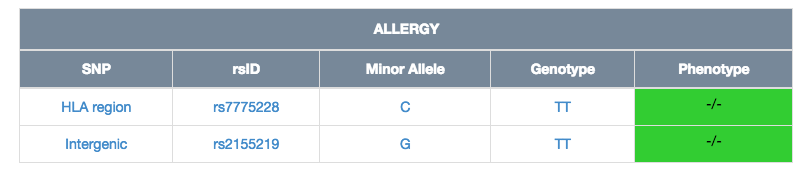
Allergy

Again no issues for me

Screen Shot 2015-01-05 at 9.27.49 AM

DeTox

My results are similar to before — no real issue

Screen Shot 2015-01-05 at 9.26.17 AM

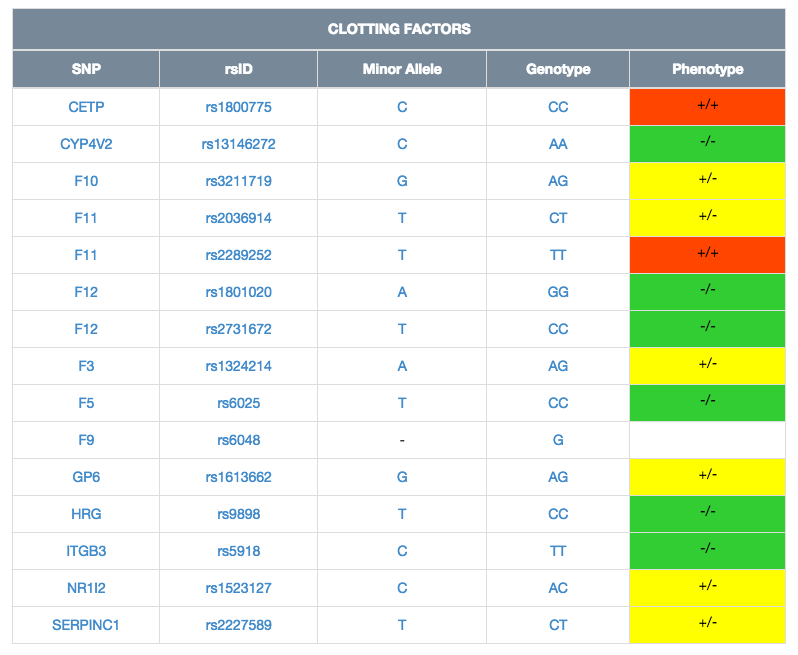
Clotting Factors

As before, lots of risk (as reported by Dave Berg at Hemex Labs back in 1991). If you go thru the rsID of this chart and the ones in yesterday post, you will see that there are both additional ones and missing ones. My post was looking at the latest PubMed data which appear to have not been included (yet) into this report.

Screen Shot 2015-01-05 at 9.30.04 AM

Thyroid

Thyroid issues are common in CFS — in my case, I am clear of risk factors

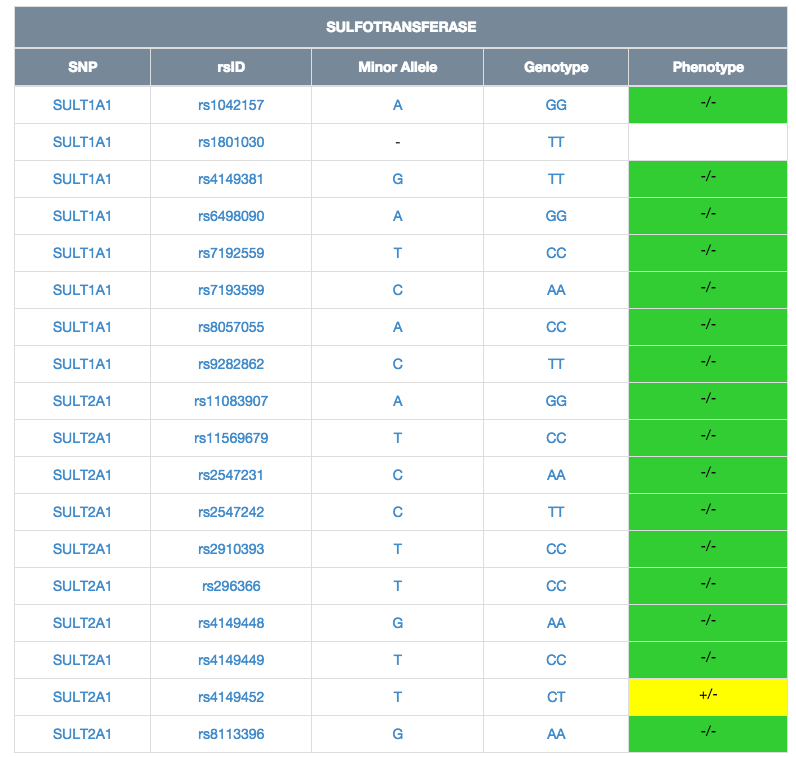
Screen Shot 2015-01-05 at 9.36.22 AMSulfotransferase

Again, another area that I am clear of risk factors

Screen Shot 2015-01-05 at 9.37.47 AM

In my next post, I will look at other reports where the news is not so good…