Child Autism microbiome over time – Part 1

A reader granted permission to review their child with autism microbiome over time, especially in light of my recent post Technical Study on Autism Microbiome. It presents an opportunity to better understand the dynamics of the microbiome with autism. I say dynamic, because the microbiome keeps changing — sometimes in minor ways, other times major. It is a moving target. This is the first part of several posts. There is a lot of data and some of it caused me to write new tools to answer some questions that arose. I believe that microbiome has significant impact on the severity of symptoms in autism.

One time microbiome testing is foolishness… you need regular ongoing testing to discover what hangs around and what is a visitor passing thru… What hangs around is what is important… Visitors can often be ignored. The microbiome is very dynamic.

You don’t make a call on who going to win the next election by asking the first person you meet on the bus

Ken Lassesen

Timelines of Key Bacteria Taxa

Presentation of the material

Diversity

I find that Species reported often and be informative. Conventional wisdom is that more is better… There was a dramatic change in early 2019.
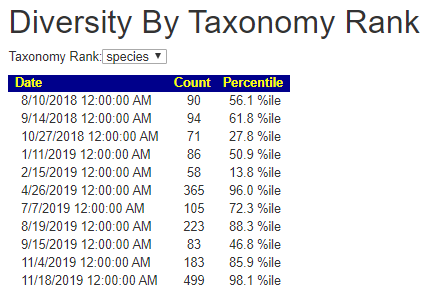
“Sample after probiotic L.reuterei and camel milk. Consistency soft solid
Diet: consisted of vegetable soups and also had introduced celery juice in the mornings”

Consensus Taxa

Prior post, Technical Study on Autism Microbiome cites:

The values are opposite – not high but very low.

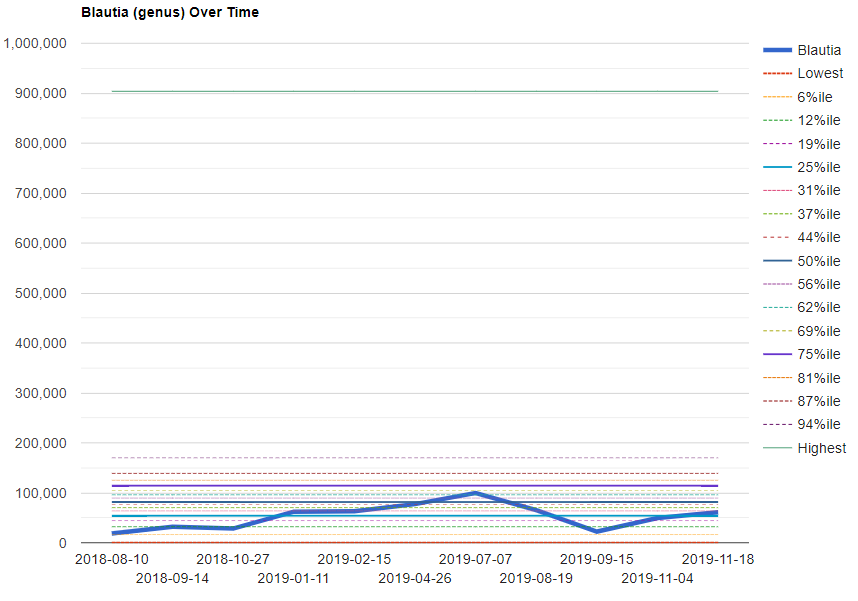
Blautia being Low

Low values are the norm, often at the very bottom

Bifidobacterium being High (in some Published studies)
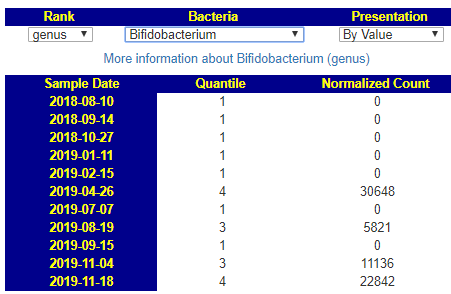
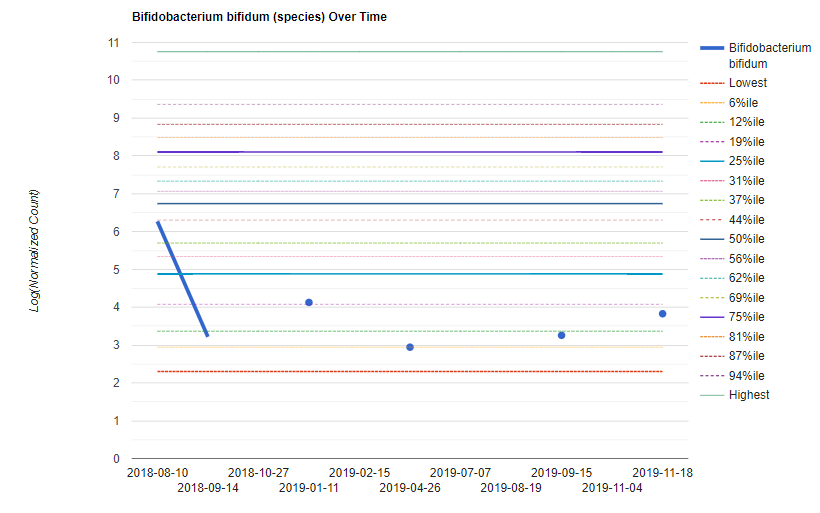
Usually low, but with two sudden spikes to high. This is reported low in some published studies and high in other studies. It may a volatile taxa with autism — I have seen major swings in another child with autism of Bifidobacterium.

Lactobacillus being High (in some Published studies)
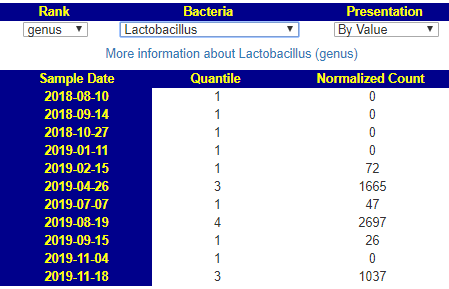
Almost follows Bifidobacterium in flipping between low and high

Citizen Science Taxa

From most significant downwards..
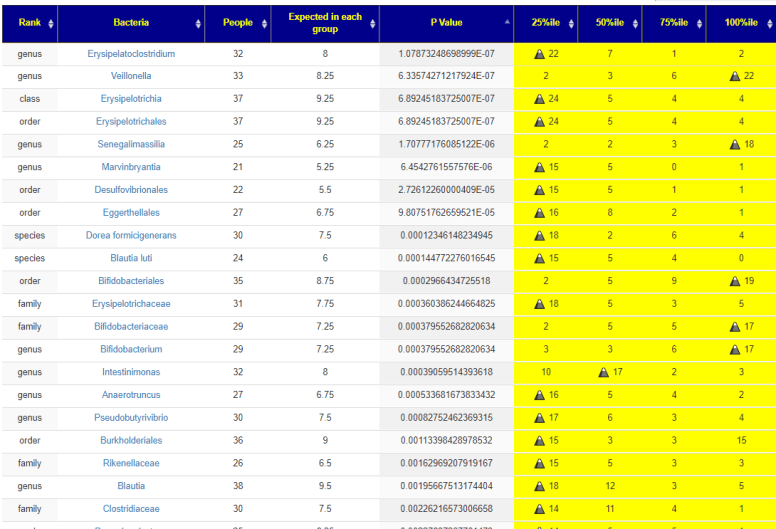
Erysipelatoclostridium genus / Erysipelotrichia class / Erysipelotrichales order – Low
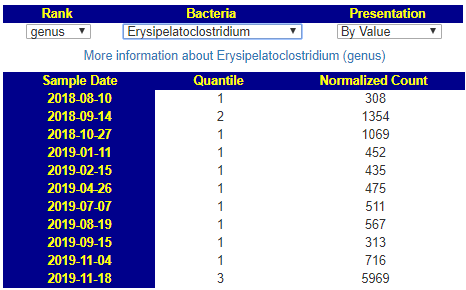
Clear match of pattern

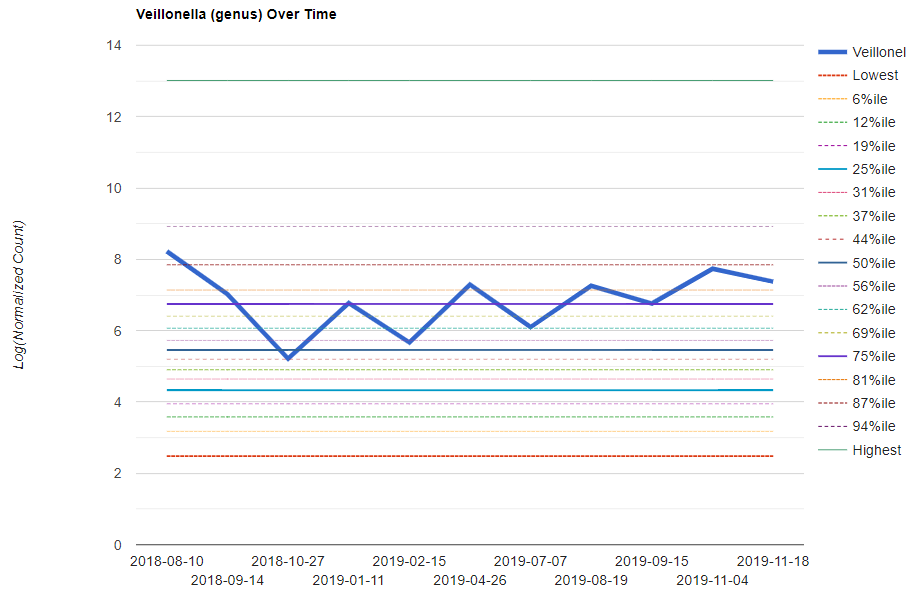
Veillonella – High

Again agreement, with an increasing over time pattern

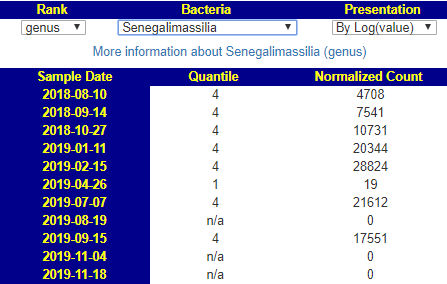
Senegalimassilia – High

With recent swings from none to high

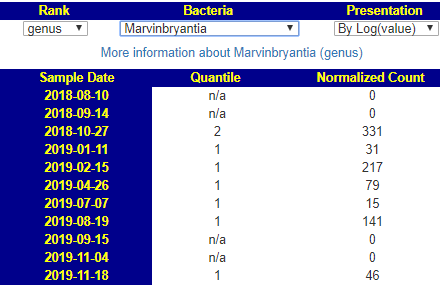
Marvinbryantia – Low

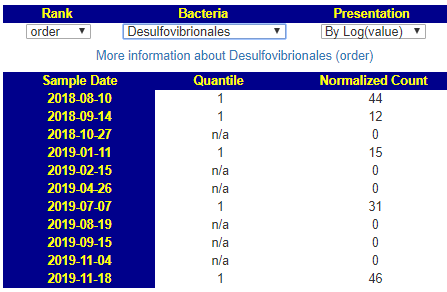
Desulfovibrionales (Order) Low. This is reported in 92% of this lab’s sample. 6/11 having none is a low probability event.
Eggerthellales (Order) Low
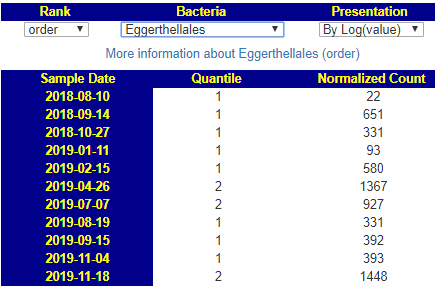
Intestinimonas – Low
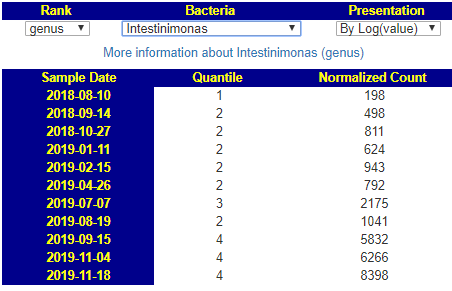
Was low and this year jumped

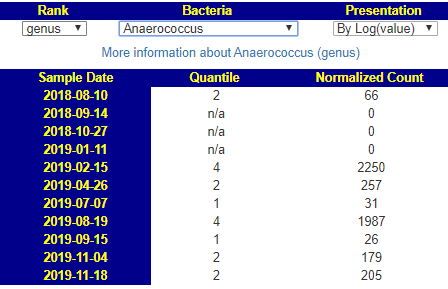
Anaerotruncus Low

Some random jumps but usually low

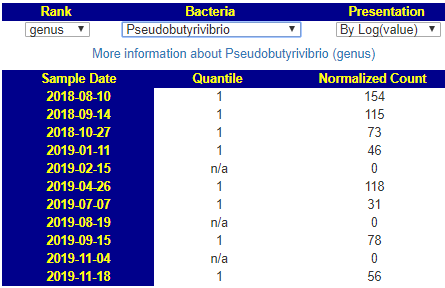
Pseudobutyrivibrio Low. This one is only seen 57% of the time in Thryve (which is what was used here) and 98% in uBiome. This distribution is not a very rare/unusual one like some following.
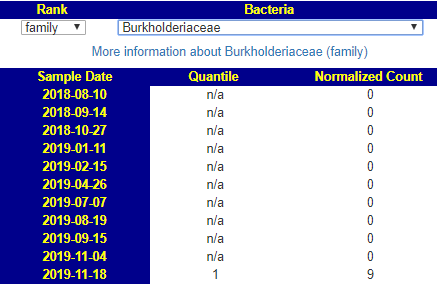
Burkholderiales Unusual!! Low and High (few middle ranges). Clicking the link I see 94% have measurable quantities – for only 1 out of 11 samples to have it is a 1 in 174,000,000,000 chance….

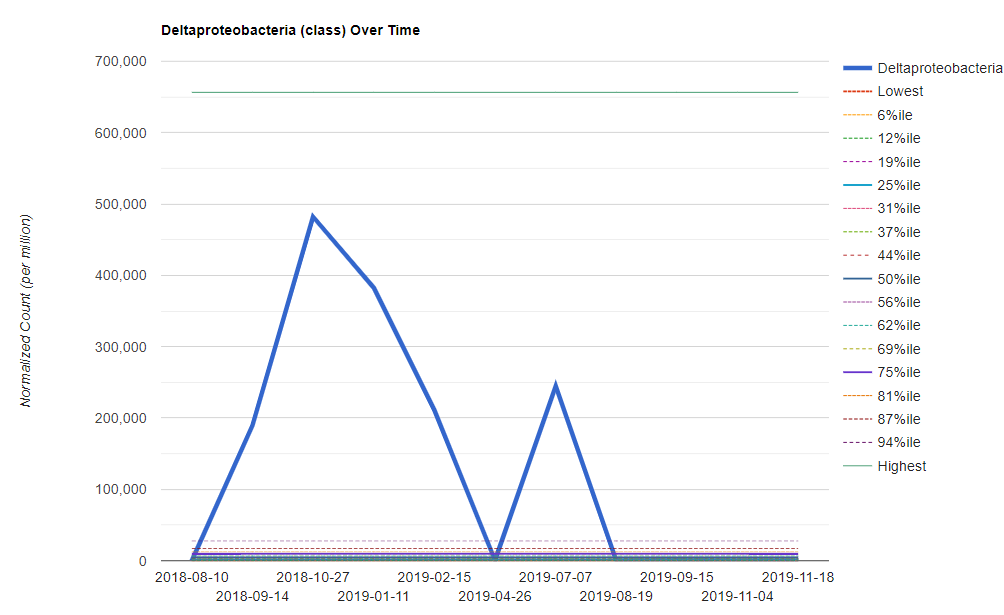
Deltaproteobacteria Low

Very high for a while and then collapse to nothing


Alistipes – Low. Clicking thru I see 85% have measurable quantities. For 7/11 samples having none (and when it does, very low)… suggests it’s absence may be significant.
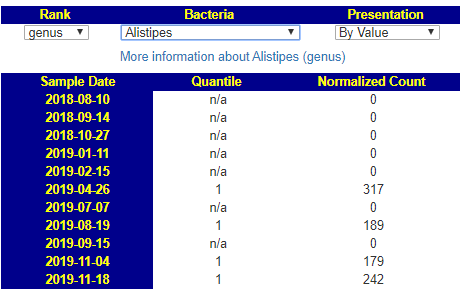
Agreement

Borderline for Significance

Terrisporobacter Medium Low. Clicking this link I see 75% of samples have measurable amounts. For 10/11 samples to have none suggests some significance to its absence.
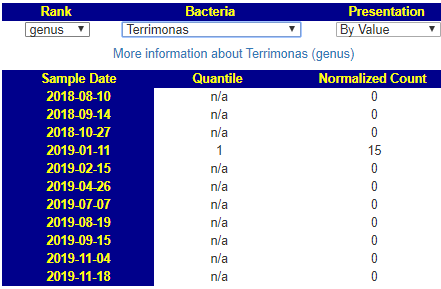
Breaks from the pattern

Summary Line #1

The following bacteria are rarely seen at all with this child but is very common in other samples. These are also reported as low across the Autism spectrum from Citizen Science:

The premise that we are working off it that the unusual is contributing to autism.

A good question to ask – Is this familial?

The mother has also done a Thryve sample so comparison was easy

Suggesting that it is unlikely due to DNA. It does suggests that giving the daughter a lot of kisses (especially on hands before meals) may have some benefits.. 😉

Suggestions #1: Dive down on this oddity

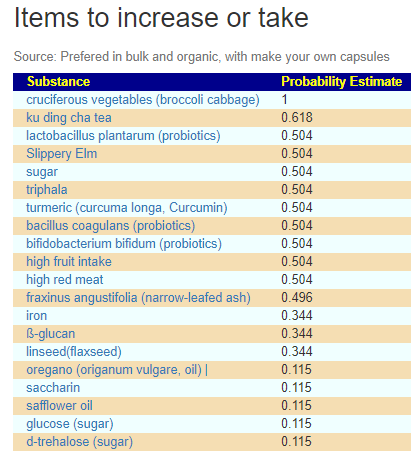
I went to Bacteria Symptom Explorer Plus (Autism via Citizen Science is there). And custom picked these 4 bacteria taxa that we want to increase. I then create a [Hand Picked Taxa Suggestion].
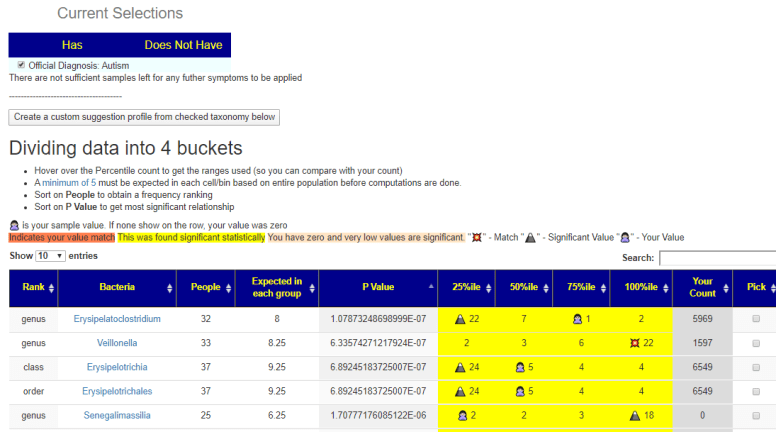
http://microbiomeprescription.com/data/SymptomExplorer?includes=262&sampleId=
Our four taxa – all of these are low

We asked for 30 items, and got less – running with direct citations. It was interesting to see Triphala on the list because it reduces many bacteria and may as a consequence increase these!
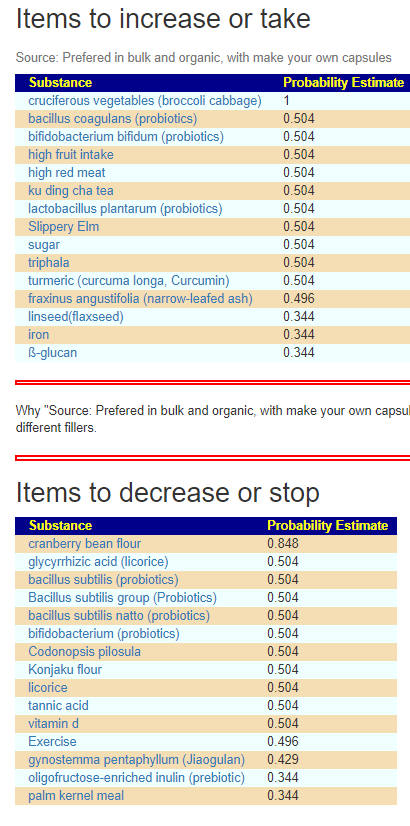
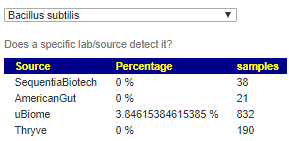
Note that certain species of Bacillus and Bifidobacterium are good and others are bad!

I tried various ways of expanding suggestions and found only parents increased the list slightly. ß-glucan + linseed(flaxseed) + high fruit intake may translate to Iron-fortified Oat or Barley porridge with flaxseed and fruit for breakfast. Supper with Oregano, Turmeric with lots of cruciferous vegetables (broccoli cabbage)
Looking back at gut based on Suggestions

We look at the probiotics suggested and levels that this person have of then.
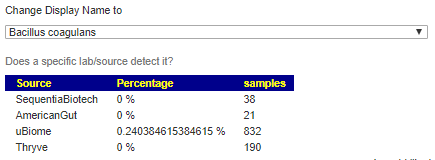
Thrive does not report on this one
Nor on this one
Nor this one
Eureka — we have one reporting
It comes and goes — mostly zero. Taking it makes sense
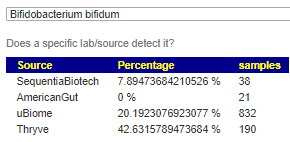
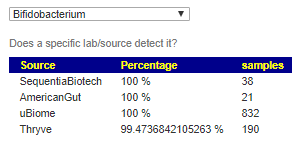
At the unspecified genus level this is a do not take a generic mixture of bifidobacterium

Predicted Symptoms

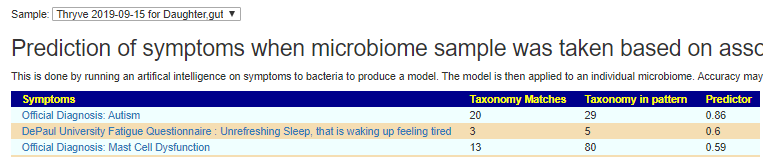
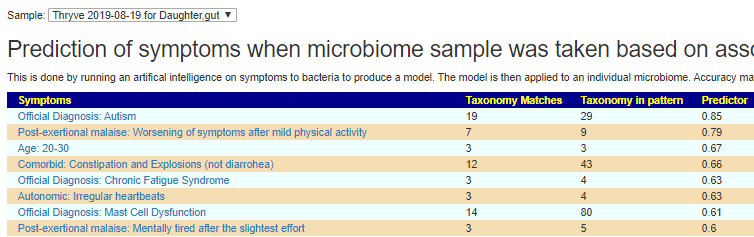
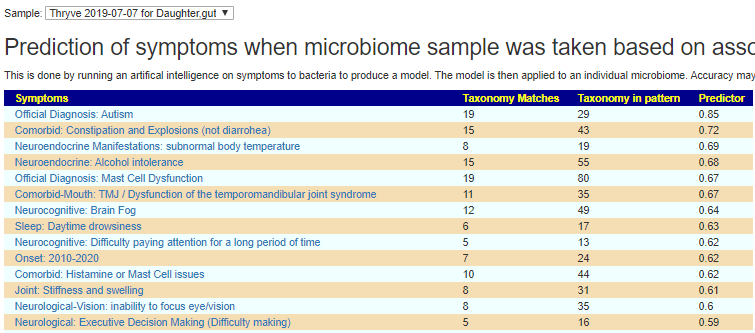
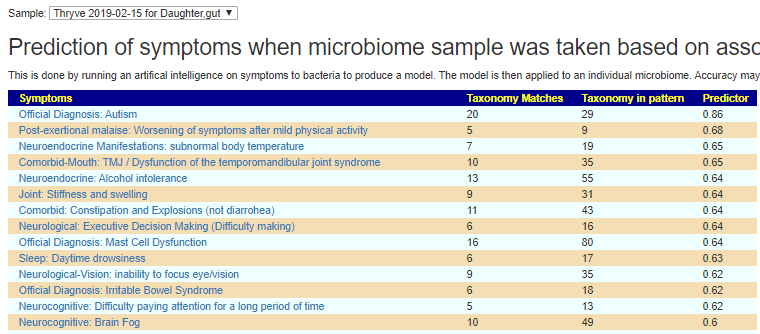
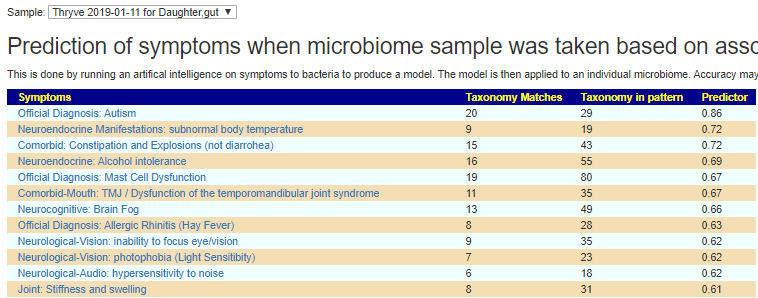
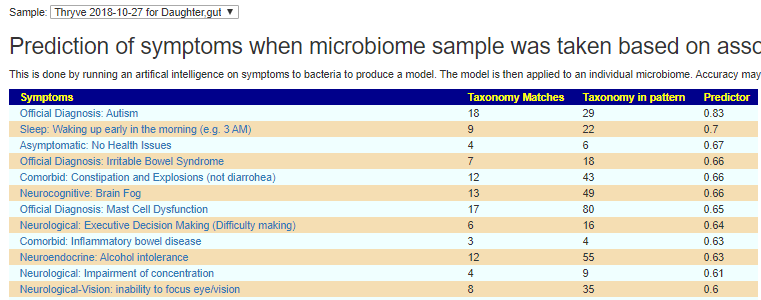
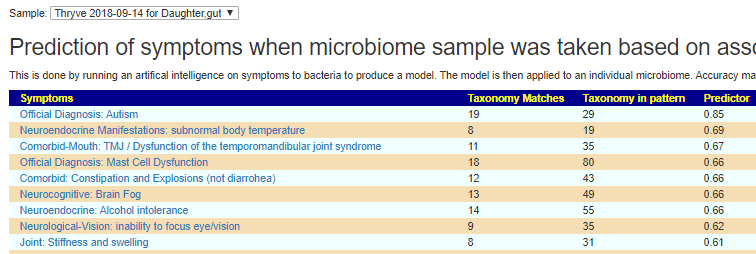
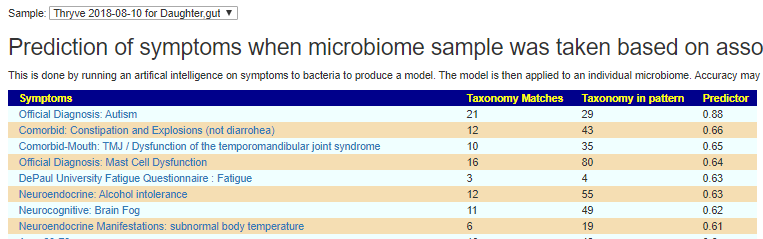
Going thru the samples, using 0.6 as the cut off point for predictions. Fatigue may manifest itself as irritability. Every single microbiome sample had autism as #1 predicted symptom.
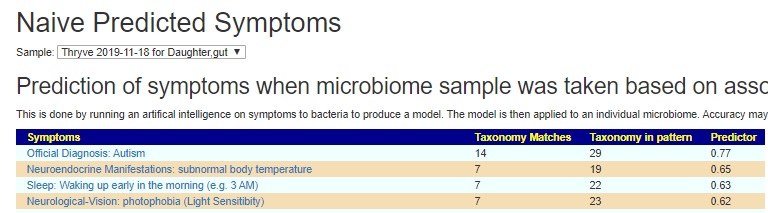
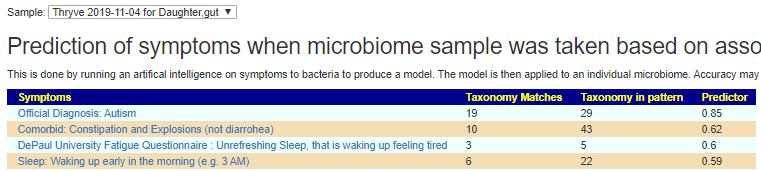
The ouch!

The mother’s microbiome had a surprise… a weak autism-like profile. Only 12 matches (the daughter ranged from 14-21). The mother when she first emailed gave a “no health issue” description.
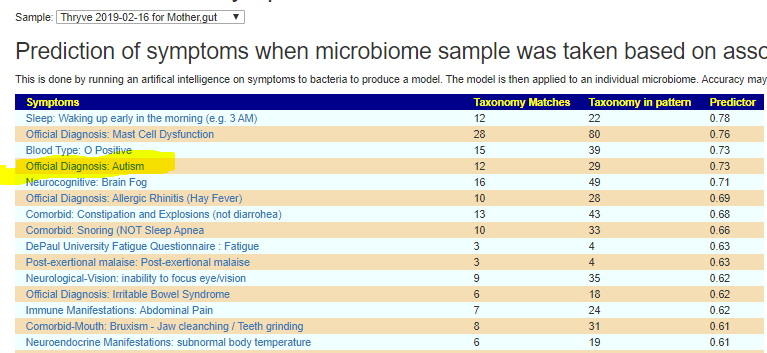
” Btw, I looked at the probable symptoms for my own sample and .. [many] were right on specially the neurocognitive ones… but a shocker at the blood type.. is 100%   Although none of the symptoms listed have ever been a concern, so sort of lived with it.. but now I’m so curious to exploring the data more.Thank you again for building this awesome tool!”

– Mother

This weekend I attended a conference with two presentations by Jason Hawrelak on Autism and the Microbiome. He presented his hypothesis that with modern western life, each generation’s microbiome becomes a subset of their parent’s microbiome. As a general concept, I agree if there are no radical changes of lifestyle (inconvenient changes usually). It’s a rational explanation for the increase of autism and other microbiome associated conditions. With this model, the mother was likely on the path towards autism(which was likely delivered to her by her mother) and with an additional iteration subsetting her microbiome… her child was dropped into it.

I believe that it is possible to recover significant amount of the lost microbiome. A simple first step is to spend weekends working on an organic farm as volunteer labor. If the kid eats dirt, or sucks on grass or wheat on this farm… he may be potentially repopulating some of the microbiome. I recall walking with my father (a farmer) and his picking straw and grass for me to suck on (unwashed) — I was getting hay bacillus or grass bacillus, a.k.a. Bacillus subtilis. “Farmer common sense medicine”

Next Installment

Coming next is Suggestions #2, looking at the bacteria that dominant the prediction of symptoms across the many samples, namely

  • Official Diagnosis: Autism
  • Comorbid: Constipation and Explosions (not diarrohea)
  • Official Diagnosis: Mast Cell Dysfunction

With these bacteria

NameRankTimes Cited
Dorea formicigeneransspecies33
Sutterellagenus33
Ruminococcaceaefamily30
Faecalibacteriumgenus27
Peptostreptococcaceaefamily27
Dorea longicatenaspecies26
Erysipelatoclostridiumgenus26
Fusicatenibactergenus24
Clostridialesorder24
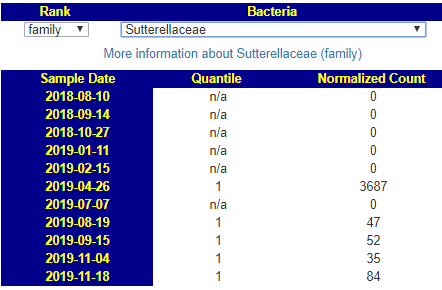
Sutterellaceaefamily22

Please remember, I am not a medical professional. I am a professional statistician, artificial intelligence engineer and software developer (Microsoft, Amazon, Starbucks etc). I extracted “facts” from medical literature and use these facts to drive a fuzzy logic inference engine (commonly known as Artificial Intelligence).

The intent is to explore logical possibilities that may warrant future studies by medical professionals using statistics.
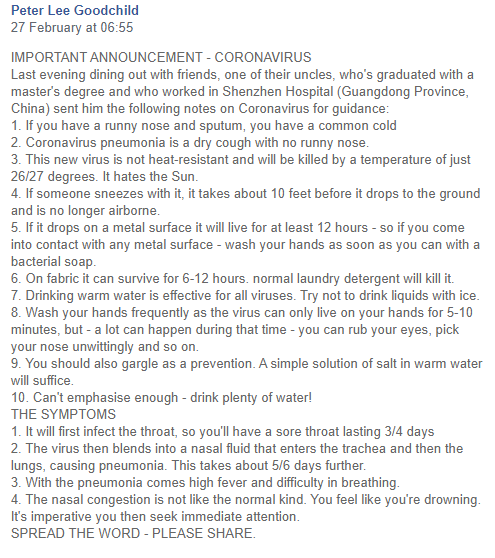
Human Coronavirus – the Facts 😷

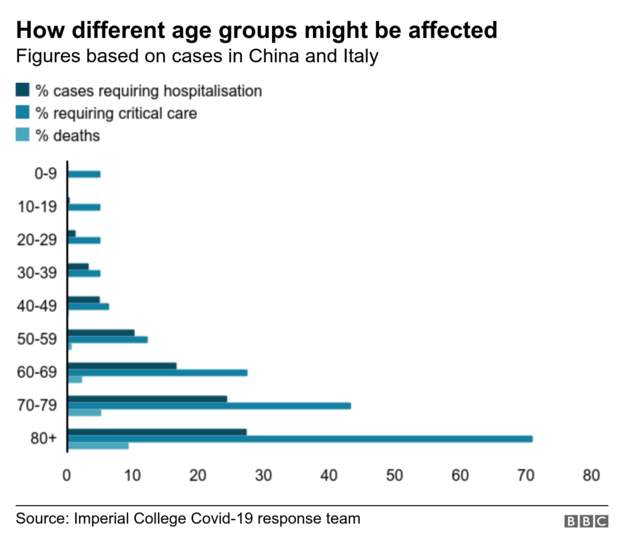
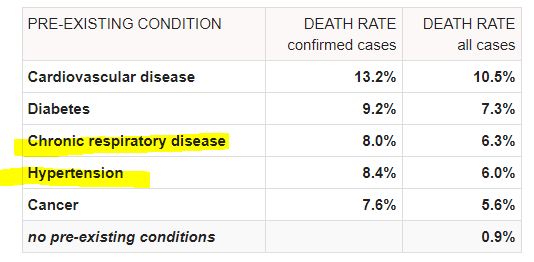
I happen to live in the next county/parish over from where there is 2019-nCoV patient confirmed by CDC. This describes symptoms for under 60’s

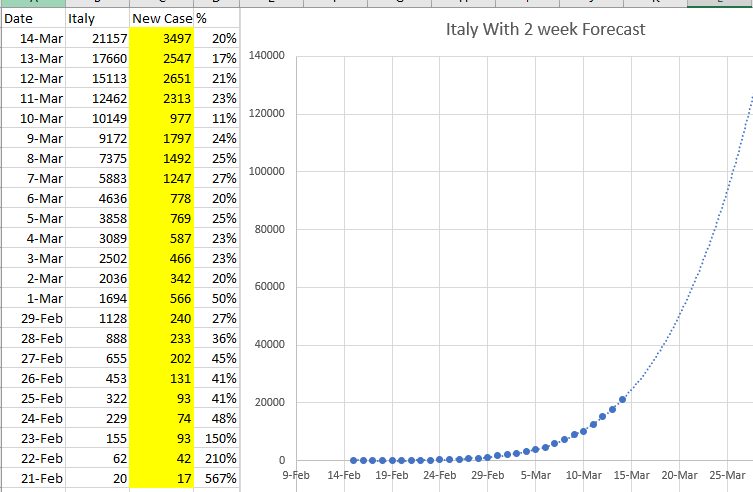
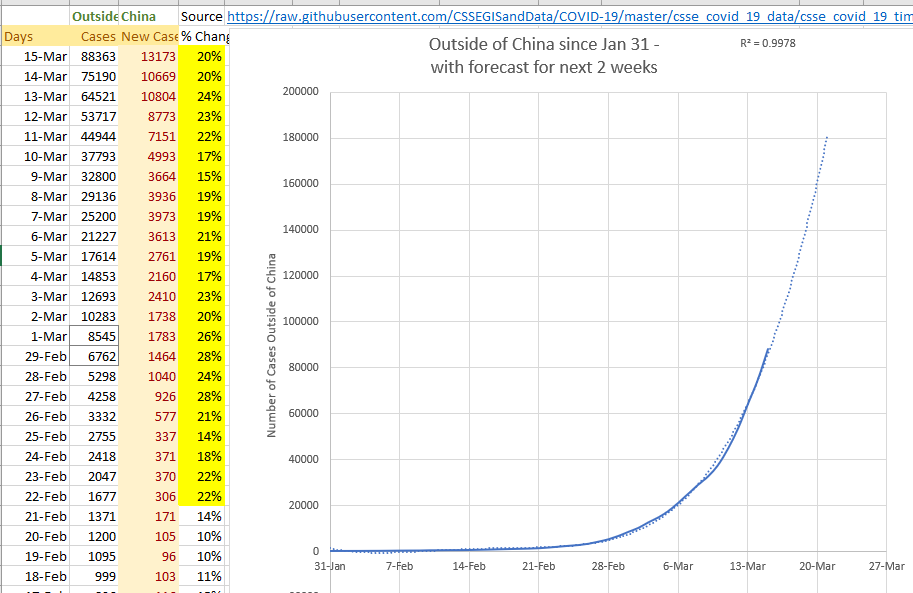
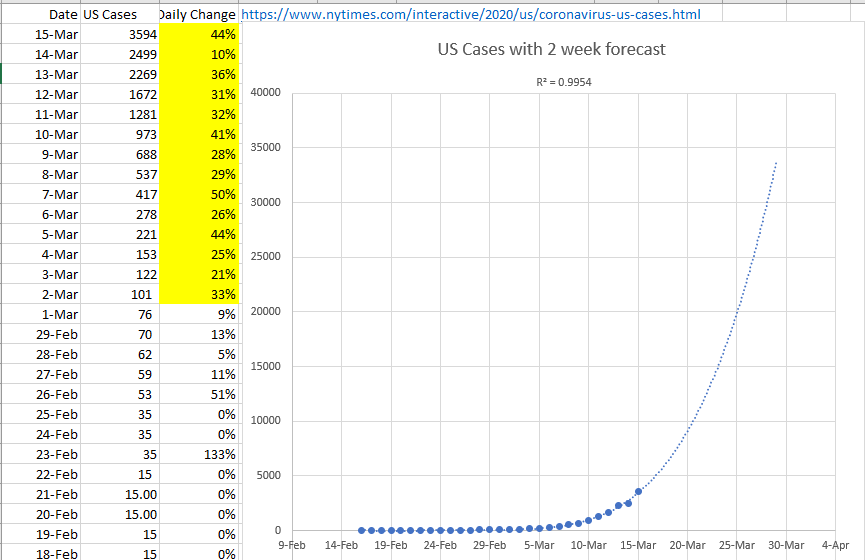
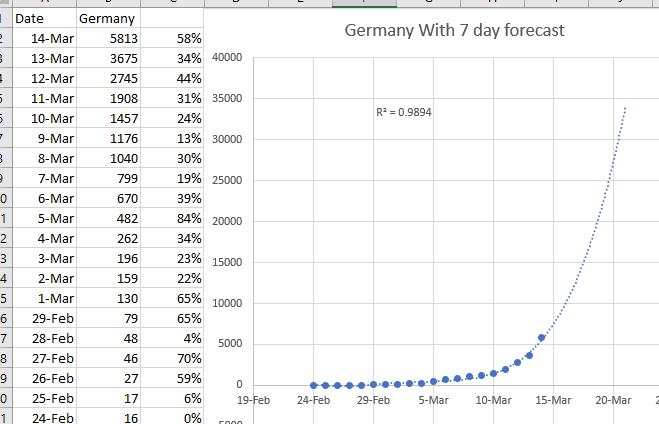
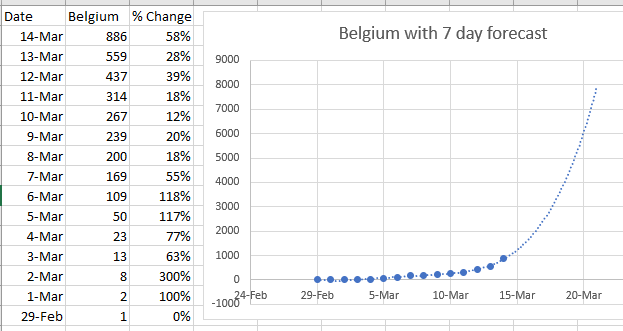
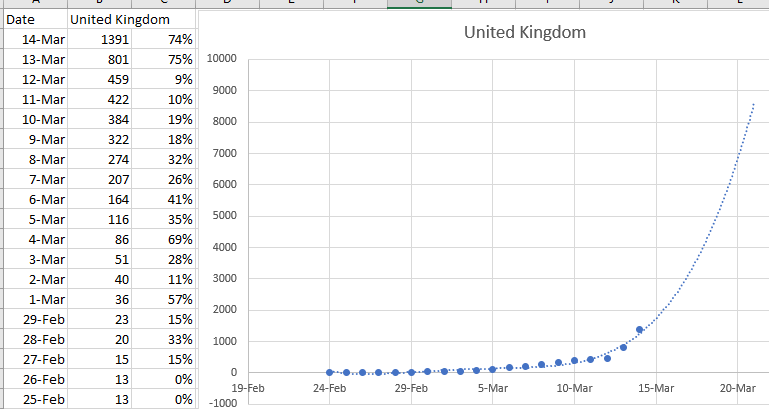
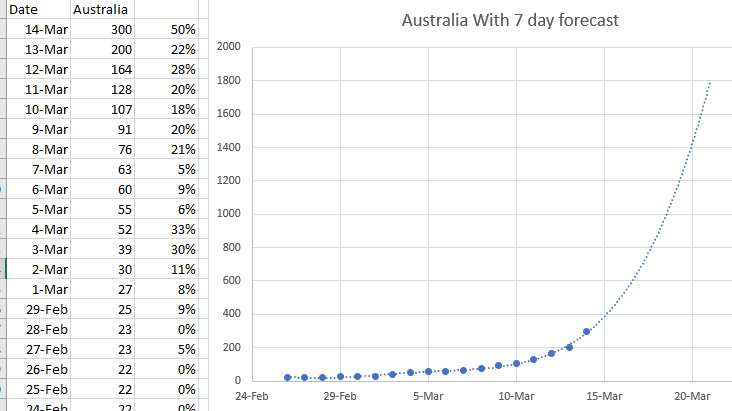
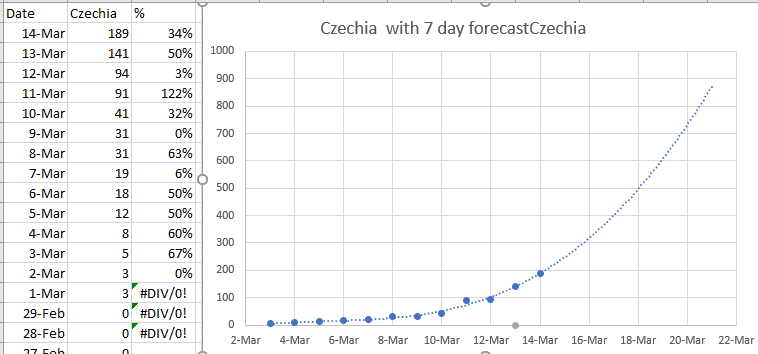
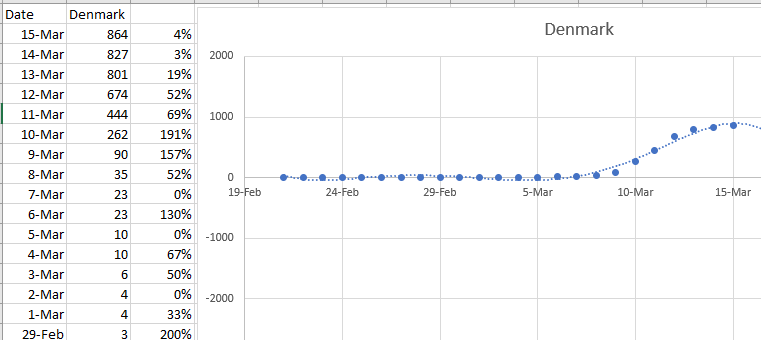
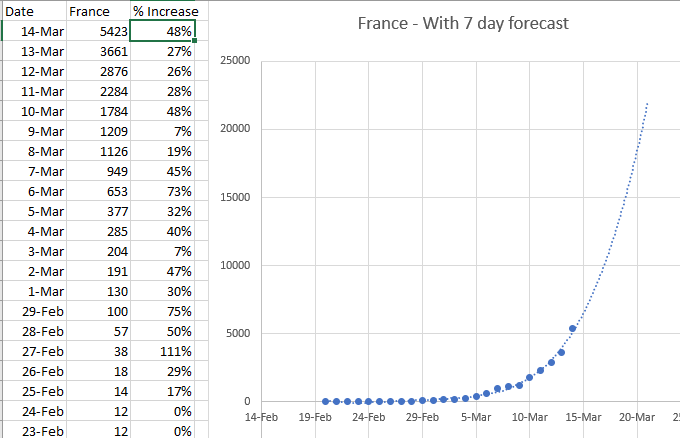
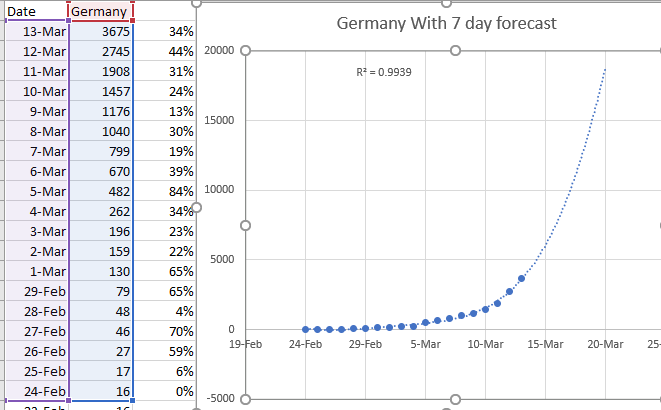
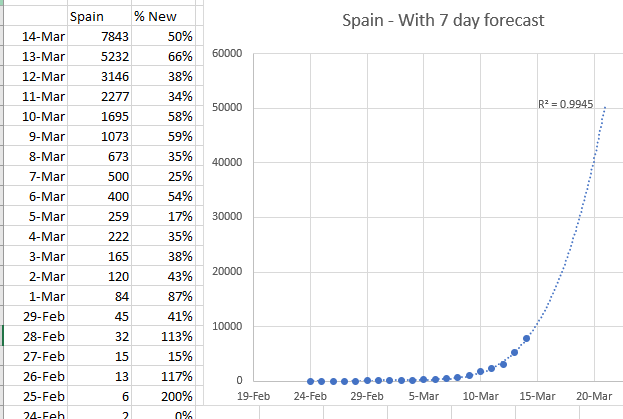
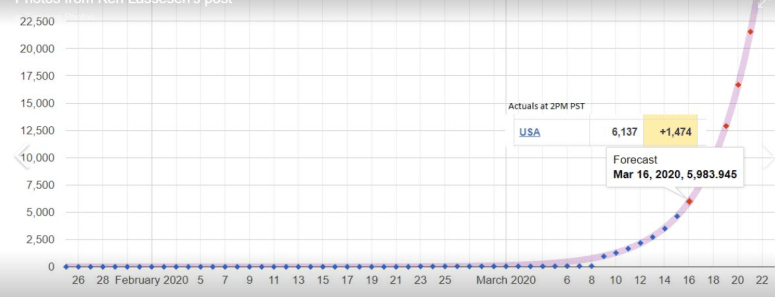
My site with forecasts. The forecasts have been very close to actuals (often too low).
US was at 6,500 later that day
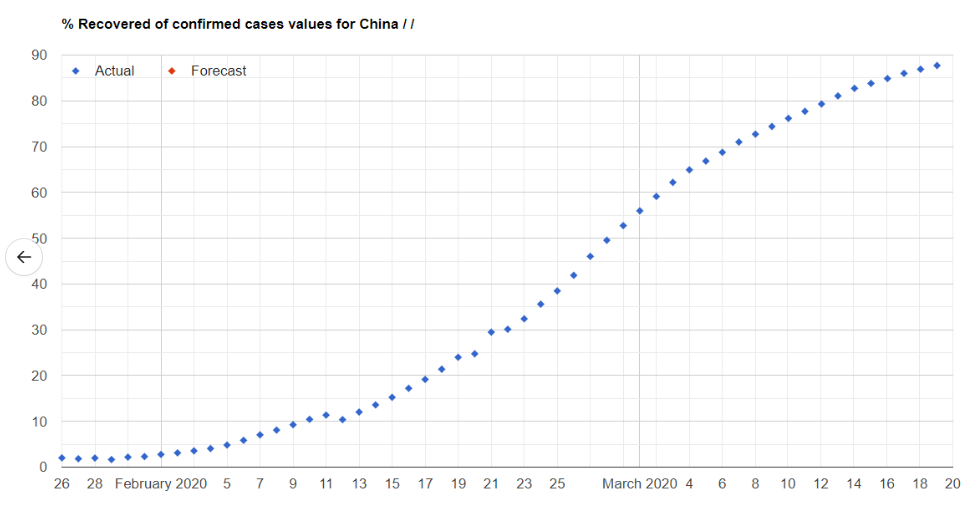
http://microbiomeprescription.com/covid/chart
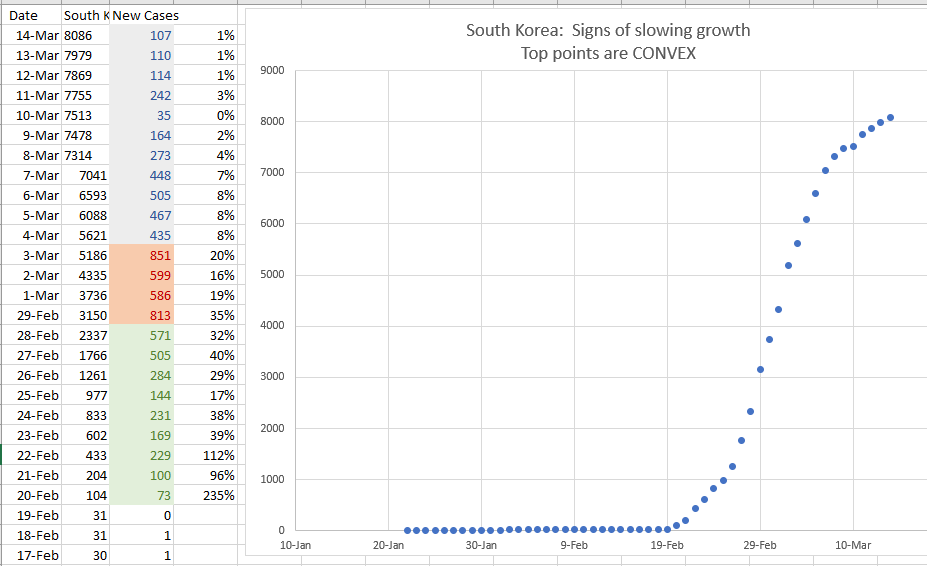
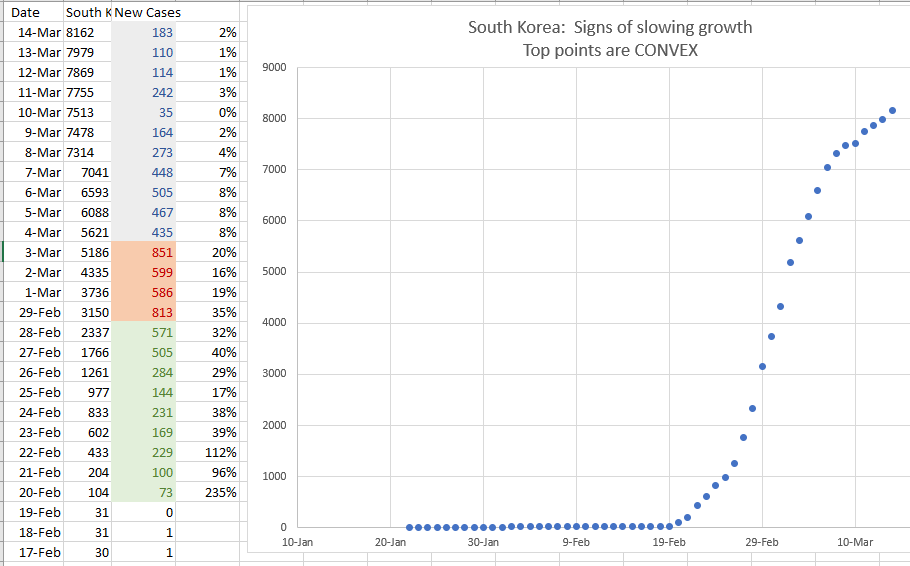
New Chart Type added. Many countries are < 1%, i.e. little control

These are some basic notes…..

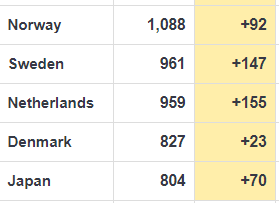
Denmark total shutdown, closed borders appear to be working

I have stopped updating these daily, go to http://microbiomeprescription.com/covid/chart for the latest with forecasts.

The Epidemiological Characteristics of an Outbreak of 2019 Novel Coronavirus Diseases (COVID-19) –

CNN Daily Press Summaries

While there are a lot of stories, often > 100 per day. A read thru is very informative

Some probably correct information

Mutations are seen

Corona virus are well known to mutate easily, see this article on Scientific American.

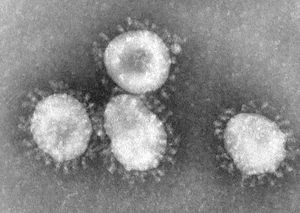
The Mug Shots

Coronaviruses. From CDC/ Dr. Fred Murphy

First 4 virus have a 3% Mortality, except for Cancer patients where it is 24% [2019]

  1. HCoV 229E (alpha coronavirus) –  common cold
  2. HCoV NL63 (alpha coronavirus)
  3. HCoV OC43 (beta coronavirus) –  common cold
  4. HCoV HKU1 (beta coronavirus)
  5. MERS-CoV (the beta coronavirus that causes Middle East Respiratory Syndrome, or MERS)
    1. 851 dead in 2468 laboratory-confirmed cases[2019]: 34.5% Mortality
  6. SARS-CoV (the beta coronavirus that causes severe acute respiratory syndrome, or SARS)
    1. 774 dead in 8099: 9.6% Mortality
  7. 2019 Novel Coronavirus (2019-nCoV)
  8. “China’s mystery new coronavirus has so far infected at least 555 people and killed 17, ” Jan 22 Mortality rate is based on those that recover. This means that Mortality is at least 3% (assuming no one else dies). Actual mortality may be easily 20+% or more.

Seasonality

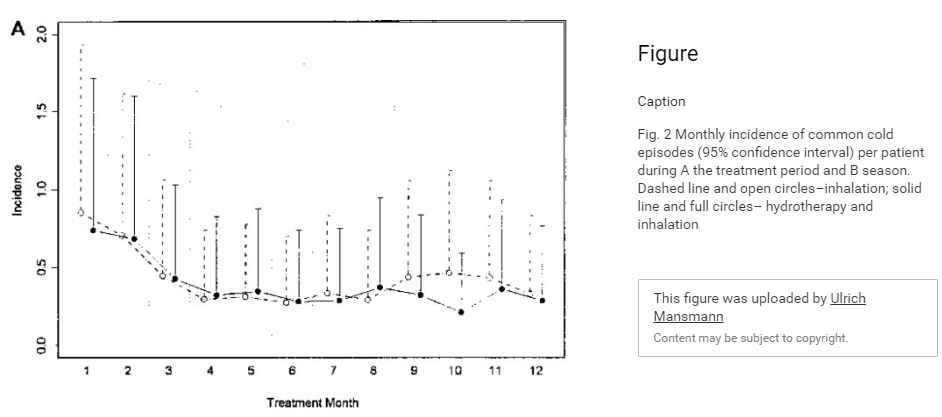
Several high ranking officials in the US and China cite that it will “die down”. Since we are dealing with a cold virus, we have past studies available. Yes – the infection rate will go down, but instead of 100 dead per day, we may be talking just 40 dead per day during the summer.

The effect of hydrotherapy on the incidence of common cold episodes in children: A randomised clinical trial (2003)

Deaths etc

See World Map of Cases maintained by John Hopkins University

https://www.newscientist.com/article/2233085-could-the-new-coronavirus-really-kill-50-million-people-worldwide/

The falling mortality may be due to the increasing use of various anti-viral drugs: ” A 35-year-old Seattle-area man identified as the nation’s first person with coronavirus developed pneumonia while in the hospital but has improved after getting antiviral medication, according to a new study. ” [Src] Thailand: anti-HIV and anti-influenza drugs [src]

And the Wuhan Municipal Health Commission also said on Monday that at least 15 health workers in Wuhan have been infected with the virus, with one of those workers put in a critical condition. Jan 20

No photo description available.
https://www.newscientist.com/article/2231453-new-coronavirus-may-be-much-more-contagious-than-initially-thought/

Scientists have revealed each infected person is passing the virus onto between 1.4 and 2.5 people. It is known as the virus’s basic reproduction number – anything higher than 1.0 means it’s self-sustaining. .. The fact only 25% of reported cases are severe is a mixed blessing. Yes, that is less dangerous than Sars, but if those hard-to-detect mild or maybe symptomless cases are contagious too, then it is much harder to contain.

BBC

Incubation Period

This is the time from meeting someone with the virus and getting it until you show symptoms.

  • “the incubation period is approximately 2–14 days; median incubation period is slightly more than 5 days.  ” CDC on MERS
  • “The incubation period for SARS is typically 2 to 7 days, although in some cases it may be as long as 10 days. In a very small proportion of cases, incubation periods of up to 14 days have been reported. ” CDC on SARS

Example: Patient X arrives by airline on January 1st, infecting 10 fellow passengers. January 6th, five are showing symptoms. January 15th, we have 11 patients with symptoms. Assuming each infects 5 more, we have 65 patients by the end of the month. 330 by Valentine’s day, 1600 by the end of February.

“[they will not seek treatment] if they believe they merely have a common cold. In fact, previous iterations of the coronavirus are very similar to a common cold. ” New Scientist

Shedding Duration

This is the time between symptoms showing until the person is no longer likely to infect others.

  • Positive rates peaked at 6-11 days after onset of illness for nasopharyngeal aspirates … and 9-14 days for faeces  [2004]
  • The median duration of shedding was 14 days (4–60 days), and 17 of 42 patients had prolonged shedding (≥21 days). Among 31 available nasal samples, 35% were OC43, 32% were NL63, 19% were HKU1, and 13% were 229E. The median shedding duration of HCoV in nasal samples did not differ between strains. [2017] This is for the common cold varieties.

“The common cold is infectious from a few days before your symptoms appear until all of the symptoms are gone. Most people will be infectious for around 2 weeks. Symptoms are usually worse during the first 2 to 3 days, and this is when you’re most likely to spread the virus.”

UK’s NHS (equivalent to US CDC)

“Third US coronavirus case confirmed in California; infection can spread before symptoms showUSA Today Jan 26 Excuse me, the moment it was identified as a coronavirus that should have been assumed!

Mutates Easily

” Bovine coronavirus and canine respiratory coronavirus diverged from a common ancestor in 1951.[34] Bovine coronavirus and human coronavirus OC43 diverged in 1899. Bovine coronavirus diverged from the equine coronavirus species at the end of the 18th century. ” [wikipedia]

China is warning that the mysterious Wuhan coronavirus is mutating, meaning it could spread further and become harder to control. ” [Jan 22]

Protection

Dr. Mark Loeb, an infectious disease specialist at McMaster University in Hamilton, Ontario, said a study during an outbreak of the SARS coronavirus found that any type of protection — whether a mask or a respirator — reduced the risk of infections in health care workers by about 85 percent. [src]

  • We estimate that if the entire cohort had used masks consistently, SARS risk would have been reduced from 6% to 1.4% per shift. https://www.ncbi.nlm.nih.gov/pmc/articles/PMC3322898/
  • ” At Hospital A, the risk for developing SARS was 12.6 times higher in individuals not using a mask than in those using a mask.  ” https://www.ncbi.nlm.nih.gov/pubmed/18806349
  • A case-control study with 36 cases and 50 controls was conducted of factors associated with the transmission of SARS within the hospital. In univariate analysis, contact with respiratory secretions elevated the odds ratio to 6.9 (95 % CI 1.4-34.6, P= 0.02). Protection was conferred by hand washing (OR 0.06, 95% CI 0.007-0.5, P=0.03) and wearing of N95 masks (OR 0.1, 95% CI 0.03-0.4, P=0.001).  https://www.ncbi.nlm.nih.gov/pmc/articles/PMC2870165/

From Do N95 respirators provide 95% protection level against airborne viruses, and how adequate are surgical masks? 2006 😷

  • “2 surgical masks, which originated from the same manufacturer, showed tremendously different penetration levels of the MS2 virions: 20.5% and 84.5%” i.e. up to 85% of virus particles will make it thru!
  • ” The N95 filtering face piece respirators may not provide the expected protection level against small virions. ( the particle size range of 10 to 80 nm)”
    • Note: “The virion shape is spherical, with an average size of 125 nm [src]. ” so N95 should provide advertised protection.

Approach #1 wear masks always outside of home, #2 home prepared food (wrapped) or prepackaged food heated wash hands before meals. Buy packaged food or food that can be heavily washed. No restaurant or take-away food. When you get home, take clothes off outside (so underwear and mask), then straight to shower (especially work on hair) and new clothes is route #1… external clothes are handled with gloves and go directly into wash each time.

Misc Items

The following may or may not be relevant

At what point do you lock down a City

” Huanggang on Thursday became the second Chinese city to go into lockdown over the coronavirus outbreak that has killed 17 people and infected more than 630. Huanggang had reported 12 cases of the coronavirus as of the end of Monday. ” [Jan 23] The Chinese is applying lessons learnt from the SARS outbreak.

Rational way to Constain it

It is simple, and already happening in China. Make it a legal requirement to wear a protective mask in public.

Consider this scenario: a 22 y.o. Barista at a Starbucks has it and symptoms do not show up for 7 days. During those 7 days, she is shedding virus on to customer’s coffee. She develop very mild symptoms (typical for that age) and continue to work. She may continue to shed virus onto customers for 2 more weeks. If this is a busy Starbucks, we are talking thousands of potential infections.

Bottom Time Lines

  • From contact to Infection
    • 2-14 days, average 5 days
  • From contact until no longer infectious
    • 6 – 74 days, average 19 days
  • Time from last reported case recovered until “all clear”
    • At least 3 weeks, up to 10 weeks.

If the 35% increase of cases per day keeps up (i.e. governments not taking radical action SOON)… on March 17th, 2020. Everyone in the world will have gotten the infection – just simple mathematics.. 2000 * (1.35 ^50) = 8 billion people.

The latest case to be confirmed is in the German state of Bavaria, only the fourth so far in Europe.

It involves a man who contracted the virus at a training event from a visiting Chinese colleague who reportedly did not show symptoms until she returned to China days later.”

https://www.bbc.com/news/world-asia-china-51279726

THIS is statistically why I advocate that a rational approach is to shut down travel (planes especially, trains, etc) world wide. If regions are free for 3 weeks. Travel between those regions can resume. If you have just 1 case… you are shut down until that case resolves (dead or recovered) plus three weeks…

Supply List

Someone asked about a supply list. My suggestions would be:

  • Prophylactic
  • Masks
    • N95 – sufficient for 3 months, or
    • Powered Air-Purifying Respirator (PAPR) with spare filters
  • Gloves
    • 2-4 boxes
  • Emergency food supply (long life)
    • In case of distribution disruption

The ALA Herb: Shiso

A reader continues going thru traditional folk medicine looking for items off the beaten path that may be of interest and sending candidates to me.

The latest request for me to research is a gem. Mast cell inhibitor, anti-allergy, reduces gut inflammation, likely help with SIBO, etc

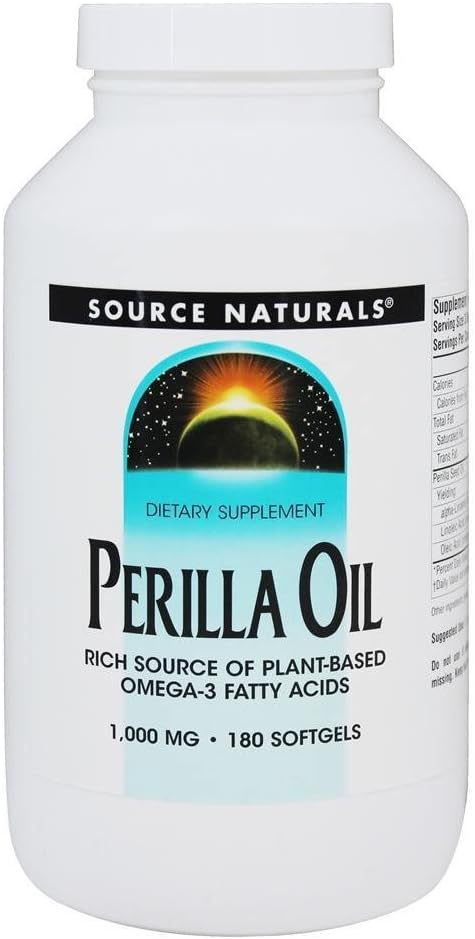
EidolonGreen [China Medicinal Herb] Perilla Frutescens (Perillae Folium/Zisuye/紫苏叶/자소엽) Dried Loose Leaves 3 Oz (88 g)

Perilla frutescens var. crispa, or shiso containing 58-65% alpha-linolenic acid [2006] [2008], It is sometimes referred to as purple mint

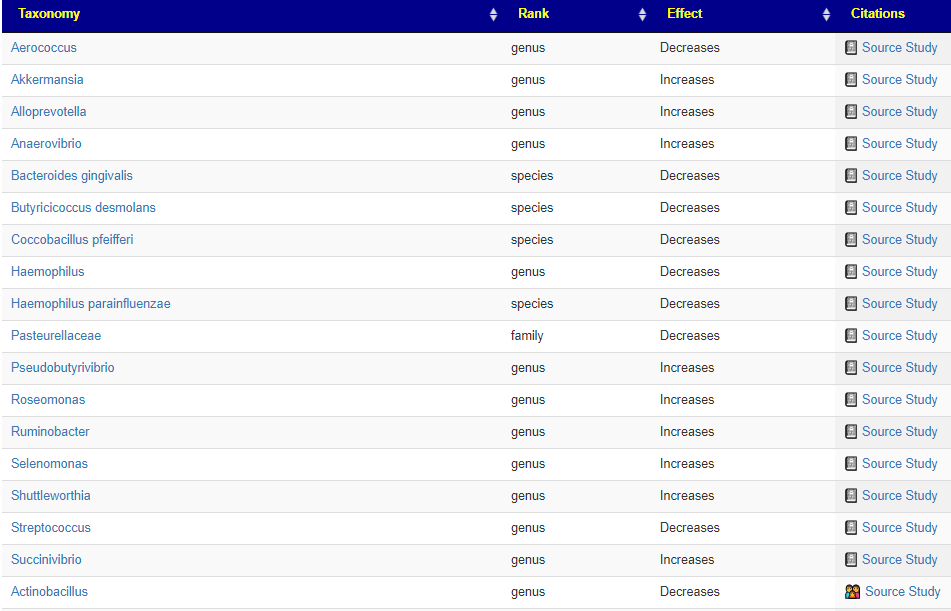
Microbiome Impact

Bottom Line

For additional information, see https://content.selfdecode.com/perilla-oil/

Needless to say, it will be added to the database at http://microbiomeprescription.com/ and increased the number of direct citations.

http://microbiomeprescription.com/library/modifier?mid2=331

Technical Study on Autism Microbiome

Over this weekend, we finally reached the threshold for citizen science to look at Autism (20+ symptom annotated uploads). This coming weekend I am attending a conference on Autism in Vancouver, British Columbia, Canada where Jason Hawrelak from Tasmania will be speaking (schedule below).

In preparation for this I decided to do a technical study comparing published studies on Autism and the results of citizen science. Is there agreement? What are the factors that come up with different results?

No photo description available.

Video Version

Source Data

Data comes from two sources (both are subject to change with time):

We had agreement on several items, namely:

We had disagreement on only one item:

  • Veillonella was high on citizen science and low on published studies

Age is a significant factor for both Bifidobacterium and Lactobacillus. Studies on autism under 6, 6-12 and older will have significantly different amounts. This may account for disagreement between published studies.

Critique of Published Studies

Reproducibility of studies is important. There are 17 Pub Med studies on the autism microbiome. If you look at Publish Studies, the same bacteria is only reported 7 times at most. Many bacteria are only reported once. Whether a bacteria is evaluated depends on the equipment being used, for example – Bilophila is reported as significant in 2 studies but Thryve 16s results do not report it.

The usual criteria is to detect statistical significance of averages between the target group and the control group. This requires some major, likely false, assumptions:

  • Representative samples in each group
  • Normal distribution of the bacteria in each group

A single outlier in a group can cause statistical significance to appear while a more sensitive (but require more effort) test like Pearson’s chi-squared test would find nothing to publish about. It is important to note that Pearson’s usually results in sample sizes of at least 20; many published studies do not have that number.

If I exclude non-matches with at least 2 studies with consistent results (a single study in 17 studies is likely unreliable), then we have the following not detected yet with Citizen Science (which have barely enough studies to do any analysis).

 Collinsella  
 Corynebacterium  
 Desulfovibrio  
  Dialister  
 Parabacteroides  
Prevotella  
 Sarcina  

On the flip side, Citizen Science reports on some bacteria not reported in published studies over 10 with high significance.

Autism Spectrum Disorder and the Gut Microbiota in Children: A Systematic Review [2020]

DNA SNPs and Microbiome Interaction

The microbiome and the person’s DNA interacts. Specific SNP issues are expected to manifest themselves in a person’s microbiome. This adds another level of complexity.

An external file that holds a picture, illustration, etc.
Object name is nihms-622118-f0005.jpg
Synaptic, transcriptional, and chromatin genes disrupted in autism (2014) https://www.ncbi.nlm.nih.gov/pmc/articles/PMC4402723/

Bottom Line

Large representative samples and in depth skilled statistical analysis is needed to reliably identify the bacteria associated with a symptom, medical condition or characteristic.

From Publish Studies and Citizen Science, we have apparent agreement on 5 taxa, disagreement on 1, and silence in terms of repeatability on some 20 additional ones. I hope/ believe that as the number of samples in Citizen Science data set grows we will find more agreement with some of the published studies.

Below is a spreadsheet for interested parties.

References

  1. The Gut Microbiota and Autism Spectrum Disorders
    Frontiers in Cellular Neuroscience (Front Cell Neurosci ) Vol: 11 Issue Pages: 120
    Pub: 2017 Apr 28 Epub: 2017 Apr 28 Authors Li Q , Han Y , Dy AB , Hagerman RJ ,
  2. New evidences on the altered gut microbiota in autism spectrum disorders.
    Microbiome (Microbiome ) Vol: 5 Issue 1 Pages: 24
    Pub: 2017 Feb 22 Epub: 2017 Feb 22 Authors Strati F , Cavalieri D , Albanese D , De Felice C , Donati C , Hayek J , Jousson O , Leoncini S , Renzi D , Calabrò A , De Filippo C ,
  3. Distinct Microbiome-Neuroimmune Signatures Correlate With Functional Abdominal Pain in Children With Autism Spectrum Disorder.
    Cellular and molecular gastroenterology and hepatology (Cell Mol Gastroenterol Hepatol ) Vol: 3 Issue 2 Pages: 218-230
    Pub: 2017 Mar Epub: 2016 Dec 11 Authors Luna RA , Oezguen N , Balderas M , Venkatachalam A , Runge JK , Versalovic J , Veenstra-VanderWeele J , Anderson GM , Savidge T , Williams KC ,
  4. The valproic acid rat model of autism presents with gut bacterial dysbiosis similar to that in human autism.
    Molecular autism (Mol Autism ) Vol: 9 Issue Pages: 61
    Pub: 2018 Epub: 2018 Dec 10 Authors Liu F , Horton-Sparks K , Hull V , Li RW , Martínez-Cerdeño V ,
  5. Analysis of gut microbiota profiles and microbe-disease associations in children with autism spectrum disorders in China.
    Scientific reports (Sci Rep ) Vol: 8 Issue 1 Pages: 13981
    Pub: 2018 Sep 18 Epub: 2018 Sep 18 Authors Zhang M , Ma W , Zhang J , He Y , Wang J ,
  6. Fecal microbiota and metabolome of children with autism and pervasive developmental disorder not otherwise specified.
    PloS one (PLoS One ) Vol: 8 Issue 10 Pages: e76993
    Pub: 2013 Epub: 2013 Oct 9 Authors De Angelis M , Piccolo M , Vannini L , Siragusa S , De Giacomo A , Serrazzanetti DI , Cristofori F , Guerzoni ME , Gobbetti M , Francavilla R ,
  7. Identifying psychiatric disorder-associated gut microbiota using microbiota-related gene set enrichment analysis.
    Briefings in bioinformatics (Brief Bioinform ) Vol: Issue Pages:
    Pub: 2019 Apr 5 Epub: 2019 Apr 5 Authors Cheng S , Han B , Ding M , Wen Y , Ma M , Zhang L , Qi X , Cheng B , Li P , Kafle OP , Liang X , Liu L , Du Y , Zhao Y , Zhang F ,
  8. Altered composition and function of intestinal microbiota in autism spectrum disorders: a systematic review.
    Translational psychiatry (Transl Psychiatry ) Vol: 9 Issue 1 Pages: 43
    Pub: 2019 Jan 29 Epub: 2019 Jan 29 Authors Liu F , Li J , Wu F , Zheng H , Peng Q , Zhou H ,
  9. Microbiota-related Changes in Bile Acid &amp;amp; Tryptophan Metabolism are Associated with Gastrointestinal Dysfunction in a Mouse Model of Autism.
    EBioMedicine (EBioMedicine ) Vol: 24 Issue Pages: 166-178
    Pub: 2017 Oct Epub: 2017 Sep 21 Authors Golubeva AV , Joyce SA , Moloney G , Burokas A , Sherwin E , Arboleya S , Flynn I , Khochanskiy D , Moya-Pérez A , Peterson V , Rea K , Murphy K , Makarova O , Buravkov S , Hyland NP , Stanton C , Clarke G , Gahan CGM , Dinan TG , Cryan JF ,
  10. Intestinal Dysbiosis and Yeast Isolation in Stool of Subjects with Autism Spectrum Disorders.
    Mycopathologia (Mycopathologia ) Vol: 182 Issue 3-4 Pages: 349-363
    Pub: 2017 Apr Epub: 2016 Sep 21 Authors Iovene MR , Bombace F , Maresca R , Sapone A , Iardino P , Picardi A , Marotta R , Schiraldi C , Siniscalco D , Serra N , de Magistris L , Bravaccio C ,
  11. Ketogenic diet modifies the gut microbiota in a murine model of autism spectrum disorder.
    Molecular autism (Mol Autism ) Vol: 7 Issue 1 Pages: 37
    Pub: 2016 Epub: 2016 Sep 1 Authors Newell C , Bomhof MR , Reimer RA , Hittel DS , Rho JM , Shearer J ,
  12. Can we reduce autism-related gastrointestinal and behavior problems by gut microbiota based dietary modulation? A review.
    Nutritional neuroscience (Nutr Neurosci ) Vol: Issue Pages: 1-12
    Pub: 2019 Jun 19 Epub: 2019 Jun 19 Authors Nogay NH , Nahikian-Nelms M ,
  13. The Role of Gut Microbiota in Gastrointestinal Symptoms of Children with ASD.
    Medicina (Kaunas, Lithuania) (Medicina (Kaunas) ) Vol: 55 Issue 8 Pages:
    Pub: 2019 Jul 26 Epub: 2019 Jul 26 Authors Martínez-González AE , Andreo-Martínez P ,
  14. Association Between Gut Microbiota and Autism Spectrum Disorder: A Systematic Review and Meta-Analysis.
    Frontiers in psychiatry (Front Psychiatry ) Vol: 10 Issue Pages: 473
    Pub: 2019 Epub: 2019 Jul 17 Authors Xu M , Xu X , Li J , Li F ,
  15. Analysis of gut microbiome, nutrition and immune status in autism spectrum disorder: a case-control study in Ecuador.
    Gut microbes (Gut Microbes ) Vol: Issue Pages: 1-12
    Pub: 2019 Sep 18 Epub: 2019 Sep 18 Authors Zurita MF , Cárdenas PA , Sandoval ME , Peña MC , Fornasini M , Flores N , Monaco MH , Berding K , Donovan SM , Kuntz T , Gilbert JA , Baldeón ME ,
  16. Increased abundance of Sutterella spp. and Ruminococcus torques in feces of children with autism spectrum disorder.
    Molecular autism (Mol Autism ) Vol: 4 Issue 1 Pages: 42
    Pub: 2013 Nov 4 Epub: 2013 Nov 4 Authors Wang L , Christophersen CT , Sorich MJ , Gerber JP , Angley MT , Conlon MA ,
  17. Characterization of Intestinal Microbiota and Probiotics Treatment in Children With Autism Spectrum Disorders in China.
    Frontiers in neurology (Front Neurol ) Vol: 10 Issue Pages: 1084
    Pub: 2019 Epub: 2019 Nov 5 Authors Niu M , Li Q , Zhang J , Wen F , Dang W , Duan G , Li H , Ruan W , Yang P , Guan C , Tian H , Gao X , Zhang S , Yuan F , Han Y ,
  18. Autism spectrum disorder is associated with gut microbiota disorder in children.
    BMC pediatrics (BMC Pediatr ) Vol: 19 Issue 1 Pages: 516
    Pub: 2019 Dec 27 Epub: 2019 Dec 27 Authors Sun H , You Z , Jia L , Wang F ,
  19. An approach to gut microbiota profile in children with autism spectrum disorder.
    Environmental microbiology reports (Environ Microbiol Rep ) Vol: Issue Pages:
    Pub: 2019 Nov 11 Epub: 2019 Nov 11 Authors Andreo-Martínez P , García-Martínez N , Sánchez-Samper EP , Martínez-González AE ,
  20. [Correlation between gut microbiota and behavior symptoms in children with autism spectrum disorder].
    Zhongguo dang dai er ke za zhi = Chinese journal of contemporary pediatrics (Zhongguo Dang Dai Er Ke Za Zhi ) Vol: 21 Issue 7 Pages: 663-669
    Pub: 2019 Jul Epub: Authors Zhao RH , Zheng PY , Liu SM , Tang YC , Li EY , Sun ZY , Jiang MM ,

For people not aware of the Microbiome Prescription site, this gives an overview.

Hidroaltesona

Hello, a few months ago I saw a comment at the ME-Research Forum in which a sick commented that a doctor in Spain is prescribing hidroaltesona to the sick as palliative treatment for the ME.
I have tried to investigate about it since I have been taking 10 mg of hidroaltesona daily for a year having improved my intestinal problems (swelling and diarrhea, about 6 times a day in the last 15 years) passing to a Normal frequency.
My doctor put me the treatment for hipocortisolismo but the intestinal improvement was immediate.
Do you know studies or testimonies of people who have maintained this long-term treatment? 

From a reader

Hidroaltesona [C21H29Na2O8P] is related to Cortisol [
C21H31O8P
] (chemically different) containing two sodium atoms. Searching PubMed did not find any studies — I have never seen this happen before! I checked Hydrocortisone [C21H30O5] and found studies but the absence of sodium and phosphate atoms left me with a feeling that it was only vaguely similar.

Image result for hidroaltesona
Available only in Spain

From Manufacturer Site

All indications of oral corticotherapy, except in states that involve life-threatening and require intravenous route. The most important ones are:

  • Replacement therapy in primary or secondary adrenocortical insufficiency.
  • Congenital adrenal hyperplasia.

Other indications are:

  • Rheumatic and collagen diseases: treatment of exacerbations and / or maintenance therapy of rheumatoid arthritis, juvenile arthritis, ankylosing spondylitis and psoriatic arthritis when conservative treatments have been shown ineffective; Polymyalgia rheumatica; acute rheumatic fever; systemic lupus erythematosus; severe dermatomyositis; noia periarteritis; cranial arteritis and Wegener’s granulomatosis; scleroderma and dermatomyositis.
  • Dermatological diseases: allergic eczema, bullous pemphigoid pemphigus, generalized exfoliative dermatitis, severe erythema multiforme, erythema nodosum and severe psoriasis.
  • Serious allergic diseases: allergic rhinitis, contact dermatitis and bronchial asthma refractory to conventional therapy.
  • Lung diseases: sarcoidosis with pulmonary disease, extrinsic allergic alveolitis (organic dust pneumoconiosis), desquamative interstitial pneumonia (idiopathic pulmonary fibrosis).
  • Eye pathology: keratitis, choroiditis, chorioretinitis, iritis and iridocyclitis.
  • Hematological diseases: idiopathic thrombocytopenia, hemolytic anemias and palliative treatment of leukemia and lymphomas.
  • Gastrointestinal and hepatic pathology: ulcerative colitis, Crohn’s disease and hepatitis.

More Information

I found some experience from MDs with it at https://www.doctoralia.es/medicamentos/hidroaltesona/preguntas

That may be the best source to get solid information.

  • “long-term corticosteroid treatments, and depending on the dose, can induce changes and side effects in practically the entire economy of the organism, affecting almost any “
  • What is the relationship between hydroaltesona and prednisone? Both active ingredients are corticosteroids, with different potency and are used in many processes and diseases. “
  • ” In principle, in adrenal insufficiency, the doses range between 25 and 40 mg per day. ” – so this patient is on a low dosage.

PubMed on Hydrocortisone and ME/CFS

  • ” Cortisol levels, before or after dex, did not differ between CFS and Healthy Controls (HCs). Cortisol levels were more variable in CFS than HCs. ” [2018]
  • ” we found an inverse relationship between cortisol reactivity and symptom severity. There was no relationship between cortisol reactivity and illness duration. ” [2016]
  • Low-dose Hydrocortisone in Chronic Fatigue Syndrome: A Randomised Crossover Trial [1999] ” Interpretation: In some patients with chronic fatigue syndrome, low-dose hydrocortisone reduces fatigue levels in the short term. Treatment for a longer time and follow-up studies are needed to find out whether this effect could be clinically useful. “
  • ” The anti-inflammatory effect of cortisone at an adequate dose has, to my knowledge, not been investigated so far. I am left with the impression that the potential effect of cortisone on myalgic encephalopathy / chronic fatigue syndrome has been rejected on the basis of three studies that have investigated only low-dose hydrocortisone therapy of an hypocortisolism presumed and which are believed to have too little potency to conclude. with something. ” [2016]

Bottom Line

This drug is prescribed for ulcerative colitis, Crohn’s disease and is known to impact the entire body. We know that it inhibits many bacteria (list here).

Checking predictions on this page, it is predictive to help ME/CFS without IBS, but worsen ME/CFS with IBS and basic CFS. On the flip side, it is predictive to help IBS. The predictions are based on a naive estimate of it’s impact on the many reported shifts with these conditions.