Histamines and Anticoagulants – a review

A good friend is testing the excessive histamine model as a significant vector for CFS. This model does fit with the dysfunctional microbiome model because gut bacteria changes histidine into histamine. The friend is showing significant signs of improvement (with a lot of symptom changes).

I was asked to double check my usual list of anti-coagulants against histamine influence. These are notes that I extracted my reference book and PubMed  review. There are three supplements that appear to reduce histamine levels, improve cognitive function and reduce coagulation (thick blood):

  • Alpha Lipoic Acid
  • Turmeric
  • Vitamin D3

Choline

In CFS patients this is important because it impacts cognitive function:

  • Relatively high in occipital cortex of the brain
  • Abnormally high in general
  • Improves with viral clearance, resulting in significant improvements in verbal learning, memory, and visual-spatial memory
  • Normalizes with Turmeric (curcumin – reduces histamine levels [2014] [2013])
  • Normalizes with Alpha Lipoic Acid (reduces histamine levels [2010] [2010])

Alpha Lipoic Acid

  • Decreases CD62P platelet expression
  • Decreases CRP levels by 19%
  • Decreases fibrinogen, factor VII, vWF, and triglycerides
  • Decreases plasma levels of free fatty acids, triglyceride, total cholesterol, low density lipoprotein-cholesterol, small dense LDL-cholesterol, oxidized LDL-cholesterol, very low density lipoprotein-cholesterol
  • Decreases symptoms of neuropathy and neuropathic deficit
  • Decreases TNF, IL-6
  • Improves blood flow and nerve function

Turmeric

The active ingredient of this kitchen spice is curcumin. Turmeric may be more effective than curcumin, the extract. Curcumin has anti-inflammatory, anti-oxidant, pro-apoptotic, chemo preventive, chemotherapeutic, anti-proliferative, wound healing, anti-parasitic, anti-malarial and anti-bacterial activity. Although inexpensive, apparently well tolerated and potentially active, curcumin has not been approved for the treatment of any human disease.

  • Benefits IBS
  • Bioactivity is increased by adding 1% black pepper
  • Increases fibrinolytic activity
  • Inhibits platelet aggregation, increases coagulation time
  • Inhibits EBV, antiviral
  • Inhibits H. pylori
  • Inhibits inducible nitric oxide synthase (iNOS)
  • Neuroprotective
  • Reduces high level of fibrinogen
  • Reduces IL6, IL8, TNF

Vitamin D3

  • 22% – 65% of CFS patients are deficient (less than 20 ng/mL)
  • 61% – 80% of Fibromyalgia patients are deficient (less than 20 ng/mL)
  • Associated with headaches, hypersomnia
  • Associated with orthostatic intolerance
  • Hypersomnia eliminated with supplements
  • Improvement became more significant with FM when blood level of 25(OH) D exceeded 50 ng/ mL (125 nmol/L)
  • Moderately to severely sub-optimal in CFS patients
  • Remission seen with 2000–10000 IU/day (with magnesium and phosphate)
  • Treatment with high-dose vitamin D resulted in clinical improvement in all FM patients
  • With myalgia in statin-treated patients, 92% were resolved when levels reached 50 ng/mL (125 nmol/L)
  • Patients with 25-OHD less than 20 ng/ml (50 nmol/L) are more likely to have
    • impaired short memory
    • confusion
    • mood disturbance
    • sleep disturbance
    • restless leg syndrome
    • palpitation
  • Inhibits  thrombus formation [2014]
  • Attenuates platelet activation  [2011]
  • Low levels seen with antiphospholipid syndrome (APS) with thrombotic disease[2012]  (a variation of APS is Dave Berg’s Hemex model of CFS)
  • Reduces histamine levels [1996] [1995] [2014]
  • A dosage to discuss with you health profession may be 15,000 to 20,000 IU/day for a few months.

To Be Avoided Anticoagulants

Aspirin

  • “aspirin enhanced histamine release” [2013]

Bromelain

  • AVOID:  allergic reaction is known to happen with this [nih] – which implies histamine release.

Other  OTC anti-coagulants

Serrapeptase

  • Anti-inflammatory
  • Effective for inflammatory venous disease
  • Improves antibiotic concentration up to 850%
  • Inhibits the formation of biofilms
  • No information on Histamine or Mast Cell impact

Nattokinase

  • Anti-hypertensive
  • Cleaves cross-linked fibrin
  • Decreases red blood cell aggregation and shear-viscosity of blood cells
  • Inactivates plasminogen activator inhibitor type 1 and then potentiates fibrinolytic activity
  • Increases activated factor VII levels
  • No information on Histamine or Mast Cell impact

Lumbrokinase

  • Anti-thrombotic
  • Digests fibrinogen and inhibits platelet adhesion
  • Decreases fibrinogen significantly. Inhibition of intrinsic coagulation pathway and the activation of fibrinolysis via an increase of t-PA activity
  • No information on Histamine or Mast Cell impact

Grape Seed Extract

Grape seed extract is rich in proanthocyanidins. Proanthocyanidins are available from other supplements (cranberry juice, cider). There are contradictory reports on whether it increases or decreases IL6, IL8, TNF. It may or may not offer protection for glutamate excitotoxicity (depends on grapes being used)

  • Decrease in uPA and PAI-1 activities and thus decreased fibrinolytic activity
  • Decreased fibrinolytic activity, decreased cell-surface plasmin activity
  • Decreases fatigue when taken with L-arginine
  • Decreases COX2
  • Decreases fatigue
  • Decreases IL-17, IL-6
  • Decreases IL-1-beta,TNF, IL-6 and IL-8
  • Decreases platelet activation
  • Decreases thrombus formation, inhibitory effect on platelets
  • Increases anti-thrombin activity
  • Increases TNF
  • No information on Histamine or Mast Cell impact.
    • Because it is a salicylate (like aspirin and bromelain) – probably best to avoid

Bifidobacterium, Chocolate and CFS

There are studies on PubMed which now agree and has implication for CFS/IBS patients

A reader forward me Chemists discover secret to dark chocolate’s health benefits from the LA times… and behold

What they found was that after cocoa was “digested,” long molecules called polyphenolic polymers remained within the gastrointestinal, or GI, tract. The molecules are too large to cross the walls of the gut and be used as nutrients, according to researcher John Finley, a professor of food science and biochemistry at Louisiana State University. “They do nothing for us except travel down the GI tract after we consume them,” Finley said. That is until they encounter some of the many microbes that inhabit the human colon, particularly Bifidobacterium and lactic acid bacteria, researchers said.

“These little guys say, ‘Hey —   there’s something in there that I can use,’ and they start to break it down,” Finley said.

The smaller molecules that result from this fermentation can travel through the gut wall and be used by the body, researchers said.

“These materials are anti-inflammatory and they serve to prevent or delay the onset of some forms of cardiovascular disease that are associated with inflammation,” Finley said.

So dark chocolate promotes the growth of bifidobacterium (a known undergrowth in CFS), as well as pumping in anti-inflammatory chemicals.

Bottom Line for diet: Take  bifidobacterium and chocolate together!

Microbiome: #4 Gut Bacteria Testing – Antibiotic shifts

A recent study on Microbiome and Crohn’s Disease included some interesting graphics.

Antibiotics impact on CD Microbiome

” we observed a strong effect on the microbial composition, and exposure to antibiotics generally amplified the dysbiosis.”

There was also a nice presentation of the shifts (NOTE: CD had excessive E.Coli, CFS has decreased E.Coli)

Screen Shot 2014-03-17 at 8.30.07 AM

Bottom Line

The above does not directly apply to CFS, but it is an excellent model of how studies on CFS dysfunctional microbiome should be studied.  For shifts in bacteria due to antibiotics, it should be done on a family by family basis.

Gut Bacteria Testings – Part 3: Available probiotics to address test results

After getting the results aggregated I reviewed the probiotics that I have suggested being beneficial, especially Prescript Assist (which I had recommended solely on the basis that it was effective for IBS).

I will call out the real interesting matches:

Bacteria Grouping Name Prescript Assist uBioma Ref Ubiome1 UBiome2 RedLab Ref RedLab1
Streptococcus Streptococcaceae Yes 0.75 -8.22 <1 Low
Corynebacteriaceae Yes (Kurha) 0.14 -24.00 -28.77
Streptococcaceae Yes (Streptomyces) 0.76 -8.23 3.51
Clostridiales Family XI Incertae Sedis Yes (Myrothecium) 2.19 -45.24 -26.99
Pseudomonadales Yes (Acinetobacter, Arthrobacter) 0.01 -7.00
Rhodospirillales Yes(Azospirillum) 0.79 -311.00 -320.00
Propionibacterium In Securil Probiotics 0.02 -16.00

This is awesome (and may explain why it works for IBS also).

Other Probiotics for low levels are:

  • Mutaflor (E.Coli Nissle 1917) – only source available
  • Securil Propio-Fidus Probiotics (for Propionibacterium, only source available
  • Align or any other ONLY bifidobacterium probiotics, for example
    • 4XProBiotic Caplets on Amazon (84 capsule for $35) – Bifidobacterium infantis, Bifidobacterium lactis, Bifidobacterium longum, Bifidobacterium bifidum. Note: Bifidobacterium infantis is the same species as Align, but not the same strain — it may be effective for IBS (no studies on pubmed)
  • Some Oral Probiotics, for example
    • Now Foods OralBiotic on Amazon (60 capsule for $14) – Streptococcus salivarius BLIS K12
    • Oragenics Evora Plus Probiotic on Amazon (30 mints for $16) – Streptococcus oralis, Streptococcus uberis, and Streptococcus rattus

You may also wish to review my earlier list of non-lactobacillus probiotics.

Time to flip the question?

Traditionally we view illness from bacteria as being caused by too much of some bacteria. After looking at these results, I am tempted to flip the question and ask “Is the illness due to too little of certain essential bacteria?”  Think of a city – garbage collectors and cops are essential but only a small percentage of the population. If they are eliminated or no one willing to do that job, the city becomes a very unhealthy place. The same analogy may apply to these bacteria that have had a major reduction in population.

Gut Bacteria Testing: Part 1 – what you get back from the labs

This is the first of a few posts looking at Gut Bacteria testings. There are many labs offering such with a wide variation of information on the information and what is tested.

The Ideal Report

Before looking at individual results, I would live to describe what I would love to see:

  • Measurements for each of the following containing:
    • Your reading,
    • Average reading of a healthy population
    • Standard deviation of a healthy population
    • Reading of the lowest 5% of a healthy population (why? I expect distributions to not be a normal bell curve)
    • Reading of the highest 5% of a healthy population (why? I expect distributions to not be a normal bell curve)
  • Measurement by the Gram-Positive species, Gram-Negative species
    • Measurement by Phylum
      • Measurement by Class
        • Measurement by Order
          • Measurement by Family
            • Measurement by Genus
              • Measurement by Species
                •  Measurement by Strain

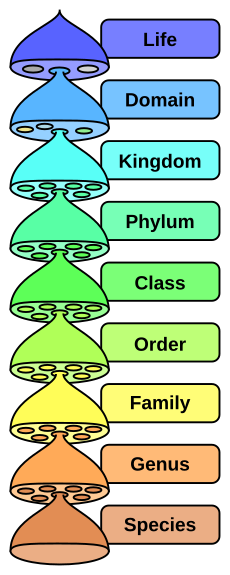
Nothing commercially available provides the above, but some are close. The diagram below is from Wikipedia commons and may help visual all of these terms.

Hierarchy

Sample Reports

My readers have been kind to send sample of their reports. All of these are for CFS patients. In my next post, I will try to create a unified view of all of the data in these samples (and any more that I get emailed to me at Ken@Lassesen.com ), combined with results from the literature. Added to this in my next post, I will also include probiotics that I am aware of that may help correct deficiencies.  

The bottom line is that it appears that the most detailed information is provided by American Gut and uBiome. No MD order is required and the cost is $100 or less. It will not be covered by medical insurance. Most MDs and NDs will likely not known what to do with the report and some may attack the significant of the report because of lacking knowledge.

Ubiome.com

At the highest level, you get a summary by phylum. They provide 18+ phylum levels. At each level they provide the average and how far from the average your are. Without any information on the range of the values seen in healthy individuals, it is hard to establish that a value is actually significant unless it is 10x or more off.

2013-11-09 uBiome - Phylum

  • At the Class level,  16+ items
  • At the Order level,  24+ items
  • At the Family level, 34+ items
  • At the Genus level, 34+ items

Total readings: 285 readings

The information is available in the JSON format and provide significant detail, one example is shown below:

{“taxon”:”186824″,”parent”:”1385″,”count”:”1″,”count_norm”:”5″,”avg”:”1.000000000000000″,”tax_name”:”Thermoactinomycetaceae”,”tax_rank”:”family”}

This allows information from different patients to be easily combined for group analysis.

Genova Diagnostics

This firm has been offering tests for many years, and appear to have kept to old technology which has limited information. Their typical report is only 8 items as shown below

Geneva Results

When known as Great Smokies (2000)
Great Smokies Report (2000)

IMHO, their measurements is very weak, they use a private rating system that appear to have tunnel vision.

AmericanGut

No sample report yet (I have ordered kits)

Red Laboratories

A sample report is below. It is much superior to Genova:

  • Far more species
  • Weakness is that the measures are “one sided” and do not provide the expected normal range.
    • Example: MD’s only give significance to High Temperatures, CFS having below (down to 96F -3F) temperature is often ignored as insignificance, while + +3F temperature is significant. 0 This one-sided perspective is seen in other tests (like SED).  When the expected value is < 25 and the patient has zero (0) – it suggests that something significant may be occurring.

Red

Bioscreen

Bio1bio2