ME/CFS: The Evils of Lactobacillus Probiotics?

A reader wrote me today with the following question

I read your article on microbial involvement, can you explain in more detail why you recommended cutting out Lactobacillus? If I interpreted your analysis, you said lactobacillus was rare in ME/CFS, doesn’t that mean increasing it could be beneficial? “..lactobacillus shows up barely in only one result..”.Meaning lactobacillus is rare for ME/CFS patients?

I meant that there is no clear evidence of a lactobacillus deficiency with ME/CFS patients microbiomes. There are reasons to believe that it may be harmful and helps maintain ME/CFS state.

History

I am a facts/study based individual that have been reading studies, conference reports since 1990’s. Back in 1999, on eGroups CFSFM-Experimental, taking probiotics were often suggested. Why? Because probiotics has been promoted as a cure-all for all conditions. A influencer snake oil. Reported results on CFSFM-Experimental were disappointing.

My mind proceeded logically. So ask the US National Library of Medicine (PubMed), “Which probiotics have been helpful for ME/CFS? Given that there were 2400 studies on ME/CFS then, I expected to find a few dozen by then — after all, it would likely be one of the first choices by naturopaths who would rush to publish their results!! There were none that used lactobacillus probiotics. Even today, we have just 32 studies mentioning “chronic fatigue syndrome” probiotics in the 8500 studies posted. [Sarcasm] “Surely, there would have been a rush with all of the ME/CFS specialists to use lactobacillus probiotics given all of this evidence”.

Being a scientist, I know that what gets published are positive results — not no result nor negative results.

Reading conference papers presented by specialist on ME Research UK, I came across a report of a conference panel by active practitioners where the consensus was no benefit. I have worked as a professional technical writer and very “phrasing aware”, I read the wording to indicate that probiotics likely did harm in some of their patients. Slamming probiotics tend to be view as a heresy with many health influencers.

There Appears No Significant Objective Evidence that lactobacillus helps!

Yes, you will find testimonials — but that is not objective evidence. They may have helped because the person did not have ME/CFS (self diagnosis) or a different condition. It is incomprehensible that there have not been dozens (or hundreds) of studies trying lactobacillus — studies that are unpublished because of unfavorable results.

Why may it be EVIL?

Again, conference papers from Australia’s Alison Hunter Memorial Foundation play an important role here. From the Way-Back machine I retrieved items no longer on their site and pasted it into 1998 Was a very good year…. The key finding was “The mean distribution of E.coli as percentage of the total aerobic microbial flora for the control subjects and CFS patients was 92.3% and 49% ” Not a little drop, but almost half the level!

NOTA BENA: The typical (cheap) 16s tests used for most modern microbiome studies effectively ignore E.Coli. Shotgun testing (much more expensive) finds E.Coli in almost every sample. Some 16s finds it in 1 in a thousand samples as shown by the table below. Modern studies not repeating these results is a direct consequence of their methodologies!!

This was the motivation for my trying Mutaflor Probiotics (E.Coli Nissle 1917) which I happen to have in the house because my wife has Crohn’s and it made a huge difference for her (with lots of studies reporting it too!!!). I had a severe Jarisch–Herxheimer reaction for two weeks and a rapid recovery from ME/CFS afterwards.

If you look at Odds Ratios for Metabolites and ME/CFS, you will see that E.Coli probiotics has the biggest impact on the metabolite imbalance with ME/CFS
Going over to the E.Coli page on Microbiome Prescription we see that Lactobacillus constantly reduces E.Coli. So we are moving from levels that are 50% of normal levels to even lower levels.

IMHO, for ME/CFS, Lactobacillus probiotics are EVIL

Yes there are a few lactobacillus that will help some symptoms (and likely make other symptoms worse). Unless you are very sure that it has the actual probiotic strain used in studies, don’t do it. See Probiotics — what is advertised may not be what you get.

IMHO, for brain fog, Lactobacillus probiotics are EVIL

Interesting study relative to ME/CFS and brain fog. Lactobacillus can trigger “thick blood”, decreasing oxygen delivery (hypo perfusion). The aggregation of human platelets by Lactobacillus species

This extends to a few other Conditions

Bottom line, checking for clinical studies if a probiotics clearly helps is recommended. This search engine may help.

Bifidobacterium also?

In Visual Exploration of Odds Ratios, we see that ME/CFS people have higher then general population amounts of Bifidobacterium. On the flip side, the average amount is reported lower on several studies. This compounds issues with several things that needs to be investigated.

  • Did the lower bifidobacterium count not found in their average as zero? We use the values only when detected. Looking at the dots, we see that the dots are sparse/rare for lower values suggesting a lower detection rate. This suggests a threshold behavior of bifidobacterium.

Looking at impact on E.Coli, we see most studies say that it decreases E.Coli

There is not enough data to come to a safe conclusion.

Odds Ratios for Metabolites and ME/CFS

This post extends the analysis of microbial involvement in ME/CFS pathophysiology by focusing on metabolites produced or consumed by bacteria, rather than on individual bacterial species seen in the earlier post Microbial involvement in myalgic encephalomyelitis/chronic fatigue syndrome pathophysiology. . This shift in perspective is valuable because:

Metabolite-Centric Analysis

Bacterial Metabolic Activity: Bacteria produce and consume various metabolites, which can significantly impact the host’s metabolic environment13.Metabolic Imbalances: Different bacterial compositions can lead to similar metabolite imbalances, making metabolite profiles potentially more informative than bacterial species profiles alone7 8.

Advantages of This Approach

  1. Net Effect: By examining metabolites, we can assess the overall impact of the microbiome on the host, regardless of the specific bacterial species present5.
  2. Consistency: Metabolite imbalances may be more consistent across patients than bacterial species composition, which can vary widely7.
  3. Functional Insight: This approach provides insight into the functional consequences of microbiome dysbiosis in ME/CFS3 8.

KEGG Application

Using the KEGG: Kyoto Encyclopedia of Genes and Genomes,(KEGG) allows for:

  • Mapping of metabolites to specific pathways
  • Identification of key metabolic alterations in ME/CFS patients
  • Potential discovery of new biomarkers or therapeutic targets7

Metabolite Profiling in ME/CFS

Recent studies have identified several metabolic alterations in ME/CFS patients:

  • Disruptions in energy metabolism and mitochondrial function2 5
  • Alterations in lipid metabolism, including changes in ceramides and complex lipids4
  • Disturbances in amino acid metabolism8

Clinical Implications

Understanding metabolite profiles in ME/CFS could lead to:

  • Improved diagnostic tools
  • Identification of potential therapeutic targets
  • Personalized treatment approaches based on individual metabolic profiles58

I am showing the numbers for Biomesight sample below. Conclusions across Ombre, uBiome and Biomesight are at the bottom.

Warning: These are the chemical names — a few are available as supplements with more common name.

BiomeSight Results

I did three slice-and-dice

  • Producers
  • Consumers
  • Net metabolites (Producers – Consumers) – this is like the most important

Remember: results may be different for different labs. Also, these are estimates of the metabolites

Metabolite Producers

  • DNA N4-methylcytosine <= 31.1
  • Cytidine 5′-diphosphoramidate <= 28
  • Pyridoxal <= 24.3
  • Allantoate <= 23.6
  • [L-Glutamate:ammonia ligase (ADP-forming)] <= 22.9
  • Adenylyl-[L-glutamate:ammonia ligase (ADP-forming)] <= 22.9
  • Uridylyl-[protein-PII] <= 22.6
  • 4-Hydroxybenzoate <= 19.6
  • 5-Phospho-D-xylonate <= 18.5
  • 5-Phospho-L-arabinate <= 18.5
  • Formyl-CoA <= 18
  • Aminoacrylate <= 17.3
  • Methylaminoacrylate <= 17.3
  • Acetoacetate <= 17.3
  • 5-Carboxyamino-1-(5-phospho-D-ribosyl)imidazole <= 17.3
  • UDP-N-acetyl-alpha-D-muramoyl-L-alanyl-L-glutamate <= 17
  • N-Acyl-L-homoserine <= 16.7
  • (R)-Piperazine-2-carboxylate <= 16.1
  • 2-[(2-Aminoethylcarbamoyl)methyl]-2-hydroxybutanedioate <= 16
  • D-Mannitol 1-phosphate <= 16
  • D-Erythritol 1-phosphate <= 15.6
  • 2-Acetylphloroglucinol <= 15.5
  • 3-Dehydrocarnitine <= 15.2
  • Deoxynucleoside <= 14.9
  • Formaldehyde <= 14.5
  • (S)-3-Acetyloctanal <= 14.4
  • Pyrrole-2-carbonyl-[pcp] <= 14.4
  • (L-Prolyl)adenylate <= 14.4
  • (L-Arginyl)adenylate <= 14.4
  • 2”-Nucleotidylgentamicin <= 13.9
  • 4-O-(beta-L-Arabinofuranosyl)-(2S,4S)-4-hydroxyproline <= 13.3
  • beta-L-Arabinofuranosyl-(1->2)-beta-L-arabinofuranose <= 13.3
  • Polysulfide <= 13.2
  • 6-Deoxy-6-sulfo-D-fructose <= 13
  • 1-Phosphatidyl-1D-myo-inositol 5-phosphate <= 12.9
  • 2-Dehydro-3-deoxy-D-galactonate <= 12.8
  • beta-L-Arabinofuranose <= 12.8
  • Maltose 6′-phosphate <= 12.7
  • Cytidine <= 12.5
  • [beta-GlcNAc-(1->4)-Mur2Ac(oyl-L-Ala-gamma-D-Glu-6-N-(beta-D-Asp)-L-Lys-D-Ala-D-Ala)]n <= 12.5
  • O-Phospho-L-homoserine <= 12.3
  • 2,5-Diamino-6-(5-phospho-D-ribosylamino)pyrimidin-4(3H)-one <= 12.3
  • Butanoyl-CoA <= 12.2
  • 4-Amino-5-hydroxymethyl-2-methylpyrimidine <= 12.1
  • Oxalyl-CoA <= 12.1
  • 5-(2-Hydroxyethyl)-4-methylthiazole <= 11.8
  • 2-Hydroxyornithine lipid <= 11.5
  • N3-Acetyl-2-deoxystreptamine antibiotic <= 11.3
  • Protein histidine <= 11.3
  • Protein N6-acetyl-L-lysine <= 11.2
  • Protoporphyrinogen IX <= 11
  • Divinylprotochlorophyllide <= 10.9

Metabolite Consumers (Substrates)

We have a shorter list with 5 metabolites bubbling to the surface as excessive metabolites.

  • Linalool >= 96.4
  • 6-Oxocyclohex-1-ene-1-carbonyl-CoA >= 96.4
  • 2-epi-5-epi-Valiolone >= 96.2
  • Lupanine >= 95.2
  • 4′-Hydroxyacetophenone >= 95.2
  • DNA cytosine <= 31.1
  • Xylitol <= 29.4
  • N5-(Cytidine 5′-diphosphoramidyl)-L-glutamine <= 28
  • 6-Hydroxynicotinate <= 27.6
  • Pyridoxine <= 24.1
  • [L-Glutamate:ammonia ligase (ADP-forming)] <= 22.9
  • Adenylyl-[L-glutamate:ammonia ligase (ADP-forming)] <= 22.9
  • 2-Amino-2-deoxyisochorismate <= 22.7
  • [Protein-PII] <= 22.6
  • Formyl-CoA <= 20.4
  • D-Erythrulose 4-phosphate <= 20 alpha-Maltose 1-phosphate <= 18.8
  • L-Arabino-1,4-lactone 5-phosphate <= 18.5
  • D-Xylono-1,4-lactone 5-phosphate <= 18.5
  • N-Acyl-L-homoserine lactone <= 18.1
  • Oxalyl-CoA <= 18
  • Methylureidoacrylate <= 17.3
  • Ureidoacrylate <= 17.3
  • UDP-N-acetyl-alpha-D-muramoyl-L-alanyl-L-glutamate <= 17
  • D-arabino-Hex-3-ulose 6-phosphate <= 17
  • beta-Alaninamide <= 16.1
  • (R)-Piperazine-2-carboxamide <= 16.1
  • 2-[(L-Alanin-3-ylcarbamoyl)methyl]-2-hydroxybutanedioate <= 16
  • Erythritol <= 15.6
  • alpha-L-Rhamnopyranosyl-(1->3)-N-acetyl-alpha-D-glucosaminyl-diphospho-trans,octacis-decaprenol <= 15.5 2,4-Diacetylphloroglucinol <= 15.5
  • (S)-Allantoin <= 15.1
  • L-Prolyl-[pcp] <= 14.4
  • trans-2-Octenal <= 14.4
  • (L-Prolyl)adenylate <= 14.4
  • (L-Arginyl)adenylate <= 14.4
  • (5-L-Glutamyl)-L-amino acid <= 13.6
  • 4-O-(beta-L-Arabinofuranosyl-(1->2)-beta-L-arabinofuranosyl-(1->2)-beta-L-arabinofuranosyl)-(2S,4S)-4-hydroxyproline <= 13.3
  • Sulfoquinovose <= 13
  • 1-Phosphatidyl-D-myo-inositol 4,5-bisphosphate <= 12.9
  • D-Galactonate <= 12.8
  • beta-L-Arabinofuranosyl-(1->2)-beta-L-arabinofuranose <= 12.8
  • Oxalate <= 12.7
  • N4-Acetylcytidine <= 12.5
  • D-Aspartate <= 12.5
  • [beta-GlcNAc-(1->4)-Mur2Ac(oyl-L-Ala-gamma-D-Glu-L-Lys-D-Ala-D-Ala)]n <= 12.5
  • 3′-Phosphoadenylyl sulfate <= 12.4
  • 2,5-Diamino-6-(5-phospho-D-ribitylamino)pyrimidin-4(3H)-one <= 12.3
  • D-Xylulose 5-phosphate <= 12.2
  • 4-Amino-5-aminomethyl-2-methylpyrimidine <= 12.1
  • Deoxynucleoside 5′-phosphate <= 11.9
  • Thiosulfate <= 11.6
  • Ornithine lipid <= 11.5
  • 2-Deoxystreptamine antibiotic <= 11.3
  • UDP-alpha-D-galactofuranose <= 11.2
  • 3′,5′-Cyclic AMP <= 11.1
  • [Sulfatase]-L-serine <= 11
  • trans-2,3-Dehydroacyl-CoA <= 10.9
  • D-Serine <= 10.6
  • 5,6-Dihydrothymine <= 10.4
  • Electron-transferring flavoprotein <= 10.3
  • D-Mannose <= 10.1
  • Ethanol <= 10.1

Net Modifiers

Here we have shorter list with

  • (R)-3-(4-Hydroxyphenyl)lactoyl-CoA >= 98.9
  • 14alpha-Formylsteroid >= 98.7
  • (E)-2-Methylgeranyl diphosphate >= 98.3
  • Harderoheme III >= 97
  • D-Erythritol 1-phosphate >= 83.4
  • 1-(5-O-Phospho-beta-D-ribofuranosyl)-5-(sulfanylcarbonyl)pyridin-1-ium-3-carbonyl adenylate >= 56.8
  • 8-Oxo-GDP <= 32.5 8-Oxo-dGDP <= 32.5
  • 2,4-Diketo-3-deoxy-L-fuconate <= 27.2
  • S-(Hercyn-2-yl)-L-cysteine S-oxide <= 27
  • L-Formylkynurenine <= 24.6
  • 2-[(2-Aminoethylcarbamoyl)methyl]-2-hydroxybutanedioate <= 23.5
  • alpha-Oxo-benzeneacetic acid <= 23.4
  • trans-o-Hydroxybenzylidenepyruvate >= 22.8
  • 2-(alpha-D-Mannosyl)-3-phosphoglycerate <= 22
  • Reduced FMN <= 20.6
  • Deamino-NAD+ <= 19.7
  • 5-(5-Phospho-D-ribosylaminoformimino)-1-(5-phosphoribosyl)-imidazole-4-carboxamide <= 18.5
  • cis-2,3-Dihydroxy-2,3-dihydro-p-cumate >= 18.2
  • Phthalate <= 17.9
  • alpha-Ribazole <= 17.7
  • beta-D-Fructose 6-phosphate <= 17.5
  • Reduced electron-transferring flavoprotein <= 16.5
  • GDP-L-fucose <= 16.4
  • 3-Hydroxy-5,9,17-trioxo-4,5:9,10-disecoandrosta-1(10),2-dien-4-oate <= 15.4
  • 2-Keto-D-gluconic acid <= 14.6
  • 6-(Hydroxymethyl)-7,8-dihydropterin <= 14.4
  • Formaldehyde <= 13.9
  • Adenosyl cobyrinate hexaamide <= 13.6
  • 3-Deoxy-D-manno-octulosonate <= 12.9
  • L-Fuculose 1-phosphate <= 12.8
  • D-Glutamate <= 12.5
  • L-Tyrosyl-tRNA(Tyr) <= 12.1
  • Maltose 6′-phosphate <= 11.8
  • O-Phospho-L-serine <= 11.8
  • 4-Guanidinobutanal <= 11.7
  • 7-Carboxy-7-carbaguanine <= 11.7
  • CDP-diacylglycerol <= 11.1
  • Protoporphyrinogen IX <= 11.1
  • 5-Guanidino-2-oxopentanoate <= 11
  • N5-Phospho-L-glutamine <= 10.9
  • D-1-Aminopropan-2-ol O-phosphate <= 10.5
  • Thymine <= 10.5
  • (2-Amino-1-hydroxyethyl)phosphonate <= 10.5
  • Hydrogenobyrinate a,c diamide <= 10.2
  • 2-Amino-3-carboxymuconate semialdehyde <= 10

Across Labs Consolidation

The analysis of metabolites across multiple microbiome testing platforms (Ombre, Biomesight, and uBiome) reveals a more consistent pattern of metabolite imbalances compared to bacterial species identification.

Potential Consequences of Low GDP-L-fucose (the top one)

The deficiency in GDP-L-fucose could have several implications:

  • Altered Immune Response: It may affect the proper functioning of the immune system, potentially impacting inflammatory processes12.
  • Cancer-Related Changes: Low levels might influence tumor progression or immune evasion mechanisms, as fucosylation is often altered in cancer24.
    • First-degree relatives: A clinic-based study reported that first-degree relatives of ME/CFS patients had a significantly higher(four times) prevalence of any cancer compared to controls (OR 4.06) [2022]
  • Cellular Communication: It could disrupt normal cell-cell interactions and signaling pathways dependent on fucosylated glycans3.
MetaboliteThresholdLowHigh
GDP-L-fucose16.512.121.2
Holo-[citrate (pro-3S)-lyase]12.71.823.4
N,N’-Diacetyllegionaminate12.15.422
alpha-Oxo-benzeneacetic acid11.81.923.4
Oxalyl-CoA11.3222.4
S-Methyl-5-thio-D-ribose 1-phosphate11.21.330.6
Malonyl-CoA10.62.526.3
1,2-Diacyl-3-alpha-D-glucosyl-sn-glycerol10.55.420

Translate Low Metabolites to Probiotics

Many of these metabolites are produced by probiotics, so in terms of highest importance and reasonably available probiotics, I produced the list below.

The top one is one is one that had very dramatic positive effect for me when I relapsed into ME/CFS (after the worse herxheimer reaction that I have ever experienced): Mutaflor (E.Coli Nissle 1917). I took it as a result of a 1999 study in Australia reporting very low levels of E.Coli in CFS patients [As a FYI, 16s tests do a very poor reporting on E.Coli].

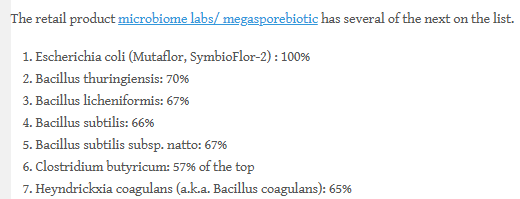
The retail product microbiome labs/ megasporebiotic has several of the next on the list.

  1. Escherichia coli (Mutaflor, SymbioFlor-2) : 100%
  2. Bacillus thuringiensis: 70%
  3. Bacillus licheniformis: 67%
  4. Bacillus subtilis: 66%
  5. Bacillus subtilis subsp. natto: 67%
  6. Clostridium butyricum: 57% of the top
  7. Heyndrickxia coagulans (a.k.a. Bacillus coagulans): 65%
  8. Lactiplantibacillus plantarum: 59%
  9. Enterococcus faecalis: 57%
  10. Akkermansia muciniphila: 54%

I asked perplexity, which foods may increase any of the above metabolites. The following were reported:

  • Spinach
  • Rhubarb
  • Beets
  • Nuts
  • Chocolate
  • Tea
  • Wheat bran
  • Strawberries

Bottom Line

While the metabolite-focused approach provides valuable insights into the biochemical imbalances associated with ME/CFS, its immediate clinical applications are somewhat limited. The probiotics and the food suggestions are reasonable and I see several of the items appearing on suggestions from the expert system for ME/CFS patients.