epigenetics-international.com Probiotics

A reader forwarded me a link to their site and ask for comments.

Cost?

For fairness, it was not specified species against not specified species.

I Spot Checked Lactobacillus Gasseri:

  • 50 servings of 5 BCFU  = 250 BCFU for £23.53  ==> $31.32 

Reference:

  • Swanson’s  60 capsules x 3 BCFU x 2 = 360 BCFU for $16.00 ==> £12.02

I Spot Checked Lactobacillus Reuteri etc

  • 50 servings of 5 BCFU  = 250 BCFU for £23.53  ==> $31.32 

Reference:

  • Swanson’s  30 capsules x 7 BCFU x 2 = 420 BCFU for $11.00 ==> £8.27

Bottom Line

While they are more expensive and lack strain information — a few hard to find by themselves species are available.

On the other hand, for items Bifidobacterium Infantis – Align If you got a FRESH BOX … the study dosage is 10 capsules per day (10 BCFU) if you want to repro a successful study
that is $7.50/day. While the strain is unknown, Epigenetics product may be a lot cheaper (at 5 bn CFU/serving) or  $0.95/day.

A uBiome signature for Multiple Chemical Sensitivity

I believe that I may have stumbled on to a uBiome signature for MCS and potentially some possible treatments (probably high herx  😦  ).

Data from Readers

I contacted readers who had shared their uBiome with me with the following question:

“Can you please reply with
0 -5 for MCS (sensitive to perfumes)
  • 0 is NONE
  • 5 for severe”

I then put the data into a table and applied a statistical test to it. The probability of getting this distribution at random (using ChiTest) was just 3%.

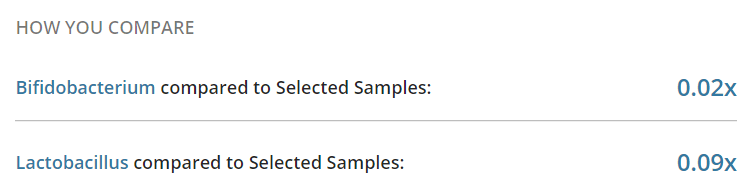
 Gordonibacter + Lacto + Bifido
 MCS Rating > 0.31x <= 0.31x
<= 2 5 2
 > 2 2 7

Back Story

During my analysis of a severe MCS ONLY uBiome (this post) I was interested in the report that all fruits was tolerated except for three. I dug into the unusual chemicals in these fruits and recognized something from a post on what is not produced when there is no Lactobacillus or Bifidobacteria. What was it? Urolithins

When someone reacts to a food we can safely assume that it is a toxin that is causing it. There are two paths:

  • The food feeds a bacteria that produces a toxin
  • The food contains a chemical that kills bacteria and thus releases toxins.

The second path lead me to see what else produces Urolithins?

“Urolithins (From DataPunk.Net)

Urolithins are microflora human metabolites of dietary ellagic acid derivatives such as ellagitannins. They are produced in the human gut, and found in the urine in the form of urolithin B glucuronide after absorption of ellagitannins-containing food such as pomegranate, strawberries, red raspberries, walnuts or oak-aged red wine.During intestinal metabolism by bacteria, ellagitannins and punicalagins are converted to urolithins, which have unknown biological activity in vivo in humans. Urolithins metabolites of pomegranate juice ellagitannins localize specifically in the prostate gland, colon, and intestinal tissues of mice, leading to clinical studies of pomegranate juice or fruit extracts for efficacy against several diseases.Ellagitannins exhibit low bioavailability and are transformed in the gut to ellagic acid and its microbiota metabolites. Urolithins are found in plasma mostly as glucuronides at low concentrations. Urolithins production is dependent on the gut microbiome enterotype. Individuals producing urolithins show a much higher abundance of the Clostridium leptum group of Firmicutes phylum than Bacteroides or Prevotella. Ellagitannin and ellagic acid metabolism to urolithins in the gut shows a large human interindividual variability and this has been associated with differences in the colon microbiota. Urolithins are dibenzopyranone metabolites that exert anti-inflammatory activity in vivo and are produced by the gut msomeicrobiota from the dietary polyphenols ellagic acid (EA) and ellagitannins. ”

PRODUCED AS ENDPRODUCT BY:

The light went on for a hypothesis — MCS is the result of having very low level of Urolithins being produce by bacteria. There are only three known genus that produces it — two of which are normally ZERO for CFS patients. It was time to try to test it. Find out who had MCS and what their Gordonibacter levels were. The responses lead to the above table and given a small sample size of just 16 people, impressive statistical significance at the 3% level (better than some studies that I have read).

Proposed Model

Urolithins and/or the associated ellagic acid is able to suppress (unknown) bacteria genus (or genii) that results in MCS.  When this patient ate a food rich in ellagic acid, they had an adverse reaction from these bacteria being killed off. 

This may be totally wrong — it’s just the KISS inference from the available data.

To present it another way, MCS is caused not by a specific bacteria but due to the absences of urolithin producing bacteria. Think of Rickets — this is not the result of a bacteria, but due to the absence of sufficient Vitamin D. We need to think of “negative space” to borrow a term from artists.

Treatment Proposal

“ellagitannins-containing food such as pomegranate, strawberries, red raspberries, walnuts or oak-aged red wine.” should feed any remaining bacteria producing urolithins. Ideally, these should be taken with bifidobacteria or lactobacillus probiotics. You may not have any of your own, but the probiotics should start consuming the ellagitannins during their short stay in your gut.

Again this is speculative.

Bottom Line

This needs a proper study with at least 100 appropriately selected patients. The proposal of having “strawberries and red raspberries with a sprinkling of probiotics” sounds ridiculously simple for treatment.  No idea of how long it will take. I have concerns that it may produce a severe herx in some people. All of this is based on inference from available data.

  • I favor the use of Bifidobacteria
  • I favor not providing other food (such as milk or yogurt) — we want the bacteria to focus on the ellagitannins.

Please consult with your physician if you have MCS before attempting to put these suggestions in practice.


uBiomes before and after a Fecal Microbiota Transplant

Over the last few years I have been in contact with a few people that have had FMT. A common pattern is symptoms disappears for a few weeks or months and then returns. If additional FMT are done, the pattern repeats. In short, it appears that the new microbiota lost the battle with the old microbiota. I have written prior about FMT in my “The poop on Fecal Transplants” post in 2014

I am very delighted to being able to examine the before and after ubiome from a patient was willing to share.

Patient Summary

  • “Under 30, female
  • Weaker immune system from a young age- bronchitis, pneumonia
    • I had mono age 16 [Epstein-Barr virus]
    • Many antibiotics for recurrent UTIs
    • Some antibiotic use for acne
  • Birth control use
  • Got food poisoning or gut infection from traveling to Dominican Republic- diarrhea/flu/severe cramping
    • Took a Zpac one month later for cold
    • Gut started to not function shortly after- not sure if it was a delayed result from the travel bug or from the Zpac
    • I had severe bloating diarrhea and constipation
  • Health started to really decline- fatigue, shortness of breath, food intolerance, weak, developed severe acne
    • Eventually diagnosed with sibo-hydrogen positive
    • Took many different antibiotics for sibo-D
    • Didn’t work, continued many other methods for gut healing
    • My sibo was now methane dominant and I was suffering from constipation
  • Nothing was helping.
    • Tested for lyme, got a positive diagnosis from LLND, went down that path of trying many different natural supplements and treatment
  • Eventually tried FMT, immediate improvements in brain function and lifted depression
    • Tried 20 implants, no real lasting results
  • Continued working on immune system.
  • Low dose naltrexone is the only thing that has made a noticeable positive shift in my health.”

Comments: Positive Lyme is common, especially if you have had mono sometime in your life. The EBV virus is suppressed and not eliminated by your immune system. Lyme tests are well known to give false positive when EBV is involved. — My lyme test was positive on my last CFS occurence and I suspected strongly that it was a false positive — since I was after prescriptions to tetracyclines (see this post), I kept quiet and insisted only on those….

I suspect that your past antibiotics use has been many different classes and likely contributed to your microbiome issues.

uBiome Result

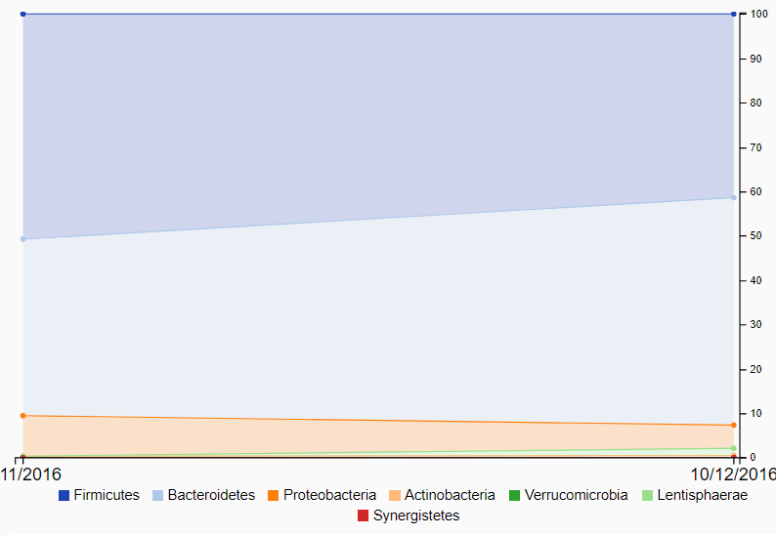
Historic Changes

The changes between samples.

changes

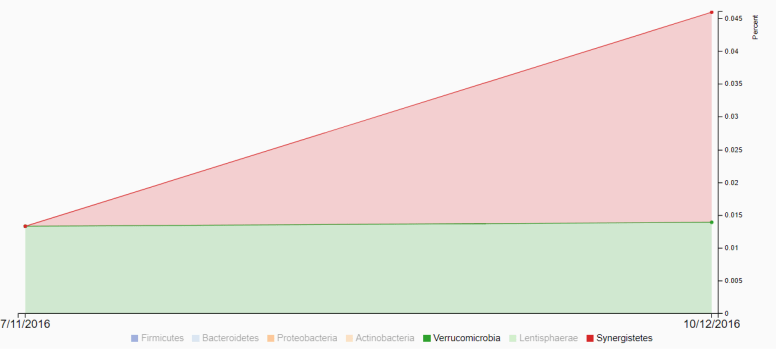
In terms of minor bacteria, this dramatic growth

m1

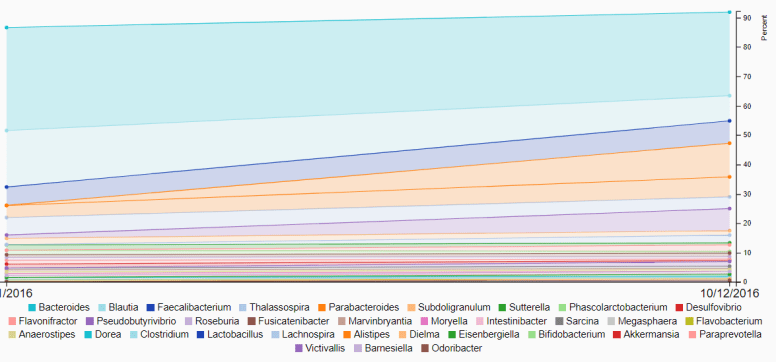
At the Genus Level

m2

Basic Analysis

Prior After
b1 b2
Diversity: 69%ile Diversity: 86%ile
u1 u2
g1 g2
E.Coli Order

Nothing reported

Akkermansia:   < 0.01x

e1

Akkermansia:   < 0.01x

Initial impression: Things have been shaken up a bit but only marginal improvement (E.Coli order appearing).

  • E.Coli probiotics (Mutaflor, Symbioflor-2) may be worth trying.
  • You have token lactobacillus and bifidobacteia — which is better than the typical CFS patient.

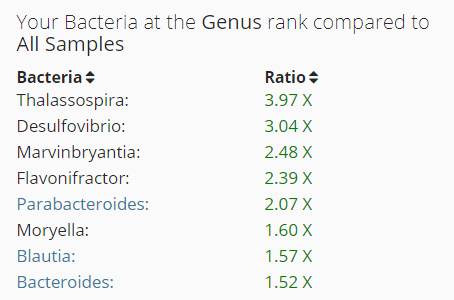
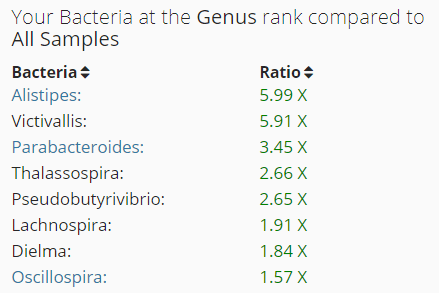
While the overgrowth genus are different (except for Parabacteroides and Thalassospira), I think we should examine both lists to see if there are any distinctive patterns. As before, I’ve numbered each genus for a cross reference and head over to DataPunk.Net for data

  1. Alistipes (genus) 
  2. Bacteroides (genus) 
  3. Blautia (genus) 
  4. Desulfovibrio (genus) 
  5. Dielma (genus) 
  6. Flavonifractor (genus) 
  7. Lachnospira (genus) 
  8. Marvinbryantia (genus) 
  9. Moryella (genus) 
  10. Oscillospira (genus) 
  11. Parabacteroides (genus) 
  12. Pseudobutyrivibrio (genus) 
  13. Thalassospira (genus) 
  14. Victivallis (genus) 

NUTRIENTS/ SUBSTRATES

INHIBITED BY

ENHANCED BY

INHIBITS


Suggestions

Flaxseed sticks out as a regular (daily) food to intake. Making flaxseed muffins with sucralose and some whole grain barley for snacks appears to make sense. A vegetable diet with fish seems reasonable.

Avoid Walnuts and Resistant starch (type II) because we do not know if they are net benefit or loss.  The rest of the ‘to avoid’ is on the Enhanced By list above.

Resistant starch (type IV) is described in this study as “Foods in which modified starches have been used (for example, breads and cakes)” – which implies that most commercial wheat/gluten items should be reduced or avoided.  Beware of prepared soups — check the labels carefully,

Bottom Line

This is speculative, but I would love to see a study with the following done before the FMT is attempted:

  • One month on tetracyclines and macrolides before (stopped 2 days before the FMT procedure)
    • Inhibit the other overgrowths. Several of those that I have seen in the uBiomes are tetracycline resistant.
    • I know some repeated FMT tried antibiotics to increase the odds — I am not sure if they were the best choices
  • Diet adds Flaxseed for a month before and at least 2 months after
  • Diet low is glucose (i.e. already in the food — if other bacteria generates it, that may be fine)
  • High dosages of probiotics after the transplant that are known to persist. See this post.
    • We want to send in “shock troops” after the FMT in the hope of overwhelming the bad bacteria and giving the native bacteria time to regroup.
    • Lactobacillus Fermentus ME-3 should be included because of it’s strong antibiotics metabolites.

FMT bring immediate remission from MCS (and possibly both MCS and SIBO) strongly suggests that these conditions are due to microbiome dysfunction.  The problem with FMT is that people’s microbiome is connected to their DNA and inherited.  FMT suffers the same risk as organ transplants — rejection! Not only is the bad bacteria fighting the FMT bacteria — but likely the body is also fighting these foreigners!


Another uBiome for a MCS person

Patient Summary

  • “67 now, MCS started in 1982
  • Universal reactor is a good term for me, not only did I over-react to a huge variety of odors and foods but I could over-reacted to almost everything I ate or smelled and I reacted in other senses too.
  • Touching the wrong thing could result in the same type reaction as eating the wrong thing or smelling the wrong thing.
  • I over-reacted to sound and emotionally too. But the food and the odor reactions were by far the most extreme and damaging.
  • I have improved over the past 10 years or so. The MCS has improved greatly (though it is still there) but food reactivity is still quite severe. I can eat very few foods.
Currently I have to live on 3 types of meat, 3 vegetables and a nice variety of fruit.
  • Meats:
    • Venison, turkey, camel
    • Recently started to react to elk and beef
  • Veges:
    • bell peppers (red, orange, yellow)
    • celery (raw or cooked)
    • romaine lettuce
  • Fruits: React to:
    • Watermelon,
    • Concord grapes,
    • Muscadines
  • I did spend 12 years at the beginning unable to eat any fruit whatsoever and only recently have I been able to eat a wide variety of fruit. And I once spent 8 months able to eat only beef round cuts and drink distilled water. That was my most limited period.
  • I never thought of myself as having ME/CFS though I had strong fatigue issues. Just didn’t seem to fit the pattern.
    • I did not have PEM for instance though I may not have had the strength to exert much at times. But if I could go any length of time without reacting my fatigue would lift considerably.

History:

  • I tried  Robert Gray’s cleansing program with herbs and psyllium seeds. 
    And I added colonics and enemas to that under yet another experts advice.  
    Always slender and more so from that first diet, within a couple of months I looked like a concentration camp victim. At 5’11.5″ I got down to 117lbs. I could just barely function. 
    Then I figured out I was reacting to almost everything I ate. And I still am 35 years later.
  •  I tried things but seldom for more than a couple of days (the time it would take me to start reacting to a new item).
  • I tried many many alternative supposedly health enhancing approaches that did not involve food or supplements. 
    Some of those did help like biofeedback, neurofeedback, a meditation like approach called Open Focus was very good. I had lots of body tension so I tried all kinds of body work and still do. A few of those were very helpful (Neurosoma, Hendrickson Method, Fascial CounterStrain come to mind).
  • I currently do different types of exercise for fitness and for specific physical complaints. I also do intuitive movements and I am learning Qigong. 
    And work with early trauma. All of this has been helpful and likely has helped me improve my vitality and reduce the severity of my symptoms.
For the first 30 of those 35 years I took no supplements (for more than a few days).
  • The only supplements I currently take are magnesium citrate (for kidney stones), cherry juice and cherry extract for gout and pain, and recently vitamin A. Almost all supplements I try I react to though not as strongly as before. The magnesium citrate and cherry juice clearly help for those
    specific uses.
  • Over the first 30 – 33 years of this I could not take probiotics. They were especially reactive for me.
  • I tried different ones but only for 1 or 2 days and then I felt too awful to continue.
    • Currently I am taking Equilibrium without reacting.
    • I also took Prescript Assist for awhile though I seemed to react to that eventually and stopped.
    • All the others I tried I never continued more than a few days or maybe a week or two before reactivity made me stop. I never noticed any improvements from probiotics.

I would really appreciate any ideas you have about my condition. ”

Basic Criteria

  • Firmicutes/Bacteroidetes Ratio: NORMAL
    • Firmicutes: 1.02x
    • Bacteroidetes: 1.02x
  • Bio Diversity: 22%ile
  • Bifidobacterium: 0x
  • Lactobacillus: 0x
  • E. Coli Order: None
  • Akkermansia: None

You are like SIBO (at least the ones that I have seen) patients in having none of certain bacteria genus – but do not have two traits common with CFS:

  • High Bio Diversity
  • Normal Firmicutes/Bacteroidetes Ratio

So you are likely very correct in your judgement that you do not have MCS.

High Bacteria Genus

mcs1

Comparing to the earlier MCS with CFS uBiome — there are no common overgrowth in bacteria genus. You have high Dorea (which Ian Lapkin reports is commonly low in CFS and have been low in most uBiome of CFS patients).

DataPunk.Net has known details about this bacteria genus:

NUTRIENTS/ SUBSTRATES

ENDPRODUCTS

INHIBITED BY

ENHANCED BY

ANTIBIOTIC RESISTANCE


Sutterella is high — but according to DataPunk.Net, this is enhanced by a high protein diet (which is what you are compelled to eat).

Roseburia (genus)  being high is interesting because it is normally inhibited by high animal protein diet and high meat diet.

NUTRIENTS/ SUBSTRATES

ENDPRODUCTS

ANTIBIOTIC RESISTANCE

Pseudobutyrivibrio (genus)  we know little, but it’s end products is Butyrate.

Anaerostipes (genus)  we have more information:

NUTRIENTS/ SUBSTRATES


ENDPRODUCTS

Commonalities

Fruit Analysis

I wandered over to Flavor, Fragrance, and Odor Analysis and found

“The highest levels of ellagic acid are found in  walnuts,  pecans,  cranberries,  raspberries,  strawberries, and grapes, as well as distilled beverages….Urolithins, such as urolithin A, are microflora human metabolites of dietary ellagic acid derivatives “.. [wikipedia].. utolithins are also end products of Bifidobacterium.

The bacteria that produces utolithins are below,  ubiome indicate low levels of the other bacteria.

Gordonibacter: 0.20 X
(Earlier MCS person was .38x )
PRODUCED AS ENDPRODUCT BY:

Supplements

I recently did a post to determine what is not being produced when lactobacillus, bifidobacteria and E.Coli disappears [which is what your uBiome states]. You may wish to start supplementing with those items. ( I know someone else with MCS that is also about to try this)

  • Add one item at a time with a low dosage and slowly increase every 4th day until you hit “the recommended” dosage on the bottle — then move along to the next one.
  • Question: is ellagic acid resulting is die off (herx)?
    • Trying some of the other fruits high in ellagic acid should clarify it (i.e. raspberries)
    • All of the known ellagic acid producers are not there or low levels. Start with a low amount and slowly increase.

Bottom Line

My wishful common pattern did not appear. I did find some interesting coincidences:

  • Reacts to food rich in ellagic acid, have almost no known bacteria producing it.
    • Is this something that kills or inhibits the bacteria causing MCS?
  • Many of the uBiome shifts seen with SIBO and CFS are there — but the overall balance between Firmicutes/Bacteroidetes is normal and much lower diversity than CFS.
  • If flaxseed can be tolerated in small quantity, then slowly increase the amount to suppress the overgrowth bacteria genus,
  • Over production of butyrate is a possibility

Probiotics:

  • I know of another MCS person that has strong reaction to probiotics. Besides equilibrium which they also tolerate — they also tolerate Culturelle (see this post ”

    Probiotics: Lactobacillus rhamnosus – a MCS probiotic?“)

  • “The findings show that Bifidobacterium lactis containing fermented milk decreased cecal pH, altered SCFA concentrations, increased the relative quantities of lactate- and butyrate-consuming bacteria, and reduced intestinal inflammation scores (Veiga et al., 2010). ”
    • Bifidobacterium BB-12
    • Danone’s Activa — contains it.

As always, an educational post not intended as medical advice. Always consult with your knowledgeable medical profession before adding or stopping supplements or changes of diet.


Another Lab Report to check microbiome: Synlab

Lab is based in Germany but available in other countries (Hungary – $140 according to reader). He gave a nice detailed summary and permission to post, so I quoted it below.

Patient Summary

“26 years old male, lives in Hungary.

Symptoms currently

-High anti-tpo levels(Hashimoto’s disease, autoimmune), level even became more elevated since I tried some probiotics.

-Sleep problems(easy to fall in sleep, but wake up after 3-4 hours and could not fall in sleep again, seems like it is constantly improving since I started to take big dose homemade chocholate (coconut oil+cacao), nettle leaf tea made from fresh leafs, and changed bed since I got to know I have dust mite allergies.

-Blurred vision, brain fog.

-Anxiety, agoraphobia, these improved since I’m under chiropractic care, I found out I had my C1 vertebra out of place, maybe since childhood.

-Sore muscles, often feel like I was doing workout.

-I’m able to do exercises, but next days I will be very fatigued.

-General low energy, but able to live my life, not locked to bed. I would say I have around 50%-60%  energy level, but become fatigued fast.

-Constant craving for chocholate.

-High blood folic acid level, this showed in my newer blood tests, after I started to experiment with different probiotics. Kinda low b12 levels, even my diet b12 rich.

-Coated tongue, especially after fruits.

-Muscle twitches.

-Chest tightness, sometimes breath difficulties.

-Rarely skin rash, dry eyes, but nothing serious.

-Not painful bloating after meals.

-No constipation, or diarrhea.

-Headaches, with not so terrible photophobia.

-Low blood pressure

-Tinnitus

Probiotics I tried:

Bio Kult, Protexin, even made yoghurt with these. At first they kinda worked, they boosted my mood,energy, but in longterm feel like they hurted slowly especially since they grown on corn, and I found out I got IgG related corn intolerance, I took them for months.

http://www.protexin.com/products/bio-kult-120-capsules/16

http://www.protexin.com/products/balance/3


-Once tried eat carrots, beets, just pulled out, and without washing few times. They worked too good, I had too much energy, but I was worried to continue eat those long enough, so I ordered Prescript-Assist, and AOR3 instead. I had zero effect from those then, but I guess I still had the bugs from raw vegetables then, but they could not make permanent changes.

-Paleo coconut yoghurt with these noname strains Bifidobacterieum lactis,Lactobacillus rhamnosus L.acidophilus,Streptococcus thermophilus, Lactobacillus reuteri(they buy reuteri from Korea, but did not tell me exact strain name), L.casei, L.bulgaricus. At first had similar effect as with Bio Gaia, but not lasted long.

-Bio Gaia L. reuteri ATCC PTA 6475,L. reuteri DSM 17938 . My brain liked these, at first gave me very calmed effect, but maybe it was just placebo, as I felt short time effect only.

-Made yoghurt with these strains and goat milk: Lactobacillus delbrueckii subsp. bulgaricus, Streptococcus salivarius  subsp. thermophilus, Lactobacillus acidophilus LA-5®, Lactobacillus  reuteri, Lactobacillus rhamnosus GG, Bifidobacterium animalis subsp.  lactis BB-12®; 0,9%). No effect.

-Goat milk kefir, homemade with these: Debaryomyces hansenii, Kluyveromyces marxianus subsp. marxianus, Lactococcus lactis subsp. cremoris, Lactococcus lactis subsp. lactis, Lactococcus lactis subsp. lactis biovar diacetylactis, Leuconostoc, Streptococcus thermophilus. My tongue did not like it, kinda burned, but I got IgG intolerance to some yeast strains.

Enterol(s. boulardii): It helped to calm down autoimmune flareup that I got from tea, but did not take long term.

Other interesting observations:

-I tried make tea with turmeric, cinnamon, black pepper, ginger. Gave me horrible autoimmune flareup, thought I will die.

-Months later I made golden paste(turmeric+coconut oil). Same effect as with tea, so I stopped instead after two days, and ordered the microbiome test to know what may happen in my gut.

-Read about chocholate’s effect on microbiome on your blog, taking high dose since few days, early to tell the experience, but so far feels promising. I will email you the result in 3 weeks.

Feel free to post my case.”

Test Results

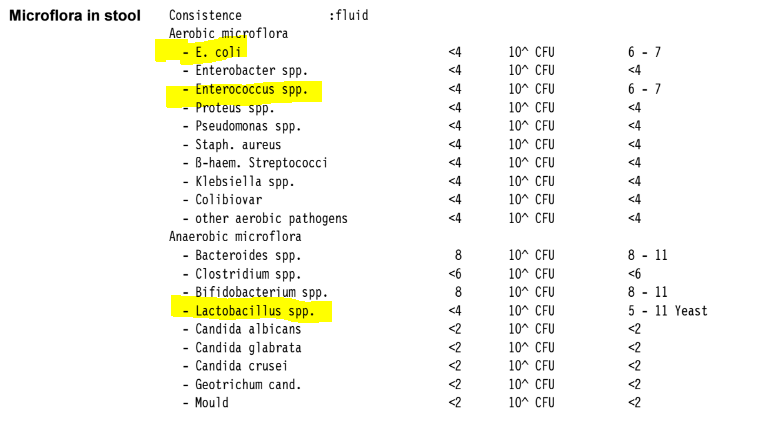
The first part is shown below — I highlighted those that are out of range.
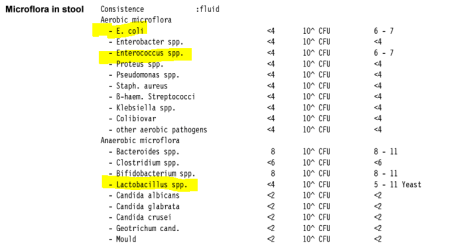
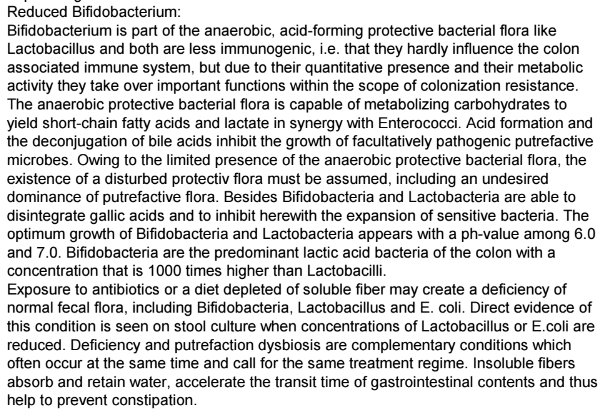
The rest of the report is advice. An example is below
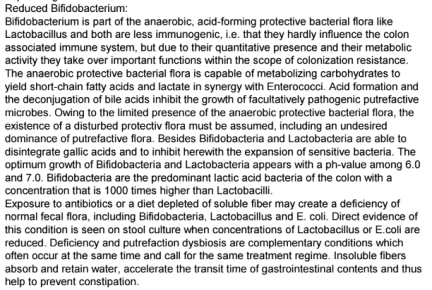
Bottom Line

The Synlab report provides the essential information for confirm a CFS/SIBO/FM microbiome dysfunction pattern. Unlike uBiome, we do not get a detail breakdown at the genus level which would allow custom tuning of diet and supplements (to the degree that we have knowledge – which is very very limited for some bacteria genus). On the plus side, you likely get the results back much sooner (days instead of weeks).

Patient Suggestions

I am pleased to see that many things helped at least temporarily, and thank you for detailing them!

Eating unwashed out of the ground (from known clean environments) is definite a thumbs up from me. The germs on those are more likely good germs. I recall reading that the human biome is closest to ‘underground plant bacteria world’ which likely reflect our ancestral eating habits.

Turmeric(Curcumin) Response

Bactericidal Activity of Curcumin I Is Associated with Damaging of Bacterial Membrane [2015]

states “Our study shows the strong antibacterial potential of curcumin I against all the tested bacteria from Gram-positive(Staphylococcus aureus and Enterococcus faecalis) as well as Gram-negative groups(Escherichia coliand Pseudomonas aeruginosa). ”

  • “It is effective against microbial pathogens like bacteria, virus and fungi.” [2017]

My take is that turmeric is very effective against your pathogens and those are likely dumping massive quantity of toxins. You may wish to retry again starting with very very low dosages and working up. You may wish to review literature on turmeric also.

It worked once and then stopped working

There are two concepts to keep in mind:

  • Corrective — makes things better
  • Prophylactic — keeps things better

When something appears to stop working — but did work for a while, you should move it to your prophylactic list to cycle thru every few weeks originally (every few months eventually). If a prophylactic has a corrective response, you should reduce the cycle time for it.

Many CFSers want the correctiva impact, but do not get prophylactic supplements!

Where to go from here

Suggestions for going forward:

  • Theoretical Supplements at least, it allows a normal healthy microbiome to have food while we get the rest of them established.
  • Licorice may help with the low blood pressure (other readers reported success with this)
  • Discuss with your MD about systematically rotating thru every tetracycline class antibiotics available (I believe different brands of each antibiotics are likely different marginally — so on the 2nd pass, try to get a different brand when practical). See this post for why.
  • Headaches/brain fog: try regular aspirin (325mg/each meal) for a few days and also piracetam. One cause of headaches can be low oxygen delivery to tissue (common in FM). If these help, see this post and attempt to get testing for genetic coagulation defects (so you know what to treat specifically).

As always, consult with a knowledgeable medical professional before any changes of supplements etc.