MicrobiomePrescription Site Revision – Stage 1a

Another portion of the revision has been completed.  This consists of two parts:

  • Displaying the percentage of gut samples that have a specific bacteria level
  • Refactor of information on each bacteria level

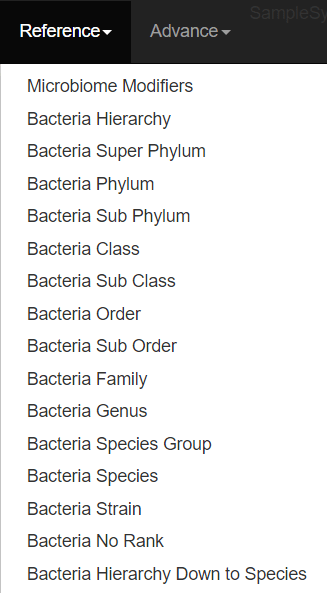
I have expanded the reference to every level of the hierarchy

choices1

Bacteria Level

An example is shown below

Bacteria Species_group

Click the appropriate link if you have an overgrowth or undergrowth

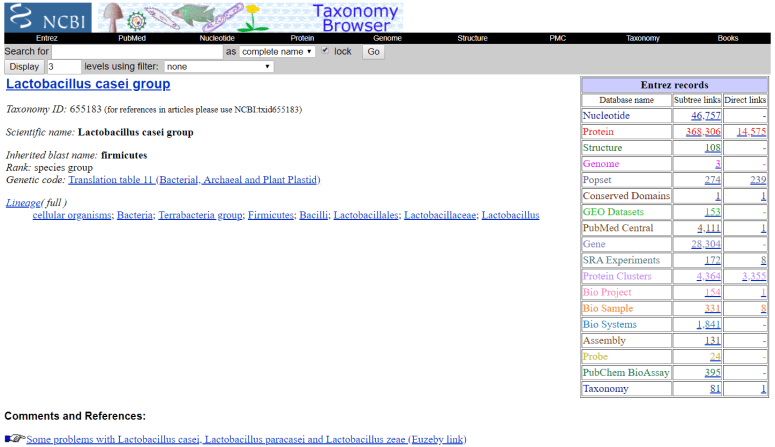
Bacteria (% of samples with it) Modifiers Data Punk NCBI Taxonomy
Acinetobacter calcoaceticus/baumannii complex (0.6% of Samples) Modifiers Bacteria Information Literature
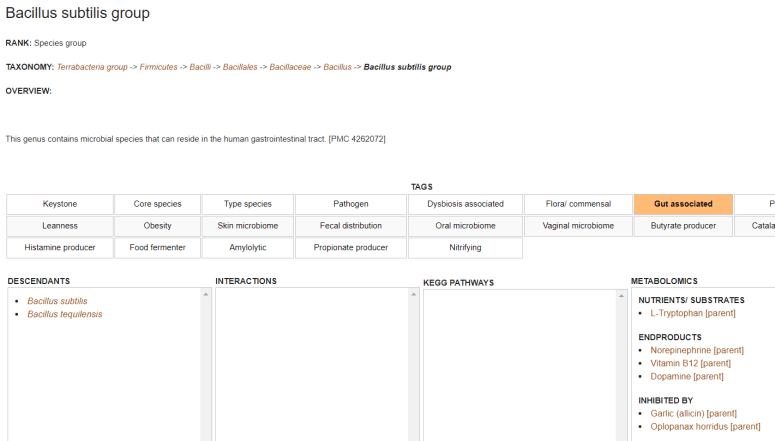
Bacillus subtilis group (3.59% of Samples) Modifiers Bacteria Information Literature
Enterobacter cloacae complex (1.8% of Samples) Modifiers Bacteria Information Literature
Lactobacillus casei group (7.78% of Samples) Modifiers Bacteria Information Literature
Pseudomonas aeruginosa group (3.59% of Samples) Modifiers Bacteria Information Literature
Pseudomonas fluorescens (0% of Samples) Modifiers Bacteria Information Literature
Streptococcus anginosus group (1.8% of Samples) Modifiers Bacteria Information Literature
Streptococcus dysgalactiae group (1.2% of Samples) Modifiers Bacteria Information Literature

The literature link takes you to the National Institute of Health site, where you have many additional links of a technical nature.

ncbi

And DataPunk for the other

dp

Hierarchy Tree

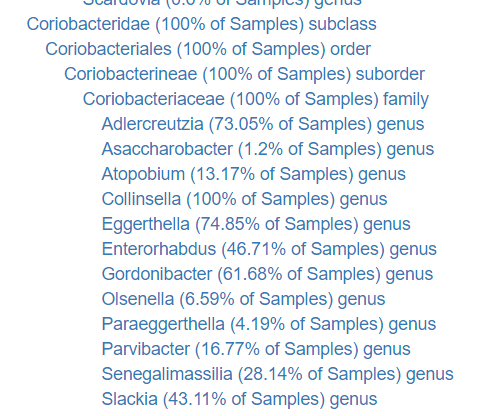
If you go to Bacteria Hierarchy or  Bacteria Hierarchy Down To Species you will see the percentage of gut samples that have a specific bacteria.

tree1

This is important because my long standing question is which low or no count bacteria should we be concerned about to increase. A low Olsenella level is likely not a concern, because most people have none of it. A low Coriobacteriaceae level may be a concern.

If you have a very high level of Olsenella, then this may be a concern. The pending refactor of recommendations will allow have a default (my own assumptions) filtering and the ability for readers to modify it to suit their own assumptions.

Bottom Line

These enhancements allow easy access to additional technical information and also allow us to see which bacteria we expect to see normally. This means we can include bacteria that should be there but which are at an abnormally low level in the revised recommendations.

MicrobiomePrescription Site Revision – Stage 1

This week I have taken off from work to do some serious refactoring on the recommendation site. The first phrase is to simplify recommendations and make items clearer for the brain fogged. At present we have 6,977 different relationships for modifying bacteria in our database.

Example:

  • One of the recommendations was for  naringenin. This is mainly found in grapefruit fruit . Very few of my readers would discover this.
  • Often the same item would have multiple names, common name, scientific name or the dominant chemical in it.

The apparent change in Stage 1 is on a single item “Modifiers”, http://microbiomeprescription.com/Library/GutModifiers

Stage1

You will see that the old items are clustered into groups.

Picking an aggregate

You will see what they appear to impact overall. Often we lack appropriate studies — but ‘similar items’ can be inferred to have similar effects. This allows us to make a reasonable guess when we lack studies.

bacillus probiotics

The following are impacted

Taxonomy Rank Effect Citations Links
Betaproteobacteria class Decreases Studies Also modified by
Acidaminococcaceae family Decreases Studies Also modified by
Bacillaceae family Increases Studies Also modified by
Bacteroidaceae family Increases Studies Also modified by
Clostridiaceae family Decreases Studies Also modified by
Lachnospiraceae family Increases Studies Also modified by
Methanobacteriaceae family Decreases Studies Also modified by
Pasteurellaceae family Increases Studies Also modified by
Rikenellaceae family Decreases Studies Also modified by
Ruminococcaceae family Increases Studies Also modified by
Veillonellaceae family Increases Studies Also modified by
Verrucomicrobiaceae family Increases Studies Also modified by
Acidaminococcus genus Decreases Studies Also modified by
Akkermansia genus Increases Studies Also modified by
Alistipes genus Decreases Studies Also modified by
Bacillus genus Increases Studies Also modified by
Bacteroides genus Increases Studies Also modified by
Clostridium genus Decreases Studies Also modified by
Faecalibacterium genus Increases Studies Also modified by
Haemophilus genus Increases Studies Also modified by
Megamonas genus Increases Studies Also modified by
Methanobrevibacter genus Decreases Studies Also modified by
Roseburia genus Increases Studies Also modified by
Methanobrevibacter smithii species Decreases Studies Also modified by

Picking an original citation

This shows the various aggregations that it has been placed into and the specifics..

bacillus subtilis natto

The following are impacted

Taxonomy Rank Effect Citations Links
Betaproteobacteria class Decreases Studies Also modified by
Clostridiaceae family Decreases Studies Also modified by
Rikenellaceae family Decreases Studies Also modified by
Alistipes genus Decreases Studies Also modified by
Clostridium genus Decreases Studies Also modified by

Studies

Clicking Studies, shows where this information came from.

  1. Effect of Feeding Bacillus subtilis natto on Hindgut Fermentation and Microbiota of Holstein Dairy Cows.
    Asian-Australasian journal of animal sciences (Asian-Australas J Anim Sci ) Vol: 27 Issue 4 Pages: 495-502
    Pub: 2014 Apr Epub:

    • Song DJ
    • Kang HY
    • Wang JQ
    • Peng H
    • Bu DP

Links

This takes you to other things that modifies the bacteria.

In the example below, we see high fat diet increases and low fat diets decreases (results from different studies agreed). BUT we also see that  ketogenic diet  has a contrary effect — possibly due to the low carbohydrate component. (The ketogenic diet is a high-fat, adequate-protein, low-carbohydrate diet that in medicine is used primarily to treat difficult-to-control epilepsy in children. The diet forces the body to burn fats rather than carbohydrates.Wikipedia)

Betaproteobacteria

General Specific Effect
bacillus probiotics bacillus subtilis natto Decreases
bacillus subtilis natto probiotic bacillus subtilis natto Decreases
bacillus subtilis probiotic bacillus subtilis natto Decreases
cellulose carboxymethyl cellulose Increases
emulsifiers (additives) polysorbate 80 Increases
fraxinus angustifolia herb fraxinus angustifolia Increases
high fat diet high fat diet Increases
ketogenic diet Decreases
low fat diet low fat diets Decreases
polymannuronate hydrolase supplement polymannuronic acid Decreases
pulse / legumes navy bean Increases
taurine amino acid l-taurine Decreases
walnuts nuts walnuts Decreases

On the above, if you click the links under effect,

ketogenic diet

Decreases

You will again be taken to the list of studies

  1. tion
    Acta neurobiologiae experimentalis (Acta Neurobiol Exp (Wars) ) Vol: 77 Issue 1 Pages: 18-30
  2. Effects of diet on gut microbiota profile and the implications for health and disease.
    Bioscience of microbiota, food and health (Biosci Microbiota Food Health ) Vol: 32 Issue 1 Pages: 1-12
  3. Short-term impact of a classical ketogenic diet on gut microbiota in GLUT1 Deficiency Syndrome: A 3-month prospective observational study.
    Clinical nutrition ESPEN (Clin Nutr ESPEN ) Vol: 17 Issue Pages: 33-37
  4. Effects of Consuming Xylitol on Gut Microbiota and Lipid Metabolism in Mice.
    Nutrients (Nutrients ) Vol: 9 Issue 7 Pages:
  5. Ketogenic diet poses a significant effect on imbalanced gut microbiota in infants with refractory epilepsy.
    World journal of gastroenterology (World J Gastroenterol ) Vol: 23 Issue 33 Pages: 6164-6171
  6. Gut Microbiome-Induced Shift of Acetate to Butyrate Positively Manages Dysbiosis in High Fat Diet.
    Molecular nutrition & food research (Mol Nutr Food Res ) Vol: 62 Issue 3 Pages:
  7. Curated database of commensal, symbiotic and pathogenic microbiota
    Generative Bioinformatics (Center of Excellence in Generative Medicine ) Vol: Issue
  8. Influence of diet on the gut microbiome and implications for human health.
    Journal of translational medicine (J Transl Med ) Vol: 15 Issue 1 Pages: 73
  9. Sodium butyrate attenuates high-fat diet-induced steatohepatitis in mice by improving gut microbiota and gastrointestinal barrier
    World Journal of Gastroenterology (World J Gastroenterol ) Vol: 23 Issue 1 Pages: 60-75

Bottom Line

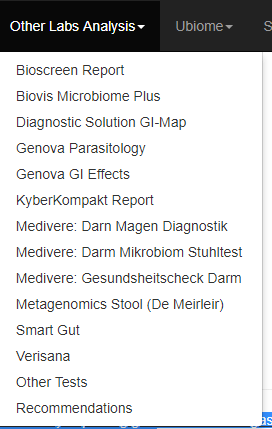
This is stage 1, reorganizing the data. Stage 2 will be adding a second recommendations choice to use the reorganized data.  The second phrase will be on the “Other Lab Analysis” reports to test that the results are similar.

OtherLabs

The third phrase will be applying it to the uBiome data.

Quality Assurance Needed!

I have done my  best guess at aggregations. I may be missing some or have some incorrect. Please email me at Ken /at/ lassesen.com with recommendations/corrections.


Blastocystis hominis infections? Ignore or act?

A reader wrote me because of progress with medical professionals have not happen and there have been significant apparent side-effects from

“on the that meeting with the doctor I discussed my parasitic infection with blastocystis hominis, and the s.boulardii treatment so he prescribed to me OMNIFLORAN (  (Lactobacillus gasseri and Bifidobacterium longum) & Perenterol Forte.  (Saccharomyces cerevisiae)

I started taking both but due to constipation that became more severe I decided to stop & wait 1 week then start with the yeast first and then introduce the probiotic.
After around 10 days +- of taking it a very strange thing happened to me (was almost 3 weeks ago) , while doing my workout which I regularly do, in one of the trainings that I didn’t do a warm up & started squatting with a heavier than usual weights I felt a pinching pain in the knees, continued a bit and then removed the weights and went on with the workout.
2-3 days later I start feeling muscle and joint paint in my entire body but especially my legs. I’m used to getting sore muscles but they recover and are not that bad, this time it continued and I couldn’t sleep well & had to put my legs on a pillow, couldn’t exercise as I used to be very active and so on.
I went to massages which relieved it a bit but still I had pain around joints (like pinching) when I bend or do sharp movements, and stiffness in my ankles that was so awful. I also felt weak, tired & super exhausted.
To make it a bit shorter, after 2 weeks of massage with physiotherapists, ultrasound and some electric differentiation treatment with high doses of vitamin C,E & magnesium I started to feel better. In the 3rd week now I started to move a bit and do some yoga and treadmill walking with some exercises for improving hip rotation and strengthening the knees but it is still a bit difficult.”

What does the literature report?

I cannot advise what a reader should do, such must come from medical professionals. What I can do is simple report what is in the literature (with links to the literature) for educational purposes.

  • Blastocystis hominis, previously considered a harmless yeast, is now classified as a protozoan inhabiting the human intestinal tract. The pathogenicity of B. hominis remains controversial and is currently the subject of extensive debate. As a result of the uncertainty surrounding the pathogenic role of B. hominis, large-scale treatment trials of B. hominis infection have so far been lacking. In spite of this, several drugs have been reported to be active against the parasite.” [2003]
  • “Because of this vast diversity, it has been suggested that the human parasite should no longer be referred to as Blastocystis hominis but instead should be called Blastocystis spp. or Blastocystis spp. subtype n (where n is the subtype number according to the Stensvold classification)” [2012]
    • “There has been debate in the literature concerning the question of the pathogenicity of Blastocystis. Some studies suggest an association between the parasite and disease, but others do not [31821]. “
    • “A causal relationship has never been established for Blastocystis and diarrhea, and no reliable animal model exists, so Koch’s postulates have not been demonstrated for this organism. “
    • “in some studies, Blastocystis was detected more frequently in patients with IBS than in a control group [273235], whereas in other studies there was no association [1844]. “
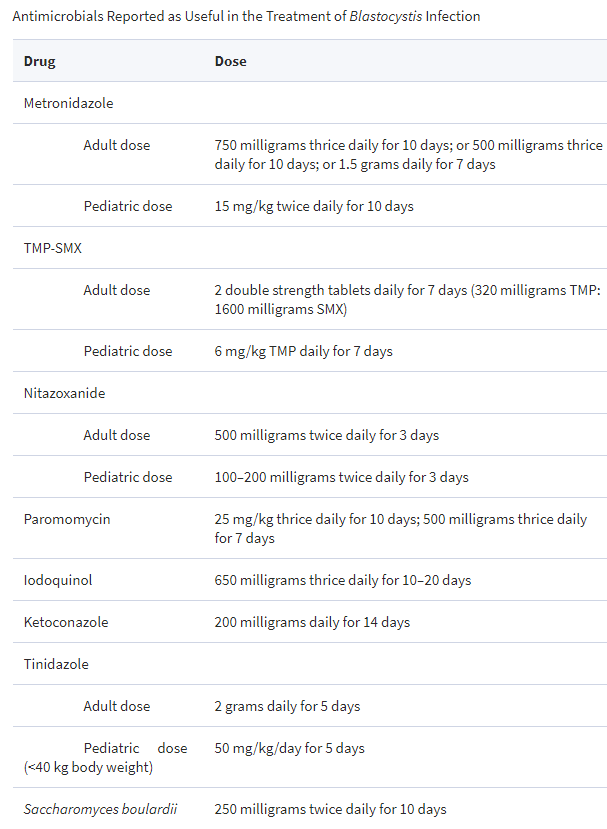
    • “Metronidazole is considered first-line treatment, but the success of eradicating Blastocystis with this drug has been reported to be anywhere from 0% to 100% [53]. “
    • blast
  • “Parasite infection by B. hominis is one of the most common diseases in our tropical medicine unit. Most patients are asymptomatic, or their symptoms can be attributed to other parasite infections. In those cases in which symptoms persist without being able to attribute them to other causes, a specific treatment is recommended.” [2018] i.e. a vacation to a tropical area, risks infection.
    • “Parasitic stool testing in newly arrived refugees in Calgary, Alta.” [2017]. 30-40% has parasites. Since refugees often end up in food service, there is a risk that eating out risks infection.
  • “In Poland, the subtypes ST1, ST2, ST3, ST4, ST6 and ST7 have been reported in humans so far. ” [2017]  i.e. there are multiple types
  • Low efficacy of metronidazole in the eradication of Blastocystis hominis in symptomatic patients: Case series and systematic literature review. [2017]
  • Modulating the Gut Micro-Environment in the Treatment of Intestinal Parasites. [2016]
    • “In fact, B. hominis is probably the most common protozoan detected in human faecal samples worldwide. Infection occurs in both immune-competent and immune-compromised individuals. Reported prevalence ranges from 2%–50% with the highest rates reported for developing countries with poor environmental hygiene. Infection appears to be more common in adults than in children “
    • “An additional clinical study that administered S. boulardii or metronidazole showed potential beneficial effects in B. hominis infection relative to a reduction of symptoms and presence of parasites [19].”
  • Clinical efficacy of Saccharomyces boulardii or metronidazole in symptomatic children with Blastocystis hominis infection.[2011] – 93+% cure rate in children with either reported. S. boulardii (250 mg twice a day,

Mayo Clinic

“If you have blastocystis without signs or symptoms, then you don’t need treatment. Mild signs and symptoms may improve on their own within a few days.

Potential medications for treating blastocystis infection include:

  • Antibiotics, such as metronidazole (Flagyl) or tinidazole (Tindamax)
  • Combination medications, such as sulfamethoxazole and trimethoprim (Bactrim, Septra, others)
  • Antiprotozoal medications, such as paromomycin, or nitazoxanide (Alinia)

However, keep in mind that response to medication for blastocystis infection varies greatly from person to person. And, because the symptoms you’re having might be unrelated to blastocystis, it’s also possible that any improvement may be due to the medication’s effect on another organism.”

Bottom Line

There appears to be no firm evidence that blastocystis infections need treatment. It appears to be an opportunistic infection that simply grows as a result of other issues. Those other issues are what should be treated.

The reader took Saccharomyces cerevisiae (NOT Saccharomyces boulardii) for 10 days. I could find no literature that this probiotic is effective for blastocystis infections.

Saccharomyces cerevisiae  impacts the microbiome also. I have nothing in my database on the impact of this on the microbiome. This reader also included her KyberKompact Pro report. The report showed the typical profile commonly seen:

  • Low Lactobacillus
  • Low Bifidobacterium
  • Low Escherichia Coli
  • Low Enterococcus spp.
  • Low Faecalibacterium prausnitzii
  • Low Akkermansia muciniphila

For S. Cerevisiae, I found:

  • “Administration of S. cerevisiae RC016 caused the decline of a logarithmic unit for Enterobacteriaceae counts compared to the control.” [2016] – making the low Enterococcus worst.
  • “SCB consumption positively influenced the establishment of the Porphyromonadaceae and Ruminococcaceae bacterial families in the colon. ” [2015]

Best suggestion moving forward:

  • Get a uBiome done (simply because it gives more information!)
  • Assume Enterococcus reduction is contributing to the symptoms.

See Enterococcus [genus] undergrowth for changes in diet that may help. Suggestions are:

  • Bioflorin Enterococcus faecium SF 68
  • Reservatrol (aka. Red Wine polyphenol)
  • Sesame cake/Meal
  • Buckwheat
  • Navy and broad beans.

This is an education post to facilitate discussing this approach with your medical professionals. It is not medical advice for the treatment of any medical condition. Always consult with your medical professional before doing any  changes of diet, supplements or activity. Some items cites may interfere with prescription medicines.


Depression Recap and possible pure diet intervention

My earlier posts were done before I had build up an analysis application for modifying the microbiome.

Depression often runs in families. The earlier naive assumption is that it was inherited by DNA. Today we know that both DNA and microbiomes are inherited. The microbiome is much easier to modified than DNA. This title says it well:
The relationship between dietary quality, serum brain-derived neurotrophic factor (BDNF) level, and the Val66met polymorphism in predicting depression.[2017]

  • “Higher dietary quality was associated with both decreased depression incidence and severity in this cross-sectional analysis. “

DNA Aspect

There is some associations that have been found, but no simple smoking gun at present, a few recent papers

Diet and Depression

Direct Studies on Depression

  • ” Low intake of riboflavin[Vitamin B2] was associated with an increased risk of depression in women but not in men.” [2016]
  • “An “omnivore” like diet high in amino acids, cobalamin [Vitamin B12], zinc, phosphorus, saturated fat, cholesterol and pantothenic acid[Vitamin B5] is associated with reduced psychological disorders. ” [2018]
  • Vitamin B-6 and depressive symptomatology, over time, in older Latino adults.[2018]
    “Our data suggest that identification and treatment of vitamin B-6 deficiency may be a useful preventive approach in this population.”
  • Saffron (powder or tea)
    • ” The administration of a standardised saffron extract (affron®) for 8 weeks improved anxiety and depressive symptoms in youth with mild-to-moderate symptoms, at least from the perspective of the adolescent. However, these beneficial effects were inconsistently corroborated by parents.” [2018]
    • ” In fact, saffron with its active ingredients (Crusin and Saffranal) by serotonin and dopamine secretion in the brain, help in reducing depression among recovered consumers of methamphetamine living with HIV/AIDS.” [2018]
    • ” Saffron has beneficial effects on depression and homocysteine level in patients with major depression.” [2018]

Microbiome

Some of the newer articles:

  • “Compared with their healthy counterparts, increased Actinobacteria and decreased Bacteroidetes levels were found in female and male MDD patients, respectively.” [2018]
  • “As a result, 279 significantly differentiated bacterial proteins (P<0.05) were detected and used for further bioinformatic analysis. According to phylogenetic analysis, statistically significant differences were observed for four phyla: Bacteroidetes, Proteobacteria, Firmicutes, Actinobacteria (P<0.05, for each). Abundances of 16 bacterial families were significantly different between the MDD and healthy controls (P<0.05). ” [2018]
  • “10 clinical trials with a total of 1349 patients were reviewed, comparing the use of probiotics to placebo controls. There was no significant difference in mood between the treatment and placebo group post-intervention”  [for depressive symptoms] [2018] – These studies are likely for “standard” probiotics (Lactobacillus, etc).
  • ” (R)-ketamine, but not lanicemine, significantly attenuated the altered levels of Bacteroidales, Clostridiales and Ruminococcaceae in the susceptible mice after chronic social defeat stress (CSDS).” [2017]

Diet Only Interventions Possibilities:

  • B Vitamins:
    • B2
    • B5
    • B6
    • B12
  • Amino acid supplementation
  • Zinc,
  • Phosphorus,
  • Saturated fat,

From the microbiome site, we have the following recommendations as generic results.

  • Barley
  • Walnuts
  • Cranberries
  • Fish Oil
  • Pomegranates
  • Biotin (Vitamin B7)
  • Peas
  • Baby aspirin

Do not go:

  • Gluten-free
  • Avoid high sugar content

This is an education post to facilitate discussing this approach with your medical professionals. It is not medical advice for the treatment of any medical condition. Always consult with your medical professional before doing any  changes of diet, supplements or activity. Some items cites may interfere with prescription medicines.


Are probiotics 100% safe – No, Just 99.99% safe

A reader messaged me about the safety of soil based organisms probiotics. I have touched on this a year ago in another post, there have been more studies since then. For hundreds of thousands of years, soil based organism was a part of our diet. I recall reading that the human gut bacteria has strong similarity to that seen around root vegetables. This is not surprising, pulling roots out of the ground (without washing!!!) was likely common for most of these thousands of years…

“But I read about someone getting sick from SBO!”

Well, there is similar risk from eating “safe” lactobacillus probiotics, cheese, yogurt, etc. Even deaths have been reported: “Lactobacillus-Cause of Death ” [2010]

” Lactobacillus has been used as a probiotic bacteria to treat diarrhea and is also present in dairy foods. It is hence commonly used. Lactobacillus endocarditis, an exceedingly unusual disorder, is accompanied by high mortality and poor response to treatment. ” – OUCH!

  • “In recent years, infections caused by Lactobacillus and Bifidobacterium made up 0.05% to 0.4% of cases of endocarditis and bacteremia. In most cases, the infections were caused by endogenous microflora of the host or bacterial strains colonizing the host’s oral cavity. According to a review of cases of infections caused by bacteria of the genus Lactobacillus from 2005 (collected by J.P. Cannot’a), 1.7% of infections have been linked directly with intensive dairy probiotic consumption by patients. ” [Lactic acid bacteria and health: are probiotics safe for human?]. [2014]

Some more citations…’ bacteremia is a bad bacteria infection, endocarditis is a bacteria infection of the heart. It has been only in the last few years

Bottom Line

Probiotics are generally safe. No probiotic is 100% safe. To me, soil based bacteria are likely more beneficial then lactobacillus because they went along with our ancestor’s diet long before we started domestication of milk producing animals. There may be considerable basis to the hygiene hypothesis which would result from our modern pathological obsession with sterilization of food in the belief that all bacteria are bad.