

I have been asked this often. My answer is extremely logical but not what you will get from most health experts (and unfortunately, may not be easy to determine for some).
The Diet….
Very simple — the type of diet that your ancestors ate 300+ years ago! Diet changes gene expression, i.e. microbiome AND dna adapts.
Last year, researchers discovered that these kinds of environmental genetic changes can be passed down for a whopping 14 generations in an animal – the largest span ever observed in a creature, in this case being a dynasty of C. elegans nematodes (roundworms)…. Usually, environmental changes to genetic expression only last a few generations.
Scientists Have Observed Epigenetic Memories Being Passed Down For 14 Generations
… studies have shown that both the children and grandchildren of women who survived the Dutch famine of 1944-45 were found to have increased glucose intolerance in adulthood.
From a post that I did three years ago:
Some nuggets that I found in a Christmas Present…
My wife gave me “Danish Cookbooks” by Carol Gold. This is NOT a cook book, but rather an academic study of cookbooks published in Denmark. I’m 100% Danish and very interested in history.
I have always been inclined towards going for ancestral diet patterns, and did Paleo for a while. My problem with Paleo is that it is more idealogical based than actual (scientific) archeologically based. It is also trying to jump the diet back thousands of years which effectively ignores how our bacteria evolved to meet our changes of diet.
A diet based on typical diet of your ancestors 400 – 1400 years ago is likely a better choice. You avoid the newly introduced foods, for example, potatoes. You also avoid process foods and modern additives. On the plus side, your gut bacteria is likely closer to the optimized bacteria your ancestors evolved from eating the same food for a thousand years.
In this book, I found two gems from the historical records:
- We have decreased the use of spice considerably — in 1600, the common spices were:
- cumin, anise, coriander, dill, fennel, lavender, sage, rosemary, mint, bay leaves, cloves, pepper, saffron, thyme, marjoram, nutmeg, cardamon, ginger, cinnamon, hyssop, wormwood, lemon balm, angelica-root.
- “The issue here is … the use of seasonings in general slackens” p.47
- Many of these spices (like wormwood and ginger) have strong antibacterial characteristics which would have kept some gut bacteria families in control well.
- “Their most common food was meat” p. 122
- White (wheat) bread was very uncommon, expensive, and typically seen only in upper class homes on special occasions(not as part of the regular menus). It appears that most of the carbohydrates came from Rye Bread.
I am sure that some readers who favor a diet that is vegan or vegetarian on ideological grounds would object to these suggestions. My response is simple, if your ancestors were vegetarians for centuries or millenniums (as some friends who were born in India can validly claim), then that is the right diet without any doubts.
Evidence shows that gut bacteria is inherited through generations — hence it is good to know what your ancestors ate because your gut bacteria have likely adapted to that diet. Given my heritage (which likely applies to people from the UK, Poland, northern France and Germany etc), this boils down to:
- Rye Bread without any wheat flour
- Meat and Fish (especially since the family seemed to always been within 5 miles of the coast back to 1500..)
- Vegetables:
- Cauliflower
- Artichoke
- Rutabaga
- Turnip
- Beets “From the Middle Ages, beetroot was used as a treatment for a variety of conditions, especially illnesses relating to digestion and the blood.”
- For more, see http://www.oldcook.com/en/medieval-vegetables
No potatoes — they really did not enter my ancestor dies until the early 1800’s – after one of my great-grandfathers was born. Little or no sugar (“Worldwide through the end of the medieval period, sugar was very expensive[1] and was considered a “fine spice“,[2] but from about the year 1500, technological improvements and New World sources began turning it into a much cheaper bulk commodity.” – Wikipedia)
This Wikipedia article may be a helpful start for many.
The last item needs to be taken with a touch of salt and sung: “A spoonful of soil helps the microbiome recover!” We have become hyper-hygienic. See the Hygiene hypothesis. This comes from a post in 2016:
“The Amish and Hutterites are U.S. agricultural populations whose lifestyles are remarkably similar in many respects but whose farming practices, in particular, are distinct; the former follow traditional farming practices whereas the latter use industrialized farming practices….Despite the similar genetic ancestries and lifestyles of Amish and Hutterite children, the prevalence of asthma and allergic sensitization was 4 and 6 times as low in the Amish” – i.e. industrialized farming practices resulted in six times (600%) the rate of asthma and allergies. See Innate Immunity and Asthma Risk in Amish and Hutterite Farm Children(2016). This is also echoed in their farm products!!! Amish and Hutterite Environmental Farm Products Have Opposite Effects on Experimental Models of Asthma [2016]. Given a choice of buying groceries from a Hutterite farm or a Amish farm, buy the Amish (non industrialized) groceries!!!!
So I advocate not a Paleo diet, but a regional medieval-food diet (modified for modern nutritional needs). No prepared foods (talk about being extremely unnatural!), so food prepared from scratch — ideally organic with heritage seeds.
Engineer Foods versus Heritage Food
For the last 100+ years, food has been breed for profitability, not health or nutrient content. Some examples:
- Shelf Life
- Time to market (especially animals — how long to get X pounds of meat at cheapest cost)
- Appearance
Using heritage, not just organic, seeds and stock. Simple example: Most modern milk are A1 milk, historical milk was A2.
Update from Archeology on Viking Diets
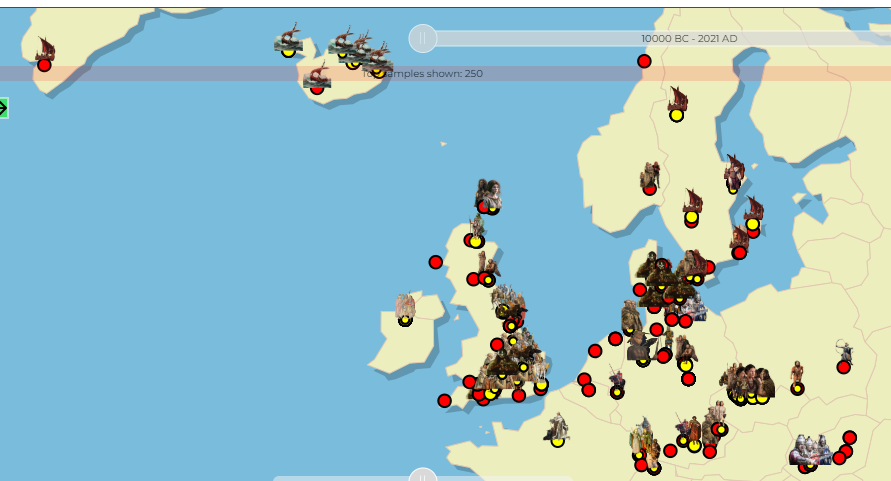
My DNA shows well where my ancestries lived or settled (i.e. Eastern England, a.k.a. DaneLaw). Map from https://mytrueancestry.com/ using my DNA. Using DNA is an awesome substitute for family history, especially for “Heinz 54” people
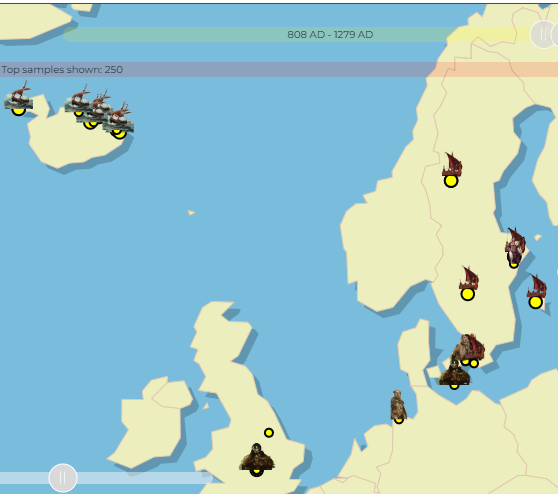
During the Viking age (800-1300 AD), we see a tighter pattern.
A reader asked about the “Viking Diet”. It may be a starting fad somewhere. For me to answer that, I use the result of archeological studies. Perplexity sums it us as:
———–
Archaeological evidence provides significant insights into the Viking diet, revealing a diverse and adaptable food culture:
Staple Foods
Vikings relied heavily on fish, particularly cod, plaice, herring, and halibut, caught along the Scandinavian coastline1. These were often dried for preservation and trade. Livestock such as pigs, cattle, sheep, and goats were kept for meat and dairy products1.
Plant-Based Foods
Vegetables like turnips, shallots, beans, peas, and goosefoot (similar to kale) were commonly consumed1. Cereals, especially barley, were found at most excavation sites across Scandinavia and used for bread, porridge, and beer1. Berries, fruits, and honey provided sweetness in their diet5.
Dietary Composition
Analysis of bone samples from Greenland Viking colonies indicates a shift in diet over time. Around 1000 CE, their diet was predominantly terrestrial, but by 1450 CE, it had become mostly marine-based3. This change is evident from stable carbon isotope analysis of bone collagen.
Nutritional Breakdown
Based on common Scandinavian foods, the Viking diet is estimated to have consisted of:
- 30-35% protein
- 35-40% fats
- 30% carbohydrates4
Seasonal Adaptations
Vikings adapted their diet to seasonal availability, preserving foods through smoking, drying, and fermentation2. This allowed them to maintain a varied diet throughout the year.
Regional Variations
Archaeological finds show differences in diet based on location. Coastal Vikings had more access to fish, while inland populations relied more on livestock and crops13.
Cooking and Eating Habits
Evidence of cooking equipment, tools, and food remains at archaeological sites provides insights into food preparation and storage methods1. Communal eating was important, as suggested by references to shared porridge in Viking sagas1.
This archaeological evidence paints a picture of a Viking diet that was diverse, adaptable, and more sophisticated than often portrayed in popular culture.
Bottom Line
For me porridge every morning is part of my preferred diet with a preference for fish.
This was posted 7 years ago. My test results from keeping to this is shown below

 CFS Remission