Sjögren syndrome microbiome profile added

I have written about Sjögren syndrome in several prior posts.

A reader just got an addition of Sjögren syndrome to their diagnosis, so I checked the literature and added what is reported to http://microbiomeprescription.com/

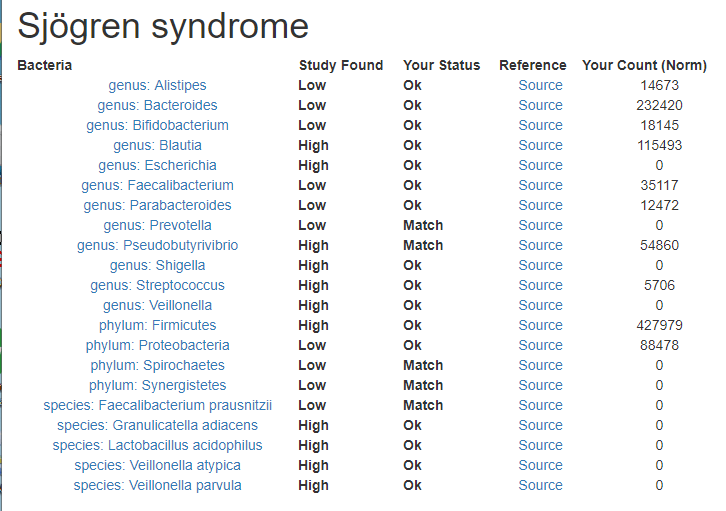
At the phylum level (highest level), there was a 50% match with the literature. The new profile is shown below.

sj

Bottom Line

All of the autoimmune profiles come from different studies, often with different measurement methods. The profiles are the best current knowledge but are far from being definitive. The current list are:

ADHD – Attention-deficit syndrome
Alzheimer’s Disease
Autism
Autoimmune Disease
Brain Injury
Chronic Fatigue Syndrome
Diabetes Type 2
Crohn’s Disease
Depression
Fibromyalgia
Gout (Arthritis)
Hashimoto’s thyroiditis
High Blood Pressure
Histamine Issues
Inflammatory Bowel Disease
Irritable Bowel Syndrome
Metabolic Syndrome
Mood Disorders
Rheumatoid arthritis
Schizophrenia
Sjogren’s Syndrome
Systemic Lupus Erythematosus
Ulcerative colitis

This is an education post to facilitate discussing this approach with your medical professionals. It is not medical advice for the treatment of any medical condition. Always consult with your medical professional before doing any  changes of diet, supplements or activity. Some items cites may interfere with prescription medicines.


Post M: Options for testing for coagulation issues / defects

This is post M, that is #1000 post on this blog. In it I will attempt to answer Nick’s comment on Thick Blood, Clots dimension of CFS etc

Nick:

I assume the minimum list are still tests rarely done? It’s interesting reading, especially as my wife’s head symptoms are getting worse, I’m wondering if there’s a blood flow issue and wonder how I could test the theory safely?

First thing, by medical standards, this can only be answered by a hematologist that is willing to do a full comprehensive panel, and an insurance company willing to pay for it.

There are more than one defect!!

I recall literature stating that they estimate that only 80-90% of the thick blood issues can be identified by lab tests. My own defect, Factor II or Prothrombin G20210A was only discovered in the 1990’s despite

This diagram shows the cascade — if there is an issue at any one point, then thick blood can occur because of this bottleneck.
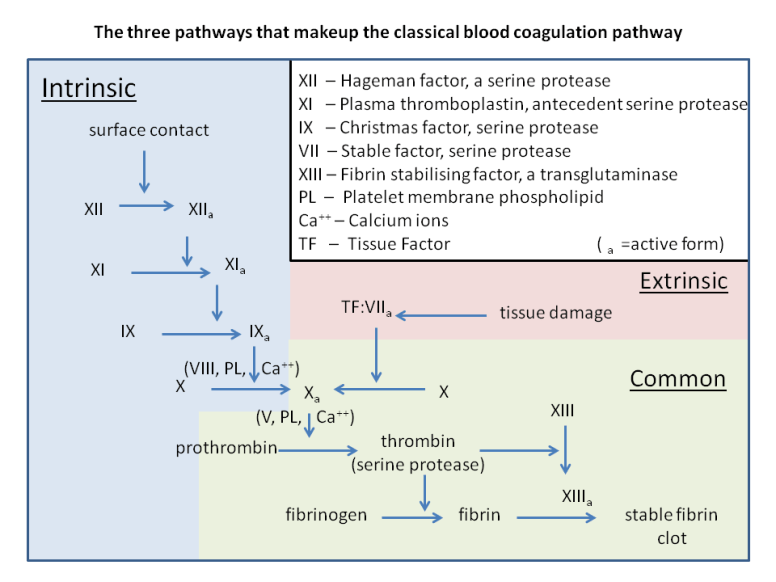
classical_blood_coagulation_pathway

Cave Lector, hoc est, ad disputationem de tua professio medicinae tantum.

Decreasing Fibrin deposits that reduces oxygen flow

This is actually one that may be a challenge to test by lab results. The fibrin deposits may have happened due to past events — the results are still there (in theory  being slowly dissolved usually) but the cause is no longer there.

720px-genesis_of_fibrin_out_of_fibrinogen-svg

Recently I was on antibiotics and used fibrin dissolvers  (fibrinolytics) to improve the flow of antibiotics into tissue. I gave my physician the notes below — she was very interested and did not raise any objections to my using them. She was also honest: she was unfamiliar with them and could not give guidance. Notes in blue are precisely what I shared with her.
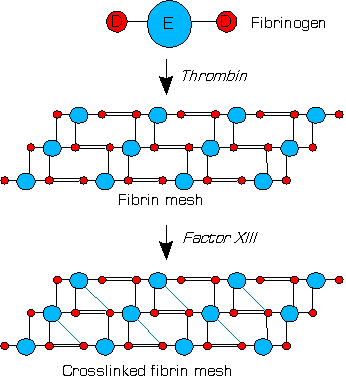
stabilisation_de_la_fibrine_par_le_factor_xiii

Nattokinase

4000 FU x 4/day

“ a nattokinase/fibrinolytic enzyme and this enzyme may be considered as a new source for thrombolytic agents.” [2011] https://www.ncbi.nlm.nih.gov/pubmed/?term=Nattokinease+fibrinolytics

Lumbrokinase

80 mg x 4/day

“The six lumbrokinase fractions (F1 to F6) with fibrinolytic activities were purified from ..“ [2004]  https://www.ncbi.nlm.nih.gov/pubmed/15469696

Serrapeptase

240,000 SPU’s x 4/day

“ reports suggest it to possess anti-atherosclerotic effects also, due to its fibrinolytic and caseinolytic properties.” [2013] https://www.ncbi.nlm.nih.gov/pubmed/23380245

“concentration of antibiotic in tissue increased by

  • ciclacillin – 8.5 fold (850%)
  • ampicillin – 5.7 fold (570%)
  • cephalexin – 3 to 5 fold (300-500%)
  • minocycline – 2.2 fold (220%)”

[1980] https://www.ncbi.nlm.nih.gov/pubmed/7001087?dopt=Abstract

Bromelain

1200 GDU x 4/day

“ studies demonstrate that bromelain exhibits various fibrinolytic, antiedematous, antithrombotic, and anti-inflammatory activities. “ [2012] https://www.ncbi.nlm.nih.gov/pubmed/23304525

*Bromelain has been demonstrated to enhance the potentiation of antibiotics (Altern. Med. Rev. 1998;3:302–5)

“[A PLANT PROTEASE FOR POTENTIATION AND FOR POSSIBLE SUBSTITUTION OF ANTIBIOTICS].”  1965, https://www.ncbi.nlm.nih.gov/pubmed/14295046

Also:

Bottom Line on fibrinolytic
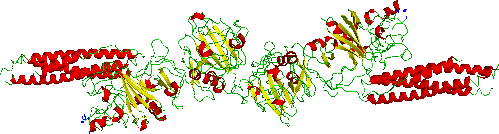
fibrinandligand

  • There is a risk of altered drug penetrations here (for antibiotics — well documented). So starting at a low dosage and increasing slowly is recommended.
  • It is unlikely there will be an immediate effect. There may be layers and layers of fibrin which may need to be dissolved layer by layer.
  • Each of the above acts on different parts/type of fibrin. I usually do a preventative cycle of each for a week, once a quarter.

Aspirin Recklessness

This reckless experiment was how I got my family practice MD to order coagulation tests from Hemex Labs (sold to a larger firm since) and got to know the director there well, Dave Berg.

I looked at a regular aspirin bottle and what the maximum dosage it listed.  I did that every day up to the maximum number of days.  Logic was simple —  unless there are complicating factors (like ulcers), it was generally deemed to be safe.

On Drugs.com it states: 3g- 4g /day depending on condition, for example for a child:

aspirin

The usual full strength aspirin is 325 mg…  so we have 12 tablets/day

Around day 7, I was starting to run up and down the walls! The MD was persuaded of the coagulation dimension to CFS.

Bottom Line for Aspirin

Once I demonstrated the hypothesis and switched to grape seed extract. IMHO, keeping on aspirin had too many other risks if taken continuously. See WebMD for more background on grape seed extract.

Piracetam and other nootropics

I have taken this (in fact, I have a kilogram of piracetam on the shelf!!) and take it whenever I sense any cognitive issues (lack of concentration, slowness of thought). I recall trying to tutor a daughter (with coagulation defects) on math and she was unable to correctly add up columns of integers.  She took two tablets of piracetam and in about 20 minutes, she could not only add up the integers correctly, but also quickly grasp algebra content that was part of her homework.

It’s coagulation impact is described in this 1993 pubmed article

  • “The particular efficacy of 8 g piracetam daily in 3 divided doses at 8-hourly intervals can be attributed to its unique dual mode of action; inhibition of platelet function by inhibition of thromboxane A2 synthetase or antagonism of thromboxane A2 and increased formation of prostaglandin I2, together with a rheological effect involving reduction in blood and plasma viscosity through an increase in cell membrane deformability and a reduction of 30-40% in the plasma concentrations of fibrinogen and von Willebrand’s factor. In addition, the administration of piracetam appears to be devoided of adverse effects.”

You will recognized a lot of terms from earlier parts of this post.

Bottom Line on Piracetam (And Turmeric)

This definitely has the best safety profile. This drug is not on the pharmacy lists in the UK, Canada or US, your medical professional may be at a loss to know how to interpret and significant improvement caused by it.

Turmeric with 1% Black Pepper

Curcumin is an extract from Turmeric.

“Data showed that curcumin and BDMC(curcumin extract) prolonged aPTT and PT significantly and inhibited thrombin and FXa activities. They inhibited the generation of thrombin or FXa. In accordance with these anticoagulant activities, curcumin and BDMC showed anticoagulant effect in vivo. Surprisingly, these anticoagulant effects of curcumin were better than those of BDMC indicating that methoxy group in curcumin positively regulated anticoagulant function of curcumin. Therefore, these results suggest that curcumin and BDMC possess antithrombotic activities and daily consumption of the curry spice turmeric might help maintain anticoagulant status.” [2012]

Again, we are talking dosage of 8 – 16 gm/day of turmeric for therapeutic impact.

Bottom Line

Another relative safe way to test. This article found that extracts performed less well than the original. I have seen the same reported elsewhere and thus prefer the original instead of extracts usually!.

Bottom Line

Above are sharing of my experiences. I recall from conversations with Dave Berg that some coagulation defects are very hard to treat.

For more information, see these conversations with Dave Berg:

Hemex Protocol and Dave Berg


Usual Disclaimer:

This is an education post to facilitate discussing this approach with your medical professionals. It is not medical advice for the treatment of any medical condition. Always consult with your medical professional before doing any  changes of diet, supplements or activity. Some items cites may interfere with prescription medicines.


Heavy prebiotic and probiotic approach

A reader on her 2nd ubiome result had significant improvement but is also on a very restrictive diet due to severe histamine sensitivities. She asked for me to extract a probiotic centric set of suggestions. The site for upload of ubiome data and analysis is: http://microbiomeprescription.com/

Sample Id   Earlier Later
* All Profiles 198 171
* All Profiles HIGH 34 38
* All Profiles LOW 164 133
* Metabolism Average 1.02669902912621 1.00242718446602
* Metabolism Std Dev 0.465175253395532 0.226425618741316

The recommendations despite the high 171 score for all autoimmune profiles was very small.

l1

The solution was pretty simple

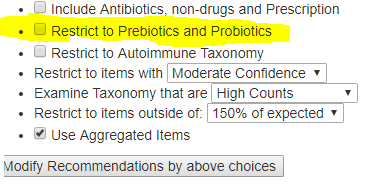
I have added another choices to filter by prebiotics and probiotics only.L2

The process becomes one of accepting less confidence. Remember — Confidence value reflects the number of studies finding a relationship, NOT how well it does it.

Our first step is

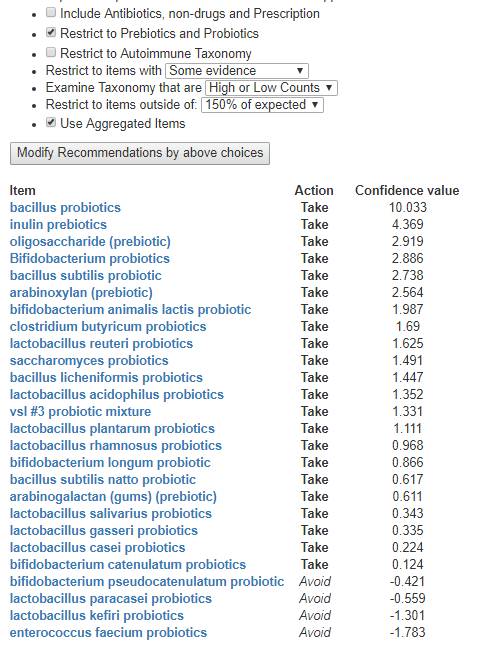
  • Going for High and Low
  • Some Evidence (at least one study)
  • Just Prebiotics and Probiotics

a1

Restricting to autoimmune takes a few items off the list, but not many.

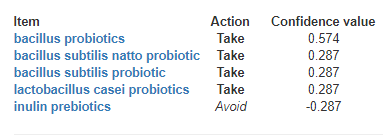
Trying just high counts and just low counts — we see most of the recommendations come from low counts. High counts are just a few items as shown below.

a2

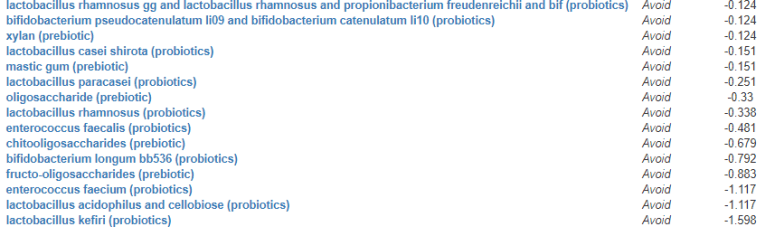
Turning off aggregation, the list became longer and more detail — for example, citing specific strains.

a3

Bottom Line

If there are severe food restrictions, then the latest revision of Suggestions allows you to focus on prebiotics and probiotics exclusively.

In the case of this reader, the reader went to CustomProbiotics (covered in this post) and ordered:

  • L. Acidophilus Powder
  • B. Longum Powder
  • L. Reuteri Probiotic Powder
  • L. Rhamnosus Powder

This reader had done this before and found that a single bottle of each lasted about 3 months and then does a new ubiome. Only L. Rhamnosus Powder is in common with the prior order.

Confession: I found a bug in suggestions.

  • High or Low – both returned High Recommendation
  • High and Low – returned Low Recommendations

This has been fixed.

This is an education post to facilitate discussing this approach with your medical professionals. It is not medical advice for the treatment of any medical condition. Always consult with your medical professional before doing any  changes of diet, supplements or activity. Some items cites may interfere with prescription medicines.


Inferring some microbiome from reactions?

A read wrote:
“Hi Ken. Not been too good recently, I was taking psyllium husk for extra dietary fibre, and I ended up with a symptom flare up, but strange eye symptoms as well.
Had eye checked, immediately sent to hospital because of a cotton wool spot in right eye. Been put on aspirin assumption it was clot based.
Anyway, it reminded me of some 11 years ago when I was trying aspirin and I tried ramping up the dose to 300mg, I had a real bad flare up in symptoms. What microbiome components could react like that?
Also, there’s still some trains of thoughts that imply chlamydia pneumoniae is a possible element of the illness in a subset of patients. We know aspirin can be effective against CPN. Can CPN exist in the gut or is it upper respiratory drainage upsetting the gut?
Could make an interesting post or two:-)”

So we have two causes of flares:

  • psyllium seed husk  (Plantago ovata Forsk) 
  • aspirin

No studies could be found for psyllium seed husk impact alone. We do find that it is high in arabinoxylan.

Going to known impacts of those two, we got the table below (at family level)


Taxonomy Rank Aspirin Arabinoxylan
Bacillaceae family Increases –
Bacteroidaceae family Decreases Increases
Bifidobacteriaceae family Decreases Increases
Clostridiaceae family Decreases Increases
Coriobacteriaceae family Decreases –
Desulfovibrionaceae family Decreases –
Enterobacteriaceae family Decreases –
Eubacteriaceae family Decreases Increases
Fusobacteriaceae family Decreases Decreases
Lachnospiraceae family Decreases Increases
Lactobacillaceae family – Increases
Peptostreptococcaceae family Decreases –
Porphyromonadaceae family Decreases –
Prevotellaceae family Increases –
Ruminococcaceae family Increases Increases
Streptococcaceae family Decreases –
Veillonellaceae family Decreases –
Verrucomicrobiaceae family Decreases Increases

At the family level Ruminococcaceae deviation is found in 4 autoimmune profiles but all of them were low  When we drop down to the genus level

  • Faecalibacterium HIGH –> Inflammatory Bowel Disease,Allergies
  • Ruminococcus HIGH –> Type 2 Diabetes, Autoimmune Disease, Irritable Bowel Syndrome, High Blood Pressure, Mood Disorders, Ulcerative colitis

Unfortunately, aspirin does not impact either of these and Faecalibacterium is increased by Arabinoxylan.

Bottom Line

It looks like reaction from two items is insufficient to infer what bacteria are involved, especially when the items have opposite type of effects across a lot of bacteria.

Map of treatment approaches for CFS/IBS/FM

A reader in Denmark asked me to recap where I am and what he can do prior to getting a ubiome done. I have been very busy working on the website at  http://microbiomeprescription.com/ for the last 5 months, so this is a quick catch up on older style posts.

The key premise is that every CFS/FM/IBS (and many autoimmune diseases) have unique to the individual microbiome dysfunction.  This mean that nothing will work for everyone.

I am formally trained as a mathematician, specializing in probability and statistics. My goal is to offer suggestions with significantly good odds of being helpful.

There are three main legs:

  • Taking items from user surveys with high benefit and low risk (often these items have never been studied in formal studies)
  • Taking items from PubMed published studies (often these are single studies which have never been repeated — hence ‘low reliability’)

Process

  • Assume the microbiome accounts for many symptoms and try adjusting it to deal with both overgrowth and critical undergrowth
    • This is typically a 2-3 months cycles because each set of modifiers will move the microbiome to a different state.

User Surveys

From User Surveys, the following are 4 times more likely to cause an improvement than making things worst. (raw data, simplified recommendations)

  • General Biotics Equilibrium – no information available
  • Ashwagandha (see what it modifies here)
  • Metronidazole (see what it modifies here)
  • Licorice, (see what it modifies here)
  • Neem. (see what it modifies here)

Publish Studies

I have done many posts (almost 1000 post), so I will just give one citation for each item below. Some of the studies were very specific on the patients selected, so the results may not apply to every one or condition.

  • Vitamin B1
    “The absence of blood thiamine deficiency and the efficacy of high-dose thiamine in our [CFS] patients suggest that fatigue is the manifestation of a thiamine deficiency, likely due to a dysfunction of the active transport of thiamine inside the cells, or due to structural enzymatic abnormalities. The administration of large quantities of thiamine increases the concentration in the blood to levels in which the passive transport restores the normal glucose metabolism in all cells and leads to a complete regression of fatigue.” [2013]
  • Vitamin B9  (Folate/Folinic acid)
    A remarkable 81% of CFS patients experienced subjective improvement of their symptoms after treatment with folinic acid” [2006] 
  • Vitamin B12
    Dose-response relationship and long-lasting effects of B12/folic acid support a true positive response in the studied group of patients with ME/fibromyalgia. [2015]
  • Vitamin D3
    Vitamin D deficiency changes the intestinal microbiome reducing B vitamin production in the gut. The resulting lack of pantothenic acid adversely affects the immune system, producing a “pro-inflammatory” state associated with atherosclerosis and autoimmunity [2016].

  • D-Ribose  
    WebMD
    , “Ribose is a kind of sugar that is produced by the body. It is used as a medicine… it has also been used to improve symptoms of chronic fatigue syndrome (CFS), fibromyalgia, and coronary artery disease. ”

  •  Magnesium
    “magnesium was demonstrated effective on ME/CFS patients’ symptom profiles.” [2012]

  • Prescript Assist Probiotic
    “Based on the results from the present 1-year extension study, treatment with this probiotic-prebiotic complex may be an option for short-term (2-4 weeks) and long-term ( approximately 60-week) reductions in IBS symptoms.” [2007]
  • Symbioflor-2 (E.Coli probiotic from Germany)
    “Treatment of IBS with the probiotic Symbioflor-2 is effective and superior to placebo in reducing typical symptoms of IBS” [2009]
  • Bifidobacterium bifidum
    “Bifidobacterium bifidum MIMBb75 effectively alleviates global IBS and improves IBS symptoms simultaneously with an improvement of quality of life.” [2011]
  • CoQ10
    “The results show that lowered levels of CoQ10 play a role in the pathophysiology of ME/CFS and that symptoms, such as fatigue, and autonomic and neurocognitive symptoms may be caused by CoQ10 depletion.” [2009]
  • curcumin, N-Acetyl-Cysteine, quercitin, silimarin, lipoic acid and omega-3 fatty acids
    “It is suggested that CFS patients should be treated with antioxidants, which inhibit the production of NFkappabeta, such as curcumin, N-Acetyl-Cysteine, quercitin, silimarin, lipoic acid and omega-3 fatty acids.” [2007]
    “Positive outcomes were highlighted in some included studies for polyphenol intakes in animal studies, D-ribose supplementation in humans and aspects of symptom alleviation for one of three polynutrient supplement studies. Omega three fatty acid blood levels and supplementation with an omega three fatty acid supplement also displayed positive outcomes in relation to chronic fatigue syndrome symptom alleviation.” [2017]

Dosages are a Challenge

In general dosages are ‘therapeutic’ – up to 1,250x RDA levels often.

  • Example for Vitamin B12
    • RDA Vitamin B12  2.4mcg [NIH]
    • The CFS MD, Dr. Myhill “I usually start with 1/2 mg (500 mcg) daily by subcutaneous injection, ” [web page]
    • This is 208x the RDA.
  • Example for Vitamin B1 – Benforiamine
    • RDA Vitamin B1  1.2 mg [NIH]
    • CFS study “leads to a complete regression of fatigue” dosages up to 1500 mg/day [2013]
    • This is 1,250x the RDA

Determining the maximum safe dosage is for health professionals to advise on.  I can cite studies and public literature — I cannot advise any one to do those dosages.

If you take the ‘bottle recommendations’ or RDA — and have no effect — I would suggest that response given a very low dosage for a CFS patient is probable .

I consolidated some dosages used in various studies in this post,

Some other dosages reported in studies:


Microbiome Model – No testing assumption

If you have not had testing, I tend to take the 1998 report at face value (until someone replicates it in different world population).  20 years ago this was reported in Australia at the 1998 Alison Hunter Memorial Clinical and Scientific Meeting. “For the anaerobes, the mean percentage distribution of Bacteroides spp. for the control subjects and CFS patients was 92.8% and 91% respectively; Bifidobacterium spp, 7.1% and 2%; Lactobacillus spp., < 1% and 0%.”

This leads me to suggest the metabolites that would be produced by the reduced bacteria taxonomy. See this post for the study references. To the above:

With Microbiome Testing

I create the http://microbiomeprescription.com/ for several reasons

  • Too much data to keep in my head: 78,692 bacteria interactions are in the database
  • Took a lot of my time to manually get rough suggestions for each ubiome
    • I prefer to have more accurate suggestions!

Once you have your ubiome results and upload them. You have lots of choices on how to get suggestions.  That is what they are — SUGGESTIONS. Try to reduce the items listed as avoids, try to increase the items listed as take. You do NOT need to do everything!

MOST IMPORTANT: Do not stop taking the items above. If you are low on vitamin B12, supplements will provide food for bacteria and processes needing it.  It is part of establishing a healthy environment for the good bacteria.

Bottom Line

Nothing above is guarantee to improve your symptoms. The odds are that they are far more likely to improve symptoms than make them worst. Your microbiome is unique and each will require different supplements.

A good start is taking what has been shown to help in the past by patient experience or studies. The next step is working on the assumptions that the microbiome shift is causing some, if not all, of the symptoms. This is creditable from many many reports of almost immediate remission after a fecal material transplant (FMT). Unfortunately, these FMT patients often relapses in a few months.

Trying to modify the microbiome by altering food, supplements, probiotics is cutting edge. It is a theoretical approach. Individual reports seem to suggest it will work for some at least. See these posts:

This is an education post to facilitate discussing this approach with your medical professionals. It is not medical advice for the treatment of any medical condition. Always consult with your medical professional before doing any  changes of diet, supplements or activity. Some items cites may interfere with prescription medicines.