Knowing your DNA can assist with treatment

Today, I went back to https://livewello.com to see how DNA reports have improved over the last few years. I used my 23andMe DNA download. A few highlights are below

Vitamins

  • Ken Lassesen is likely to have reduced levels of vitamin B6
  • Ken Lassesen likely to have increased B12 levels
  • Ken Lassesen has reduced MTHFR enzyme activity
  • Ken Lassesen is more likely to respond to long-term vitamin E supplementation
  • Ken Lassesen is likely to experience less pain symptoms when treated with folic acid, vitamin B6 and B12
  • Ken Lassesen has decreased ability to convert vitamin A found in plant sources to active vitamin A
  • Ken Lassesen has decreased likelihood of gluten sensitivity and decreased risk of having celiac disease
  • Ken Lassesen has high efficiency for converting ALA to EPA

What does this mean?

  • Likely need to supplement more with  L5-Methyl Folate and RIboflavin then usual
  • Eating bread- for example, rye bread is probably not a risk factor

Pain Relief

  • Ken Lassesen may have an increased risk for aspirin allergy
  • Ken Lassesen might have typical or increased risk of hypersensitivity to NSAIDs (includes aspirin)
  • Ken Lassesen may have increased likelihood of Acute coronary syndrome when exposed to non-steroids (NSAIDs)
  • Ken Lassesen might have an increased risk of aspirin-related chronic urticaria
  • Ken Lassesen is likely to breakdown Proton Pump Inhibitor drugs like nexium, quickly, leaving too little active medication to be effective
  • Ken Lassesen may have an increased likelihood of headache when discontinuing the use of pain relievers
  • Ken Lassesen is likely to have increased pain relief when treated with ibuprofen
  • Ken Lassesen might have decreased risk of liver failure from unintentional acetaminophen overdose

CFS-related Symptom Risks

  • Ken Lassesen has typical sensitivity to pain
  • Ken Lassesen might have decreased risk of IBS
  • Ken Lassesen is more likely to have lower microbiome species diversity
  • Ken Lassesen has decreased risk of depression
  • Ken Lassesen has slightly reduced COMT activity and slightly higher levels of brain dopamine
  • Ken Lassesen might have increased chemical sensitivity risk
  • Ken Lassesen has increased risk of having chronic widespread pain
  • Ken Lassesen might have increased sensitivity to Mercury

Some items like mercury impacts dental filling issues.

Bottom Line

DNA is not deterministic — that is, because you have increased risk, it does not mean you will have something. I simply means that odds are higher, odd that sometimes can be modified by being aware.

For example: cut out aspirin, make sure that I have higher dosages of Methyl Folate and Riboflavin. Say no to Proton Pump Inhibitor because they are unlikely to work.

Oh. by the way:

  • Ken Lassesen is more likely to show empathy
  • Ken Lassesen might have decreased risk of aggressive behavior
 

uBiome’s Smart Gut (with transfer to Explorer)

A local friend got their medical provider to order a Smart Gut. This is a version that requires ordering by a medical professional (mainly because it gives medical advise on the results).

Smart Gut focus is known associations with medical conditions. Only bacteria genus and  species associated are shown.

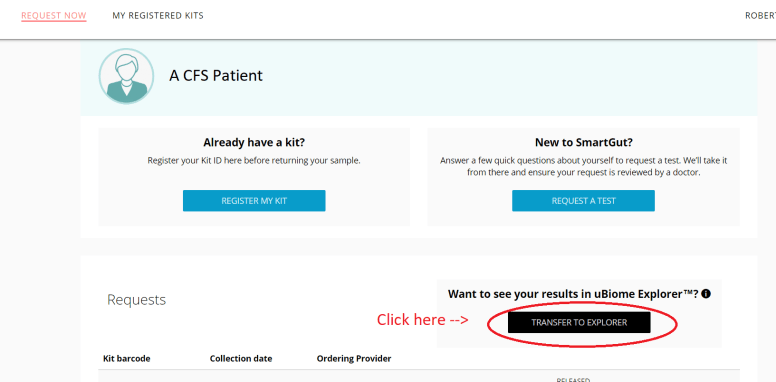
How to Transfer to uBiome Explorer

If you got a Smart Gut done, you will see an option to transfer the data to the Explorer (which is what I usually look at).

robertA

The data will not appear immediately, you may need to wait a day or two.

share

Smart Gut Results

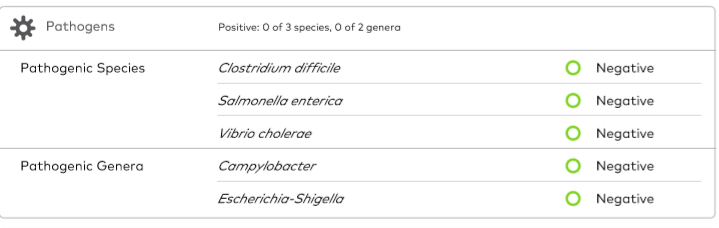
First, as seems typical — no pathogenic (evil species) were found. If they were, traditional medicine would take action.

r1

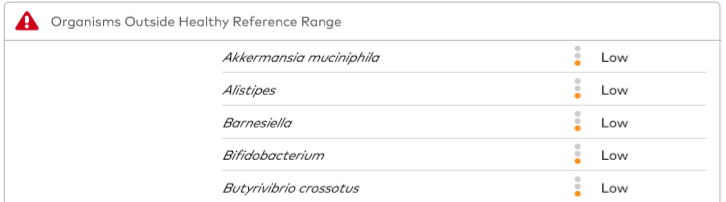
Items that are Outside of Reference Ranges

These may be too high or too low.  In the past, I have focused on the excessively high one but intended to include these into deep dives (“How to increase….”) before I attempt to create a website allowing people to do the analysis in an automated fashion themselves.

r2

r3

NOTE: We are not given what the ranges are, I can infer estimates if several people with Smart Gut results are willing to share their login with me for a few days.

What Conditions do these suggest?

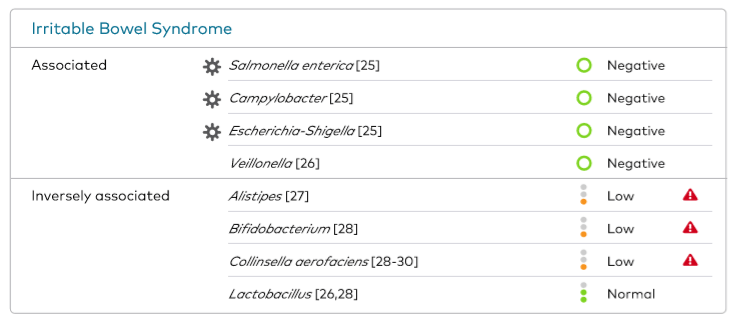
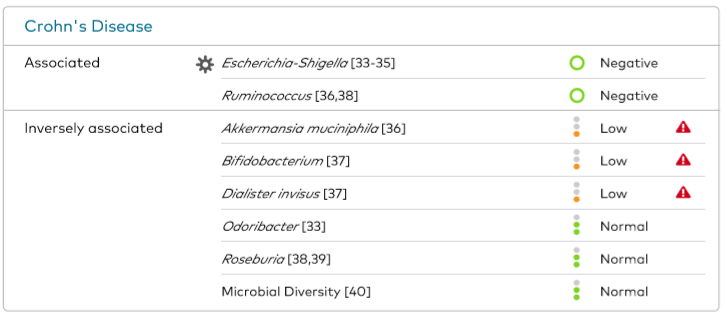
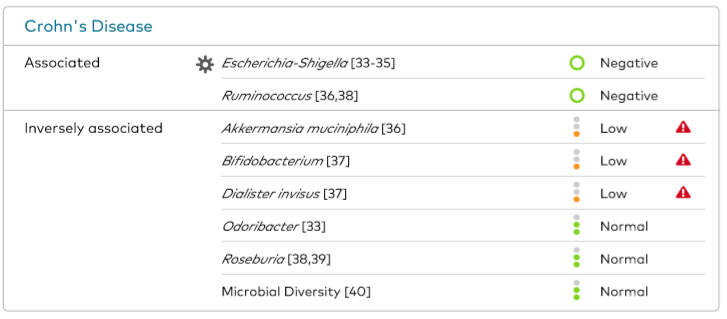
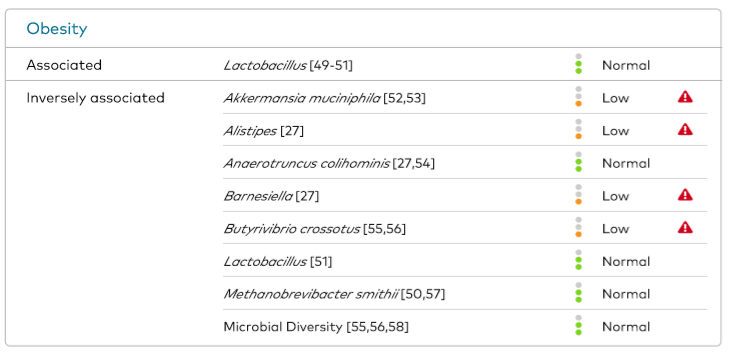
  • Inversely associated means that a LOW level means increased risk.
  • These findings are not predictive/deterministic, they just indicators of increased risk. For example:
    • 1 /2 markers for constipation
    • 3/ 8 markers for IBS
    • 3 / 8 markers for Crohn’s Disease
    • 4 /9 markers for obesity
  • With increased risk, they preventative steps could be done, like
    • increasing the low (Inversely associated) bacteria,
    • actively monitoring for associated bacteria (there were ZERO found — good news)
  • The [##] after each gives references to the medical study that found the association.
    • A single [#] means that just one study found it — i.e. possible
    • Two [#,#] means that two studies found it — i.e. probable
    • Three [#,#,#] means very probable

Case in point:  4/9 markers for obesity — but this reader reports them self as being thin.

Do not forget DNA: all of the conditions below also have DNA associated with them. Often bad microbiome + good DNA ==> no clinical condition!

r4

r5

r5

r6

r7

Personal Comments

IMHO: if you have less than 75% of the association, but more than 25%, I would be tempted to describe you as having risk of developing. 75% or more without the diagnosis, “borderline”

Ubiome Results

Standard Items:

  • Lactobacillus: 0.31x
    • Lactobacillus gasseri
    • Lactobacillus sp. CR-609S
  • Bifidobacterium: 0
  • Akkermansia:  0x
  • Diversity:  83%ile
  • Firmicutes to Bacteroidetes:  3.0:1 (Normal 2.1:1)

Uncommon Bacteria

Bacteria name Rank % of Samples
Denitratisoma Genus 0.1%
Anaerobacillus Genus 0.1%
Anaerobacterium Genus 0.8%
Acetivibrio Genus 1.0%
Fretibacterium Genus 1.3%
Leptotrichia Genus 1.5%
Ochrobactrum Genus 1.9%
Brucellaceae Family 2.2%
Caldicoprobacter Genus 3.1%
Anaerovorax Genus 3.2%

High Bacteria

Bacteria
Ratio
Intestinibacter: 11.59 X
Anaerotruncus: 5.76 X
Bilophila: 4.48 X
Intestinimonas: 3.66 X
Flavonifractor: 3.37 X
Gelria: 3.15 X
Eggerthella: 2.99 X
Parabacteroides:  2.43 X
Oscillibacter: 2.39 X
Hydrogenoanaerobacterium: 2.12 X
Shuttleworthia: 2.08 X
Subdoligranulum: 1.92 X
Terrisporobacter: 1.57 X
Pseudobutyrivibrio: 1.56 X

References

Overgrowth:


Bottom Line Suggestions

The lists below are done by merging the lists from the deep dives linked above for overgrowth. Some items may encourage one genus and discourage another genus — those are removed (unless it seems that it strongly predominates on one). The impact on Lactobacillus, Bifidobacterium and E.Coli are intentionally ignored [See this post for the logic]. This is all based on applying logic to the results of studies — thus theoretical. This is an addition (not a replacement) to this overview post.

Avoid

  • Allergens
  • Amoxicillin-Clavulanate antibiotics
  • Arginine supplements
  • Barley x2
  • Berberine x 3
  • Bifidobacterim Breve
  • Bifidobacterium catenulatum
  • Bifidobacterium longum.
  • Bifidobacterium pseudocatenulatum
  • Bile
  • Black Tea
  • Canola Oil
  • CVS Maximum Strength Probiotic
  • fermented Korean soybean paste
  • High animal protein/meat diet x2
  • Lactobacillus Casei x2
  • Lactobacillus salivarius
  • Lingonberries
  • Lysine supplements and foods
  • Milk-derived saturated fat
  • Omega 3
  • pomegranate juice
  • Proton-pump inhibitors (PPI)
  • Quercetin w. Resveratrol
  • Resistant Starch
  • Resveratrol (Grapes, wine) x2
  • Rhubarb
  • Saccharomyces boulardii x5
  • stress
  • Walnuts x4
  • Yogurt
  • —-
  • Doxycycline
  • Tetracycline
  • Erythromycin
  • Chloramphenicol

Take

  • Capsaicin(chili peppers)
  • Cranberry x 2
  • Flaxseed x2
  • Gallate (green teas) x2
  • Inulin (Chicory) x5
  • Lactobacillus kefiri x2
  • Lactobacillus paracasei
  • Lactobacillus plantarum
  • Lactobacillus reuteri
  • L-glutamine
  • Metformin
  • Metronidazole antibiotics
  • Oligosaccharide prebiotics
  • Tea Tree Oil
  • Vitamin C
  • Magnesium
  • Calcium
  • xylanase/xylosidase.

This is an education post to facilitate discussing this approach with your medical professionals. It is not medical advice for the treatment of any condition. Always consult with your medical professional before doing any  changes of diet, supplements or activity. Some items cites may interfere with prescription medicines.

Reducing Shuttleworthia genus

For updated information see Microbiome Prescription

DataPub.Net

Firmicutes -> Clostridia -> Clostridiales -> Lachnospiraceae -> Shuttleworthia

INHIBITED BY

ENHANCED BY

PubMed etc

There is   8+ studies on PubMed

Disease

Diet

  • high-grain diet diets altered the rumen epithelial bacterial community, with an increase in the proportion of genus Prevotella and a decrease in the relative abundance of the genera Shuttleworthia and Fibrobacteres” [2017]

Prebiotic

Probiotic

Antibiotics

Bottom Line

Avoid

Take

Reducing Hydrogenoanaerobacterium genus

For updated information see Microbiome Prescription

DataPub.Net

Firmicutes -> Clostridia -> Clostridiales -> Ruminococcaceae -> Hydrogenoanaerobacterium

INHIBITED BY

ENHANCED BY

PubMed etc

There is just  6 studies on PubMed

Disease

Diet

Prebiotic

Probiotic

Antibiotics

Bottom Line

Avoid

Take

Reducing Gelria genus

For updated information see Microbiome Prescription

DataPub.Net

 Firmicutes -> Clostridia -> Thermoanaerobacterales -> Thermoanaerobacteraceae -> Gelria

Nothing

PubMed etc

There is just  6+ studies on PubMed, most dealing with sewage.

Disease

Diet

Prebiotic

Probiotic

Antibiotics

Bottom Line

Avoid

Take