Impact of additives and food on Herbs and Health

Updating my notes on Oregano today, I came across this study:

  • “Results showed that protein, pH, aw, presence of beef extract, sodium lactate and nitrates did not influence their antimicrobial effect. In contrast, the presence of pork fat had a negative effect against both [Garlic and Oregano] Essential Oils [EO] associated with their dilution of the lipid content.  The addition of food phosphates also exerts a negative effect against EOs ” [2017] A common source of pork fat are hot dogs and sausages.
  • [Potato] Starch and [sunflower] oils concentrations of 5% and 10% had a negative impact on the EO efficacy. On the contrary, the EOs were more effective at high concentrations of protein, and at pH 5, by comparison with pH 6 or 7. ” [2008]
  • ” EOs retained greater efficacy at pH 5 and 2.32% sugar…moderate levels of simple sugars.” [2009]

And from prior posts dealing with food additives:

  • ”geographical variation in Crohn’s Disease [CD] correlates with emulsifier consumption as does the increasing incidence of CD in Japan; … very small concentrations of the emulsifier polysorbate 80 enhance bacterial translocation across intestinal epithelia.” [2013] See this post for more and this one on Endocrine Disruptors.
    • ”we determined that the polysaccharide dietary additive, maltodextrin (MDX), impairs cellular anti-bacterial responses and suppresses intestinal anti-microbial defense mechanisms”[2015]
    • Avoid Emulsifers, (sometimes they are called “Conditioners” on labels) especially
  • “Findings from epidemiology studies indicate that diets high in animal fat and low in fruits and vegetables are the most common pattern associated with an increased risk of IBD. Low levels of vitamin D also appear to be a risk factor for IBD. …. Unfortunately, omega 3 supplements have not been shown to decrease the risk of relapse in patients with Crohn’s disease. … Although fiber supplements have not been definitively shown to benefit patients with IBD, soluble fiber is the best way to generate short-chain fatty acids such as butyrate, which has anti-inflammatory effects. Addition of vitamin D and curcumin [Turmeric] has been shown to increase the efficacy of IBD therapy. There is compelling evidence from animal models that emulsifiers in processed foods increase risk for IBD.” [2016]
  • dietary emulsifiers interact with the multilayered endogenus mucus secretaions that coat the luminal surfaces of the intestinal tract and may compromise the ability of the human mucus to prevent contact between microorganisms and intestinal epithelial cells. Because emulsifiers have become ubiquitous ingredients in virtually all processed foods and beverages, including many that claim to be “organic”… [2016]

Bottom Line

Processed food is likely a significant contributor to IBD/IBS/FM/CFS. Population study also associate non-Mediterranean diet pattern with higher incidence of IBD. Pork and using sunflower oil (use Olive oil instead) is likely a food to exclude from your diet if you are taking herbs or essential oils because they reduce the herbs effectiveness. Avoid foods that lists emulsifiers and phosphates. Keep a note on your smart phone of the name of the common emulsifiers listed above.

And Yes, “Virginia there are organic emulsifiers in organic food…. “ — avoid them. Organic does not mean unqualified safe or good.
mat


Diets for CFS/IBS/FM Microbiome

I have covered some diets in some prior post. Diets, like antibiotics and even supplements, are often toss at a patient without researching the potential side-effects. Having a disease model (microbiome shift) gives a measuring stick to evaluate suggestions against.


PubMed in 2017

Explicit Studies

So – existing literature has found little solution apart from some supplements which I have posted on earlier.

Looking at microbiome shifts

I was surprised not to find more on the various diets cited above, especially shifts in Firmicutes and Bacteroidetes. There was only a few high quality reports.

Ketogenic Diet

Mediterranean Diet (MDS)

  • Mediterranean diet and faecal microbiota: a transversal study.[2016]
    • Mediterranean Diet Score (MDS) was associated with a higher abundance of Bacteroidetes (p = 0.001), Prevotellacea (p = 0.002) and Prevotella (p = 0.003) and a lower concentration of Firmicutes (p = 0.003) and Lachnospiraceae (p = 0.045).  Also,  in subjects with MDS ≥ 4, higher concentrations of faecal propionate (p = 0.034) and butyrate (p = 0.018) were detected. ” 🙂 Perfect!

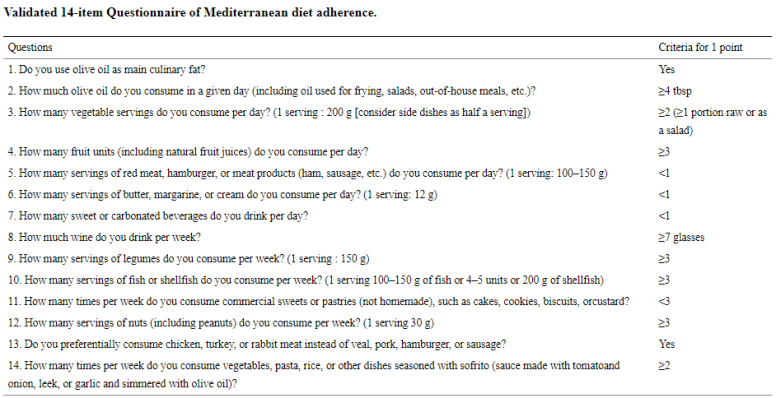
Mediterranean Diet Score

There is an interesting study looking at typical diet in 7 countries at this web site. From this 2012 study, you can evaluate where you are, and provide clues as to how to alter your general diet. My own score with below is a low 8, and I can see some changes that I can make to increase it.

mds

Bottom Line

No diet has been shown to have health benefits for CFS/FM/IBS apart from certain specific supplements.  On the other hand, if the microbiome shift model is correct, the Mediterranean Diet is likely to result in improve symptoms that will increase the higher you get your score. How? it will counter the shift of bacteria seen in CFS.

Nuts and Seeds for CFS?

A reader forwarded me a link to a paper and from some of his questions, I thought that I should explain the model that I am assuming for Lactobacillus

  • Supplementation with Lactobacillus probiotics is generally a poor choice….
    • Almost all probiotics with be 100% gone within 24 hours.
    • They do not take up residence — they are in transit only
    • They produce chemicals that are effectively natural antibiotics… unfortunately, the targets are often E.Coli and Bifidobacteria.
  • Taking supplements that encourages Lactobacillus (i.e. your own natural) and also biodiversity is assumed to be good.  Both criteria should be satisfied. The concept is that these lactobacillus are friendly to your specific strains of E.Coli and Bifidobacteria.
    • nut types that increases Firmicutes and decreases Bacteriodetes should likely be avoided[For new readers: CFS/IBS/FM have major increases of Firmicutes  and collapse of Bacteriodetes. See this post for background and studies].

Mediterranean/Greek Diet

This type of diet seems to be well suited for CFS/FM/IBS, I will review the literature in another post.

“Excesses of any component of the diet were typically avoided and consequently over-consumption was rare. Sugar, sweet desserts, and salt were rarely consumed, and animal products except for seafood and yogurt and cheese were less frequently consumed. In addition, olives and olive oil, nuts, and seeds were parts of daily intakes, as wine and spices often were. Balanced eating patterns of the macronutrients greatly reduced the development of overweight or obesity and metabolic diseases resulting from excessive caloric intakes. Intake percentages of fats and carbohydrates were fairly high, but total calories were not higher than maintenance requirements.” [2016 – full text]

Note: Beware of “mediterranean-like” diets that just tosses in some elements on top of a basic western diet.

Studies

  • “Changes in the Gut Microbial Communities Following Addition of Walnuts to the Diet” [2017]
    • “Walnuts are rich in omega-3 fatty acids, phytochemicals and antioxidants making them unique compared to other foods…Walnuts are an excellent source of omega-3 fatty acids, particularly alpha-linoleic acid. “
    • “Walnuts increased the abundance of Firmicutes and reduced the abundance of Bacteriodetes.” – this is the opposite of what we hope to do. See this post for background.
    • “The animals that ate walnuts had a significantly greater (>1.8 fold) ratio of Firmicutes to Bacteriodetes when compared to the replacement diet.”
  • “Prebiotic nut compounds and human microbiota. [2017]”
    • “After 6 weeks, significant increases in Bifidobacterium spp. and Lactobacillus spp. were observed in the almond and almond skin groups, although the populations of Escherichia coli showed little change, and the growth of Clostridium perfringens was significantly repressed.”
  • Effects of almond and pistachio consumption on gut microbiota composition in a randomised cross-over human feeding study.[2014]
    • “The effect of pistachio consumption on gut microbiota composition was much stronger than that of almond consumption and included an increase in the number of potentially beneficial butyrate-producing bacteria. Although the numbers of bifidobacteria were not affected by the consumption of either nut, pistachio consumption appeared to decrease the number of lactic acid bacteria (P< 0·05). Increasing the consumption of almonds or pistachios appears to be an effective means of modifying gut microbiota composition.”
      • Excessive lactic acid is a CFS characteristic, see this post.
  • Dairy and plant based food intakes are associated with altered faecal microbiota in 2 to 3 year old Australian children [2016].
    • “Dairy intake was positively associated with the Firmicutes:Bacteroidetes ratio, and in particular Erysipelatoclostridium spp., but negatively associated with species richness and diversity. ” – in other words, dairy shifts in the wrong direction — i.e. Yogurt may not be helping you
    • “In contrast, vegetarian protein (soy, pulses[Dried peas, edible beans, lentils and chickpeas are the most common varieties of pulses] and nuts) serve intake (FFQ data) was negatively associated with the relative abundance of the phylum Firmicutes” — so nuts (excluding walnuts cited above) shifts in the right direction.
    • “data revealed that the relative abundance of Bacteroidetes was negatively associated with dairy serve intake while the relative abundance of Firmicutes was negatively associated with vegetarian protein serve intake. “
    • Note that the full text associate certain foods with certain bacteria groups (plus and minus), and is worth reading if you have your uBiome done.
  • Prebiotic effects of almonds and almond skins on intestinal microbiota in healthy adult humans[2014].
    • ” Significant increases in the populations of Bifidobacterium spp. and Lactobacillus spp. were observed in fecal samples as a consequence of almond or almond skin supplementation. However, the populations of Escherichia coli did not change significantly, while the growth of the pathogen Clostridum perfringens was significantly repressed. “
  • “a moderate intake of almonds improves diet quality in adults and their young children and modulates microbiota composition.” [2016]

Bottom Line

Consumption of soy, pulses[Dried peas, edible beans, lentils and chickpeas] and whole nuts should assist correcting the microbiome shift seen with CFS, in general.

  • Do not include Walnuts.
  • Include pistachios daily
  • Almonds (Almond milk is not the same)
  • Restrict Dairy Intake
  • Peanut is NOT A NUT (see wikipedia)
    • Nothing found on peanut intake impact on the microbiome. Many studies on peanut allergies.
    • I am neutral if it is good or bad… no evidence to work from.

For the rest of the nuts, we do not have studies on specific varieties.

Zinc – What do we know in 2017

  • “We found that serum zinc was significantly lower in the CFS patients than in the normal controls. There was a trend toward a significant negative correlation between serum zinc and the severity of CFS and there was a significant and negative correlation between serum zinc and the subjective experience of infection.” [2006]
  • “Serum levels of zinc (P = 0.001) and magnesium (P = 0.002) were significantly decreased by FM groups,” [2008]
  • “[IBS]…Finally, the role of zinc in treatment of infectious diarrhea led to studies of its effect on intracellular human enterocyte ion secretion. ” [2010]
  • “The aim of our study was to evaluate the oral dietary intake of a group of patients with irritable bowel syndrome and to compare with international recommendations….A low intake of calcium, magnesium, yodo and zinc was detected.” [2004]
  • “paper reports a study of 50 patients affected by irritable bowel syndrome. Two subgroups have been identified (Ac and Ad), characterised by reduced blood zinc [correction of zinchemia] and increased fecal excretion of zinc. This finding suggests that the syndrome has a multifactorial pathogenesis and that over time it may follow a different pattern in the different subgroups.” [1990]
  • Dryness of eye symptom associated with low zinc levels [2016]

Other Aspects

  • “These studies demonstrate for the first time that zinc regulates LPS-mediated immune activation of human macrophages in a ZIP8-dependent manner, reducing IL-10. Based on these findings we predict that macrophage zinc metabolism is important in host defense against pathogens.” [2017]
  • “We found no evidence that the use of oral zinc supplementation improves symptoms in adults with tinnitus.” [2016]
  • “We can conclude that the food supplement containing α-lipoic acid, L-carnosin, zinc,[ 7.5 mg] and vitamins of group B improved glycemic control, lipid profile, and anti-oxidative stress markers.” [2016]
  • “The scientific evidence presented in this systematic review shows that zinc supplementation improves insulin resistance in obese individuals of both sexes.” [2017]
  • “35% to 45% of adults 60 years of age or older had zinc intakes below the estimated average requirement of 6.8 mg/day for elderly females and 9.4 mg/day for elderly males. Zinc deficiency may lead to loss of appetite, impaired immune function, weight loss, delayed healing of wounds, eye and skin lesions, and smell and taste disturbances” [2016]
    • Zinc supplementation at 30 mg/d for 3 mo is effective in increasing serum zinc concentrations in nursing home elderly; however, not all zinc-deficient elderly reached adequate concentrations.” [2016]

Missing Diet on what is an effective level of supplementation

Above we see low levels across the board. There have been no reported studies on the effect of supplementation in the above conditions. What is level and duration needed to be effective!

Bottom Line

This [2016] study seems the best match for CFS/FM/IBS and used 30 mg/d for at least 3 mo. “Tolerable Upper Intake Levels (UL) of zinc for people who are not receiving zinc under medical supervision: … adults 19 years and older (including pregnancy and lactation), 40 mg/day.” WebMd

Coenzyme Q10 in 2017

A reader requested to review the most recent literature on CoQ10 and summarize my conclusions.

Fibromyalgia and Migraines

“CoQ(10) level in plasma samples from FM patients was doubled compared to healthy controls and in blood mononuclear cells isolated from 37 FM patients was found to be about 40% lower….The protection caused in mononuclear cells by CoQ(10) would indicate the benefit of its supplementation in FM patients. ” [2009]

” Coenzyme Q(10) (CoQ(10)) levels in salivary cells (SCs) and mononuclear blood cells (BMCs) from Fibromyalgia (FM)..were reduced in both cell models. Oral supplementation showed an improvement in clinical symptoms and restored levels.” [2012]

” In this report, we show the effect of CoQ10 treatment on clinical symptoms, blood mononuclear cells, and mitochondrial and oxidative stress markers from a woman with FM. After CoQ10 treatment, the patient reported a significant improvement of clinical symptoms.” [2012]

“A placebo-controlled trial of CoQ10 in FM patients has shown a reduced NLRP3 inflammasome activation and IL-1β and IL-18 serum levels.” [2014]

  • “300 mg/day CoQ10 divided into three doses”
  • This study did not describe any symptom improvements seen — it was focused on lab results.
  • [2011] study cites: “Patients with CoQ(10) deficiency showed a statistically significant reduction on symptoms after CoQ(10) treatment during 9 months (300 mg/day).”

Folic Acid and coenzyme q10 ameliorate cognitive dysfunction in the rats with intracerebroventricular injection of streptozotocin [2012].

  • “The present results suggest that CoQ10 and folic acid have therapeutic and preventive effects on cognitive impairments in Alzheimer’s disease.”
  • [2006] study on mice, found CoQ10 alone had similar effects.

Role of magnesium, coenzyme Q10, riboflavin, and vitamin B12 in migraine prophylaxis. [2004] “

  • “The therapeutic potential of magnesium, coenzyme Q(10), riboflavin, and vitamin B(12) can be cautiously inferred from some published open clinical trials; it should, however, be considered that double-blind randomized larger studies are needed to correctly estimate the impact of the placebo effect in these promising therapies.”
  • “Treatment with … magnesium, riboflavin and Q10 ..had an impact on migraine frequency which showed a trend towards statistical significance.” [2015] i.e. it looks like it may help, but the effect could be random variation of patients symptoms.
  • Oxidative stress correlates with headache symptoms in fibromyalgia: coenzyme Q₁₀ effect on clinical improvement.[2012]
    • “induced a significant improvement in clinical and headache symptoms”

CFS/ME

No Studies Could be found for…

  • Small intestinal bacterial overgrowth
  • IBS

Bottom Line

A dosages of 300 mg/day of CoQ10 appears to have significant benefits. CoQ10 alone for CFS had no studies, only with NADH (which has benefits for CFS alone). NADH is related to niacin (B3) which may be a more economical supplement than NADH, but this is speculation as no studies have been done. NADH amounts cited in studies with positive effects was 20mg/day – but evidence suggests it benefits will disappear after 3 months.

I discovered a 2010 article finding that grapefruit juice significantly enhances the absorption of CoQ10

NADH Notes

  • “Administration of oral NADH was associated to a decrease in anxiety and maximum heart rate, after a stress test in patients with CFS. On the contrary, this treatment did not modify other clinical variables and the global functional performance.” [2010]
  • “8 of 26 (31%) responded favorably to NADH in contrast to 2 of 26 (8%) to placebo. ” [1999]
  • “The twelve patients who received NADH had a dramatic and statistically significant reduction of the mean symptom score in the first trimester (p < 0.001). However, symptom scores in the subsequent trimesters of therapy were similar in both treatment groups. ” [2004]