Sulfur may be significance

One of my readers have their own blog, Il diario di Fable. Today, he facebooked me with “I am so happy!” – wait a minute, this is someone with CFS — how can they be happy?  We had an excellent skype session and his latest post cites a WestonAPrice.org topic on sulfur-deficiency. This is interesting coincidental because earlier this week we found that sulfur vegetables encourages the growth of E.Coli (post) which CFS patients are low in (E.Coli is a dominant family in healthy individuals). A sulfur deficiency may lead to an E.Coli reduction to almost zero seen in CFS patients.

This blogger has been taking various probiotics , L Rhamnosus, Saccharomyces Boulardii, Mutaflor — but none had significant effect until sulfur was added. He is excited, he sees signs of remission — I am interested because it makes sense.

His post is in Italian but it translated into very clear English using Google Translate. There are tie in with Vitamin D3, ATP etc.

He identifies our love of soft water is likely a part of why we may have deficiency, as well as association between soil sulfur levels and the rate of many illnesses. An issue echoed by WHO scientists.

  • “Cooking food in soft water also tends to remove magnesium, calcium, and other essential elements from food, making matters worse.” [2008]

Methylsulfonylmethane (MSM) is a supplement that he suggests and provides a link to another blogger, “HealthbBenefits of MSM: Microflora“.

Pub Med?

There has been zero studies on MSM and Chronic Fatigue Syndrome, IBS. Two studies on fibromyalgia, none reporting on actual studies.

  • ” the combined administration of MSM and boswellic acids ….significantly reduced patients need for anti-inflammatory drugs.” [2011]
  •  “Sulfur is the sixth most abundant macromineral in breast milk and the third most abundant mineral based on percentage of total body weight.” [2002]

Bottom Line

Taking MSM alone may have little effect. Taking it with a  E.Coli probiotic would appear to be a reasonable approach. The E.Coli will both grow from it, but it will also transform it into other sulfur compounds in the body.

This is theoretical — there is no significant evidence for or against it.


.

The Heart and Blood of CFS

Today, there was a post in a local CFS group dealing with a variety of heart issues.  I believe that many patients and their physicians are unaware of a set of interacting conditions that often cannot be successfully treated in isolation. I though that a review of what we know about the CFS heart and blood may be a good review for myself and my readers.

POTS:

Postural orthostatic tachycardia syndrome (POTS) is a heterogeneous disorder of the autonomic nervous system in which a change from the supine position to an upright position causes an abnormally large increase in heart rate or tachycardia (30 bpm within 10 min of standing or head-up tilt). This response is accompanied by a decrease in blood flow to the brain and hence a spectrum of symptoms associated with cerebral hypoperfusion.” [2016]  – SPECT scans of CFS patient usually show moderate to severe  cerebral hypoperfusion

Low Blood Volume

David Bell, M.D. did a study in 1995 (twenty years ago) finding about low blood volume. Cort Johnson has an 2015 update by Dr. Bell that is worth reading. “In contrast, ME patients have a volume that can be as low as 50% of normal.”

Change of Red Blood Cell Shape

Back in 1997, Dr. Les Simpson in New Zealand wrote “Myalgic Encephalomyelitis (ME): A Haemorheological Disorder Manifested as Impaired Capillary Blood Flow” observed this in CFS patients. “So it has been proposed – first at the Cambridge Symposium on ME in 1990 and in another article in 1998, that ME is a dysfunctional state resulting from reduced rates of capillary blood flow due to the presence of shape-changed, poorly-deformable red cells” [source]

Hypercoagulation – Thick blood

In 1999, Dave Berg, Hemex Labs published Chronic fatigue syndrome and/or fibromyalgia as a variation of antiphospholipid antibody syndrome: an explanatory model and approach to laboratory diagnosis. Thick blood means that instead of flowing like water, the blood may flow like maple syrup or ketchup.

Small heart size

“A considerable number of CFS patients have a small heart. Small heart syndrome may contribute to the development of CFS as a constitutional factor predisposing to fatigue, and may be included in the genesis of CFS.” [2008]

” Echocardiographic examination revealed that CFS patients with “small heart” had an actually small LV chamber and poor cardiac performance. Cardiac functional changes evaluated by repeated examinations appeared to be directly associated with the severity of their symptoms. Small heart syndrome with impaired cardiac function may contribute to the development of CFS through low cardiac output as a constitutional factor.” [2009]

SPECT – Hypoperfusion in the Brain

Single-photon emission computerized tomography (SPECT) scans are the most reliable for CFS. Cerebral blood flow is reduced in chronic fatigue syndrome as assessed by arterial spin labeling[2011]. Full Text

Low Iron

Hemoglobin is the iron-containing oxygen-transportmetalloprotein in the red blood cells of all vertebrates  Hemoglobin in the blood carries oxygen from the respiratory organs (lungs or gills) to the rest of the body (i.e. the tissues). There it releases the oxygen to permit aerobic respiration to provide energy to power the functions of the organism in the process called metabolism. [wikipedia]

Iron insufficiency and hypovitaminosis D in adolescents with chronic fatigue and orthostatic intolerance. Restless leg syndrome (RLS) is  negatively correlated with ferritin / iron [2012] and RLS is also co-morbid with CFS (i.e. the less iron, the more likely you will have RLS)

Condition Summary

Volume of red blood cell has decreased significantly. Red blood cells are less pliable so there are harder to move along. Coagulation has increased, making the blood harder to push along. Inflammation and vascular constriction has happen in blood vessels. Compounding this is a smaller pump (heart) size!

The body actually appears to try super-saturating the available (less than normal volume ) hemoglobin – “, a significant increase in oxyhemoglobin content, and a significant increase in the oxidation of heme a+a(3) and copper in cytochrome c oxidase in CFS patients.” [2009]

“This study has shown that there are objectively measured abnormalities of blood pressure variability in CFS and that these abnormalities have the potential to be a bedside diagnostic tool.” [2012]

Effectively the body is screaming from low oxygen (hypoxia). Rapid heart beat in an attempt to push through more blood. Restless leg is also an attempt to push more blood through by using the leg muscles to boost the heart. Pain in FM, brain fog in CFS are all symptoms of low oxygen delivery.

With the heart having to work harder constantly, side-effects will eventually show up.

Treatment Possibilities

Dr. Bell in his 2015 article describes positive experiences from blood transfusions. Posterior reversible encephalopathy syndrome secondary to blood transfusion[2015].

Reducing coagulation, reducing inflammation, vascular dilators, and a diet rich in the chemicals needed to produce red blood cells.

Symptom Reduction

Hypobaric chambers, changing blood pH (acidity/base)  and oxygen masks will increase oxygen levels somewhat — but the root problem is not how much oxygen gets into the body (i.e. how much coal is mined) but the speed and quantity of delivery.

Personal Experience

Early in my treatment for my second episode with CFS, I pushed  my MD to take the coagulation aspect seriously. I read what the maximum safe dosage on an aspirin bottle was and proceeded to do exactly that every day  for the 10 days on the bottle.

After 5-6 days, I was running up the walls with energy. What is aspirin?:

  • blood thinner
  • reduces inflammation

At the same time, I had switched from expensive NADH tablets to regular flushing niacin (a vascular dilator) and had been satisfying a strong craving for peanut butter (i.e. eating lots of it!)

Peanuts are rich in the ingredients needed to produce hemoglobin, including:  niacin, folate, pantothenic acid, thiamin, roboflain, choline, Vitamin B6, Iron, magnesium etc…

Of course, staying on high dosage aspirin was not viable. The energy burst faded when I stopped. The MD proceeded with a full coagulation panel done by Dave Berg’s Hemex lab and we started down the anticoagulation path while continuing doing minocycline (an anti-inflammatory antibiotics) to address what was then believed to be the root cause.

Alas…

Heart transplants and regular blood transfusions are unlikely to be accepted as treatment for CFS…..


A review of supplements asked by readers.

A reader asked me for an opinion on Adrenal Rebuilder which contains

  • Proprietary Blend of Porcine glandulars (Processed to Remove Hormones) (Gonad, Adrenal Cortex, Hypothalamus,
    Anterior Pitutary), Calcium Glycerophosphate, Inositol)

It had no role in terms of my model.  Adrenal supplements have been tried for decades by CFS suffers without any significant success for remission. Some people find that it does help some symptoms for a few hours. Do not (probably) waste your money.


What about Symbioflor-1, the other probiotic from symbiopharm.de? It claims to help with upper respiratory infections — how can that be?

If you have pneumonia, you may take antibiotics and it clears respiratory infections. Probiotics produce antibiotics (in fact many antibiotics come from species that are in some probiotics). The claim is very reasonable, many CFSers have persistent coughs. What does pubmed say?

So the evidence says yes, it does help!


“What about RechtsRegulat? Dr. K believes that it works better than heparin.”

Well the ingredients are listed as

“Controlled biological cultivation of fermented fruits, vegetables and nuts, date, fig, walnut, coconut, lemon, soybean, celery, artichoke, millet, pea, saffron. Drinking water, lactic acid and Glycerin. Free of preservatives, alcohol and sugar.” – this reads like a classic “tonic”

On PubMed, there are no studies at all, this immediately raise alarm bells if something have been on the market for any length of time. Typically a study will be attempted (it pays back many fold to have a positive study) — if none are published, it implies that the study failed to show statistically significant results.

With no studies and no listing of the bacteria in the fermentation, AND high cost, I would discourage it’s use. The bacteria could be Bacillus Subtlis (which would be good) — but there is no transparency into this product. If you have some, can afford it, and it works for you fine! I simply have reservations about recommending it to anyone without studies or even a listing of the bacteria in it. I did find one study on it (not on PubMed) which reports “In microbiological tests i.e. breeding on different nutrient agars with different inoculi for different time scales gave no indication of living Lactobacillae. ” Heparin was not mentioned in this paper.


What about Pro-Symbioflor? A third product from the same company…

Well, “contains the natural intestinal bacteria Enterococcus faecalis and Escherichia coli, in inactive form.”

We have a 2013 study on it. “an autolysate of cells and cell fragments of E. faecalis (DSM 16440) and E. coli (DSM 17252) called Pro-Symbioflor. 1.5 mL of Pro-Symbioflor contains 3.0 to 9.0 107 CFU of living bacteria before inactivation.”

I recall reading articles of significant benefits from inactivated probiotics. The main positive aspect is that they will have an effect and then be washed out. With living probiotics, there is a risk of full bacteria warfare happening between probiotics and dysfunctional bacteria — a battle that can keep going for weeks — hence stopping does not result in a herx fading quickly.

If you are sensitive to probiotics, you may wish to consider this.

E. Coli and Green Vegetables

A reader asked ” I just read an article that said the sugars released in certain greens help protect the helpful strains of E. Coli once they are established in the gut. Have you run across any information on this?

This is important, because CFSers are very low (or have none) E.Coli. With two E.Coli probiotics being available, Mutaflor and Symbioflor-2 it is important to feed them when you take these probiotics to get the maximum benefit. These probiotics should be taken immediately before having the vegetables listed below.

Researching this I found the following:

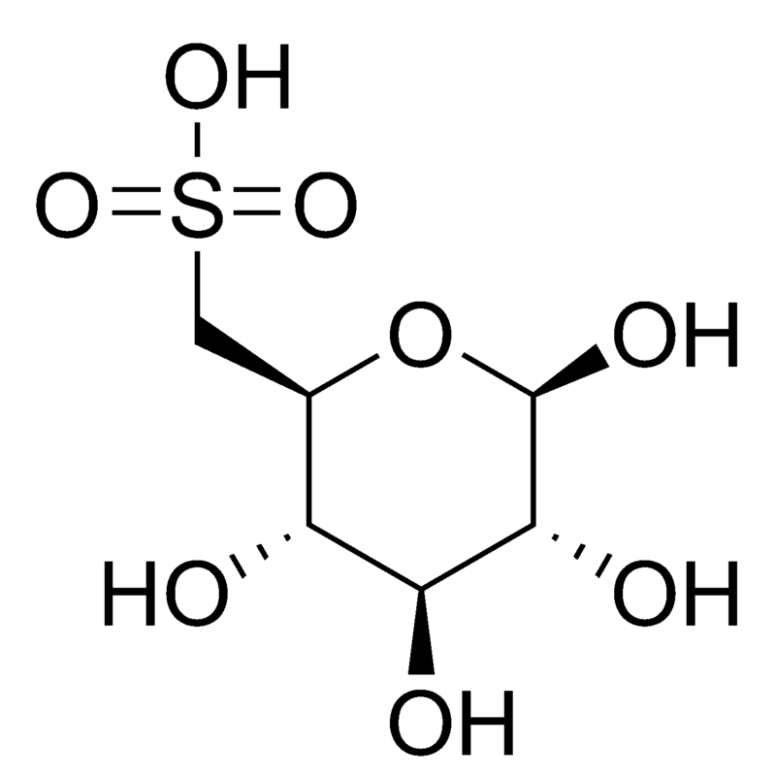
” the unusual but abundant sugar sulfoquinovose – SQ for short –  …Dr Goddard-Borger said the discovery could be exploited to cultivate the growth of ‘good’ gut bacteria. “Every time we eat we consume significant amounts of SQ sugars, which are used as an energy source by good gut bacteria,” he said.

“Bacteria in the gut, such as crucial protective strains of E. coli, use SQ as a source of energy. E. coli provides a protective barrier that prevents growth and colonisation by bad bacteria, because the good bugs are taking up all the habitable real estate,” Dr Goddard-Borger said.” [Feb 2015]

” Abundant in nature, the SQ is considered unusual because it is the only sugar that contains sulphur.” [2015]

800px-sulfoquinovose_chemical_structure

Which vegetables are high? The articles cite three, but how much is in each?  Since we are talking about a sugar, we may be able to approximate from total sugar each has.

  • Kale (100g — has 2.3 g of sugars)
  • Spinach (100 g – has 0.4 g of sugars)
  • Watercress (100 g – has 0.2g of sugars)

There is an inference in the articles that dark greens have it — but I have not been able to verify that (or the amount that each one has). ““Every time we eat leafy green vegetables we consume significant amounts of SQ sugars, which are used as an energy source by good gut bacteria.” [2015]  

What Vegetables?

“Many commonly consumed cruciferous vegetables come from the Brassica genus, including broccoli, Brussels sprouts, cabbage, cauliflower, collard greens, kale, kohlrabi, mustard, rutabaga, turnips, bok choy, and Chinese cabbage (1). Arugula, horse radish, radish, wasabi, and watercress are also cruciferous vegetables. Cruciferous vegetables are unique in that they are rich sources of glucosinolates, sulfur-containing compounds that impart a pungent aroma and spicy (some say bitter) taste” [OregonState.Edu]

I was able to locate the following table:

Food (raw) Serving in grams Total Glucosinolates (mg) % of Total
Brussels sprouts 1/2 cup (44 gms) 104 0.236
Garden cress 1/2 cup (25 gms) 98 0.392
Mustard Greens 1/2 cup, chopped (28 gms) 79 0.282
Turnip 1/2 cup, cubes (65 gms) 60 0.092
Cabbage, savoy 1/2 cup, chopped (45 gms) 35 0.078
Kale 1 cup, chopped (67 gms) 67 0.100
Watercress 1 cup, chopped (34 gms) 32 0.094
Kohlrabi 1/2 cup, chopped (67 gms) 31 0.046
Cabbage, red 1/2 cup, chopped (45 gms) 29 0.064
Broccoli 1/2 cup, chopped (44 gms) 27 0.061
Horseradish 1 Tablespoon (15 gms) 24 0.160
Cauliflower 1/2 cup, chopped 50 gms) 22 0.044
Bok Choy (pak choi) 1/2 cup, chopped (35 gms) 19 0.054

Table adapted from: McNaughton SA, Marks GC. Development of a food composition database for the estimation of dietary intakes of glucosinolates, the biologically active constituents of cruciferous vegetables. Br J Nutr. 2003;90(3):687-697. [source]

What does PubMed say? Only 40 articles

  • “. Here we show that Escherichia coli K-12, the most widely studied prokaryotic model organism, performs sulphoglycolysis, in addition to standard glycolysis.” [2014]
  • ” All these interactions with carbohydrate routes might help explain the observed anticancer activity that glucose 6-sulfonate [sulfoquinovose] has in vitro. This adds to our knowledge of how vegetables rich in glucose 6-sulfonate can also act as metabolic inhibitors of pathways that are increased in metabolic diseases.” [2012]

Problems Eating the Above?

While browsing for information I noticed items like low sulfur GAP diet. Since E.Coli is the processor of SQ, and we know that CFSers (and other conditions) can be low, or no E.Coli — I wonder if the bad response to these foods are:

  • Due to no E.Coli to process them
  • Die off of bacteria that does not like the sulfur. (note that these chemicals are a known natural pesticide).

Warning: Low iodine levels does not play well with these and can interfere with thyroid hormone synthesis.


Organic Acid tests

A reader forwarded the results of Organic Acid Tests done by Quest Diagnostic Biochemical Genetics lab. They had several abnormal results and was frustrated because their MD did not know what to do with it! In theory, it would indicate genetic mutations — in theory, but to more confident, explicit DNA testing would be needed (which is also fuzzy for interpretation).

“Approximately one thousand inborn errors of metabolism (IEM) have been identified to date primarily through the detection of endogenous metabolites abnormally accumulated in biological fluids and tissues. The laboratory discipline that covers the biochemical diagnosis of IEM is Clinical Biochemical Genetics, and is defined as one concerned with the evaluation and diagnosis of patients and families with inherited metabolic disease, monitoring of treatment, and distinguishing heterozygous carriers from non-carriers by metabolite and enzymatic analysis of physiological fluids and tissues.” [MayoClinic]

When we come to CFS patients — there is (IMHO) a significant risk of misidentifying an abnormality as being genetic instead of being due to a microbiome shift. There are several roads to go down:

  • You do not have CFS proper, you have a metabolic error
  • You do have CFS, and the abnormality is due to the microbiome shift
  • You have a metabolic error that predispose you to CFS, because over and under production of organic acids encourages a shift of the microbiome

Reviewing the literature, there is not sufficient knowledge to know which is true. We do know that DNA SNPs are associated with CFS, FM, IBS and MCS. Checking each of the thousand metabolic errors for relevant SNPs and then seeing if there are any matches with the above DNA SNPs is a massive amount of work and likely have informational value only (I am concerned about treatment value – so doing such, honestly, does not interest me).

With that said, let us see what we can find.

The Unusual Results

The first step is always to try googling/wikipedia each item. I actually found wikipedia very sparse.  The HMDB provides much more information — and are linked below. The information is “thick”, suitable for professionals above MD pay grades!

  • N-Acetylaspartic: High
    • N-Acetylaspartic acid is a derivative of aspartic acid. It is the second most concentrated molecule in the brain after the amino acid glutamate. It is synthesized in neurons from the amino acid aspartate and acetyl coenzyme A. The various functions served by N-acetylaspartic acid are still under investigation, but the primary proposed functions include:. 1) A neuronal osmolyte that is involved in fluid balance in the brain 2) A source of acetate for lipid and myelin synthesis in oligodendrocytes, the glial cells that myelinate neuronal axons 3) A precursor for the synthesis of the important neuronal dipeptide N-acetylaspartylglutamate 4)N-Acetylaspartic acid may also be involved in energy production from the amino acid glutamate in neuronal mitochondria. —
  • 2-Hydroxyglutaric: High (1 over)
    • This inhibitory effect leads to alterations in the hypoxia induced factor (HIF)-mediated hypoxic response and alterations in gene expression through global epigenetic remodeling. The net effect is that D-2-hydroxyglutarate causes a cascading effect that leads genetic perturbations and malignant transformation.
  • Ethylmalonic: Very High
    • Ethylmalonic acid is identified in the urine of patients with short-chain acyl-coenzyme A dehydrogenase deficiency, which is a fatty acid metabolism disorder.
  • Methylsuccinic: High
    • clinically characterized by neuromotor delay, hyperlactic acidemia, recurrent petechiae, orthostatic acrocyanosis, and chronic diarrhea
  • Glutaric: Low
    • Increasing lysine intake may help raise
  • Adipic: High
    • Adipic acid in the urine and in the blood is typically exogenous in origin and is a good biomarker of jello consumption. In fact, a condition known as adipic aciduria is actually an artifact of jello consumption (PMID: 1779643 ). However, certain disorders (such as diabetes and glutaric aciduria type I.) can lead to elevated levels of adipic acid and other dicarboxcylic acids (such as suberic acid) in urine. – stop eating Jello????

The Genetic Lab’s Conclusion

“The Pattern of Elevated Organic Acids does not suggest a specific inherited metabolic disorder” – So while there many reading that are off, the pattern does not match what is known — and thus there is no known treatment (since there is not a known problem!).

Take Away

IMHO, the above tests have very limited treatment information. Association with causes (beyond DNA mutations) or effective treatment is just not there.  It is totally unclear if some of these highs and lows are related to bacteria shifts (instead of DNA).

A simple example for 2-Hydroxyglutaric,  “High levels of 2-hydroxyglutarate dehydrogenase were found exclusively in organisms that use the hydroxyglutarate pathway. The data indicate that only two pathways are involved in the fermentation of glutamate by the bacteria analyzed. The methylaspartate pathway appears to be used only by species of Clostridium, whereas the hydroxyglutarate pathway is used by representatives of several genera.” [1974]

” In humans the compound is formed by a hydroxyacid-oxoacid transhydrogenase whereas in bacteria is formed by a 2-hydroxyglutarate synthase.” [Wikipedia]