A Review of how little we know about gut bacteria

T0day I came across an article entitled: The first 1000 cultured species of the human gastrointestinal microbiota [Oxford University Press, 2014). While technical, it has lots of diagrams and picture. It really illustrate how little we know about the bacteria in out guts (and their dysfunction)

First hard fact is the last 15 years, some 30% more species have been identified and it is really taking off with improve scientific techniques.

f1-medium

Many of the bacteria species actively involved with FM, CFS, IBS etc may still be awaiting discovery! Worst still, we do not know which antibiotics impact which of these 1000+ species – which makes the use of antibiotics more guessing than science.

Irritable Bowel Syndrome

I am going to extract all of the differences seen with IBS cited in this article to illustrate the many many facets of the microbiome dysfunction that exists.

“The Bifidobacterium spp. are assumed to have a beneficial effect on health (Mitsuoka, 1990) and several members of the Bifidobacterium genus are commercially applied as probiotics. The most relevant observation is that these bacteria have decreased abundance in relation to a number of diseases including vitamin K deficiency (Benno et al., 1985), atopic diseases (Kalliomakiet al., 2001), irritable bowel syndrome (Kerckhoffs et al., 2009; Rajilić-Stojanović et al., 2011), and autism (Wang et al., 2011a). Moreover, Bifidobacterium spp. represent a very stable component of the gastrointestinal microbiota of each person, the composition of which hardly changes throughout years (Rajilić-Stojanović et al., 2013b).”

f3-large

The Bifidobacterium Tree

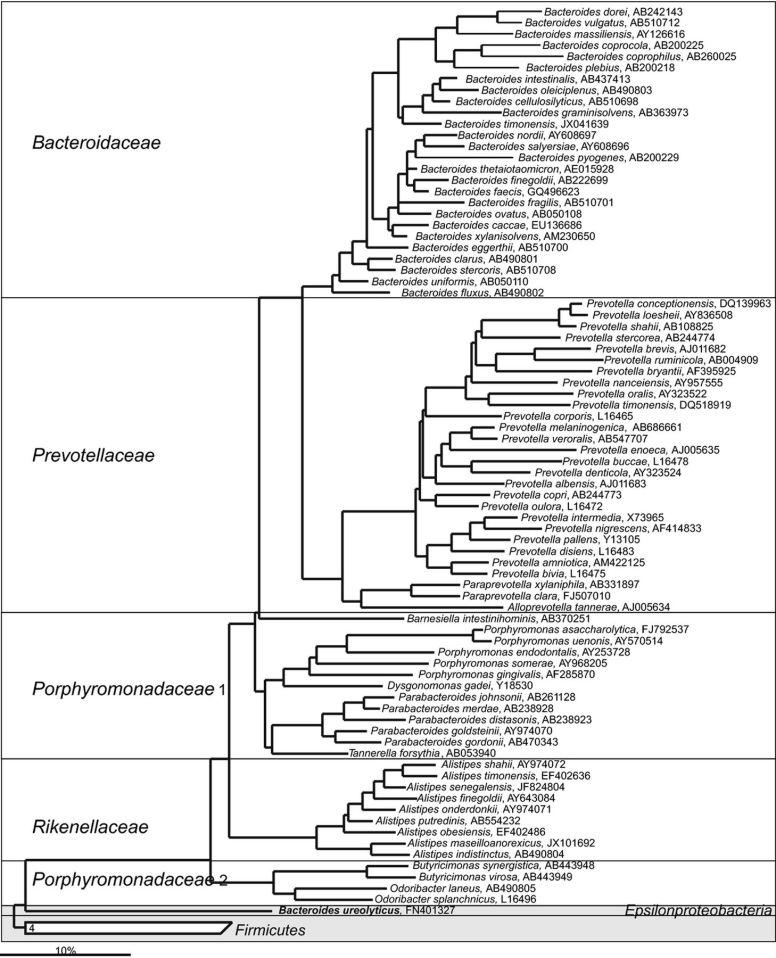
 “Because of their broad metabolic potential, the role of the Bacteroidetes in the gastrointestinal microbiota is complex: while the reduced abundance of the Bacteroidetes in some cases is associated with obesity (Ley, 2010) and irritable bowel syndrome (Rajilić-Stojanović et al., 2011), this bacterial group appears to be enriched in patients suffering from type 1 and type 2 diabetes (Larsen et al., 2010).”
f6-large

The Bacteriodetes Tree


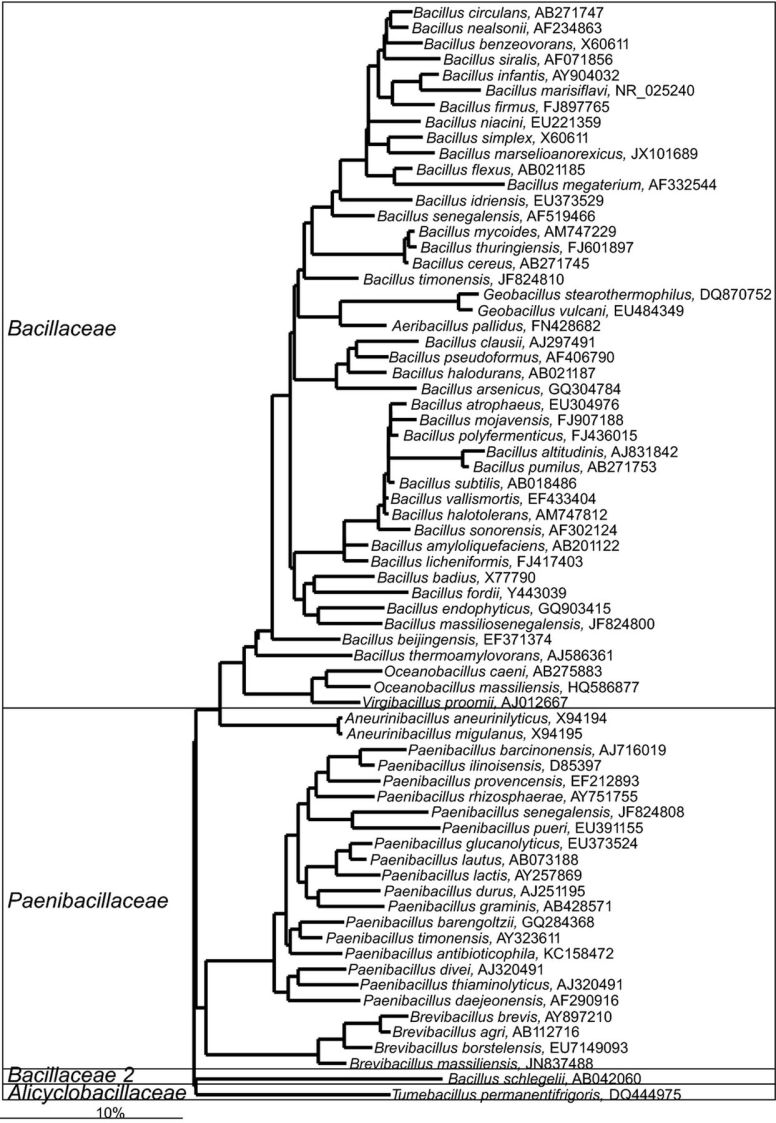
” Little is known about the function of these bacteria in the ecosystem, but it is noteworthy that two independent studies have shown that members of the Bacillales order, more specifically Aneurinibacillus spp., have an increased abundance in feces of irritable bowel syndrome patients (Krogius-Kurikka et al., 2009; Rajilić-Stojanović et al., 2011),”
f11-large
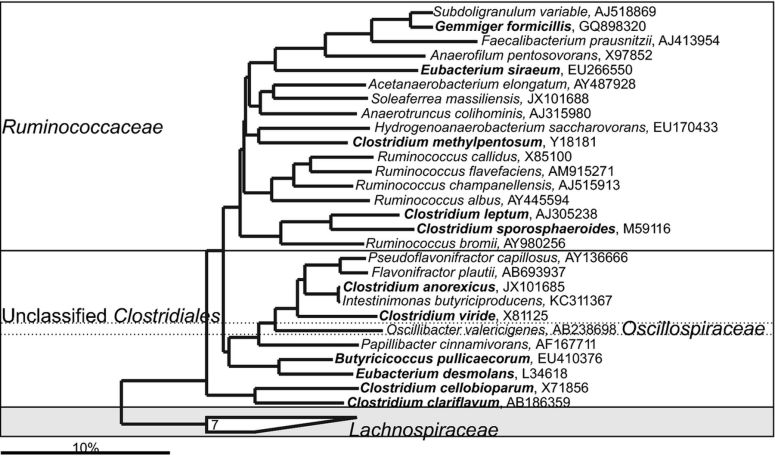
“The gastrointestinal Lachnospiraceae include Dorea spp., which are the major gas producers in the gastrointestinal tract and its end-products of glucose fermentation include both hydrogen and carbon dioxide (Taras et al., 2002). Dorea spp. were found in an increased in abundance in both pediatric and adult irritable bowel syndrome patients (Rajilić-Stojanović et al., 2011; Saulnier et al., 2011), which probably could explain the symptom of bloating, experienced by the majority of these patients.”
f14-large
“Christensenella/Catabacter group were reported to be dramatically (20-fold) depleted in fecal samples of ulcerative patients relative to controls (Rajilić-Stojanović et al., 2013a) and significantly (fivefold) depleted in fecal samples of patients with postinfectious irritable bowel syndrome (Jalanka-Tuovinen et al., 2013).”
f17-large
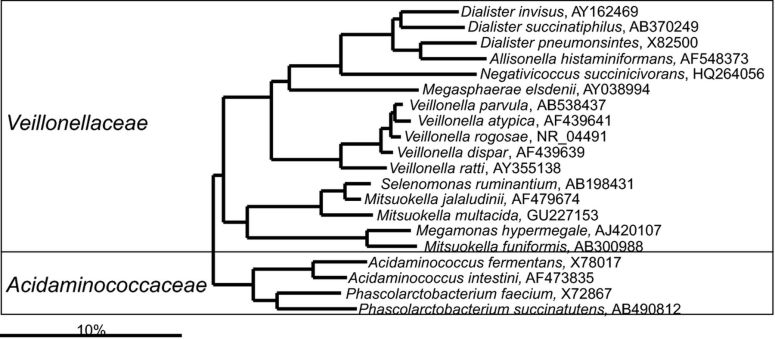
“Currently, there is no evidence about the role of Veillonella spp. in human health, although several studies have shown an increased abundance of Veillonella spp. in fecal samples of irritable bowel patients (Malinen et al., 2005; Tana et al., 2010; Saulnier et al., 2011), which could indicate an increased transit of the ileal microbiota to the lower part of the gastrointestinal tract.”
f18-large
“A recent study has indicated that members of the Gammaproteobacteria and in particular Haemophilus spp. are elevated in irritable bowel syndrome pediatric patients (Saulnier et al., 2011). Members of the same phylogenetic group were found to correlate with irritable bowel syndrome symptom score in an independent study (Rajilić-Stojanović et al.,2011).”
“a recent study has shown a highly significant (fourfold) reduction of methanogenic archaea in irritable bowel syndrome patients relative to controls (Rajilić-Stojanović et al., 2011).”
“, the latter research has suggested that D. fragilis might be associated with a number of diseases including diarrhea, abdominal pain, anorexia, irritable bowel syndrome or allergic colitis (reviewed in Johnson et al., 2004).”

Implications

Many of the bacteria species cited above that are low, in fact most, are not available as probiotics. The species that are high are not easy to treat with antibiotics because you do not want those antibiotics to also be effective against the low ones.

This is why I keep describing my approach as a model — it tells what needs to happen but not how to make it happen.  Clinical studies with different probiotics that were found consistently effective for IBS are a staring point — but each probiotic will likely help with just part of the process.


Lactobacillus Plantarum

This species originally appeared to be one of the good lactobacillus. I though after yesterday’s post, it would be good to drill down into it to be sure.  Swanson sells it as a single species probiotic.  Most of the studies are for specific strains (which are not currently on the market).

At a high level, it looks very good

” L. plantarum attracted many researchers because of its wide applications in the medical field with antioxidant, anticancer, anti-inflammatory, antiproliferative, anti-obesity and antidiabetic properties.” [2016] [Full Text]

and drilling down into some details, it continue to look good

BUT then I hit this set of studies for IBS

Bottom Line

If you have IBS, definitely avoid this one. While it has some good benefits for things like aluminum – it seems not to be a good choice for CFS/IBS. IBS studies are a good proxy for CFS (when no studies exist), and multiple studies show no effect (for the same strain that occasionally have positive effect), or negative effect.

Ken’s Rule: If a probiotic has been tested for IBS with good results (and no bad ones) then it is recommended. Good results with other digestive issues — but no IBS, also recommended. No results or negative, places it in the suspect camp.

My favorites are:

  • Prescript Assist
  • Mutaflor
  • Symbioflor-2


Aluminum, Vaccines and CFS

One of my reader is involved with a group of CFSers in Europe and one of the members got a lab report that they were very high in aluminum.  This is a testable and have been associated with a subset of CFS patients and associated with vaccines. In other words, a subset of people that are very sensitive to aluminium.

  • ” Concerns linked to the use of alum particles emerged following recognition of their causative role in the so-called macrophagic myofasciitis (MMF) lesion detected in patients with myalgic encephalomyelitis/chronic fatigue/syndrome. MMF revealed an unexpectedly long-lasting biopersistence of alum within immune cells in presumably susceptible individuals, stressing the previous fundamental misconception of its biodisposition. ” [2015]
  • Macrophagic myofasciitis and chronic fatigue syndrome are severely disabling conditions which may be caused by adverse reactions to aluminium-containing adjuvants in vaccines. While a little is known of disease aetiology both conditions are characterised by an aberrant immune response, have a number of prominent symptoms in common and are coincident in many individuals. Herein, we have described a case of vaccine-associated chronic fatigue syndrome and macrophagic myofasciitis in an individual demonstrating aluminium overload.” A role for the body burden of aluminium in vaccine-associated macrophagic myofasciitis andchronic fatigue syndrome [2009].
  • ” The results indicate that patients had significantly increased serum aluminum and decreased iron compared to controls. ” Serum concentrations of some metals and steroids in patients with chronic fatigue syndrome with reference to neurological and cognitive abnormalities [2001].
  • ” Al deposits in the macrophages, and Al assays (in μg/g, dry weight) were 768.10±18 for the patient compared with the two control patients, 5.61±0.59 and 9.13±0.057.” [2012]

Most of this work is done in France and tend to be ignored in the US (or if raised, dismissed as quackery!).

There is a nice table of the aluminum content of foods here. ” processed foods contained more aluminium than the primary products. Consequently, food was considered to be increasingly contaminated by aluminium packaging “.

Aluminum is found in consumer products including: • antacids • astringents • buffered aspirin • food additives • antiperspirants • cosmetics  [cdc]

There have been no study that I could find comparing aluminum levels in general CFS patients against controls. We need such a study. If the level of aluminum increases with the duration of CFS, then it is likely that the CFS body is not able to remove the aluminum in food.

Jumping to Assumptions

Do not immediately blame a vaccine / aluminum for CFS — at least, not until laboratory tests confirm high level of aluminum (which could also come from food — especially rice), Another factor could be the water you drink ” This study suggests that phosphate restricts the entry of Al into the cell, while fluoride promotes it.” [1998] For more effects of aluminum see this paper.

There have been individual cases reports, 2008 Story, but with 5 vaccinations,  the immune response to the vaccines could also be the cause. We cannot be sure.

The patient above grew up next to a recycler and that was their likely source of aluminum.

Caused of OR Caused by?

The finding that some lactobacillus are involved with the removal of aluminium combined with very low lactobacillus in CFS patients opens the possibility of aluminium building because the normal bacteria that would reduce it is not there!

This could be a compounding cycle of no bacteria -> increased aluminum –> CFS-like symptoms —> aluminum reducing other bacteria families.

We do not know — but we should be open to both views…  we need appropriate studies on a large population of CFS patients to resolve this question.

Treatment?

Note we are not talking about Aluminum Toxicity, but aluminum disruption of the immune system. There is considerable evidence that it will impact certain bacteria [The bactericidal action of highly purified aluminum and certain aluminum alloys [1969].Aluminium toxicity and binding to Escherichia coli [1991].


Heparins and CFS

I was in the fortunate group who had comprehensive coagulation testing by Hemex labs and Dave Berg before he retired and Hemex lab sold. I have mentioned in prior posts how heparin+piracetam is very effective for reduce brain fog in cfs (and jet lag too!). The unfortunate aspect is that no one has taken up his work subsequently — the typical Medical Doctor, if you are successful in getting coagulation tests, will only order the most common ones and ignore anything that does not suggest that you are about to have a stroke –i.e. acute coagulation and not low-grade chronic coagulation. CFS manifestations is often a variation of Hughes Syndrome aka Antiphospholipid Syndrome (APS). I have know people with CFS who were tested for the classic APS and was positive for it.

Dave Berg Research

The following are links to his work and description of his works

Infections Shared

There are a series of infections associated with APS, and a series of infections associated with CFS. The full list of both are below — and they match!!!!  Associated does not causes, but can often mean that the infection sees a friendly environment and moves in OR was already there and contained by a healthy immune system. If you have CFS, you likely have one or more infections that is likely to cause coagulation.

Chronic Fatigue Syndrome Associated Infections APS Infections
EBV (20% – 72%)  — 11 articles on pubmed Epstein-Bar Virus (EBV or HHV4)
VZV – 2 articles on pub med
Varicella zoster virus (VZV or HHV3 -chicken pox)
** Human Immunodeficiency virus (HIV)
HHV6 (25% – 58%) – 12 articles on pub med
Human Herpes Virus 6 (HHV6)
CMV (29%) – 4 articles on pub med
Cytomegalovirus (CMV) (HHV5)
Coxiella Burnetii (Rickettsia)(90% – 50%) – 6 articles on pub med
Coxiella Burnetii (Enteroviruses)
Lyme  – 2 articles on pub med
Lyme Disease (Rickettsia)
 1 article on Pub Med Mediterranean spotted fever (Rickettsia)
Mycoplasma (41% – 69%) – 13 articles on pub med
Mycoplasma
Anecdotal – see below
Leprosy
** Tuberculosis
** Syphilis
Parvovirus B Three articles on pub med
Parvovirus B
** Hepatitis
Chlamydia-Pneumonia (8%) – 4 articles on pub med
Chlamydia-Pneumonia – 3 articles on pub med
Human Enteroviruses (32% – 82%) 2 articles on pub med

Primary sources for APS infections was “Hughes Syndrome Antiphospholipid Syndrome” Springer, 2000 (2nd printing 2002), editor M.A. Khamashta. Chapter 14, “Infections and Antiphospholipid Syndrome”(by A.E. Gharavi and S.S. Pierangeli), p. 135.


Coagulation also happens with Multiple Chemical Sensitivity flares (which appears to be allergy-like except IgE is not involved):

  • Dahl R, Venge P. Activation of blood coagulation during inhalation challenge tests. Allergy 1981 Feb;36(2):129-33;
  • Pandit HB, Spillert CR, Shih RD. Determination of hypercoagulable state in acute bronchospasm. J Am Osteopath Assoc 1999 Apr;99(4):203-6.
  • Armentia A, Barber D, Lombardero M, Martin Santos JM, Martin Gil FJ, Arranz Pena ML, Callejo A, Salcedo G, Sanchez-Monge R. Anaphylaxis associated with antiphospholipid syndrome.Ann Allergy Asthma Immunol 2001 Jul;87(1):54-9
  • James E. Lessenger, Occupational Acute Anaphylactic Reaction to Assault by Perfume Spray in the Face, J Am Board Fam Pract 14(2):137-140, 2001

One person that I know very well with MCS, had a coagulation panel before a MCS exposure, and then 3 weeks afterwards — there was a jump of 5 Standard Deviation of active coagulation.


Treatment

Originally, we were recommended a Low-Molecular Weight Heparin, Lovenox by brand name (other names are Xaparin and Clexane), Enoxaparin sodium, taken by injection. Injections are not fun and Lovenox was expensive!!!.

Later, we learnt that the taking regular heparin sublingual (under the tongue for 2 minutes and then spit it out) appears to be equally effective and much cheaper (and no needle tracks!). Heparin is natural and stored with histamine in mast cells (it is debatable if histamine sensitivity is a side effect of the body releasing heparin to deal with coagulation issues, the release of heparin also releases histamine!). Regular heparin is Unfractionated heparin (UFH) as a pharmaceutical is heparin that has not been fractionated to sequester the fraction of molecules with low molecular weight.

[Sublingual application of heparin L for the treatment of patients with coronary insufficiency]. [1968]

Moreover, drug costs for a six-day course of treatment for a patient weighing 176 pounds would be $712 for low molecular weight heparin Lovenox (enoxaparin) or Fragmin (dalteparin) versus $37 for unfractionated heparin, they reported in the Aug. 23 issue of the Journal of the American Medical Association.” [source]

There have been studies showing that heparin sublingual is not as effective [1952] and other studies found it was effective.[1951] [1959].

The final decision is really between the physician, the insurer and the patient.  Injection of Enoxaparin sodium is the safest route to guarantee effect, but the use of sublingual unfractionated heparin would be the alternative.

Dosage? That is again a technical question best left for the professional. Dave Berg discovered that heparin at the dosages needed to prevent miscarriages due to APS was sufficient to cause CFS symptoms to disappear.

  • “In six of 13 third-trimester pregnancies, > 10,000 units subcutaneously every 12 hours was needed.” [1995]
  • ” The average dose was 16,400 IU/24 hours or 225 IU/kg of body weight per 24 hours.” [1989]

TIA – Transient Ischemic Attacks

Sometime CFSers will suffer TIA, especially from stressful situations.  If it seems to match, you may wish to actually read up on it so you can describe your symptoms in it’s framework (and eliminate all of the non-TIA aspects from your symptoms) so your MD will magically diagnosis that you have had a TIA — remember to say “What is a TIA?”. Yes, this is gamesmanship with the MD. Give your MD an easy diagnosis!

  • Weakness, numbness or paralysis in your face, arm or leg, typically on one side of your body
  • Slurred or garbled speech or difficulty understanding others
  • Blindness in one or both eyes or double vision
  • Dizziness or loss of balance or coordination
  • clumsiness of the hands or fingers. Or, you may notice more serious symptoms, like a complete inability to walk, move the arms, or move facial muscles.
  • patients may tell their doctor that they had difficulty recalling words during the event (dysphasia may be the only symptom of the mini stroke) [HealthLine]
  • Often just last 5-10 minutes – so patient or care giver report is the only evidence.
  • [HealthLine]The common signs of a TIA include:

    • sudden increase in blood pressure
    • muscle weakness
    • temporary numbness in an arm or leg
    • dizziness
    • sudden fatigue
    • unconsciousness
    • confusion
    • temporary memory loss
    • body tingling
    • personality changes
    • difficulty speaking
    • garbled speech
    • poor balance
    • changes in vision

My wife had many of these before she was treated for hypocoagulation, none afterwards.

REMEMBER: TIAs are spells, i.e. events that go on for 5-10 minutes. To many CFSers they are interpreted as short CFS flares and often ignored in the noise of CFS symptoms. Reporting one incidence  happening in a month should be more than sufficient.

CAUTION

Before taking heparin, your MD should review all of your supplements to identify blood thinning herbs etc. In general, you want to omit all of them while taking heparin.

Also, there is a risk  of Heparin-Induced Thrombocytopenia (HIT)” the frequency of HIT-IgG formation ranged from a low of 3.2% in orthopedic patients receiving LMWH to a high of 20% in cardiac patients  …. The frequency of HIT was highest (4.9%) in the orthopedic–UFH patients and was relatively low in both the orthopedic–LMWH patients (0.9%) and the cardiac–UFH patients (1%).” [2000]

“HIT is considerably more common with UFH than with LMWH use. The absolute risk with LMWH is only 0.2%.” [2005]

“HIT occurs in 3 to 5 percent of patients who receive intravenous unfractionated heparin compared to the 0.5 percent incidence rate with subcutaneous LMWH, …..This result cannot be totally guarded against, but certain precautions can be taken. Adequate calcium and vitamin D supplementation is one potential prophylatic measure” [2005]

Low Molecular Weight Heparin is safest, 0.2% (1 in 500) may have HIT.

Question on Histamine Sensitivity?

Since mast cells contains histamine AND heparin, would heparin injections reduce histamine sensitivity?

Questions from Readers

  • Low Molecular Weight Heparin (LMWH) is the safest because of 1/100th the risk of HIT.
  • Which is best subcutaneous (below the skin) or intravenous (into a vein)?
  • Dosage — I cannot suggest a dosage — that is for medical professional, the dosages for pregnancies was sufficient for the first reports to Hemex of remission. I found the following citations for prophylactic use:
    •   40 mg daily of enoxaparin [2003]
    • 0.56 to 0.63 mg/kg  [2011] i.e. 60 kg (130 lbs) person –>  35 mg/daily
  • Using anticoagulants of any type (including herbs), mean that you must keep very aware of easy bruising or easy bleeding from cuts. If either happens, stop and contact your medical professional. It is best to do anticoagulant under medical professionals to verify that your liver, kidney, etc are functioning well before they potentially get stress.


Itching, Hives, Histamine and Bacteria

In the past I have written about histamine intolerance[ Mar 2014] being a possible CFS mechanism. I also wrote about Non-histamine probiotics. After that post, there was a 2015 paper on Mast Cell and Autoimmune Diseases (“Mast Cells promote inflammation in the same way like TNF”). In this post, I want to look at what we know about specific bacteria that may cause itching, hives, or to use the medical term , urticaria. Medical opinion is that all of these are due to histamine release, so we are effectively looking at bacteria that can cause histamine to be release from mast cells.

Bottom Line

There are many virus and bacteria that are associated with urticaris — which I assume is primarily caused by histamine release. IMHO, Staphylococcus it the preferred one to initially target and there was a pub med reports in 2001 of eradication of Staphylococcus leading to CFS remission. As well as staphylococcus toxoid on FM and CFS resulting in major positive results in 2002.

I have updated my staphylococcus aureus-the-cfs-maintainer post with more herbs and spices that have evidence on PubMed of being effective. One word of caution, some may dump chemicals triggering histamine release when they are killed — so have DAO and anti-histamine handy!