Niacin, Niacinamide, NADH, Inositol

In my last post, we saw that Niacin levels in the blood was often low with microbiome dysfunction. This trigger a memory of early in my second relapse taking the expensive NADH supplement because a study finding that it helped CFS.

NADH Studies

Once I found that it was a precursor to niacin, I switched to taking much cheaper (flushing) niacin. It actually worked better!!! Turning lobster red and itchy skin is another matter!

Forms of Niacin

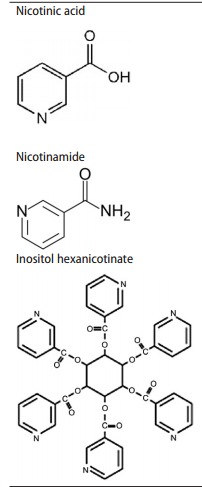
“Niacin and niacinamide are both forms of vitamin B-3, and they can be used interchangeably in daily doses of 100 mg or less. However, each form has specific health applications when used in higher doses. Niacin is often taken to support cholesterol levels already within the healthy range (both LDL and HDL), while niacinamide is used to help promote a healthy insulin response, as well as to help maintain joint health. A third form of vitamin B-3 known as inositol hexaniacinate is similar to niacin, but it does not produce the red, prickly flush that often accompanies the latter form, and for this reason it is commonly referred to as flush free niacin.” Swanson Vitamins

From Niacin: chemical forms, bioavailability, and health effects[2012]. the following was found interesting:
Niacin

  • NA – flushing niacin, aka. Nicotinic acid
  • ER-NA – extended release  nicotinic acid
  • IHN – Inositol hexanicotinate
  • NM – Nicotinamide (a.k.a.  niacinamide, nicotinic amide)

“Clearly, NA is a very effective and inexpensive agent for improving health outcomes in persons with elevated lipid levels at risk for heart disease, but its utility is limited by poor patient compliance due to the generally unacceptable flushing reaction”

“There is debate about whether the bioavailability of NA from IHN is high enough to justify it being considered a form of niacin. Some publications support this classification, while others contradict it…  data on the efficacy of IHN for lowering serum lipids do not support the hypothesis that the chemical forms are clinically interchangeable”

“Higher doses of NM have been tested for a variety of possible benefits related to several disease conditions such as depression,55 but results are inconsistent and NM is not generally recognized as an effective treatment for clinical depression or high plasma triglyceride and cholesterol levels”

“The data for a direct quantitative comparison of the ER-NA and NA forms are not robust, but the risk of hepatotoxicity seems approximately twice as high with the ER-NA forms compared with the crystalline NA form.”

“This analysis indicates that, contrary to the common and mistaken perception, the four major forms of niacin in the marketplace (NA, ER-NA, IHN, and NM) are not bioequivalent with respect to efficacy or safety.”

What is a flush?

“High intakes of NA(Niacin) produce a vasodilative effect that can result in an intense itching or burning sensation of the skin known as the “niacin flush.” Flushing may be classified as a nuisance effect. It is initiated via prostaglandin D2-mediated vasodilatation of small subcutaneous blood vessels. The vasodilatation is associated with an unpleasant sensation of intense warmth and itching that commonly starts in the face and neck and can proceed down through the body. Some individuals may experience a rash, hypotension, and/or dizziness. Flushing appears about 30 minutes after intake of NA, and 2–4 hours after intake of ER-NA. Skin-flushing reactions usually persist over only a few doses until the body develops a natural tolerance. The daily dose is generally administered over several hours in three parts to reduce flushing.

Although flushing is a common side effect with both the free nicotinic acid and the extended-release forms, it is possible to ameliorate this symptom by ingesting niacin with food, avoiding alcohol, and, for those individuals on aspirin therapy, consuming aspirin one-half hour before ingesting niacin. The free nicotinic acid form can be taken with multiple meals in divided doses, making it possible to achieve therapeutic goals.”

Bottom Line

They are not the same. I prefer NA – classic niacin. The flush usually clear out my brain (when it happens). Usually I do not get a flush, but when I do it is suggestive that something is changing in my system — perhaps increased growth of bacteria producing toxins.

While there is a total absence of studies dealing with Niacin and Chronic Fatigue Syndrome, Irritable bowel disease, Fibromyalgia, it has been found to be low in the blood of other microbiome dysfunction. It is part of natural vascular dilation which suggests a low level may result in tighter blood vessels and less oxygen delivery (more brain fog). From personal experience, I recommend it.


Diet impact on Microbiome

Many health issues are associated with western diet. When non-western cultures start imitating western eating habits, there are often an explosion of western health issues. I believe that several auto-immune conditions, including CFS/FM/IBS/UC/Crohn’s etc are included (that is the incidence increases). “An increasing number of human disease conditions, such as inflammatory bowel diseases (IBD), type 2 diabetes, obesity, allergies and colorectal cancer are linked with altered microbiota composition. Moreover, a clearer picture is emerging of the composition of the human microbiota in healthy individuals, its variability over time and between different persons and how the microbiota is shaped by environmental factors (i.e., diet) and the host’s genetic background.” [2015]

Since all of these conditions are associated with microbiome irregularity, I will just grind thru recent research on what is good or bad for the microbiome (across many conditions).

In addition to below, you may wish to check some related prior posts:

  • “Intake of dietary fiber is associated with reduced disease flares in patients with Crohn’s disease, but not UC. Recommendations to limit dietary fiber should be reevaluated.” [2015]
  • “A diet imbalance with high consumption of sugar and soft drinks and low consumption of vegetables was associated with UC risk.”[2015]
    • “Evidence from uncontrolled and controlled challenge studies suggests that malabsorbed sugars (fructose, sorbitol, lactose) and fructans may act as dietary triggers for clinical symptoms suggestive of IBS.”[2009]
  • ” westernization of diet with high sugar and fat are thought to be associated with rapidly increasing incidence of CD.” [2015] – China Paper
  • ” intake of zinc was inversely associated with risk of CD but not UC.” [2015] i.e. more zinc intake, less CD risk
  • ” supplementation of some types of dietary fibre can prolong remission and reduce lesions of the intestinal mucosa during the course of the disease… The patients were recommended to add 60 g of oat bran per day (corresponding to 20 g dietary fibre) to the diet for 3 months. The oat bran supplementation resulted in a statistically significant increase in the faecal short chain fatty acids concentration, in particular butyrate. None of the patients in the study group reported gastrointestinal complaints and there were no colitis relapses. ” [2015]
    • “Data on diet have been inconsistent, but high fiber intake, particularly of soluble fiber, appears to protect against CD, whereas protein intake may increase disease risk.”[2013]
    • ” long-term intake of dietary fiber, particularly from fruit, is associated with lower risk of CD but not UC.” [2013]
    • “Colitis was significantly reduced in all fructo-oligosaccharides-fed rats compared to the control diet, whereas inulin decreased chronic intestinal inflammation in only half the number of animals.” i.e. FOS is not inulin and it is much better than inulin.
      • patients with Crohn’s disease may be more sensitive to inulin intake” [2013]
    • “Results demonstrated that consuming a wheat bran-inclusive diet was feasible and caused no adverse effects, and participants consuming whole wheat bran in the diet reported improved health-related quality of life (p = .028) and gastrointestinal function (p = .008) compared to the attention control group.”[2014]
  • “greater intake of fish (P trend = 0.01) and fiber (P trend = 0.06) were associated with lower risk of CD.” [2015]
  • ” Epidemiological studies have suggested an inverse association between selenium levels and inflammatory bowel disease (IBD), which includes Crohn’s disease and ulcerative colitis that can potentially progress to colon cancer.”[2015]
    • “hold promise that adequate dietary Se supply may counteract chronic intestinal inflammation in humans”[2014]
    • “New Zealand has one of the highest incidence rates of Crohn‘s Disease (CD), whilst the serum selenium status of New Zealanders is amongst the lowest in the world.”[2012]
  • ” we determined that the polysaccharide dietary additive, maltodextrin (MDX), impairs cellular anti-bacterial responses and suppresses intestinal anti-microbial defense mechanisms”[2015]
    • ” geographical variation in CD correlates with emulsifier consumption as does the increasing incidence of CD in Japan; … very small concentrations of the emulsifier polysorbate 80 enhance bacterial translocation across intestinal epithelia.” [2013]
  • 500 mg [of curcumin/turmeric] twice per day for 3 weeks …The Crohn’s patients score dropped from 5 to 0 suggesting improvement.”[2013 Full Text]
  • “Clinical trials have shown benefit with enterically delivered phosphatidylcholine supplementation in UC and near-significant benefit with vitamin D supplementation in CD.”[2014]
  • ” In a population-based case-control study, breast-feeding, having pets, and better sanitary conditions were protective of IBD”[2015]
  • “There is circumstantial evidence from epidemiology studies that a diet deficient in folate may have contributed to the global rise in these diseases.” [2013]
    • “A significant inverse relation was observed between dietary folate equivalent consumption and migraine frequency.” [Feb 2015]
  • “Comparisons between controls and newly diagnosed patients showed that increased consumption of milk and yogurt (P = 0.042), fruits (P = 0.0001), citrus (P = 0.0001), vegetables (P = 0.0001), carrots (P = 0.0001), legumes (P = 0.036), fish and selfish (P = 0.001), honey (P = 0.003), and nuts (P = 0.038), was associated with decreased risk for CD. On the other hand, significantly increased intake of fat (P = 0.041), olive oil (P = 0.038), margarine (P = 0.038), sugar (P = 0.02), alcohol drinks (P = 0.009), fried food (P = 0.0001), and pasta (P = 0.0001), was noticed on recently diagnosed patients in comparison with the healthy control group.” [2012]
    • “Those who experience migraine at least once per week were more likely to have low intake of skim/low-fat milk and white and red wine.” [Aug 2015]
  • “CD showed positive association with urban residence (at birth and current), …and strict vegetarian dietary habit,..negative association with regular fish consumption”[2011]
  • “The average daily micronutrient intake of male and female patients, specifically of vitamin B1, B2, B6, folic acid, magnesium and iron, was significantly lower in celiac patients”[2013]
    • “More than 50% of patients had low plasma concentrations of vitamin C (84%), copper (84%), niacin (77%), and zinc (65%).”[2006]
  • A diet low in fermentable oligosaccharides, disaccharides, monosaccharides, and polyols (FODMAPs)
    • A diet low in FODMAPs reduces symptoms of irritable bowel syndrome.Halmos EP, Power VA, Shepherd SJ, Gibson PR, Muir JG. [2014]
    • Low FODMAP diet information
    • “Diets differing in FODMAP content have marked effects on gut microbiota composition. The implications of long-term reduction of intake of FODMAPs require elucidation.”[2015]
  • We also recommend the use of the following supplements in the preventative treatment of migraines, in decreasing order of preference: magnesium, Petasites hybridus, feverfew, coenzyme Q10, riboflavin, and alpha lipoic acid.” [2009]
  • “Of these, sweet potatoes had the highest reported frequency of beneficial responses. We also identified 4 foods with detrimental effects in more than 25% of our study population. These were mustard, wasabi,  raw and cooked tomatoes” [2015]
    • ” Among commonly consumed individual raw vegetables, tomatoes, carrots, and scallions related significantly inversely to BP.”[2014]  – low BP is common with CFS
  • ” A small number of foods are frequently considered to be beneficial, including white fish, salmon and tuna, gluten-free products, oatmeal, bananas, boiled potatoes, sweet potatoes (kumara), pumpkin, soya milk, goat’s milk and yoghurt.” [2010]

Bottom Line

Going thru the above, I found a lot of overlap with items reported with CFS, hence I suspect that it will likely apply to CFS. Second, the results reported are not gospel!

  • ” Patient-targeted dietary recommendations focus on food restrictions and are highly conflicting.” [2014] “There is little evidence from interventional studies to support specific dietary recommendations” [2013]

REMEMBER appropriate probiotics will likely be needed to utilize this diet better.

From the above,  I conclude:

  • Stop Omega 6 supplementation, eat fish instead (which also provides Vitamin D)
  • Stop taking explicit inulin, instead use fructo-oligosaccharides
  • Decrease meat fat,  increase vegetables, specifically:
    • sweet potatoes
    • pumpkins
    • boiled potatoes
    • carrots
    • legumes
  • Increase fiber
    • oatmeal, oat bran
  • Increase fruits, specifically:
    • bananas
    • avoid tomatoes
  • Eliminate soft drinks and items with added sugar
    • If the ingrediants includes sugar — avoid
    • Sugars INCLUDE:
      • fructose,
      • sorbitol,
      • lactose
  • Avoid Emulsifers, (sometimes they are called “Conditioners” on labels) especially
  • Eat fish —  do not go strict vegetarian
  • Eat nuts

Supplements

These are the same ones usually seen with CFS

  • Selenium (recommended levels may be set low — only enough to prevent certain diseases such as Keshan disease) – at least 75 µg/day
  • Vitamin D3 (15000-20000 IU/day should be discussed)
  • Magnesium
  • riboflavin
  • alpha lipoic acid.
  • CoQ10
  • Turmeric – 1000 mg/day
  • Zinc and Copper
  • B1, B6, B9 (Folate)

Tradition breads did not use sugar!!

Sugar was very expensive for a long time. Some modern bread has kept the old taste:

bread

crispbread

The bread below attempts to “look good -100% whole grain, no sugar” but contains emulsifers and a lot more:

badbread

Earlier Posts (Condition Specific)


Sex Differences in CFS Microbiome

A reader forwarded me a new report published today in Nature which found differences between males and female CFS suffers. The title does not indicate that it is linked to CFS/ME  “Support for the Microgenderome: Associations in a Human Clinical Population

One of the major findings is what I have speculated (without a solid study to support it): There is association between symptoms seen and bacteria in the microbiome.  Shifting the microbiome may reduce specific symptoms.

Clostridium

  • “In females, the Clostridium genus was positively associated with eight of the thirteen ME/CFS symptoms.”
  • “For males, an opposite association was found, with a significant negative correlation betweenClostridium RA and mood symptoms”

Lactobacillus

  • “the positive associations between the distribution of Lactobacillus and total ME/CFS symptom factors for males”
  • ” for females, no significant relationships were revealed between these variables.”

Streptococcus

  • “Correlations for StreptococcusRA suggested opposing protective or pathogenic qualities between the sexes.”
  • “Conversely for females, there were significant negative correlations between Streptococcus RA and pain (F3:rs = −0.17, n = 154, p = 0.034), neurosensory (F5: rs = −0.16, n = 165, p = 0.040), and immunity impairments” – i.e. more Streptococus had less pain, neurosensory and immunity issues in women.

Bifidobacterium

  • No significance between sexes, but:
  • “Significant, small negative correlations were shown between Bifidobacterium RA fatigue (F1: rs = −0.16, n = 166, p = 0.036), neurocognitive (F2: rs = −0.17, n = 158, p = 0.032), neurosensory (F5: rs = −0.17, n = 164, p = 0.030), energy/production and transportation impairments (F10: rs = −0.23, n = 164, p = 0.003), ICC symptoms (F12: rs = −0.19, n = 123, p = 0.044), and Total symptoms (F13: rs = −0.20, n = 117, p = 0.029) factors.” i.e. the more Bifidobacterium, the less severe symptoms.

Study’s Weaknesses

  • There were no matched controls to identify where there are dramatic shifts from a healthy population
  • The analysis was at a high level (family) and did not look at strains
  • Only four families were examined

Bottom Line

This article was largely data reporting, however in it’s discussion we find some interesting things to consider.

“Observations across Lactobacillus and Streptococcus genera suggest support for D-lactate as a contributing factor to symptom expression, particularly in males. This hypothesis explains the neurological symptoms of ME/CFS as a consequence of neurotoxic effects of bacterial metabolites (i.e., D-lactic acid produced by most species of Lactobacillus and Streptococcus) on the brain and nervous system25. Increased D-lactic acid levels have been found in the serum of CFS patients with intestinal bacterial overgrowth7, associated with cognitive and neurological impairments26, and reduced in response to treatment in a sample of CFS patients27. The mechanisms of a sex-specific response to D-lactic acid have not been considered.”

” Notably, the findings for Lactobacillus spp. in males caution against premature probiotic supplementation with D-lactate producing bacteria. However, results support the health-promoting effects of Bifidobacteria as observed across diverse disease states including IBS28,29, cancer30, anxiety and depression31,32.”

My Take Away

The results appears to be in close agreement with my general model and supports my view that:

  • Most Lactobacillus probiotics should be avoided
  • Most Bifidobacteria probiotics should be taken

The role of Clostridium is fuzzy, but it suggests that Miyarisan (clostridium butyricum) may help to moderate the symptoms in at least one sex. It may improve in both (displaced the bad ones).

Streptococus role is interesting because it was been reported as low in CFS. This family is common in oral probiotics and suggests that supplementation may improve symptoms.


Controlling a Herxheimer Reaction

I have posted before about Jarisch-Herxheimer reaction (JHR or ‘herx’) reactions,

I have had months of herx reactions before two remissions and learn to control it. By control, I mean keep the amount and duration of herx in a comfortable range occurring at the times that I wish it to happen. This is not easy to do with mental fog. I am currently chatting daily with someone that is going thru a herx and additional supplements are arriving that they wish to add. Some of these new supplements are poor choices when you are already herxing hard. The herx has been severe for her, she has had to crawl to the washroom (like my own wife did for her CFS some 15 years ago). One of her characteristics is depression and anxiety – which is very common in CFS (even without a herx!)


How long will it last?

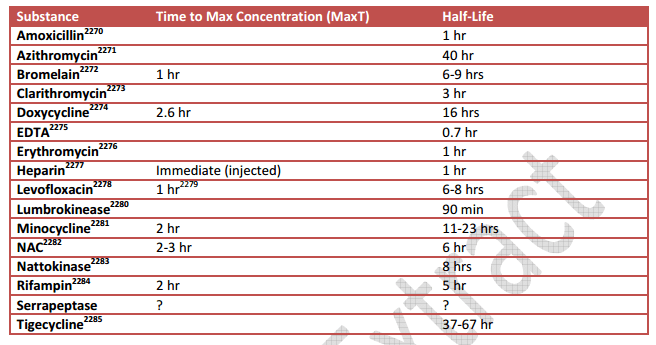
From when you take something until it is at peak concentration in your body is the time that the herx will slowly increase. Typically it is 2-3 hours (see table below). This is why I usually suggest taking antibiotics/antivirals about 1-2 hours before bed so the herx hits in your sleep (or helps you get to sleep).

The half life is the time until the herx or effect decreases by 50%.

halflife

An example:

  • You are taking minocycline and want to increase the herx and have a choice of NAC or EDTA
    • With NAC, you would take both at the same time and the herx will likely stay more severe for 6 hrs and then start to fade away – why because NAC half life is 6 hrs.
    • With EDTA, you would take it about 3 hours after the minocycline. Because it has a short half life, you want the minocycline concentration to be at it max first.

If you are taking prescription antibiotics or antivirals, you will likely be able to find the time to peak and/or half life on pubmed. Click this link and change “antibiotic” to the specific antibiotics. http://www.ncbi.nlm.nih.gov/pubmed/?term=(MaxT+or+Half-Life)+and+antibiotic

Increases Herx

The items do not directly impact infections, but they either breaks down protective films around infections (biofilms) or increases the penetration of antibiotics. If the herx is waning, taking some of these will likely increase herx. The increase of herx will dependent on the volume taken.

Decreases Herx

The classic way of decreasing herx is reducing the dosage. However, there are items that can reduce the herx -many of these items has the potential of inducing a secondary herx, however, I am not aware of that being reported for any on the lists. The lists are not comprehensive.

Detox herbs

Detoxification herbs are a model advocated by alternative medicine. These are herbs that assist with removing toxins from the body, conceptually, the toxins producing the herx. When I checked PubMed, I found just over 50 articles, it is very understudied. I came across this in the Journal of Alternative Complementary Medicine:

“Whereas supplements for which good supporting evidence exists generally cost around $3-$4 per month, those that are heavily promoted for which there is little supporting evidence cost about $20-$60 per month. The major cause of this problem in the United States is weakness of the law. There is an urgent need for stricter regulation and for giving better advice to the general public.” [2010]

Other Stuff

Honestly, who actually knows! If the herb kills some groups of bacteria (and most do), you may get additional herxing.  IMHO, once you are herxing, you should keep your supplements the same — with CFS there is not only brain fog, but also response to supplements fog!


Bacopa monniera and Cognitive Function

A reader wrote me about this herb that was in a mixture that contains several items that I also favor. I was not familiar with it, so I did a little research.

Bacopa monniera is a herb used in Indian Traditional/   “Ayurvedic treatment for epilepsy and asthma.[5] It is also used in Ayurveda for ulcers, tumors, ascites, enlarged spleen, inflammations,leprosy, anemia, and gastroenteritis.[3] ” – Wikipedia

Examine.com writes “Bacopa monnieri is a Nootropic herb that has been used in traditional medicine for longevity and cognitive enhancement. Supplementation can reduce anxiety and improve memory formation.”

There is an excellent narrative on Ayurvedic use of this herb over the last 5500 years.

Many of these areas are known to be associated with microbiome dysfunction. Does modern medical science agree? Over to PubMed which around 160 articles in total. The interesting results are:

  • “These results indicate that, cognition-enhancing and neuromodulatory propensity of BME is through modulating the expression of AChE, BDNF, MUS-1, CREB and also by altering the levels of neurotransmitters in hippocampus of rat brain.” [2015]
  • ” Studies in animal model evidenced that Bacopa treatment can attenuate dementia and enhances memory. Further, they demonstrate that Bacopa primarily either acts via antioxidant mechanism (i.e., neuroprotection) or alters different neurotransmitters (serotonin (5-hydroxytryptamine, 5-HT), dopamine (DA), acetylcholine (ACh), γ-aminobutyric acid (GABA)) to execute the pharmacological effect. ” [2015]
  • “Present study also confirms that 80-120 mg/kg doses of BM extract have significantly higher antidepressant-like activity.”[2014]
  • Bacopa monniera ameliorates cognitive impairment and neurodegeneration induced by intracerebroventricular-streptozotocin in rat: behavioral, biochemical, immunohistochemical and histopathological evidences[2015].
  • “The present results clearly demonstrate that the methanolic extract of B. monniera possesses antidepressant-like activity in the animal behavioral models” [2015]
  • “treatment with BM extract during growth spurt period of neonatal rats enhances learning and memory”[2011]

Human Studies

  • “The current study attempted to determine the chronic effects of single daily dose of 450 mg of Brahmi extract on cognitive performance and anxiety in healthy adults. The results of the current study are not in agreement with findings of some of the earlier studies which have found improvement both on cognitive parameters and a reduction of anxiety scores… However, there was a trend for lower state anxiety in the B. monniera (Brahmi) group as compared to placebo group.” [2013]
  • ” Promising indications for use in humans include improving cognition in the elderly and in patients with neurodegenerative disorders.” [2013]
  • “Promising candidates for future research include Bacopa monniera (brahmi) …providing potential efficacy in improving attentional and hyperkinetic disorders via a combination of cognitive enhancing and sedative effects.” [2011]

Bacteria / Gut

  • ” we had reported the prophylactic and curative effects of standardized extract of Bacopa monniera (BME) in various gastric ulcer models. The effect was due to augmentation of the defensive mucosal factors like increase in mucin secretion, life span of mucosal cells and gastric antioxidant effect rather than on the offensive acid-pepsin secretion.” [2003]
  • “BME showed antimicrobial activity against skin pathogens,”[2013]
  • ” a butanolic extract of Bacopa monnieri showed maximum inhibitory activity against the human pathogen Escherichia coli,” [2005]

Bottom Line

There are no studies with CFS/FM/IBS patients which would be ideal. My gut feeling (subjective) is that it is worth trying at 500-1000 mg/day. The most likely effect is reduction of the stress response (which usually have side effects of improved cognitive abilities). There is also a potential that it may reduce leaky gut – but that has not been explored or demonstrated in studies.