A Serotonin SNP in CFS

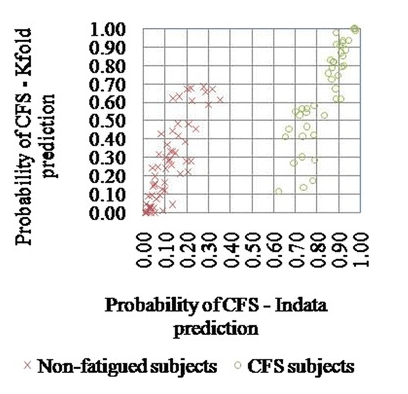
Another DNA study was published in Oct, 2015 out of Norway which appears to be included in 23 and me results, but the key SNP is not there. It looked at the SLC6A4 gene. This gene is associated with OCD and anxiety  (which could present before CFS). An earlier 2015 study from Finland/India demonstrated that examining multiple SNPs at the same time was reasonable good in predicting people with CFS when some 1-200 SNPs were considered in combination. The study size was way to small to be used in practice.
SNPS

Looking up on 23AndMe

After you logon to 23andMe, click the link below

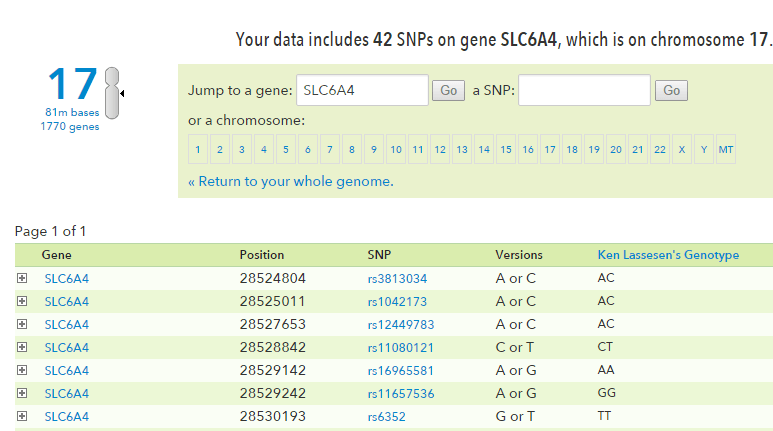
https://www.23andme.com/you/explorer/gene/?gene_name=SLC6A4

And this should appear:
SLC

“Patients with the SS or SLGgenotype had a significantly lower number of steps per day and also a significantly higher FDI score than patients with the LALG, SLA or LALA genotype when gender was taken into account as a covariate… we found that CFS patients with the 5-HTT SS or SLG genotype had a more pronounced reduction in physical and psychosocial functioning than patients with the 5-HTT LALG, SLA or LALA genotype. This suggests that patients with the 5-HTT SS or SLG genotype have a less favorable 30 weeks outcome than patients with the 5-HTT LALG, SLA or LALA genotype.”

FYI: The LALG, SLA or LALA genotype are associated with medium to high serotonin production [2013].

” In accordance with previous studies of Caucasians or European Americans indicating a general 5-HTT SS or SLG genotype frequency of about 25% [6,10], the same genotype frequency was 26% in the patients and 21% in the controls. Thus, the 5-HTT genotype cannot explain why some individuals develop CFS.”  – IMHO, it is associated with how the body responds to the microbiome shift seen in CFS.

Details

This link should take you directly to the SNP cited (SNP rs25531 A > G),

https://www.23andme.com/you/explorer/snp/?snp_name=rs25531

(A;A) 2.5 short form of 5-HTTLPR. lower levels of serotonin, slightly less happy, benefits from more support
(G;G) 2.1 long form of 5-HTTLPR. less sensitive to pain

It is in the 23andme DNA(Thank you Livewello.com for catching the typo!) —

revised

On Health Rising, it has been reported as “unreliable”   My personality type is a Polly-Anna, which would be consistent with the Genotype.

Recent related Studies

Bottom Line

We cannot use 23andMe results to check our status — however, if prior to CFS, you were prone to OCD or Anxiety, then it is more probable that you have this gene variation.

For 25% of CFS patients, serotonin supplementation my result in improved results (especially with those with OCD or Anxiety prior to CFS).

 

New study found SNPs for some symptoms!

A reader in Spain forwarded to me an article just published days ago, “Mitochondrial DNA variants correlate with symptoms in myalgic encephalomyelitis/chronic fatigue syndrome [2016]“. As expected, there was no outstanding results except for mtDNA (Mitochondrial DNA). mtDNA is inherited from the mother only, thus for some symptoms — a daughter’s symptoms may be the same as her mother in general.

The conclusions were

“We did not observe a significant association of mitochondrial DNA genome variation with either susceptibility or resistance to ME/CFS. We did not detect any significant difference in level of heteroplasmy between cases and controls. Using a cohort of 193 ME/CFS cases and 196 controls, at 5 % FDR we observed eight mtDNA SNPs to be associated with 16 symptom categories and three haplogroups associated with six symptom categories, suggesting that the mitochondrial genome of an individual with ME/CFS can affect the type and severity of particular symptoms.”

How to Check Yours!

I have reproduced the table 4 in the article and added a column showing my own SNPs below. For myself, the SNPs and symptoms were accurate! Below I explain how you can test your own DNA against this study.

Nucleotide position Symptomatic allele p value q value* Symptom Type Survey 23AndMe Click Below
150 T 0.000196 0.01373 Accomplished less emotional SF-36 C 23 and me
150 T 0.000308 0.02156 Emotional limitations SF-36 C
150 T 8.94E-05 0.005944 Less time for work SF-36 C
150 T 0.00048 0.03358 Didn’t work as carefully SF-36 C
930 G 9.71E-05 0.006795 Difficulty performing work SF-36 G Match 23 and me
1719 A 3.80E-06 0.0002661 Inflammatory distress Cluster DePaul G 23 and me
1719 A 4.17E-05 0.002919 Flu-like symptoms Distress DePaul G
1719 A 6.09E-05 0.004262 Chemical sensitivity Distress DePaul G
1719 A 6.54E-05 0.00458 Neuro inflammatory distress Cluster DePaul G
1719 A 0.000161 0.01129 Sensitivity to bright lights Distress DePaul G
1719 A 0.000295 0.02068 Chemical sensitivity Severity DePaul G
1719 A 0.000301 0.02108 Sensitivity to bright lights Frequency DePaul G
3010 A 0.000173 0.01208 Sleep in day, awake all night Frequency DePaul G 23 and me
3010 A 0.000226 0.01582 Sleep in day, awake all night Distress DePaul G
5147 G 0.001175 0.04114 Difficulty performing work SF-36 G Match 23 and me
16093 T 0.000206 0.0144 Accomplished less physical SF-36 T Match 23 and me
16093 T 0.000289 0.02022 Physical limitations SF-36 T Match
16223 T 0.00076 0.0266 Sensitivity to bright lights Frequency DePaul C 23 and me
16223 T 0.000885 0.03098 Neuro inflammatory distress Cluster DePaul C
16519 C 0.000125 0.008729 Gastrointestinal distress Cluster DePaul T 23 and me
16519 C 0.000135 0.009423 Bloating Severity DePaul T
16519 C 0.000149 0.01043 Abdomen/stomach pain Severity DePaul T
16519 C 0.000182 0.01274 Bloating Frequency DePaul T
16519 C 0.000355 0.02482 Bloating Distress DePaul T

Process

  1. Log on to 23Andme.com
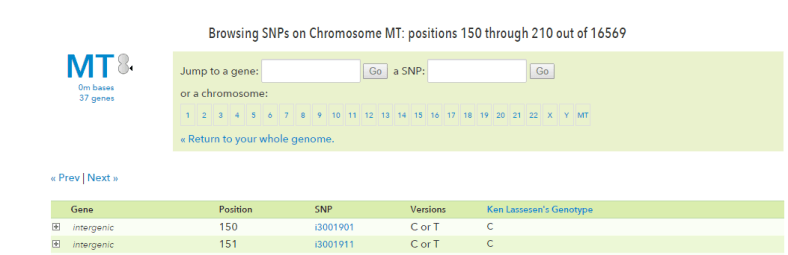
  2. Click the link on the far right after logging on
  3. A page will be rendered like the one shown below
  4. mtdna

Look at the Nucleotide position in the table and “Position” on this page. Then look to the right to see your value.  I have a value of “C” which is not the same as the symptomatic allele — hence it is likely not a symptom for me (and it is not).

Haplogroup and Symptoms

“All of the significant associations were with symptoms related to joint pain, bloating, or “feeling dead” after exercise. Haplogroup J showed a protective effect against all metrics of joint pain and individuals belonging to haplogroup U reported less severe bloating and had lower bloating distress scores compared to other haplogroups. On the other hand, ME/CFS individuals with haplogroup H tended to be more susceptible to “feeling dead” after exercise than other haplogroups.”

I am in the R1 haplogroup so there was no findings for me.

Bottom Line

The SNPs likely impacts how the body responds to shifts of the microbiome (effectively a chemical factory with many many chemicals) and are not a direct cause of the symptoms. The shifts are unique but with a lot of commonality — for example, some of these SNPs could be connected to D-Lactic Acidosis, a condition that could arise from many different bacteria in the microbiome.


Thyroid, Weight and Chronic Fatigue Syndrome

Over the last 2 decades that I have been active in the Chronic Fatigue Syndrome, thyroid issues in patients with CFS has been a common chorus on many forums. I have not had thyroid issues (typically hypothyroidism or thyroiditis – too low levels) but a reader asked me to look at it — particularly from the microbiome aspects and hopefully with some probiotic interventions being possible. This is what I found:

Thyroid and CFS

There are over 60 pub med articles so it is not an incidental thing. Some high lights that I found are:

  • ” Detailed analyses showed that thyroid disease (P<0.01) and gynecologic surgery (P<0.05) were significantly more common in FM.” [2015]
  • Thyroid autoimmunity may represent a predisposition for the development of fibromyalgia? [2012] ” we observed that the presence of autoimmune thyroid disease worsens fibromyalgia (FM) symptoms … thus suggesting a hypothetical role of thyroid autoimmunity in FM pathogenesis.”
  •  “Good responders [to B12 and folic acid] had used significantly more frequent injections (p<0.03) and higher doses of B12 (p<0.03) for a longer time (p<0.0005), higher daily amounts of oral folic acid (p<0.003) in good relation with the individual MTHFR genotype, more often thyroid hormones (p<0.02), and no strong analgesics at all, [2015]
  • “However, it is also known that iodine deficiency may give rise to clinical symptoms ofhypothyroidism without abnormality of thyroid hormone values…we will focus on the relationship between iodine deficiency and obesity, ” [2008]
  • “The prevalence of thyroid dysfunction in women with suspected FM does not differ from that in the general population.” [2006]
    • “FM is often associated with other diseases that act as confounding and aggravating factors, such as rheumatoid arthritis (RA), spondyloarthritides (SpA), osteoarthritis (OA) and thyroid disease.” [2012]
    • ” This finding support thyroid autoimmunity may influence the development of FM, but the evidence which support that FM is related to autoimmune etiology is not clear,” [2012]

Obesity and Thyroid

This area has been heavily studied with over 1100 articles,

Microbiome and Obesity

There are almost 500 articles dealing with probiotics and obesity. As expected, some probiotics increases weight gain and other reduces weight.

  • “Experimental studies with gut microbiota transplantations in mice and in humans indicate that a specific gut microbiota composition can be the cause and not just the consequence of the obese state and metabolic disease, which suggests a potential for gut microbiota modulation in prevention and treatment of obesity-related metabolic diseases.” [2016]
  • ” L. plantarum FH185 was demonstrated that it has anti-obesity effect in the in vitro and in vivo test”[2015]
  • “Lactobacillus reuteri GMNL-263 (Lr263) probiotics, which have been shown to reduce obesity and arteriosclerosis in vivo.” [2015]
  • ” oral administration of L. rhamnosus and herbs resulted in a significant decrease in the body weight, epididymal fat mass, fasting blood glucose and serum insulin levels.” [2015]
  • Anti-obesity effect of Lactobacillus gasseri SBT2055 accompanied by inhibition of pro-inflammatory gene expression in the visceral adipose tissue in diet-induced obese mice.[2014]

Or to cite a 2014 review of all of the literature “Analysis of the eligible articles pointed out that Lactobacillus gasseri SBT 2055, Lactobacillus rhamnosus ATCC 53103, and the combination of L. rhamnosus ATCC 53102 and Bifidobacterium lactis Bb12 may reduce adiposity, body weight, and weight gain. This suggests that these microbial strains can be applied in the treatment of obesity”  [2014]

Microbiome and Thyroid

  • Link between hypothyroidism and small intestinal bacterial overgrowth. [2014] “It has been reported that SIBO may be present in more than half of patients with hypothyroidism.[1] Lauritano et al.[11] studied 90 subjects (hypothyroidism [n = 50] and control [n = 40]) and found that significantly higher numbers of patients (54%) with hypothyroidism have SIBO as demonstrated with positive glucose breath test compared with the control group (5%) (P < 0.001).[11] … A study with probiotic Bacillus clausii also showed promising results in SIBO. “
  • DYSMICROBISM, INFLAMMATORY BOWEL DISEASE AND THYROIDITIS: ANALYSIS OF THE LITERATURE.[2015] -” The axis dysmicrobism-IBD-autoimmune reaction will be investigated as a possible etiopathogenic mechanism to Autoimmune Thyroiditis. If such is the case, then the employment of specific probiotic strains may represent a useful approach to moderate the immune system.”
  • Does microbiota composition affect thyroid homeostasis? [2015]
  • Gut microbe analysis between hyperthyroid and healthy individuals. [2014] “decrease of Bifidobacterium and Lactobacillus ((*) P < 0.05), and increase of Enterococcus ((*) P < 0.05) in the hyperthyroid group. “While this is the opposite of hypothyroidism, it does demonstrate that the microbiome plays a role.
  • “Further studies are clearly needed to test the hypothesis that the gut commensal microflora represents an important environmental factor triggering Hashimoto’s thyroiditis.” [2012]

Thyroid and Vitamin D

Vitamin D is generally very low with FM and CFS, with symptom decreasing as the level increases. This raise the question whether there is an association of hypothyroidsim and vitamin D levels.

Bottom Line

There is significant evidence that hypothyroidism is connected to the microbiome as well as obesity to the microbiome. There are no studies investigating if both are connected to the same shift. The association of a mother with hypothyroidism to a child with hypothyroidism appears to be more connected with the mother’s microbiome being passed along than DNA (which would be expected to connected to both parents).  The available literature suggests the following probiotics may improve these conditions (I’ve omitted the stains to simplify matter) – either by known anti-obesity effects OR by addressing SIBO.

Having a combination of these with other probiotics have the risk that the other probiotics may counter-act the benefits.

Additionally, Vitamin D is a clear benefit. If the microbiome is off, the absorption may be low so a rate of 10-15000 IU/day should be discussed with your medical professional.

Supplementing with Iodine is unclear. High levels appears to cause it “Does iodine excess lead to hypothyroidism? Evidence from a case-control study in India. [2015], so any supplementation should be done with care and testing.


Candida- Drugs and Probiotics

Candida spp., mostly C. albicans, can be isolated in the vaginal tracts of 20 to 30% of healthy asymptomatic nonpregnant women at any single point in time and in up to 70% if followed longitudinally over a 1-year period (25, 27). If the balance between colonization and the host is temporarily disturbed, Candida can cause disease such as vulvovaginal candidiasis (VVC), which is associated with clinical signs of inflammation. Such episodes can happen sporadically or often can be attributed to the presence of a known risk factor, e.g., the disturbance of local microbiologic flora by antibiotic use.” [2010] In other words in a normal natural part of the microbiome. The problem arises when it gets out of balance. With CFS, it can become unclear because  clinical signs of inflammation may occur when candida is in balance!

We know that E.Coli is frequently reported as low or non-existent with CFS patients. Checking pubmed, we find that E.Coli appears to play a significant role in maintaining the balance.

  • “Orally administered E. coli strain Nissle 1917 [Mutaflor] reduced Listeria monocyto-genes and Candida albicans in a dose-dependent manner. Treatment with 10(9) cfu of E. coli bacteria led to a reduction of Listeria counts to 7.4% in spleen and 2.4% in liver. A more than 10-fold decrease of viable Candida albicans (residual parasitaemia 6.8%) in the kidneys of the infected animals was also achieved by this E. coli concentration.” [1997]

This begs the question — is blindly killing it, and ignoring the microbiome factors that allow it to get out of balance, the right approach?

Anti-Candida Prescription Drugs

My model of CFS is based on studies of high and low bacteria families. Although this is at a vary coarse level, it is a reasonable level for the information actually available.  Back in 2013, I created a table in a post showing the impact of various antibiotics on these families.

I have taken this table and replaced the antibiotics with anti-candida drugs shown below according to WebMD. I have omitted the intravenous ones.

  • fluconazole (FCZ) possesses minimal inherent bactericidal activity” [1996]
  • Nystatin “
Antibiotic Family Klebsiella/Enterobacter Enterococcus Streptococcus E.Coli Bifidobacterium Lactobacillus Score for CFS
In CFS Patients HIGH HIGH HIGH low low low *
fluconazole oral aka

Diflucan oral

no info no info no info no info no info no info ?
nystatin no info no info Resistant Resistant no info Decrease ?
amphotericin B injection no info no info Resistant no info no info no info ?

As you can see, I really had a hard time to find any information on their impact on bacterial families. The general appearance is that they do not impact the microbiome bacteria families — but that may be solely because no one has studied this.

Probiotics

While there may be beliefs that probiotics help, I want to find actual  studies.  We know that Mutaflor does help from the above study cited at the start of this post. There is only some 200+ articles on pubmed.

“Although the results of different studies are controversial, most have suggested use of probiotics in the prevention or treatment of VVC, and no adverse effects have been reported” [2014]

For many of the studies, there was a mixture or a lot of fuzziness in terms of effectiveness (i.e. a 5% reduction to 10 fold reduction could not be determined). Often their effect is to stop Candida adhering to surfaces, rather than killing off Candida.

Bottom Line

I am actually unhappy about this post. The reason is that the literature is missing or vague. The main take away is that the following are suggested (with the most powerful on top) to address Candida.

  • Mutaflor (E. Coli Nissle 1917)
  • L. Reuteri
  • L. Gasseri
  • L. Rhamnosus
  • L.Plantarum

The fact that these probiotics are also in the suggested list for CFS is not surprising. Candida being out of balance is consistent with the microbiome being out of balance in CFS.


The Healthy Gut Summit — Will it be specific enough for CFS patients?

I see Cort Johnson is mentioning this on his blog and I went over their site to get a feel for the presenters and their background. My observations are:

  • It will likely be presenting pro-forma alternative medicine  views on the microbiome — which is good, but likely not specific for CFS.  Example, Lactobacillus is good for healthy individuals, not good for CFS patients suffering from D-Lactic acidosis.
  • What I found checking a few speakers does not give me confidence on it being breakthrough or even well research.
    axe
  • None of the speakers are “CFS practitioners”
  • Unlike most conferences — there appears to be no questions/answers periods.

Gut feeling is that well it may be entertaining to watch, it will lack any specific (valid/researched) suggestions for CFS and may well advocate somethings that may be harmful for the unique microbiome dysfunction seen in CFS.

I may be wrong. Since they provide all of the content as PDFs — if you see something that is specific to CFS — feel free to forward to me for comment and review.