A letter from a reader

It is Christmas and the best Christmas present that I can give is hope. A reader sent me this email and consented to have it shared

Note: This reader may have be fortunate starting with just the right things for her microbiome dysfunction – each person’s microbiome is unique (more unique than DNA).  You may or may not experience the same response if you follow her steps. 

Hi, Ken!
 I hope you are doing well!  I am sorry I haven’t sent notes back to you right away. I started several times but was foiled by a computer that is now having its hard drive replaced. I want to thank you again for the work you are doing, for being so science-based and detail-oriented. You truly have helped me very, very, very, very much.
The purpose of this e-mail is to give you a summary of my symptoms, treatment and progress. Any thoughts you want to share with me are welcome, and you can use this in your blog any way you want.  Keep in mind that I don’t have a diagnosis of CFS, though I do think I have something on that spectrum.
At the time I found your blog, these were my symptoms, all of which, disappeared or diminished within days  of taking action based on reading your blog (except for the asthma and allergies, which nonetheless somewhat better)
  • Hypersomnia (12-16 hours sleep per day) Several shorter episodes in my lifetime, but continuous for the past couple years, and becoming very bad fall 2014. At the time I had a bunch of medical tests that were all negative, supposedly, but when I went to a back-up MD for a sore throat fall, he looked at the test results and said they showed that at the time of the test I had active mononucleosis. That validation for my exhaustion last year is part of what spurred me to think something medically really was wrong and to redouble my efforts leading to finding your blog.
  • Post-exercise exhaustion/malaise. Exercise has always been one of my favorite things when I am doing it, but in the past several years I would get really into it and then crash.
  • Intense brain fog and very poor executive function (Getting worse these past 10 years. It was to the point I virtually stopped making any kind of social or other appointments because I was afraid I would miss them)
  • Fatigue when not asleep (several years) (A three-hour drive would sometimes take seven because I would have to pull over and sleep.
  • Small but chronically painful lymph nodes (about 10 years) I just figured I was constantly fighting off a cold or something.
  • Chronically coated tongue (about 10 years) Doctor always said it was due to post-nasal drip due to allergies.
  • Distracting foot discomfort when sleeping (not pain, not swelling, hard to describe) Affected by heat and foods, and especially tea and coffee but not caffeine in other forms.
  • Occasional boils in groin area (supposedly common for post-menopausal women)
  • Intersticial Cysctitis (feeling like you have the beginning of a bladder infection when you don’t)
  • Intense hay-fever (ongoing seasonally since childhood, now all year round)
  • Pet allergies
  • Painful sensitive skin
  • Asthma (emerged in adulthood, usually episodes are virally induced)
  • Snoring (Recently had gotten quite bad according to my husband.)
  • Depression, maybe (Now I am rethinking symptoms that I have in the past attributed to depression, like hypersomnia.
  • Irritable bowel symptoms (which started 17 years ago, and which I have almost always successfully controlled via diet.
  • Sinus pain in face
  • Jaw pain
  • Conjuctivitis
  • Gas
Ha!! I’m sure I sound like I was more fun than a barrel of monkeys.  I actually presented suprisingly well given all of this.  I have kept things, under control with antidepressants, anti-anxiety meds, antihistamines, advil, and so forth.
 I had gone to my GP for this stuff periodically for years and I gradually got the impression he thought I was a whiner or perhaps just someone who needed to accept I was aging badly. So I just attributed my fatigue  to stress and burnout. ..[lots of life stress]… so I just concluded I was worn down and needed to take care of myself. Oh, and up until last year, I maintained a fairly responsible work at home job for 11 years for a national program where my last title was Associate Director, and that was stressful too. During the time I had mono but didn’t know it, and couldn’t work no matter how hard I tried, I thought I must just be irretrievably burnt out on my job, and because my husband had a great job at the time, I quit, with the intention of exercising and nutritionizing my way back to health, but it didn’t work, I just kept sleeping.
Here’s what I did after reading your blog (the timeline may not be quite right but I think I have been doing this for about 9 weeks now in all)
1. Started with turmeric (in the form of Golden Milk) and Yakult.  I did this for about a week.
2. Added Bifidobacterium infantis.
3. Added oregano oil.
4. After two weeks of that, added tulsi and neem.
5. Switched out the Bifidobacterium infantus that came with a scoop with Align.
6. Started taking Culturelle.
7. Took a couple of weeks off the oregano, tumeric, tulsi and neem,  while continuing the probiotics
8. Started 20,000 IU per day of vitamin D
9. Started tumeric again about a week ago.
10. Added daily Alpha Lipoic Acid and vitamin B6
11. Started the oregano, tulsi and neem about two days ago.
12. I occasionally take ginseng, because a friend who recovered from CFS said she used it.
Other things to keep in mind are that I started allergy shots in around November (had been preparing for them since spring) and got a cavity filled about 6 weeks ago, which may have put a stop to some bacterial activity. I also occasionally did oil-pulling with coconut oil, swished the Bifidobacterium infantis around in my mouth, and gargled the Yakult.
Anyway….for the first three weeks or so the results were little short of miraculous. I was walking on air. I felt better than I have in 25 years.  I would still say I am doing AMAZINGLY better, to the extent I have begun looking for a job (would have waited a bit but my husband just got laid off.)
However, the fatigue is coming back a bit, as is the foot discomfort, which makes me worry that I am headed for another crash and burn.
I may have sabotaged my recovery a bit early on — I felt so much better that I started drinking coffee (which is my favorite thing but haven’t been able to unreservedly enjoy for years), and having a little bit of alcohol and pasta. And, having heard how careful one is supposed to be around exercise, I may have overdone it, even though I was trying to really pace myself.
I am planning on ordering the probiotic you mentioned that just came out recently, that focuses on histamine-producing bacteria.  I’ve looked at a couple of other ones that aren’t available in this country, but don’t feel like taking on the international piece right now.
And…I am thinking about taking a large dose of dark chocolate.
You may wonder about herxing – I had some symptoms of that when I first started with the oregano, and fear of that is why I am holding back on embracing chocolate, having had herx problems from too much chocolate before (I now realize) (Main symptom is very bloodshot eyes)
 Thanks again for all you are doing and I will continue to stay in touch. I love your blog and whenever I read it, just when I think that you have already written as much as you possibly can that applies to my situation, you write more.
I hope you have a very nice holiday season, whatever you celebrate.
Gratefully,

P.S. A couple of things…you have so much info on your blog, even reading the posts where you put things very simply I had to go over them again and again due to brain fog to come up with a plan. Dont have any specific suggestions but I bet others have had that issue too.

Also, is there a simple way to access all your posts and read them in chronological order from the beginning?

My comments

The reality is that dysfunction bacteria are adaptive and will mutate to survive in a hostile environment.  In the case of anti-bacterial, it means rotation is the key to deal with this adaptation. Anti-bacterial includes herbs, probiotics and prescription antibiotics.

I would suggest adding the following herbs to your rotation:

  • Olive Leaf
  • Wormwood (especially if you have MCS or EHS)
  • Haritaki

For probiotics,

Other supplements:

  • Mastic Gum — chew in mouth
  • Gum Arabic– chew in mouth
  • Boswellia — aka Frankincense
  • Ashwanghada

The latter two will help with cognitive function (see earlier post). The two gums, if chewed, are anti-inflammatory, anti-bacterial and should reduce any dysfunctional bacteria reserves in the mouth that may repopulate the gut. I will be doing a post on available oral probiotics in the next week.

Miyarisan and ashwanghada should both make a significant impact on stress.

Stabilizing the recovery of a healthy microbiome takes months, there are residue bacteria (some may be “sleepers”, i.e. go into a dormant state) that can repopulate weeks later. Sleepers are not affected by anti-biological agents because they are dormant and do not interact. These species can be robust (“tough”) and aggressive (“fast breeders”).

I continue to protect my recovery by doing rotations of probiotics, herbs and spices — usually just one at a time for a week before switching to something else. If any sleepers awake, I want a reception to be waiting for them!

Concerning your PS — I will look at a creating a “Cook Book” page over the holidays. A list of items in tables:

  • Pick one of the following and try for 2 weeks…
  • With the above, pick one of the following…
  • Slowly add this to regular ongoing supplements (i.e. Vitamin D, Zinc, Magnesium…)

with links to a related blog post on this specific item.

This will be added to the MENU BAR — to make it easier to find…


REMINDER: This is educational information only. Always discuss changes of diet, supplements and probiotics with a knowledgable medical professional before doing any modifications. 


Recent Probiotic News

This is my periodic review of recent news dealing with probiotics.

  • “Any two humans typically differ by about 1 in 1,000 DNA bases, whereas bacteria of the same species may differ by as many as 250 in 1,000, Snyder said. “I don’t think people realized just how much diversity there was. The complexity we found was astounding,” he said….”For example, many strains of E. coli bacteria live harmlessly and even helpfully in the human gut, while others are lethal. Being able to tell one strain from another could help researchers determine which strains are dangerous and why.” [2015] – Reinforces the need to work at the strain level.
  • “Resistant starch (RS) type 2 is present in cereals, tubers, legumes, and fruits [4]. In animal models, consumption of RS improves gut integrity and absorption of nutrients and reduces T cell infiltration of the mucosa [57]. In humans, the consumption of RS changes the composition of the microbiota and promotes the microbial fermentative production of short-chain fatty acids (SCFA), which putatively reduce gastrointestinal inflammation [810]. RS also improves symptoms and reduces pathology in inflammatory bowel disease [11]. In addition, RS meets the criteria for safety, durability, and availability as a dietary intervention to reduce environmental enteric dysfunction (Subclinical, chronic gut inflammation) EED.”[2015]
  • “effects were lasting, since the overall recovery of the microbial mass, bacterial diversity and concentrations were still below pre-antibiotic values 4 months after the end of antibiotic treatment.” [2015]
  • Lactobacullus plantarum 299V increases iron uptake [2015This STRAIN is available from Jarrow and is sold on Amazon.
  • “Increased intakes of fermented foods like kimchi and beer are associated with significantly reduced risks of atopic dermatitis (eczema), says a new study from Korea… 44% lower prevalence…” [2015]
  • “The potential for the gut microbiota to affect health has a particular relevance for older individuals. This is because the microbiota may modulate aging-related changes in innate immunity, sarcopaenia, and cognitive function, all of which are elements of frailty. Both cell culture–dependent and –independent studies show that the gut microbiota of older people differs from that of younger adults. There is no chronological threshold or age at which the composition of the microbiota suddenly alters; rather, changes occur gradually with time. Our detailed analyses have separated the microbiota into groups associated with age, long-term residential care, habitual diet, and degree of retention of a core microbiome. We are beginning to understand how these groups change with aging and how they relate to clinical phenotypes. These data provide a framework for analyzing microbiota-health associations, distinguishing correlation from causation, identifying microbiota interaction with physiological aging processes, and developing microbiota-based health surveillance for older adults.” [2015]
  • “Overall, the present study emphasizes the need to disentangle gut microbiota signatures of specific human diseases from those of medication.”[2015] – i.e. not controlling for medications being taken can result in suspect results.
  • “The researchers observed that commensal E. coli are no longer proliferating 20 minutes after an animal eats, and that the bacteria produce a different suite of proteins than during mealtimes. Giving these proteins to rodents caused the release of peptide YY, which signals fullness, and caused the animals to eat less.”[2015]
  • “Here, we show that the human microbiome reacts differently to a high-protein, high-fat Western diet than that of a model primate, the African green monkey, or vervet (Chlorocebus aethiops sabaeus). Specifically, humans exhibit increased relative abundance of Firmicutes and reduced relative abundance of Prevotella on a Western diet while vervets show the opposite pattern. Predictive metagenomics demonstrate an increased relative abundance of genes associated with carbohydrate metabolism in the microbiome of only humans consuming a Western diet….the role of animal models for understanding the relationship between the human gut microbiota and host metabolism must be re-focused.” [2015]
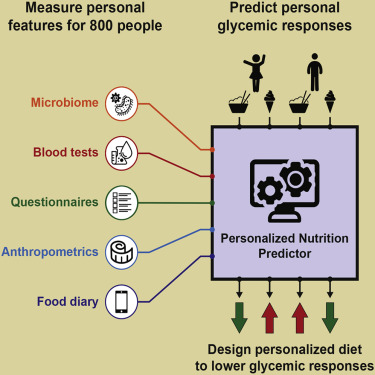
  • “we continuously monitored week-long glucose levels in an 800-person cohort, measured responses to 46,898 meals, and found high variability in the response to identical meals, suggesting that universal dietary recommendations may have limited utility. We devised a machine-learning algorithm that integrates blood parameters, dietary habits, anthropometrics, physical activity, and gut microbiota measured in this cohort and showed that it accurately predicts personalized postprandial glycemic response to real-life meals.” [2015]

The picture below summarized the last item — the “goodness” or “badness” of a food is very individual and gut bacteria is a significant factor.

Print

Leaky Gut and probiotics

Intestinal permeability (“leaky gut”) is another leading factor in the development and progression of non-alcoholic fatty liver disease [2014], which gives us a condition to also search on.

A 2015 study found “Antitumor necrosis factor-α(TNF-α) therapy reduces mucosal inflammation and restores intestinal permeability in IBD patients. Butyrate, zinc, and some probiotics also ameliorate mucosal barrier dysfunction but their use is still limited and further studies are needed before considering permeability manipulation as a therapeutic target in IBD.” and continues with:

  • “To date the ones with proven efficacy are Escherichia coli Nissle 1917, Bifidobacterium,Lactobacillus rhamnosus GG, or the multispecies VSL#3 which contains eight different probiotics [132]”
  • Zinc is a trace element essential for cell turnover and repair systems. Inflammatory conditions and malnutrition are known risk factors for zinc deficiency and several works proved the efficacy of its supplementation during acute diarrhoea and experimental colitis [127129]”
  • “Finally, vitamin D is worth a mention because it is involved in maintaining intestinal barrier function”
  • “Furthermore, there is increasing concern about the role of industrial food additives as promoters of immune-related diseases. A recent review showed the ability of additives to increase intestinal permeability by interfering with the TJs, promoting the passage of immunogenic antigens [113].”

Wait a minute — these seem to be the same items that I recommended for CFS!


  • “A butyrate-producing probiotic (MIYAIRI 588) reduced the lipid deposition and significantly improved the triglyceride content, IR, serum endotoxin levels, and hepatic inflammatory indexes in a rat model of choline-deficient diet-induced Non-alcoholic fatty liver disease[77].” [2014] This is Miyarisan!
  • “In particular,Lactobacillus casei DN-114001[60] and VSL#3 (a mixture of pre- and probiotics)[61] seem to restore intestinal barrier function by enhancing the expression of ZO-2 and protein kinase C in TJs. … Escherichia coli strain Nissle 1917 restored mucosal permeability in the murine dextran sulfate sodium-induced colitis model by increasing ZO-1 expression[43].” [2014]
  • Bifidobacterium longum was superior in attenuating liver fat accumulation… lack of changes in intestinal permeability in treated mice” [2014]
  • “With regard to exercise-induced GI permeability problems, there is still a lack of studies with appropriate data and a gap to understand the underlying mechanisms”[2012] – this may be a significant factor for the CFS crash after exercising, increased leaky gut!
    • “..cycling resulted in increased I-FABP levels, reflecting small intestinal injury … This is the first study to reveal that ibuprofen aggravates exercise-induced small intestinal injury and induces gut barrier dysfunction in healthy individuals. We conclude that nonsteroidal anti-inflammatory drugs consumption by athletes is not harmless and should be discouraged.” [2012]
    • Exercise-induced splanchnic hypoperfusion results in quantifiable small intestinal injury. Importantly, the extent of intestinal injury correlates with transiently increased small intestinal permeability, indicating gut barrier dysfunction in healthy individuals.”[2011]

Short List of What to take

Avoid PREPARED foods, food from raw materials is strongly preferred.

An Alzheimer connection?

An Oct 2015 article “Different Brain Regions are Infected with Fungi in Alzheimer’s Disease” suggests that leaky gut may be a contributing factor for AD.

“Many investigators have also considered the idea that AD is an infectious disease, or at least that infectious agents constitute a risk factor for AD21,22,23. Accordingly, genetic material from several viruses and bacteria have been reported in brains from AD patients. In particular, herpes simplex type 1 (HSV-1) and Chlamydophila pneumoniae have been suggested as potential aetiological agents of AD. In addition, brain infection by several pathogens may induce amyloid formation24,25,26. Furthermore, Αβ peptide exhibits antimicrobial activity and shows particularly strong inhibitory activity against Candida albicans27.”

This appears to be further indicated by this earlier 2015 study “Increased concentrations of fecal calprotectin indicate a disturbed intestinal barrier function in AD patients which could be of relevance for the lowering of essential aromatic amino acids concentrations in the blood.”

Interesting that IBD and IBS are different here “Fecal calprotectin has been shown to consistently differentiate IBD from irritable bowel syndrome because it has excellent negative predictive value in ruling out IBD in undiagnosed, symptomatic patients.” [2006]

If you have IBS — you may wish to have fecal calprotectin tested to verify if it is IBD or IBS (and potentially if you have a higher Alzheimer’s Disease risk).

A light went on?

Hypoperfusion (decrease access to tissue) produces increased leaky gut. Hypocoagulation produces hypoperfusion. Hypercoagulation(aka “Thick Blood”) has been reported to occur in over 85% of CFS patients (not severe enough to cause strokes, some may have TIAs). Is hypercoagulation why there may be significant increase in leaky gut in CFS after exercise (see earlier post). That is — there was already significant hypoperfusion before exercising resulting in an amplified response with exercise?

There appear to be some studies heading in that direction….


Swanson New Line of Single Species Probiotics

Recently I was asked what probiotics to take when you have a Vitamin D defect (a VDR genetic mutation). In answering this, I referenced the reader to: “Vitamin D receptor pathway is required for probiotic protection in colitis.” [2015] which reports:

  • “We found that the probiotics Lactobacillus rhamnosus strain GG (LGG) and Lactobacillus plantarum (LP) increased VDR protein expression in both mouse and human intestinal epithelial cells.”

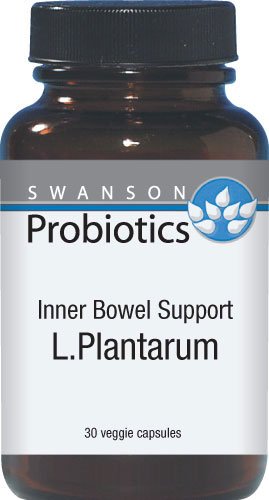
The first one is our long time friend, Culturelle (available on Amazon and also at Costco often). For the second one, I discovered that Swanson now has a single species version

41cpcndtkil

I noticed that there were additional single species probiotics from Swanson. I have summarized in a table below

Species

Billion CFS

Link

L. Plantarum

10

http://www.swansonvitamins.com/swanson-probiotics-l-plantarum-inner-bowel-support-30-veg-drcaps

L. Gasseri

3

http://www.swansonvitamins.com/swanson-probiotics-lactobacillus-gasseri-3-billon-cfu-60-veg-drcaps#label

L. Rhamnosus

5

http://www.swansonvitamins.com/swanson-probiotics-lactobacillus-rhamnosus-fos-60-veg-drcaps

Saccharomyces Boulardii

5

http://www.swansonvitamins.com/swanson-probiotics-saccharomyces-boulardii-30-veg-drcaps

Bacillus Coagulans

2

http://www.swansonvitamins.com/swanson-probiotics-produra-bacillus-coagulans-30-veg-drcaps


Exercise and the Microbiome

My last post deal with microbiome differences seen between healthy individuals and CFSers after stress exercise. In this post I will look at the reported changes (in healthy individuals usually) as a result of exercise in the hope that it may provide hints on what is happening. There was not much. What I found is below.


NOTE THIS MAY OR MAY NOT BE APPLICABLE TO CFS PATIENTS

A 2014 article included the following chart dealing with mice:

  • ND – Normal Diet
  • HFD – High Fat Diet
  • ND+ex — Normal Diet + exercise
  • HFD+ex – High Fat Diet + exercise

Screen Shot 2015-12-19 at 4.02.44 PM

“Somewhat to our surprise, our data suggest that HFD and exercise independently impact the different behavioral domains of anxiety and cognition, much like the orthogonal effects on the gut microbiome. Though the cognition associations with specific OTUs were weaker compared to anxiety, we nonetheless found significant relationships that all fell within Clostridiales, a diverse taxonomic order within the phyla Firmicutes that has not been previously associated with cognition.. Numerous studies have described how the gut microbiome is altered by a HFD and obesity including changes in Firmicutes and Bacteroidetes [28-31]. Though only a very minor phylum in terms of representation, we also found that HFD reduced the relative abundance of Tenericutes, driven almost entirely by a single OTU (#67) from the genus Anaeroplasma (>99% probability as shown in Additional file 2: Table S2) that has not been previously implicated in dietary manipulations.”

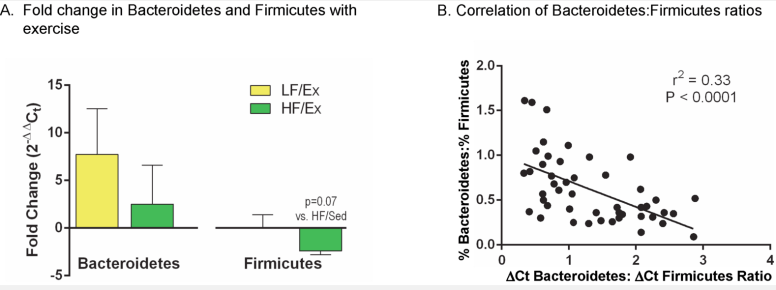
Screen Shot 2015-12-19 at 4.19.53 PMScreen Shot 2015-12-19 at 4.22.32 PM.pngAnother 2014 article looked at mice with Low Fat (LF) and High Fat (HF) diets.

Screen Shot 2015-12-19 at 4.17.25 PM

“Exercise alters the gut microbiota in mice on both a LF and HF diet and normalizes major phylum-level changes for mice on the HF diet; furthermore, the volume of exercise (total distance run) inversely correlates with the Bacteroidetes:Firmicutes ratio. The Ex-induced gut microbiota in both LF and HF conditions are different than their sedentary counterparts and yet, also different from each other. At the taxonomic level of bacterial family, HF diet induced blooms in some of the major constituent groups within Firmicutes such as Lactobacillaceae, Lachnospiraceae, and Ruminococcaceae and a decrease in the major constituent group of Bacteroidetes, S24-7. Exercise in the HF condition prevented some of the dietary changes, such as with Lactobacillaceae and S24-7, but intensified the blooms seen with HF feeding in others such as with Lachnospiraceae, and Ruminococcaceae. Further exploration of the gut microbiota changes induced by Ex may allow for exploitation of this effect and the development of treatments for obesity and dysbiosis associated with high fat intake.”


From a 2013 article “Diet rapidly and reproducibly alters the human gut microbiome”,

“The animal-based diet increased the abundance of bile-tolerant microorganisms (Alistipes,Bilophila and Bacteroides) and decreased the levels of Firmicutes that metabolize dietary plant polysaccharides (Roseburia, Eubacterium rectale and Ruminococcus bromii). Microbial activity mirrored differences between herbivorous and carnivorous mammals2, reflecting trade-offs between carbohydrate and protein fermentation. Foodborne microbes from both diets transiently colonized the gut, including bacteria, fungi and even viruses. Finally, increases in the abundance and activity of Bilophila wadsworthia on the animal-based diet support a link between dietary fat, bile acids and the outgrowth of microorganisms capable of triggering inflammatory bowel disease

“Exercise leads to an increase alpha diversity amongst individual’s microbiome, especially the Firmicutes and Clostridiales. Significant differences were seen in commensal bacteria within the phylum, Firmicutes. These included Faecalibacterium prausnitzii, uncharacterized species of genus Oscillospira, Lachnospira, Coprococcus, and uncharacterized families of Clostridiales. These differences in commensal bacteria can lead to healthier individuals more able to fight off certain pathogens. For example, Faecalibacterium prausnitzii is a butyrate producer, which has been shown to be important in maintaining intestinal epithelial health. (Blottere HM et al. 2003) ” [2014 Thesis Paper] – NOTE: Miyarisan is also a butyrate producer which is available as a probiotic and why I suggest it for CFS (there are no studies on its use with CFS — yet).


An interesting 2015 article ,”Leaky intestine and impaired microbiome in an amyotrophic lateral sclerosis mouse model” states: “These changes were associated with a shifted profile of the intestinal microbiome, including reduced levels of Butyrivibrio Fibrisolvens, Escherichia coli, and Fermicus, in G93A mice[Leaky Gut]. The relative abundance of bacteria was shifted in G93A mice compared to wild‐type mice…We observed a reduction in butyrate‐producing bacteria (Butyrivibrio Fibrisolvens). ” – Note: E.Coli is reported to be low or almost non-existent in many CFS patients. Thus Mutaflor (E.Coli Nissle 1917) and Miyarisan (Clostridium butyricum) would appear to be logical probiotics for CFS and IBS (No studies to date on either could be located).


My next post will look at what research has found effective for Leaky Gut

It appears that leaky gut is connected to the low levels of:

  • Butyrivibrio Fibrisolvens,
  • Escherichia coli, and
  • Fermicus

See my next post more in a day or two.