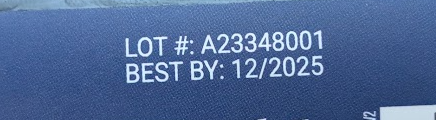
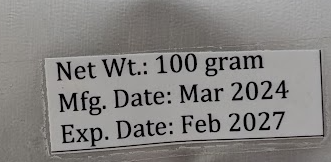
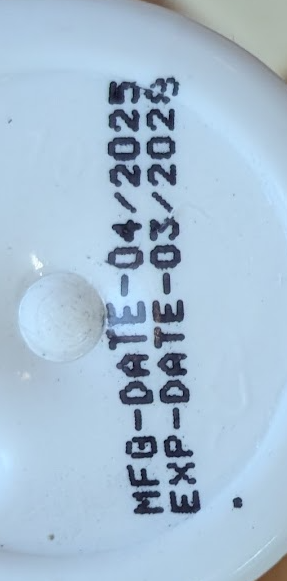
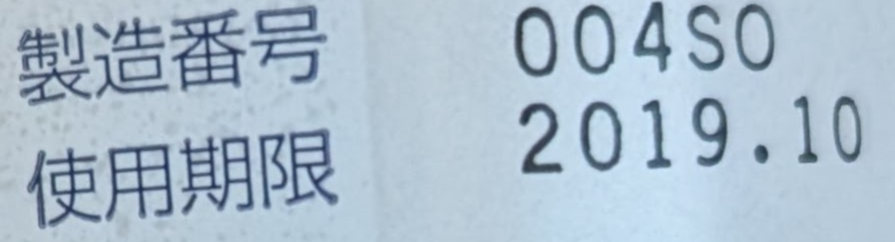
Below you see some data information shown on a few probiotic products. Many products do not show either production date nor best by date.. They are not legally required.
My preference has always favor probiotics that includes manufacturing date. Two of the products above cite a three year shelf life (assuming appropriate storage). My favorite source, Maple Life Science™, ship directly to me from their factory. Usually they arrive within one month of manufacture (occasionally, the same month!)
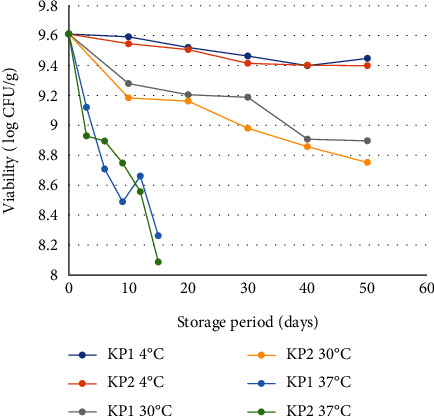
From the moment that a probiotic leaves a factory, temperature control is usually non-existent. The trucks that transport them are likely not refrigerated nor are wholesale warehouse storing them. When they arrive at a health food store they are typically placed in a refrigerated cabinet for presentation to customers. In many cases, if you insist on seeing where the bottles are stored before, do not be surprise to see that it is not a refrigerated area. It is possible that the probiotics may be subject to 37C(98.6F) for months before the shop keeper places it in the refrigerated cabinet. Each number on the left scale indicate 1/10 of the number above it.
A shipment from a east coast producer to a west coast store direct, is 4-8 days. If the shipment goes to a wholesaler’s warehouse than expect a few days more. The result in summer can easily be as much as 97% of the viable bacteria that leaves the factory may be killed if it takes 15 summer days (per above chart).
The short version is that during summer in the US, the amount of viable bacteria may be 1/100 of what the probiotic had at the factory. There are stick-on labels that will change color if storage exceeds a threshold — unfortunately, no one is using that.
In terms of probiotics sold by microbiome testing companies, the only one that I know of that “ships direct from probiotic manufacturer” is PrecisionBiome.Eu that has established a relationship with a German probiotic producer. Their client base is the EU, so transit time from “vat to customer” is short.
Absence of Regulations Problem
There are recommendations such as Best Practices Voluntary Guidelines for Probiotics[2017] provides some guidance (ignored by most producers). Producers can make claims of shelf life (best before) of 10 years without consequences. With no manufacture date, no one knows when it was made. Calls to their customer lines will usually give questionable answers. The probiotic industry have many active lobbyists to inhibit anything that may effect profits.
Figure Pointing for Probiotics being DAO
If you buy a probiotic and found it is effectively DAO and contact the manufacturer. The manufacturer will claim no responsibility once it left their premise. It is the responsibility of the trucking companies and wholesaler storage. Those folks will then point at the retail store mishandling things.
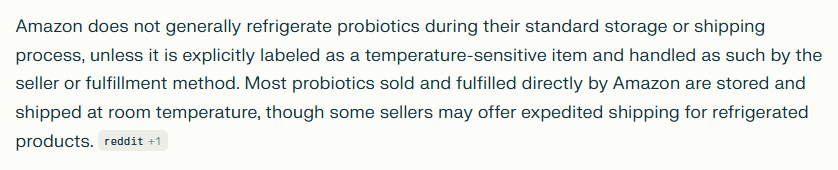
This harsh reality is why I try to buy direct from the manufacturer (no Amazon, no health food stores).
Bottom Line
“I didn’t get any benefit from probiotics, though I got them refrigerated from my trusted health food store“ is a frequent complaint that I hear. IMHO, they do not work because they have been well cooked! Our habit is to order our year supply of probiotics from Maple Life Science™ in the fall and winter. The colder it is outside, the better it is.
My “rules of thumbs” on taking probiotics will be the next topic.
What is the difference between a Species and a Strain? To understand this, view Species as “dogs” and strains as specific types. Is picking a Chihuahua as a police dog a good choice, or a St. Bernard suitable for someone with disability living in a one room apartment?
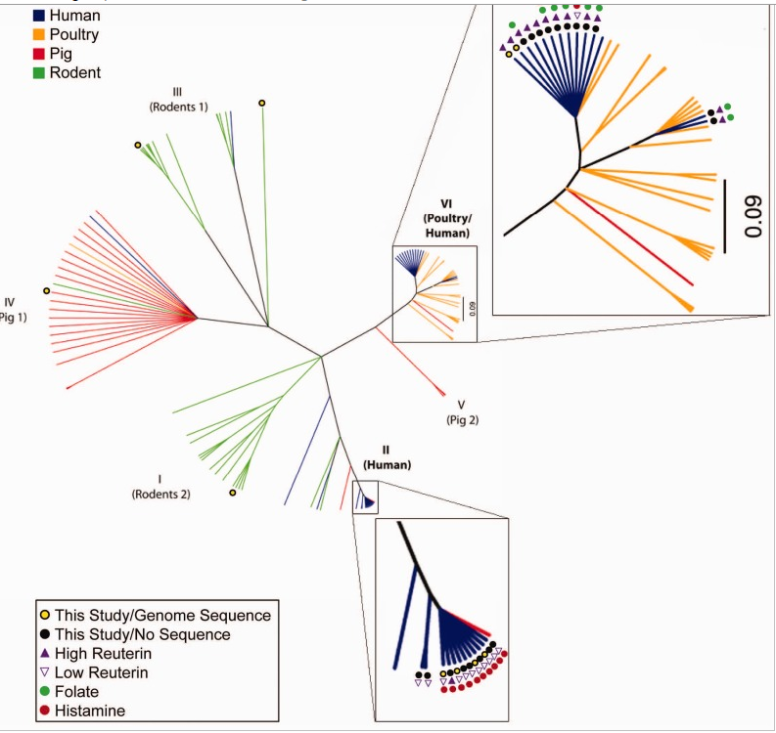
The chart below shows different aspects of different strains for Lactobacillus Reuteri. When you buy a probiotic names “Lactobacillus Reuteri”, it is unlikely which species if was obtained from is specified on the bottle. If it was not from a human, it is very unlikely that it will reproduce or take root in your body.
Probiotic manufacturers and packagers are focused on making money. They will ask for the cheapest source for a probiotic that they expect to be able to sell for the greatest profit.
I have known people that are histamine sensitive that are fine with one brand of Lactobacillus Reuteri but get sick from another brand…. Looking at the chart below, the answer is obvious: One has a histamine producer and one does not.
This morning I was asked about Bacteroides fragilis BF839 which is cited in several studies on the US National Library of Medicine. Most of the studies are from 2024 or 2025. At present, it is not for sale anywhere and I do not expect it to be for five(5) years at least because of approval processes. Given the authors’ location, I expect it will be first available in China.
Researched and Stain is for sale
Several years ago I set up a free page listing those available (somewhere in the world). I also automated a weekly automatic scan of the US National Library of Medicine for any new studies using these strains. The page is kept up to date.
Occasionally, someone emails me about a new strain that has one or more studies associated. I add those to the list. If you find one that I missed, please email me!
The page allows searching across the studies abstracts for key words. For example, if you are interested in Autism, just enter that and click search. The page will then show the retail brands with links to the studies.
The intent of the page is discourage random trial of probiotics which has no effect (except on bank accounts).
List of Strains with name of product or seller
At present we are at 156 different strains. These are listed below.
Akkermansia muciniphila WB-STR-0001: Pendukum Glucose Control
VSL3 / Visbiome / De Simone Formulation: Alfasigma USA, Inc.
Safest Product for Correct Identification
These strains are usually under legal protection and thus the manufacturer has a vested (financial) interest to make sure that “what is advertised is delivered”.
Why is this important, just look at some of the literature
64.4% were incorrectly labeled in either number of viable cells or bacterial species
51.6% exhibited resistance to at least one antimicrobial agent
26.8% had a lower number of viable cells than their label claims, No viable Lactobacillus was found in some products
57.8% comprised other species rather than those claimed on the contents
Your first choice should be the probiotics that are most likely to be as advertisedandhas been studied for the symptom of condition that you are interested in.
If you have uploaded/transfered your 16s or shotgun sample to Microbiome Prescription and then logged in. You will see the page below.
Select your latest sample (if more than one) and then click on the link at the bottom right.
This will take you to a page like the one shown below. Select one or more of the conditions you have and click [Get Report] at bottom. The page shows how many bacteria shifts matches that reported in the literature (in this example 27 studies) and how strong you ranked against other people (67%ile).
The result is a long report. The key sections are:
Significant Bacteria Shifts: the most significant bacteria of those matched
Note: above we have 27 studies, the number of bacteria may be less.
Cross Validated Suggestions: Items reported from studies that help ME/CFS and which we also computed will help correction bacteria shifts.
Probiotic Species Impact by R2 associations: The probiotics that are computed to help most using a private data source
Additional Suggestions: Items not cited in studies but computed to will help correct bacteria shifts.
The suggestions are likely to differ from those computed elsewhere on the site. The studies usually just indicate lower or higher amount and lacks precision on how much lower or higher is significant. This results in different bacteria being selected.
The preferred way is to use Symptoms
And then select your symptoms.
While this usually gives better results, it does not give links to studies which MDs often want to see.
BEST PRACTICE is to do what both methods agree upon.
The youtube below does a walk thru of using MicrobiomePrescription.com with a person with ME/CFS, had COVID and Autism. MicrobiomePrescription.com is a free site with world class artificial intelligence system connected to a comprehensive database.
A few highlights from the video:
Correctly Predicted symptoms from their microbiome alone
Symptoms are strongly associated to particular microbiome patterns. These patterns can be used to “guess” the symptoms that they are likely to have. As shown below, for many people it is very accurate!
PREMISE: If we correct the microbiome dysbiosis. then the symptom should be less severe or disappear.
Suggestions agree with Clinical Experience of working
The antibiotics with [CFS] are ones that have been used in studies with some good responses reported. In particular, a similar combination is used successfully by Dr. Cecile Jadin with her patients.
Good and Bad Probiotics are Identified
For this person’s sample, 9 probiotics were computed to help and 33 probiotics were computed to hurt.
Goal is Improved Odds, not a Protocol
The suggestions will be different (often very different) from person to person. Each item is computed to independently help. Take what you are comfortable with. Items to avoid should be respected (when practical).
While working on a pending post [ME/CFS after EBV in Competitive Athlete] on their microbiome sample I was pleasantly surprised to see their top suggestions have literature on the same substances helping reduce EBV. In one sense, I should have expected it, given the premise that I am working off.
Premise: An infection (including virus) alters the microbiome to be optimal for it survival. Correcting the dysbiosis, weakens the infection (i.e. you may starve it of essential metabolites)
I decided to collect these items in this post for people with ME/CFS and positive for EBV, i.e. chronic active EBV (CAEBV)
Suggestions
Note: [More Info] are links to perplexity.ai, the information may be questionable in some cases.
Magnesium plays a critical role in the immune response to Epstein-Barr Virus (EBV), particularly in individuals with genetic defects affecting magnesium transport: [more info]
Vitamin E has demonstrated inhibitory effects on Epstein-Barr Virus (EBV) transformation of human B cells, particularly under conditions of oxidative stress: [more info]
Olive leaf extract (OLE) has been shown in multiple studies to have significant antiviral and antioxidant activity against Epstein-Barr Virus (EBV): [more info]
Commonly recognized antiviral medicinal plants in Ayurveda Medicine. Those with [citation] after them have explicit literature for EBV, most have literature for other virus.
Zingiber officinale – Ginger
Caesalpinia bonducella – Fever Nut or Bonduc Nut
Allium sativum – Garlic
Glycyrrhiza glabra – Licorice or Liquorice
ts antiviral activity is clearly demonstrated by different studies on the herpes simplex virus, Epstein–Barr virus (EBV), [2023] [2020]
Ferula assafoetida – Asafoetida or Hing
Gymnema sylvestre – Gymnema or Gurmar (Sugar Destroyer)
Gossypium herbaceum – Levant Cotton or Cotton Plant
Phyllanthus niruri – Stonebreaker or Chanca Piedra
Trachyspermum ammi – Ajwain or Carom Seeds
Withania somnifera – Ashwagandha or Indian Ginseng
Andrographis paniculata – Andrographis or King of Bitters
has a pronounced effect in inactivation or the inhibition of Epstein Virus (EBV) [2021] [2021] [2021]
My general advice would be to do the mineral supplementation with appropriate dosage (This Dosages page may help) for at least 2 weeks, then start on some of the Herbs and Spices (Rotating every 2 weeks). Be warned that “die off” like effect may occur with some. Then rotate on to the probiotics for 2 weeks at a time.
–
Postscript and Reminder
As a statistician with relevant degrees and professional memberships, I present data and statistical models for evaluation by medical professionals. I am not a licensed medical practitioner and must adhere to strict laws regarding the appearance of practicing medicine. My work focuses on academic models and scientific language, particularly statistics. I cannot provide direct medical advice or tell individuals what to take or avoid. My analyses aim to inform about items that statistically show better odds of improving the microbiome. All suggestions should be reviewed by a qualified medical professional before implementation. The information provided describes my logic and thinking and is not intended as personal medical advice. Always consult with your knowledgeable healthcare provider.
Implementation Strategies
Rotate bacteria inhibitors (antibiotics, herbs, probiotics) every 1-2 weeks
Some herbs/spices are compatible with probiotics (e.g., Wormwood with Bifidobacteria)
Verify dosages against reliable sources or research studies, not commercial product labels. This Dosages page may help.