A review of a new CFS/ME Hypothesis

A reader asked for my thoughts on “Pathophysiology of skeletal muscle disturbances in Myalgic Encephalomyelitis/Chronic Fatigue Syndrome (ME/CFS)” 21 Apr 2021. With over 20 years of reading many many hypothesis of ME/CFS, I have learnt to look for earlier indicators that it will be unlikely.

First, “skeletal muscle disturbances” applies to a subset of ME/CFS only. The second item is simple – is this a new hypothesis or an old one-recycled? What I found was:

What is the new hypothesis?

The author’s earlier title was “A Unifying Hypothesis of the Pathophysiology of Myalgic Encephalomyelitis/Chronic Fatigue Syndrome (ME/CFS): Recognitions from the finding of autoantibodies against ß2-adrenergic receptors” [2020] There is no reference to acylcarnitine in the document – this is a red flag for an under-researched paper. You want to cite and discuss prior papers on the same topic.

“sympathetic overactivity in the presence of vascular dysregulation by ß2AdR dysfunction causes predominance of vasoconstrictor influences in brain and skeletal muscles,”

The conclusion is below and amounts (IMHO) to a bunch of hand-waving. The key factor is that the hypothesis is really not testable (hence authors get credit for a publication, suffers of ME/CFS gets nothing).

Considering all the potential predisposing factors we think that in the presence of a high sympathetic tone dysfunction of the ß2AdR could play an essential role (conditio sine qua non) in the etiology of ME/CFS although secondary and rather complex mechanisms have to get involved and to interact, particularly in the chronification of the disease (Figs. 4 and 5). Dysfunction of the ß2AdR by autoantibodies, mutations and desensitization by chronic stress would favor vascular dysfunction and cause insufficient stimulation of the Na+/K+-ATPase at least as a risk factor together with other precipitating factors. There may be numbers of different, still unknown predispositions.

According to our hypothesis dysfunctions of the ß2AdR or post-receptor mechanisms, of the NHE1, the Na+/K+ATPase, the NCX, the RAAS and the KKS could be causally involved in ME/CFS and should therefore be further investigated. This concept offers potential novel strategies for the treatment of this debilitating disease.

The only use of the word “treatment” is in the last sentence.

Going to the earlier study by the same author, I read “Metabolic changes in ME/CFS are also in line with a concept of hypoxia and ischemia.” — that echoes the old hypercoagulation hypothesis from Dave Berg [1999, 2000]. The key difference is that Berg’s hypothesis was testable (via the ISAC Panel) and a variety of treatments (depending on the results). For myself, it worked and I went into full remission. This was confirmed in a trial but then a series of poorly done studies faded away. I recall one study that tested using baby-aspirin on ME/CFS patients and reported no results, thus dismissing the coagulation hypothesis.

A major factor in Berg’s hypothesis fading was the complexity of multiple treatment plans was more than most ME/CFS physicians wanted to deal with (give me one magic bullet please!) , patients referred to hematologists were tossed back because low grade chronic coagulation was not of interest to them.

How well studied is ß2-adrenergic receptors?

I checked PubMed and found there is only 16 results. Several deal with asthma, and thus I would expect an association to asthma to be in the ME/CFS literature – which I was unable to find

Bottom Line

I would drop this concept into the circular filing cabinet. It lacks any direct test results on ME/CFS patients to support it, offers no treatments. It is full of speculation and “reasoning”, i.e. “Therefore, QTc shortening can be explained only by ß2AdR dysfunction in the presence of intact ß1-adrenergic receptors and a high sympathetic tone.” The use of the phrase “can be explained only” instead of ” could be explained” signals spin-doctoring and salesmanship to me, not careful science.

Piracetam for ME/CFS, Long Haul COVID brain fog

This morning I dropped a note to my physician about immune system activation symptoms from getting my 2nd covid shot. One item cited was suspected activation of coagulation resulting in brain fog. I mention that it disappears for half of the day with 300 mg of Piracetam. I expect an email back asking what is Piracetam?

From Wikipedia, you can get general background. It is NOT to be confused with paracetamol (acetaminophen). It’s sits in a murky space in the US, so while legal, without prescription, it can be hard to find.

It improves brain function for many conditions

  • [2020] After treatment, the quality of life scores was significantly higher than the control group, and the difference was statistically significant (P<0.05). For patients with vascular dementia after cerebral infarction, piracetam combined with nimodipine can improve the cognitive function, improve the quality of life, and have a significant clinical effect.
  • [2021] Although Piracetam is officially recognized as a nootropic, its enhancing effects in the healthy individual’s brain are moderate [104,54]. The racetam molecules are being used across a range of brain disorders, including Alzheimer’s disease, narcolepsy, ADHD, Parkinson’s disease and brain aging [105,106].
  • [2020] Piracetam shifted the balance of mitochondrial fission or fusion toward fusion, which is more favorable for ATP production, which would indirectly benefit synaptic function because of the energy requirements of synapses. 43 A review indicated favorable effects on neurotransmission and neuroplasticity. 44 Another report showed that the increased neurite length after piracetam treatment was accompanied by increased expression of the synaptic marker GAP43, thus improving neural plasticity. 45

In days long ago when I often fly between Seattle and India for work, I used a heparin-piracetam cocktail to reduce risk of DVT. As a side effect, I never experienced jet-lag.

  • [1998] ” The heparin-piracetam complex had a more pronounced anticoagulant and fibrinolytic activities than the individual components.”
  • [1993] “The particular efficacy of 8 g piracetam daily in 3 divided doses at 8-hourly intervals can be attributed to its unique dual mode of action; inhibition of platelet function by inhibition of thromboxane A2 synthetase or antagonism of thromboxane A2 and increased formation of prostaglandin I2, together with a rheological effect involving reduction in blood and plasma viscosity through an increase in cell membrane deformability and a reduction of 30-40% in the plasma concentrations of fibrinogen and von Willebrand’s factor”

This last study is why it is my go to when brain fog occurs. I have a mutation that results in higher levels of fibrinogen.

Coagulation in various forms in ME/CFS was demonstrated in the late 1990’s by David Berg. [Other Berg Links: [A,B, *] .

COVID Coagulation

Doing a search on PubMed for “covid coagulopathy“, we find over 1100 citations. For long haul covid to include persistent coagulation is very probable. It may be due to microbiome alterations or other mechanisms.

Bottom Line

Trying piracetam for brain fog is something to discuss with your MD. You may need to educate him about the contents of this article. The [1993] study was on humans and thus showed safety and also dosage (8 grams/day in 3 dosages).

Piracetam for ME/CFS, Long Haul COVID brain fog

Looking beyond bacteria

An Exploration of the microbiome economy using Microbiome Prescription and a 16s report.

Small intestinal bacterial overgrowth (SIBO)

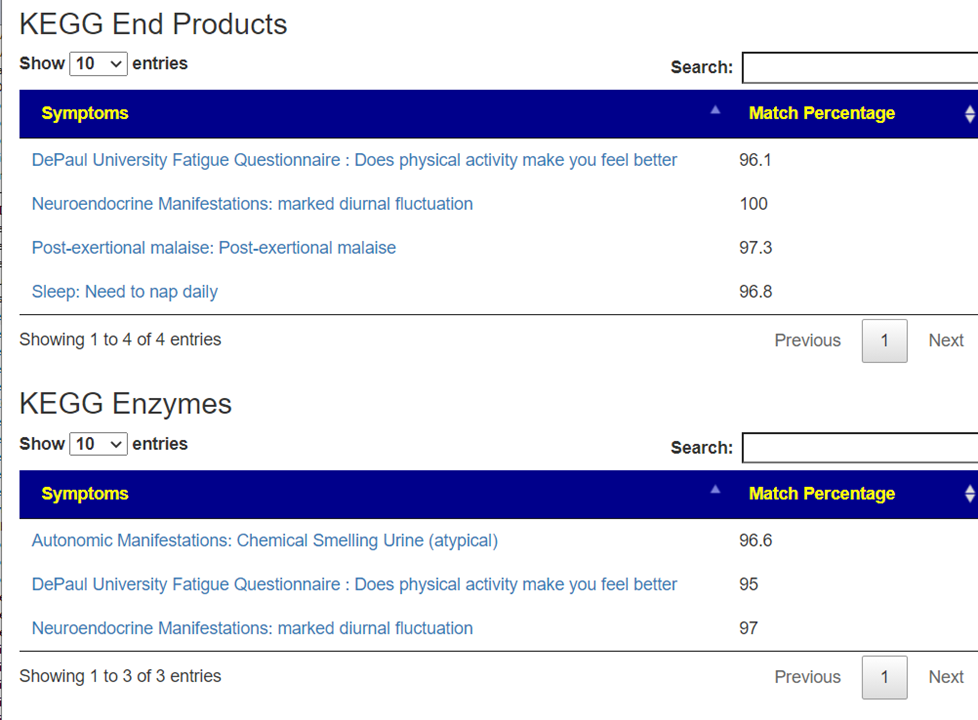
This is detected by end products produced: Hydrogen and Methane and not specific bacteria.

We can explore for associations of different products of bacteria to symptoms

The challenge – Looking at almost 10,000 items for patterns. This is automated, so let us jump to results.

Predicted Symptoms

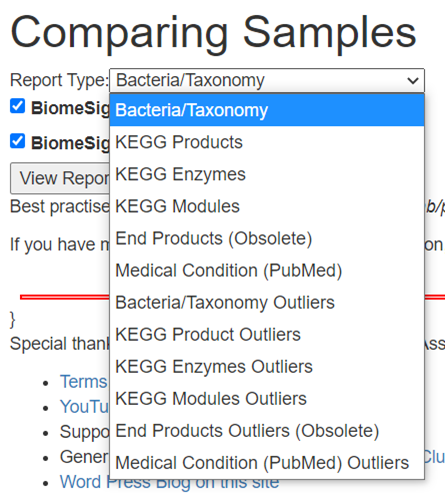
Support for multiple samples

Summary

The purpose is to discover associations. Association does not prove causality; but association often reflect severity of symptoms. This gives leads to explore…. Not canned answers…

Long Haul Covid – Welcome to the ME/CFS world!

Long haul COVID is sometime referred to as Post-Virus Syndrome. I prefer the more general, Post-Infection Syndrome. Most people with a CFS/ME diagnosis fall under that classification and causation. It appears to impact about 10% of people with a certain severity of COVID. The profile is very similar to ME/CFS: “were predominately white females, between the ages of 30 and 60, who lived in the United States. “[NIH]

Forget about Disability etc

A few people may get it, those with positive test results for something wrong, for example a SPECT scan of the brain. In general, long haul covid show no atypical results from standard medical tests. This has been the situation for ME/CFS for decades. Some people may get it granted for up to one year… and then will get turned down on renewal. The fact that they may not have been hospitalized or had a formal diagnosis may make a claim more difficult “More than half never sought hospital care. Only 8 percent said that they’d been admitted to the hospital for COVID-19.”[NIH] Insurance Company: “We need clinical evidence that you had COVID…”

How will the insurance company respond?

From ME/CFS experience, it will be suggested that it is either psychosomatic, or work-phobic , or someone using it as an excuse not to work, or psychologically crippled from COVID stress. There is nothing wrong with the patient according to medical tests. Hence, it is psychological or attitude. Benefit denied.

COVID cases grew exponentially, Long Haul Cases will decline with Exponential decline or decay. Unfortunately, insurance company will view it as linear decline…if 50% recover in 9 months, then anyone still with it at 18 months must be a faker.

Probable Cause … microbiome dysfunction

Microbiome dysfunction, even when shown, would be viewed as an experimental or research diagnosis and thus, not applicable for disability. This gets much worst because almost no physician knows now to effectively deal with a microbiome dysfunction apart from a Fecal Matter Transplant (which may require multiple attempts using different donors — they still have not figured out compatibility and compensation vectors for FMT). FMT in the US is restricted to a very small number of conditions, and long haul covid is unlikely to be included for decades.

Technically, sufficient information appears to be available on PubMed (National Library of Medicine). It is not consolidated into a cookbook formula but spread across over 3000 separate articles. Clinical MDs do not have time to consume this, and applying it would be contrary to existing standards of care. Their supervisors will veto it (been there, seen that!)

Bottom Line

The cure for Long Haul Covid is likely the same cure as ME/CFS. From existing studies, we know that a percentage will spontaneous recover every 6 months, with the percentage decreasing over time. Some will never recover. A few will, like ME/CFS. continue to get worse.

My hope is that some long haulers will get their 16s results (from one of these providers), upload it to Microbiome Prescription and in time, we’ll see the pattern and how to address it.