My focus for the last few years has been on the ME/CFS Microbiome. I decided to test a variety of AI sites for their answering of the question below. Why do I ask this question? Simple, the rate of ME/CFS is very different between men and women, hence the differences of the microbiome may account for this.
What is the difference of reference ranges between 30 year old men and women microbiomes
Women may have more short-chain fatty acid (SCFA) producers (Roseburia, Faecalibacterium), influencing metabolism.
Men may have more bile-tolerant bacteria (Bilophila), linked to high-fat diets.
Perplexity.com
Alpha Diversity
Women generally exhibit higher microbial richness (SV richness) and Shannon diversity indices compared to men in young adulthood,
Taxonomic Composition
Females show higher abundances of Bacteroides, Prevotella, and Faecalibacterium, while males tend to have more Clostridium clusters and Enterobacteriaceae124.
Diversity: Some studies suggest that women in their younger adult years (including around age 30) tend to have a higher alpha diversity (a measure of the variety of species within an individual) in their gut microbiome compared to men of the same age.
Claude 3.7 Sonnet
Key microbiome differences between 30-year-old men and women:
Bacterial diversity: Women often show slightly higher overall microbial diversity
Firmicutes/Bacteroidetes ratio: Men typically have higher levels of Bacteroidetes, while women tend to have higher levels of Firmicutes
Sex-hormone influenced taxa: Women generally have higher abundance of Akkermansia, Bifidobacterium, and certain Lactobacillus species
Bile acid metabolism: Different bile acid profiles between sexes influence microbiome composition
Prevotella vs. Bacteroides: Women often show higher relative abundance of Prevotella compared to men
Grok.com
Women: Higher relative abundance of Firmicutes and Actinobacteria, lower Bacteroidetes. This may contribute to a higher Firmicutes/Bacteroidetes (F/B) ratio, associated with energy extraction from food. Premenopausal women show enriched species like Bifidobacterium, Ruminococcus, and Akkermansia, which are linked to beneficial metabolic effects.Men: Higher Bacteroidetes (e.g., Bacteroides, Prevotella), with men three times more likely to have a stool community type dominated by Prevotella over Bacteroides.
At age 30, women generally show higher gut and oral microbiome diversity, with enriched Firmicutes and Actinobacteria in the gut and Lactobacillus-dominated vaginal microbiomes. Men have higher skin microbiome diversity and gut Bacteroidetes abundance. These differences stem from hormonal and immune interactions, impacting disease susceptibility.
“Understanding these differences is essential, as they can have profound implications for health, particularly in conditions like irritable bowel syndrome (IBS) and metabolic disorders. “
“Research has shown that the microbiome of male mice exhibits higher levels of Firmicutes and lower levels of Bacteroidetes compared to females, contributing to differences in health outcomes and susceptibility to diseases such as CRC”
None of the other bacteria listed below were reference. Lots of discussion on hormones. The response was disappointing.
ChatGPT.com
Similar to DeepSeek above (not a surprise!).
Relative Abundances of Bacterial Genera (typical trends):
Bacterial Genus
More Abundant In
Notes
Bacteroides
Men
Linked with protein and fat-rich diets
Prevotella
Women
Often higher in fiber-rich diets
Akkermansia
Women
Linked to estrogen levels; supports mucosal health
Faecalibacterium
Both
Anti-inflammatory, usually similar in healthy individuals
And this summary
Feature
Men
Women
Microbial diversity
Lower
Higher
Dominant genus
Bacteroides
Prevotella, Lactobacillus
Hormonal effect
Lower
Higher
Butyrate production
Lower
Higher
Bottom Line
Differences were cited for the following bacteria. I suspect everyone has been reported in one or another study. All of the AIs appear to have incomplete answers. Incompleteness is expected, given their methodology of assembling data. The knowledge level is likely typical of most medical professional: reflecting what they have recently read (and not the entire body of available literature)
It was interesting to note that some of the differences were ascribed to male or female eating habits.
My great disappointment is that no microbiome testing company that I am aware of, uses reference ranges that are gender and age based. That makes identifying truly abnormal shifts questionable.
To give a practical example, suppose that you are getting reference range for height instead. You measure people on the street (it happens to be in front of shipyard). We know women tend to be up to 14cm shorter than men, so a bias to males in your sample is ignored. If the shipyard is in India, you get 154 cm. In Holland, 184 cm. So conclusions about a person having “stunted growth” or “excessive growth” based on their height without any reference to appropriate context becomes very suspect. A female that is 140 cm in India could be deemed to have stunted growth — yet is the average height for a woman in India.
I’d love some additional help, please. I’ve done two BiomeSight.com tests. I followed the suggestions after the first test and my microbiome has changed and some of my symptoms are improving. However, I couldn’t tolerate any of the bifidobacterium strains I tried, all of them caused very painful long-lasting migraines. Despite taking them for a combined 6wks (3 different strains for 2wks each), my bifidobacterium levels look unchanged. The suggestions do say that ‘No Probiotics without some adverse risks could not be identified.’ so maybe it’s better I just avoid them altogether for now?
I was diagnosed with ME/CFS 16yrs ago, after EBV 22yrs ago.
I caught Covid-19 in 2023.
I was diagnosed with chronic migraines in 2024 – they have increased in severity and occurrence over the last 5yrs, since the Covid-19 vaccines, though I can’t be sure it’s related.
My primary symptoms are: fatigue, pem, migraines, brain fog, ibs, acne, and hair loss.
I give my permission to use the above information anonymously for a blog post.
Analysis
I smiled when I saw ” ‘No Probiotics without some adverse risks could not be identified” and “I couldn’t tolerate any of the bifidobacterium strains I tried“. It seems that the expert system are making good (probable) suggestions. Suggestions are based on odds and not guaranteed.
Pass 1 – Based on Reported Symptoms
When there are many symptoms, my usual path is to get symptoms entered and then get suggestions focused on the bacteria likely associated to those symptoms. This is a targeted approach.
This person had entered any symptoms for their latest sample, and did for the sample from 7 months prior. 4-9 months between samples is what I advocate (balancing costs and time to change the microbiome).
I usually check all of the types of suggestions (I have no ideological position against using any of the types)
Then on the resulting page we see 12 bacteria that are the most likely causes. 2 low and 10 high. Suggestions are computed using five(5) different algorithms and then we use Monte Carlo Model to improve the odds of making good choices. Why different algorithms — simple, microbiome tests are fuzzy in their identification and many different criteria for selecting bacteria are advocated in the literature.
We go to the Consensus Suggestions and sort by Take Count — to get what all agrees about.
Looking at positive 5’s only:
Vitamins
Vitamin B2
Vitamin B1
Zinc
Amino Acid
Melatonin
Carnitine
Glutamine
Taurien
Antibiotic (Only 5’s)
loperamide hydrochloride Loperamide is most commonly used to treat acute and chronic diarrhea, including traveler’s diarrhea and diarrhea associated with inflammatory bowel disease (IBD).
florfenicol. Florfenicol is effective against a wide range of bacterial pathogens in animals, including both Gram-positive and Gram-negative bacteria. It is commonly used to treat respiratory infections, gastrointestinal infections, urinary tract infections, and other bacterial infections in livestock and companion animals
AtorvastatinAtorvastatin belongs to a class of medications known as statins, which work by inhibiting HMG-CoA reductase, an enzyme involved in cholesterol synthesis. By reducing cholesterol production in the liver, atorvastatin helps lower total cholesterol, LDL cholesterol (often referred to as “bad” cholesterol), and triglyceride levels.
It is interesting that Lactobacillus dominate with just one Bifidobacterium. I would carefully try these, one at a time, starting with a low dosage and increases, then change every 1-2 week to the next (keeping notes!!!), My preferred source of probiotics are listed here.
Pass 2 – Based on PubMed
I view this method as less accurate but the suggestions are ideal for discussion with a MD if antibiotics or other prescription items are suggested. It is available as the last item.
Rather than detailing items, I attached the report below
I’ll give this new round of suggestions a go, and then I’ll do another test.
I don’t have a willing GP (or vet, lol) to prescribe antibiotics but it’s very interesting that statins suggested – high cholesterol runs in my family and a lot of them are on statins.
The cholesterol issues are often DNA related… and DNA also impacts the microbiome. DNA is hard to change, the microbiome is easier.
From Perplexity: High cholesterol levels can indeed be influenced by genetic factors, with both common and rare gene variants playing significant roles in LDL cholesterol regulation. Here’s a breakdown of the genetic mechanisms involved:
Key Genes Affecting Cholesterol
LDLR (LDL Receptor) Mutations in this gene (chromosome 19) disrupt LDL cholesterol clearance, causing familial hypercholesterolemia (FH). This autosomal dominant condition leads to lifelong elevated LDL levels (200–300% higher in heterozygotes) due to defective receptor production or function126.
APOB (Apolipoprotein B) Mutations in APOB impair LDL binding to receptors, reducing clearance. For example, the APOB variant causing “familial ligand-defective apoB-100” increases LDL by 200–300%17.
PCSK9 Gain-of-function mutations in this gene degrade LDL receptors excessively, raising LDL levels. Conversely, loss-of-function variants (e.g., in 2% of African Americans) lower LDL by 30% and protect against heart disease168.
E4 carriers have ~5% higher LDL due to rapid lipoprotein clearance and LDLR downregulation.
E2 carriers have ~5% lower LDL but risk familial dysbetalipoproteinemia13.
Inherited Disorders
Familial Hypercholesterolemia (FH): Caused by mutations in LDLR, APOB, or PCSK9. Affects ~1/250 people, leading to LDL >190 mg/dL and premature atherosclerosis if untreated146.
Familial Hypobetalipoproteinemia: APOB mutations reduce LDL production, resulting in very low cholesterol levels13.
Autosomal Recessive Hypercholesterolemia: Rare ARH mutations cause LDL receptor dysfunction, leading to severe cholesterol elevation1.
Polygenic Influences
Most hypercholesterolemia cases involve interactions between multiple common variants (e.g., APOE, NPC1L1) and lifestyle factors. These variants individually exert small effects but collectively contribute to cholesterol variability137.
While genetics set baseline risks, diet and exercise remain critical for management, especially in individuals with predisposing variants368. Genetic testing is recommended for suspected FH to guide early intervention
Postscript – and Reminder
I am not a licensed medical professional and there are strict laws where I live about “appearing to practice medicine”. I am safe when it is “academic models” and I keep to the language of science, especially statistics. I am not safe when the explanations have possible overtones of advising a patient instead of presenting data to be evaluated by a medical professional before implementing.
I cannot tell people what they should take or not take. I can inform people items that have better odds of improving their microbiome as a results on numeric calculations. I am a trained experienced statistician with appropriate degrees and professional memberships. All suggestions should be reviewed by your medical professional before starting.
The answers above describe my logic and thinking and is not intended to give advice to this person or any one. Always review with your knowledgeable medical professional.
First, apologies to people over the microbiome prescription site being up, then down, then up, then down. The hosting company that I am using (and 900,000 other customers!) having been dealing with issues with their cloud provider. As I write this on Saturday, March 8th 2025, evening — it is back up.
Today, I reworked some old page concepts, improving the mathematics and the presentation. The purpose is to give you some ideas of where your ME/CFS or Long COVID may progress. By progress, I mean symptoms that may get added to your already massive list.
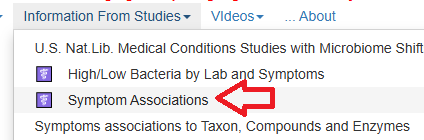
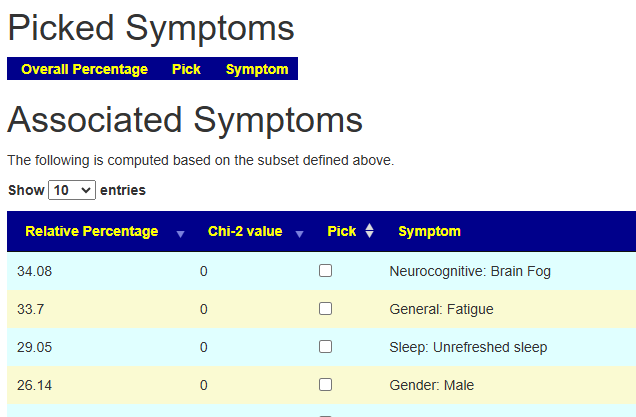
This will show a page with no symptoms/characteristics entered.
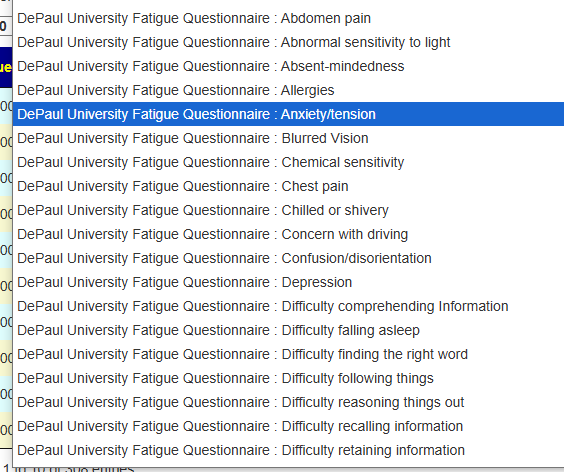
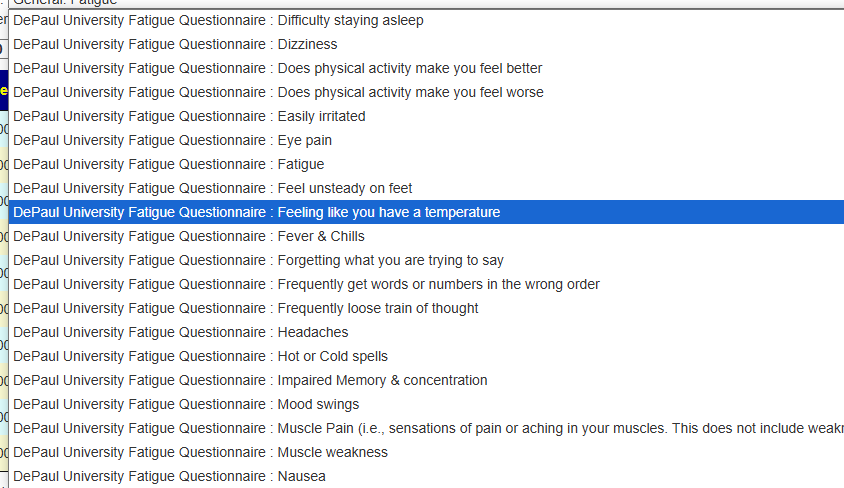
Enter the most critical symptom that you have. For this example, I will do long COVID. Just enter it in the Search box until you see what you are interested in
Check the Check box and the page will refresh. You will see that 11.7% of the samples report Long Covid. Below it are the OTHER symptoms that these people report — with the percentage that reports each symptom
We will pick POTS next. The page will update. Note that Post exertional Malaise that was 26% chance above jumps to 67%. Having POTS with Long COVID increases the odds.
Adding in General Headaches, increases Brain Fog to 84% chance. If you do not have Brain Fog at the moment, there is a very good chance that you will get it.
Bottom Line
The purpose of this tool is give concrete odd of what your next symptoms may be. Here’s a walk through.
For any one that is interested, bacteria with P < 0.005 significance to 324 symptoms and diagnosis is now available (with source data) at https://microbiomeprescription.com/sample/Frequency Some items of interest to the ME/CFS Community are below
Metabolites are substances made or used in the body during metabolism, which is the process of breaking down food or chemicals into energy and other useful materials. They help the body grow, repair itself, and function properly. Examples include amino acids, vitamins, and sugars.
Example for ME/CFS
In Myalgic Encephalomyelitis/Chronic Fatigue Syndrome (ME/CFS), metabolites have been found to play a critical role in understanding the disease’s mechanisms and symptoms:
Gut Microbiome and Butyrate: ME/CFS is associated with changes in gut bacteria, leading to reduced levels of butyrate, a metabolite produced by certain gut microbes. Butyrate supports gut health, immune regulation, and energy production. Reduced butyrate levels in ME/CFS patients are linked to fatigue severity and inflammation.
Energy Metabolism: Studies reveal abnormalities in pathways like fatty acid metabolism, glucose metabolism, and the citric acid (TCA) cycle in ME/CFS patients. These changes suggest impaired cellular energy production, contributing to chronic fatigue.
Amino Acid Metabolism: Altered tryptophan metabolism and disruptions in the kynurenine pathway have been observed, which may affect immune function and contribute to neurocognitive symptoms through the gut-brain axis.
Plasma Metabolites: ME/CFS patients exhibit differences in plasma metabolites compared to healthy controls, particularly after physical exertion. These include disruptions in glutamate metabolism, which may impact recovery and exacerbate symptoms.
Disease Subtypes: Metabolomic studies have identified distinct metabolic profiles among ME/CFS patients, suggesting subtypes with different clinical presentations and underlying mechanisms.
These findings highlight the importance of metabolites in ME/CFS research, offering potential biomarkers for diagnosis and targets for therapeutic interventions.
Example for IBS
In the context of Irritable Bowel Syndrome (IBS), metabolites play a significant role:
Gut microbiota-derived metabolites: These are substances produced by the bacteria in our intestines and are thought to be involved in IBS symptoms. Some important examples include:
Bile acids
Short-chain fatty acids
Vitamins
Amino acids
Serotonin
Hypoxanthine
Blood metabolites: Certain metabolites in the blood have been found to have a causal relationship with IBS. For example:
Stearate: Associated with decreased susceptibility to IBS
Arginine: Associated with increased risk of IBS
1-palmitoylglycerol: Associated with increased risk of IBS
Fecal metabolites: Studies have identified specific fecal metabolite profiles in IBS patients that differ from healthy individuals. These metabolites are often amino acids or fatty acids.
Brain-gut interaction: Some metabolites, particularly amino acids like tryptophan, glutamate, and histidine, may influence brain function in IBS patients5. They could affect brain connectivity either directly by crossing the blood-brain barrier or indirectly through peripheral mechanisms.
Understanding these metabolites and their interactions with the gut microbiome may provide valuable insights into the underlying mechanisms of IBS and potentially lead to new diagnostic tools or treatments.
Enzymes Role to Metabolites
Enzymes play a crucial role in managing metabolites within our bodies. Here’s a simple description of their relationship:
Enzymes are proteins that act as biological catalysts7. They speed up chemical reactions in our cells without being used up themselves.
Metabolites are substances produced or used during metabolism1. They can be small molecules like sugars, amino acids, or fatty acids.
Enzymes help break down large molecules (like proteins, fats, and carbohydrates) into smaller metabolites. This process is essential for digestion and energy production.
Enzymes also help build larger molecules from smaller metabolites. This is important for creating cellular structures and storing energy.
Each enzyme typically works on specific metabolites, called substrates1. The enzyme and substrate fit together like a lock and key.
By controlling which reactions happen and how quickly, enzymes regulate the levels of various metabolites in our bodies. This helps maintain balance and allows cells to respond to changing needs.
In essence, enzymes are the workers that manage metabolites, ensuring our bodies can efficiently use the food we eat and carry out the chemical processes necessary for life.
Data From Samples Uploaded with ME/CFS
It happens that from uploaded samples and KEGG: Kyoto Encyclopedia of Genes and Genomes; we can determine that the following enzymes are (VERY VERY) statistically significant. The most significant ones are all too high. The top ones comes from the three genus only: Chlorobaculum , Pelodictyon and Prosthecochloris
Chlorobaculum limnaeum
Chlorobaculum parvum
Chlorobaculum tepidum
Chlorobium chlorochromatii
Chlorobium limicola
Chlorobium phaeobacteroides
Chlorobium phaeovibrioides
Chloroherpeton thalassium
Pelodictyon luteolum
Pelodictyon phaeoclathratiforme
Prosthecochloris aestuarii
Prosthecochloris sp. CIB 2401
Prosthecochloris sp. GSB1
Prosthecochloris sp. HL-130-GSB
Some (but not all) enzymes can be provided by some probiotics. Below is recent feedback from a person dealing with a child’s autism.






 CFS Remission