Rickettsia (Lyme/Q-fever) Detection by Microbiome?

Today I had a messenger session with someone who noted that Diplorickettsia was in his results. Rickettsia infection treatment plan is the historic basis of Ceclie Jadin’s protocol that she learnt from the Pasteur Institute for Tropical Medicine which has been successful for some ME/CFS patients.

What is Diplorickettsia genus?

” Doubled rickettsia, for the phenotypic resemblance of the isolated strain with rickettsiae shown by Gimenez staining A novel obligate intracellular gamma-proteobacterium associated with ixodid ticks, Diplorickettsia massiliensis” [Src]

”  The disease (Lyme neuroborreliosis) is caused by multiple genospecies of Borrelia burgdorferi sensu lato bacteria transmitted by ixodid (hard) ticks, ” [2019]

Checking uploads from Thryve, there were two individuals that had this evidence of a tick bite that may have transferred bacteria that has taken up residency. I have put these people in contact with other (with permission).

Legionella and Coxiella, both of which include notable pathogens. For example, Q fever is caused by Coxiella burnetii and Legionella pneumophila causes Legionnaires’ disease[2][3] and Pontiac fever.[4][5][6]

Wikipedia

Looking at other Thryve uploads, I found one more person with Coxiella. For Legionella, I found 6 additional people — including myself!

For myself, it was present in nose samples (ubiome) in 2017 (highest count, almost 3%) and 2018 (not in relapse) and then appear in my first Thryve gut sample of 2019-11-10. This echos back to several past post of the nasal cavity and mouth being reserves for various bacteria that may help maintain various medical conditions. For ME/CFS, that has been detected: Chronic fatigue syndrome patients have alterations in their oral microbiome composition and function. [Sep 2018].

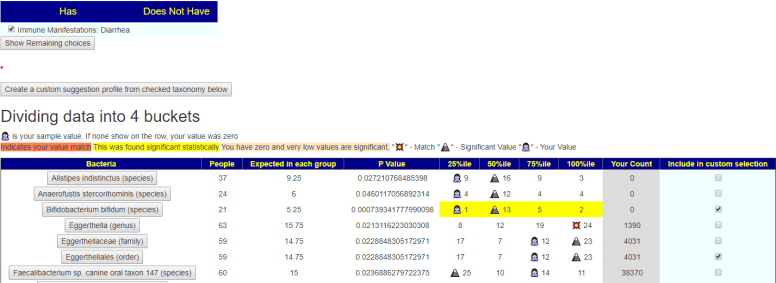
Rickettsia

As cited above, this was the experience used by Jadin. I found some 20+ individuals, including myself with the same pattern, in nose prior and in my last gut sample from Thryve.

Borrelia (Lyme)

I found this reported in 3 peoples microbiome from XenoGene, a european provider.

This does not mean that you have a pathogenic version. It indicates that you have a cousin to a pathogenic version (whose disease role may not be known).

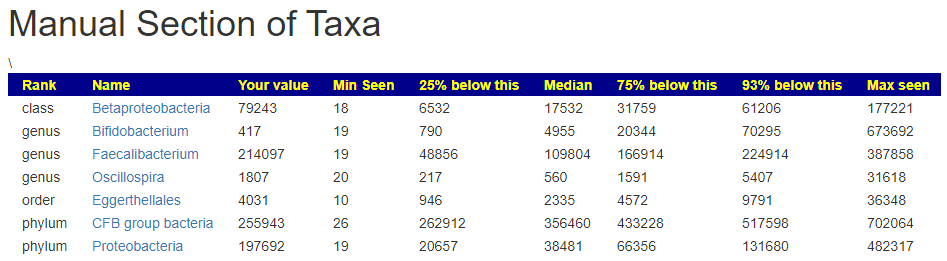
I have added both of these to Health reports.. as illustrated below
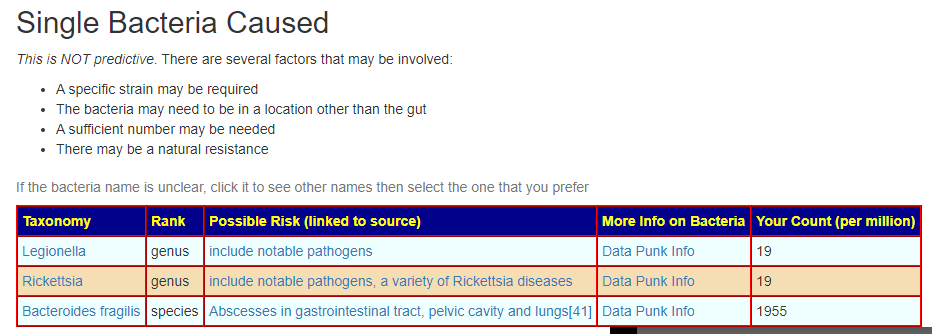
Whether a low number is significant is an unknown

If you discover any similar ‘interest’ bacteria, please let me know and I will update the risk items. Thanks!

For those wishing more information on 16s Microbiome analysis, see this listing of providers.

  • Thryve reports on two
  • Xenogene reports on the Lyme bacteria
The angst of trying to find a physician for ME/CFS

So, how do we find a doctor who believes in cfs and can check into some of this for us. This site is amazing information. – From Facebook Post

Ken Lassesen There are only handful of MDs in every jurisdiction unfortunately. In the province of British Columbia (5 million people) there was just ONE until she left. They are now back up to two!!!!

” The estimated prevalence of ME/CFS in our study ranges from 519 to 1,038/100,000, ” [CDC] so we have perhaps 5,000 patients for these MDs, all being time consuming. A General practise MD usually have 1500-2000 patients (most of them healthy and just seen once a year). For ME/CFS, the patients numbers drop down greatly.

My first 2 physicians were a GP/Surgeon who diagnosis (because of that chronic CFS cough) was antibiotic resistant walking pneumonia and put me on rotating antibiotics (the right thing!)… and a family practice physician (who I saw 2 weeks before onset). With her, I had to literally lead her thru the treatment plan (Jadin’s rotating antibiotics and Hemex coagulation therapy) and the literature once she accepted the diagnosis. I even arranged conference calls with leading researchers at that time for her.

#3 ended up being a ND that worked with a Lyme MD (very long wait list to see the MD), there was a lot of negotiation on the treatment plan, but it worked. In my jurisdiction NDs may prescribe antibiotics — that is not true everywhere.

The KEY is getting a physician that is willing to learn and read well summarize information.

#4 physician was a loss… sorry not standard of care… changed to a new physician, ex-Armed Forces MD (thus seen PTSD a lot), she is very interested in the microbiome model. The remission was not due to her, but instead of “physician heal thyself” became it became Artificial Intelligence heal me!.

With that said, many “CFS physicians” can be locked into a certain view of ME/CFS (which can be 20 years stale). A few people with that speciality still believe it’s a psychological condition.

https://www.mefm.bc.ca/for-health-care-providers

My facebook response

The purpose of this blog containing over 1200 documented posts citing existing medical literature was to try to give an alternative path when there is no specialist physician available.

The path premise is to use the data here (or suggestions from the microbiome prescription site – after getting a 16s analysis). 16s analysis DOES NOT REQUIRE A MD’S REQUISITION!!!! They are direct to retail (and expect some MDs to raise their eyebrows!). The cost is often the same as a few bottles of probiotics.

Use this information and present the changes that you are planning to do to your physician and ask if they have any concerns with doing those. Most MD’s will look at it and shrug. If there have any questions on an item— tell them you will bring in the study next time (I link to all of the studies!).

So, technically you are under a MD’s supervision but have 0% dependency on him generating a treatment plan.

For those of you with brain fog, you may wish to get a significant other or friend to sort thru things.

I suggest these links as a starting point:

Remember that the greatest cause of back-sliding is forgetting how you were when symptoms improve and you stop taking items because they appear to no longer help. The second cause is absent mindedness.

Report on Heritage Super Food!

I was fascinated by your recent posts about eating for your heritage. I have a 23andme done already, so I confirmed I’m roughly 40% British, 40% French/German, and 9% Nordic.

Then I looked at the 4 uBiomes I have on your site. Barley was the main suggestion for all of them. I started eating cooked barley for breakfast and adding in barley/rye only breads, with no wheat. The skinny flat ones that you’ve pictured on your site many times over the years. Shockingly, my brain fog has been improved and my mood is much better. These are two of my worst symptoms and nothing else has touched them for almost a decade.

The problem is that my diarrhea has returned. This was the reason I stopped eating all types of gluten. Going GF and taking lots of digestive enzymes cured me of an awful lifelong struggle with IBS-D. So now I’m worried. I hope it’s just a temporary reaction to a microbiome change. But would love your advice. 

From a reader

The reader did this as a result of my Eating for your heritage microbiome post. I am going to use those uBiomes (with permission from reader) to try to tackle the diarrhea issue using the new Hand picking bacteria to modify

The diarrhea effect may be a herxheimer like effect from the microbiome changing. If this is the case, then roughly it out for a while is suggested (after consulting with a medical professional of course).

The ideal situation would be getting a post-Barley microbiome, to both see the changes and possibly identify what shifted to cause diarrhea to return. For this analysis, I used the latest uBiome sample.

Using the IBS Medical Condition Profile
Using Citizen Science

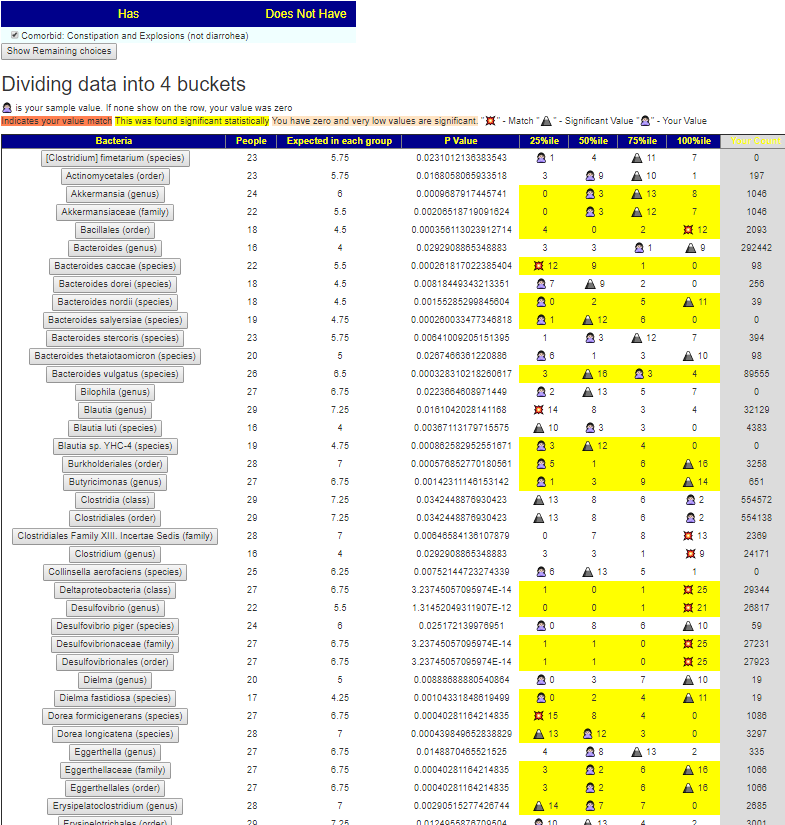
The final bucket of bacteria we came up with is shown below

Suggestions

I left this bucket on my site so the reader can look at the full list.

  • Under suggestions, I would skip wheat for the moment 😉
  • Under avoid, only a few items are > 0.1, but three items are commonly used in self-treatment.
Good Probiotics
Poor probiotics

Bottom Line

We await the reader’s report on what impact these changes make. If it is negative, I will post it regardless. I seek answers which means a willingness to accept learning experiences.

Hand picking bacteria to modify

Many bacteria have no known effect. The default approach is to focus on high and low bacteria with a goal to move them towards the commonly seen values using all of the bacteria.

There are various filters available (i.e. use only bacteria associated with some medical conditions), but some people wish to really focus on certain bacteria only. A recent enhancement provides that ability

Where you can pick bacteria

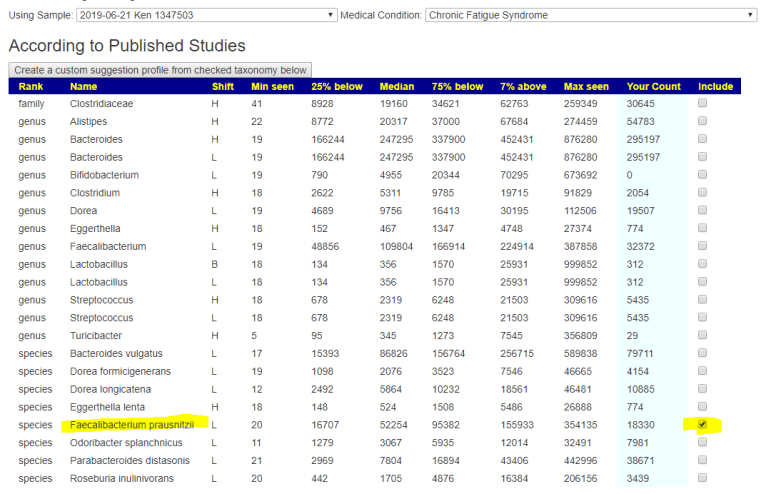
There are three spots that you can pick bacteria on http://microbiomeprescription.com/ . You can select some from each spot; the ones selected will be aggregated.

Start by going to My Biome View
Put a check besides the ones of concern and click the top button
These hand picked buttons will now appear
Click on View Hand Picked Taxa to see what you have selected and the values
Looking at Symptoms, Click and then pick one of your symptoms
On Bacteria Explorer Plus, the checkboxes are on the left side. Select and click
We have both selections merged
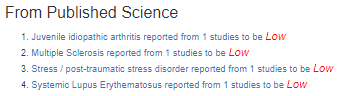
Using data from published medical studies click above
And for published studies, the same pattern
We have a composite selected in three different ways.

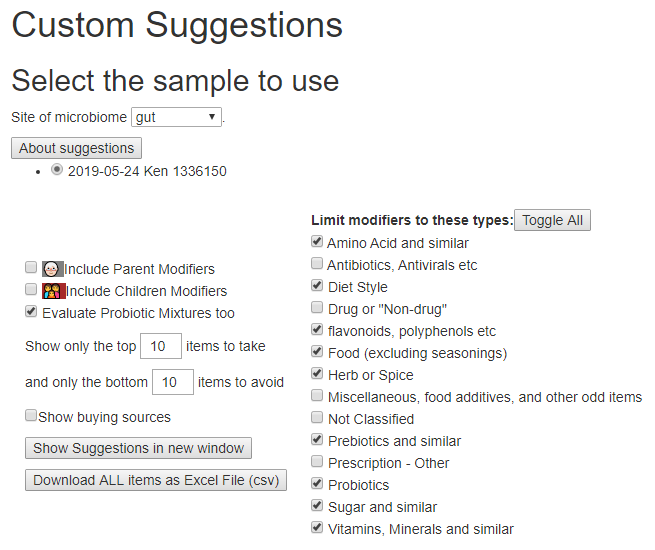
Suggestions

A lot of the bacteria filtering options are removed because they are not needed. You have already picked the bacteria.
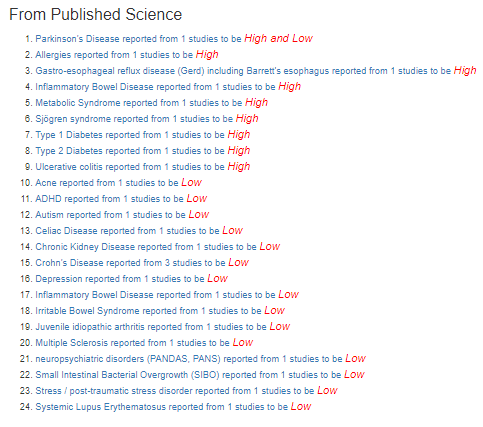
  • If you have only a few bacteria (< 20) then Include Parent / Children is recommended

The Video Walkthru

ThyrveInside Reports vs MicrobiomePrescription Reports

This post is looking at Thyrve Subject Reports vs MicrobiomePrescription reports. Interpretation depends on which studies you use and methodologies. There is no right or wrong answer.

With that said, having received my first Thryve Report, I am curious on how they compare (when there are tough equivalents).

Gut Score

The first item is that Thryve is building their report on “compared to those of the healthy population from the American Gut Project“. Oops we have an apples to crab apples scenario, different equipment, different processes. I am disappointed that they do not have a reference using only their equipment and samples. uBiome attempted to do that (but some employees submitted their pet’s microbiome into the mix!)

So I am healthier than the average person
I am 11% above a healthy score — what does that mean? How was healthy determined?
Microbiome Prescription gives a percentile score. The numbers are in conceptual agreement

Likelihood Analysis

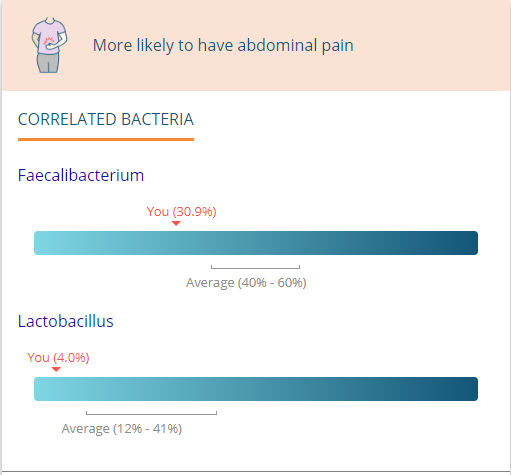
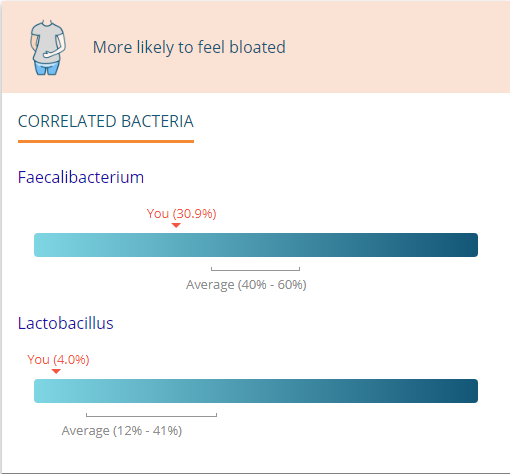
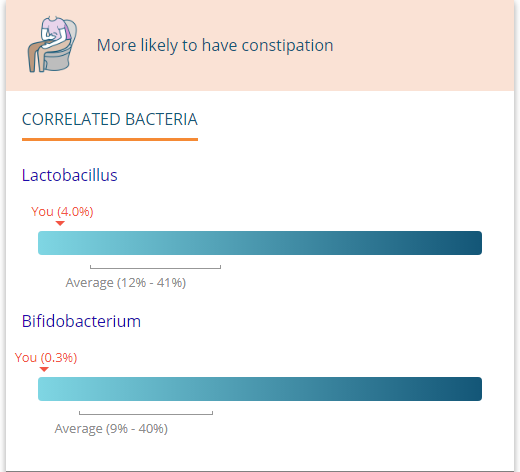
Reviewing this page, I chuckled because they do not give a single likelihood (a probability measure). They simply give your numbers against the average range.

They cite two bacteria only and it is unclear if high or low will cause the pain.

While on MP we have some 17 bacteria associations with where the peak values are.

We are in agreement for Faecalibacterium but Lactobacillus did not reach statistical significance

And on MP we have the following being statistically very significant for bloating:

  • Butyricicoccus (genus)
  • Faecalibacterium (genus)
  • Ruminococcaceae (family)
  • Subdoligranulum (genus)

On MP, well, we have many bacteria identified. Lactobacillaceae (family) is there, but it’s child Lactobacillus (genus) is not. Bifidobacterium is not.
Likelihood Analysis Bottom Line

It looks like Thryve’s information is very old and very stale. The information may well be coming from studies that did not use 16s to obtain populations.

They have been entrusted with a warehouse of data from their customers and have not been good stewards of it (I am an old fashion person that grew up with a strong understanding of and importance of stewardship).

Your Gut Bacteria

Thryve attempts to give health benefits and associated diseases. Again, they seem to have old stale information.

http://microbiomeprescription.com/library/details?taxon=1239
http://microbiomeprescription.com/library/details?taxon=28890
http://microbiomeprescription.com/library/details?taxon=256845

Probiotics

They do not appear to make recommendation solely off the microbiome. I speculate they take the health information and look up based on that information.

For me, they came up with:

  • Lactobacillus reuteri
  • Lactobacillus rhamnosus
  • Lactobacillus casei 
  • Bifidobacterium lactis

The MicrobiomePrescript site came up with:

And near the top of my avoid list

Lactobacillus rhamnosus did not show up.

We both had the same microbiome data. Microbiome Prescription does provide the studies that the suggestions were based on. Thryve does not.

Bottom Line

ThryveAlive works well for providing reports on your microbiome. Given the demonstrated staleness of the data on their site (it costs a lot of money to keep current unless you have someone willing to donate the many hours for the public good).

Most microbiome providers likely fall into the same staleness trap. They put the effort in to get their website up and looking good, then they coast along without keep current because they do not wish to spend the money to keep current (especially true if there is venture capital backing the firm).

NOTE: The data on MicrobiomePrescription is available for Commercial Licensing, see this post.