Microbiome analysis of children – what is known

I have been contacted over the years of parents of children of various ages – one of the questions is how do their microbiome compare to adult ones. Can you detect abnormalities with them. This reviews the literature that I have been able to locate. I excluded studies for under 1 year.

In a comparison of 20 children and adolescents with ASD and 20 neurotypical control individuals between the ages of 3 and 16 years, those with ASD had lower abundances of the gut microbiota Coprococcus, Prevotella, and unclassified Veillonellaceae.9 A more recent study also found differences in gut microbial composition among children between the ages of 3 and 12 years with ASD and gastrointestinal symptoms compared with 41 typically developing controls also with gastrointestinal symptoms.10 However, in cross-sectional analyses, it is difficult to know the directionality of observed associations. … The postnatal gut microbiome is remarkably dynamic up to 3 years of age, which is also a critical period for brain development.22 

Association of the Infant Gut Microbiome With Early Childhood Neurodevelopmental Outcomes An Ancillary Study to the VDAART Randomized Clinical Trial [2019]
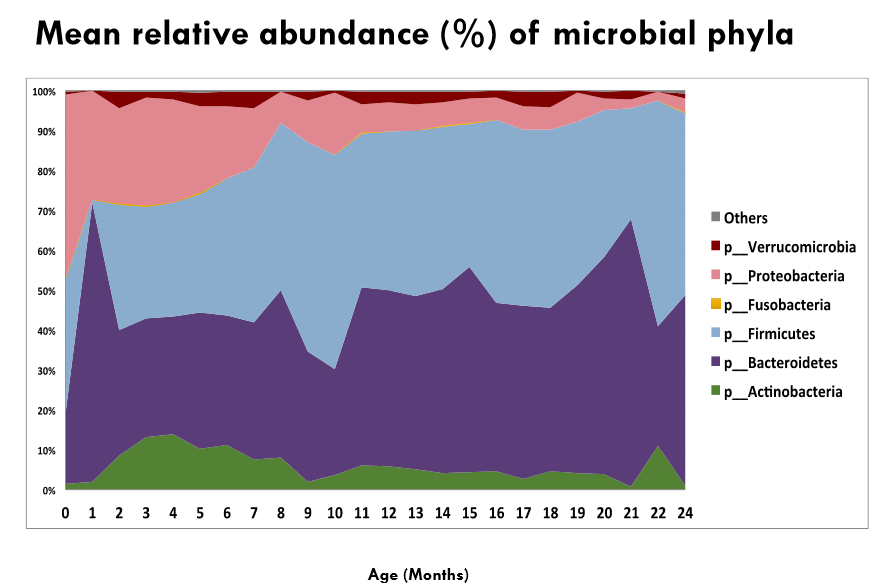
SHAPING THE GUT MICROBIOME DURING INFANCY, 2018

Bottom Line

It is very difficult to come to any conclusions about whether a microbiome is dysfunctional or now before the age of three unless there are extreme shifts. From the age of three onwards, there is relative stability that changes around 60 as shown below. As a result, I am adding age to the symptoms entry.
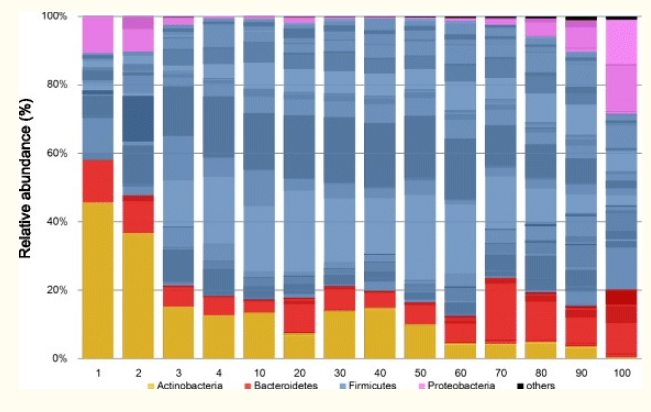
Age-related changes in gut microbiota composition from newborn to centenarian: a cross-sectional study [2016]

At finer level, we see the wide variety of measures (Note: these are showing boxplot lines – the range of normal is age dependent!!). Once I get enough samples with ages added, I will update the boxplot numbers to match age also – the study only had 371 samples. These plots also illustrate why averages can rarely (if ever!) be used to reliably determine it there is a problem!
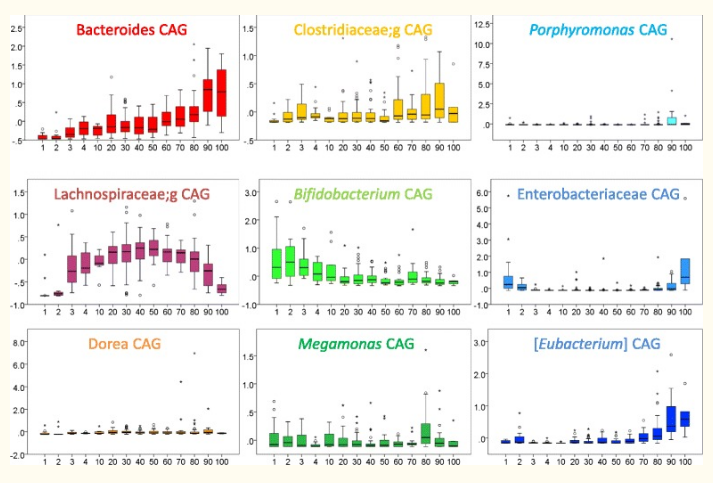
The next chart takes a few brain cells to understand, but it is informative once the presentation kicks in
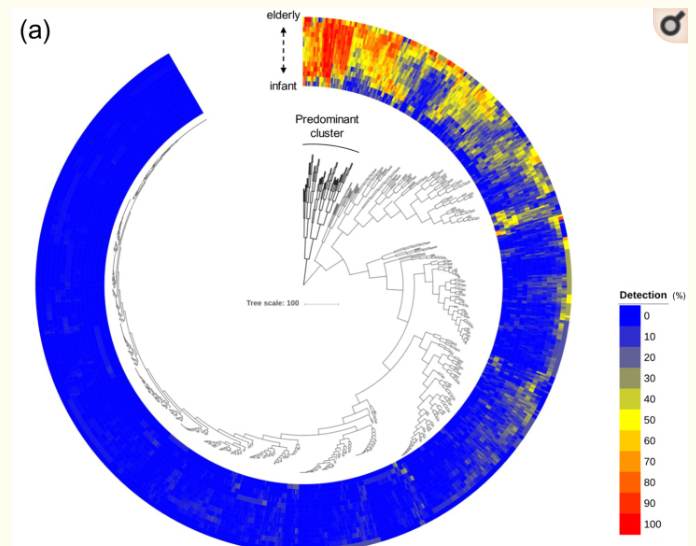
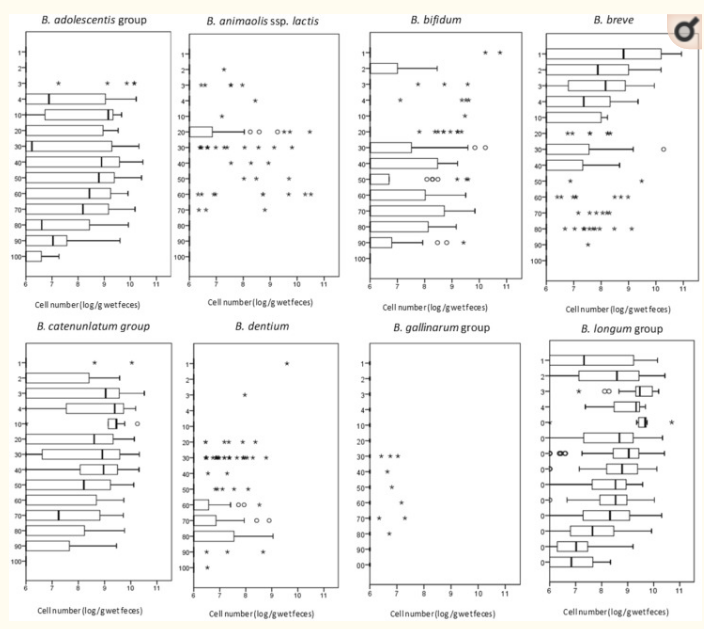
Genomic diversity and distribution of Bifidobacterium longum subsp. longum across the human lifespan [2018]
Age is on the left axis.

Bottom Line

For a child under 10, sudden great changes of a bacteria is a indicator of dysfunction — but this implies ongoing measurements. All of the sample sizes in studies that I found are too small to have great confidence in evaluating a sample. Having reference data is essential for the microbiome (with my relapse and recovery, having two ubiome results from before the relapse gave me a basis to work from).
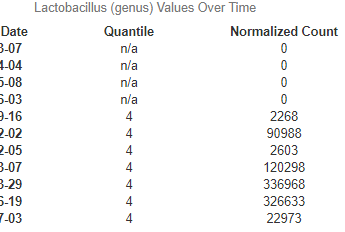
Lactobacillus became 33% of the microbiome from none.

If you (or your child) is in poor health and a sibling is in good health, because of the amount of inheritability of the microbiome, their microbiome to use as a reference is better than nothing. Healthy parents are the next step for getting a reference (much weaker).
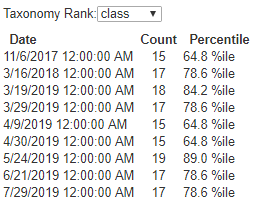
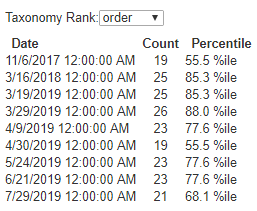
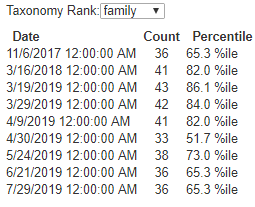
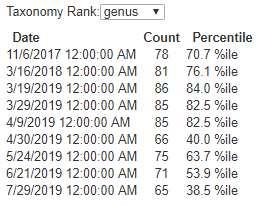
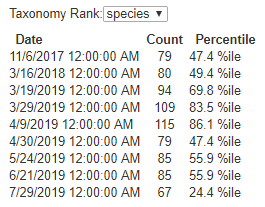
Timeline of Diversity by Taxonomy rank

I have just added this to the site for comparing results from different tests. http://microbiomeprescription.com/

Below are some of mine. Remember the first one in 2019 was onset of ME/CFS and it has since moved much closer to recovery (but not all of the way there). uBiome does provide a Diversity number, but it is a black box. I opted to count the number at each taxonomic level instead and then show as a percentile compared to other uploaded samples.

It was interesting that ME/CFS signature shows up at the species level best. A ton of new species appeared with onset.

ME/CFS caused 43% more species to appear than my healthy references

ME/CFS Relapse And Recover Report #6 Part B

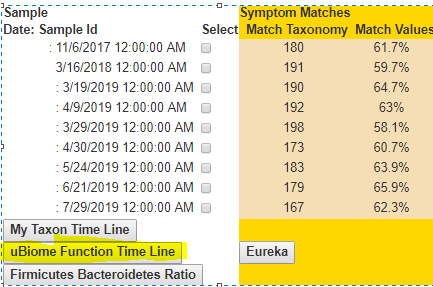
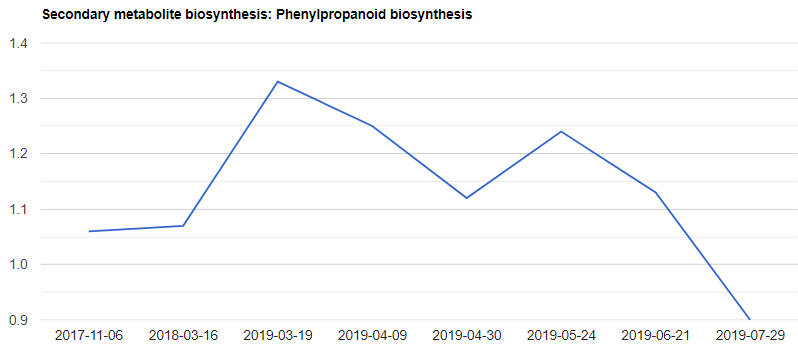
Since the original #6 report, I have entered from the uBiome site, the predicted metabolic function values for my samples (in the new entry form) and coded up a timeline view. It has been pushed to the site. NOTE: This comes from the uBiome site and is not available from other 16s test providers. There are 105 different functions reported by uBiome.

To get the charts you must TRANSCRIBE the data from ubiome. Otherwise you will see nothing. See this post.

This post looks at the most interesting charts. The 2017/2018 values are PRE-RELAPSE and show the normal values for me.


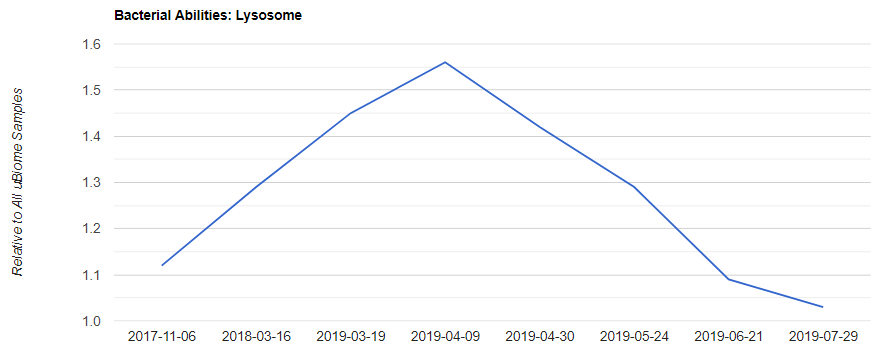
Historically, I run high on this value — it collapsed and then slowly recovered.
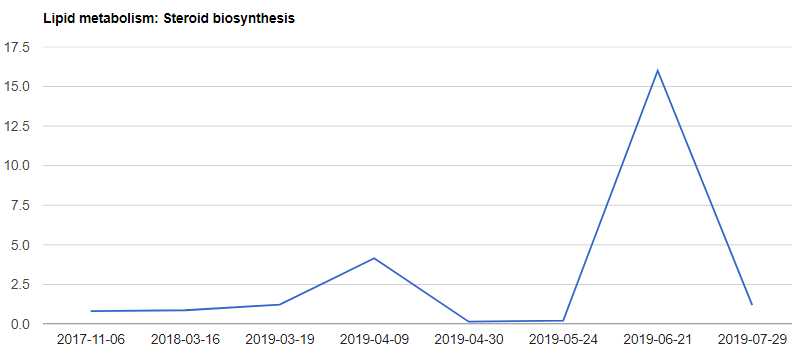
This may be connected to ongoing fatigue. It is 4x higher than prior to relapse.
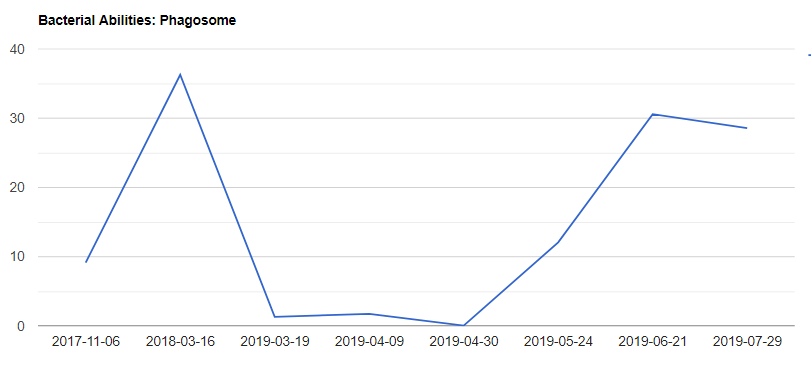
A lot of major jumping around on this one

uBiome Function Metabolism entry and display being updated

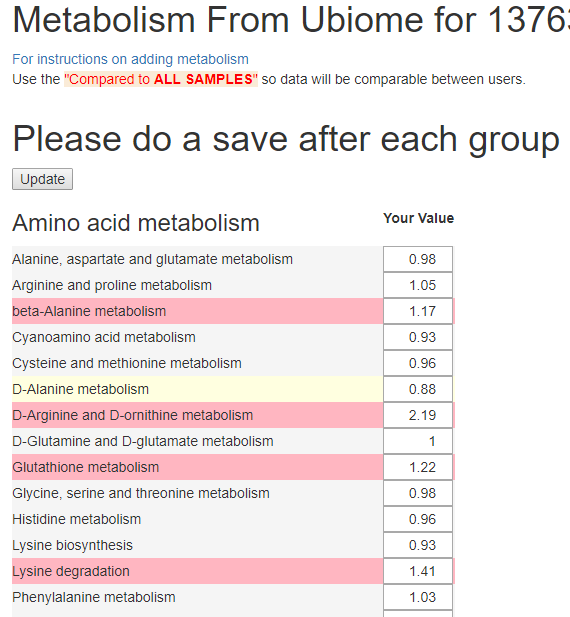
I have just revised the metabolism entry form for ubiome data to allow entering the specific value as shown below. ( http://microbiomeprescription.com/ )This makes data more meaningful and useful for citizen science analysis. By the end of day, I should have added the ability to view the Metabolism function over time (just like you can view individual taxon over time). While ubiome does have a display — it is very busy.

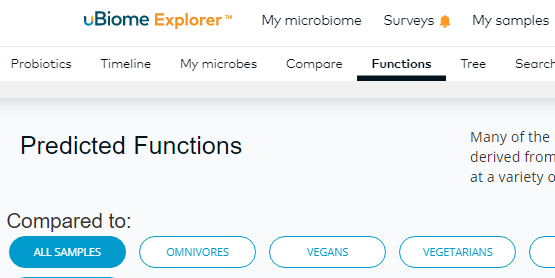
How to get to the data (use ALL SAMPLES always)


So get your data updated and enjoy the new charts!

ME/CFS Relapse And Recover Report #6

I received my ubiome results today (sample done on 7/29/2019) – so 10 days from sending it off.

Back Story

At the start of this year, stress at work increased and requests to management and HR to be moved to a different group with a different manager fell on procrastinating ears. I was showing early physical signs of excessive stress. In the middle of March, there was a sudden relapse of myalgic encephalomyelitis, I could feel my body change literally within an hour. Drive home and started taking sick time.

The first thing that I knew that was essential was knowing what was happening with my microbiome and to start counteracting it via my Microbiome Prescription web site. Once I got my reports, I proceeded to implement the suggestions with retesting every month because the microbiome is a moving target.

Fast forward, all of the typical myalgic encephalomyelitis symptoms are gone except for one – very limited duration of physical activity before sudden complete exhaustion hits. Over the last month, the duration has significantly increased but still only a fraction of what I could do in January of this year.

I observed that there was immediate drop of some bacteria groups at onset, followed by additional groups dropping off in the next period. The delay drop off is expected because when the first group stop producing, the reserves of their metabolites (chemicals) are still circulating and slowly get consumed until they drop below a threshold and the other bacteria are starved out.

Links to my prior reports are linked to below:

This post review the high lights of what has happening. The microbiome lab results agree with my observations of myself.

Ubiome Charts

The Diversity score is sitting at 87%ile (more species than 9 out of 10 people — a real cosmopolitan gut) but appears to not reflect the ME/CFS state in any way. The numbers for diversity and wellness reported by uBiome is shown below, they do not appear to correspond well with the onset and likely of limited or no value.

Anti-Inflammatory Microbiomes

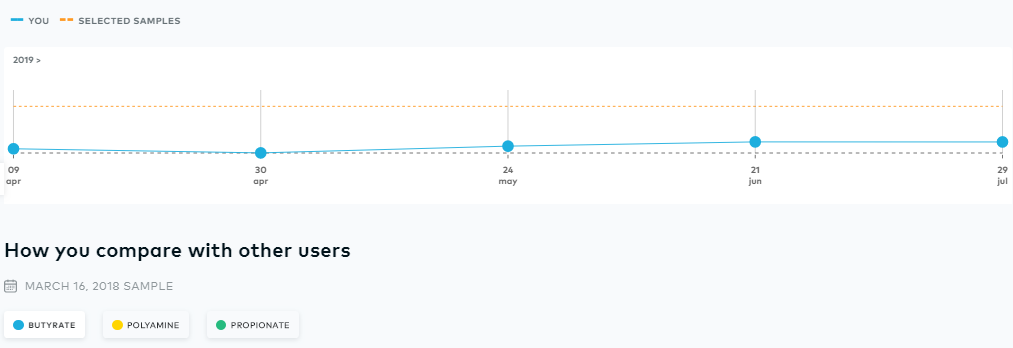
Propionate continues to improve significantly, still slightly below my pre-relapse level
Polyamine continues to be in my historic pre-relapse range
Butyrate is maintaining the improvement. It was usually low pre-relapse
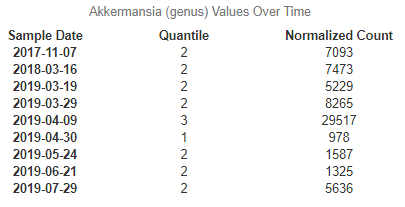
Akkermansia and Lactobacillus has made a major improvement since the last time

And for yogurt specific strains, it is much improved

GABA production is improving, serotonin has come down a bit (but still higher than pre-lapse level)

Microbiome Site Charts

I put little value in this ratio beyond being an indicator of change happening.
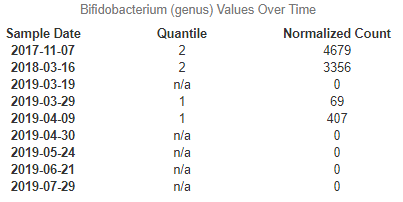
Bifidobacterium died with the onset, attempted to make a come back and perished again.
Lactobacillus followed the same pattern, attempted a come back that failed — but eventually managed to get going — Looking at strains, they changed every sample.
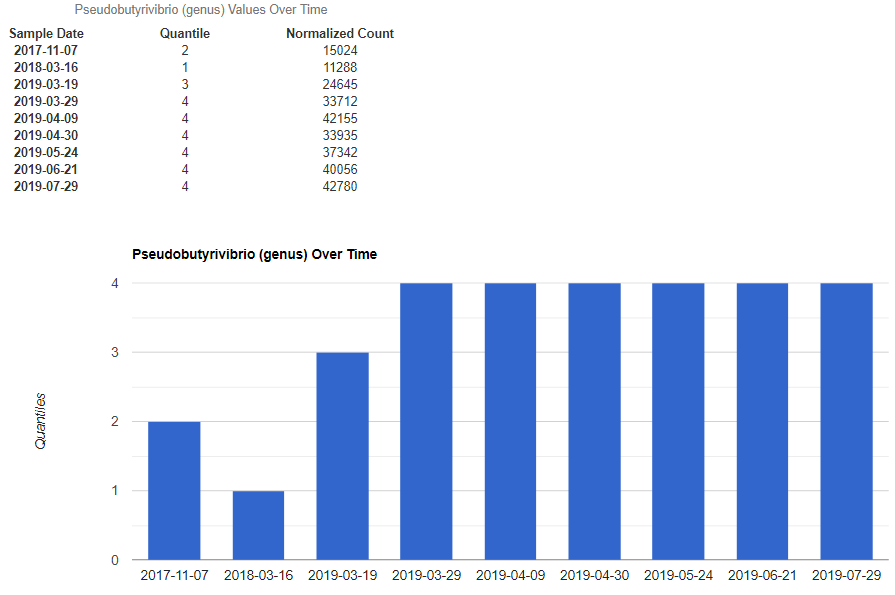
Similar pattern, collapse – attempt to recover that failed, then slow recovery afterwards

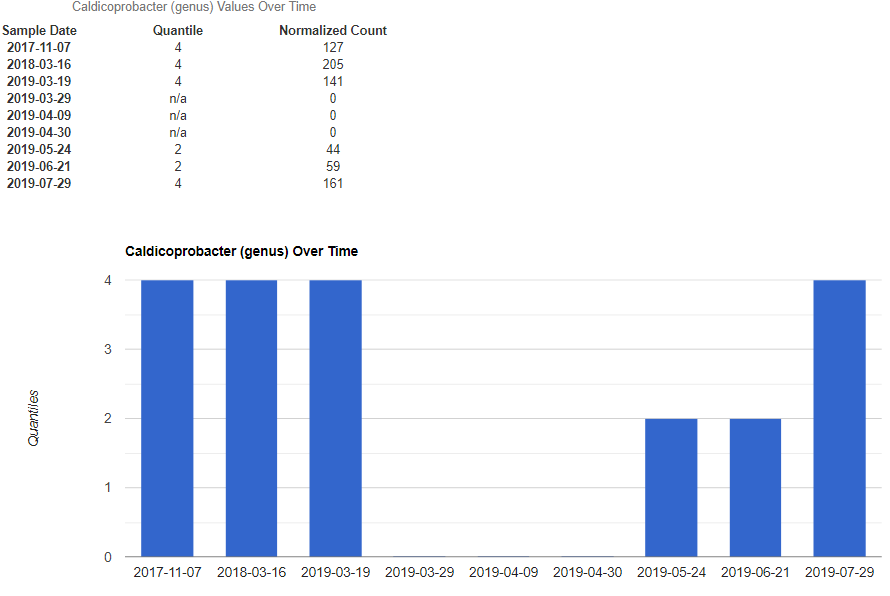
This bacteria disappear with onset and has not returned
We see this disappeared and has been making a good recovery to the typical levels from the past.
Kluyvera is identical to E.Coli for 16s Reports. With onset, it disappeared — characteristic of CFS as reported back in 1998.
This taxonomy may play a significant role for me. According to data punk, it is a known inhibitor of bifidobacterium BUT NOT of Lactobacillus nor Akkermansia. This is well reflected in my results.
This bacteria also looks like it may be playing a significant role.

We do find this bacteria is ME/CFS associated in the literature and successful treatment.

Another taxonomy that disappeared and is now recovering

A few interesting Species

End Products

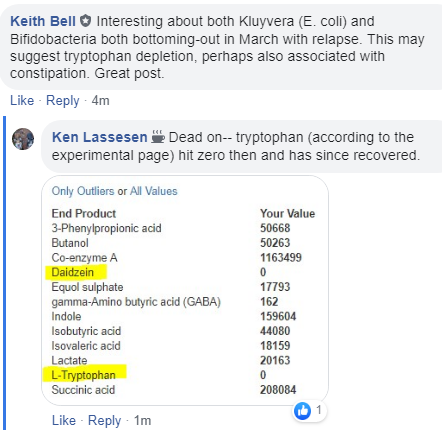
According to this experimental page, I am producing high levels of:

Last Sample. All of the low levels in prior samples have disappeared

Probable Symptoms Predictions

We had a number of hits (75% accurate) — some of which I noticed and dismissed until I read the list. The items are:

  1. Sleep: Waking up early in the morning (e.g. 3 AM)
  2. Onset: 2010-2020
  3. General: Heavy feeling in arms and legs
  4. Pain: Joint pain (sore legs from doing short walks)
  5. General: Heavy feeling in arms and legs
  6. Following are long time symptoms
    1. Neurological – Vision: inability to focus eye/vision
    2. Comorbid: Methylation issues (MTHFR)
    3. Neurological-Sleep: Sleep Apnea (a.k.a. Snoring)
  7. Intermittent
    1. Immune Manifestations: Constipation

Suggestions are very similar to the last ones

Remember these are SPECIFIC to my microbiome, they probably do NOT apply to you.

  • Take List
    • Cranberries — I have been doing a glass of juice with breakfast.
    • Aspirin –
    • Most of the B vitamins, Vitamin D
    • NAC, Melatonin
    • Zinc
    • Monolaurin – which is new and an old favorite
  • Avoid List
    • Red Meat — I have been chickening out for the last month!
    • Vegetarian diet, low protein diet
    • Walnuts
    • Slippery Elm
    • Licorice
    • Lactobacillus Plantarum (i.e. Align), also Digestive Advantage, duraflora, etc
    • Triphala

On the probiotic list, #1 is Activia Drink, also Mutaflor. On the no known impact, I found enterogermina (which I take once a week — it is known to persist after just one dose), and miyarisan (which I use as a lozenge, sucking slowly in the mouth — it has cleared up dry-mouth and nasal issues ). Symbioflor-2 is a neutral — but since Mutaflor is on the to take list and this is also an E.Coli probiotics, it will also be done regularly (like enterogermina, it is known to persist after a single dose for several days).

Flavonoid Suggestions

Apples, Banana, Almonds as snack foods (at least one of each a day), Cinnamon, thyme,basil, nutmeg for spices. Peppermint (2-4 cups of peppermint tea a day). Oregano is high in Luteolin so I will be adding Oregano tea.

Bottom Line

I continue to move to recovery: both in terms of symptoms (decreasing) and in terms of microbiome results. This is my first recovery without the involvement of any antibiotics, which implies to me that they are not always necessary.

The pattern that I am using is simple:

  • Know where your microbiome is at (new uBiome test every 4-6 weeks)
  • Trust the AI Engine to make better than the average physician suggestions, It remembers 58,000 facts and apply them is a consistent fashion.
  • Be patient and consistent.

Until I got the latest results and realized from doing yard work last weekend (wife: You have been out working on the yard a long time!), I was starting to have doubts about continued improvement. This type of doubt (from slow improvement) is an ongoing challenge for recovery — people forget (especially with brain fog and memory issues) how they were a month ago and incorrectly assume no change. The joy of microbiome analysis is that you have lab results showing the changes (even when symptoms may not have changed much).

Comments from Facebook that may be relevant