Multiple Chemical Sensitivity – Current understanding of DNA

In this post, I want to list potential DNA polymorphism (SNPs) associated with MCS and then look at what we know about these polymorphisms.

” There is a significant overlap of MCS, CFS and fibromyalgie.”

Multiple chemical sensitivity syndrome (MCS)–suggestions for an extension of the U.S. MCS-case definition. 2005

Statistically significant differences between patient cases and controls were found with respect to rs1801133 (MTHFR), rs174546 (FADS1) and rs1801282 (PPARγ) polymorphisms…. Specific genetic polymorphisms associated with the syndrome or its pathogenesis were not identified.

Multiple chemical sensitivity: Genotypic characterization, nutritional status and quality of life in 52 patients. [2017]

We observed that high chemical sensitive individuals diagnosed by using Japanese criteria as MCS patients were more significantly associated with SOD2 polymorphisms.

Evaluation of genetic polymorphisms in patients with multiple chemical sensitivity. 2013

demonstrating an increased risk for MCS in Caucasian females homozygous for the CYP2D6 isoform and for the association of CYP2D6 and phase II NAT-2 polymorphisms [98]. Proneness to MCS was connected with NAT-2 polymorphism and homozygous deletions of M1 and T1 GST genes [99].

The Search for Reliable Biomarkers of Disease in Multiple Chemical Sensitivity and Other Environmental Intolerances 2011

A genetic predisposition for MCS may involve altered biotransformation of environmental chemicals. The CYP2D6 enzyme activates and inactivates toxins; the NAT2 enzyme bioactivates arylamines to protein-binding metabolites. A gene-gene interaction between CYP2D6 and NAT2 suggested that rapid metabolism for both enzymes may confer substantially elevated risk (OR = 18.7, P = 0.002)

Case-control study of genotypes in multiple chemical sensitivity: CYP2D6, NAT1, NAT2, PON1, PON2 and MTHFR. 2004

No significant differences of the allelic distribution of geneticpolymorphisms in the genes for 5HTT, NAT1, NAT2, PON1, PON2, and SOD2 were found between cases and controls. The results are in contrast to the study of McKeown-Eyssen and coworkers (2004) but in accordance with the German MCS multicenter study. 

Sequence variations in subjects with self-reported multiple chemical sensitivity (sMCS): a case-control study. 2008

No significant differences in the allelic distribution of genetic polymorphisms in the GSTM1, GSTT1, ALDH2 or PON1 genes were found among the four levels of each subscale, or between cases and controls.

Factors in genetic susceptibility in a chemical sensitive population using QEESI. 2012

Summarized

  • Clean evidence for
    • MTHFR,
    • FADS1
    • PPARγ
    • CYP2D6
  • Disagreement for
    • SOD2
    • NAT-2
    • 5HTT,
    • NAT1,
    • PON1,
    • PON2

Polymorphisms

MTHFR

The MTHFR gene provides instructions for making an enzyme called methylenetetrahydrofolate reductase. This enzyme plays a role in processing amino acids, the building blocks of proteins. Methylenetetrahydrofolate reductase is important for a chemical reaction involving forms of the vitamin folate (also called vitamin B9). Specifically, this enzyme converts a molecule called 5,10-methylenetetrahydrofolate to a molecule called 5-methyltetrahydrofolate. This reaction is required for the multistep process that converts the amino acid homocysteine to another amino acid, methionine. The body uses methionine to make proteins and other important compounds.

People with this condition often develop eye problems, abnormal blood clotting, skeletal abnormalities, and cognitive problems

US National Library of Medicine

FADS1

” These results position Fads1 as an underappreciated regulator of inflammation initiation and resolution, and suggest that endogenously synthesized arachidonic acid and eicosapentaenoic acid are key determinates of inflammatory disease progression and liver X receptor signaling. ”

Δ-5 Fatty Acid Desaturase FADS1 Impacts Metabolic Disease by Balancing Proinflammatory and Proresolving Lipid Mediators

Single nucleotide polymorphisms (SNPs) of FADS1 and FADS2 may affect long-chain polyunsaturatedfatty acids (LC-PUFA) metabolism and have a potential role in the development of atopic (Allergic) diseases.[7] – Wikipedia

PPARγ

Peroxisome proliferator-activated receptor gamma (PPARγ) is a member of the nuclear receptor superfamily of ligand-inducible transcription factors that regulate adipogenesis, lipid metabolism, cell proliferation, inflammation and insulin sensitization. 

[2017]

PPAR-gamma decreases the inflammatory response of many cardiovascular cells, particularly endothelial cells.[30] PPAR-gamma activates the PON1 gene, increasing synthesis and release of paraoxonase 1 from the liver, reducing atherosclerosis.[31]

Many insulin sensitizing drugs (namely, the thiazolidinediones) used in the treatment of diabetes activate PPARG as a means to lower serum glucose without increasing pancreatic insulin secretion. 

CYP2D6

This gene encodes a member of the cytochrome P450 superfamily of enzymes. The cytochrome P450 proteins are monooxygenases which catalyze many reactions involved in drug metabolism and synthesis of cholesterol, steroids and other lipids. This protein localizes to the endoplasmic reticulum and is known to metabolize as many as 25% of commonly prescribed drugs. Its substrates include antidepressants, antipsychotics, analgesics and antitussives, beta adrenergic blocking agents, antiarrythmics and antiemetics. The gene is highly polymorphic in the human population; certain alleles result in the poor metabolizer phenotype, characterized by a decreased ability to metabolize the enzyme’s substrates. Some individuals with the poor metabolizer phenotype have no functional protein since they carry 2 null alleles whereas in other individuals the gene is absent. This gene can vary in copy number and individuals with the ultrarapid metabolizer phenotype can have 3 or more active copies of the gene. Alternatively spliced transcript variants encoding different isoforms have been found for this gene. [provided by RefSeq, Jul 2014]

US National Library of Medicine

Bottom Line

Using the above information, there seem to be some avenues that should be explore for MCS patients for researchers:

Scanning some MCS discussion groups, at least two of the above avenues appears to help some.

Treatment Status

A search on PubMed shows that modern medical science is still struggling on diagnosis of this condition.

There are many random attempts to treat (usually by people with magic bullets that they are trying to find things to treat):

A randomised, placebo-controlled trial of transcranial pulsed electromagnetic fields in patients with multiple chemical sensitivity. [2017] “PEMF treatment of 6 weeks showed no effect on functional impairments in MCS. ” sometimes with word-smithing to indicate some form of positive effect (which could also be a placebo effect). Two classic phrases:

  • “Significant improvement” – something appears better, but the evidence did not reach statistical significance.
  • “Statistical significant improvement” – maths said something improved, but not remission and may be a very small improvement.

A IT Reader’s Medical Challenges

I usually avoid getting too involved with readers — for a simple reason: this blog and the microbiome analysis site is already a time consuming evening and weekend gig (full time IT day job). I am not a physician or medically trained, so “patient history” is an inappropriate term to use.

This reader came via LinkedIn (where I have started posting items from this blog to confuse all of my technical nerd contacts 😉 ). The number of issues, technical documentation provided, and detail history made if a good review example.

The last time I felt great was in high school, I was eating lots, exercising 2-3 (swimming) hours a day, sleeping well, studying hard. However, even though I was doing well, after a swimming race, I had trouble getting out of the pool and was too tired, no other swimmers were like that. I knew that at age 15 I was sick due to the excessive fatigue.

Ding: typical CFS has a “day-after exhaustion” after exercise. I recall my Stress ECG Test — absolute flying colors. Next morning, horrible. This hints that something else may be in play.

I had mercury fillings since I was about 8 years old and in November 2017 I got them replaced and since then my chelation treatment (DMSA) has been easier in terms of symptoms. My symptoms started when I started college (2006), I wasn’t getting much sleep due to a noisy heating element and had frequent heartburn[GERD –
gastroesophageal reflux disorders ]. I would sometimes be sad but I attributed this to a lack of exercise. Also, I have had misophonia a year after starting university (started 2006, finished 2010).

Partial sleep deprivation is associated with shifts in 4 bacteria families, and 20 genus (list). Sadness is associated with depression in medical terms. It is associated with 13 genus (diagram). Cross comparing the genus lists, there was nothing in common (suggesting that sleep deprivation and depression are not strongly connected). It does imply up to 33 genus may be altered. For GERD, we can add a few more … :

Although far from comprehensive (only approximately 24 clones were sequenced per sample), the study found Veillonella (19%), Prevotella (12%), Neisseria (4%), and Fusobacterium (9%) to be more prevalent in patients than in controls. 

Microbiome in Reflux Disorders and Esophageal Adenocarcinoma [2014]

Reminder that I use: “The microecologic disease theory, or the “Pathogenic Microbial Community” theory, is a new model in which the entire community contributes to pathogenicity, with no individual community members being classified as pathogens.13,14Dysbiosis is a similar concept that refers to an abnormal state of the microbial ecosystem, dividing commensal bacteria into “protective” and “harmful” species. With dysbiosis, the cause of certain chronic diseases is an upset balance between the two groups.13 ” [2014] This model means that AI/Machine Learning is the best tool for analysis.

Reader’s state: ‘sub-clinical dysbiosis’, that is, most gastroenterologists would state “you are fine — I see no issues of concern”.

After university (2011), I went to Asia for a week and a few months after I came back with a duodenal ulcer (found upon endoscopy), it was a stressful experience both emotionally and sleep-wise since I went through 2 12 hour shifts. I presented with fatigue, blood loss, dark stools, coffee ground vomit, collapse, blindness, urinating in bed, sleep loss, pale skin. I then went on to working in one Asian city for about a year (2012), a year after my initial trip to another Asian city , came back to the USA and became very fatigued when I was in my parents home — especially when I was around the carpets (was there for a few months).


Ulcers are usually associated with Helicobacter pylori. (one study found only 27% of these ulcers had H. pylori [2001]). We do see via DataPunk, a large number of bacteria that clusters with (i.e. if you have H. Pylori, you will often find these)

I went back to Asia to a number of cities (after Fukushima) and lived there for 2 years and upon using a new teflon pan, I got a headache, was dizzy, nauseated and got tinnitus (2015).

The carpet scenario with the teflon response implies multiple chemical sensitivity. While teflon is ‘normally considered to be safe’, poorly made or overheated pans are known to release “perfluorooctanoic acid (PFOA) ….
it can stay in the environment and in the human body for long periods of time. “[cancer.org] The table below shows the impact of a very closely related chemical.


Dietary Exposure to the Environmental Chemical, PFOS on the Diversity of Gut Microbiota, Associated With the Development of Metabolic Syndrome [2018]

At this point, my mind go to suggesting an Olestra diet for a few months. YES that ugly horrible synetic fat – Ken, you must be kidding!. Why, see “I would never do this if there was an alternative” in this 2013 post. He is already doing chelation treatment (DMSA) — this is a different form of chelation. I have seen it work for MCS persons after a chemical exposure — they return to normal much faster.

When I came back to the USA and started working in my US office, I started zoning out in the first weeks, then the next week I started having a burning feeling in my tongue, then 2 weeks after I started having headaches, memory loss, and stomach pain. Within 1-2 months, I had short and long term memory loss, I lost sleep, I became fatigued and even though exercise helped in alleviating these symptoms some days I was too tired, then I had nausea, non-blood vomiting, and ulcer symptoms. On a trip to other coast for work, I didn’t sleep well due to some fragrance in the hotel room and being woken by a fire alarm at 3am, I woke up, couldn’t breath, was about to pass out and began losing my vision and ringing in my ears started but I managed to get to some water, prevented passing out, and fell asleep (February 2017).

In fact, a similar set of symptoms appears right before I went to the ER during my first ulcer (2012) but in that case, I lost my sight and hearing and hit a wall, I crawled back to bed based upon feeling my environment.  During the second day of the business trip, I noticed a bloody stool and went to a clinic whereby a rectal exam showed I did have blood in my stool, but the doctor said it wasn’t much and I continued on for a week bleeding. During that week, I had flu-like symptoms and my primary care doctor ran some blood work. I got a call from the doctor the next day to go to the ER immediately since I lost half of my blood/hemoglobin, which explained the extreme fatigue and almost passing out. I did, they found a large duodenal ulcer but it was so big they didn’t cauterize it and they also found a hiatal hernia. I continued on with my work in the office after taking some medical leave. I continued having symptoms and eventually was given work from home, but when I came to the office my tongue felt like it was on fire within 15 minutes.

I think it was due to the carpets and did an air quality test that found the VOC’s were high but not higher than the legal limits, no formaldehyde, almost no mold. I got a diagnosis of multiple chemical sensitivities but was dissatisfied with this since I thought something else was at play. I went to see a naturopath in SF since I found a yelp review of someone whose symptoms mirrored my own and that person claimed she was cured by this particular naturopath. Dr. [withheld] put me on a treatment to fix my gut problems, diagnosed me with heavy metals poisoning, and then put me on treatment for the poisoning. I did that for a while and it helped temporarily but I had the same symptoms again.

I then went to another naturopath who suggested that my phase I liver detox was doing too much and my phase II liver detox wasn’t doing enough and his treatment helped me for a while but it seems to not be doing much now. Everytime after I do chelation, I would feel better initially then usually go back to the way I was before I did the chelation a few days after. I did read Cutler’s “Amalgam Illness” and “Hashimoto’s Protocol” by izabella wentz. I did another treatment with QuickSilver Scientific’s “Deluxe Detox Qube”, once again, it helped for a while but then stopped working.

Many experiments later, I noticed that my tongue was white and when I scrapped it my chemical sensitivities were not as bad. I started scraping my tongue, gargling with baking soda and trisodium phosphate, which helped but didn’t cure my chemical sensitivities. I started consuming 2 tablespoons of food grade diatoms and that got rid of more of my chemical sensitivities but I was still sensitive (burning of tongue, headaches, memory loss, fatigue) to perfume.

I know I haven’t gotten rid of candida completely. I have candida, nystatin helped in getting rid of my chemical sensitivities and tinnitus almost completely for a few days but then my tongue was coated in white and my chemical sensitivities were getting worse.

I try to crowd it out with probiotics but it doesn’t seem to work too well. I got my thyroid tests back and they may indicate autoimmunity but according to some thats a reaction to candida. I took diflucan and then later itraconazole to try to treat the toenail fungus, I did have a history of jock itch but that’s gone and I also have dandruff (some naturopaths think all 3 conditions are connected). The itraconazole seems to be working and the probiotics seem to be working on my unhealing abrasions on my body.

I got tested for EBV, turns out I had it in the past and was actively infected at the time of the test but the only symptoms I had related to EBV was fatigue, I took valganciclovir and had less fatigue after the course of treatment. I took metronidazole, tetracycline for a possible ulcer that occurred recently (sleep deprivation). I tried doxycycline and while being on it in the beginning, I got much more access to my intellect and was able to work/study for 6 hours/day straight and exercise for hours/day. It was similar to when I first started liquid nystatin. I still have high TPO antibodies which we at 51 when I got the mercury diagnosis, went up to 100 after a year of treatment and then after the nystatin treatment, it went down to 70. I suspect that I have multiple conditions still left to treat such as SIBO and parasites but am seeking someone to help me get back to normal.


My hypothesis is that there a bacterial dysbiosis in the brain (interpret that as you may). There may be benefits from trying antibiotics and other substances that will pass easily thru the blood-brain barrier. There is an excellent article on this Characteristics of compounds that cross the blood-brain barrier [2009] One simple take-way is items with LOW Molecular weight. For myself, a SPECT scan was (mis)read as Alzheimer’s during my last major episode.

Ongoing problems

Here are my present problems that I seek help with:

  • toenail fungus
  • memory problems/brain fog
  • insomnia
  • I am frequently too cold
  • Fatigue, still sometimes
  • Infections/scars on my lower legs
  • Tinnitus and sometimes partial deafness of right ear
  • Misophonia
  • Multiple chemical sensitivities such as to perfume, laundry detergent, cleaning solutions, fragrances/air fresheners such as cars.

Suggestions to discuss with your medical professionals

As always, not medical advice, just personal observations that could be relevant.

Brain Fog

This can originate from many causes. For myself, coagulation is a major component.

  • My MD accepted this when I took the maximum dosage of aspirin (per bottle) for 10 days and saw the difference. Subsequently,
    • Deep coagulation testing by a lab that specialized in that only
    • Low dosage heparin (originally injection, but we found sublingual worked just as well)
    • Racetams (Piracetam especially)
    • Other blood thinners or items that reduced viscosity of the blood.
      • At one time, nurses were running out of places to draw blood from me because it was so thick.
  • Get a SPECT scan (not MRI, a SPECT) — my family physician referred me for my last one. A relative got referred to Dr. Daniel Amen from a psychologist that works with him. Both scans were similar results.

Toenail Fungus

I am curious if there was any testing for which particular fungii it is? As well as susceptibility to various treatments. I recall reading that mercury exposure results in reduced susceptibility for many bacteria and suspect it may be the same for fungi.

Insomnia

My first take on this is hypoxia (a.k.a. sea-level altitude sickness). Due to low delivered oxygen level to the brain. ” In the elderly with CVD, SDB mediated by hypoxia can be associated with more insomnia and a worse prognosis. ” [2015] . Brain Fog and hypoxia are associated. Back in 2000, I saw the strong correlation between a subset of CFS symptoms and altitude sickness symptoms.

This issue of poor delivery of oxygen and blood would also account for:

Infections/scars on my lower legs

This one initially stopped me — because I have had a similar issue which I did not get connected to CFS until now. For myself, using Triamcinolone Acetonide ointment reduced it greatly but I still see some ‘rough spots’. I suspect now , as above, that it is an impeded circulation issue which prevents the body naturally addressing issues. As a FYI, over the last 10 years I have had recurrent sepsis on my lower legs. Do you have any foot neuropathy? I have a little on one toe and associated it nerves dying from a lack of oxygen — hypoxia.

Multiple Chemical Sensitivity

There is nothing that I can really add here that I have not covered in prior posts. I do not have it active at the moment, but did experience it for a few months during an acute phrase. My workplace is very saturated with chemicals (although it was suppose to be chemical free a decade ago) – so much so that coming home from work (because my wife has severe MCS)

  • Infrared sauna for 30-45 minutes
  • Repeated showers (occasionally vinegar rinse, and vodka rinse are needed)
  • Clothes go into a plastic bag and often need to be double washed in vinegar.

I do not react physically, but do attempt to avoid fragrances for the sake of my wife.

Only suggestion is OLESTRA chips at least once a day to remove reside chemicals that may be contributing .. Make sure you read about frequent response (toxic smelling stools etc) before you start.

“Ding” revisited

I suspect that the fatigue as a child may be due to impeded circulation. The ability to clear toxins and deliver oxygen was less than other people. If this is correct, then your microbiome would shift to species liking lower oxygen levels. This suggests that increased oxygen levels (oxygen mask or hyperbaric chambers) may assist.

How the microbiome ages

I came across this interesting article currently in peer review (thus may have issues):

Human microbiome aging clocks based on deep learning and tandem of permutation feature importance and accumulated local effects

If the results are correct, then it may give great insight to age-related diseases caused by the microbiome changing. The claim that a healthy’s person’s age can be determined with 4 years from their microbiome (with 95% accuracy) is a surprise, but very likely true.

“Some microbes showed steadily increasing age prediction with increasing abundance (e.g. [Eubacterium] hallii); other microbes were on the opposite, inversely correlating with predicted age (e.g. Bacteroides vulgatus)… certain microbes that were previously identified as important by PFI showed little influence on predicted age (e.g. [Eubacterium] rectale) ”

Among the interesting findings are the following that decreases with age:

  • Bacteroides thetaiotaomicron
  • Bacteroides vulgatus
  • Bifidobacterium bifidum
  • Bifidobacterium longum
  • Odoribacter splanchnicus
  • Streptococcus salivarius

The following increase with age:

  • Lactobacillus reuteri
  • Lactococcus lactis
  • Propionibacterium freudenreichii

Bottom Line

Their AI model is not available on line (I wish it was and could accept ubiome data sets). It presents a significant step forward for determining what should be expected for an individual based on age. There are other factors that should also be included.

Addendum


Major faecal microbiota shifts in composition and diversity with age in a geographically restricted cohort of mothers and their children (2014)

Age-related changes in gut microbiota composition from newborn to centenarian: a cross-sectional study (2016)

Good probiotics for Histamine Issues

A reader wrote today me today on my Histamine post from July 2018

“Hi Ken, thank you for all the info you provide with this blog. In an older post, you recommended Lactobacillus Rhamnosus GG and E. Coli Nissle 1917 for reducing histamine. Does this advice still hold true? Are there any other strain worth trying? “

I will revisit the two probiotics he asked about (since more data is always coming in). See the link post for more information on Histamine in general.

Lactobacillus Rhamnosus

one billion viable microencapsulated bacteria Lactobacillus rhamnosus GG in combination with fructooligosaccharides to complex therapy of premature children results in regulation of cytokine balance with the tendency to reduction of an inflammatory process and has a preventive effect concerning allergopathy formation.

INVESTIGATION OF PROTECTIVE EFFECTS OF SYNBIOTICS ON ALLERGOPATHY FORMATION. 2018

Treatment with the probiotic mixture(four species of probiotics, Bifidobacterium lactis, Lactobacillus casei, Lactobacillus rhamnosus, and Lactobacillus plantarum) and sodium butyrate reduced ear thicknesses, the quantity of leaked Evans blue, and serum histamine values, while increasing serum IL-10 values.

Anti-Inflammatory Effects of a Mixture of Lactic Acid Bacteria and Sodium Butyrate in Atopic Dermatitis Murine Model. 2018

Escherichia Coli Nissle 1917 (Mutaflor)

We do not have such clarity for Mutaflor. We do find that it reduces allergies:

Other Strains

” Histamine derived from lactobacilli isolates is considered to be a potential immunomodulator able to interact with the host immune system….
 However, our findings indicated that the impact of lactobacilli histamine is strictly strain-dependent and concentration dependent.    ” [2018]

“These probiotic strains showed neither hemolytic activity nor mucin degradation activity, and they did not produce ammonia or biogenic amines (i.e., cadaverine, histamine or tyramine)

Safety Evaluations of Bifidobacterium bifidum BGN4 and Bifidobacterium longum BORI. 2018

“Here, we investigated the effect of Lac-B, a mixture of freeze-dried Bifidobacterium infantis and Bifidobacterium longum, on the allergy-related histamine signaling. … Our findings indicate that oral administration of Lac-B showed significant anti-allergic effect through suppression of both H1R and HDC gene expression followed by decrease in H1R, HDC protein level, and histamine content. 

Suppression of histamine signaling by probiotic Lac-B: a possible mechanism of its anti-allergic effect. 2008
  • “Use of a probiotic mixture containing Bifidobacterium animalis subsp. lactis BB12 and Enterococcus faecium L3 in atopic children….
    significantly reduced the use of oral antihistamines, ” [2018]

Products Claiming…

There are some probiotic mixtures claiming not to produce histamines, for example: “ProBiota HistaminX contains only probiotic species that are considered “histamine-friendly” and excludes those known to produce histamine in the gut.* “.

Checking for responses from people who tried it

“hmm…first time I took bif inf I started with small amount , part of a capsule, and got bellyache from it ( therapist had told me nobody ever gets bellyache from it, can given safely to babies…well, lets say i know my belly better then he does) ” [Phoenix Rising]

Bottom Line

The strongest evidence is for Lactobacillus rhamnosus with caution suggested for other Lactobacillus.

Streptococcus faecium and Streptococcus faecalis produce or not produce histamine depending on strain [1990] “Forty-one (31.5%) of the S. faecium strains and 2 (1.9%) of the S. faecalis strains produced histamine. ” [1988]

“the histamine producing strain Streptococcus thermophilus PRI60” [2014]

  • So Streptococcus faecalis have a low risk of producing histamines.

Bifidobacterium (keep to the cited ones) appear promising (the ProBiota HistaminX has a lot of them in it).

There are a variety of sites, that gives lists of good and bad bacteria — unfortunately, they do not cite sources (or solid sources).

Florasan-D – alternatives

A reader wrote about this probiotic: ” with a special probiotic that i buy in Russia , i was having great results amazing “. He provided a link to it.

A research group at the First Moscow State Medical University has reported that they have identified a probiotic that eradicates eradicates small intestinal bacterial overgrowth (SIBO) in patients who also have irritable bowel syndrome (IBS).  The probiotic, available only in Russia, combinated four strains of bacteria and is named Florasan-D. Florasan-D includes a combination of Bifidobacterium bifidum,Bifidobacterium longum, Bifidobacterium infantis and Lactobacillus rhamnosus.


The findings revealed that both IBS-C and  IBS-D patients treated with the probiotic experienced statistically significant improvements in several measures (abdominal pain and stool frequency) after 28 days, compared with baseline.

Gut-Chek Blog

This did not cure SIBO/IBC-C/IBS-D. It improved it for some. He is likely one of the lucky ones. He is facing a problem because he is no longer able to buy it and asked for my help.

The research study is here (American Journal of Clinical Medicine Research, 2015 3 (2), pp 18-23.) And this chart may clarify “improves” and does not cure.

I was unable to find anything on the strains in this mixture nor their relative percentage. I found a Russian Reference that the dosage was 250 mg/day.

Replacement?

We are wishing the following:

  • Bifidobacterium bifidum,
  • Bifidobacterium longum,
  • Bifidobacterium infantis and 
  • Lactobacillus rhamnosus

CustomProbiotics

They have a 5 strain bifidobacteria containing the 3 above (with B. Lactis and B.Breve being the additional ones). They also sell pure Lactobacillus rhamnosus or use Culturelle (L. Rhamnosus GG).

They also have D-Lactate Free Probiotic Powder containing all of these, plus two more. IMHO — this would be my preferred substitution

  • L. Rhamnosus, Strain LR-32 -MATCH
  • L. Salivarius, Strain LS-33
  • B. Lactis, Strain BL-04
  • B. Bifidum, Strain Bb-06 – MATCH
  • B. Infantis, Strain Bi-26 – MATCH
  • B. Longum, Strain BL-05 – MATCH

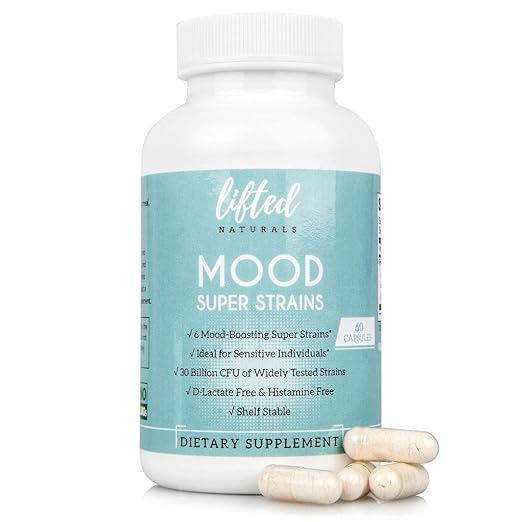
Lifted Naturals Bifidus Mood Super Strains

This contains the same bifiobacteriums PLUS B. Breve and LGG.

Ingredients

L. rhamnosus (GG), B. longum, B. bifidum, B. lactis, B. breve, B. infantis

Bottom Line

In general, I do not recommend combinations probiotics because each species/strains has different impacts making the net effect fuzzy. Finding a reasonable replacement for the combination that helped this person is possible. My number 1 choice would be:

D-Lactate Free Probiotic Powder

Then Bifidus Mood Super Strains