Noise Sensitivity and the Gut

Another interesting article showed up from AI detecting atypical articles on PubMed. I strongly suspect that this applies to noise sensitive individuals (
Hyperacusis). There are no studies on Hyperacusis microbiome

Effects of chronic noise on glucose metabolism and gut microbiota-host inflammatory homeostasis in rats. [2016]

 Chronic noise exposure increased blood glucose and corticosterone levels for at least 14 days after cessation of noise. Stressed rats also exhibited elevated levels of glycogen and triglyceride in the liver and impaired hepatic insulin production via insulin-induced insulin receptor/insulin receptor substrate 1/glycogen synthase kinase 3β signalling, which persisted for 3-14 days after cessation of noise exposure. Chronic noise altered the percentage of Proteobacteria and Actinobacteria in the gut, increasing Roseburia but decreasing Faecalibacterium levels in the cecum relative to controls. Immunoglobulin A, interleukin 1β, and tumor necrosis factor α levels were also elevated in the intestine of these animals, corresponding to noise-induced abnormalities in glucose regulation and insulin sensitivity. These results suggest that lifelong environmental noise exposure could have cumulative effects on diabetes onset and development resulting from alterations in gut microbiota composition and intestinal inflammation.

Effects of chronic noise on glucose metabolism and gut microbiota-host inflammatory homeostasis in rats. [2016]

Human Studies

 IL-12 levels increased, whereas the NKT cell population decreased with increasing noise levels. The results further suggested that cortisol levels are more influenced by the subject’s sensitivity to noise than to the level of chronic road traffic noise. Therefore, noise appears to have the largest effect on IL-12 levels as well as the population and activity of NKT cells. In conclusion, our results suggest that low-level road traffic noise and sensitivity to noise can affect health by causing changes in the immune response through mechanisms other than increased cortisol.

Effects of self-reported sensitivity and road-traffic noise levels on the immune system. [2017]

Exposure to noise in work environment increases the incidence of tension and inappropriate behavior associated with aggression. Controlling noise through use of protective equipment might reduce the deleterious effects of noise on workers.

Effect of Chronic Noise Exposure on Aggressive Behavior of Automotive Industry Workers. [2018]

Note that hypertension(high blood pressure) is associated with these microbiome shifts

Bottom Line

I suspect there is a feedback cycle between the microbiome and
hyperacusis.

Looking at contributed samples that reported hyperacusis (some 73!), we see some significant patterns;

We do not know if the shifts caused the hyperacusis OR the hyperacusis caused the shifts OR there was a feedback cycle between the two,

How much vitamin D should you take for a healthy microbiome?

The last post, we found that research had found the vitamin D was the key component for a cascade that influenced B Vitamins, sleep and some digestive issues. This post will try to address the issue of vitamin D dosage.

On my old web site, I had done several posts on Vitamin D (from 2005-2006) – with links to PubMed articles.

In this post, I will jump to the bottom line fast (if you want more detail, see above).

Target Level

  • “The patients with optimal vitamin D status [25(OH)D ≥75 nmol/l]  ” [2016]
  • “Serum iPTH held a stable plateau level at 36 pg/ml as long as serum 25(OH)D values were higher than 78 nmol/l (31 ng/ml), but increased when the serum 25(OH)D value fell below this. ” [1997]
  • “Evidence is reviewed that shows that serum 25(OH)D3 concentrations of < 80 nmol/L are associated with reduced calcium absorption, osteoporosis, and increased fracture risk.” [2004]
  • In my posts from a decade ago, I created this chart using an image from an article from [2004]
Functional indices of vitamin D status and ramifications of vitamin D deficiency.

My suggested target level is 120 nmol/l. 50% above the level that issues start.

How much to take?

This is easy if you know your current level due to a chart from 2004,


Connie M Weaver and James C Fleet, Vitamin D requirements: current and future  
Am J Clin Nutr 2004;80(suppl):1735S–9S

Find the best match in the chart. I will take the high lighted one:

  • Actual reading: 66 nmol/l
  • Chart target: 80 nmol/l
  • Difference: 14 nmol/l
  • Amount to take: 1371 IU
  • So: 1371 IU/14 = 100 IU for each number below. Since our goal is 120 nmol/l, (120-66) * 100 = 5,400 IU/day

A reader indicated their level was 18 nmol/l. this becomes (120-18) * 100 = 12,000 IU/day.

Bottom Line

The numbers above are from the literature assuming no complicating factors such as those listed below. 

In these cases the dosages may need to be up to 10x more.

Any process resulting in malabsorption of intestinal fat may impair the absorption of vitamin D. In one study, absorption of tritium-labeled (3H)-vitamin D in normal subjects ranged from 62.4% to 91.3% of the initial oral dose (10). In patients with celiac disease, biliary obstruction absorption and chronic pancreatitis, absorption fell to 50%, < 28% and < 18% of the oral dose, respectively. In each case, impaired vitamin D absorption correlated with the degree of steatorrhea. Other conditions in which vitamin D absorption is impaired include liver failure (see below), cystic fibrosis, Crohn’s disease, and gastric bypass. Individuals taking bile acid-binding medications (such as colestyramine and colestipol for hypercholesterolemia) will also have impaired vitamin D absorption

Factors Influencing Vitamin D Status (2011)

The proper process is simple: Get your base line, do the computed amount above for 3 months, measure again. According to the literature you should be at the desired level by then. If you are 10% below, increase the dosage by 10%. This is the only way to estimate the degree of malabsorption.

No-D, No-B Thus Autoimmune

Another interesting article popped out of the AI selected articles:

Vitamin D deficiency changes the intestinal microbiome reducing B vitamin production in the gut. The resulting lack of pantothenic acid adversely affects the immune system, producing a “pro-inflammatory” state associated with atherosclerosis and autoimmunity. [2016]

Vitamin D blood levels of 60-80 ng/ml promote normal sleep. The present study was undertaken to explore why this beneficial effect waned after 2 years as arthritic pain increased. Pantothenic acid becomes coenzyme A, a cofactor necessary for cortisol and acetylcholine production. 1950s experiments suggested a connection between pantothenic acid deficiency, autoimmune arthritis and insomnia. The B vitamins have been shown to have an intestinal bacterial source and a food source, suggesting that the normal intestinal microbiome may have always been the primary source of B vitamins. Review of the scientific literature shows that pantothenic acid does not have a natural food source, it is supplied by the normal intestinal bacteria.

Three months of vitamin D plus B100 resulted in improved sleep, reduced pain and unexpected resolution of bowel symptoms. These results suggest that the combination of vitamin D plus B100 creates an intestinal environment that favors the return of the four specific species, Actinobacteria, Bacteroidetes, Firmicutes and Proteobacteria that make up the normal human microbiome.

This lead to some related articles (also old)

It was found that the time after which changes in vitamin levels developed as well as the intensity of changes differ, depending on the experimental model used, but the sequence of vitamin disappearance from the organism is always the same. The first to disappear were vitamins B1, followed by vitamin B6 and pantothenic acid.

Changes in the levels of certain vitamins from B group under conditions of vitamin deficiency. 1976

Bottom Line

From the above we see a cascade starting with deficient Vitamin D

  1. Reduced Vitamin D
  2. Reduced Thiamine (B1)
  3. Reduced pyridoxine (B6)
  4. Reduced Pantothenic Acid (B5)
  5. eventually reduced Cobalamin (B12)
    1. ” affect VB12 level, indirectly, by reducing 25(OH)D level in middle aged women. ” [2018]

For CFS specifically we have Ana Dorothea Hoeck’s research

Amalgams and the microbiome

Another interesting group of studies popped out of my AI search of PubMed literature. As a statistician, I see that the articles that says it was ok are old ones and from the literature it seems that different results were obtained according to sample methods. Recent studies indicate that mercury does influence the microbiome and there is an absence of contemporary studies (using modern measurement techniques) on dental amalgams to clarify the matter.

In a survey of 640 human subjects, a subgroup of 356 persons without recent exposure to antibiotics demonstrated that those with a high prevalence of Hg resistance in their intestinal floras were significantly more likely to also have resistance to two or more antibiotics….
Representative mercury-resistant isolates of three selected bacterial families (oral streptococci, members of the family Enterobacteriaceae, and enterococci) were also resistant to one or more antibiotics, including ampicillin, tetracycline, streptomycin, kanamycin, and chloramphenicol.  

Mercury released from dental “silver” fillings provokes an increase in mercury- and antibiotic-resistant bacteria in oral and intestinal floras of primates. 1993

The aim of this review is to point out the health hazards of the uncontrolled global use of implanted mercury-leaking dental amalgam fillings. In spite of the pandemic use of amalgam, most dentists and doctors are still ignorant about the levels of mercury exposure and its health implications. This review discusses the following chronically neglected aspects in clinical practice: The use of materials science in calculating the mercury exposure levels, which may exceed the TLVs by an order of magnitude; Microbial dissolution and methylation of mercury from amalgam by oral and intestinal bacteria; Diagnostic problems and effects of chronic mercury exposure with emphasis on intestinal, cardiovascular, mental and neurologic symptoms and disorders; Diagnostic value of faeces–instead of urine examination–as the main indicator of Hg exposure; Lack of control groups unexposed to Hg (amalgam free) for epidemiologic investigations of health problems; Contribution of dental mercury to environmental pollution. In conclusion, a lack of interdisciplinary research and of a critical approach to established clinical routine appears to be the reason for the failure of the dental profession to protect the patient from Hg exposure when saving the tooth.

Dental mercury–a public health hazard. [1994]

The group exposed to dental amalgam (n = 92) had 13 times more mercury in feces than the group that had never been exposed to amalgam (n = 43) and the group whose amalgam fillings had been removed (n = 56). No significant differences in either mercury resistance or antibiotic resistance in the fecal aerobic gram-negative flora of these subject groups were seen.

Antimicrobial and mercury resistance in aerobic gram-negative bacilli in fecal flora among persons with and without dental amalgam fillings. 1995

The results of this study show that there was no significant difference between children with amalgam fillings and those without such fillings with regard to the prevalence, or the proportion, of Hg-resistant bacteria in their oral microflora.

Prevalence and antibiotic resistance profile of mercury-resistant oral bacteria from children with and without mercury amalgam fillings. 2002

 A significant correlation between the prevalence of mercury resistance and multiple antimicrobial resistance in intestinal bacterial strains was observed.

Resistance of the normal human microflora to mercury and antimicrobials after exposure to mercury from dental amalgam fillings. 1996

According to the conclusions of independent evaluations from different state health agencies, the release of mercury from dental amalgam does not present any non-acceptable risk to the general population.

Resistance of the normal human microflora to mercury and antimicrobials after exposure to mercury from dental amalgam filling 1998

the Cu group (CCu group), the Hg group (CHg group), and the Cu + Hg group (CCH group). …Furthermore, compared to the control group, the abundance of bacteria genera Rikenella, Jeotgailcoccus, and Staphylococcus were significantly decreased, whereas the bacteria genus Corynebacterium was significantly increased in the CCu group. The abundance of bacteria genera of Sporosarcina, Jeotgailcoccus, and Staphylococcus were significantly decreased in the CHg group and CCH group. The bacteria genus Anaeroplasma was significantly increased in the CCH group. The results indicated that high doses of Cu and Hg caused histopathological lesions and changed the diversity of microbiota in the cecum of female mice, which provide a theoretical basis for more accurate assessment of the risk in intestinal diseases caused by Cu and Hg.

High Doses of Copper and Mercury Changed Cecal Microbiota in Female Mice. 2018

“Redundancy analysis showed that arsenic and mercury were significantly associated with Parabacteroides and Oscillospira in the gut. ” 2019

Genuine Health Probiotics – a Review

My last review was a thumbs down for a poorly presented probiotic. In this review I want to show what a well presented probiotic looks like. I cam across this one from a demo at my local food co-op and was delighted to read the label. Their direct web-site is here

Let us look at some of the labels on 5 of their products:


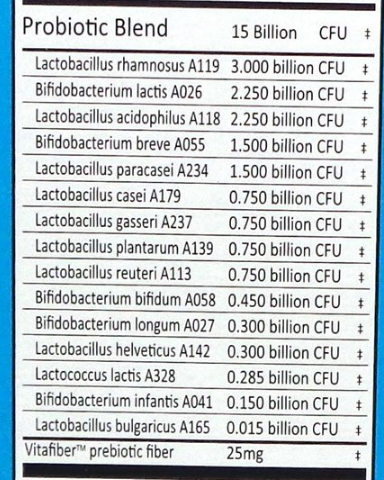
Genuine Health Gut Health Probiotic, 15 Billion by Genuine Health

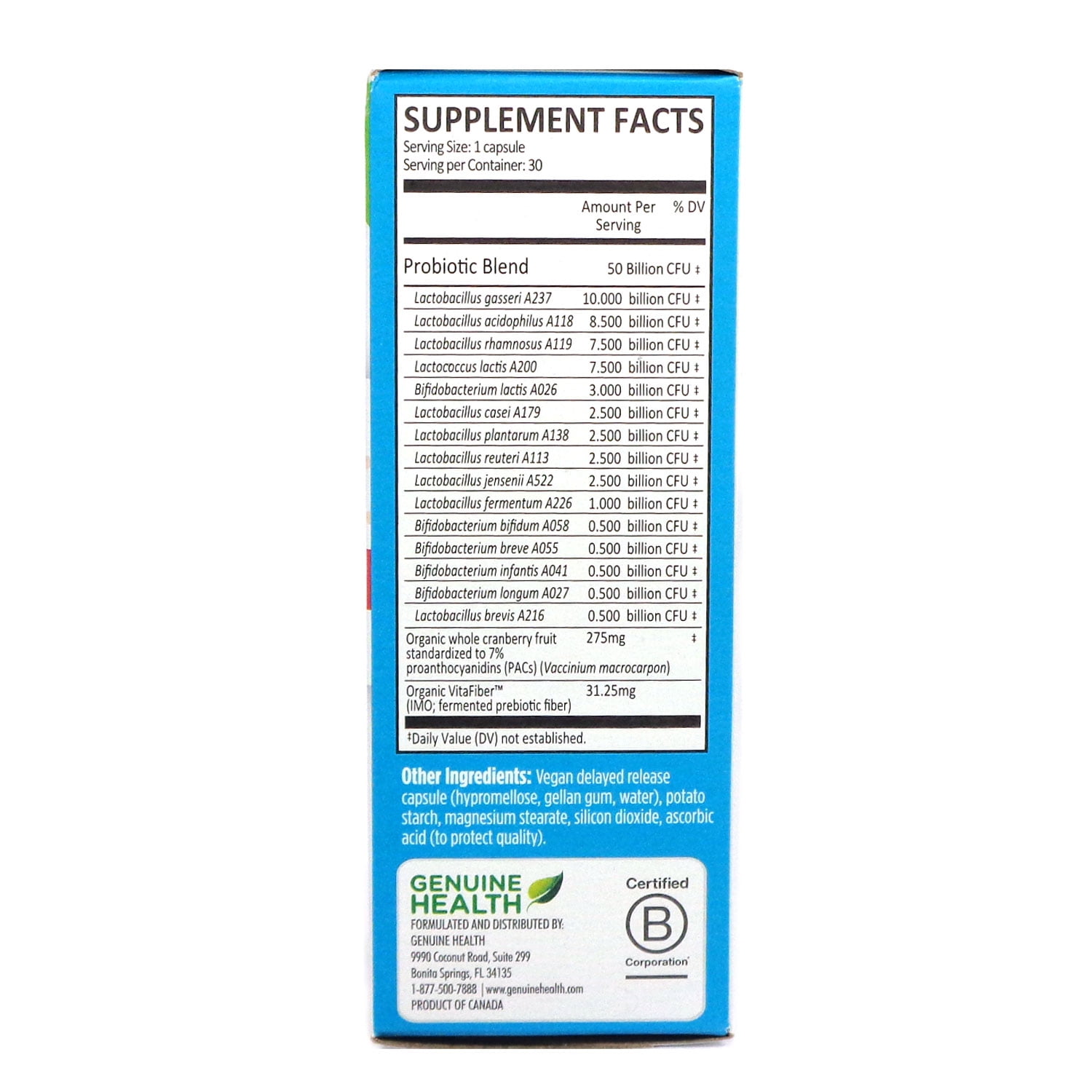
GENUINE HEALTH Gut Health Advanced 50B,

Genuine Health Gut Health Probiotic, Women’s Mood 

The Sweet one!


Genuine Health Women’s Advanced Gut Health Proboitic UTI By Genuine Health 

Why do I say “sweet” — because it has some very rare species to see in any probiotic:

  • Lactobacillus Jensenii
  • Lactobacillus Fermentum

Origin – Animal, human or environment?

That’s why we use coded strains in advanced gut health probiotic. The strains that we use are 100% human strains, are non-GMO, and do not come from animals.

GenuineHealth site

Likely the same source as NovaProbiotics

While looking for information on these strains, I found this page with many of the same strains listed. this site states:


Each bacterial strain part of our collection was isolated, identified and purified after one-time collection either from meconium, placenta or a healthy human subject. The strains were obtained two decades ago and have been naturally replicating in the laboratory ever since, periodically undergoing numerous tests to assure the bacteria are healthy and maintain their positive characteristics.

NovaProbiotics.com
NovaProbiotics.com

Nova Probiotics appears to be a Canadian firm based in Quebec.

What do we have for actual published research?

It is always a good win when you see all of the species and their relative amounts listed. The icing on the cake would be research for these specific strains… At the moment, I have not found such — I have emailed Nova Probiotics asking if any studies are available.

Bottom Line

For a probiotic mixture, I would give this one a big thumbs up — for the following reasons:

  • All of the probiotics are human sourced
  • All of the strains listed
  • The amount of each strain is listed
  • There appears to have been actual studies, as shown on this page.
  • The issue may be one of the studies not being published formally.