

Quick review of the numbers for my various components.
Blog continues to grow in Readership

Facebook Page over last 28 days

Microbiome Site


Bottom Line
77K (21%) to http://microbiomeprescription.com/
282K (79%) to this Blog site
Quick review of the numbers for my various components.
77K (21%) to http://microbiomeprescription.com/
282K (79%) to this Blog site
A reader asked me about this probiotic. It is unusual because it contains some species not seen in other probiotics.

This looks like an impressive list of atypical species.
My impression after finding that most of these are used in brewing, wine making, sausage making — etc. Is that someone decided to toss a stack of commercial products used in food production to make a nice sounding product.
My challenge to the manufacturer (or their representatives) is to provide pubmed citations for each and every species cited above showing they have medical benefit. It they are unable, then the hypothesis that this is not a health-orientated engineered product but a marketing-to-the-masses marketing product, appears probable.
A year end review of recent literature and findings on pubmed. Oral Fecal Matter Transplants have been practised by canines forever (as every dog owner knows), evidence suggests (once various safety and regulatory issues are resolved) that it may be far superior to probiotics.
The advent of these applications for MTs poses challenges for regulatory bodies. The transplanted material is not a “typical” drug, and thus may not be appropriate for the drug regulatory pathway. The material consists of a community of highly dynamic, metabolically active organisms (9). Many of the transferred organisms are challenging to culture in vitro, and it is difficult to test their effectiveness in animals (9). Each batch of “product” is different, making characterization of the transplanted material problematic.
Improving regulation of microbiota transplants.
In this first article, the shift in the type of bile acid in significant.
A consistent metabolic signature was identified in the post-transplant microbiota, with reduced primary bile acids and substantial restoration of secondary bile acid production capacity. Total Fatty Acid (FA) levels were unchanged but the ratio of inflammatory to non-inflammatory FAs decreased.
Changes in microbiota composition, bile and fatty acid metabolism, in successful faecal microbiota transplantation for Clostridioides difficile infectio
Implication to how donor diets should be modified.
we show that obese mice receiving FMTs from healthy resveratrol-fed mice have improved glucose homeostasis within 11 days of the first transplant, and that resveratrol-FMTs is more efficacious than oral supplementation of resveratrol for the same duration.
Fecal transplant from resveratrol-fed donors improves glycaemia and cardiovascular features of the metabolic syndrome in mic
Two cancer patients were successfully treated with fecal microbiota transplants (FMTs) for colitis caused by immunotherapy, according to a case report published today (November 12) in Nature Medicine. Both patients accepted donors’ gut microbiomes following the procedure and their symptoms cleared up within weeks.
A case study of two patients with advanced cancer shows it might be possible to avoid a common and severe side effect of immunotherapy treatment.
Previous work has suggested that people whose transplanted organs get rejected tend to have certain bacteria in their gut. But though bacteria causing the rejection is one explanation, so is the reverse – that rejection encourages growth of the bacteria.
Faecal swaps could help stop heart transplants from being rejected
A single treatment using an optimized, targeted form of faecal microbiota transplantation (FMT) produces sustained clinical and cognitive improvements, according to the results of a long-term follow-up of patients with liver cirrhosis and hepatic encephalopathy (HE) who had participated in a short-term study.
Fecal microbiota transplantation produces sustained improvements in cognitive and clinical outcomes
IBS
Fecal microbiota transplantation improved symptoms in patients with refractory irritable bowel syndrome with severe abdominal bloating, according to research presented here.
Fecal transplant improves refractory IBS with abdominal bloating
Fecal microbiota transplantation altered the gut microbiota of patients with irritable bowel syndrome, but it was not superior to placebo for improving symptoms in a study presented at Digestive Disease Week.
Fecal transplant alters gut microbiome in IBS patients
In the study of 18 children with autism and moderate to severe gastrointestinal problems, parents and doctors said they saw positive changes that lasted at least eight weeks after the treatment. Children without autism were included for comparison of bacterial and viral gut composition prior to the study.
Autism symptoms improve after fecal transplant, small study finds

Full Disclosure: I have talked to people who have done DYI oral FTMT (DYIOFMT ???) with positive results. These individuals were very intelligent, aware of risks and issues, and do near-professional due-diligence.
It’s year end and I thought a review of the last articles in 2018 on PubMed would be a good way to see out the year.
When seemingly disparate biomedical findings on ME/CFS are interpreted through the lens of these microbiome-based paradigms and platforms, a cohesive picture of the ME/CFS disease process emerges. ME/CFS may be driven by pathogen-induced dysfunction, with resulting microbiome dysbiosis varying based on a patient’s unique infectious and environmental history.
It is subsequently important to consider that the microbiome may contribute to host blood pressure regulation. Pluznick et al. (69) found that gut microbiome-derived Short Chain Fatty Acids such as acetate and propionate travel to the kidneys and blood vessels. There they impacted activity of Olfr78 and Gpr41, two host receptors that control circulation and blood flow.
Several research teams have tied ME/CFS to bacterial gut microbiome dysbiosis.
Composition of the blood metabolome has also been shown to shift in ME/CFS. One such study reported elevated plasma levels of choline, carnitine, and complex lipid metabolites in ME/CFS patients (84).
Myalgic Encephalomyelitis/Chronic Fatigue Syndrome in the Era of the Human Microbiome: Persistent Pathogens Drive Chronic Symptoms by Interfering With Host Metabolism, Gene Expression, and Immunity.
This is a constantly moving target.
Chronic fatigue syndrome (CFS), introduced in 1988 and re-specified in 1994, is defined as (unexplained) chronic fatigue accompanied by at least four out of eight listed (ill-defined) symptoms.
The diagnosis of ME requires only two type of symptoms (post-exertional muscle weakness and neurological dysfunction), but a patient has to experience at least eight symptoms to meet the diagnosis according to the ME-ICC.
Myalgic Encephalomyelitis or What? The International Consensus Criteria.
IMHO, the mind set of researchers tend to be towards finding a singleton pattern (one causing bacteria, one causing virus in the past) and as we see in this review, one pattern of microbiome shifts. My view is that each symptom is likely connected to a pattern of metabolite shifts. Similar shifts can occur with different bacteria shifts.
Differences were reported in each study; however, only three were considered statistically significant, and the findings across all studies were inconsistent.
A systematic review of enteric dysbiosis in chronic fatigue syndrome/myalgic encephalomyelitis.
Quick list of current deficiencies accepted for CFS. Some symptoms may be moderated by therapeutic levels of supplements. See this post.
Also, some nutrient deficiencies (vitamin C, vitamin B complex, sodium, magnesium, zinc, folic acid, l-carnitine, l-tryptophan, essential fatty acids, and coenzyme Q10) appear to be important in the severity and exacerbation of CFS symptoms.
Chronic fatigue syndrome (CFS): Suggestions for a nutritional treatment in the therapeutic approach.
This is a continuation of Dr. David Bell’s 1998 work
Adults with ME/CFS had a significantly lower blood volume if they had a clinical suspicion of orthostatic intolerance (OI) compared to those without a clinical suspicion of OI, as well as a significantly lower blood volume compared to the expected value.
Blood Volume Status in ME/CFS Correlates With the Presence or Absence of Orthostatic Symptoms: Preliminary Results.
For more information on brain scans, see this post.
In the ME/CFS patients, we observed significant FA decreases in the genu of the corpus callosum and the anterior limb of the right internal capsule (P < 0.05), there were also significant MK decreases in the right frontal area, anterior cingulate gyrus, superior longitudinal fasciculus (SLF), and left parietal area (P < 0.05). Significant NDI decreases were observed in the right posterior cingulate gyrus, SLF, and left frontal area of the ME/CFS patients (P < 0.05). Significant ODI decreases were seen in the bilateral occipital areas, right superior temporal gyrus, the anterior limb of internal capsule, and the posterior cingulate gyrus (P < 0.05), and significant ODI increases were revealed in the bilateral occipital and right temporal areas (P < 0.05).
Brain abnormalities in myalgic encephalomyelitis/chronic fatigue syndrome: Evaluation by diffusional kurtosis imaging and neurite orientation dispersion and density imaging
Regional cerebral blood flow and glucose utilization rates are decreased in patients with ME/CFS as compared with age- and sex-matched healthy subjects. Acetyl-L-carnitine uptake into the releasable pool of glutamate and serotonin transporters densities are decreased in a few specific brain regions, mostly in the anterior cingulate in the patients. Our recent PET study successfully demonstrated that neuroinflammation is present in widespread brain areas in ME/CFS patients, and is associated with the severity of neuropsychological symptoms.
[Brain Science on Myalgic Encephalomyelitis/Chronic Fatigue Syndrome]
On Facebook, the following was asked:
My daughter took a stomach acid test with bicarbonate. She burped after 51 seconds. If you burp after 1 to 2 minutes, it means that you have normal stomach acid. So my question is. Her doctor still wants her to take butyric acid (Butycap). The doctor says it does not matter that my daughter has normal stomach acid. He said Butyric acid is important for intestinal health and is recognized as the main source of energy for the colon epithelium or intestinal barrier or intestinal mucosa, the epithelial cells that make up the thin layer of a mucous membrane covering the intestinal surface. But I am afraid it could be too much stomach acid? Isn’t it that everything should be in balance?
This type of test is common in alternative medicine (and some traditional MDs). A good example is given here. The key factor is that you appear to be testing HCl (hydrochloric acid)
A long time ago, I taught some chemistry courses at Vancouver City College in B.C. Canada. Some acids will not react to bicarbonate. Consider
Acetylsalicylic acid (commonly known as Aspirin!!) or even vinegar, it will react but at a different speed — that is the key: speed of reaction. This can be influence by temperature and other factors.

Gastric acid, gastric juice or stomach acid, is a digestive fluid formed in the stomach and is composed of hydrochloric acid (HCl), potassium chloride (KCl) and sodium chloride (NaCl).
https://en.wikipedia.org/wiki/Gastric_acid
For benefits see: Butyric acid – a well-known molecule revisited [2017]
The species of bacteria involved in the production of butyrate are Clostridium spp,Eubacterium spp., Fusobacterium spp., Butyrivibrio spp., Megasphaera elsdenii, Mitsuokella multiacida, Roseburia intestinalis, Faecalibacterium prausnitzii and Eubacterium hallii [18]. Recently, an increased intake of highly processed, low-fibre food products rich in simple sugars has been observed, resulting in low levels of butyrate production in the intestinal lumen.
Butyric acid in irritable bowel syndrome [2013]
Buying capsules is always one solution, but often an expensive path,
Butter contains significant amounts of butyric acid (a low molecular weight fatty acid) which is volatile and makes a significant contribution to the flavour of the fat.
Stanley P. Cauvain, in Baking Problems Solved (Second Edition), 2017
Butter contains 290 mg of butyric acid for 10 grams (1/3 of a oz – or 1/48th of a pound of butter). For a fuller food list see this page. 1 lb of butter = 290 * 48 = 13.9 gram. Using France’s cost this amounts to 0.20 Euro per gram of butyric acid
For the supplement path, let us look at this item selling for 40 Euros for 30 sachets containing 787mg each. Total 23.6 grams or 1.69 Euro per gram
of butyric acid .
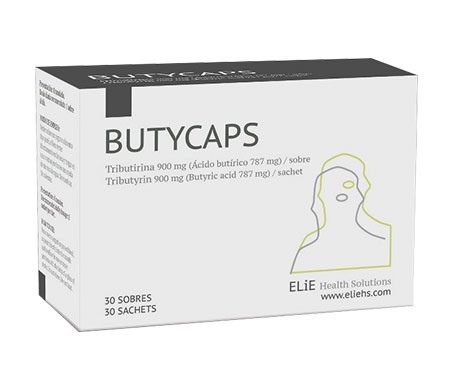
Taking butyric acid will not impact stomach acid. As with all supplements, a little research can reduce you supplement coasts by a factor of 10 often (as also seen in my last post).
 CFS Remission