N-Acetyl-Cysteine (NAC) – Recap

Back in 2001, it was speculated that ” the dietary supplements glutathione, N-acetylcysteine, alpha-lipoic acid, oligomeric proanthocyanidins, Ginkgo biloba, and Vaccinium myrtillus (bilberry) may be beneficial [for CFS].” [2001] This suggestion is repeated 6 years later – “It is suggested that CFS patients should be treated with antioxidants, which inhibit the production of NFkappabeta, such as curcumin, N-Acetyl-Cysteine, quercitin, silimarin, lipoic acid and omega-3 fatty acids.” [2007].

Positive results were obtained from combined use of ” glutamine, N-acetyl cysteine and zinc… A good clinical response is significantly predicted by attenuated IgA and IgM responses to LPS, the younger age of the patients, and a shorter duration of illness (< 5 years).” in [2008]. Similar mixtures of “L-carnitine, coenzyme Q10, taurine + lipoic acid, with or without curcumine + quercitine or N-acetyl-cysteine, zinc + glutamine” study ended up with the need to do proper controlled studies.. [2014]


Well, some 16 years after it was suggested, we do not find actual studies! So, let us see what we find using our model…

  • Antibacterial effects of N-acetylcysteine against endodontic pathogens[2016].
    • “we conclude that NAC has excellent antibacterial and antibiofilm efficacy against endodontic pathogens”
  • “An increase (P < 0.05) in gut Lactobacillus and Bifidobacterium, accompanied with a decrease (P < 0.05) in Escherichia coli counts, was also observed in the NAC group.” [2014]
  • ” NAC appears to be a promising, non-antibiotic alternative to prevent biofilm-associated infections.” [2017]
  • “N-acetylcysteine (NAC) enhances the release of histamine” [1991]

Bottom Line

When you take NAC, one half of it will be out of your body in 6 hours [5.6 hrs half life]. If you take it once per day, the amount left before you take it again is just 1/16 (8%) of when you took it. I would suggest taking NAC  every 8 hours to get the maximum benefit.

It definitely have benefits when taken with anti-infection herbs and some probiotics. If you have histamine issues, you may wish to take care.
 

Oregano: Benefits

Oregano is a herb  have been used in folk medicine since ancient times, including by Hippocrates.[15][16][17]

Survey results have found positive benefits for readers of this blog (71% improved).

  • “the most susceptible strains to Origanum vulgare L. essential oil were: E. coli 1 , E. coli 2 , S. aureus 3 and C. albicans1-3 . Inhibition of C. albicans filamentation was detected at 0.45 μl ml-1″ [2017]
  • Antimicrobial activity of Basil, Oregano and Thyme essential oils[2016].
    • “The oregano oil antimicrobial effect is accredited to carvacrol and thymol, while its antimicrobial spectrum is broad including bacteria (methicillin-resistant S.aureus, Listeria innocua, L. monocytogenes, A.baumannii, K. pneumoniae, Citrobacter freundii, S. enteritidis, S. typhimurium, E. coli, E. coli O157:H7, P. vulgaris, P. aeruginosa, P. fluorescens, Y. enterocolitica, Bacillus subtilis, B. cereus, Serratia liquefaciens, Lactobacillus carvatus, Lactobacillus sakes), fungi (Aspergillus spp. Candida spp.) and parasites (Blastocystishominis, Entamoeba hartmanni, Endolimax nana).”
  • “In the ileum, the Oregano group did not exhibit the sharp decline (p < 0.001) in the lactic acid bacteria population observed in the other two experimental groups.” So lactic acid friendly!
  • ” No negative effect on growth or metabolic activity of lactic acid bacteria Streptococcus thermophilus CRL 728 and CRL 813, Lactobacillus delbrueckii subsp. bulgaricus CRL 656 and CRL 468, and Lactococcus lactis subsp. lactis CRL 597 up to the maximum concentration (200μg/g) assayed was observed. ” [2016]

No studies could be located for IBS/FM/CFS.

Oregano Oil

  • Oregano oil exhibited the highest antibacterial activity followed by manuka and thyme oils…The results obtained in this study highlight that exposure to sub-inhibitory concentration of EO modifies strains enterotoxins production and EOs susceptibility profile.” [2017]
  • “Results showed that protein, pH, aw, presence of beef extract, sodium lactate and nitrates did not influence their antimicrobial effect. In contrast, the presence of pork fat had a negative effect against both [Garlic and Oregano] Essential Oils associated with their dilution of the lipid content.  The addition of food phosphates also exerts a negative effect against EOs ” [2017]

Bottom Line

This is a very easy herb to obtain any where in the world. 454 gm of ground organic oregano cost $15 on Amazon. There is no dosage information available, but I suspect 8 “00” capsules a day is fine. Based on what bacteria is effective against and readers’ experience, it is definitely recommended.


Resveratrol Recap

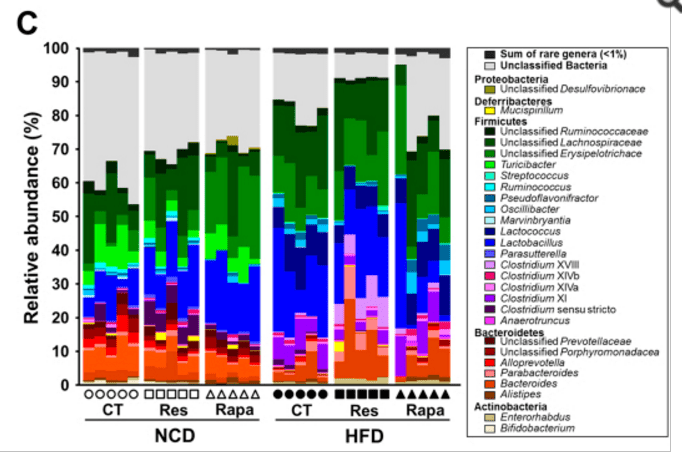
My last post lead me to discover that resveratrol (RES) impacts the microbiome as shown in the diagram below. In particular, reduced unclassified bacteria.  I had cover this in

rapa

Resveratol and the Microbiome

  • “Cell extract of B. infantis showed the highest effect on the deglycosylation of piceid to resveratrol, already after 30 min.” [2016 Full Text] – in other words, this occurs naturally but with decreased bifidobacterium, the natural levels may be reduced.
    • “Out of 13 bacterial strains tested, Lactobacillus kimchi JB301 could completely convert polydatin into resveratrol.” [2014]
  • “Resveratrol improves the gut microbiota dysbiosis induced by the HF diet, including increasing the Bacteroidetes-to-Firmicutes ratios, significantly inhibiting the growth of Enterococcus faecalis, and increasing the growth of Lactobacillus and Bifidobacterium.” [2014]
  • resveratrol showed strong potential as antibiotic alternatives for reversing the adverse effects of weaning stress on growth performance, immunity and microbial environment in E. coli and Salmonella-challenged piglets.” [2013]
  • “shows that the intake of polyphenols contained in natural sources, such as hydroxytyrosol, tyrosol, oleuropein (olives), naringin and hesperidin (Citrus fruits), resveratrol, procyanidins or oligomeric procyanidin (grapes or grape seed extracts), (-)-epigallocatechin gallate (green tea) and quercetin (grapes, green tea) etc., are able to modulate chronic inflammatory diseases, such as type 2 diabetes, rheumatoid arthritis, inflammatory bowel disease,” [2011]
  • Resveratrol increased lactobacilli and bifidobacteria as well as diminished the increase of enterobacteria upon DSS treatment. Resveratrol significantly protected the colonic mucosa architecture, reduced body weight loss, diminished the induced anemia and reduced systemic inflammation markers, colonic mucosa prostaglandin E(2), cycloxygenase-2, prostaglandin E synthase and nitric oxide levels. In addition, the expression of 2,655 genes in distal colon mucosa related to important pathways was varied. These results reinforce the concept of resveratrol as a dietary beneficial compound in intestinal inflammation at doses possibly attainable with resveratrol-enriched nutraceuticals.” [2009]

Microbiome related changes

  • “The bioavailability of resveratrol is highly influenced by several factors such as the food matrix” [2012]
  • “Resveratrol treatment of mice with established heart failure (HF) enhances exercise performance, which is associated with alterations in whole body and skeletal muscle energy metabolism. Overall, our pre-clinical data suggest that resveratrol supplementation may effectively improve fatigue and exercise intolerance in HF patients.” [2017]
  • ” Therapeutical interventions that aim to increase Glutathione concentrations in vivo include N-acetyl cysteine (NAC); Nrf-2 activation via hyperbaric oxygen therapy; dimethyl fumarate; phytochemicals, including curcumin, resveratrol, and cinnamon; and folate supplementation.” [2014]
    • NAC – Improves 59% of CFS patients after 10-14 months (2008)
  • ” our data provide evidences that the intake of resveratrol associated with rice bran oil plays antinociceptive and antidepressant actions probably through reducing reactive species and suggests the involvement of oxidative stress in this model of fibromyalgia as possible underlying mechanism of pathogenesis of the disease.” [2016]
  • Resveratrol improves hippocampal atrophy in chronic fatigue mice by enhancing neurogenesis and inhibiting apoptosis of granular cells [2011].
  • “In conclusion, our study showed that hyper-anxiety associated with prediabetic condition is ameliorated[reduced] by resveratrol [grape seed extract] through modulation of sirtuins,”[2016]

Bottom Line

Resveratrol is strongly recommended to be part of your daily supplements. There is no apparent need to rotate (since it is naturally occurring in the body) if you are using an extract. If you are obtaining it from Japanese Knotweed Rhizome and other herbs and spices high in it, you should rotate — because other anti-infection substances in the mixture may become ineffectual over time. My preference (based on some studies) is to obtain things from the natural source and not to use refined extracts — there is often many substances that perform a helping hand to the active(studied) ingredient.

Given this update of information, I would be inclined to suggest around 1000 mg/day of resveratrol . Of course, this should be reviewed and discussed with your knowledgable medical professional.

Costs for 1000 mg using Amazon.com

  • 64-70 cents  (Not organic)  “Resveratrol”
  • 6-10 cents  Nature Restore Organic Japanese Knotweed Powder (buying in 250 grams – 1 lb bulk)

  • 30  cents grape seed extract (bottled),  7 cents as bulk


Macrolide: Sirolimus – a gut altering antifungal

A reader wrote:

I just started experimenting with Sirolimus.  Besides being an immune suppressor and life extender it also a very potent antifungal, more so than  Diflucan.  Just used 1mg, got the worst Herx ever , very high inflammation.   Did not expect that, was hoping more for a lessening of autoimmunity, which is more common.   Did not know I had such a high Candida load.  I was looking at the readout, found one Candida notation, but did not seem high enough to cause this, when you look around see what you can find that is fungal related.

Sirolimus (INN/USAN), also known as rapamycin, is a macrolide compound” [wikipedia]

We know the general characteristic of macrolides.. favorable shifts in the microbiome [post] and this family is also used by MDs Jadin and Botelo in their protocols for  CFS and other related conditions. As with strains with probiotics, each member of a antibiotic family has it’s own characteristics.

Sirolimus is well studies (18K articles on pubmed)

  • “a large number of small molecules such as farnesol, fatty acids, rapamycin, geldanamycin, histone deacetylase inhibitors, and cell cycle inhibitors have been reported to modulate the yeast-to-hypha transition in C. albicans.” [2011, Full Text]
    • “Rapamycin, a hydrophobic macrolide produced as a secondary metabolite by the soil bacterium Streptomyces hygroscopicus, was initially discovered as an antifungal agent against C. albicans (139).”
  • “Rapamycin markedly prolonged lifespan and health span in cancer- and infection-prone mice supporting disease mitigation as a mechanism for mTOR suppression-mediated longevity extension. It modestly altered gut metagenomes,” [2015]
  • Chronic Repression of mTOR Complex 2 Induces Changes in the Gut Microbiota of Diet-induced Obese Mice[2016]. [Full Text]
    • ” the abundance of unclassified Marinilabiliaceae and Turicibacter decreased in response to .. rapamycin (mTOR).”
    • “Mechanistic target of rapamycin (mTOR) is a central regulator of energy storage and consumption, and is implicated in deleterious states such as cancer, metabolic diseases and ageing17. Because over-activation of mTOR complex 1 (mTORC1) signaling by excessive energy intake plays a crucial role in metabolic disorders17,”
    • “rapamycin changed the relative abundances of Turicibacter, unclassified Marinilabiliaceae, Alloprevotella, unclassified Porphyromonadaceae, Ruminococcus, Bifidobacterium, Marvinbryantia, Ruminococcus (Lachnospiraceae), Helicobacter, and Coprobacillus to those observed in HFD-fed mice”

      rapa

    • In charts above Res is resveratrol (grape seed extract)

Bottom Line

The reader’s observations appear to be spot on. There is evidence that it increases Lacobacillus and reduces unclassified bacteria (with a non-high fat diet). It is an antifungal. The drug is extracted from a bacteria that one day may be available as a probiotic. The last study above indicate that resveratrol (non prescription) has additional functions above those usually associated with it and will be revisited on a future post.

There are no studies for CFS/IBS/FM for this drug.

Streptococcus Thermophilus

A reader asked:

“Could you tell me what you know about streptococcus thermophilus? I am Th2 overactive and have read on numerous websites that this strain should be avoided if Th2 dominant. Do you if there is any studies to show this is true?”

General Information

First, I want to know what we know about it in general. Because it is used in yogurt, a lot of studies are for it in combination with other probiotics. This means finding studies of it alone are actually rare.

  • Streptococcus thermophilus is one of the most widely used lactic acid bacteria in the dairy industry, in particular in yoghurt manufacture, where it is associated with Lactobacillus delbrueckii subsp. bulgaricus…. One of the most unpredicted results was a significant decrease of most of the transcripts and enzymes involved in purine biosynthesis. Interestingly, the expression of nearly all genes potentially encoding iron transporters of S. thermophilus decreased, … suggesting a reduction in the intracellular iron concentration, probably in response to H(2)O(2) production by L. bulgaricus.” [2009]
    • So yogurt does not help with iron absorption….
  •  However, no significant change in the number of fecal bifidobacteria was observed in the other groups (yogurt fermented with Lactobacillus delbrueckii subsp. bulgaricus and Streptococcus thermophilus for 2 weeks, )  throughout the ingestion period. [2015]
  • Streptococcus thermophilus.. no increase in  the feces of the probiotic therapy group [2014]
  • Streptococcus salivarius ssp. thermophilus  improved flatulence [2013]
  •  a significantly higher density of LAB and C. perfringens and a significant decrease in the density of Bacteroides was observed after consumption of both types of yogurt. [2008]
    • ” In contrast, in the stool samples there was a higher relative abundance of Bacteroidetes and lower abundance of Firmicutes observed in ME/CFS patients compared to healthy controls.” [2015] – so yogurt appears to help the microbiome of CFS patients.
  • “The results showed that the test groups (III and IV) receiving folate-rich fermented milks prepared using high-folate producing S. thermophilus strains (RD 102 and RD 104)  showed a significant increase in hemoglobin level compared with the control groups (I and II).” [2011]
    • So two specific strains does help with iron absorption (assumed to be without the typical yogurt probiotics)….

TH1/TH2

  • “S. thermophilus did not influence the balance Th1/Th2.” [2002]
  • Streptococcus thermophilus AHU1838 (FERM AP-21009), and Lactobacillus paracasei subsp. casei AHU1839 (FERM AP-21010) enhanced the secretion of Th1 cytokines such as interferon-gamma (IFN-gamma) and interleukin-12 (IL-12).” [2008]
  • “S. thermophilus was able to induce IL-12 production (Th2), while the production of IL-12 induced by other bacteria remained at a low level.”
  • “Oral administration of Streptococcus thermophilus CCFM218 (ST218) treatment revealed a strong suppressive effect on airway inflammation characterized by reduced inflammatory cell infiltration and levels of Th2 cytokines in lung tissues,” [2015]
  • “Of ten LAB extracts, four (from L. acidophilus, L. bulgaricus, L. casei, and S. thermophiles) promoted both cell proliferating and TH1 cytokine production.”[2015]

Bottom Line

It appears that whether S. thermophilus increases or decreases or has no effect on TH1 or TH2 depends on the specific strains. It appears that S. thermophilus by itself  has no impact on the microbiome. In yogurt (with other probiotics), it appears to have to shift the microbiome in a favorable way — but I need to explicitly research this and will post when this is done. Yogurt may decrease iron (and thus hemoglobin, resulting in less oxygen delivery to tissue).