Care and Feeding of E.Coli – Baking Soda

A reader forwarded to me a PubMed article about bicarbonate (for example, sodium bicarbonate aka baking soda)

E. coli requires a supply of bicarbonate/CO2 as a metabolic substrate during normal growth. It is needed not only for biosynthesis of various small molecules but also for fatty acid biosynthesis and in central metabolism. The small molecules, which include arginine, pyrimidines, and purines, can be provided as supplements and, interestingly, certain mutants limited in the production of these nutrients can be suppressed with increased levels of CO2 (8). However, the need for CO2 in central metabolism cannot be replaced with supplements. The only known supply pathway for bicarbonate is via the hydration of CO2.” [2003]

This relates to two separate items which have been reported on CFS groups to help:

  • Various breathing techniques which increases CO2 levels, and also believed to change pH (acidity of the blood)
  • The use of sodium bicarbonate (baking soda) – which some take for acid stomach.

FYI:  “in DNA, the purines adenine (A) and guanine (G) pair up with the pyrimidines thymine (T) and cytosine (C), respectively.” [Wikipedia]

Model

We do not know precisely why CFS patients have a massive drop of the E.Coli population. The initial speculation would be toxins produced by bad bacteria. The alternative explanation is that they are starved  by changes caused by other bacteria. For example arginine:

  • During onsets, I found an urge to eat peanut butter as cited in my 2013 post, a source rich in arginine.
    • “Avoid arginine” is a frequent alternative recommendation(because it may encourage the herpes virus) – possibly making CFS worst.
  • “humans, develop L-arginine deficiency, which is associated with intestinal mastocytosis, elevated levels of histamine, and enhanced intestinal permeability.” [2013] from my 2015 post on histamines
  • “Patients with PVFS(i.e. CFS) had significantly low baseline arginine-vasopressin levels when compared with healthy subjects.” [1993]
  • I could not find any studies on the impact of arginine supplementation on CFS/IBS/fibromyalgia.

You may wish to also read my earlier post on feeding E.Coli.

Baking Soda – Sodium Bicarbonate

  • “If used in excessive amounts, baking soda has the potential to cause a variety of serious metabolic abnormalities. We believe this is the first reported case of hemorrhagic encephalopathy induced by baking soda ingestion.” [2016]
  • “…IC/BPS and common comorbidities (irritable bowel syndrome, fibromyalgia, chronic fatigue syndrome, neuropathic pain, vulvodynia, and headache) Current questionnaire-based data suggests…calcium glycerophosphate and sodium bicarbonate tend to improve symptoms.” [2012]
  • “Sodium bicarbonate [SB] supplementation increased blood pH, bicarbonate and base excess prior to every trial (all p ≤ 0.001); absolute changes in pH, bicarbonate and base excess from baseline to pre-exercise were similar in all SB trials (all p > 0.05)”[2015]
  • Sodium bicarbonate supplementation increased (P < 0.05) the final pH levels and concentrations of total volatile fatty acids and LPS, as well as the proportions of acetate, propionate, isobutyrate, isovalerate and valerate, and it decreased (P < 0.05) the proportion of butyrate and the levels of lactic acid, methylamine, tryptamine, tyramine, histamine and putrescine compared with the control…. increased (P < 0.05) the bacterial diversity index compared with the control…. also decreased (P < 0.05) the relative abundance of Streptococcus and Butyrivibrio and increased (P < 0.05) the proportions of Ruminococcus, Succinivibrio and Prevotella.” [2016]

Bottom Line

Supplementation with baking soda appears to be a rational action regardless of whether or not you have acid reflux. The rationale is:

  • it shifts pH which means that it will impact the microbiome
  • it improves symptoms
  • it reduces histamine (a problem in a subset of CFS patients)
    • Taking with L-arginine, would also be rational
  • it reduces lactic acid (a problem for a major subset of CFS patients)
  • it feeds E.Coli

Note: there have been no explicit studies reported on PubMed on the use of arginine or baking soda for CFS / fibromyalgia / Irritable Bowel Syndrome. There is a positive subjective study for baking soda with a co-morbid condition.
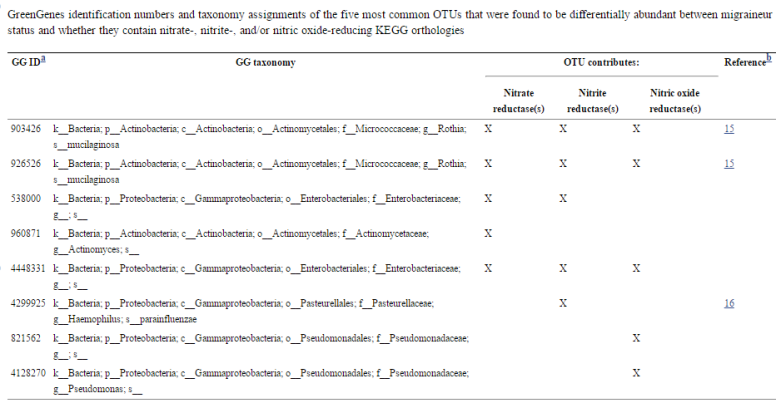
Migraine and Microbiome – Update

My last post found some specific microbiome shifts associated with acid reflux. I thought that it would be good to revisit migraines (since the microbiome is getting more and more studied).  My earlier post from a year ago is here (which includes probiotics suggestions). The amount of material is slim, but will likely increase in the next 2 years.

migraines


Helicobacter pylori and the microbiome

Helicobacter pylori is seen in 40% of migraine suffers. This hints that it may be of interest to see what type of shifts is seen with it.

  • “Within Proteobacteria, gamma- and beta-proteobacteria were the most abundant for H. pylori-negative patients, , whilst epsilon-proteobacteria was for H. pylori positive…In the H. pylori-negative patients, there was more relative abundance of Gamaproteobacteria, Betaproteobacteria, Bacteroidia and Clostridia classes ” [2016]
  • “In H. pylori-positive patients, with respect to H. pylori-negative subjects, Maldonado-Contreras et al.28 report a higher abundance of Proteobacteria, Spirochetes and Acidobacteria; and a decreased abundance of Actinobacteria, Bacteroidetes and Firmicutes.”[2015]

Acid Reflux

A reader asked about heart burn / excessive acid stomach / acid reflux / reflux esophagitis.  This is a common symptom for a subset of CFS patients.

  • “Dysbiosis, consisting of enrichment in some Gram-negative taxa (including Veillonella, Prevotella, Haemophilus, Neisseria, Campylobacter, and Fusobacterium), has been reported in association with gastroesophageal reflux disease” [2016]
  • “the study found Veillonella(19%), Prevotella (12%), Neisseria (4%), and Fusobacterium (9%) to be more prevalent in patients with reflux esophagitis and Barrett’s esophagus than in controls.” [2014]
  • “Notably, increased levels of Enterobacteriaceae were observed in the gastric fluid of oesophagitis and BE patients.” [2014]
  • “The advent of widespread antibiotic use occurred in the 1950s, preceding the surge of EA.” [2016]

Proton Pump Inhibitors

  • Common treatment like Proton Pump inhibitors “change the populations of microbes living in the intestines … PPI use makes some infections 1.5 times as likely, ” [2015 Medscape]
  • The BMJ article had a nice graphic of what PPI’s do with red indicting higher growth and blue with decrease.  For example, bifidobacteriaceae is decreased (and it was already low in CFS patients), lactobacillales is increased (increase the level of D-lactic acidosis).

acidreflux

  • “increased Enterococcaceae and Streptococcaceae, decreased Clostridiales…increased Micrococcaceae and Staphylococcaceae …an increase in genes involved in bacterial invasion.”[2015]

Possible Herb Treatments

Enterobacteriaceae is increased, but the increase appear to be for specific species. I went thru all of the above overgrowth and found a few items that appear to reduce some of them.

Possible Probiotic Treatments

  • Bifidobacterium animalis subsp lactis (B. lactis)… lower proportions of  Veillonella parvula, Capnocytophaga sputigena, Eikenella corrodens, Prevotella intermedia-like species [2016]
  • “Intake of approximately one billion live B. bifidum cells affected the relative abundance… specifically, Prevotellaceae (P = 0.041) and Prevotella (P = 0.034) were significantly decreased, whereas Ruminococcaceae (P = 0.039) and Rikenellaceae (P = 0.010) were significantly increased.” [2016]
  • BUT NOT: “L. rhamnosus GG [Culturelle] supplementation has an influence on the composition of the intestinal microbiota in children, causing an increase in the abundance of Prevotella,”
  • “L. gasseri inhibition of [Neisseria] gonococcal adherence is a multifactorial process” [2015]
  • “Lactobacillus curvatus DN317 [very specific strain] .. found to be bacteriostatic against Campylobacter jejuni ATCC 33560.”[2016]
  • BUT NOT: “L. reuteri intake correlated with increased S. oralis/S. mitis/S. mitis bv2/S. infantis group and Campylobacter concisus, Granulicatella adiacens, Bergeyella sp. HOT322, Neisseria subflava, and SR1 [G-1] sp. HOT874 detection and reduced S. mutans, S. anginosus, N. mucosa, Fusobacterium periodicum, F. nucleatum ss vincentii, and Prevotella maculosa detection. This effect had disappeared 1 month after exposure was terminated.” [2015] — unclear if it will help or hurt

Bottom Line

It appears that reflux esophagitis is caused by a bacteria shift. It was surprising to find zero studies on PubMed using probiotics to treat this condition.

IMHO, yogurt is more likely to contribute to this condition than improve it.


IBS/IBD – Recent Studies

These are some note from reviewing recent studies. I view IBS potentially cascading into IBD, UC or Crohn’s disease is some subset of patients.

  • “Findings from epidemiology studies indicate that diets high in animal fat and low in fruits and vegetables are the most common pattern associated with an increased risk of IBD. Low levels of vitamin D also appear to be a risk factor for IBD. …. Unfortunately, omega 3 supplements have not been shown to decrease the risk of relapse in patients with Crohn’s disease. … Although fiber supplements have not been definitively shown to benefit patients with IBD, soluble fiber is the best way to generate short-chain fatty acids such as butyrate, which has anti-inflammatory effects. Addition of vitamin D and curcumin [Turmeric] has been shown to increase the efficacy of IBD therapy. There is compelling evidence from animal models that emulsifiers in processed foods increase risk for IBD.” [2016]
  • “viruses, and specially bacteriophages, can play a role in controlling microbial populations in the gastrointestinal tract. This may affect both bacterial diversity and metabolism, but possible implications for IBD still remain to be solved.” [2016]

Good and Bad Bacteria

The ubiome reports earlier had a variety of unusual species. There is a lovely study on Crohn’s disease that covered a major number of families which may be of special interest to those that had their uBiome done. [2016]

goodbad.png

NOTE: the OTUID is an identifier for the family/species/strain. Thus you have different Bacteroides associated with remission and active. It is not a matter of having bacteroides or not having bacteroides, but the details of which species and strains.

  • “the Bacteroides fragilis group and other anaerobic gram-negative bacilli (AGNB) that were previously included in the Bacteroides genus but are now included in the Prevotella and Porphyromonas genera….Infections due to AGNB are common, yet the specific identification of AGNB in these infections is difficult… are resistant to penicillins… AGNB promote infection through synergy with their aerobic and anaerobic counterparts and with each other….The B fragilis group is almost uniformly susceptible to metronidazole, carbapenems, chloramphenicol, and combinations of a penicillin and beta-lactamase inhibitors.” [2016]


  • “Anti-Saccharomyces cerevisiae antibodies (ASCA) of all IgG subclasses and anti-B. fragilis IgG1 levels were increased in CD patients compared to UC patients and controls.” [2016] Note: B. fragilis was high for active disease above, Saccharomyces is a yeast (brewer yeast)
  • “Compared to patients in remission, patients with active IBD had lower abundance of Clostridium coccoides (MD = -0.49, 95% CI: -0.79 to -0.19), Clostridium leptum (MD = -0.44, 95% CI: -0.74 to -0.14), Faecalibacterium prausnitzii (MD = -0.81, 95% CI: -1.23 to -0.39) and Bifidobacterium (MD = -0.37, 95% CI: -0.56 to -0.17). Subgroup analyses showed a difference in all four bacteria between patients with UC classified as active or in remission. Patients with active CD had fewer C. leptum, F. prausnitzii and Bifidobacterium, but not C. coccoides.” [2016]

Coffee and the Microbiome

In fairness, I should disclose that I do work for Starbucks….

I thought it was time that I look at coffee. Typical alternative medicine recommendation are no coffee, lots of yogurt containing Lactobacillus Acidophilus. I know that the latter is wrong advice for CFS/IBS. What about the former — coffee?

  • “The results showed a direct association between the intake of red wine, a source of stilbenes, and the relative abundance of Bacteroides, and between the intake of coffee, rich in phenolic acids, and the abundance of Clostridium, Lactococcus and Lactobacillus genera.” [2016]
  • “Although unequivocal epidemiologic evidence indicates that the risk of Parkinson’s Disease is lower in smokers and coffee drinkers, explanations for these findings remain controversial[134,135]…. 30% lower among coffee drinkers than among non-drinkers[136]…. Both cigarette and coffee consumption can alter the composition of the gut microbiota in a way that mitigates intestinal inflammation. …It has been also shown that consumption of coffee in both mice and humans induces a significant increase in the number of Bifidobacteria, which exert anti-inflammatory properties” [2015]
  • Coffee is a relatively rich source of chlorogenic acids (CGA),…Similarly, an equivalent quantity of CGA (80·8 mg, matched with that in high-CGA coffee) induced a significant increase in the growth of Bifidobacterium spp. (P<0·05). CGA alone also induced a significant increase in the growth of the Clostridium coccoides-Eubacterium rectale group (P<0·05). [2015]
  • Coffee consumption attenuated the increase in Firmicutes (F)-to-Bacteroidetes (B) ratio and Clostridium Cluster XI normally associated with high-fat feeding but also resulted in augmented levels of Enterobacteria.”[2014]
  • “Our results show that the consumption of the coffee preparation resulting from water co-extraction of green and roasted coffee beans produce an increase in the metabolic activity and/or numbers of the Bifidobacterium spp. population, a bacterial group of reputed beneficial effects, without major impact on the dominant microbiota.”[2009]
  • On the negative side: “In some studies restriction in consumption of fermented carbohydrates [usually Lactobacillus species], coffee and alcohol, as well as diet with elimination IgG-sensed food was also shown to be effective in irritable bowel syndrome.” [2013]

Bottom Line

If you have CFS, coffee may be good for your microbiome!