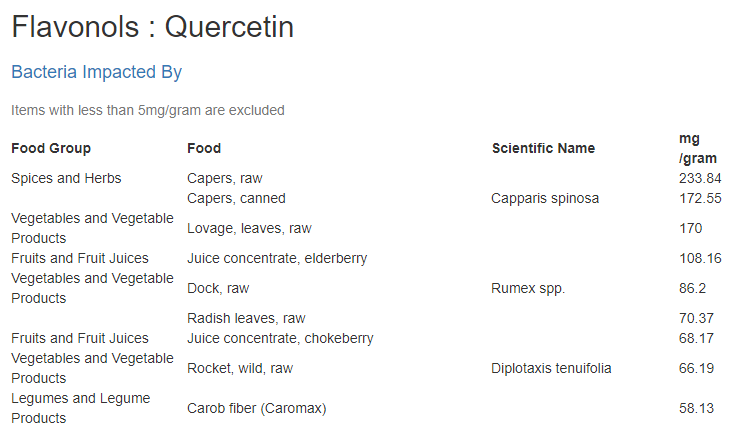
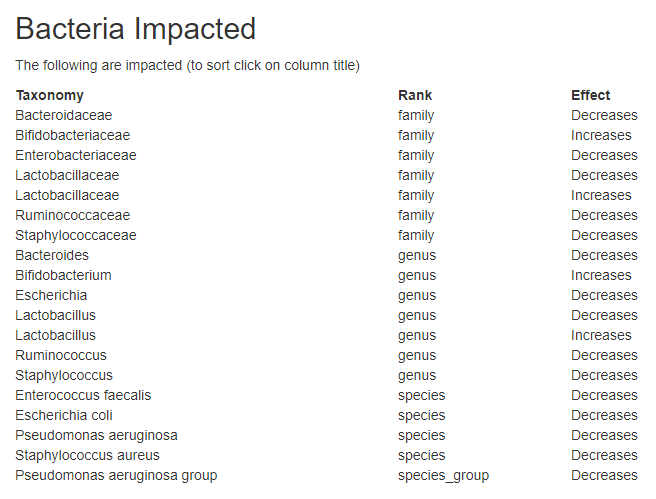
A few will have a link to bacteria impacted by it.
Stage #1 Complete
Stage #2 will be similar to what I did for probiotic mixtures — if there are multiple flavonoids in the suggestions, then the foods containing them will be examined and a relative weighing of the foods will be done (Take, Mix, Avoid).
I have updated the database with this information and also revised a few pages. If you are interested in seeing how you matches, here are the steps:
Logon and go to your samples page. Click Condition Templates
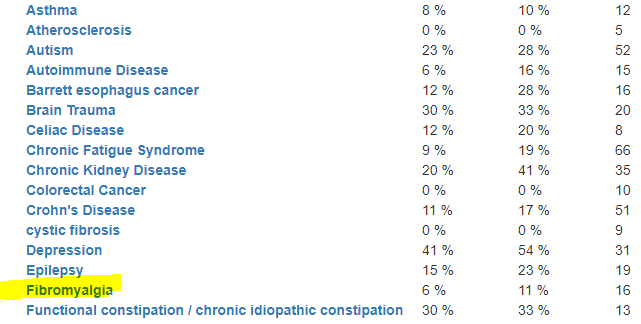
On the next page, click Fibromyalgia:
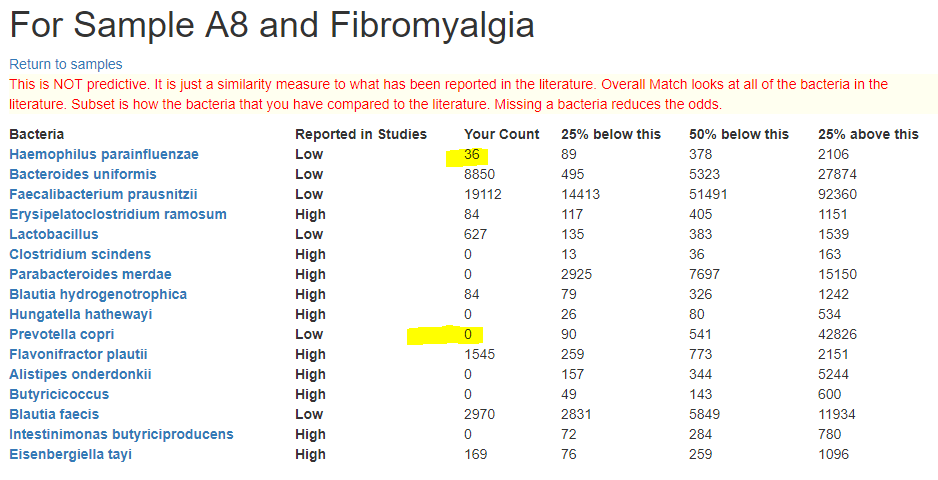
The next page will list ALL of the bacteria associated, your values and reference values.
If you have none reported, a Zero is shown.
One of the problems with most studies is they report on the average of a sample — not every person matches. Also the definition of “high” or “low” can be subjective and also dependent on the population being used.
What Can you do about it?
If you look at the Custom Suggestions page, there is a special drop down box. If you set it to Fibromyalgia then the suggestions will be done only for this subset of bacteria,
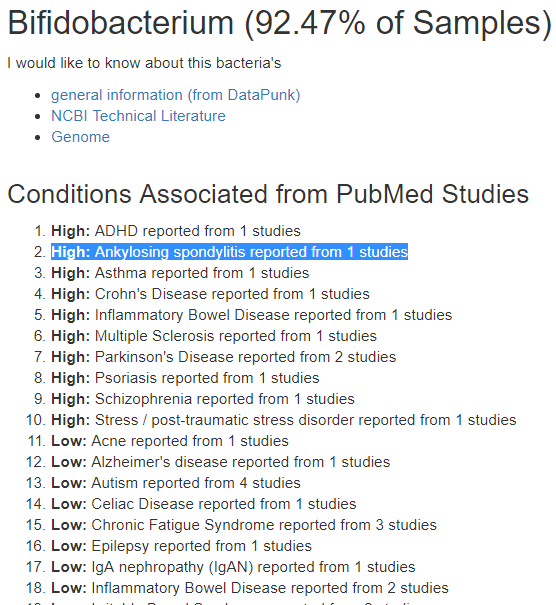
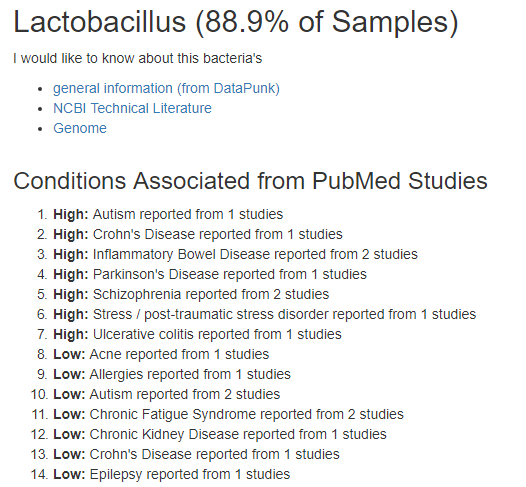
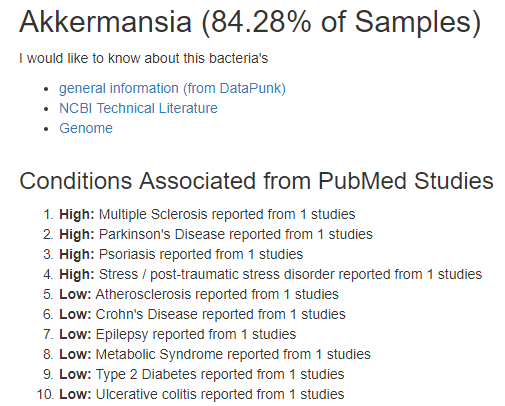
Chatting with a friend this evening, I realized that I could easily add this information to the Reference Library page for each bacteria. Usually this will appear at the genus or family level. A few examples:
Looking at the suggested probiotics, we find that MegasporeBiotic is a net -2.4 (Plus: 6, Negative: 8.4). An HU58 listed on the negative list. Given that she is very high in both of these… it makes sense.
Checking the modifiers, we see that this type of probiotic are indeed predicted to increase these two families.
FORGET about taking bifidobacterium and lactobacillus to increase bifidobacterium and lactobacillus . Take bacillus (which inhibits the inhibitors of bifidobacterium and lactobacillus )
I have added an educational page to the site. The purpose is to illustrate why focusing on a single bacteria may fail to produce results. You must also focus on the bacteria that support and contribute to it.
Where the new page is located
New button on the Available Samples Page
When you click this, a new page will appear as shown below
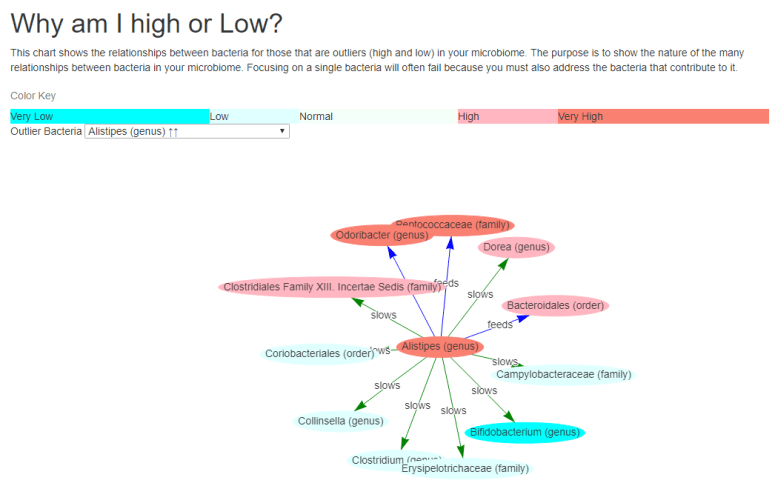
High bacteria slow other bacteria which may be low or very low
There are arrows pointing between the bacteria, labelled with their influence. Some examples;
High Alistipes slows / inhibits bifidobacterium. In this case, so very well that it is very low.
Alistipes feeds / encourages Odoribacter, Dorea, Peptococcaceae. so high amount of Alistipes results in higher amounts of these.
Alistipes also inhibits other bacteria… and we see many that are low.
To keep complexity down, I do not display bacteria in the middle range.
The Outliers list includes only the bacteria that are outliers AND which have known relationships with other bacteria.
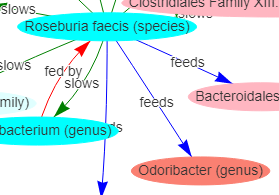
oseburia faecis is low, but Odoribacter is high! (read below for why)
A few things to remember:
A low bacteria may feed a bacteria that is very high. What this means is that OTHER things are feeding. For example, Roseburia faecis feed Odoribacter – so we would expect it to be low, but if you look above, we also see that Alisipes also feed it. Think of it this way: corn feed people, wheat feed people, barley feed people. If you have no corn, you may still have a lot of fat people.
Similarly, a high bacteria may feed other bacteria. Some of those may be low. To return to the food analogy: the bacteria may be producing pork — a lot of fat people, but none of them are Jewish or Vegetarians.
For those who do not have a ubiome sample available, I created a quick video showing the page.











 CFS Remission