Vivomixx Probiotic – A review

Update – Feb 2016

A reader raised the issue if Vivomixx and VSL#3 are actually the same. She was unable to clarify this via Mr. Google. On VSL#3, see this 2017 review — it does not have any evidence of being beneficial for CFS/FM/Etc.

According to this site VSL#3 was renamed Vivomixx in New Zealand.

Vivomixx Clinical Trial NCT02508844Vivomixx Clinical Trial NCT02508844

Vivomixx® 112.5 Billion CFU / Capsule

  • Bifidobacterium breve,
  • Bifidobacterium longum,
  • Bifidobacterium infantis,
  • Lactobacillus acidophilus,
  • Lactobacillus plantarum,
  • Lactobacillus paracasei,
  • Lactobacillus bulgaricus and
  • Streptococcus thermophilus

According to the VSL#3 site. 8 strains of live freeze dried bacteria [112.5 billion CFU] containing

  • Bifidobacterium breve,
  • Bifidobacterium longum,
  • Bifidobacterium infantis,
  • Lactobacillus acidophilus,
  • Lactobacillus plantarum,
  • Lactobacillus paracasei,
  • Lactobacillus bulgaricus and
  • Streptococcus thermophilus.

They are the same product under two different names.

Original

A user asked about a specific (expensive) probiotic for histamine issues. It is produce in Switzerland and thus available to European readers, in the US it appears to be called VSL#3.
http://www.vivomixx.eu/eng/what-is-vivomixx.htm

What I am going to do for this review is to decompose this blend into it parts, then research each part.

First, on the good side — the specific strains are listed (if specific strains are not listed, then probiotics are usually high risk and should be avoided until there are studies for the actual product!)

Query #1:

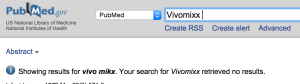
  • Are there any pubmed studies for this specific brand product? The answer is NO.
    Screen Shot 2015-06-14 at 5.23.50 PM
  • Decompose into strains in a table
Strain Pubmed for Histamine
Streptococcus thermophilus DSM 24731,
  • nothing for strain.
  • “a total of 69 Streptococcus thermophilus strains screened, two strains, CHCC1524 and CHCC6483, showed the capacity to produce histamine.” [2010] – likely neutral.
bifidobacteria (B. breve DSM 24732,
  • nothing for strain
  • nothing for species
B. longum DSM 24736,
  • nothing for strain
  • nothing for species
B. infantis DSM 24737
  • nothing for strain
  • nothing for species
Lactobacilli acidophilus DSM 24735,
  • nothing for strain
  • nothing clear for species
L. plantarum DSM 24730,
  • nothing for strain
  • “Lactobacillus plantarum Tensia did not produce potentially harmful biogenic amines, such as histamine”[2012]
  • Appears to be histamine neutral
L. paracasei DSM 24733,
  • nothing for strain
  • Suggestion that some of the species may produce histamine [2011]
L. delbrueckii subsp. bulgaricus DSM 24734
  • nothing for strain
  • nothing for species

Addendum

VSL#3, the alternative name has a variety of benefits for: Pouchitis, Ulcerative colitis, IBS and Allergy

Bottom line

Nothing suggests that it would produce histamines. Alternatively there is no public published peer-reviewed information on PubMed suggesting any positive impact from any of the strains. Recommendation — you are paying to toss some dice with a real possibility of zero benefit. See https://atomic-temporary-42474220.wpcomstaging.com/2016/07/10/first-survey-results-on-probiotics/ for experience. I will add this in the next survey list.

Post Script

A reader pointed out that Vivomixx is also known as VSL #3.  This lead to just one article being found:

  • “Oral therapeutic administration of VSL#3 to ST-sensitized mice significantly reduces symptom score and histamine release in the faeces following allergen challenge, as well as specific IgE response.” [2011]

Older news on Probiotics

  • L-glutamine impacts gut bacteria http://www.nutritionjrnl.com/article/S0899-9007(15)00035-0/abstract
    • The Firmicutes/Bacteroidetes ratio decreased after glutamine  supplementation.
    • Firmicutes and Actinobacteria reduced significantly after glutamine supplementation.
  • Dead Probiotics have some benefits
  • Can pass traits to children http://www.biosciencetechnology.com/news/2015/02/mothers-can-pass-traits-offspring-through-bacterias-dna?et_cid=4420409&et_rid=688877945&type=cta
    • “The study is the first to show that bacterial DNA can pass from parent to offspring in a manner that affects specific traits such as immunity and inflammation.”
    • “When the scientists housed mice with low levels of the antibody with mice that had high levels of the antibody, all of the mice ended up with low antibody levels in a few weeks. … low antibody levels is [associated with] a bacterium called Sutterella”
  • Shift seen with onset of type 1 diabetes http://www.nutraingredients.com/Research/Microbiome-changes-linked-to-onset-of-type-1-diabetes
  • Impact of diet: http://www.microbecolhealthdis.net/index.php/mehd/article/view/26164
    • Vegetarian Diet: increased proportions of Bacteroides/Prevotella group, Bacteroides thetaiotaomicron, Clostridium clostridioforme, and Faecalibacterium prausnitzii
    • Western Diet:
      • The least microbial diversity in this study was observed for adult Americans
      • the genus Prevotella was underrepresented
    • WHOLE GRAIN PRODUCTS
      • proportion of Lactobacillus/Enterococcus group was increased
      • barley flakes, brown rice flakes, or a mixture of both increased microbial diversity, as well as a rise in the proportion of Firmicutes and a reduction of the Bacteroidetes phylum
      • barley:a higher abundance of Blautia and Roseburia and a lower abundance of Bacteroides.
      • white bread vs rye bread: numbers of Bacteroidetes decreased, whereas levels of Clostridium cluster IV, Collinsella, and Atopobium spp. increased.
    • FRUITS AND NUTS
      • an increased amount of Bifidobacterium spp. in the feces of volunteers after blueberry drink consumption.
      • increase of the Bifidobacterium genus after consumption of red berries
      • consumption of red wine and de-alcoholized red wine the abundance of Bifidobacterium,Enterococcus, Eggerthella lenta, and the phylum Fusobacteria were increased compared to baseline values (most effects were more pronounced after red wine consumption)
      • pistachios had a stronger impact on microbiota composition than the consumption of almonds.

Chronic Fatigue Syndrome 101

A reader asked:

Out of curiosity, what tests can be taken for chronic fatigue? Because of it running in my family, and because of how exhausted I’ve become from recent events, I’m wondering if I’m in early stages of development of it as well. I’ve been lucky so far, but the right combo of triggers could certainly cause it to occur as well. I really need to find a way to get some extended time off, because I’m not gonna last long otherwise.

I will address the following key questions:

  • Are there any accepted-by-most MDs tests for Chronic Fatigue Syndrome?
  • What are the best tests available in your opinion?
  • What is the probable cause of Chronic Fatigue Syndrome?
  • How does onset happen?
  • What can be done to defend against full out CFS

Accepted Tests for CFS?

None — CFS is officially a diagnosis of having a set of symptoms with no known cause (and by inference, no test abnormality that would explain it).  While it is similar around the world, each country has a slightly different medical take on it. The unfortunate part is A CFS diagnosis requires that the patient has been fatigued for 6 months or more and has 4 of the 8 symptoms for CFS for 6 months or more. you have to be down with it for at least  6 months — by which time it may be well established and harder to prevent from becoming a permanent state.

Best Tests to Confirm CFS or indicating Increased Risk

There are three tests that I have found works as indicator of CFS status. In theory, they may be early predictors. Two require a MD to order, one does not require a MD. The best one (IMHO) does not require a MD.

  • SPECT Scan — not a MRI, but a SPECT. It will show major abnormalities in 80% of CFS patients. For myself, the radiologist read it as Alzheimer’s Disease (“Early” because I was too young). It was very similar to the results of SPECT scan done by Dr. Daniel Amen (seen on PBS) on a teenager with CFS that I am familiar with.
  • Abnormally high Vitamin 1,25 D levels (this is not the usual vitamin D lab). My readings were so high, that the lab repeated the test because they thought there must be a mistake. As I recovered, the level dropped back to normal levels. IMHO, an elevated level is a indicator of high risk. Article
  • Shifts of Microbiome — there is a very major shift with CFS. As the condition develop, the microbiome is expected to alter more and more towards the very distinct pattern seen with CFS. – This does NOT require a MD, you can buy the kit for $100 (in fact, I have a few kits on the shelf as a reserve if there is a concern).

If you are concerned — first step get the Microbiome testing done ASAP … it takes a few weeks to get the results. It is likely the most sensitive because the shift of microbiome is slow and progressive.

Probable Cause

Having been thru CFS three times and reading almost every summary on PubMed, my model of CFS meets the classic scientific criteria of the simplest model that explains all of the observations.

  • CFS (and likely many autoimmune conditions) is a shift of gut bacteria (microbiome) caused by bacteria, virus or chemicals that do not return to healthy-normal in a reasonable time.

The bacteria, virus or chemical does not directly cause CFS, it is a catalyst or trigger to the self-maintaining shift. The shifted bacteria population pumps inflammation signals and other chemicals into the body causing a host of symptoms. Gut bacteria is actually inherited and is very connected with your DNA.  Your DNA favors certain bacteria mixtures. My own experience is that some symptoms seems specific to certain species. Neem took away one group of symptoms. Ashwanganda removed other symptoms.

How does onset happens

The mechanism is some events that alters the chemical signals passed to the gut bacteria. Some species are encouraged and others are discouraged. Stress alters the chemicals flowing in the body and is often a contributing factor. A bacteria or virus can also trigger it. Recent studies suggests that the immune response to an infection alters the chemical signals so that certain chemicals are produced in greater quantities to fight the infection. The problem is that the chemical signals ends up establishing a feed back loop that results in those chemical signals not being turned off. In some cases, light can trigger an increase of these chemical signals, for example UV can trigger lupus [WebMd] and been reported to trigger other autoimmune conditions.

How to slow or reverse onset

Working from the model above and literature (plus personal experience) – the key is reduce the bad bacteria and increase the good ones.  Conceptually this is easy. In reality, it’s complex because we know so little on which ones are bad or good — or how to change them either way. My best suggestions(short list) is:

  • Probiotics:
  • Herbs and Spices (available in bulk at most East-Indian stores)
    • Neem
    • Tulsi — start drinking lots of Tulsi tea!
    • Ashwanganda
    • More items
  • Supplements:
    • Vitamin D3 — 20,000 IU/day
    • Magnesium supplements
    • B-12
  • Antibiotics
    • Only Tetracyclines are advised – they have been successfully used with CFS in the past.

I do not know how the microbiome shifts during onset, so if you suspect you may be developing CFS and get microbiome testing with abnormal results — please forward them to me.

New Probiotic on Market: L Reuteri NCIMB 30242 (ONLY)

There are eight PubMed studies on this strain.

  • Significantly changes the size and composition of the circulating bile acid [2015]
  • a greater proportion of L. reuteri-treated subjects showed improved general GI health status (p = 0.042) and improved diarrhea symptoms (p = 0.03). [2013]
  • the first report of increased circulating 25-hydroxyvitamin D in response to oral probiotic supplementation[2013]

For general information about L.Reuteri see my earlier post.

Available from manufacturer and on Amazon.

This stain is also sold as Cardioviva on amazon

I have just ordered some myself.

Garlic, IBS, CFS, and the Microbiome

A reader wrote “Every time I eat garlic, both cooked and raw, I get a LOT of foul smelling gas… I don’t get this from onions for example…Do you have any idea why this is, what it might indicated as far as the microbiome go? I know garlic is rich in inulin…”

Inulin from garlic is well known, as well as from:

  • artichokes, garlic, beans, oats, onions and asparagus [ref]

I also recall that garlic has anti-biotic characteristics:

fresh garlic, but not aged garlic, can kill certain bacteria such as E. coli, antibiotic-resistant Staphylococcus aureus, and Salmonella enteritidis in the laboratory.” [WebMd]

Historically:

“From Roman antiquity through World War I, garlic poultices were used to prevent wound infections. The famous microbiologist Louis Pasteur performed some of the original work showing that garlic could kill bacteria. In 1916, the British government issued a general plea for the public to supply it with garlic in order to meet wartime needs. Garlic was called Russian penicillin during World War II because, after running out of antibiotics, the Russian government turned to this ancient treatment for its soldiers.

After World War II, Sandoz Pharmaceuticals manufactured a garlic compound for intestinal spasms, and the Van Patten Company produced another for lowering blood pressure.” [NYU]

Going over to PubMed

  • Garlic contains sulfur compounds like allicin, ajoene, allylmethyltrisulfide, diallyltrisulfide, diallyldisulphide and others which exhibit various biological properties like antimicrobial, anticancer, antioxidant, immunomodulatory, antiinflammatory, hypoglycemic, and cardiovascular effects.[2014]
  • ReducesInflammatory bowel disease (IBD) [2014]
  • Reduces  free-living (Hexamita inflata), and parasitic (Spironucleus vortens and Giardia intestinalis).[2014] Spironucleus vortens[2014]
  • garlic exhibits antibacterial activity against probiotic bifidobacteria. The aim of the current study was to elucidate the mechanism of action of garlic clove extract (GCE) on Bifidobacterium bifidum LMG 11041, B. longum LMG 13197 and B. lactis Bb12 [2014] – so do not take garlic with bifidobactra probiotics!

For more follow there links: Intestines and garlic and  garlic and antibiotics

Bottom Line

The foul smelling gas is likely release by species of bacteria being killed. Cross referencing species cited above I found that Giardia intestinalis is garlic sensistive and produces foul smelling faeces  [2014] as one possibility. Other possibilities include Aerococcus urinae [2013], Strongyloides stercoralis [2012] and likely many more.

A suggestion to discuss with your medical professional would be whether to try increasing dosage (fresh garlic – not capsules etc)  and see if the foul smell eventually clears (suggesting that the bacteria has been effectively reduced). It should be discussed with whoever lives with you… you could be a challenge to be around!.