

This uses the consensus model and does the following:
- Identifies the bacteria shifts reported in the literature that are seen in your microbiome sample
- Computes substances that should improve those shifts
- FILTER these substances using the literature of what helps the condition.
So, you have a list of things to fix the microbiome that are also known to help the condition. Many studies find that only a portion of people are helped. Our hypothesis is that the microbiome is a key factor here.
Last we give the top other suggestions (in general, they have never been tested in a clinical study — and thus we are depending on the microbiome impact)
After this, we give a list of studies used to generate the report. This should buy creditability with MD for what is being done as well as educate them.
This new suggestions report also handles multiple conditions. The example below is for someone that has both Autism and ME/CFS. It gives a good illustration of the new report intent.
The list of items reported to help ME/CFS is here with the studies the items are cited in.
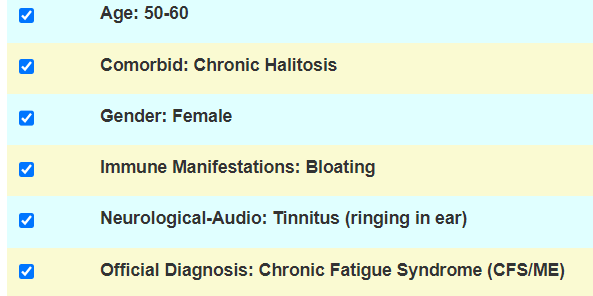
This report is for Private@Annon.comand uses their reported medical conditions, microbiome sample and a fuzzy logic expert system to compute recommendations
The reported condition(s) are
- Autism –
Common Advice:- Omega-3 Fatty Acids: Some studies have explored omega-3 supplements (particularly those containing EPA and DHA) due to their potential neuroprotective and anti-inflammatory properties. While research results have been mixed, some parents or caregivers of individuals with ASD might consider omega-3 supplements based on the belief that they could positively impact cognitive and behavioral functions.
- Probiotics: The gut-brain connection has sparked interest in the potential role of probiotics in influencing behavior and cognition. Some studies suggest that gut health might affect certain aspects of behavior in individuals with ASD. However, the use of probiotics for managing autism symptoms lacks robust scientific evidence, and their effectiveness remains unclear.
- Vitamin D: Low vitamin D levels have been observed in some individuals with ASD. While research is ongoing, maintaining adequate vitamin D levels is considered important for overall health. Some parents may opt for vitamin D supplements under the guidance of a healthcare professional.
- Multivitamins and Minerals: Individuals with ASD might have specific dietary habits that could lead to deficiencies in certain vitamins or minerals. Ensuring a balanced diet or supplementing with multivitamins and minerals under the guidance of a healthcare provider might be considered to address potential deficiencies.
- Chronic Fatigue Syndrome – CFS,ME,Myalgic encephalomyelitis
Common Advice:- Coenzyme Q10 (CoQ10): Some studies have suggested that CoQ10 supplementation might have potential benefits in reducing fatigue and improving energy levels in individuals with CFS. However, more research is needed to establish its effectiveness for CFS specifically.
- Omega-3 Fatty Acids: Omega-3 supplements containing EPA and DHA have anti-inflammatory properties and may support overall health. Some individuals with CFS might consider omega-3 supplementation for potential benefits, although evidence supporting their use specifically for CFS is limited.
- Probiotics: The role of probiotics in managing CFS symptoms is an area of ongoing research. Some studies suggest that probiotics might impact gut health and the immune system, which could potentially affect symptoms in some individuals with CFS. However, specific probiotic strains, dosages, and their efficacy for CFS require further investigation.
- Vitamins and Minerals: Nutritional deficiencies are common in individuals with CFS, possibly due to poor dietary intake or other factors. Some individuals might have deficiencies in vitamins (such as vitamin D, B vitamins) or minerals (like magnesium or iron). Supplements might be recommended to address identified deficiencies.
Significant Bacteria Shifts
Based on the existing literature on the US National Library of Medicine and this microbiome sample, we have the following matches of bacteria shifts. There is a growing body of literature finding that the effectiveness of interventions depends on the existing microbiome. We filter by suggested interventions and this person’s specific microbiome to produce this “double validated” list..
Acidobacteriota – phylum : High 13 15 Actinomycetota – phylum : Low 18 Akkermansia – genus : High 10 22 25 Akkermansia muciniphila – species : High 6 Alcaligenaceae – family : High 25 Bacteroides ovatus – species : High 17 Bacteroides uniformis – species : High 17 Citrobacter – genus : High 20 Coprococcus – genus : Low 10 Dorea – genus : Low 1 8 24 25 Eggerthella – genus : Low 5 | Faecalibacterium – genus : High 9 21 25 Oscillospiraceae – family : High 23 25 Phascolarctobacterium – genus : Low 17 23 25 Phocaeicola vulgatus – species : Low 7 14 25 Pseudomonadaceae – family : Low 5 Pseudomonas – genus : Low 5 Ruminococcaceae – family : High 12 Staphylococcus – genus : Low 2 Sutterella – genus : High 3 8 11 19 21 25 Sutterellaceae – family : High 4 22 Veillonellaceae – family : Low 16 |
Cross Validated Suggestions
The following improves the bacteria identified above and also is reported in the literature of helping some people with this condition. Each is link to the source study.
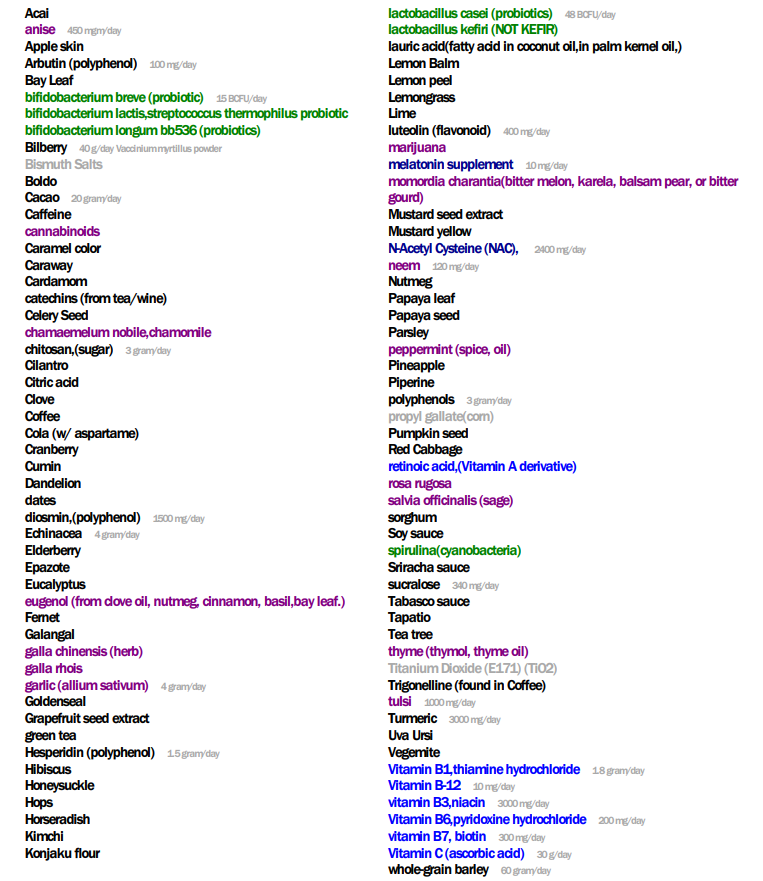
(r)-propranolol hydrochloride,(prescription) 76 aripiprazole,(prescription) 55 Astragalus 71 azithromycin,(antibiotic)s[CFS] 70 bifidobacterium infantis,(probiotics) 61 62 bifidobacterium lactis bb12 (probiotics) 61 63 Cacao 33 104 Coenzyme Q10 33 56 72 87 89 98 105 colostrum 62 doxepin hydrochloride,(prescription) 76 doxycycline (antibiotic)s[CFS] 67 d-ribose 34 35 72 erythromycin (antibiotic)s[CFS] 68 Far infrared Sauna 82 83 84 85 folinic acid calcium salt,(prescription) 38 41 42 fructo-oligosaccharides (prebiotic) 61 glycyrrhizic acid (licorice) 101 102 103 guanfacine hydrochloride,(prescription) 76 inulin (prebiotic) 64 iron 72 ketotifen fumarate,(prescription) 72 74 lactobacillus paracasei (probiotics) 61 lactobacillus plantarum (probiotics) 36 37 58 59 60 | lactobacillus rhamnosus (probiotics) 61 liothyronine,(prescription) 74 low fodmap diet 75 maprotiline hydrochloride,(prescription) 100 melatonin supplement 72 76 minocycline (antibiotic)s[CFS] 65 66 momordia charantia(bitter melon, karela, balsam pear, or bitter gourd) 90 N-Acetyl Cysteine (NAC), 57 72 naltrexone hydrochloride dihydrate,(prescription) LDN 72 74 77 omega-3 fatty acids 35 38 43 44 72 resveratrol (grape seed/polyphenols/red wine) 54 risperidone,(prescription) 55 SAM-e 31 selenium 72 87 88 ß-glucan 69 Sulforaphane (In broccoli sprouts,cauliflower, kale, cole crops, cabbage, collards, mustard, and cress) 38 39 49 50 51 52 53 trazodone hydrochloride,(prescription) 72 76 Tryptophan 72 Vitamin B1,thiamine hydrochloride 91 92 93 Vitamin B-12 38 47 48 72 Vitamin B9,folic acid 27 28 29 30 72 86 vitamin d 38 45 46 72 94 zinc 72 |
Suggestions Impact by Bacteria
Reviewing substances reported to help with this condition on the US National Library of Medicine, and which will correct the above bacteria shifts. the following are recommended. Some bacteria may lack literature because none of the studied substances for the condition(s) are known to modify the bacteria.
- Acidobacteriota
- Actinomycetota
- Astragalus 71 715
- Coenzyme Q10 33 756
- fructo-oligosaccharides (prebiotic) 56 61 72 87 89 98 105 536 756
- inulin (prebiotic) 64 557
- lactobacillus paracasei (probiotics) 61 64 631 772
- lactobacillus plantarum (probiotics) 36 494
- low fodmap diet 36 37 58 59 60 75 260 494 617
- minocycline (antibiotic)s[CFS] 65 107
- selenium 66 72 107 664
- Tryptophan 72 87 88 632 664
- vitamin d 38 731
- Akkermansia
- (r)-propranolol hydrochloride,(prescription) 38 45 46 72 76 94 308 731 773
- aripiprazole,(prescription) 55 308
- azithromycin,(antibiotic)s[CFS] 70 119
- doxepin hydrochloride,(prescription) 70 76 308
- doxycycline (antibiotic)s[CFS] 67 308
- erythromycin (antibiotic)s[CFS] 68 308
- Far infrared Sauna 82 662
- iron 72 83 84 85 438 662
- ketotifen fumarate,(prescription) 72 308
- lactobacillus plantarum (probiotics) 36 74 236 308
- lactobacillus reuteri (probiotics) 36 37 58 59 60 64 236 532 569 746 763
- liothyronine,(prescription) 74 308
- maprotiline hydrochloride,(prescription) 100 308
- melatonin supplement 72 308
- minocycline (antibiotic)s[CFS] 65 76 308
- omega-3 fatty acids 35 66 260 308
- resveratrol (grape seed/polyphenols/red wine) 38 43 44 54 72 212 260
- risperidone,(prescription) 55 308
- trazodone hydrochloride,(prescription) 72 308
- Vitamin B1,thiamine hydrochloride 76 91 308
- Vitamin B9,folic acid 27 92 93 308
- zinc 27 28 29 30 72 86 308 438
- Akkermansia muciniphila
- (r)-propranolol hydrochloride,(prescription) 76 308
- aripiprazole,(prescription) 55 308
- azithromycin,(antibiotic)s[CFS] 70 119
- doxepin hydrochloride,(prescription) 70 76 308
- doxycycline (antibiotic)s[CFS] 67 308
- erythromycin (antibiotic)s[CFS] 68 308
- Far infrared Sauna 82 662
- iron 72 83 84 85 438 662
- ketotifen fumarate,(prescription) 72 308
- lactobacillus plantarum (probiotics) 36 74 236 308
- lactobacillus reuteri (probiotics) 36 37 58 59 60 64 236 532 746 763
- liothyronine,(prescription) 74 308
- maprotiline hydrochloride,(prescription) 100 308
- melatonin supplement 72 308
- minocycline (antibiotic)s[CFS] 65 76 308
- omega-3 fatty acids 35 66 260 308
- resveratrol (grape seed/polyphenols/red wine) 38 43 44 54 72 212 260
- risperidone,(prescription) 55 308
- trazodone hydrochloride,(prescription) 72 308
- Vitamin B1,thiamine hydrochloride 76 91 308
- Vitamin B9,folic acid 27 92 93 308
- zinc 27 28 29 30 72 86 308 438
- Alcaligenaceae
- Bacteroides ovatus
- azithromycin,(antibiotic)s[CFS] 70 308
- bifidobacterium infantis,(probiotics) 61 70 265 709
- Cacao 33 62 139 265
- doxepin hydrochloride,(prescription) 33 76 104 139 308 561
- doxycycline (antibiotic)s[CFS] 67 270
- erythromycin (antibiotic)s[CFS] 67 68 308 709
- folinic acid calcium salt,(prescription) 38 68 308 709
- fructo-oligosaccharides (prebiotic) 41 42 61 308 336
- glycyrrhizic acid (licorice) 61 101 384 548
- guanfacine hydrochloride,(prescription) 76 102 103 308 548
- iron 72 438
- lactobacillus plantarum (probiotics) 36 581
- lactobacillus reuteri (probiotics) 37 58 59 60 64 315 581
- liothyronine,(prescription) 64 74 308 532
- melatonin supplement 72 308
- minocycline (antibiotic)s[CFS] 65 76 270 308
- momordia charantia(bitter melon, karela, balsam pear, or bitter gourd) 65 66 90 260 270 308
- N-Acetyl Cysteine (NAC), 57 548
- resveratrol (grape seed/polyphenols/red wine) 54 72 152 548
- ß-glucan 54 69 260 381 394
- Vitamin B1,thiamine hydrochloride 91 308
- Vitamin B9,folic acid 27 92 93 308 438
- vitamin d 28 29 30 38 72 86 438 775
- Bacteroides uniformis
- aripiprazole,(prescription) 45 46 55 72 94 308 775
- azithromycin,(antibiotic)s[CFS] 70 308
- bifidobacterium infantis,(probiotics) 61 70 265 709
- Cacao 33 62 139 265
- doxepin hydrochloride,(prescription) 76 104 139 308
- doxycycline (antibiotic)s[CFS] 67 270
- erythromycin (antibiotic)s[CFS] 67 68 308 709
- fructo-oligosaccharides (prebiotic) 61 68 336 709
- glycyrrhizic acid (licorice) 61 101 384 548
- guanfacine hydrochloride,(prescription) 76 102 103 308 548
- lactobacillus plantarum (probiotics) 36 581
- lactobacillus reuteri (probiotics) 37 58 59 60 64 315 581
- maprotiline hydrochloride,(prescription) 64 100 308 532
- melatonin supplement 72 308
- minocycline (antibiotic)s[CFS] 65 76 270 308
- momordia charantia(bitter melon, karela, balsam pear, or bitter gourd) 65 66 90 260 270 308
- N-Acetyl Cysteine (NAC), 57 548
- naltrexone hydrochloride dihydrate,(prescription) LDN 72 308 548
- resveratrol (grape seed/polyphenols/red wine) 54 74 77 152 308
- risperidone,(prescription) 54 55 308 381 394
- ß-glucan 69 260
- trazodone hydrochloride,(prescription) 72 308
- Vitamin B9,folic acid 27 76 308 438
- vitamin d 28 29 30 38 72 86 438 775
- Citrobacter
- azithromycin,(antibiotic)s[CFS] 45 46 70 72 94 119 775
- bifidobacterium infantis,(probiotics) 61 497
- bifidobacterium lactis bb12 (probiotics) 61 62 324 497
- fructo-oligosaccharides (prebiotic) 61 63 313 324
- inulin (prebiotic) 61 64 136 323
- iron 64 72 371 392
- lactobacillus paracasei (probiotics) 61 361
- lactobacillus plantarum (probiotics) 36 61 158 435
- lactobacillus reuteri (probiotics) 36 37 58 59 60 64 158 171 187 233 364 502 581
- lactobacillus rhamnosus (probiotics) 61 64 288 315 372 440
- minocycline (antibiotic)s[CFS] 65 457
- resveratrol (grape seed/polyphenols/red wine) 54 66 348 457
- selenium 72 128
- Sulforaphane (In broccoli sprouts,cauliflower, kale, cole crops, cabbage, collards, mustard, and cress) 38 72 87 88 128 377 678
- Vitamin B-12 38 39 49 50 51 52 53 199 678
- vitamin d 38 47 48 72 173 199
- zinc 45 46 72 94 173 343
- Coprococcus
- fructo-oligosaccharides (prebiotic) 61 72 159 377
- glycyrrhizic acid (licorice) 61 101 201 743
- inulin (prebiotic) 64 102 103 205 743
- iron 64 72 290 292 332 365 371 482 489 772
- lactobacillus paracasei (probiotics) 61 72 155 438
- lactobacillus plantarum (probiotics) 36 61 158 626
- lactobacillus reuteri (probiotics) 36 37 58 59 60 64 158 191 644 746
- lactobacillus rhamnosus (probiotics) 61 64 393 532
- melatonin supplement 72 708
- minocycline (antibiotic)s[CFS] 65 76 107 708
- omega-3 fatty acids 35 65 66 107 193 506
- resveratrol (grape seed/polyphenols/red wine) 35 38 43 44 54 72 506 512 520
- Tryptophan 72 632
- Vitamin B9,folic acid 27 438
- vitamin d 28 29 30 38 72 86 438 601
- Dorea
- bifidobacterium infantis,(probiotics) 38 45 46 61 72 94 508 601 641 731 773 774
- fructo-oligosaccharides (prebiotic) 61 62 159 508
- glycyrrhizic acid (licorice) 61 101 201 743
- inulin (prebiotic) 64 102 103 205 743
- iron 64 72 290 292 332 365 371 489 772
- lactobacillus paracasei (probiotics) 61 626
- lactobacillus plantarum (probiotics) 36 158
- lactobacillus reuteri (probiotics) 36 37 58 59 60 64 158 191 644 746
- lactobacillus rhamnosus (probiotics) 61 64 393 532
- melatonin supplement 72 708
- minocycline (antibiotic)s[CFS] 65 76 107 708
- omega-3 fatty acids 35 65 66 107 193 506
- resveratrol (grape seed/polyphenols/red wine) 35 38 43 44 54 72 506 512 520
- Tryptophan 72 632
- vitamin d 38 601
- Eggerthella
- Escherichia
- azithromycin,(antibiotic)s[CFS] 45 46 70 72 94 164 269
- doxycycline (antibiotic)s[CFS] 67 121
- d-ribose 34 67 609 732
- erythromycin (antibiotic)s[CFS] 34 35 68 72 609 675 732
- fructo-oligosaccharides (prebiotic) 61 159
- inulin (prebiotic) 61 64 354 772
- iron 72 438
- minocycline (antibiotic)s[CFS] 65 72 133 580
- resveratrol (grape seed/polyphenols/red wine) 54 66 133 334
- risperidone,(prescription) 55 433
- SAM-e 31 585
- Vitamin B9,folic acid 27 438
- vitamin d 28 29 30 38 72 86 438 571
- zinc 45 46 72 94 130 571
- Faecalibacterium
- azithromycin,(antibiotic)s[CFS] 70 72 269 438
- colostrum 62 738
- fructo-oligosaccharides (prebiotic) 61 260
- inulin (prebiotic) 64 537
- iron 64 72 264 772
- lactobacillus paracasei (probiotics) 61 155
- lactobacillus plantarum (probiotics) 36 236
- lactobacillus rhamnosus (probiotics) 37 58 59 60 61 222 236
- low fodmap diet 61 75 260 372
- omega-3 fatty acids 35 260
- vitamin d 35 38 43 44 72 260 506 652
- zinc 45 46 72 94 237 652
- Oscillospiraceae
- azithromycin,(antibiotic)s[CFS] 70 269
- colostrum 62 738
- doxycycline (antibiotic)s[CFS] 67 121
- fructo-oligosaccharides (prebiotic) 61 414
- glycyrrhizic acid (licorice) 61 101 516 743
- inulin (prebiotic) 64 102 103 290 743
- iron 64 72 264 537 772
- lactobacillus paracasei (probiotics) 61 155
- lactobacillus plantarum (probiotics) 36 61 236 635
- lactobacillus reuteri (probiotics) 37 58 59 60 64 236 532
- lactobacillus rhamnosus (probiotics) 61 372
- omega-3 fatty acids 35 506
- resveratrol (grape seed/polyphenols/red wine) 38 43 44 54 72 506 696
- Vitamin B1,thiamine hydrochloride 54 91 235 699
- Vitamin B9,folic acid 27 92 93 235 691
- vitamin d 28 29 30 38 72 86 616 691
- zinc 38 45 46 72 94 237 616 652 773 774
- Phascolarctobacterium
- Phocaeicola vulgatus
- bifidobacterium lactis bb12 (probiotics) 61 64 161 772
- doxycycline (antibiotic)s[CFS] 63 67 121 161
- fructo-oligosaccharides (prebiotic) 61 260
- inulin (prebiotic) 64 365
- iron 72 371
- lactobacillus plantarum (probiotics) 36 72 232 438
- lactobacillus rhamnosus (probiotics) 36 37 58 59 60 61 232 236 372
- minocycline (antibiotic)s[CFS] 65 107
- resveratrol (grape seed/polyphenols/red wine) 54 66 107 146
- Vitamin B9,folic acid 27 54 212 262 387 438
- vitamin d 28 29 30 38 72 86 164 438
- Pseudomonadaceae
- Pseudomonas
- Ruminococcaceae
- azithromycin,(antibiotic)s[CFS] 70 269
- doxycycline (antibiotic)s[CFS] 67 121
- fructo-oligosaccharides (prebiotic) 61 260
- glycyrrhizic acid (licorice) 101 743
- iron 72 102 103 264 743
- lactobacillus paracasei (probiotics) 61 155
- lactobacillus rhamnosus (probiotics) 61 222
- low fodmap diet 61 75 260 372
- omega-3 fatty acids 35 260
- Vitamin B9,folic acid 27 38 43 44 72 260 691
- zinc 28 29 30 72 86 237 691
- Staphylococcus
- Sutterella
- Sutterellaceae
- Veillonellaceae
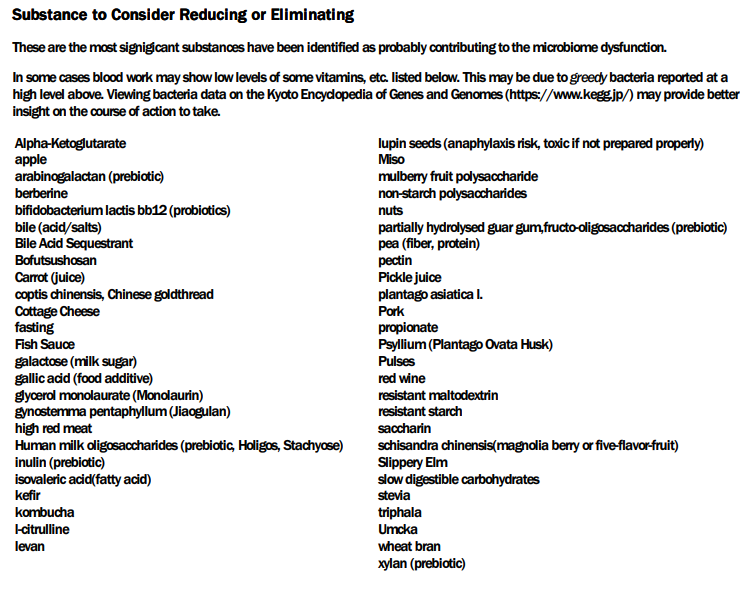
Additional Suggestions
There are many other interventions to correct the bacteria shifts seen with this person. The top 20 suggestions are listed below as the top 20 items to avoid.
| Items to add | Items to avoid |
|---|---|
| Human milk oligosaccharides (prebiotic, Holigos, Stachyose)bacillus subtilis (probiotics)lactuloselactobacillus sakei (probiotics)linseed(flaxseed)Shen Ling Bai Zhu Sanwheat brannavy beanraffinose(sugar beet)ketogenic dietchondrus crispus,red sea weedsesame cake/mealKimchialmonds/ almond skinsmediterranean dietnon-starch polysaccharidesbroccolivitamin awheylactobacillus plantarum,xylooligosaccharides,(prebiotic) (probiotics) | oregano (origanum vulgare, oil) |barleyberberinethyme (thymol, thyme oil)Slippery Elmfastingquercetin,resveratrolcinnamon (oil. spice)vegetariansBofutsushosantriphalasyzygium aromaticum (clove)Curcumincranberry bean flourfoeniculum vulgare,fennelXanthohumolquercetinhigh-fat dietsstevialactobacillus rhamnosus gg (probiotics) |
Reference
The following is a partial list of the critical citations used above.1New evidences on the altered gut microbiota in autism spectrum disorders.
2The valproic acid rat model of autism presents with gut bacterial dysbiosis similar to that in human autism.
3Analysis of gut microbiota profiles and microbe-disease associations in children with autism spectrum disorders in China.
4Fecal microbiota and metabolome of children with autism and pervasive developmental disorder not otherwise specified.
5Fecal metagenomic profiles in subgroups of patients with myalgic encephalomyelitis/chronic fatigue syndrome.
6Ketogenic diet modifies the gut microbiota in a murine model of autism spectrum disorder.
7Can we reduce autism-related gastrointestinal and behavior problems by gut microbiota based dietary modulation? A review.
8The Role of Gut Microbiota in Gastrointestinal Symptoms of Children with ASD.
9Association Between Gut Microbiota and Autism Spectrum Disorder: A Systematic Review and Meta-Analysis.
10Analysis of gut microbiome, nutrition and immune status in autism spectrum disorder: a case-control study in Ecuador.
11Increased abundance of Sutterella spp. and Ruminococcus torques in feces of children with autism spectrum disorder.
12Autism spectrum disorder is associated with gut microbiota disorder in children.
13[Correlation between gut microbiota and behavior symptoms in children with autism spectrum disorder].
14Changes in the Gut Microbiota of Children with Autism Spectrum Disorder.
15Altered gut microbiota and short chain fatty acids in Chinese children with autism spectrum disorder.
16Gut Microbial Dysbiosis in Indian Children with Autism Spectrum Disorders.
17Potential role of microbiome in Chronic Fatigue Syndrome/Myalgic Encephalomyelits (CFS/ME).
18Altered Gut Microbiota in Korean Children with Autism Spectrum Disorders.
19Are Fecal Metabolome and Microbiota Profiles Correlated with Autism Severity? A Cross-Sectional Study on ASD Preschoolers.
20Serum Oxytocin Level Correlates With Gut Microbiome Dysbiosis in Children With Autism Spectrum Disorder.
21Mucosa-associated specific bacterial species disrupt the intestinal epithelial barrier in the autism phenome.
22Autism Spectrum Disorders and the Gut Microbiota.
23Altered Gut Microbiota and Short-chain Fatty Acids in Chinese Children with Constipated Autism Spectrum Disorder.
24Machine Learning Algorithms Applied to Predict Autism Spectrum Disorder Based on Gut Microbiome Composition.
25The Role of Short-Chain Fatty Acids and Altered Microbiota Composition in Autism Spectrum Disorder: A Comprehensive Literature Review.
26Open Trial of Vitamin B12 Nasal Drops in Adults With Myalgic Encephalomyelitis/Chronic Fatigue Syndrome: Comparison of Responders and Non-Responders.
27Response to vitamin B12 and folic acid in myalgic encephalomyelitis and fibromyalgia.
28[Vitamin B12 and chronic fatigue].
29[Vitamin B12, chronic fatigue and injection treatment].
30Liver extract-folic acid-cyanocobalamin vs placebo for chronic fatigue syndrome.
31Alternative medical interventions used in the treatment and management of myalgic encephalomyelitis/chronic fatigue syndrome and fibromyalgia.
32Cognitive behaviour therapy for the chronic fatigue syndrome. Evening primrose oil and magnesium have been shown to be effective.
33Dietary and nutrition interventions for the therapeutic treatment of chronic fatigue syndrome/myalgic encephalomyelitis: a systematic review.
34The use of D-ribose in chronic fatigue syndrome and fibromyalgia: a pilot study.
35Role of dietary modification in alleviating chronic fatigue syndrome symptoms: a systematic review.
36Effects of Lactobacillus plantarum PS128 on Children with Autism Spectrum Disorder in Taiwan: A Randomized, Double-Blind, Placebo-Controlled Trial.
37Lactobacillus plantarum PS128 and Other Probiotics in Children and Adolescents with Autism Spectrum Disorder: A Real-World Experience.
38Dietary Supplement for Core Symptoms of Autism Spectrum Disorder: Where Are We Now and Where Should We Go?
39Effect of camel milk on thymus and activation-regulated chemokine in autistic children: double-blind study.
40Camel Milk as a Potential Therapy as an Antioxidant in Autism Spectrum Disorder (ASD).
41Blocking and Binding Folate Receptor Alpha Autoantibodies Identify Novel Autism Spectrum Disorder Subgroups.
42Folinic acid improves verbal communication in children with autism and language impairment: a randomized double-blind placebo-controlled trial.
43Effects of large doses of arachidonic acid added to docosahexaenoic acid on social impairment in individuals with autism spectrum disorders: a double-blind, placebo-controlled, randomized trial.
44Internet-based, randomized, controlled trial of omega-3 fatty acids for hyperactivity in autism.
45Retraction: Randomized controlled trial of vitamin D supplementation in children with autism spectrum disorder.
46Vitamin D status in autism spectrum disorders and the efficacy of vitamin D supplementation in autistic children.
47Pilot study of the effect of methyl B12 treatment on behavioral and biomarker measures in children with autism.
48Randomized, Placebo-Controlled Trial of Methyl B12 for Children with Autism.
49Sulforaphane treatment for autism spectrum disorder: A systematic review.
50Dietary Intake of Sulforaphane-Rich Broccoli Sprout Extracts during Juvenile and Adolescence Can Prevent Phencyclidine-Induced Cognitive Deficits at Adulthood.
51Sulforaphane treatment of autism spectrum disorder (ASD).
52Sulforaphane treatment of autism spectrum disorder (ASD).
53Sulforaphane as an adjunctive treatment for irritability in children with autism spectrum disorder: A randomized, double-blind, placebo-controlled clinical trial.
54Resveratrol as adjunctive therapy in treatment of irritability in children with autism: A double-blind and placebo-controlled randomized trial.
55Aripiprazole for the treatment of irritability associated with autism.
56Coenzyme Q(10) supplementation reduces oxidative stress and decreases antioxidant enzyme activity in children with autism spectrum disorders.
57N-acetylcysteine as an adjunctive therapy to risperidone for treatment of irritability in autism: a randomized, double-blind, placebo-controlled clinical trial of efficacy and safety.
58Enhancing social behavior in an autism spectrum disorder mouse model: investigating the underlying mechanisms of Lactiplantibacillus plantarum intervention.
59Lactiplantibacillus plantarum N-1 improves autism-like behavior and gut microbiota in mouse.
60Lactiplantibacillus plantarum ST-III-fermented milk improves autistic-like behaviors in valproic acid-induced autism spectrum disorder mice by altering gut microbiota.
61Probiotics and fructo-oligosaccharide intervention modulate the microbiota-gut brain axis to improve autism spectrum reducing also the hyper-serotonergic state and the dopamine metabolism disorder.
62Pilot study of probiotic/colostrum supplementation on gut function in children with autism and gastrointestinal symptoms.
63Bifidobacterium animalis subsp. lactis Probio-M8 alleviates abnormal behavior and regulates gut microbiota in a mouse model suffering from autism.
64A synbiotic formulation of Lactobacillus reuteri and inulin alleviates ASD-like behaviors in a mouse model: the mediating role of the gut-brain axis.
65Oral Minocycline Therapy Improves Symptoms of Myalgic Encephalomyelitis, Especially in the Initial Disease Stage.
66Could Minocycline Be a “Magic Bullet” for the Treatment of Myalgic Encephalomyelitis/Chronic Fatigue Syndrome?
67Long-term effect of cognitive behavioural therapy and doxycycline treatment for patients with Q fever fatigue syndrome: One-year follow-up of the Qure study.
68Open-label pilot for treatment targeting gut dysbiosis in myalgic encephalomyelitis/chronic fatigue syndrome: neuropsychological symptoms and sex comparisons.
69Yeast Beta-Glucan Supplementation with Multivitamins Attenuates Cognitive Impairments in Individuals with Myalgic Encephalomyelitis/Chronic Fatigue Syndrome: A Randomized, Double-Blind, Placebo-Controlled Trial.
70Azithromycin in chronic fatigue syndrome (CFS), an analysis of clinical data.
71Chronic fatigue syndrome post-COVID-19: triple-blind randomised clinical trial of Astragalus root extract.
72[Post-COVID syndrome with fatigue and exercise intolerance: myalgic encephalomyelitis/chronic fatigue syndrome].
73Neurovascular Dysregulation and Acute Exercise Intolerance in Myalgic Encephalomyelitis/Chronic Fatigue Syndrome: A Randomized, Placebo-Controlled Trial of Pyridostigmine.
74Advancing Research and Treatment: An Overview of Clinical Trials in Myalgic Encephalomyelitis/Chronic Fatigue Syndrome (ME/CFS) and Future Perspectives.
75Review of Myalgic Encephalomyelitis/Chronic Fatigue Syndrome: an evidence-based approach to diagnosis and management by clinicians.
76Diagnosis and Management of Myalgic Encephalomyelitis/Chronic Fatigue Syndrome.
77Low-dose naltrexone for post-COVID fatigue syndrome: a study protocol for a double-blind, randomised trial in British Columbia.
78Effects of Hyperbaric Oxygen Therapy on Long COVID: A Systematic Review.
79Reversible widespread brain (18)F-FDG PET hypometabolism in chronic fatigue syndrome treated by hyperbaric oxygen therapy.
80[Fibromyalgia and myalgic encephalomyelitis: The oxygen clue].
81The efficacy of hyperbaric oxygen therapy in the management of chronic fatigue syndrome.
82Effects of Waon therapy on chronic fatigue syndrome: a pilot study.
83Targeting mitochondrial dysfunction in the treatment of Myalgic Encephalomyelitis/Chronic Fatigue Syndrome (ME/CFS) – a clinical audit.
84[A new treatment: thermal therapy for chronic fatigue syndrome].
85The effects of repeated thermal therapy for two patients with chronic fatigue syndrome.
86Clinical activity of folinic acid in patients with chronic fatigue syndrome.
87Does Coenzyme Q10 Plus Selenium Supplementation Ameliorate Clinical Outcomes by Modulating Oxidative Stress and Inflammation in Individuals with Myalgic Encephalomyelitis/Chronic Fatigue Syndrome?
88Therapeutic Effect and Metabolic Mechanism of A Selenium-Polysaccharide from Ziyang Green Tea on Chronic Fatigue Syndrome.
89Coenzyme Q10 + alpha lipoic acid for chronic COVID syndrome.
90News and views in myalgic encephalomyelitis/chronic fatigue syndrome (ME/CFS): The role of co-morbidity and novel treatments.
91Effects of Qiye Shen`an Pian Combined with Glutamate and Vitamin B1 on Fatigue State, Immune Function and Quality of Life in Patients with Chronic Fatigue Syndrome.
92B-vitamins, related vitamers, and metabolites in patients with quiescent inflammatory bowel disease and chronic fatigue treated with high dose oral thiamine.
93Randomised clinical trial: high-dose oral thiamine versus placebo for chronic fatigue in patients with quiescent inflammatory bowel disease.
95Complementary and alternative medicine for patients with chronic fatigue syndrome: a systematic review.
96[A case of chronic fatigue syndrome who showed a beneficial effect by intravenous administration of magnesium sulphate].
97Intravenous magnesium loading in chronic fatigue syndrome.
98Prospective observational study of treatments for unexplained chronic fatigue.
99[Therapy of chronic fatigue syndrome].
100Psychotropic treatment of chronic fatigue syndrome and related disorders.
101Chronic fatigue syndrome and liquorice.
102Chronic fatigue syndrome and liquorice.
103Liquorice and chronic fatigue syndrome.
104High cocoa polyphenol rich chocolate may reduce the burden of the symptoms in chronic fatigue syndrome.
105Effect of Dietary Coenzyme Q10 Plus NADH Supplementation on Fatigue Perception and Health-Related Quality of Life in Individuals with Myalgic Encephalomyelitis/Chronic Fatigue Syndrome: A Prospective, Randomized, Double-Blind, Placebo-Controlled Trial.
106Assessment of Bioautography and Spot Screening of TLC of Green Tea (Camellia) Plant Extracts as Antibacterial and Antioxidant Agents
107GUT MICROBIOTA DYSBIOSIS IS LINKED TO HYPERTENSION
108Modulation of the gut microbiota composition by rifaximin in non-constipated irritable bowel syndrome patients: a molecular approach
109The Influence of Nonsteroidal Anti-Inflammatory Drugs on the Gut Microbiome
110Impact of probiotic supplements on microbiome diversity following antibiotic treatment of mice
111Impact of diet and individual variation on intestinal microbiota composition and fermentation products in obese men
112Sodium butyrate attenuates high-fat diet-induced steatohepatitis in mice by improving gut microbiota and gastrointestinal barrier
113Antibiotic use in childhood alters the gut microbiota and predisposes to overweight
114Low-dose penicillin in early life induces long-term changes in murine gut microbiota, brain cytokines and behavior
115Energy-dense diet triggers changes in gut microbiota, reorganization of gut-brain vagal communication and increases body fat accumulation
116Health benefit of vegetable/fruit juice-based diet: Role of microbiome



 CFS Remission