CFS / Myalgic Encephalomyelitis Microbiome Analysis

Reminder:

I am a computer scientist and a statistician. I am not licensed to practice medicine, and where I live has strict laws about ‘appearing to practice medicine’. What I can do for readers is to write a public blog (anonymous) from your data and back story as an education post on using the software and the statistics it produces. I cannot consult. The content should be reviewed by a medical professional before implementing.

Video walkthru of this post

Back Story

35yr old, female with ME of around 15 years, Coeliac and Crohn’s diagnosed in 2014 plus simple temporalobe seizures and endometriosis.

I have tested extremely extensively and most labs are generally normal with the exception of:

  • Prolactin- always slightly above high end of range
  • Lyme ELISA IgM positive but Blot negative (possibly cross-reactive with RF)
  • Rheumatoid factor – one point over upper range
  • LDH – consistently slightly above range
  • Aldolase – tested once, slightly above range
  • ALT – occasionally slightly above range
  • EBV – positive for past infection but never any evidence of reactivation
  • SIBO breath test positive for hydrogen only

I am really struggling with acne… I have been offered Lymecycline for the acne but don’t know if it’s worth the risk. I am currently on a 7-day course of Co-amoxiclav (amoxicillin + clavulanic acid) for an infected cyst (my Biome sample was taken before this).

I was able to control my crohn’s with an elemental diet, followed by strict paleo, then gradually reverting to a more relaxed diet. I did a course of oregano oil which was very harsh on the gut but it got rid of my constant bloating for the first time in my life (this came back and remains since reintroducing carbs). I’m 99.9% sure I’m on the autism spectrum. Interestingly, some of my autistic traits and my ME symptoms abate somewhat for a short period at the beginning of a cold virus (the first couple of days while fever is present). I had a similar temporary reaction to Sulforaphane.

My ME started while I was working full time, following glandular fever in 2006. The onset was characterised by ‘tired but wired’ and rolling PEM, finding it almost impossible to fall asleep until it was nearly time to get up and a complete inability to get into deep sleep. I reduced my working hours gradually but eventually gave up work fully in 2008. Even when ‘healthy’ I never had normal stamina, muscle mass and was really ready for bed by the end of the work day.

Possibly coinciding with my gastrointestinal diagnoses and subsequent avoidance of gluten, my symptoms calmed a bit from the ‘acute’ years, and I began to sleep a little better and get brief symptom-free interludes while at rest. Now, prolonged activity above baseline will lead to a return of the PEM and ‘tired but wired’ symptoms (inability to switch off nonsensical chattering thoughts at night leading to insomnia, feeling hot with chills, feverish, sweats, tossing and turning all night. These symptoms stop on rising but leave me extremely brain fogged from the sleep deprivation, and then repeat the next night. I also experience myalgia, headaches, orthostatic intolerance and strong need to lay horizontal throughout the day. I wake with heavy puffy face and eyelids most days. I go through periods of extreme dry mouth, worse on waking despite always hydrating well.

Even in my symptom-free-at-rest periods, I still struggle to get to sleep some nights, although I keep a strict routine 10pm-10am. I find it very difficult to get into the deeper stages of sleep almost all of the time. Even with all reasonable interventions and ear plugs I am easily startled awake by household sounds and there is usually activity from others from 4-5am onwards.

Microbiome Analysis

I am going to do three levels of Analysis. I will start with generic, then move on to diagnosis using US National Library of Medicine studies and ending with the latest refactor, using bacteria associated with symptoms discovered from uploads to this site.
The purpose of these analysis to get suggestions for the most probable bacteria causing issues.

Overall Health

I will not go step by step (see this post with video for how to do this) but do the following suggestion generation and then look at the consensus

Then I went to Advance Suggestion with Percentile: 15% and the following PubMed conditions (Remember that Display Level must be Intermediate or higher to see this option):

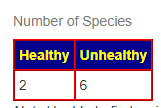
  • Acne – 3 bacteria
  • Crohn’s Disease – 24 bacteria
  • Celiac Disease – 14 bacteria
  • Chronic Fatigue Syndrome – 13 bacteria

Then I went to Symptom Associated to Bacteria (Citizen Science) and found the following applicable items:

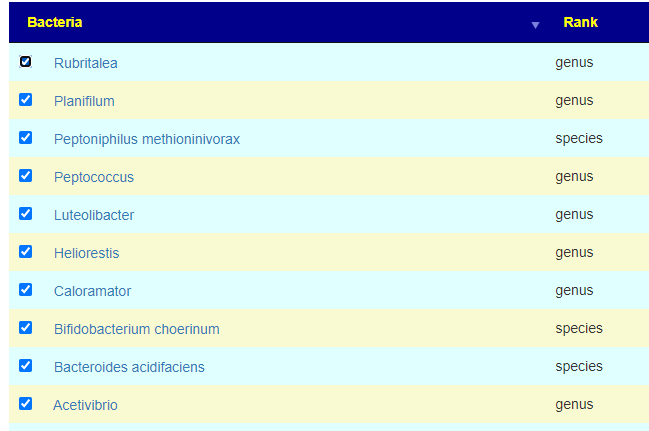
For Official Diagnosis: Chronic Fatigue Syndrome (CFS/ME), most of the matched were at the Genus Level

The result is 40 bacteria added to our hand picked list.

Consensus Highlights

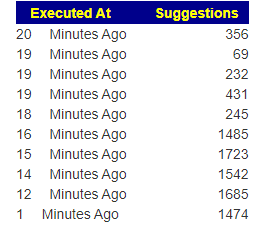
We have a lot of different suggestions over our 10 analysis, often more than 1000!

Suggestions to discuss with your medical professional

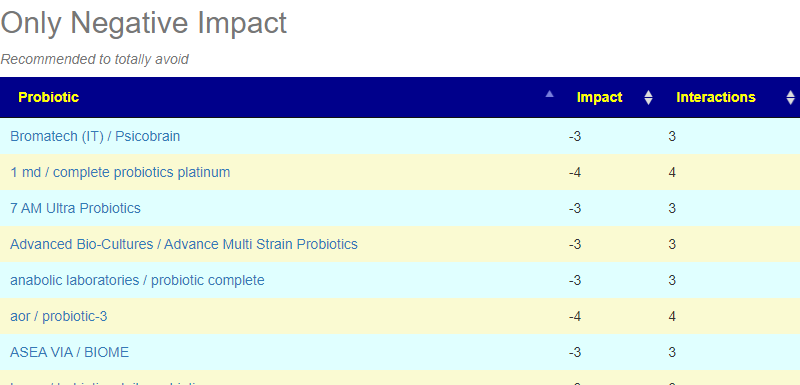
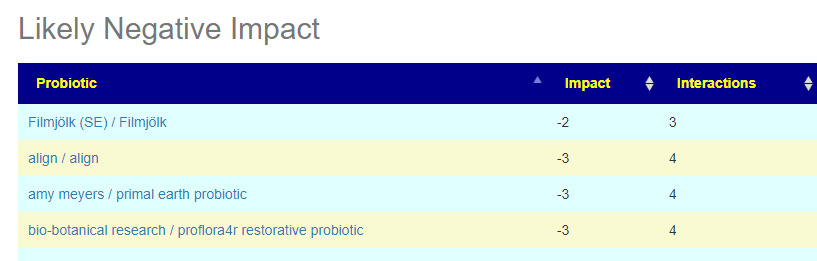
On the avoid list:

Also listed was gluten-free diet. I suspect the type of gluten may be significant.

KEGG Probiotics:

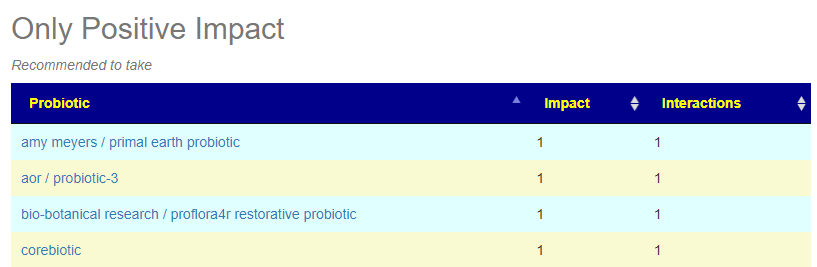
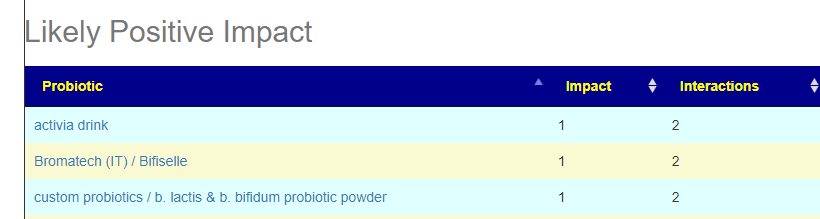
The usual one for ME/CFS are at the top (and were also listed in Safer or Safest Takes) :

For supplements:

  • beta-alanine – Percentile: 9.7
  • D-Ribose – Percentile: 4
  • Glycine – Percentile: 13.6
  • L-Cysteine – Percentile: 13.6
  • L-Threonine – Percentile: 6.5
  • Magnesium – Percentile: 0.1

Both D-Ribose and Magnesium are well studied supplements in a ME/CFS context (confirming predictions to clinical practice the items are linked to CFSRemission Blog).

Bottom Line

At this point I will stop for several reasons:

  • Purpose was to show the method
  • Person has brain fog often, so more notes may be counter productive
  • ME/CFS usually have restricted funds, so keeping the number of items low reduces frustrations over not being able to acquire.

A video will be added in the next few days

Questions And Answers

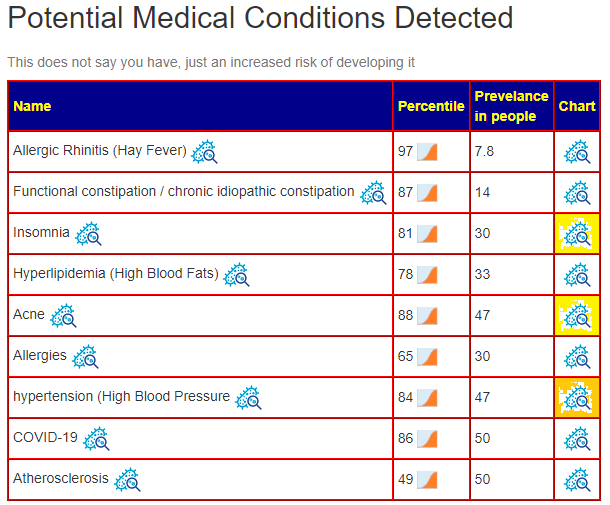
Q: I forgot to mention it, but I do have allergic rhinitis and high cholesterol (as listed under the detected conditions) so this is very accurate.

A: Although I see this often, it keeps surprising me about the accuracy of predictions!

Q: Interesting that it doesn’t pick up on any CFS-related bacteria at a species level, I wonder if this fluctuates and could possibly be because I was relatively low-symptom at the time of the sample, i.e. not in a PEM flare? 

A: You are very likely correct, it does fluctuates. Also, keep in mind that there are many subsets of ME/CFS, so this can be a little hit-and-miss.

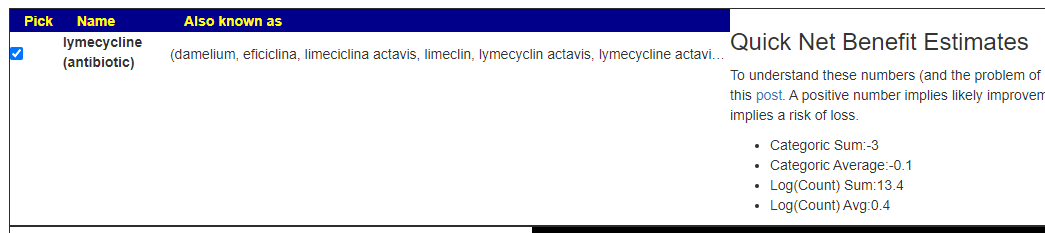
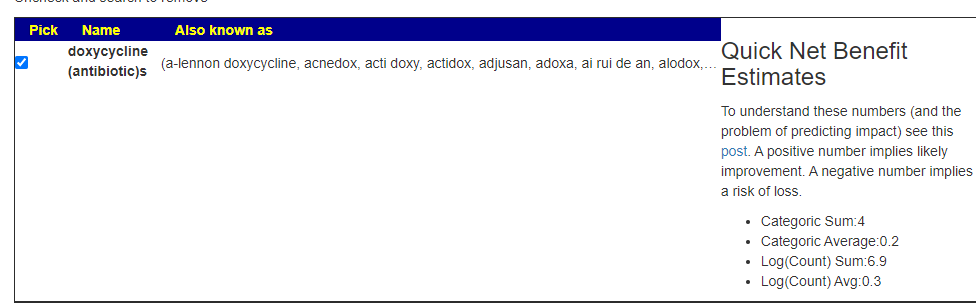
Should I take Lymecycline?

A: This is a little complex, we have mixed results.

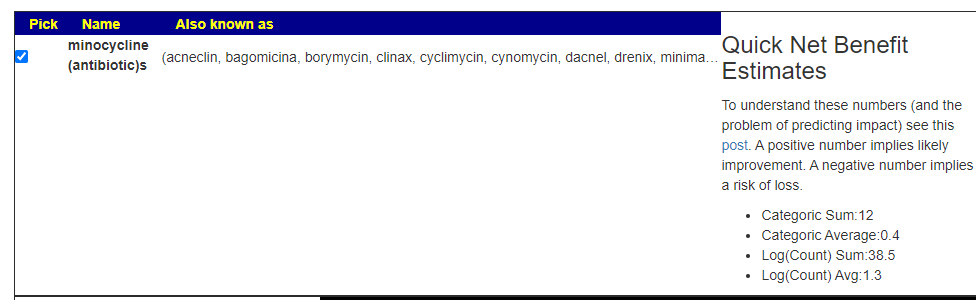
But when I tried a different antibiotic often prescribed for acne, it is all positive

I would suggest making a counter proposal to your medical professional of minocycline instead.

Q: I’d be interested in your opinion on IgY hyperimmune egg powder supplements for targeting gut pathogens

A: There are many retail products like this. What I found are some vet studies[36 listed here]. I found a list of clinical studies here. My general impression is that it is favorable. There is one word of caution, it appears similar to transfer factor — i.e. the IgY may be targeted to specific bacteria/infections only. Hence, my advice would be to buy just one unit of it, if no response, change to a different brand when you finish it. Remember my motto: Rotate, rotate, rotate….

A reader experience with CFS and Autism

Sue, a reader in Australia, shared her experience below on the challenge of taking supplements. Other people may have the same challenge. In some cases, retail products additives can be the source of problems. In this house, we tend to make our own or use additive free.

The problem began when Ken Lassesen’s brilliant AI came up with oils my daughter must take by swallowing them, with high probability of success. Coriander, thyme, lavender, perilla oils. She’s been sick to the point of house-bound for years, and we’ve got to get her into life. She has autism and chronic fatigue, and since 2018  Ken Lassesen’s AI  has at least got her out of bed (unexpectedly, skads of licorice and thyme leaves are  key players here) when no kindly, well-informed, hard-working doctor could achieve that.

So- where to get the oils? First call was to my excellent local pharmacy in Sydney – Newton’s – and they told me that their oils shouldn’t be ingested, but they’d heard of a place “somewhere in NSW” called “something like” TERRA,  and they were “a bit expensive”. I found and rang TERRA, and they sent me the oils, one expensive from a company that’s licensed to provide ingestible oils, the other from a second company that I was assured was as good but hasn’t gone through the rigours of getting a license.

Now, how to get them into her. We tried dripping it into Bonvit gel caps  from our local chemist with some “blotting paper” in the bottom of thiamine which she has to take anyway, but they disintegrated almost as we looked at them. Bonvit are  fine with powders, but oils aren’t powders! Then we tried Surgipack’s capsules which were sturdier so they  lasted until she put them in her mouth. A few seconds later, howls of pain.  

Next morning we thought we had the solution and tracked down two sizes of Surgipack, so we put the oil and thiamine mixture into the smaller one and put that inside the bigger one, carefully wiping down the outside surface. We were very pleased with ourselves until a phone call with howls of pain with a burning oesophagus and stomach. I talked her into trying to take them right in the middle of breakfast, and she agreed to give them another go. It was still painful afterwards but she bravely soldiered on, saying that “it might be working” !  But after five days, the pain got too much to bear and she said she’d  “never have that stuff again. However good it’s supposed to be”.

But there must be nasty meds taken all the time, so how do the commercial companies get them into people without the whole nation howling in pain, with mass revolts? They must know something we don’t. 

We have a lot of private compounding chemists here so I rang around and asked them, one after another, if they used special capsules and could I buy some. But they make their money out of compounding, not selling their ingredients, so no. At last I chanced on a chatty girl who said what I needed was enteric-coated capsules”, but that her company couldn’t supply them. She vaguely mentioned legal reasons.

So then, the internet. We immediately found a supplier of enteric capsules in Australia, The Capsule Guy, costing $17 for 250 capsules. They come in sizes and we chose smallish ones, so we could put them inside a larger Surgipack capsule in case of dribbles.

We began 4 days ago. No howls. Then joy.  Yesterday afternoon, her birthday, she went out to the party of a childhood friend who has the same birthday. She only stayed 3 hours before she wilted, but she went out and we are over the moon. Thank you, Ken. You are bringing our daughter into life.

Post-Script

Reading an account like this makes all of the hours that I spent on the blog and web site worthwhile. Thank you Sue for sharing! P.S. Sue started in 2018, it is not an overnight turnaround, it is a slow long march. Each person is unique, as is their microbiome. Microbiome Prescription is specific to an individual’s microbiome and not their diagnosis. The microbiome changes, hence retesting every few months is strongly encouraged.

Using OATS test results to pick Probiotics

In a series of past posts, I walked thru the many pages of a OATS looking at each line in the context of Autism:

The thing that I kept finding is that while issues are identified, evidence-based treatment options are very sparse in the literature. Often none are found. For someone with brain fog, this is beyond possible.

The OATS tests from The Great Plains Laboratory, LLC is what I am referring to.

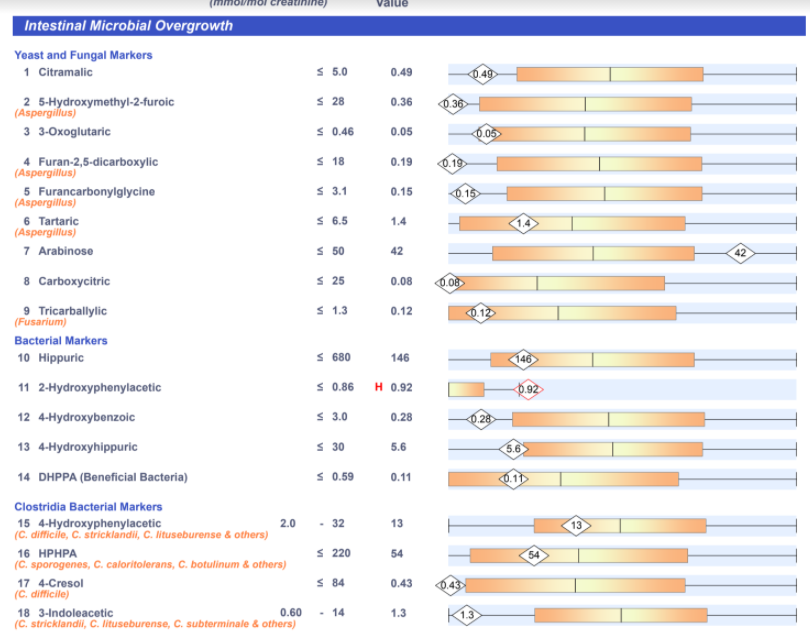
Typical OATS pages

One of the first challenges is the ‘biochemistry jargon’ on the page. Fortunately, every item is given a number which is what I used. If you are interested in Tartaric, then look for OATS6 – no need to try copying the name.

KEGG: Kyoto Encyclopedia of Genes and Genomes to the rescue!

Bacteria produces and consumes compounds, like organic acids. Probiotics are bacteria. There are two paths to connecting probiotics to organic acid:

  • Clinical Studies seeing what they actually change — there are almost none
  • Looking at the Genes in the probiotics and what they consume or produce. KEGG data covers almost all of the probiotics!

KEGG data is not friendly to most people. It is nerdy scientific speak which often require a master’s degree in the right areas to understand. An example page is below.

It contains genomic data on bacteria for some 6000 strains (out of over 10,000,000+ strains). When we look at probiotics, most retail probiotics do not list the strains in it, only the species (one species may have 400 different strains). Many mixtures also do not list the amount of each species.

The Kludge

The solution is to use the available information to give best estimates for species (by aggregating the values for each strain in a species that KEGG has) and to assume equal representation of each species listed for the probiotic. With these assumptions we can calculate what is produced and what is consumed.

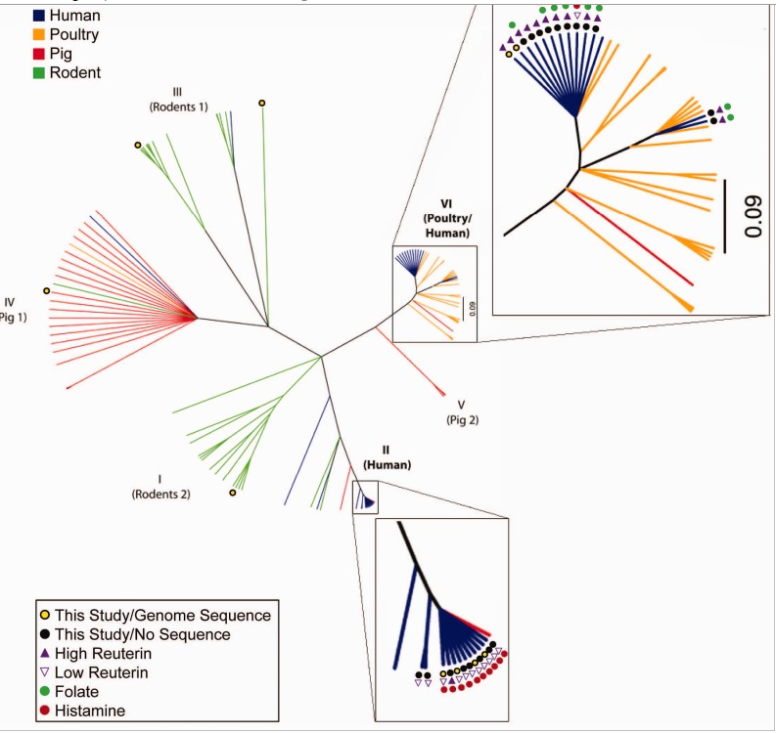
The diagram below shows many of strains of L. Reuteri. We may see that 40% of the strains produce histamine and thus give it a weight of 0.4

From prediction to function using evolutionary genomics: human-specific ecotypes of Lactobacillusreuteri have diverse probiotic functions[2014].

The task of matching up the OATS compound to the KEGG compound is done. As would be expected, some that are on one list, may not exist on the other list. We do have 51 matches out of 76 listed on the OATS test. Going the other way, we have 3,184 compounds that retail probiotics produces or consume (i.e. 3,108 that are missing from the OATS test!).

The result was this page: Probiotics to Change KEGG Compounds

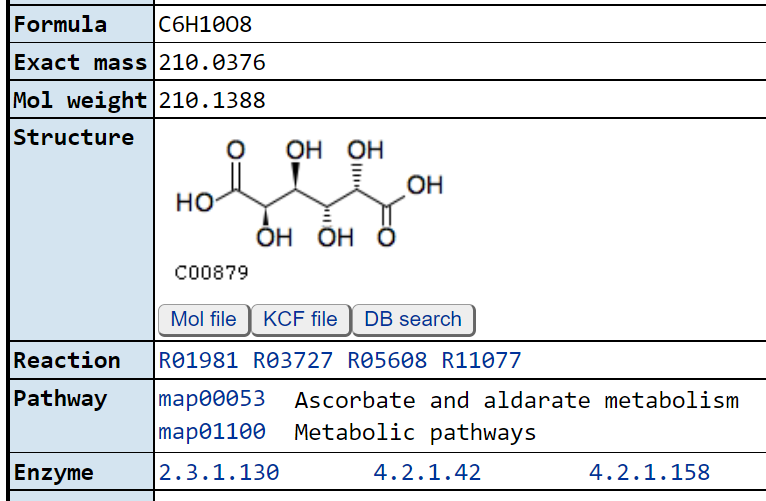
There are some challenges, For example: OATS report on Arabinose but not which type. KEGG provides both versions (What is the difference between D- and L-? It is which way that the molecule is twisted – to the Left or the Right (D – Droite from French) which impacts chemical interactions)

In the video below, I walk thru how we use OATS results and this page with the analysis post listed above. Other test results can be used. OATS happened to be inspiration for this feature.

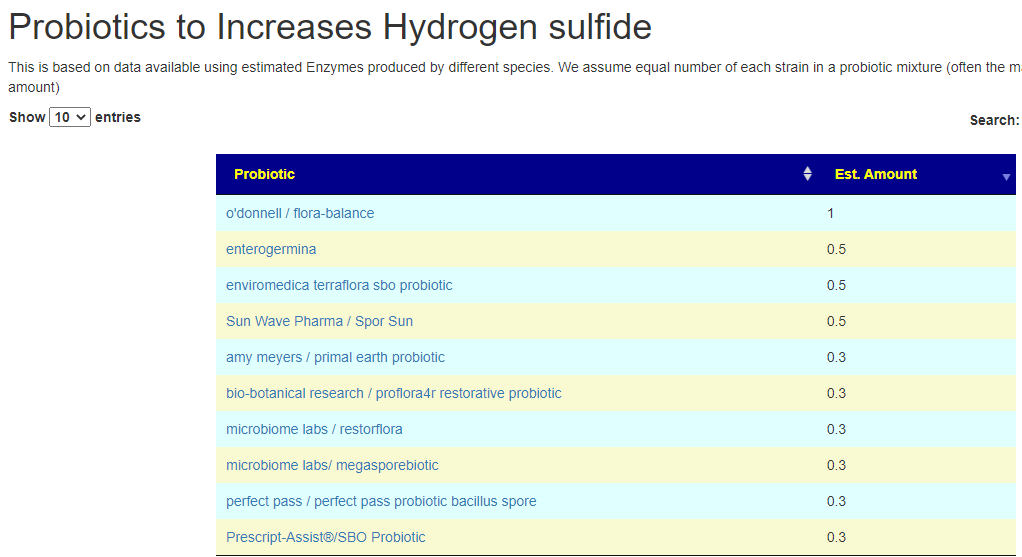
Some of the items listed will be on the OATS tests, other may not. For example, you may have high Hydrogen sulfide which may be reported from a Small Intestinal Bacterial Overgrowth (SIBO) test.

Clicking on the left buttons will take you to a list of commercial probiotics:

If you are dealing with SIBO, you may wish to AVOID these probiotics!


OATS Specific Page

I have created a page that allows OATS data to be entered and then considered as a whole. Picking Probiotics From OATS results. The process is simple, check the boxes where you have high or low results on the OATS test.

At the bottom of the page you will see the results organized into 5 groups:

Brain Fog – Hypoperfusion of the brain in ME/CFS and Long Covid

A reader followed a new article that seems to bear strong echoes from research done 23 years ago by David Berg at Hemex Labs. The article is “CFS/ME, FM: THERAPEUTIC TEST AND FIRST TREATMENT SCHEME FOR PATIENTS WITH CHRONIC FATIGUE AND BRAIN FOG TO ASSIST THE DIAGNOSIS OF PERSISTENT CLOTS AND HYPOPERFUSION.” Oct 2021

 Our approach is that Chronic Fatigue Syndrome and Myalgic Encephalomyelitis (CFS/ME) include several Subgroups according to their pathophysiology and the causes that originate the symptoms, and most of the cases of CFS/ME correspond to a Subgroup in which there is an inadequate functioning of the blood vessels, more specifically a dysfunction of the endothelial cells, which in a high percentage is accompanied by a lower blood flow and a state of long-term hypercoagulability, with the presence of persistent clots that are attached to the vascular walls and also circulating intravascularly.  

There are other Subgroups within CFS/ME, such as that associated with Dysbiosis, SIBO or alteration of the Intestinal Microbiota, a situation in which D-Lactate is increased.

There are also Subgroups associated with Vitamin depletion (especially B complex) and Subgroups associated with decreased hormones (especially thyroid and adrenal).

It should be taken into account that patients with CFS/ME can frequently present symptoms associated with several of the Subgroups of CFS/ME, being frequent that they present at the same time Endothelial Dysfunction, Dysbiosis or SIBO, and vitamin B complex depletion Endothelial dysfunction and persistent clots cause tissue hypoperfusion. Long-term dysfunction of the blood vessel walls and the presence of persistent clots causes a decrease in the perfusion of fluids from the bloodstream to the cells and tissues, which is called tissue hypoperfusion, which implies a lower contribution to cells and tissues of: – Oxygen (generating cellular hypoxia). – Vitamins. – Nutrients. – Hormones. – Other substances.

Long-term tissue hypoperfusion affects the normal functioning of organs and systems, especially those that require a greater supply of oxygen and nutrients, which are mainly the musculoskeletal system, the brain and the lungs. 

Endothelial Dysfunction, Persistent Clots, and Hypoperfusion are not detectable with routine exams

Gustavo Aguirre Chang Aurora Natividad Trujillo Figueredo

The study goes on to focus on elevated D-dimer as the critical test. Unfortunately, this is not as comprehensive as the Hemex panels being done in 1999 onwards by Hemex labs. Hemex lab specialized in coagulation issues, mainly issues with miscarriages caused by hypercoagulation, and stumbled on to the significance of hypercoagulation for ME/CFS. Hypercoagulation is a well established cause of hypoperfusion.

This article gives protocols etc. You may grab a copy here.

Some of my prior posts in this area are listed below:

A review of a ME/CFS Microbiome

Every ME/CFS microbiome is different. IMHO, the root cause is a bad mixture of chemicals and chemical signals being produced by a dysfunctional microbiome that has reached a stabilization point.

Patient

This reader provided detail background which is always desired.

Background:

35yr Male have had ME/CFS for about 7 years now since 2015. In 2018 after first child and really bad sleep it got really bad..would wake up with anxiety for no reason. Major brain fog depressed and tired all the time. Sometimes had to be in bed multiple parts of the day. When I would exercise I would crash 5 hours after exactly for 24 hours which were an extreme version of my symptoms …plus temperature dysregulation, flushed feeling in the face, vision sometimes blurry (blood sugar looked normal), eyes squinty/heavy, felt very rundown, stomach would get inflamed with water, weight gain instead of loss, felt dehydrated even though I drank electrolytes, night sweats, etc. Strangely the period immediately after exercise leading up to the crash I would feel fine. Seen a lot of different doctors, but never felt like the root cause of it all was found. Made a lot of progress working on mental health, positive circle of friends, church/prayer, methylation, detox, nutrition, neurofeedback/ EMDR, and Perrin Technique (lymp drainage massage daily). Tried of other strange out of the box treatments like frequency therapy, applied kinesiology, red light therapy, self learned some acupuncture.   

History:

Child hood trauma, but no serious health problems growing up minus strep throat a few times and bad food poisoning in 2013. Always struggled with a bit of brain fog and ADD like symptoms (can start tasks, but difficult finishing them). I’m an entrepreneur and before my health issues started would play basketball 3x a week for a decade, gym, and martial arts…sometimes all on the same day.  In 2015 went through a stressful mental and physical time starting another business. I really burned the candle at both ends. 

Initial onset was panic attacks , felt like I was going to die driving even though I know that wasn’t logical (fight or flight stuck). EMDR stopped the panic attack issues. Overall made lots of progress, but haven’t healed PEM yet.

Initial Onset Labs/Tests:

-Salivary Test showed tanked Cortisol and Low Neurotransmitters w/High DHEA.

-Blood Sugar and A1C barely a little over normal range.

-High Cholesterol / Trig /LDL and Low HDL

-Gi Stool Test showed candida, pseudomonas, low Bifido..naturopath put me on klaire labs bifido probiotic, super restrictive diet , and grape seed extract to kill candida all for 6 months. (Bifido still low per last 16s years later)

-Mold Test showed Ochrat toxin at 35/17..took some charcoal and glutathione for a while. House tested very low for Mold.

-Non Alcoholic Fatty Liver per Naturopath …corrected in latest lab

Brain Scans QEEG:

-Low power overall in the brain

-Was using Delta waves during the day at times and had a hard time getting into Alpha (neutral gear)

-Never seen anyone with a scan like me nor in their global database

– Lots of stuff going on in subconscious and abnormalities all around

Analysis

On my pending projects list is a database linking microbiome to lab results – still waiting for volunteers (I do not have sufficient bandwidth at present to start the population of data). I have done prior posts on some related items:

The Microbiome

Looking at probable symptoms, entered symptoms and the above history we have a high number of matches with a few items suggested but not listed above (i.e. issues that should be checked)

  • Infection: Epstein-Barr virus Associated Bacteria (re-activation of EBV is common in ME/CFS)
  • Comorbid: Methylation issues (MTHFR)

From an autism group that I follow,  Prevotella copri goes high with the presence of mycotoxin [2020], which may explain this rather dramatic chart below. There does not appear to be a significant active mycotoxin issue at present.

Scanning thru My Microbiome view I note the following:

This produced a very short list of suggestions: Iron, Zinc and lactobacillus reuteri (probiotics) with some interesting avoids:  folic acid,(supplement Vitamin B9),  quercetin,resveratrol, boulardii (probiotics), glycyrrhizic acid (licorice). Adding in items known for parents/children we see some more probiotics suggested:

It is clear that a B-Complex may have questionable results.

Pro Forma for ME/CFS

My usual advice for ME/CFS when brain fog is not too severe is to use advance suggestions and slowly work up from 3%ile until you get at least 10 bacteria identified.

  • 6% –> 6 bacteria
  • 9% –> 10 bacteria
  • 12% –> 15 bacteria

At 9%, we have relatively few to take over 0.4 confidence:  iron, linseed(flaxseed),omega-3 fatty acids and some interesting avoids:  soy, inulin (prebiotic), Cacao, resistant starch,  resveratrol (grape seed),mediterranean diet, lactobacillus casei (probiotics). I say interesting because the avoid items are often seen as to take with ME/CFS. For example,  High cocoa polyphenol rich chocolate may reduce the burden of the symptoms in chronic fatigue syndrome Nutrition Journal [2010].

I increased to 12%, and a lot of items appeared.

Finding a good list of suggestions is an iterative process, I usually want to see a good list of items over 0.4 as suggestions — going up to 12%ile produced the desired goal.

Among the interesting items was:

  • Aspirin – it has the same effect on platelets (one factor of blood coagulation) as reservatrol (an AVOID), and should help with cognitive issues. They impact on the microbiome is different. in my own story, aspirin had a dramatic positive effect taking the maximum dosage of aspirin for the maximum duration had on me, and resulted in my MD becoming a believer that hypercoagulation was part of the CFS condition and ordering tests from Hemex Labs (a specialty lab on coagulation) — a significant part in terms of brain fog.

Neither Kegg suggested supplements nor Kegg suggested probiotics returned anything,

Bottom Line

Compare to others with ME/CFS, their microbiome is not an extremely shifted as is often seen. For probiotic dosages, I recommend looking them up here — often people take insufficient to effect change.

The dominant probiotic suggestion is: Lactobacillus Salivarius. Which is available from several sources. My own favorite source is Custom Probiotics (bottle price can be a shock, but the cost per BCFU is a fraction of competition).

Beginner Guide to Getting Suggestions from Microbiome Part 2 – YouTube

Questions from Person and Answers

  1.  iron – very strange. I eat a lot of red meat and take liver supplements. Did you take iron on your journey and what type?
    1. A: Iron uptake depends on the bacteria present. This article goes into the mechanisms. More related studies [2021] [2021]
  2. EBV – sorry actually have this test. I did a protocol for a month but maybe didnt nuke it enough?  My attached isn’t clear if it’s past infection or reinfection though. 
    1. A: This does not indicate an active case (it could be), it indicates that the microbiome has had signs of an EBV shift….
  3. On my Nirvana Biome – does it distinguish good e coli From bad? It said it was high there as well as c.diff ..on 16s test don’t think either showed up as a concern.
    1. None of the 16s tests distinguish good e coli From bad. It is important to know that most E.Coli are good.
  4. Coagulation – your aspirin comment made a big light bulb go off. I remember a few times I would take aspirin right after basketball which may have been for some other issue but I remember feeling like I didn’t crash/get PEM.  Is there any studies on what a good dose might be for this.
    1. A: “baby aspirin” (up to 100 mg) daily is well accepted (see this summary). I would suggest (in consultation with your medical professional), trying to find an effective daily dosage each day. Ideally, it would be taken with food to reduce risks. Take aspirin over other items like acetaminophen.
  5. Looks like I can rule our mycotoxins. I had a bit of elevated ochra a …worked on it a bit. Good news 
    1. A: Reasonable intrepretation
  6. I have a friend who has similar issues and I directed him to your site. He’s getting a 16s and just had a spect scan. Let me know if you’re looking for more blog cases. Happy to ask him. Please let me know if there is anything I can do to help you too!
    1. Yes, please do.