Histamine and Mast Cell Stabilizers

Recently I have seen a lot of difference of opinions on social media on these issues. There are several blogger who write on this, for example:

I was well trained at University to always work from primary sources (hence the joys of learning at least some greek, latin, french, german, danish for history courses). Bloggers are secondary and often tertiary sources – with the risk of reading more into stuff then there may actually be, or spinning the data to gain readers.

On the flip side, some of their advice comes from experience. The unfortunate aspect of experience is that there is no control for placebo effects, or anti-placebo effects, or effects due to other factors with the person.

You may also wish to read DAO and Probiotics, a prior post

To me, the primary sources are two grades:

  • Individual specific studies (which suffer from a variety of bias risks)
  • Review Articles (unlike bloggers, these are peer reviewed)

Wikipedia lists the following as Mast Cell Stabilizers, most are prescription drugs

The drug bank list of Histamine H1 Antagonists, Non-Sedating provides a similar link with the KEGG providing nice diagrams here, with the following enzymes:

07216 Catecholamine transferase inhibitors
07219 Cyclooxygenase inhibitors
07024 HMG-CoA reductase inhibitors
07217 Renin-angiotensin system inhibitors
07218 HIV protease inhibitors
  • “Aspirin enhanced histamine release from basophils via increased Syk kinase activation” [2013]

 There is no evidence to suggest that sensitization against drugs occurs more frequently among patients with presumed histamine intolerance compared to patients with normal tolerance to histamine. However, preclinical data suggest interactions between some drugs and histamine catabolism. Nevertheless, the clinical relevance of these findings remains unclear as histamine in humans can be catabolized by different pathways[Editor: DAO and HNMT]. There are no drugs for which induction or worsening of histamine intolerance has been established clinically.

Drug hypersensitivity in patients with presumed histamine intolerance and mast cell activation disease [2019]

In terms of citizen science, we find some strong statistical associations for some bacteria shifts

From: https://microbiomeprescription.com/Explorer/ToSymptomsSummary?id1=133

The Review

Mast Cell Stabilizers

  • Twenty-first century mast cell stabilizers [2013] See Table 1 “Naturally occurring mast cell stabilizers”
    • I have a page that links to what contain various flavonoids here, with the amount (and mast cell stabilizers labelled)
      • Often people work off “contains” only, ignoring the amount, for example
        • Apigenin: Kumquats has 21 mg/gram and mangos 0.01 mg/gram — a 2000x difference!
    • Example: Apigenin
  • PubMed reports nothing for probiotics that have this effect. Nor for bifidobacterium, nor lactobacillus
    • For Bacillus, we find evidence of histamine release [1975], exactly the wrong response

DAO Response

There are chemicals/vitamins that DAO and  Histamine N-methyltransferase (HNMT) ( the key natural histamine removers) need to act upon histamines. These include:

  • “Vitamin B6 is a collective term for all 3-hydroxy-2-methylpyridines which act as vitamins. Vitamin B6 substances like pyridoxine, pyridoxal, pyridoxamine, and their phosphorylated metabolites are all equally effective. Pyridoxal-5-phosphate and pyridoxamine-5-phosphate fulfill the functions of a coenzyme in the organism [for activation of DAO].” [2014]
  • Impact of oral vitamin C on histamine levels and seasickness [2014]
    Note: “Histamine (p < 0.01) and DAO levels were increased after the intake of vitamin C (p < 0.001)”
    • The p values suggests that DAO increased significantly more than histamine.
    • This may be the source of QAnon belief that citric fruits/vitamin C is bad.
  • “A cross-over study in former East-Germany on patients who had infection-related asthma found that 5 g/day vitamin C decreased the proportion of participants who had bronchial hypersensitivity to histamine by 52 percentage points (95% CI: 25 to 71).” [2013]
  • “copper …. did significantly increase two enzyme activities (SOD and DAO)” [1997]
  • “diamine oxidase (DAO) activity were both increased (linear, p = 0.0004, 0.001, respectively) with Defatted Rice Bran…” [2019]

Negative Impacts

Caution: DAO production seems to increase with gut permeability issues (GPI). Thus something that improves GPI may not actually decrease DAO production, the change of DAO may be a side effect.

  • “selenium-enriched yeast …significantly decreased the serum concentrations of diamine oxidase (DAO)” [2020] – unclear if the yeast or the selenium was the primary cause.
  • “Tannic acid … reduced diamine oxidase (DAO) activity”  [2020] ( Tea, coffee, wine, chocolate)
  • ” Antimalarial drugs that inhibit histamine N-methyltransferase also inhibit putrescine catabolism in vivo and DAO activity in vitro” [1981]
  • “putrescine supplement…. increase in putrescine at 1 h and in diamine oxidase (EC 1.4.3.6) activity within 3-6 h” [1986]
    • “putrescine is found in virtually all foods of plant origin, and is particularly abundant in fruits and vegetables, notably citrus fruits (1,554 nmol/g) and green peppers (794 nmol/g) (961). There are also high amounts of putrescine in wheat germ (705 nmol/g) and soybean sprouts (507 nmol/g) (3770).” [2019]
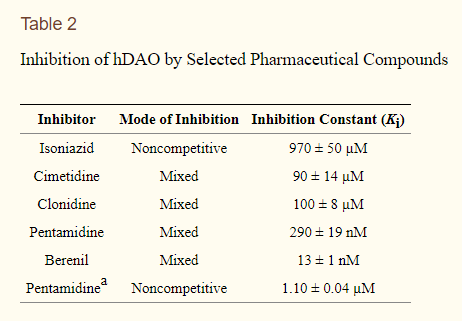
Drugs that inhibits DAO The structure and inhibition of human diamine oxidase [2009]

Histamine Production

Many probiotics produce histamines, for a list see our commercial probiotic list. For many probiotics, we could not find PubMed studies. Lactobacillus buchneri has been implicated in histamine-poisoning[1991].
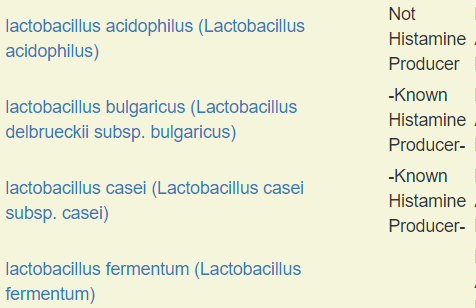
See this post to see why strain is often not sufficient, L.Reuteri may or may not produce histamine depending on specific strain.

Foods

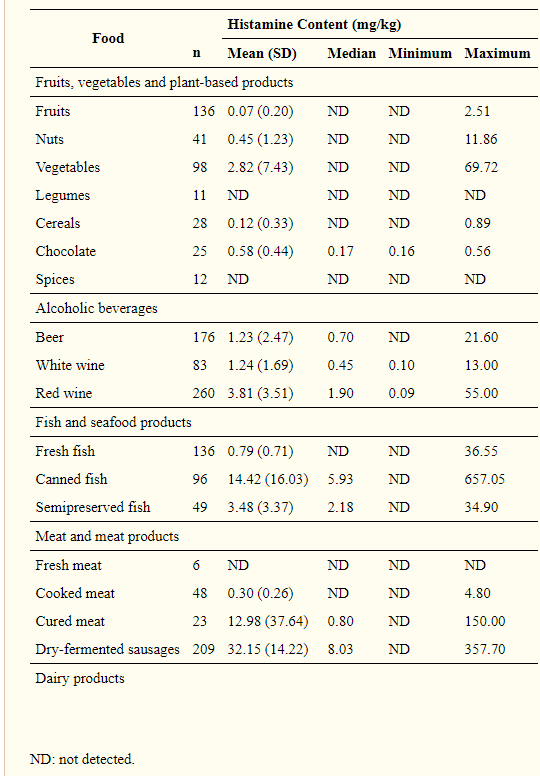
Fermented foods are usually uncertain for which bacteria are fermenting it. As we see above, many produce histamine. Studies of commercial Kefir have found that the listed bacteria and the actual are usually in disagreement. Bottom line: no fermented food. This includes sauerkraut, soy, miso, red wine and salami[2020] [1991] .This usually extends into no left-overs, most items left in the fridge (or out) indefinitely– get covered in furry green/black coats. This extends to many cheeses [2020][1995], with Feta Cheese being a possible exception [2020]. For cheese, the same cheese name (like Stilton and Camembert cited below), from one producer may be fine and from another bad — the difference is which strains (not species) of bacteria was used. This also applies to yogurts. For “wild Culture cheeses” it is Russian Roulette for histamines.

Very fresh fish can be safe, but they are prone to producing histamine quickly once skinned [2020].

This also applies to items like nuts and beans that are not fresh.

Citrus fruits are high in histamines” [Internet Legend?] – alas, I could not find any usable studies. I did find this

In this study, aqueous extracts of peels of best known citrus fruits namely grapefruit (Citrus paradisi), lemon (C. limon), lime (C. aurantifolia) and orange (C. sinensis) were used. Depending on polyphenols content, the extracts were graded as orange > lemon > lime > grapefruit. Effects of the extracts on the release of histamine from rat peritoneal exudate cells (PECs) was measured to know anti-allergic activity. All extracts inhibited the release of histamine from rat PECs induced by the calcium ionophore A23187

Anti-histamine release and anti-inflammatory activities of aqueous extracts of citrus fruits peels [2013]
  • “Nasal spray from lemon and quince (LQNS) is used to treat hay fever symptoms and has been shown to inhibit histamine release from mast cells ” [2016]

Other Histamine Producing Foods

In researching another possible internet myth, pineapples and banana. I found a summary of a study which could easily be misread to imply histamine issues. After some effort, I found the full text of the article and shows the results of their lab tests below. The summary statedHistamine, tyramine, noradrenaline, serotonin and other pressor amines occur in fruits and fermented foods such as bananas, pineapples, cheese and wine. ” It does not state that each is found in every fruit and fermented food

Naturally Occurring Toxic Factors in Plants and Animals Used as Food [1966]
Grasping for straws?

“Abnormal association between mast cells and nerve fibers, and increased release of tryptase and histamine have also been described in IBS patients [7],” [2017] has led to the not-demonstrated belief that what improves IBS also improves histamine. i.e. Beneficial effects of Saccharomyces boulardii CNCM I-745 on clinical disorders associated with intestinal barrier disruption [2019]

Highest Mast Stabilizer Foods

As mentioned above, we should not ignore the amount, fortunately the database behind Microbiome Prescription, allows us to compute across all natural mast cell stabilizers and get concrete numbers.

By amount of Mast Cell Stabilizers

Foodmg/gram
Spices, parsley, dried4523.25
Spices, celery seed841.05
Capers, canned303.89
Spices, saffron205.48
Dill weed, fresh68.48
Thyme, fresh47.75
Elderberries, raw27.35
Kumquats, raw21.87
Peppermint, fresh18.05
Cranberries, raw16.15
Cranberries, dried, sweetened12.83
Blueberries, cultivated (highbush), raw9.53
Blueberries, frozen, unsweetened7.55
Cranberry sauce, whole, canned, OCEAN SPRAY6.51
Pitanga, (surinam-cherry), raw6.2
Acerola, (west indian cherry), raw5.79
Figs, raw5.47
Currants, european black, raw5.16
Raisins, golden seedless5.11
Prickly pears, raw5.04
Apples, raw, with skin4.27
Apples, Red Delicious, raw. with skin3.87
Blackberries, raw3.85
Apples, Gala, raw, with skin3.8
Apples, Golden Delicious, raw, with skin3.69
Spices, marjoram, dried3.5
Lemons, raw, without peel3.07
Olives, ripe, canned (small-extra large) – May be high in histamine [2000]2.8
Rosemary, fresh2.55
Apples, Granny Smith, raw, with skin2.54
Cherries, sweet, raw2.53
Mulberries, raw2.47
Cranberry sauce, canned, sweetened2.44
Apples, Fuji, raw, with skin2.36
Apricots, raw2.26
Gooseberries, raw2.11
Applesauce, canned, unsweetened, without added ascorbic acid (includes USDA commodity)2
Juice, lemon, canned or bottled1.83
Plums, dried (prunes), uncooked1.82
Kiwifruit, green, raw1.81
Cherries, sour, red, raw1.71
Strawberries, raw1.61
Raspberries, raw1.48
Jujube, raw1.26
Raspberries, frozen, red, unsweetened1.14
Juice, pomegranate, bottled1.11
Apples, raw, without skin1.07
Strawberries, frozen, unsweetened0.98
Grapefruit, raw, pink and red, all areas0.94
Dates, deglet noor0.93
Sauce, pasta, spaghetti/marinara, ready-to-serve0.92
Watermelon, raw0.91
Oranges, raw, navels0.91
Plums, raw0.9
Peaches, raw0.88
Pears, raw0.84
Oranges, raw, all commercial varieties0.77
Juice, grape, canned or bottled, unsweetened, without added ascorbic acid0.75
Melons, cantaloupe, raw0.72
Nectarines, raw0.69
Juice, apple, canned or bottled, unsweetened, without added ascorbic acid0.58
Olives, pickled, canned or bottled, green May be high in histamine [2000]0.56
Juice, lime, raw0.51

By Number of different Mast Cell Stablizers

Different flavonoids may have different responses, hence the most varied should also be considered.

FoodFlavonoids Counts
Raspberries, raw6
Strawberries, frozen, unsweetened3
Oranges, raw, all commercial varieties3
Apples, raw, with skin3
Blueberries, cultivated (highbush), raw3
Blueberries, frozen, unsweetened3
Cranberries, raw3
Kiwifruit, green, raw3
Lemons, raw, without peel3
Mangos, raw2
Melons, cantaloupe, raw2
Oil, olive, salad or cooking2
Cranberry sauce, canned, sweetened2
Currants, european black, raw2
Dill weed, fresh2
Elderberries, raw2
Gooseberries, raw2
Grapefruit, raw, pink and red, all areas2
Capers, canned2
Cherries, sour, red, frozen, unsweetened2
Cherries, sour, red, raw2
Cherries, sweet, raw2
Cranberries, dried, sweetened2
Apricots, raw2
Bananas, raw2
Blackberries, raw2
Oranges, raw, navels2
Peaches, raw2
Peppermint, fresh2
Pitanga, (surinam-cherry), raw2
Prickly pears, raw2
Raisins, golden seedless (because of age, histamine risk)2
Raspberries, frozen, red, unsweetened2
Strawberries, raw2
Thyme, fresh2
Watermelon, raw2
Rosemary, fresh2
Spices, celery seed2
Spices, parsley, dried2
Acerola, (west indian cherry), raw2

Bottom Line

I will gladly take comments citing gold standard sources (PubMed with full test), please do not add comments about so-and-so saying something is bad. I dislike QAnon medicine.

The above should give a framework for diet and cooking, as points

  • Use items high in mast cell stabilizers
  • No fermented foods or left overs
  • No ‘old raw’ ingredients (i.e. nuts, beans, etc) – unfortunately, most of these do not have “Picked dates” on them. Bad storage (i.e. high humidity, temperature) is also a factor.
    • Dried fruit/vegetables have significant histamine risk
    • Canned food is unclear, but there are cases of problems from some manufacturers[2010].
  • Fresh frozen is usually fine. We buy blueberries originating at a far 4 miles away. We know that the temperature is cool when they are harvested and thus the risk of bacterial growth on them is low. Likely much lower than “fresh blueberries” at the market that was shipped from Chile and have been on display for 3 days.
    • Find out when fruit, vegetables etc are delivered to your market, you want to shop the next day — avoiding all old looking items
  • Peel fruits etc, immediately before consumption. Skins evolved to protect the contents from bacteria (i.e. histamine producing) growths

Whenever you hear an avoid (example list)— do your homework on it. Use PubMed exclusively. One of the best items for mast cell stabilization is Kumquats, which is on many avoid lists because it is in the citric family…. another QAnon recommendation.

IBS/Gut permeability appears to be a significant co-factor.

Evidence please! Studies, not the volume of people repeating rumors!

Child Anxiety and Microbiome

A reader with an autism child who has seen increasing anxiety asked for me to do an update on Anxiety. Given that it is a child, I raise my selection criteria to human studies, ideally on children. I have excluded Cognitive Behavior Therapy and Drug studies. My prior posts (often citing mice studies) are:

“Gut bacteria influence behavior, and both depression and anxiety symptoms are directly associated with alterations in the microbiota.” [Psychobiotics: Mechanisms of Action, Evaluation Methods and Effectiveness in Applications with Food Products 2020] It supplies a list of studies where depression or anxiety is reduced by probiotics. Probiotics that cites anxiety improvement include:

  • Bifidobacterium longum
  • Bifidobacterium breve
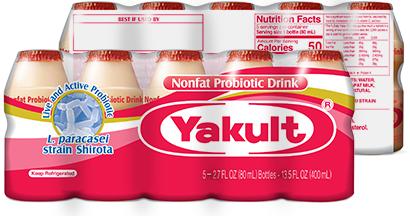
  • Lactobacillus casei Shirota (Yakult)
  • Lactobacillus plantarum
  • Lactobacillus rhamnosus
  • Faecalibacterium prausnitzii

Vitamins

  • Vitamin D supplementation improves anxiety but not depression symptoms in patients with vitamin D deficiency [2020]
  • Tryptophan supplements lacks clinical human studies, but appears to be a low risk item, especially if serotonin levels are lower. [2017] [2020]
    • Note: Walnuts are a source for tryptophan and magnesium [WebMD] — Walnuts and Magnesiums are on this child suggestions list from Microbiome Prescription.
  • “Root of the Ayurvedic drug W. somnifera (Aswagandha) appears a promising safe and effective traditional medicine for management of schizophrenia, chronic stress, insomnia, anxiety, memory/cognitive enhancement, obsessive-compulsive disorder” [2020]
  • ” herbal combination containing St. John’s Wort, Valerian, and Passionflower….
An external file that holds a picture, illustration, etc.
Object name is 10354_2012_165_Fig1_HTML.jpg
Herbal triplet in treatment of nervous agitation in children [2013]
  • “Exercise as an intervention for anxiety and depression has been demonstrated in both of the animal studies and human clinical trials. “[2020]

Bottom Line

Vitamin D supplement will not show short term improvement, it takes time to raise the level. (Lots of )Fresh walnuts and Aswagandha would be my first choice for my child. Then keeping Yakult handy, available on request, to the child. Lots of walks (since playground play is likely not viable in this age of Covid)

Yakult product information and nutrition facts | Yakult & Yakult Light |  Probiotic Drink

As with all medicines, natural or otherwise, please consult with experts who are experienced in their actions, interactions, contraindications and potential side effects before starting this or any other supplement program.

DAO and Probiotics

A reader requested me to do a review of the literature on probiotics and DAO as a result of my post, The Dilemma of D-Lactate Free Probiotics. As background on why DAO is important for some people, see:

The purpose of this post is to focus on DAO (and not treating histamine issues).

Returning to DAO and probiotics, the news is not good:

  • “Rats that received oral C. butyricum or butyrate had reduced intestinal injury and plasma levels of DAO, LPS, and inflammatory cytokines.” [2020]
  • Streptococcus thermophilesdecreased endotoxin (ET), D-lactate (D-LA) and diamine oxidase (DAO) content in serum. [2020]
  • ” the serum DAO activity and D-lactate concentration significantly increased by fluoride were also reduced (P < 0.05) by…Lactobacillus johnsonii [2020]
  • ” DAO, endotoxin and D-lactate levels were significantly reduced following chronic ethanol consumption.” [2019] — Have lots of alcohol to reduce D-lactate!
  • “the Lactobacillus plantarum group exhibited reduced serum levels of diamine oxidase (DAO) compared with the p-control group” [2019]
  • ” Bacillus amyloliquefaciens …  significantly decreased activity of DAO compared with aureomycin group. [2018]
  • “Bifidobacterium or Lactobacillus … reduced plasma DAO and D-lactate. [2014]

The latest incursions into the probiotic market of claims have posited the amelioration of oxidative stress via potent antioxidant attributes or limiting the administration of probiotics to those species that do not produce D-Lactic acid (i.e., claims that D-Lactic acid acidosis is linked to chronic health conditions)..there is no place in science and medicine that supports unsubstantiated claimsExtravagant industry based notions continue to fuel the imprimatur of distrust and skepticism that is leveled by scientists and clinicians at an industry that is already rife with scientific and medical distrust and questionable views on probiotics. 

Probiotics, D-Lactic acidosis, oxidative stress and strain specificity [2017]

Histamine Intolerance: The Current State of the Art [2020] is a very informative read

  • “DAO (EC 1.4.3.22), also called histaminase or amiloride-binding protein, is a copper-dependent amino oxidase encoded by the AOC1 gene located on chromosome 7 (7q34-36) [14,15,16]. ” – so raising copper levels above average may be helpful (but not in excess).
    • Note that this refers to KEGG Enzyme, a recent addition to the Microbiome Prescriptions – alas, none of the bacterias or fungi associated with this is reported in current uploads.
  • There is an alternative,  histamine-N-methyltransferase (HNMT). “Thus, depending on its location, the histamine present in the body is deaminated or methylated by the action of the enzymes DAO and HNMT, respectively “
    • ” Histamine N-methyltransferase (HNMT) is a histamine-metabolising enzyme expressed in the brain…Clinical studies have suggested that single nucleotide polymorphisms of the human HNMT gene are associated with several brain disorders such as Parkinson’s disease and attention deficit hyperactivity disorder. ” [2019]
  • ” DAO deficiency has also been linked to certain functional gastrointestinal disorders, such as carbohydrate malabsorption and nonceliac gluten sensitivity (NCGS) [63,73,77,78,79]. “
  •  It has been estimated that approximately 20% of the European population regularly take DAO-inhibiting drugs, which significantly increases the number of people susceptible to the adverse effects of dietary histamine [28]

This article gives a nice, high level summary

Fruits, Fresh Meat, and Legumes are the safest

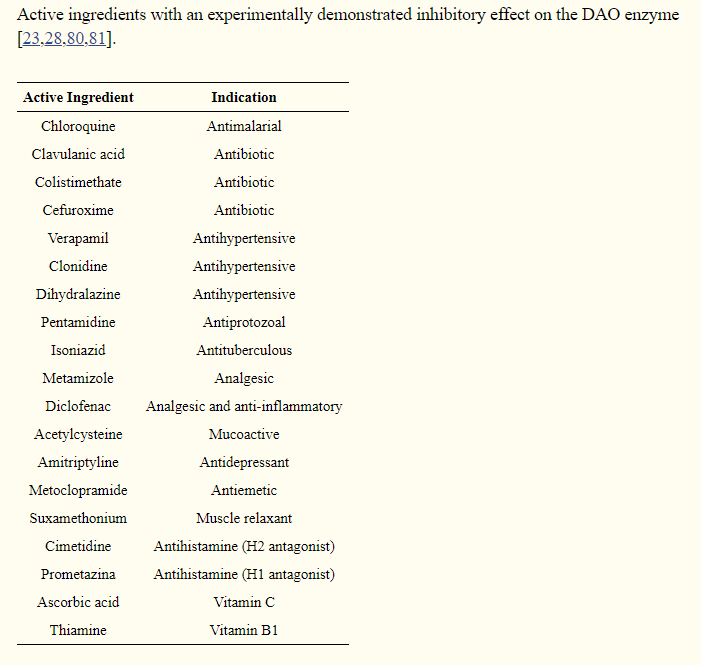
It is important to note that not only probiotics can reduce DAO levels, but many common supplements can too:

Vitamin B1 and Vitamin C should be avoided with histamine issues

Bottom Line

Avoid probiotics unless there is a very compelling reason to use them (i.e. solid studies), Vitamin B1 and Vitamin C. Radical ways to improve DAO levels: lots of fluoride and alcohol (not recommended).

IMHO, the promoter of the probiotics products claiming help for histamine is under a moral obligation to demonstrate with a study that they work. For these products, a study with 15 control and 15 with brain fog/high d-lactate by lab, is a very very low cost study. Take DAO and D-Lactate readings at start for all, give them the probiotics for 30-90 days, remeasure… then publish. BEAUTIFUL MARKETING MATERIAL. The absence of such publications strongly suggests that this is now pure marketing hype (based on a logical idea and being “sold” on logic and not on evidence based studies). For D-Lactate study likely was done with no (or negative) results – which is exactly what was reported in the study below [that did get published, likely because it was a registered trial].

“Open-label pilot for treatment targeting gut dysbiosis in myalgic encephalomyelitis/chronic fatigue syndrome: neuropsychological symptoms and sex comparisons’ 2018 – very similar product to below. “A small, negative correlation was observed between change in D:L lactate concentration ratios and change in Streptococcus count for the total sample (r s  = − .243, p = .142). ” This is NOT STATISTICALLY SIGNIFICANT ( p < 0.01 is what we want to see). 

Probiota Histiminix

This product claims ” contains probiotic species that have been carefully selected to exclude those that are known to increase histamine in the gut.” They omit to state that it probably decrease DAO. It contains:

  • Bifidobacterium infantis
  • Bifidobacterium bifidum
  • Bifidobacterium longum
  • Lactobacillus salivarius
  • Lactobacillus plantarum (study cited above states this species reduced DAO)
  • Bifidobacterium lactis
  • Bifidobacterium breve

Post Script for those with Histamine issues

This page may be useful, it includes how to check for DNA mutations that can result in low DAO or HNMT.

Addendum

Using KEGG for DAO and HNMT, we do find that DAO and HNMT are produced (i.e. have the genes to produce) by the following which are not technically probiotics (not bacteria), but are called such by some people.

  • Fungi
    • DAO
      • Ascomycetes
      • Basidiomycetes
      • Microsporidians
    • HNMT
      • Ascomycetes
      • Basidiomycetes
      • Microsporidians

Ascomycetes in both cases contains Saccharomycetes, and these specific strains (both available as a “probiotic” ):

There have been no studies of these on human histamine impact. There are reported allergic reaction (rare).

Feedback

A reader forward this image

Image may contain: text that says "Microorganisms capable of degrading histamine (DAO producers) Leuconostoc mesenteroides Leuconostoc sp. Escherichia faecium sp.group Sarcina lutea Lactobacillus curvatus Lactobacillus sakei Lactobacillus sp. Weisella hellenica Capable of degrading food sources of histamine and may reduce total histamine load Possible future role of probiotics? Dapkevicius.M Nout MJR, RomboutsF Houben JH, Wymenga W. ogenic amine format ion and degradat.ion by potential ish silage starter ganisms ntemationalj ouma Food Microbiology 2000 7:107 euschner Heidel Hammes N. Histamine and tyramine degradat Microbiology 1998 39:1-10 by ood er International of Food"

I looked at the sources of this information — food processing. Such studies are very very difficult to work from — because of murky causality. Is the observed change due to antibiotics produced by them inhibiting the bacteria producing histamines. We are also dealing with a very high oxygen environment (compare to the body). What we need to answer the questions are human studies…. where they are tested, is the effect an increase or decrease of DAO. So far (see above), lowering of DAO.

The Dilemma of D-Lactate Free Probiotics

A reader asked me to do a review of Spectrumceuticals Pro4-50 D-Lactate Free Probiotics which contains

  •  L. rhamnosus,
  • B. lactis,
  • B. breve and 
  • B. longum

Custom Probiotics offers a similar one labeled with the strains.

  • L. Rhamnosus, Strain LR-32
  • L. Salivarius, Strain LS-33
  • B. Lactis, Strain BL-04
  • B. Bifidum, Strain Bb-06
  • B. Infantis, Strain Bi-26
  • B. Longum, Strain BL-05

The latest incursions into the probiotic market of claims have posited the amelioration of oxidative stress via potent antioxidant attributes or limiting the administration of probiotics to those species that do not produce D-Lactic acid (i.e., claims that D-Lactic acid acidosis is linked to chronic health conditions)..there is no place in science and medicine that supports unsubstantiated claims. Extravagant industry based notions continue to fuel the imprimatur of distrust and skepticism that is leveled by scientists and clinicians at an industry that is already rife with scientific and medical distrust and questionable views on probiotics. 

Probiotics, D-Lactic acidosis, oxidative stress and strain specificity [2017]

We should note a few things from the literature:

  • ” Gut permeability markers (D-lactate and diamine oxidase (DAO))  …. the serum DAO activity and D-lactate concentration significantly increased by fluoride” [2020]
    • Translation: No fluoride toothpaste or fluoridated water (beware of bottled water – it’s often sourced from civil fluoridated water systems)
  • “The indicators of intestinal mucosal barrier function, such as Dlactate, endotoxin, and diamine oxidase, were significantly improved and the systemic inflammation (interleukin 10) was attenuated after probiotic [live Clostridium butyricum plus Bifidobacterium infantis] therapy. “
  • “D-lactic acidosis is characterized by brain fogginess (BF) and elevated D-lactate and occurs in short bowel syndrome….  SIBO was more prevalent in BF than non-BF group.  After discontinuation of probiotics and a course of antibiotics, BF resolved and gastrointestinal symptoms improved significantly (p = 0.005) in 23/30 (77%).”  [2018]
  • “Compared with control, d-lactate content, diamine oxidase activity, and adrenocorticotropic hormone level in serum decreased significantly [with Bacillus licheniformis]” [2013]
  • “a stand-alone synbiotic treatment was started, specifically Bifidobacterium breve Yakult and Lactobacillus casei Shirota as probiotics, and galacto-oligosaccharide as a prebiotic. Serum D-lactate levels declined, and the patient has been recurrence-free for 3 years without dietary restriction.’ [2013]
  • ” she was treated with sodium bicarbonate and oral antibiotics. The probiotics the patient had taken were likely the cause of D-lactic acidosis and should therefore be avoided in patients with short bowel syndrome.” [2009]

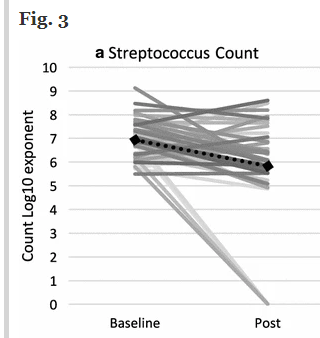
The reader requesting this review cited “Open-label pilot for treatment targeting gut dysbiosis in myalgic encephalomyelitis/chronic fatigue syndrome: neuropsychological symptoms and sex comparisons’ 2018. Which used the above mixture. “A small, negative correlation was observed between change in D:L lactate concentration ratios and change in Streptococcus count for the total sample (r s  = − .243, p = .142). ” This is NOT STATISTICALLY SIGNIFICANT ( p < 0.01 is what we want to see). In fact, a chart in it illustrated the problem of using averages with the microbiome.

A small percentage had a dramatic effect with treatment — this cause the average to go down, but the change was not statistically significant (i.e. may be randomness)


Bottom Line

The apparent reason for the promotion of D-Lactate Free probiotics is to reduce D-Lactate levels. There is no gold standard (or even silver standard) evidence that the above probiotics will do that. The dominant successful way of treating D-Lactic Acidosis is with antibiotics and avoidance of probiotics.

The best documented, all probiotic treatment is:

  • Clostridium butyricum plus Bifidobacterium infantis
Promoter’s Moral Obligation

IMHO, the promoter of these products is under a moral obligation to demonstrate with a study that they work. For these products, a study with 15 control and 15 with brain fog/high d-lactate by lab, is a very very low cost study. Take DAO and D-Lactate readings at start for all, give them the probiotics for 30-90 days, remeasure… then publish. BEAUTIFUL MARKETING MATERIAL. The absence of such publications strongly suggests that this is now pure marketing hype (based on a logical idea and being “sold” on logic and not on evidence based studies). A study likely was done with no (or negative) results – which is exactly what was reported in the above study [that did get published, likely because it was a registered trial].

The Dilemma

The literature indicate that reducing D-Lactate also reduces DAO. Insufficient DAO is associated with Mast-Cell Activation and Histamine issues. There is a need for a balance here. A tightrope that may need to be carefully walked.

Sleep Consequences

Sleep issues in ME/CFS may be connected to excessive D-Lactic acid (A known characteristic of ME/CFS)

Results and conclusion: Administration of L-lactate does not influence sleep-wake cycle of experimental animals. At the same time, its artificial optical analog D-lactate induces the significant (as compared to the control) decrease in wake (34.8% to 26.5%) and increase in slow wave sleep (57.4% to 69.2%). It has been suggested that D-lactate may be the antagonist of one or several L-lactate receptors.

[D-lactate as a novel somnogenic factor?] [2020]

MAST CELL ACTIVATION SYNDROME (MCAS) and the Microbiome

A reader from Romania requested that I do a post on MCAS. It’s of special interest to me because some close friends appear to have this issue. I know from prior posts that there is limited professional knowledge that is effective, and most of it is symptom relief and not addressing the underlying cause.

I recently added a major component to my microbiome analysis site – enzymes from Kyoto Encyclopedia of Genes and Genomes. Witg this, we have had a significant number of microbiome samples shared to the site reporting Comorbid: Histamine or Mast Cell issues. One of the challenges is that there may be some fuzz since this is self reported.

In this post you will see that enzyme imbalances from a microbiome sample can lead to a root cause of some symptoms. In some cases, lead to actions that may moderate the symptom.

The process that I going to use, is simple:

  • Look at each species reported in each of 224 people microbiome (over 10,000 different bacteria species)
  • Look up the genes in each one of these species.
  • Look up which ones of 1600+ Enzymes each gene produced. Most bacteria produces many many enzymes – they have a lot of genes.
  • Look at statistically significant oddities in the enzymes of those reporting a certain symptom

When this data is pushed thru some artificial intelligence, one enzymes leaps out for MCAS, lipopolysaccharide 3-alpha-galactosyltransferase.

Actually the number is closer to 1200 — many of those with this symptom have zero of the bacteria producing this enzyme.

Four other enzymes are also suspect (and low) but without as strong statistical significance at present, as the one above.

We can also walk this bacteria-to-enzyme path backwards, from the enzymes that are low, we look up the genes that produces it, then from the genes identify the bacteria; as a final step, we see if any commercially available probiotics produces this enzyme. The thinking is simple: if you are short of an enzymes, then increasing enzymes may calm down the processes causing MCAS. We come up with two of them:

This looks like AI magic, machine learning of other evils of technology. Not quite, we can look for studies dealing with allergies and/or MCAS and see if either of these have been studied. First, we discovered that is not a single study on using the above to treat MCAS. For allergies, histamine reactions, we find significant literature

There are additional studies of these two lactobacillus species with other probiotics being effective with allergies (unfortunately with multiple probiotics being involved, things are unclear as to which part is helping). Note that most lactobacillus species do NOT produce this enzyme.

This is a Novel Approach

The body’s circulating metabolites/chemicals imbalances causing symptoms is well accepted. At present, there is testings of a few of the chemicals that can identify to a medical person that there is an imbalance. They do not provide a clear answer on what the source is. With the use of the microbiome down to the species (and strain) levels, we can estimate levels of over 1600 enzymes. If we have a sufficient reference population, we can identify major shifts. We also jump to an understanding of the root cause — which has eluded us before — our microbiome is not producing enough of certain chemicals due to the current composition of the bacteria population.

In the case of MCAS, it is too little of one specific enzyme. This enzyme happens to be produced by two probiotic species. We have also confirmed that these same two species are known to help allergies (but the exact method of helping is often speculated on).

People often want a simple explanation of how it is connected. Unfortunately when dealing with KEGG, we enter the world of a ton of biological wiring as shown by the chart below. This does not means that we can’t use this information; it just means that for most people, the how may be above their formal education and bandwidth.

From: https://www.kegg.jp/kegg-bin/show_pathway?ec01100+2.4.1.44

Let us return to this LOW enzyme for a moment and see what is in the literature about it or what is influenced by it: lipopolysaccharide 3-alpha-galactosyltransferase.

In other words. this enzyme seems connected to mast cells and its activation. Artificial Intelligence magic applied to a large data store of facts, gave us this enlightenment as to cause and suggestions on how to improve MCAS. We lack any case studies — but given the low risk, it is likely worth trying after consulting with your medical professional.

This same pattern can be applied to dozens of individual symptoms (see this page), or across a microbiome sample as a whole.

Addendum

A comment pointed me to Human diamine oxidase is readily released from activated neutrophils ex vivo and in vivo but is rarely elevated in bacteremic patients [Sep 2020] which contains interesting relevant information:

. DAO antigen levels were also determined in three different subcohorts of patients with culture-proven bacteremia and high C-reactive protein (CRP) levels. DAO concentrations were elevated in a time-dependent manner in serum but not in EDTA or citrate plasma (P < 0.01). Neutrophil activation using phorbol myristate acetate (PMA) and zymosan dose-dependently caused DAO concentrations to be elevated more than 10-fold at both 22°C and 37°C (both P-values <0.001). Administration of LPS to healthy volunteers released DAO from neutrophils (P < 0.001). Of the 55 different bacteremic patients selected from three independent cohorts only 3 (5.4%) showed highly elevated DAO concentrations. Serum DAO concentrations do not accurately reflect circulating enzyme levels but coagulation-induced neutrophil activation and consequently DAO release. Only a few bacteremic patients show high DAO concentrations able to degrade histamine rapidly.

Human diamine oxidase is readily released from activated neutrophils ex vivo and in vivo but is rarely elevated in bacteremic patients [Sep 2020]

Lipopolysaccharide are endotoxins. ” Gram negative pathogens may secrete outer membrane vesicles containing lipopolysaccharide endotoxin and some virulence proteins in the bounding membrane along with some other toxins as intra-vesicular contents,” This drops a scent in this direction:

It also leads to a hypothesis that could be tested easily: MCAS is associated with lower or non-existent levels of gram-negative bacteria in the microbiome.

CAUTION: What is claimed to be in a probiotic may not be

This is a long standing problem with commercial probiotics — there is no effective regulation that what is advertised is actually in the bottle. In this case, we want specific species — ideally just those species.

My family’s usual source is Custom Probiotics – because their products have no filler, single species usually, and single strains. Unfortunately, they only sell one of these species: Lactobacillus Acidophilus with a recommended adult dosage of 160 BCFU/day. A list of commercial probiotics with claimed species is here, unfortunately L.H. is almost always in mixtures except for one UK source, Metabolics, species LMG 26307 (they also sell Lactobacillus Acidophilus, species LMG 8151) so an ideal single source for a MCAS person in the EU who wish to trial these suggestions.

If you an “off the shelf” probiotic mixture, your odds are better of actually getting the right species when the probiotic does not just say “lactobacillus helveticus” but gives a strain, i.e. one of these: ATCC:15009,  CCUG:30139,  CIP:103146,  DSM:20075IFO:15019JCM:1120,  BCCM/LMG:13555 BCCM/LMG:6413 NBRC:15019NRRL:B-4526 CGMCC:1.1877. It is available from manufacturers, i.e. creative enzymes.

  • “A new study by scientists at the University of California has found that contents of many bifidobacteria probiotic products differ from the ingredients listed….16 products.. only one matched the ingredient list .. Some products also contained non-label species” [Source 2015
  • “Current trademark law and the lack of stringent regulation of probiotic manufacturing mean that the trademark owner can commercialize any formulation under the same brand, even if significantly different from the original.” The Unregulated Probiotic Market
  • My earlier post: Deceptive Probiotic Labels

Genome Sequence of Lactobacillus helveticus, an Organism Distinguished by Selective Gene Loss and Insertion Sequence Element Expansion tells how unique this species is.

YouTube on the process used