ME/CFS: The Evils of Lactobacillus Probiotics?

A reader wrote me today with the following question

I read your article on microbial involvement, can you explain in more detail why you recommended cutting out Lactobacillus? If I interpreted your analysis, you said lactobacillus was rare in ME/CFS, doesn’t that mean increasing it could be beneficial? “..lactobacillus shows up barely in only one result..”.Meaning lactobacillus is rare for ME/CFS patients?

I meant that there is no clear evidence of a lactobacillus deficiency with ME/CFS patients microbiomes. There are reasons to believe that it may be harmful and helps maintain ME/CFS state.

History

I am a facts/study based individual that have been reading studies, conference reports since 1990’s. Back in 1999, on eGroups CFSFM-Experimental, taking probiotics were often suggested. Why? Because probiotics has been promoted as a cure-all for all conditions. A influencer snake oil. Reported results on CFSFM-Experimental were disappointing.

My mind proceeded logically. So ask the US National Library of Medicine (PubMed), “Which probiotics have been helpful for ME/CFS? Given that there were 2400 studies on ME/CFS then, I expected to find a few dozen by then — after all, it would likely be one of the first choices by naturopaths who would rush to publish their results!! There were none that used lactobacillus probiotics. Even today, we have just 32 studies mentioning “chronic fatigue syndrome” probiotics in the 8500 studies posted. [Sarcasm] “Surely, there would have been a rush with all of the ME/CFS specialists to use lactobacillus probiotics given all of this evidence”.

Being a scientist, I know that what gets published are positive results — not no result nor negative results.

Reading conference papers presented by specialist on ME Research UK, I came across a report of a conference panel by active practitioners where the consensus was no benefit. I have worked as a professional technical writer and very “phrasing aware”, I read the wording to indicate that probiotics likely did harm in some of their patients. Slamming probiotics tend to be view as a heresy with many health influencers.

There Appears No Significant Objective Evidence that lactobacillus helps!

Yes, you will find testimonials — but that is not objective evidence. They may have helped because the person did not have ME/CFS (self diagnosis) or a different condition. It is incomprehensible that there have not been dozens (or hundreds) of studies trying lactobacillus — studies that are unpublished because of unfavorable results.

Why may it be EVIL?

Again, conference papers from Australia’s Alison Hunter Memorial Foundation play an important role here. From the Way-Back machine I retrieved items no longer on their site and pasted it into 1998 Was a very good year…. The key finding was “The mean distribution of E.coli as percentage of the total aerobic microbial flora for the control subjects and CFS patients was 92.3% and 49% ” Not a little drop, but almost half the level!

NOTA BENA: The typical (cheap) 16s tests used for most modern microbiome studies effectively ignore E.Coli. Shotgun testing (much more expensive) finds E.Coli in almost every sample. Some 16s finds it in 1 in a thousand samples as shown by the table below. Modern studies not repeating these results is a direct consequence of their methodologies!!

This was the motivation for my trying Mutaflor Probiotics (E.Coli Nissle 1917) which I happen to have in the house because my wife has Crohn’s and it made a huge difference for her (with lots of studies reporting it too!!!). I had a severe Jarisch–Herxheimer reaction for two weeks and a rapid recovery from ME/CFS afterwards.

If you look at Odds Ratios for Metabolites and ME/CFS, you will see that E.Coli probiotics has the biggest impact on the metabolite imbalance with ME/CFS

Going over to the E.Coli page on Microbiome Prescription we see that Lactobacillus constantly reduces E.Coli. So we are moving from levels that are 50% of normal levels to even lower levels.

IMHO, for ME/CFS, Lactobacillus probiotics are EVIL

Yes there are a few lactobacillus that will help some symptoms (and likely make other symptoms worse). Unless you are very sure that it has the actual probiotic strain used in studies, don’t do it. See Probiotics — what is advertised may not be what you get.

IMHO, for brain fog, Lactobacillus probiotics are EVIL

Interesting study relative to ME/CFS and brain fog. Lactobacillus can trigger “thick blood”, decreasing oxygen delivery (hypo perfusion). The aggregation of human platelets by Lactobacillus species

This extends to a few other Conditions

Bottom line, checking for clinical studies if a probiotics clearly helps is recommended. This search engine may help.

Bifidobacterium also?

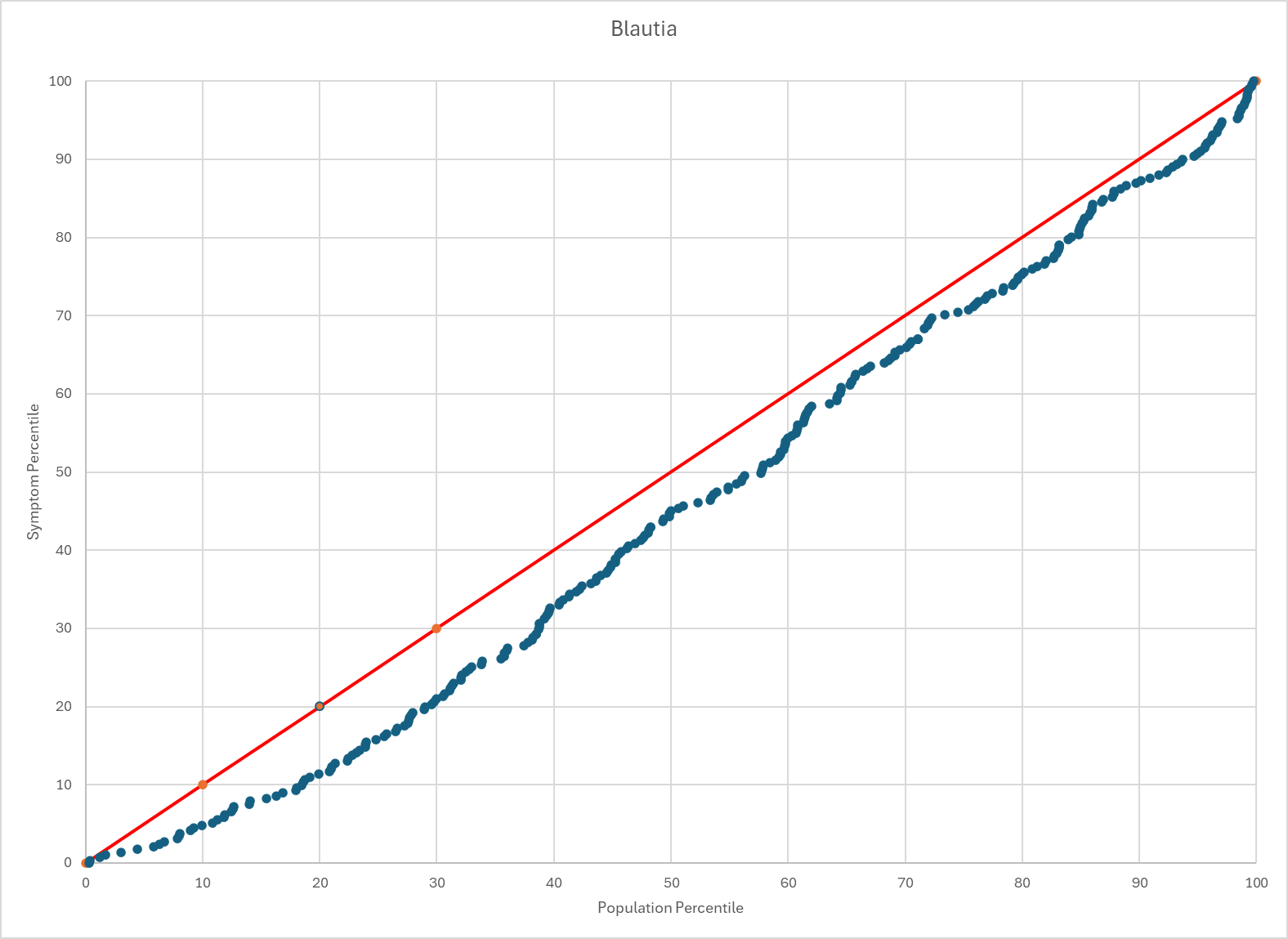
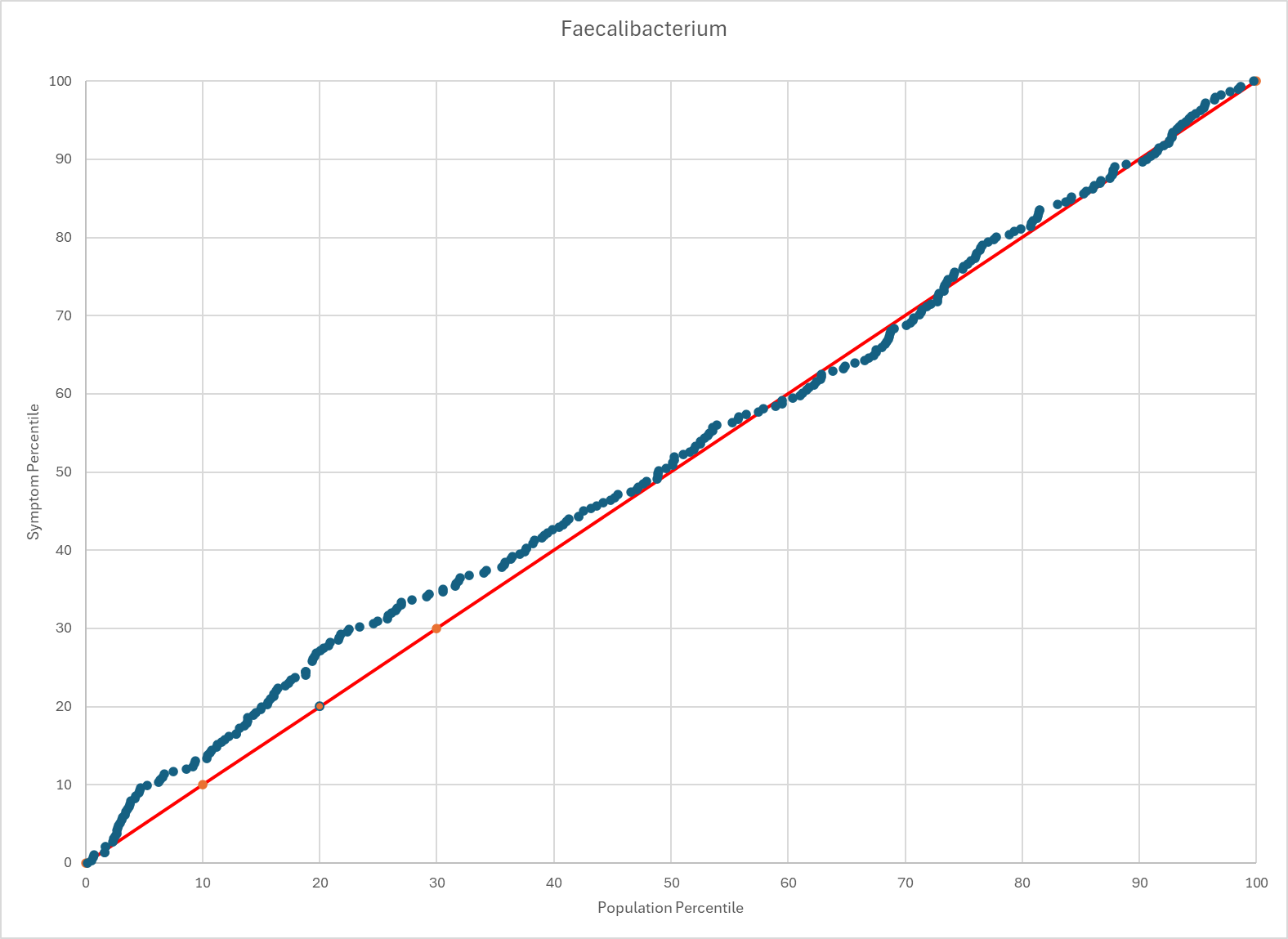
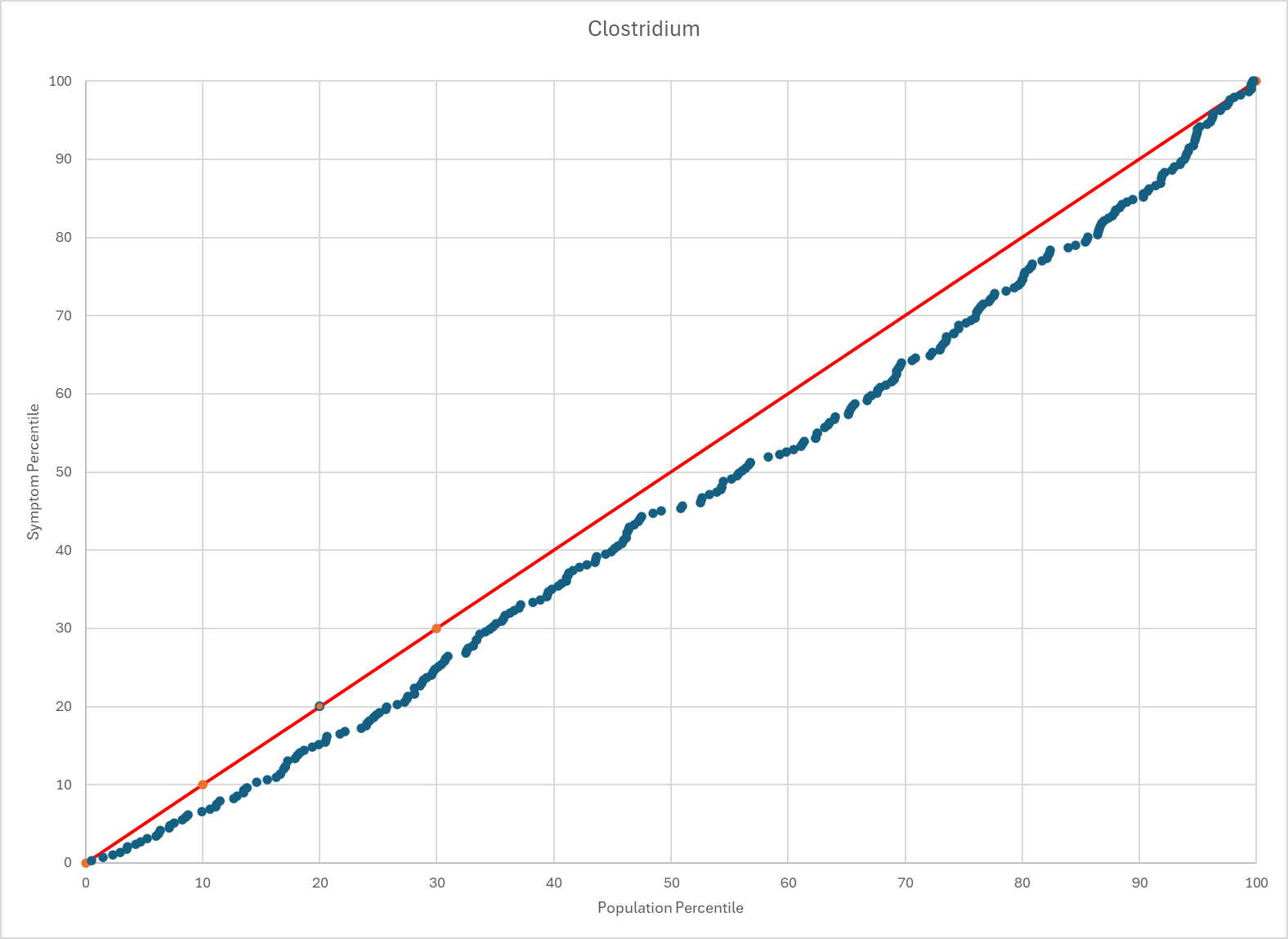
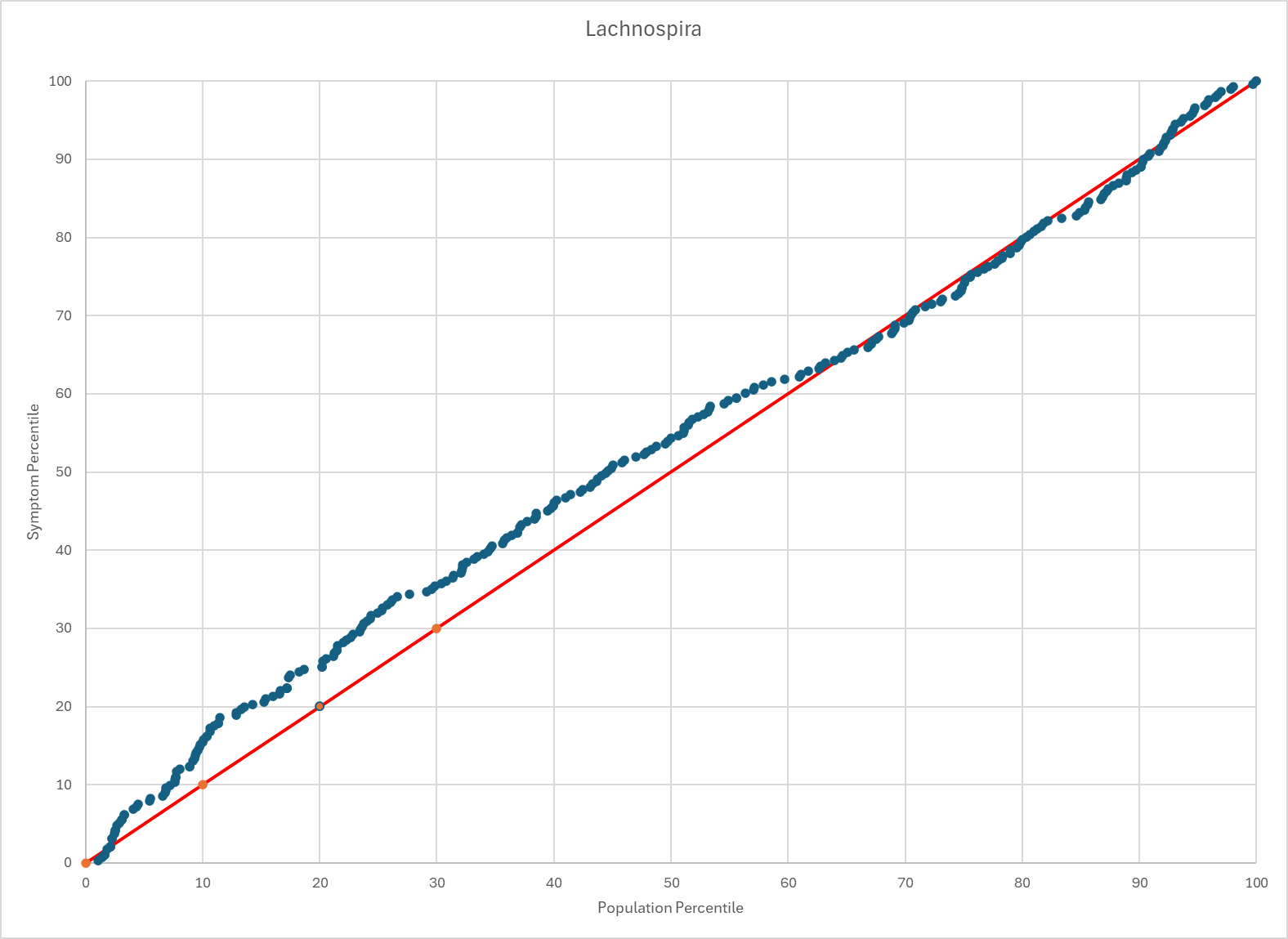
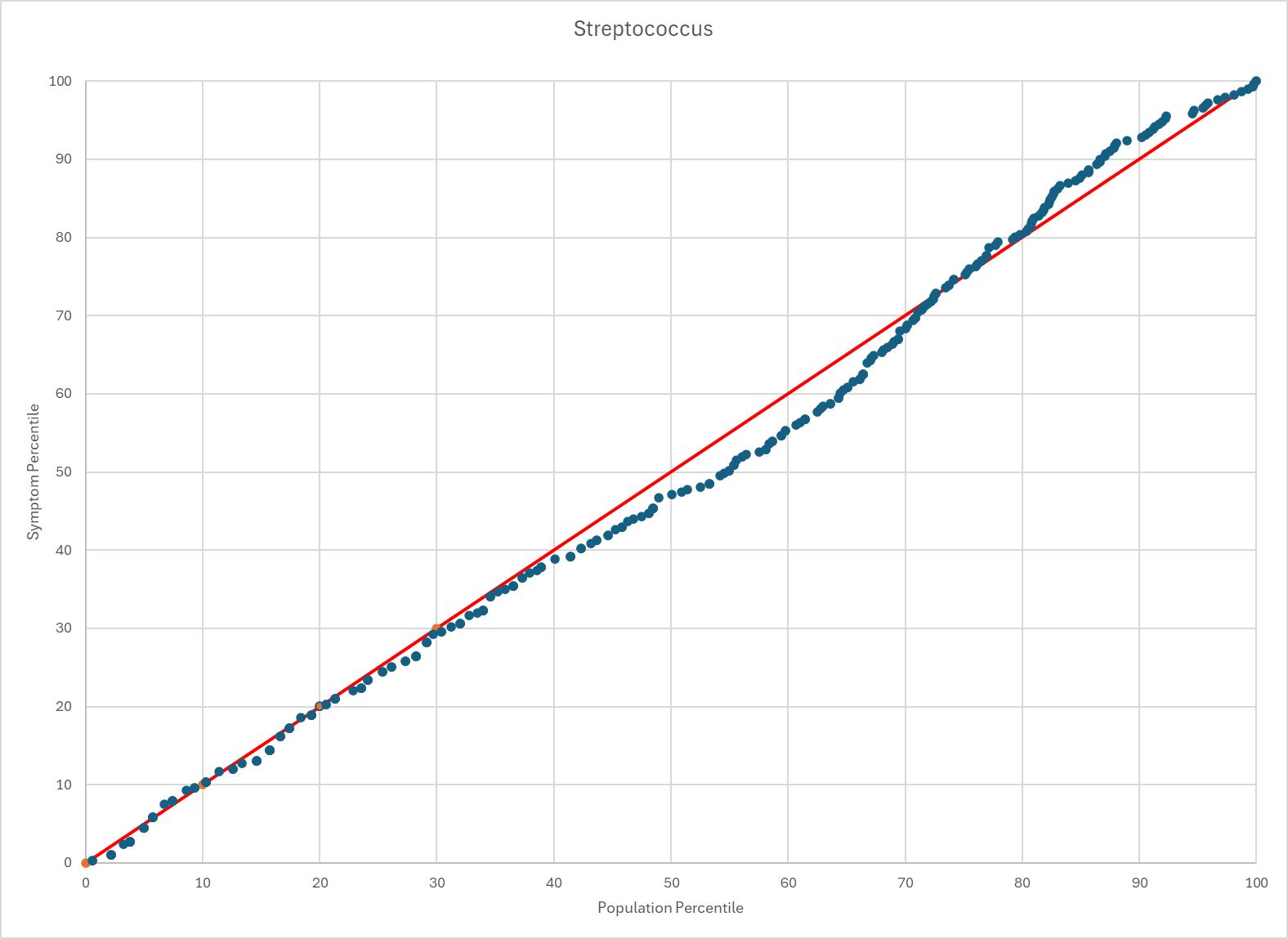
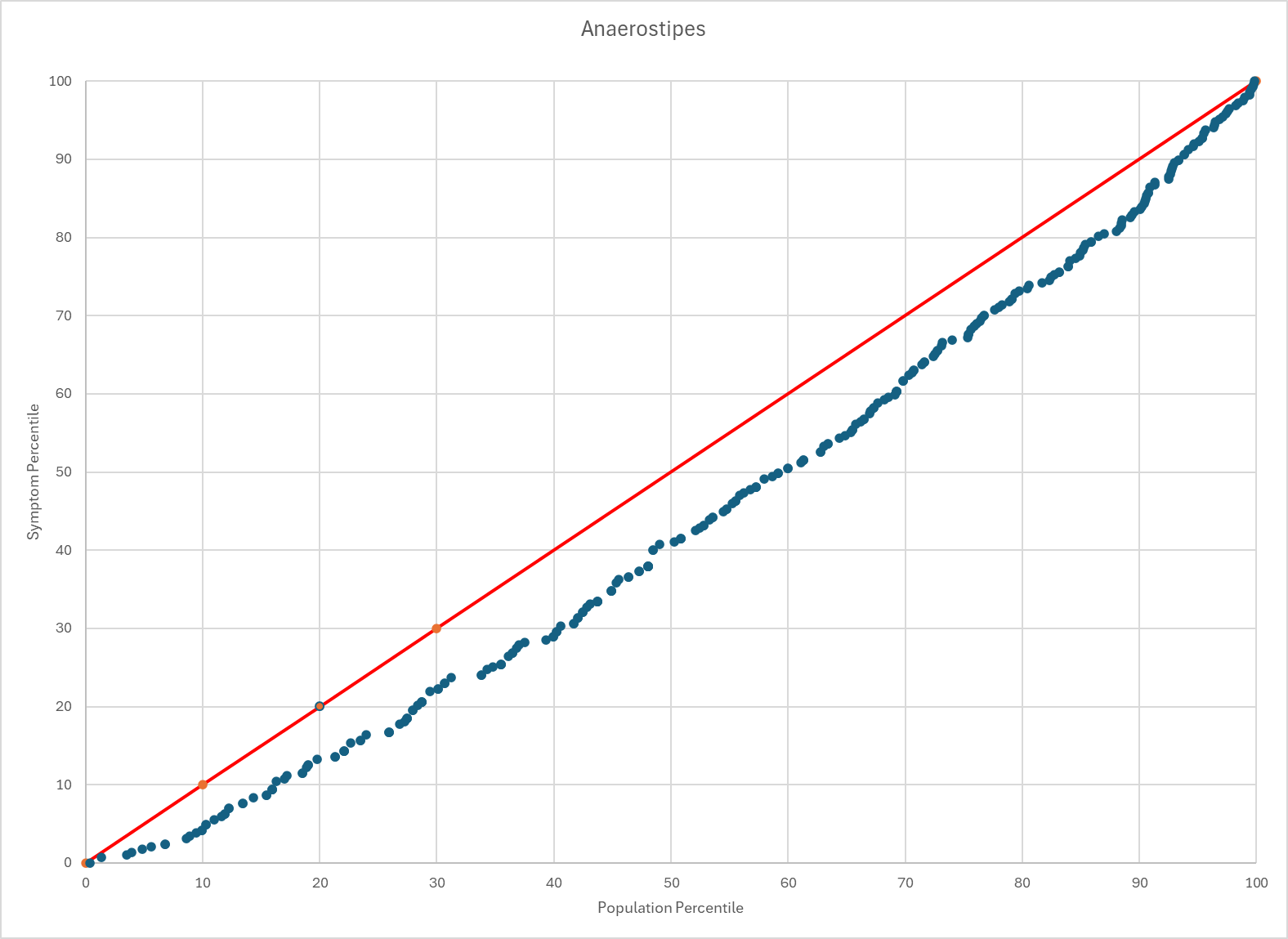
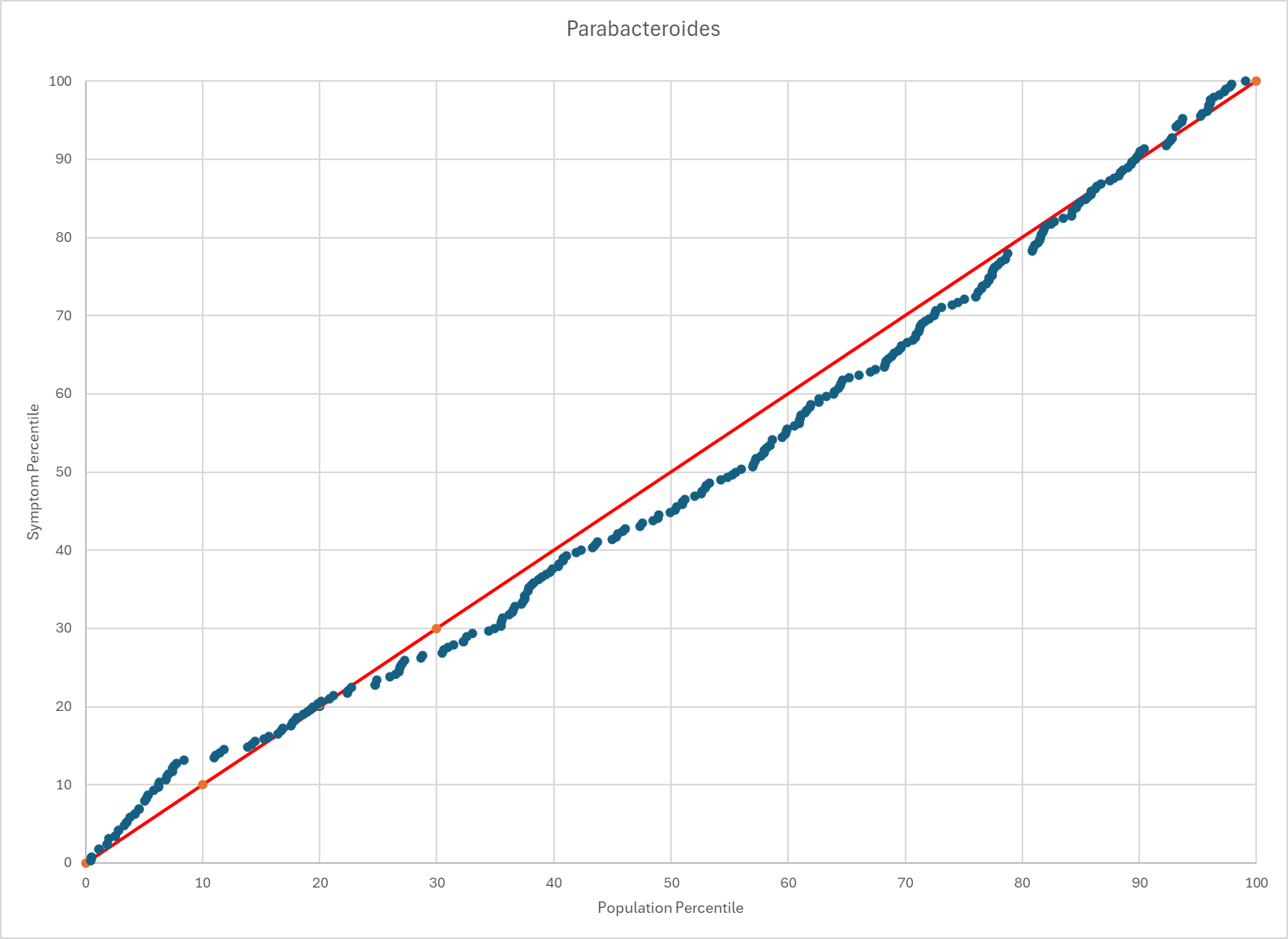
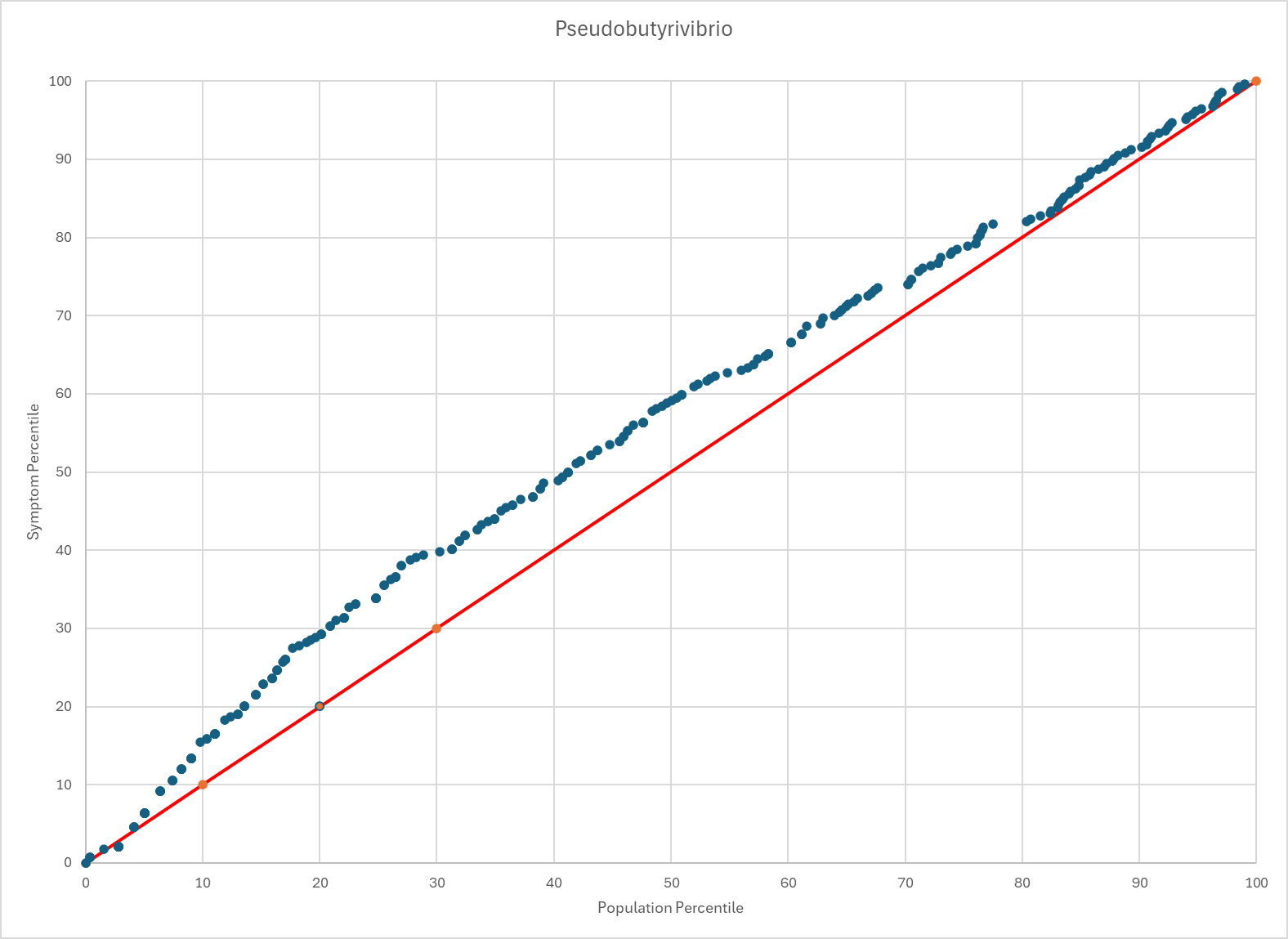
In Visual Exploration of Odds Ratios, we see that ME/CFS people have higher then general population amounts of Bifidobacterium. On the flip side, the average amount is reported lower on several studies. This compounds issues with several things that needs to be investigated.

  • Did the lower bifidobacterium count not found in their average as zero? We use the values only when detected. Looking at the dots, we see that the dots are sparse/rare for lower values suggesting a lower detection rate. This suggests a threshold behavior of bifidobacterium.

Looking at impact on E.Coli, we see most studies say that it decreases E.Coli

There is not enough data to come to a safe conclusion.

Odds Ratios for Metabolites and ME/CFS

This post extends the analysis of microbial involvement in ME/CFS pathophysiology by focusing on metabolites produced or consumed by bacteria, rather than on individual bacterial species seen in the earlier post Microbial involvement in myalgic encephalomyelitis/chronic fatigue syndrome pathophysiology. . This shift in perspective is valuable because:

Metabolite-Centric Analysis

Bacterial Metabolic Activity: Bacteria produce and consume various metabolites, which can significantly impact the host’s metabolic environment13.Metabolic Imbalances: Different bacterial compositions can lead to similar metabolite imbalances, making metabolite profiles potentially more informative than bacterial species profiles alone7 8.

Advantages of This Approach

  1. Net Effect: By examining metabolites, we can assess the overall impact of the microbiome on the host, regardless of the specific bacterial species present5.
  2. Consistency: Metabolite imbalances may be more consistent across patients than bacterial species composition, which can vary widely7.
  3. Functional Insight: This approach provides insight into the functional consequences of microbiome dysbiosis in ME/CFS3 8.

KEGG Application

Using the KEGG: Kyoto Encyclopedia of Genes and Genomes,(KEGG) allows for:

  • Mapping of metabolites to specific pathways
  • Identification of key metabolic alterations in ME/CFS patients
  • Potential discovery of new biomarkers or therapeutic targets7

Metabolite Profiling in ME/CFS

Recent studies have identified several metabolic alterations in ME/CFS patients:

  • Disruptions in energy metabolism and mitochondrial function2 5
  • Alterations in lipid metabolism, including changes in ceramides and complex lipids4
  • Disturbances in amino acid metabolism8

Clinical Implications

Understanding metabolite profiles in ME/CFS could lead to:

  • Improved diagnostic tools
  • Identification of potential therapeutic targets
  • Personalized treatment approaches based on individual metabolic profiles58

I am showing the numbers for Biomesight sample below. Conclusions across Ombre, uBiome and Biomesight are at the bottom.

Warning: These are the chemical names — a few are available as supplements with more common name.

BiomeSight Results

I did three slice-and-dice

  • Producers
  • Consumers
  • Net metabolites (Producers – Consumers) – this is like the most important

Remember: results may be different for different labs. Also, these are estimates of the metabolites

Metabolite Producers

  • DNA N4-methylcytosine <= 31.1
  • Cytidine 5′-diphosphoramidate <= 28
  • Pyridoxal <= 24.3
  • Allantoate <= 23.6
  • [L-Glutamate:ammonia ligase (ADP-forming)] <= 22.9
  • Adenylyl-[L-glutamate:ammonia ligase (ADP-forming)] <= 22.9
  • Uridylyl-[protein-PII] <= 22.6
  • 4-Hydroxybenzoate <= 19.6
  • 5-Phospho-D-xylonate <= 18.5
  • 5-Phospho-L-arabinate <= 18.5
  • Formyl-CoA <= 18
  • Aminoacrylate <= 17.3
  • Methylaminoacrylate <= 17.3
  • Acetoacetate <= 17.3
  • 5-Carboxyamino-1-(5-phospho-D-ribosyl)imidazole <= 17.3
  • UDP-N-acetyl-alpha-D-muramoyl-L-alanyl-L-glutamate <= 17
  • N-Acyl-L-homoserine <= 16.7
  • (R)-Piperazine-2-carboxylate <= 16.1
  • 2-[(2-Aminoethylcarbamoyl)methyl]-2-hydroxybutanedioate <= 16
  • D-Mannitol 1-phosphate <= 16
  • D-Erythritol 1-phosphate <= 15.6
  • 2-Acetylphloroglucinol <= 15.5
  • 3-Dehydrocarnitine <= 15.2
  • Deoxynucleoside <= 14.9
  • Formaldehyde <= 14.5
  • (S)-3-Acetyloctanal <= 14.4
  • Pyrrole-2-carbonyl-[pcp] <= 14.4
  • (L-Prolyl)adenylate <= 14.4
  • (L-Arginyl)adenylate <= 14.4
  • 2”-Nucleotidylgentamicin <= 13.9
  • 4-O-(beta-L-Arabinofuranosyl)-(2S,4S)-4-hydroxyproline <= 13.3
  • beta-L-Arabinofuranosyl-(1->2)-beta-L-arabinofuranose <= 13.3
  • Polysulfide <= 13.2
  • 6-Deoxy-6-sulfo-D-fructose <= 13
  • 1-Phosphatidyl-1D-myo-inositol 5-phosphate <= 12.9
  • 2-Dehydro-3-deoxy-D-galactonate <= 12.8
  • beta-L-Arabinofuranose <= 12.8
  • Maltose 6′-phosphate <= 12.7
  • Cytidine <= 12.5
  • [beta-GlcNAc-(1->4)-Mur2Ac(oyl-L-Ala-gamma-D-Glu-6-N-(beta-D-Asp)-L-Lys-D-Ala-D-Ala)]n <= 12.5
  • O-Phospho-L-homoserine <= 12.3
  • 2,5-Diamino-6-(5-phospho-D-ribosylamino)pyrimidin-4(3H)-one <= 12.3
  • Butanoyl-CoA <= 12.2
  • 4-Amino-5-hydroxymethyl-2-methylpyrimidine <= 12.1
  • Oxalyl-CoA <= 12.1
  • 5-(2-Hydroxyethyl)-4-methylthiazole <= 11.8
  • 2-Hydroxyornithine lipid <= 11.5
  • N3-Acetyl-2-deoxystreptamine antibiotic <= 11.3
  • Protein histidine <= 11.3
  • Protein N6-acetyl-L-lysine <= 11.2
  • Protoporphyrinogen IX <= 11
  • Divinylprotochlorophyllide <= 10.9

Metabolite Consumers (Substrates)

We have a shorter list with 5 metabolites bubbling to the surface as excessive metabolites.

  • Linalool >= 96.4
  • 6-Oxocyclohex-1-ene-1-carbonyl-CoA >= 96.4
  • 2-epi-5-epi-Valiolone >= 96.2
  • Lupanine >= 95.2
  • 4′-Hydroxyacetophenone >= 95.2
  • DNA cytosine <= 31.1
  • Xylitol <= 29.4
  • N5-(Cytidine 5′-diphosphoramidyl)-L-glutamine <= 28
  • 6-Hydroxynicotinate <= 27.6
  • Pyridoxine <= 24.1
  • [L-Glutamate:ammonia ligase (ADP-forming)] <= 22.9
  • Adenylyl-[L-glutamate:ammonia ligase (ADP-forming)] <= 22.9
  • 2-Amino-2-deoxyisochorismate <= 22.7
  • [Protein-PII] <= 22.6
  • Formyl-CoA <= 20.4
  • D-Erythrulose 4-phosphate <= 20 alpha-Maltose 1-phosphate <= 18.8
  • L-Arabino-1,4-lactone 5-phosphate <= 18.5
  • D-Xylono-1,4-lactone 5-phosphate <= 18.5
  • N-Acyl-L-homoserine lactone <= 18.1
  • Oxalyl-CoA <= 18
  • Methylureidoacrylate <= 17.3
  • Ureidoacrylate <= 17.3
  • UDP-N-acetyl-alpha-D-muramoyl-L-alanyl-L-glutamate <= 17
  • D-arabino-Hex-3-ulose 6-phosphate <= 17
  • beta-Alaninamide <= 16.1
  • (R)-Piperazine-2-carboxamide <= 16.1
  • 2-[(L-Alanin-3-ylcarbamoyl)methyl]-2-hydroxybutanedioate <= 16
  • Erythritol <= 15.6
  • alpha-L-Rhamnopyranosyl-(1->3)-N-acetyl-alpha-D-glucosaminyl-diphospho-trans,octacis-decaprenol <= 15.5 2,4-Diacetylphloroglucinol <= 15.5
  • (S)-Allantoin <= 15.1
  • L-Prolyl-[pcp] <= 14.4
  • trans-2-Octenal <= 14.4
  • (L-Prolyl)adenylate <= 14.4
  • (L-Arginyl)adenylate <= 14.4
  • (5-L-Glutamyl)-L-amino acid <= 13.6
  • 4-O-(beta-L-Arabinofuranosyl-(1->2)-beta-L-arabinofuranosyl-(1->2)-beta-L-arabinofuranosyl)-(2S,4S)-4-hydroxyproline <= 13.3
  • Sulfoquinovose <= 13
  • 1-Phosphatidyl-D-myo-inositol 4,5-bisphosphate <= 12.9
  • D-Galactonate <= 12.8
  • beta-L-Arabinofuranosyl-(1->2)-beta-L-arabinofuranose <= 12.8
  • Oxalate <= 12.7
  • N4-Acetylcytidine <= 12.5
  • D-Aspartate <= 12.5
  • [beta-GlcNAc-(1->4)-Mur2Ac(oyl-L-Ala-gamma-D-Glu-L-Lys-D-Ala-D-Ala)]n <= 12.5
  • 3′-Phosphoadenylyl sulfate <= 12.4
  • 2,5-Diamino-6-(5-phospho-D-ribitylamino)pyrimidin-4(3H)-one <= 12.3
  • D-Xylulose 5-phosphate <= 12.2
  • 4-Amino-5-aminomethyl-2-methylpyrimidine <= 12.1
  • Deoxynucleoside 5′-phosphate <= 11.9
  • Thiosulfate <= 11.6
  • Ornithine lipid <= 11.5
  • 2-Deoxystreptamine antibiotic <= 11.3
  • UDP-alpha-D-galactofuranose <= 11.2
  • 3′,5′-Cyclic AMP <= 11.1
  • [Sulfatase]-L-serine <= 11
  • trans-2,3-Dehydroacyl-CoA <= 10.9
  • D-Serine <= 10.6
  • 5,6-Dihydrothymine <= 10.4
  • Electron-transferring flavoprotein <= 10.3
  • D-Mannose <= 10.1
  • Ethanol <= 10.1

Net Modifiers

Here we have shorter list with

  • (R)-3-(4-Hydroxyphenyl)lactoyl-CoA >= 98.9
  • 14alpha-Formylsteroid >= 98.7
  • (E)-2-Methylgeranyl diphosphate >= 98.3
  • Harderoheme III >= 97
  • D-Erythritol 1-phosphate >= 83.4
  • 1-(5-O-Phospho-beta-D-ribofuranosyl)-5-(sulfanylcarbonyl)pyridin-1-ium-3-carbonyl adenylate >= 56.8
  • 8-Oxo-GDP <= 32.5 8-Oxo-dGDP <= 32.5
  • 2,4-Diketo-3-deoxy-L-fuconate <= 27.2
  • S-(Hercyn-2-yl)-L-cysteine S-oxide <= 27
  • L-Formylkynurenine <= 24.6
  • 2-[(2-Aminoethylcarbamoyl)methyl]-2-hydroxybutanedioate <= 23.5
  • alpha-Oxo-benzeneacetic acid <= 23.4
  • trans-o-Hydroxybenzylidenepyruvate >= 22.8
  • 2-(alpha-D-Mannosyl)-3-phosphoglycerate <= 22
  • Reduced FMN <= 20.6
  • Deamino-NAD+ <= 19.7
  • 5-(5-Phospho-D-ribosylaminoformimino)-1-(5-phosphoribosyl)-imidazole-4-carboxamide <= 18.5
  • cis-2,3-Dihydroxy-2,3-dihydro-p-cumate >= 18.2
  • Phthalate <= 17.9
  • alpha-Ribazole <= 17.7
  • beta-D-Fructose 6-phosphate <= 17.5
  • Reduced electron-transferring flavoprotein <= 16.5
  • GDP-L-fucose <= 16.4
  • 3-Hydroxy-5,9,17-trioxo-4,5:9,10-disecoandrosta-1(10),2-dien-4-oate <= 15.4
  • 2-Keto-D-gluconic acid <= 14.6
  • 6-(Hydroxymethyl)-7,8-dihydropterin <= 14.4
  • Formaldehyde <= 13.9
  • Adenosyl cobyrinate hexaamide <= 13.6
  • 3-Deoxy-D-manno-octulosonate <= 12.9
  • L-Fuculose 1-phosphate <= 12.8
  • D-Glutamate <= 12.5
  • L-Tyrosyl-tRNA(Tyr) <= 12.1
  • Maltose 6′-phosphate <= 11.8
  • O-Phospho-L-serine <= 11.8
  • 4-Guanidinobutanal <= 11.7
  • 7-Carboxy-7-carbaguanine <= 11.7
  • CDP-diacylglycerol <= 11.1
  • Protoporphyrinogen IX <= 11.1
  • 5-Guanidino-2-oxopentanoate <= 11
  • N5-Phospho-L-glutamine <= 10.9
  • D-1-Aminopropan-2-ol O-phosphate <= 10.5
  • Thymine <= 10.5
  • (2-Amino-1-hydroxyethyl)phosphonate <= 10.5
  • Hydrogenobyrinate a,c diamide <= 10.2
  • 2-Amino-3-carboxymuconate semialdehyde <= 10

Across Labs Consolidation

The analysis of metabolites across multiple microbiome testing platforms (Ombre, Biomesight, and uBiome) reveals a more consistent pattern of metabolite imbalances compared to bacterial species identification.

Potential Consequences of Low GDP-L-fucose (the top one)

The deficiency in GDP-L-fucose could have several implications:

  • Altered Immune Response: It may affect the proper functioning of the immune system, potentially impacting inflammatory processes12.
  • Cancer-Related Changes: Low levels might influence tumor progression or immune evasion mechanisms, as fucosylation is often altered in cancer24.
    • First-degree relatives: A clinic-based study reported that first-degree relatives of ME/CFS patients had a significantly higher(four times) prevalence of any cancer compared to controls (OR 4.06) [2022]
  • Cellular Communication: It could disrupt normal cell-cell interactions and signaling pathways dependent on fucosylated glycans3.
MetaboliteThresholdLowHigh
GDP-L-fucose16.512.121.2
Holo-[citrate (pro-3S)-lyase]12.71.823.4
N,N’-Diacetyllegionaminate12.15.422
alpha-Oxo-benzeneacetic acid11.81.923.4
Oxalyl-CoA11.3222.4
S-Methyl-5-thio-D-ribose 1-phosphate11.21.330.6
Malonyl-CoA10.62.526.3
1,2-Diacyl-3-alpha-D-glucosyl-sn-glycerol10.55.420

Translate Low Metabolites to Probiotics

Many of these metabolites are produced by probiotics, so in terms of highest importance and reasonably available probiotics, I produced the list below.

The top one is one is one that had very dramatic positive effect for me when I relapsed into ME/CFS (after the worse herxheimer reaction that I have ever experienced): Mutaflor (E.Coli Nissle 1917). I took it as a result of a 1999 study in Australia reporting very low levels of E.Coli in CFS patients [As a FYI, 16s tests do a very poor reporting on E.Coli].

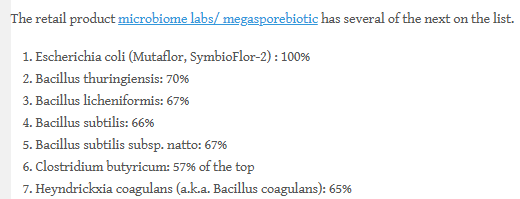
The retail product microbiome labs/ megasporebiotic has several of the next on the list.

  1. Escherichia coli (Mutaflor, SymbioFlor-2) : 100%
  2. Bacillus thuringiensis: 70%
  3. Bacillus licheniformis: 67%
  4. Bacillus subtilis: 66%
  5. Bacillus subtilis subsp. natto: 67%
  6. Clostridium butyricum: 57% of the top
  7. Heyndrickxia coagulans (a.k.a. Bacillus coagulans): 65%
  8. Lactiplantibacillus plantarum: 59%
  9. Enterococcus faecalis: 57%
  10. Akkermansia muciniphila: 54%

I asked perplexity, which foods may increase any of the above metabolites. The following were reported:

  • Spinach
  • Rhubarb
  • Beets
  • Nuts
  • Chocolate
  • Tea
  • Wheat bran
  • Strawberries

Bottom Line

While the metabolite-focused approach provides valuable insights into the biochemical imbalances associated with ME/CFS, its immediate clinical applications are somewhat limited. The probiotics and the food suggestions are reasonable and I see several of the items appearing on suggestions from the expert system for ME/CFS patients.

Microbial involvement in myalgic encephalomyelitis/chronic fatigue syndrome pathophysiology

This is the title of a new publication in Microbes & Immunity, available here.

Microbiome fluctuations or metabolic endotoxemia are proposed as possible disorder biomarkers. Based on the fact that gut microbiota dysbiosis reverts to a state of eubiosis in long-term patients with this condition, it may be hypothesized that disease progression begins with the loss of beneficial gut microorganisms, particularly short-chain fatty acid producers, leading to more widespread gastrointestinal phenotypes that are subsequently reflected in plasma metabolite levels. These alterations, specific of each individual, thereby result in metabolic and phenotypic shifts and in ME/CFS.

Microbial involvement in myalgic encephalomyelitis/chronic fatigue syndrome pathophysiology 6 Sep 2024

This has been my primary hypothesis for many years and lead to my writing Microbiome Prescription to normalize the dysbiosis. The bacteria shifts will be reported differently from different labs because of a lack of standardization of microbiome tests (See The taxonomy nightmare before Christmas… ).

Recently, I implemented an Odds Ratio analysis of the 5000+ sample microbiomes that have been upload to Microbiome Prescription. A quick overview is here: Bacteria Associated with General Fatigue.

Below I have pulled the lab specific dysbiosis shifts for ME/CFS at thhe genus level.

Biomesight Tests

The number are the percentile ranking for the bacteria listed. Each match increases the odds of ME/CFS by 1.5.

  • Methylonatrum >= 99
  • Planifilum >= 98.9
  • Thiohalorhabdus >= 98.9
  • Granulicatella >= 98.7
  • Amedibacillus >= 98.6
  • Enterococcus >= 98
  • Methylobacillus >= 98
  • Emticicia >= 97.7
  • Candidatus Tammella >= 97.7
  • Dokdonella >= 97.6
  • Runella >= 97.4
  • Collinsella <= 18
  • Pseudobutyrivibrio <= 16.4
  • Calothrix <= 13.8
  • Lachnospira <= 11.4
  • Veillonella <= 10.8
  • Shuttleworthia <= 8.5
  • Parabacteroides <= 8.4
  • Bifidobacterium <= 8.4
  • Faecalibacterium <= 7.5
  • Actinobacillus <= 7.5
  • Pedobacter <= 7.2
  • Coprococcus <= 4.6
  • Moorella <= 3.5
  • Natronincola <= 2.9
  • Mediterraneibacter <= 2.5
  • Oscillospira <= 1.8
  • Anaerovibrio <= 1.7
  • Sphingobacterium <= 1.6

Thryve

  • Collinsella <= 44.2
  • Bifidobacterium <= 41.1
  • Gemmiger <= 23
  • Dorea <= 19
  • Butyrivibrio <= 8
  • Fusicatenibacter <= 5.7
  • Lachnoclostridium <= 5.2
  • Gordonibacter <= 5.1
  • Eubacterium <= 4.8
  • Prevotella <= 4
  • Brassicibacter <= 3.9
  • Sporobacter <= 3.5
  • Johnsonella <= 3.5
  • Phascolarctobacterium <= 3.4
  • Dialister <= 3.4
  • Agathobacter <= 3.3
  • Lactonifactor <= 3.2
  • Murimonas <= 3.2
  • Moryella <= 3.1
  • Niabella <= 3.1
  • Ruminococcus <= 3
  • Hungatella <= 3
  • Anaerotruncus <= 2.8
  • Odoribacter <= 2.7
  • Lactobacillus <= 2.4
  • Eggerthella <= 2.3
  • Cellulosilyticum <= 2.1
  • Haemophilus <= 2
  • Holdemania <= 2
  • Terrisporobacter <= 2
  • Anaerobutyricum <= 1.9
  • Howardella <= 1.8
  • Hydrogenoanaerobacterium <= 1.8
  • Lachnobacterium <= 1.8
  • Hespellia <= 1.7
  • Agathobaculum <= 1.6
  • Pseudoflavonifractor <= 1.6
  • Desulfotomaculum <= 1.6
  • Intestinibacter <= 1.6
  • Barnesiella <= 1.5
  • Eisenbergiella <= 1.5
  • Facklamia <= 1.5
  • Acetatifactor <= 1.5
  • Ruminiclostridium <= 1.5
  • Natranaerovirga <= 1.5
  • Enterocloster <= 1.4
  • Caloramator <= 1.4
  • Thomasclavelia <= 1.4
  • Desulfovibrio <= 1.4
  • Parabacteroides <= 1.4
  • Shuttleworthia <= 1.3
  • Peptoniphilus <= 1.3
  • Akkermansia <= 1.3
  • Alistipes <= 1.3
  • Marvinbryantia <= 1.3
  • Acetivibrio <= 1.2
  • Paraprevotella <= 1.2
  • Veillonella <= 1.2
  • Bacteroides <= 1.2
  • Butyricimonas <= 1.2
  • Romboutsia <= 1.2
  • Ethanoligenens <= 1.2
  • Phocaeicola <= 1.2
  • Anaerocolumna <= 1.2
  • Blautia <= 1.1
  • Coprococcus <= 1
  • Lachnospira <= 1

uBiome

  • Veillonella <= 22.4
  • Hespellia <= 19
  • Bifidobacterium <= 15.1
  • Anaerosporobacter <= 7.2
  • Streptococcus <= 6.8
  • Eggerthella <= 6.4
  • Phascolarctobacterium <= 4.1
  • Eisenbergiella <= 3.9
  • Marvinbryantia <= 3.4
  • Holdemania <= 3.1
  • Dorea <= 3
  • Anaerostipes <= 3
  • Oscillibacter <= 2.7
  • Dialister <= 2.3
  • Kluyvera <= 2.1
  • Peptoclostridium <= 1.7
  • Erysipelatoclostridium <= 1.4
  • Intestinimonas <= 1.3
  • Sarcina <= 1.3
  • Roseburia <= 1.3
  • Phocaeicola <= 1.2
  • Terrisporobacter <= 1.2
  • Bacteroides <= 1.1

Bottom Line

Bifidobacterium is common across all of these, and lactobacillus shows up barely in only one result. Since there can be some hostility between Bifidobacterium and Lactobacillus, I would suggest cutting out lactobacillus probiotics.

I repeated this for Bifidobacterium species and one species shone.

  • Bifidobacterium longum <= 9.9

My personal preference for a source is Maple Life Science which sells direct from factory resulting in very fresh and alive probiotics.

Some examples of analysis people with Long COVID and ME/CFS are there. I am working on building an algorithm to build suggestions based on odds ratio which should improve the suggestions more.

ME/CFS Patient continues the trek to recovery

Prior Posts

Dealing with ME/CFS and many microbiome dysfunction is rarely a short journey

Recent Story

Some supplements that I have been taking since the last test:

  • Tetracycline 
  • Clove 
  • Holy basil (Neem)
  • Augmentin + Bromelain 
  • Grapefruit seed extract 
  • Monolaurin
  • Apple peel powder 
  • Thyme

My symptoms:

  • Still get the red nose (some form of rosacea). 
  • Still feel fatigued (both physically and mentally). But it is better than before.
  • Feeling stressed. But it is better than before.
  • Brain fog.
  • Bloated.
  • Lots of gas – I fart and burps a lot. 
  • Issues with allergies (itching eyes, stuffed nose and itchy skin)

Video

Analysis

We will start with the high-level comparison. Note that some numbers will change with time. There are no major changes. Since the latest sample reports 20% more bacteria, many counts are expected to be 20% higher – for example: Thorne Ranges: old: 230 + 20% = 276, with the seen count being 253 (so an apparent improvement although the number went up)

Criteria9/2/20241/22/20249/12/20232/22/20238/11/20223/25/202212/3/20218/31/2021
Lab Read Quality9.17.93.59.75.56.23.67.8
Outside Range from GanzImmun Diagostics1616161515171720
Outside Range from Lab Teletest2320 202424222225
Outside Range from Medivere1416161515151519
Outside Range from Metagenomics67799778
Outside Range from Microba Co-Biome32277111
Outside Range from MyBioma6577778
Outside Range from Nirvana/CosmosId2120202323181821
Outside Range from Thorne (20/80%ile)253230198223223217217246
Outside Range from XenoGene3232 243232363639
Outside Lab Range (+/- 1.96SD)121510119914
Outside Box-Plot-Whiskers4852564236425942
Outside Kaltoft-Moldrup113123 70139567859140
Bacteria Reported By Lab600508399666478613456572
Bacteria Over 85%ile4852      
Bacteria Under 15%ile118157      
Pathogens2326 253023392430
Condition Est. Over 85%ile25      

There is a new comparison table added that compares sets of symptoms bacteria for symptoms reported in either sample. This is a thought experiment on a different way of evaluating the microbiome, i.e. are symptom bacteria reducing. Remembering that we have 20% more bacteria reported, the improvement may be slightly under-reported.

Going Forward

My current preference is to use symptom associations suggestions with KEGG suggested suggestions. This assumes that the person has added their symptoms.

Using Entered symptoms

Since this person has access to antibiotics, I opted to include all classes of modifiers. We have 38 bacteria selected — a reasonable number

The suggests were a nice mixture for ME/CFS. Typically, I see the top being just antibiotics, in this case we have several probiotics there.

And suggested retail probiotics are:

Using Diagnosis and PubMed

Using a diagnosis provides less precise filtering compounded by different labs (with different identification of bacteria). If the person is using a lab that lacks a large number of annotated samples from that lab, then it is the best path.

The suggested path is to go down the list and pick the ones that has the highest value(s) that agrees with one or more of the diagnoses that you have.

In this case we have only 4 bacteria in the selection, so the suggestions will be likely more generic than specific.

There are no antibiotics in this list

The probiotic list is below. It has some similarities to the above list.

Using KEGG Derived Probiotics

This is an experimental approach that attempts to do a metagnòmia approach from the available data. We estimate which compounds are too high or too low. Then we match them to probiotics which produce or consumes them. Postbiotics can be used for items that are too low. There is no filtering of any type; we look at the entire microbiome.

The results are different — as to be expected. Why expected? The prior ways depended on studies being done what each probiotics bacterium does. Often there are no studies. This way uses the DNA/RNA sequences of everything and thus we do not need studies.

I usually focus on too low, with the assumption that a surplus will just be ignored or has less impact (i.e. starvation versus obesity) We can see where there is agreement between the lists.

  • aor / probiotic-3 is [30]
  • bioflorin (deu) / bioflorin is [25]
  • miyarisan (jp) / miyarisan is [22]
  • Microbiome Labs / MEGA Genesis is [27]
  • Bulk Probiotics / L. Reuteri Probiotic Powder is [27]

Consensus View?

You can build consensus views, a.k.a. Monte Carlo model, but IMHO that is likely done by those that want to “over work the problem”.

Summary of Suggestions

Remember these are suggestions, and NOT a protocol. What you actually do should be reviewed by a knowledgeable medical professional before starting.

My own proposal for discussion would be:

This can be made more complex by using consensus / Monte Carlo Model

Reader Plan

Microbiome Prescription produces suggestions, the weights/priorities are the odds of causing a change and not the amount of change (there is simply no objective data to compute the amount). This reader did their own evaluation of what they felt comfortable with (excellent idea).

I have also bought 2 more tests so I will do them with max 3 months apart as you said in the video.

I came up with this protocol by using the “Beginner-Symptoms: Select bacteria connected with symptoms”:

  • Week 1-2: Gum arabic
  • Week 3-4: Monolarin (lauric acid)
  • Week 5-6: Psyllium
  • Week 7-8: Rosemary 
  • Week 9-10: Parsley
  • Week 11-12: SymbioFlor-2

I found that I get best results from herbs, prebiotics and antibiotics. The only probiotic I’ve got good results from is Symbioflor 2 (an E.Coli probiotic) [Editor: E.Coli probiotics also worked best for me]

A lot of probiotics that I’ve tested I’ve got bad results from. 

Postscript and Reminder

As a statistician with relevant degrees and professional memberships, I present data and statistical models for evaluation by medical professionals. I am not a licensed medical practitioner and must adhere to strict laws regarding the appearance of practicing medicine. My work focuses on academic models and scientific language, particularly statistics. I cannot provide direct medical advice or tell individuals what to take or avoid.My analyses aim to inform about items that statistically show better odds of improving the microbiome. All suggestions should be reviewed by a qualified medical professional before implementation. The information provided describes my logic and thinking and is not intended as personal medical advice. Always consult with your knowledgeable healthcare provider.

Implementation Strategies

  1. Rotate bacteria inhibitors (antibiotics, herbs, probiotics) every 1-2 weeks
  2. Some herbs/spices are compatible with probiotics (e.g., Wormwood with Bifidobacteria)
  3. Verify dosages against reliable sources or research studies, not commercial product labels. This Dosages page may help.
  4. There are 3 suppliers of probiotics that I prefer: Custom Probiotics Maple Life Science™Bulk Probiotics: see Probiotics post for why
  5. My preferred provider for herbs etc is Maple Life Science™ – they are all organic, fresh, without fillers, and very reasonably priced.

Professional Medical Review Recommended

Individual health conditions may make some suggestions inappropriate. Mind Mood Microbes outlines some of what her consultation service considers:
A comprehensive medical assessment should consider:

  • Terrain-related data
  • Signs of low stomach acid, pancreatic function, bile production, etc.
  • Detailed health history
  • Specific symptom characteristics (e.g., type and location of bloating)
  • Potential underlying conditions (e.g., H-pylori, carbohydrate digestion issues)
  • Individual susceptibility to specific probiotics
  • Nature of symptoms (e.g., headache type – pressure, cluster, or migraine)
  • Possible histamine issues
  • Colon acidity levels
  • SCFA production and acidification needs

A knowledgeable medical professional can help tailor recommendations to your specific health needs and conditions.

Experiments with antibiotics for CFS with Multiple Chemical Sensitivity

From a reader. His prior microbiome analysis is here.


A short update…

  • About two months ago I had a sinus infection and got a week long course of Amoxicillin for it. Almost all my symptoms went away during the antibiotic treatment.
  • Each day I was just waiting to get to take my daily dose, the improvement was so substantial.
    • After finishing the course, it took about 48 hours until I was pretty much back to where I started.
  • After the treatment stopped, the symptoms came back. Nothing changed in the end.
  • But while on the treatment I felt great. I slept fantastic. All my pain went away. All my tired and wired symptoms went away. But the improvement did not persist.
  • Two weeks ago I went to see a doc that I know fairly well, and told him what happened. After hearing my story, he gave me a month long treatment of Doxycycline. I do not know his rationale for not giving me Amoxicillin.
  • Many years ago I also had a lung infection and was treated with Ciprofloxacin. It also removed the symptoms during treatment.
  • The Doxycycline does nothing for my symptoms. It only creates an upset stomach, when Amoxicillin gave me no side effects except curing my CFS and MCS.
  • Why does Amoxicillin help, but Doxycycline not? But not Doxycycline..the one antibiotic I managed to get a lot of..but it does not help.

Are there any conclusions to be drawn from this information?


We have this person’s microbiome uploaded, so first step is to just run “Just Give Me Suggestions”

I then using the available data for these three to see what the other two does not — i.e. the smoking gun

Taxa NameTaxa Rank
Enterobacteriaceaefamily
Moraxellaceaefamily
Enterococcaceaefamily
Aeromonadaceaefamily
Pseudomonadaceaefamily
Verrucomicrobiaceaefamily
Morganellaceaefamily
Atlantibactergenus
Metakosakoniagenus
Pseudescherichiagenus
Limnobaculumgenus
Lelliottiagenus
Pluralibactergenus
Kosakoniagenus
Shimwelliagenus
Roseimicrobiumgenus
Rosenbergiellagenus
Brevifollisgenus
Pseudocitrobactergenus
Franconibactergenus
Siccibactergenus
Gibbsiellagenus
Candidatus Moranellagenus
Candidatus Schneideriagenus
Candidatus Profftiagenus
Candidatus Riesiagenus
Candidatus Ishikawaellagenus
Cronobactergenus
Phytobactergenus
Mangrovibactergenus
Biostraticolagenus
Luteolibactergenus
Persicirhabdusgenus
Candidatus Regiellagenus
Haloferulagenus
Buttiauxellagenus
Leclerciagenus
Cedeceagenus
Trabulsiellagenus
Yokenellagenus
Raoultellagenus
Fucophilusgenus
Acinetobactergenus
Pseudomonasgenus
Prosthecobactergenus
Candidatus Phlomobactergenus
Citrobactergenus
Enterobactergenus
Klebsiellagenus
Kluyveragenus
Morganellagenus
Proteusgenus
Salmonellagenus
Shigellagenus
Aeromonasgenus
Plesiomonasgenus
Enterococcusgenus
Verrucomicrobiumgenus
Scandinaviumgenus
Jejubactergenus
Sulfuriroseicoccusgenus
Entomohabitansgenus

Next, we look at his last sample for these and found:

Taxa NameTax RankPercentile
Enterobactergenus73.64152
Enterococcusgenus69.35996
Lelliottiagenus68.33713
Enterococcaceaefamily62.73872
Enterobacteriaceaefamily60.38241
Enterobacteralesorder59.50287
Klebsiellagenus54.63183
Klebsiella/Raoultella groupno rank54.63183
Pseudomonadaceaefamily41.17647
Pseudomonasgenus41.0804
Verrucomicrobiaceaefamily21.69038
Verrucomicrobialesorder19.43128
Aeromonadaceaefamily17.55486
Moraxellaceaefamily14.05018

Next step is to look at the combinations of these top 3 bacteria to see how they rank (percentile) in combination

  • Enterobacter,Enterococcus – 72%ile
  • Enterococcus, Lelliottia – 75%ile
  • Enterobacter, Lelliottia – 74%ile
  • Enterobacter, Enterococcus, Lelliottia – 79%ile

The presence of Lelliottia makes things marginally more significant.

Looking at the Taxa Tree

One possibility is that the cause of not a genus that is reported with 16s tests. Looking at the tree we can determine the “unknowns” The Family is 910 from which we remove (150,70,230,40,10) ending with 410 unclassified i.e. almost half of the bacteria in Enterobacterales are not identified. Any smoking gun may be hidden in the deficiencies of 16s testing.

Where we are

We do not know precisely the bacteria involved with ME/CFS and MCS. For this person, the antibiotic history does allow us to identify possible candidates. The next question is obvious, which antibiotics should we suggest to the MD? We have the consensus list and we want to reduce it to those that impact these three bacteria as the most likely to help.

For all three bacteria, we have the following list (Note that the [CFS] indicates that it is often used by ME/CFS Specialists)

WeightAntibiotic
769.5tobramycin (antibiotic)s
608.2amikacin (antibiotic)s
590.4amoxicillin (antibiotic)s[CFS]
563.5gentamicin (antibiotic)s
441.6imipenem (antibiotic)s
388.6streptomycin (antibiotic)s
380.1erythromycin (antibiotic)s[CFS]
326.5azithromycin,(antibiotic)s[CFS]
301.6intesti-bacteriophage
261.3vancomycin (antibiotic)[CFS]
191.2ciprofloxacin (antibiotic)s[CFS]
178.7clarithromycin (antibiotic)s[CFS]
86.5rifaximin (antibiotic)s
81.2carbapenem (antibiotic)s

The challenge is now persuading the MD to prescribe these based on the microbiome sample and this analysis. Next we look at alternatives.

Non Prescription Approaches

As above, we restrict to those items that reduces all three of the above bacteria

  • ALL probiotics were negative
  • Nothing for Amino Acid and similar
  • Nothing for Prebiotics and similar
  • Nothing for Food or Diet Style
  • Nothing for Vitamins and Minerals (Vitamin B2 was just a 2)
  • Hesperidin (polyphenol) – was over 800 and the only Flavonoids, polyphenols with a positive value
  • N-Acetyl Cysteine (NAC) – was over 700 and the sole common supplement
  • chitosan,(sugar) – was 200’s and the sole sugar

Herbs and Spices

I have also been trying multiple different herbs. The one which so far has given the best effect is an alcoholic tincture of Artemisia Annua.

From reader

Wormwood(artemisia) is a 21 (minor positive impact predicted). It reduces some genus of Enterobacteriaceae but nothing reported for Enterococcus, Lelliottia or Enterobacter.

PriorityModifier
329.4foeniculum vulgare,fennel
294.4laser trilobum l.,kefe cumin
289.6hypericin, St. John’s Wort
213.1neem
164.6tulsi
118.7garlic (allium sativum)
105.9Curcumin
23.6triphala
-20.5cinnamon (oil. spice)
-49.6oregano (origanum vulgare, oil) |
-87.4persimmon tannin
-143.2Dangshen
-313.3berberine

Suggestions to discuss with MD

If antibiotics are not viable then the following seems to be the best choices

  • Hesperidin (polyphenol)
  • N-Acetyl Cysteine (NAC)
  • Foeniculum Vulgare, Fennel
  • laser trilobum l.,kefe cumin
  • Hypericin, St. John’s Wort
  • Neem

Hesperidin..very interesting herb. It says to assist with blood flow and blood vessel health, exactly the type of issues I am dealing with. I will try it.

Feedback from person on draft

Bottom Line

This was a very interesting post because we seem to be able to identify the family of bacteria involved with this person’s symptoms Enterobacteriaceae. This agrees with the literature.

  • “The prevalence and median values for serum IgA against the LPS of enterobacteria were significantly greater in patients with CFS than in normal volunteers and patients with partial CFS.” [2010]
  • “Often, a lower Bacteroides/Firmicutes ratio can be accompanied by an increase in Enterobacteriaceae, therefore suggesting a complete reshuffling of the gut microbiota composition” [2021]
  • “Increased Serum IgA and IgM against LPS of Enterobacteria in Chronic Fatigue Syndrome (CFS): Indication for the Involvement of Gram-Negative Enterobacteria in the Etiology of CFS and for the Presence of an Increased Gut-Intestinal Permeability” [2007]

I do have a concern that almost 50% of the genus in Enterobacteriaceae were not identified in the sample. We are in a bit of fog — which we will address by assuming it will also be sensitive to it sibling genus.

Postscript – and Reminder

I am not a licensed medical professional and there are strict laws where I live about “appearing to practice medicine”.  I am safe when it is “academic models” and I keep to the language of science, especially statistics. I am not safe when the explanations have possible overtones of advising a patient instead of presenting data to be evaluated by a medical professional before implementing.

I cannot tell people what they should take or not take. I can inform people items that have better odds of improving their microbiome as a results on numeric calculations. I am a trained experienced statistician with appropriate degrees and professional memberships. All suggestions should be reviewed by your medical professional before starting.

The answers above describe my logic and thinking and is not intended to give advice to this person or any one. Always review with your knowledgeable medical professional.