ME/CFS Books and MDs

In the family dealing with ME/CFS we were very fortunate in working with now retired folks, (links to MEPedia pages on them). It was 25 years ago.

Also we had significant interaction with

Many support groups provide lists of local MDs that are sympathetic to ME/CFS patients. Typically, they will attempt to do symptom relief, not remediate the underlying cause or do not test outside of their local standards of practice (i.e. testing for associated viral infection, Lyme or rickettsia infections) – independent of insurance coverage or the patient being will to pay.

For example:

The family was extremely fortunate to be covered by the old Microsoft Medical insurance that covered everything that the MD wanted with no deductibles; and we had a MD that was willing to learn and explore.

My recommendations for books are:

Other books can be found here:

Note that the better books are often difficult or impossible to understand due to brain fog (and sometime lack of sufficient education is specific areas)

Determine a Model and if possible, see if there is evidence that the model works

I went with two models for ME/CFS: A hypercoagulation condition (David Berg) and an “occult rickettsia like infection” (Cecile Jadin); today we could call it “post Infection Fatigue Syndrome”. Both were testable (by lab or by reaction to low risk drugs, i.e. an antibiotic often prescribed for Acne) and actionable.

Today, my thinking is that the simplest model is a persistent microbiome dysfunction. This is very testable with direct retail tests; and actionable (using Microbiome Prescription). Often the antibiotics suggestions from Microbiome Prescription mirrors the Jadin approach. The treatment plan works for her models and my microbiome model!

Going with a hypothesis that is not both testable and actionable is not recommended. Take action today incase it works! Leave speculations to researchers trying to get grant money for their special interests.

For examples using my model: see Analysis Posts on Long COVID and ME/CFS

Symptoms and Bacteria appears to be strongly related

It is typical that Microbiome Prediction correctly predicts 80-100% of a person’s dominant symptoms from their microbiome. This implies that the bacteria shifts are causing the symptoms; thus correcting the bacteria shifts may reduce or eliminate symptoms.

Suggested Questionnaire for Evaluating a MD

What testing would you like to do?

Are you going to just provide symptom relief or are you going to search for the underlying cause to eliminate it?
A follow up ME/CFS Analysis

This is a follow up on the prior post below. The reader’s comments are “I am feeling much better but still very fatigued and lately been quite achey.  The recommendations have changed significantly except for whole grain barley.”

For more analysis see: Analysis Posts on Long COVID and ME/CFS

Comparison of Microbiome Samples

Let us first do the simple numbers. A lot of values are the same (typical) but many of them show improvement. 🙂  indicate significant reduction is out of range values See Technical Note: Lab Quality Versus Bacteria Reported We would expect a 15% drop from lower lab quality, the drops shown are well below that).

CriteriaCurrent SampleOld Sample
Eubiosis Index62.8% 🙂59%
Lab Read Quality4.38.4
Outside Range from JasonH88
Outside Range from Medivere2020
Outside Range from Metagenomics1010
Outside Range from MyBioma88
Outside Range from Nirvana/CosmosId1818
Outside Range from XenoGene4242
Outside Lab Range (+/- 1.96SD)9 🙂16
Outside Box-Plot-Whiskers38 🙂98
Outside Kaltoft-Moldrup56 🙂139
Bacteria Reported By Lab494752
Bacteria Over 90%ile20 🙂82
Bacteria Under 10%ile66 🙂232
Shannon Diversity Index1.4651.701
Simpson Diversity Index0.0350.028
Chao1 Index747417093
Shannon Diversity Percentile28.561.4
Simpson Diversity Percentile30.221.5
Chao1 Percentile28.987.7
Lab: BiomeSight
Pathogens18 🙂39
Condition Est. Over 90%ile44
Kegg Compounds Low969 :-)1242
Kegg Compounds High5 🙂23
Kegg Enzymes Low272284
Kegg Enzymes High17 🙂75
P or P Chi2.9999245.999999999

Health Analysis Comparisons

I have not created an automatic compare yet (on to do list). Many values were similar, some interesting ones with improvements are below. Jason Hawrelak Criteria got worse, but I have deep reservations on using his criteria on Biomesight tests (he based them on a very different test method).

CurrentPrior
General Health Predictors: Flagged Bacteria8 🙂10
Anti inflammatory Bacteria Score14.4%ile 🙂13.3 %ile
Lactate (controls many bad bacteria) 33.1 %ile 🙂20 %ile
L-Lactic Acid (controls many bad bacteria) 47.1 %ile :-)25.2 %ile
NADH (Typically low with ME/CFS) 26.5 %ile :-)13.7 %ile
Hydrogen peroxide (controls many bad bacteria) 17.3 %ile 🙂5.8 %ile
D-Lactic Acid (Associated with brain fog) 6.5 %ile 🙂7.9 %ile
Potential Medical Conditions Detected2 🙂7
Bacteria deemed Unhealthy7 🙂22
Jason Hawrelak Criteria56.4 %ile75.8 %ile

Going Forward

A review of the Health Analysis was done above, with the two items: Mood Disorders and COVID-19 (a proxy for ME/CFS IMHO). A secondary review of all the items on [Changing Microbiome]/[US National Library of Medicine Studies] for high items not flagged. Nothing added.

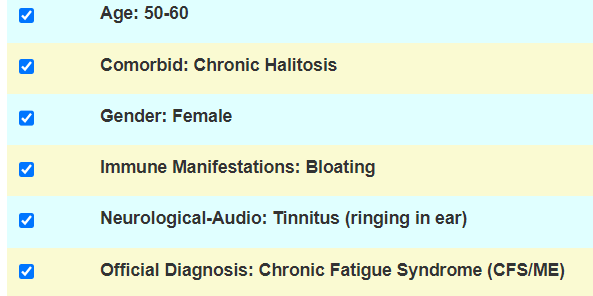
Doing what is becoming a regular pattern: “Just give me suggestions” and then using given symptoms under Special Studies using these items:

Note: items like age and gender are omitted as well as any other symptoms that we do not have sufficient data.

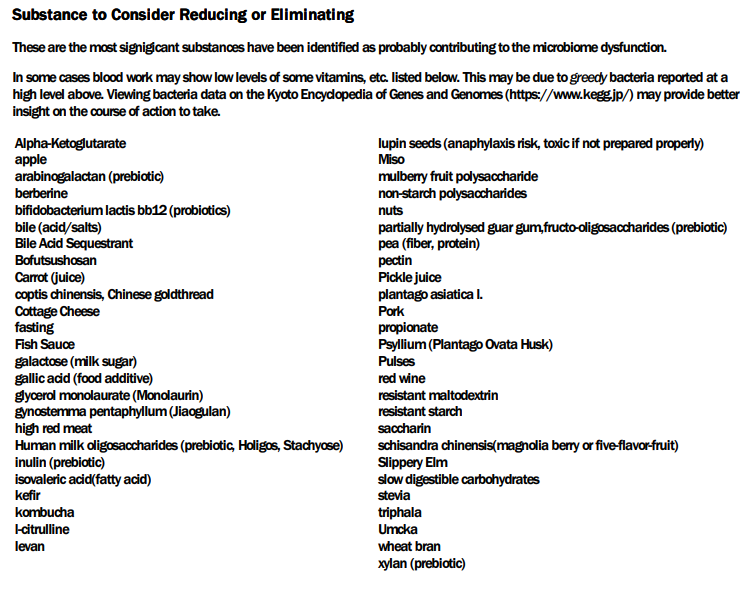
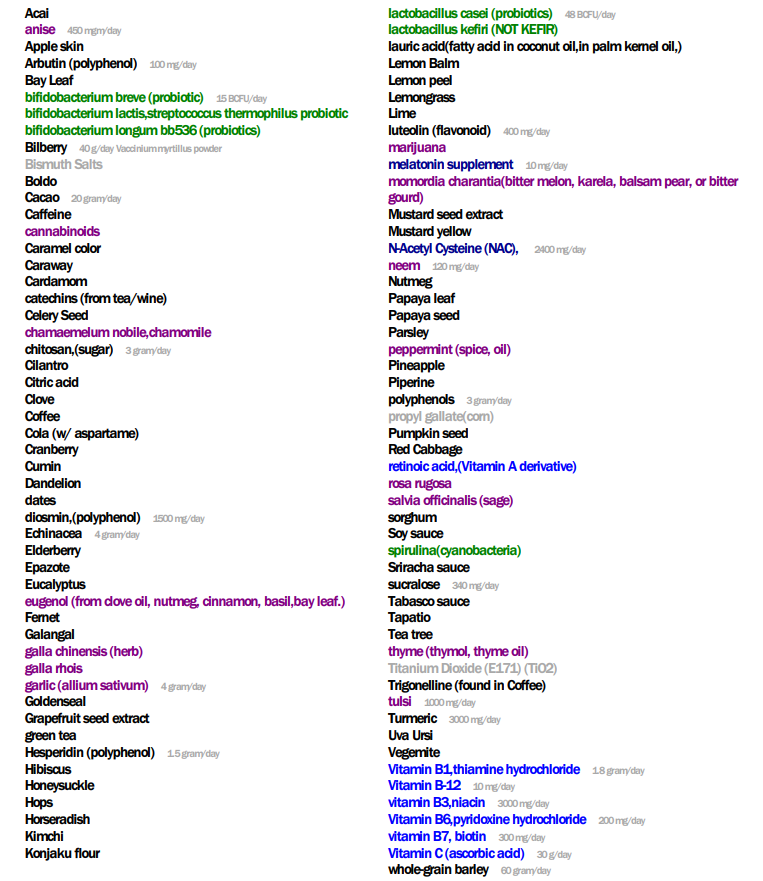
First the filtered PDF suggestions. The list is much longer than usual:

And the to avoid list is more typical.

Let us go over to viewing the consensus for the latest microbiome sample to get some suggestions.


The highest suggested value/priority was 485 (so 240 for cutoff), lowest value was -574 ( so-287 for cutoff)

So in summary, shift a diet to low sugar, gluten free with moderation in meat (no guidance on chicken or fish). If your MD is willing, I would suggest reviewing Cecile Jadin approach with antibiotics and rotate with those suggested above. IMHO Continuous on a single antibiotic is more likely to complicate the microbiome.

Postscript – and Reminder

I am not a licensed medical professional and there are strict laws where I live about “appearing to practice medicine”.  I am safe when it is “academic models” and I keep to the language of science, especially statistics. I am not safe when the explanations have possible overtones of advising a patient instead of presenting data to be evaluated by a medical professional before implementing.

I cannot tell people what they should take or not take. I can inform people items that have better odds of improving their microbiome as a results on numeric calculations. I am a trained experienced statistician with appropriate degrees and professional memberships. All suggestions should be reviewed by your medical professional before starting.

The answers above describe my logic and thinking and is not intended to give advice to this person or any one. Always review with your knowledgeable medical professional.

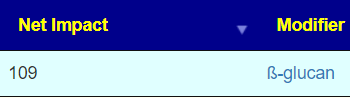
Beta-Glucan and ME/CFS: The Microbiome Fixer

A reader that does microbiome analysis of her ME/CFS daughter ‘s microbiome using Microbiome Prescription expert system sent me this note with some literature.

Your wonderful system recommended beta-glucans [also written β-Glucan] for my daughter,  and when I looked further, I found this. I’m trying her on them for a month-, after testing her for reactions for three days- the first week has been hopeful. Will keep you posted if you wish.

Reader

β-Glucan is a nonstarch polysaccharide having documented health benefits and industrial applications. It can be extracted from various sources, including cereals, bacteria, molds, and fungi. The chemical nature of extracted β-glucan from these sources differs slightly. This variation in chemistry defines its industrial uses and health benefits.

Biopolymers for Food Design, 2018

Literature

There is not much literature available for ME/CFS.

  • “The findings showed that the beta-glucan supplementation significantly improved cognitive fatigue (assessed with FIS-40 scores) after the 36-week treatment compared to the baseline (p = 0.0338). Taken together, this study presents the novel finding that yeast-derived beta-glucan may alleviate cognitive fatigue symptoms in ME/CFS.” [2023]
  • β-Glucan Improves Conditions of Chronic Fatigue in Mice by Stimulation of Immunity [2020] Reduces TNF-α (which is connected to mast cell issues)
  • Effects of β-(1,3–1,6)-d-glucan on irritable bowel syndrome-related colonic hypersensitivity [2012]
    “β-Glucan did not affect the pain response in general but specifically affects the visceral pain response.”
  • Serum concentrations of 2′,5′-oligoadenylate synthetase, neopterin, and beta-glucan in patients with chronic fatigue syndrome and in patients with major depression. [1994]
  •  the dosage of supplementation ranged from 2.5 to 1000 mg daily [of beta-glucan] for up to 6.5 months … The primary physiological outcome of the majority of the interventions was immunomodulation, which resulted in (a) strengthened immune defense that reduces the incidence and symptoms of cold, flu and other respiratory infections and (b) improvement of allergic symptoms.” [2021]
  • β-glucan attenuates cognitive impairment via the gut-brain axis in diet-induced obese mice [2020]

Some literature for Autism

Many Sources of Beta Glucan

Often the expert system on Microbiome Prescription comes up with Barley as a strong recommendation for ME/CFS people. Barley is an excellent source. Personally, I have oats or barley porridge a couple of times every week. The impact of the β-Glucan in the Barley may be the mechanism — we just do not have as many studies as we do for Barley.

  • “The primary sources of food β-glucan for humans are cereals (especially oats and barley), fungi, algae, and yeast ” [2023] A table from this article is below
  • β-glucans bind to specific receptors on immune cells and initiate immune responses…. In vitro study found that the fermentation of barley and oat β-glucan by human fecal samples show variations in SCFAs production and the bacterial populations of Clostridium histolyticum and the ratio of Bacteroides–Prevotella species. Absorption of these SCFAs by the gut epithelial cells helps in regulating cell differentiation, proliferation, apoptosis, and gene expression (210). Butyrate increases the protein expression of tight junctions such as ZO-1 and claudin-1, resulting in enhanced intestinal barrier function.”
    β-glucan is an essential food ingredient in controlling metabolic dysregulations linked to metabolic syndrome. β-glucans have a very minimal probability of having any unfavorable side effects and are reasonably inexpensive.” [2023]

Bottom Line

Real simple: Barley or Oats porridge for breakfast each day! Since there are some chemical differences between the β-glucans in these two grains– rotate between these (and different brands) at least monthly.

Using the generic suggestions for me/cfs we see both barley and B-glucan are positive (but oats are slightly negative). The more detailed citizen science suggestions are still be worked on, but I expect similar.

Reviewing Clinical Trials, my impression is 1 gram/day of β-glucans which translates to 20 grams of Barley or 40 grams of Oats per day.

“30g uncooked oats or barley will make a fairly small bowl of porridge whilst 70-80g will provide a particularly large serving for one person. Traditional porridge recipes tend to use oatmeal with approximately 200ml of water per 50g oats, and a pinch of salt.”

University of Aberdeen

Some people will advocate just eat mushroom. While correct that it contains beta-glucans, we need to be careful not to slip into homeopathic dosages!

Among those, mushrooms feature a particularly high level, so it’s no exaggeration when we say “for beta glucans, look to mushrooms!” The amounts of beta glucans found per 100 g of raw mushroom include 2.3 g (maitake), 2.0 g (bunapi), 1.9 g (eryngii), 1.8 g (bunashimeji) and 1.5 g (shimofuri hiratake) (Hokuto data).

https://www.hokto-kinoko.co.jp/lang/en/kouka/jiten/jiten06/

When we go to typical US mushrooms (i.e. Button), we drop to .75 g/100 grams [FDA]. So we are talking about 5-6 oz of mushrooms per day. That 3/4 of the typical mushroom package per day per person.

Celiac and Gluten Sensitive Issue

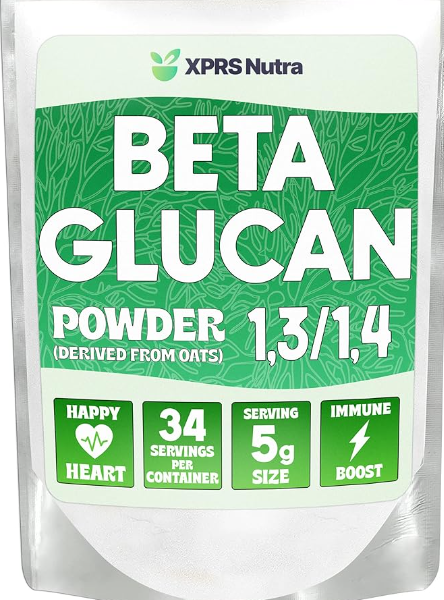
Most beta glucan supplements are produced from Saccharomyces cerevisiae (thus gluten free). For example the item below is about US$17.00 and gives 100 days at 1 gram per day.

I should note that there are different forms of beta glucan, for example above it is the 1,3/1,6 forms. Another product has 1,3/1,4 and is derived from Oats (you will have to write the company to see if it is gluten free or low gluten).

The cost per gram is much lower as bulk powders than with pre-filled “premium” capsules – the same volume of beta glucan can be as high as $250 (12x more) with some products.

Tool for getting suggestions for your specific ME/CFS Symptoms

After I posted List of Bacteria significant for ME/CFS from the shared samples uploaded to Microbiome Prescription, several readers asked “How do I use this”. This took me a few days to come up with, code and implement an answer.

I wanted this to go beyond just ME/CFS because there is a huge variety of symptoms and co-morbidity seen with ME/CFS. After testing and tuning the algorithm, I am pleased with the current results.

The process is show below.

The Steps

  1. First get a suitable microbiome test done (See this list of supported tests)
  2. Transfer or upload your results to Microbiome Prescription
  3. An email will be sent to you to login
  4. Login in.
  5. Enter your symptoms
  • Return to “My Profile”
  • A new button will appear

Clicking it will move to the page below. YOU MAY FIND THAT IT TAKES UP TO A MINUTE (We are doing a massive number of computation)

This will show a tree of the bacteria involved. The Species are under the genus they below to. In the example below we see the ENTIRE phylum that Bifidobacterium is in are low (none found) of 9 species whose presence would likely reduce your symptoms.


Elsewhere you may see highs with certain bacteria species desired to higher. Often the symptom key is at the species level.

At the bottom you will see a button to get suggestions

The next page shows the symptoms being targeted to and choices of what you want to consider.

Make any changes desired and click show suggestions

REMEMBER these are suggestions for ONE person using their Symptoms and their microbiome profile. It is intended for them only. Your own suggestions may be very different with many items exchanged between ADD and REMOVE.

Technical Methodology Details are described here Technical Note: Prevalence, Average and Not Reported.

Post-Script

This approach sidestep the proforma process often drilled into researchers (you must have a healthy control group and a verified, criteria matching target population). I kept to rigorous statistical analysis while ignoring these constraints which are philosophical in nature. We used the available data and set our significance level to P < 0.005; instead of the typical research level of P < 0.05. In other words, we are 10 times more certain about our results.

List of Bacteria significant for ME/CFS

This is from donated samples on microbiome prescription that have been annotated with diagnosis or symptoms. See this post for how these were calculated. All items are with P < 0.005 (10 times more significant than many published studies).

Bacteria NameRankShift
DeferribacteresphylumSeen too often
ThermodesulfobacteriaphylumSeen too often
Hyphomicrobium aestuariispeciesSeen too often
RhizobiaceaefamilySeen too often
GluconobactergenusSeen too often
Erwinia oleaespeciesNot seen as often as expected
Actinobacillus porcinusspeciesNot seen as often as expected
Prevotella micansspeciesNot seen as often as expected
Prevotella oulorumspeciesNot seen as often as expected
Prevotella shahiispeciesNot seen as often as expected
ThiocapsagenusSeen too often
Pediococcus argentinicusspeciesSeen too often
Peptostreptococcus stomatisspeciesSeen too often
Streptococcus mutansspeciesSeen too often
Sporosarcina pasteuriispeciesSeen too often
Lactobacillus acidophilusspeciesSeen too often
Erysipelothrix inopinataspeciesSeen too often
Bifidobacterium angulatumspeciesNot seen as often as expected
Bifidobacterium catenulatumspeciesNot seen as often as expected
Bifidobacterium ruminantiumspeciesSeen too often
Bifidobacterium catenulatum subsp. kashiwanohensesubspeciesNot seen as often as expected
Corynebacterium glucuronolyticumspeciesSeen too often
HaploplasmagenusSeen too often
Acholeplasma hippikonspeciesSeen too often
Propionigenium modestumspeciesSeen too often
LevilactobacillusgenusSeen too often
PediococcusgenusSeen too often
RoseospiragenusSeen too often
Caloramator indicusspeciesSeen too often
Caloramator viterbiensisspeciesSeen too often
HyphomicrobiumgenusSeen too often
Prosthecobacter fluviatilisspeciesSeen too often
Tetragenococcus halophilusspeciesNot seen as often as expected
Acidaminobacter hydrogenoformansspeciesSeen too often
ThermodesulfobacterialesorderSeen too often
DeferribacteralesorderSeen too often
Heliorestis baculataspeciesSeen too often
ParapedobactergenusSeen too often
Mogibacterium vescumspeciesSeen too often
Collinsella tanakaeispeciesSeen too often
AbsiellagenusSeen too often
Pseudomonas viridiflavaspeciesNot seen as often as expected
Finegoldia magnaspeciesSeen too often
Sphingobium abikonensespeciesSeen too often
Anaerococcus tetradiusspeciesSeen too often
Cetobacterium cetispeciesSeen too often
PeptostreptococcusgenusSeen too often
ThermodesulfobacteriaceaefamilySeen too often
ThermodesulfatatorgenusSeen too often
DeferribacteraceaefamilySeen too often
DeferribacteresclassSeen too often
ThermodesulfobacteriaclassSeen too often
CetobacteriumgenusSeen too often
PropionigeniumgenusSeen too often
ProsthecobactergenusSeen too often
Roseobacteraceae Pujalte et al. 2014familySeen too often
DesulfonatronovibriogenusSeen too often
Thermodesulfatator atlanticusspeciesSeen too often
Aminiphilus circumscriptusspeciesSeen too often
Olivibacter terraespeciesSeen too often
Parapedobacter koreensisspeciesSeen too often
AcidaminobactergenusSeen too often
Bifidobacterium kashiwanohense PV20-2strainNot seen as often as expected
AminiphilusgenusSeen too often
Haploplasma cavigenitaliumspeciesSeen too often
Prevotella coprispecieslow in ME/CFS
Prevotellagenuslow in ME/CFS
Sporolactobacillaceaefamilylow in ME/CFS
Sporolactobacillus putidusspecieslow in ME/CFS
Sporolactobacillusgenuslow in ME/CFS
Prevotellaceaefamilylow in ME/CFS
Firmicutesphylumhigh in ME/CFS
Blautiagenushigh in ME/CFS
Cetobacterium cetispecieshigh in ME/CFS
Cetobacteriumgenushigh in ME/CFS
Bifidobacterium tsurumiensespecieslow in ME/CFS
Propionigeniumgenushigh in ME/CFS
Propionigenium modestumspecieshigh in ME/CFS
Phocaeicola plebeiusspecieslow in ME/CFS
Eubacterialesorderhigh in ME/CFS
Clostridiaclasshigh in ME/CFS
Catonella morbispecieshigh in ME/CFS
Catonellagenushigh in ME/CFS
Bifidobacterium gallicumspecieslow in ME/CFS
Bacteroides rodentiumspecieshigh in ME/CFS
Cerasicoccusgenuslow in ME/CFS
Gallionellaceaefamilylow in ME/CFS
Gallionellagenuslow in ME/CFS
Aggregatibacter aphrophilusspecieslow in ME/CFS
Cerasicoccus arenaespecieslow in ME/CFS
Filifactor alocisspecieslow in ME/CFS
Desulfotomaculum defluviispecieshigh in ME/CFS
Collinsella intestinalisspecieshigh in ME/CFS
Anaerolineaeclasshigh in ME/CFS
Bifidobacterium bifidumspecieslow in ME/CFS
Clostridium frigorisspecieslow in ME/CFS
Desulfotomaculumgenushigh in ME/CFS
Hahellagenuslow in ME/CFS
Desulfovibriogenuslow in ME/CFS
Megamonasgenuslow in ME/CFS
Lachnospiraceaefamilyhigh in ME/CFS
Bifidobacterium angulatumspecieslow in ME/CFS
Acinetobacter antiviralisspecieslow in ME/CFS
Syntrophomonas sapovoransspecieslow in ME/CFS
Pseudomonas viridiflavaspecieslow in ME/CFS
Chloroflexiphylumhigh in ME/CFS
Puniceicoccaceaefamilylow in ME/CFS
Oribacteriumgenuslow in ME/CFS
Geobactergenushigh in ME/CFS
Geobacteraceaefamilyhigh in ME/CFS
Terrabacteria groupcladehigh in ME/CFS
Campylobacter concisusspecieslow in ME/CFS
Fusobacteriaceaefamilyhigh in ME/CFS
Opitutaeclasslow in ME/CFS
Fusobacterialesorderhigh in ME/CFS
Fusobacteriiaclasshigh in ME/CFS
Fusobacteriaphylumhigh in ME/CFS
Emticicia oligotrophicaspecieslow in ME/CFS
Emticiciagenuslow in ME/CFS
Megamonas funiformisspecieslow in ME/CFS
Puniceicoccalesorderlow in ME/CFS
Thiorhodococcusgenuslow in ME/CFS
Granulicellagenuslow in ME/CFS
Allohahellagenuslow in ME/CFS
Allohahella antarcticaspecieslow in ME/CFS
Spirosomaceaefamilylow in ME/CFS
Gallionella ferrugineaspecieslow in ME/CFS
Oribacterium sinusspecieslow in ME/CFS
Granulicella tundricolaspecieslow in ME/CFS
Prevotella paludivivensspecieslow in ME/CFS
Legionellalesorderhigh in ME/CFS
Caldilinea tarbellicaspecieshigh in ME/CFS
Caldilinealesorderhigh in ME/CFS
Caldilineaceaefamilyhigh in ME/CFS
Caldilineagenushigh in ME/CFS
Caldilineaeclasshigh in ME/CFS
Moorellagenuslow in ME/CFS
Cytophagaceaefamilylow in ME/CFS
Legionellaceaefamilyhigh in ME/CFS
Anaeroplasmataceaefamilylow in ME/CFS
Anaeroplasmagenuslow in ME/CFS
Anaeroplasmatalesorderlow in ME/CFS