Paleo-ketogenic Diet for CFS – a good fit?

In my last few posts I looked at illnesses in the autoimmune spectrum that have started to have their microbiome studied. For each of them I used DataPunk.net to filter out good and bad things for correcting the shifts done. I then spot checked some of the things against the literature and discovered that the predictions of what could happen — frequently was found to help. The oddest one was that using diet-pop (versus regular pop) reduced the risk of Rheumatoid Arthritis was confirmed and matched the prediction that sugar substitutes helped correct/prevent this specific microbiome shift.

  1. Autism
  2. Rheumatoid Arthritis
  3. Multiple Sclerosis

At present I do believe that CFS is likely a mixture of different microbiome shift patterns. This comes from two things:

  • the definition requires X of Y symptoms and symptoms are related to the microbiome shifts
  • going thru many uBiome results — I see the commonality of low or no lactobacillus, bifidobacterium and e.coli (originally reported in 1998) but with all of the other bacteria genus being all over the place.

We can shift microbiome patterns by diet.  The problem is that the diet should match the microbiome shift desired. This means that any specific diet as a general recommendation to CFS patients becomes suspect without a detail examination of the microbiome first. Eating Navy beans and barley oatmeal for breakfast will help some and hurt others.

A reader asked explicitly about the paleo-ketogenic diet, so I will start by summarizing what research reports.

Paleo-ketogenic diet Research

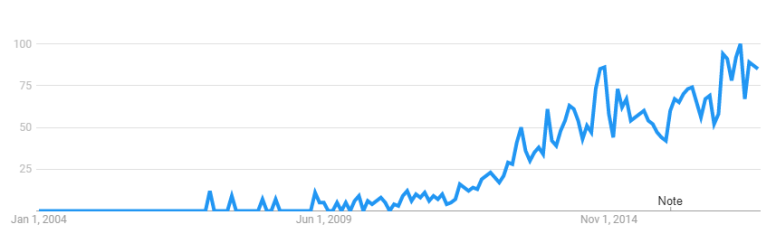
Google Trends shows us that it started around 2009 and has been growing in interest.
google

Going to PubMed – Nothing for this search term. On Google Scholar, we had 681 hits (often blog posts). I used the following from the Ancestral Health Society’s “Annual symposium of the German Society for Paleo Nutrition”

With the following being asserted:

“Adjusting to the ketogenic Paleo diet led to subjectively noticeable health benefits:
• Significant weight loss of 70 kg (154 pounds) within 15 months
• Enhanced metabolic fat burning and gains of lean body mass
• Improved cognitive performance
• Stronger immune system
• Mental balance and general well-being”  2013, p7

Bottom line, I was unable to find any clinical studies.

What is the diet and how does it impact the microbiome?

  • The ketogenic diet is a high-fat, adequate-proteinlow-carbohydrate diet [Wikipedia]
  • The Paleolithic diet (also called the paleo dietcaveman diet or stone-age diet[1]) is a modern fad diet requiring the sole or predominant consumption of foods presumed to have been the only foods either available or consumed by humans during the Paleolithic era [wikipedia]
    • “the diet typically includes vegetables, fruits, nuts, roots, and meat while excluding foods such as dairy products, grains, sugar, legumes, processed oils, salt, and alcohol or coffee.[1] The diet is based on avoiding not just modern processed foods, but rather the foods that humans began eating after the Neolithic Revolution when humans transitioned from hunter-gatherer lifestyles to settled agriculture.”

The wikipedia definitions actually provide us with sufficient information to infer what expected shifts in the microbiome may be due to our friend, DataPunk.Net.

Ketogenic Diet – simply BAD for CFS

A quick trip to DataPunk.net revealed that it inhibits Lactobacillus and double inhibits Bifidobacterium. Forget all of the other bacteria genus — it’s wrong for the basics!!!!

Enhances Inhibits
High Fat High Fat low-carbohydrate 
Alistipes Actinobacteria Agathobacter rectalis
Clostridium perfringens Akkermansia Bifidobacterium
Enterococcus Akkermansia muciniphila Prevotella
Erysipelotrichia Bifidobacteriaceae Roseburia
Fusobacterium Bifidobacterium
Lactobacillales Bifidobacterium pseudolongum
Proteobacteria Clostridiales
Verrucomicrobiales Clostridium clostridioforme
Coprococcus
Faecalibacterium
Lactobacillus
Lactococcus
Ruminococcus
Verrucomicrobia

Addenum:

UPDATE: I just checked the old CfsFMExperimental Group on Yahoo and the use of ketogenic diet was a topic on that group back in 2000-2005. It never went anywhere — although people tried it.

Paleolithic diet

Compared to the ketogenic diet, the Paleolithic diet is a winner.  Lean animal meat is in keeping with paleolithic life (all animals were wild and hunted by men and other creatures).

Bottom Line

I prefer a diet custom tuned to the microbiome shifts — but if you want a ‘stock diet’ I would prefer you to consider a paleolithic diet (although it is vaguely defined).

 

Impacting Autism bacteria

This is a theoretical post. Working from high bacteria and low bacteria cited in this earlier post, I went to DataPunk.Net and extracted information about each genus.

I have struck thru items that appear on both sides. We do not know if these items will help or make things worst…. i.e. these are should avoid for safety items.

The Increase or Decrease are what you in theory would reduce high bacteria and enhance low bacteria. In some cases, the same item will decrease the high bacteria and increase the low bacteria; in general, we have limited knowledge from published articles.

High Bacteria Low Bacteria
  1. Bacteroidetes (phylum) 
  2. Caloramator (genus) 
  3. Candida
  4. Clostridium (genus) 
  5. Clostridium perfringens (species) 
  6. Collinsella (genus) 
  7. Corynebacterium (genus) 
  8. Desulfovibrio (genus) 
  9. Dorea
  10. Lactobacillus (genus) 
  11. Sarcina (genus) 
  1. Akkermansia muciniphila (species) 
  2. Alistipes (genus) 
  3. Bifidobacterium (genus) 
  4. Bilophila (genus) 
  5. Blautia (genus) 
  6. Coprococcus (genus) 
  7. Dialister (genus) 
  8. Firmicutes (phylum) 
  9. Parabacteroides (genus) 
  10. Prevotella (genus) 
  11. Sutterella (genus) 
  12. Veillonella (genus) 
  13. Veillonellaceae (family) 
To Improve
Decrease Intake of
To Improve
Increase Intake of
  • (+)-Catechin L10
  • Almonds/ almond skins  H10
  • Ascophyllum nodosum (rockweed)  L3
  • Berberine H8 L3
  • Chemotherapy L3 L12
  • Chicory L4 L10
  • Cranberry bean flour L2
  • Daesiho-tang (DSHT) H1 H10 L8
  • Dopamine L10
  • Epicatechin L10
  • Ethanol L1
  • Flaxseed L1 L5 L6 L8 H4 H5
  • Gallate L2
  • Ganoderma lucidum mycelium H1 L8
  • Glyphosphate L3
  • Grapes (table) L4
  • Gynostemma pentaphyllum H1
  • High fat diet H5 L1 L3 L6
  • High meat diet L8
  • Inulin L4 L10
  • Iron supplements H4 H5 L3
  • Jerusalem artichoke L10
  • Laminaria digitata (oarweed) H10
  • Laminaria hyperborea (curvie) L3
  • Low carbohydrate diet L3 L10
  • Low energy diet/ calorie restriction L8
  • Low FODMAP diet L3
  • Magnesium  H10
  • Magnesium-deficient diet  L3
  • Navy bean (Cooked) L10 H10
  • Omega 3 fatty acids L1
  • Partial Sleep Deprivation H6
  • Plant-rich diet L2
  • Polymannuronic acid L6 L11
  • Proton-pump inhibitors (PPI) H7 H8 H10
  • Resistant starch (type IV) L1 L10
  • Resveratrol L10 H10
  • Sesame cake/meal H10
  • Sucralose (Splenda)  L3
  • Tannin L2
  • Walnuts L5
  • Whole grain diet H6
  • Whole-grain barley L8 L10
  • β-Glucan H4 H5 L10
  • Almonds/ almond skins L3
  • Aloe vera H7
  • Arabinoxylans L3
  • Barley L4
  • Berberine L5 L10
  • Bile L4
  • Carboxymethyl cellulose (CMC) L1
  • Chemotherapy L6 L11 H10
  • Chicory L3
  • Cholic acid L5 L8
  • Chondrus crispus (red seaweed) L3 H5
  • Cranberry bean flour L1 L10 H5
  • Daesiho-tang (DSHT) L1 L3
  • Epinephrine L10
  • Fasting L1
  • Flaxseed L10
  • Fructo-oligosaccharides L3
  • Glyphosphate H10
  • Grapes (table) L1
  • Green tea L1 L3
  • Heme L1 L10
  • High animal protein diet L4
  • High carbohydrate diet L10
  • High fat diet L2 H10
  • High fruit intake L2
  • High meat diet L2 L4
  • High protein diet L1 L4 L11
  • Inulin L3
  • Iron supplements [parent]  H10
  • Jerusalem artichoke L3
  • Laminaria hyperborea (curvie)  H10
  • L-citrulline L10
  • Lingonberries L1
  • Low processed foods diet L1
  • Magnesium L3
  • Magnesium-deficient diet  H10
  • Mediterranean diet  L10
  • Melatonin L1
  • Metformin L1
  • Methyl gallate  H5
  • Milk-derived saturated fat L4
  • Navy bean (Cooked) H4 H5 H6 L3
  • Partial Sleep Deprivation H1 L8
  • Polymannuronic acid H1 H4 H5
  • Polysorbate 80 L1
  • Pomegranate ellagitannins L1
  • Propyl gallate  H5
  • Proton-pump inhibitors (PPI) L9 L12
  • Pyruvate L4
  • Quercetin H5
  • Red wine L3 L10
  • Resistant starch (type II) H4 H5 L5 L6
  • Resistant starch (type III) L3
  • Resistant starch (type IV) L5 L9
  • Resveratrol L1 L3
  • Rhubarb L1
  • Saccharomyces boulardii L5 L6 L10
  • Sarcodiotheca gaudichaudii (red seaweed)  H5
  • Sesame cake/meal L3
  • Stevia H10
  • Stigmastanol H6
  • Sucralose (Splenda) H10
  • Tannic acid H1 H5
  • Trametes versicolor H4 H5
  • Walnuts H1 L5 L6 L8
  • β-sitosterol H6


Bottom Line

Some of the increased items above appears to be backed by the literature:

This is the third time that we observed: microbiome shift seen in an autoimmune condition–> what corrects the shift –> studies confirm the suggestions improves the condition.

As always consult with your medical professional before changing diet or supplements. The above considers the condition is isolation of other conditions that may be a factor.

Autism Microbiome

This is part of a current blog arc looking at related conditions that often seem to be in the family of people with CFS/FM/IBS.  A reader forwarded me a link to A Single Species Of Gut Bacteria Can Reverse Autism-Related Social Behavior In Mice [2016]. The species was Lactobacillus Reuteri — the bacteria ascribed to being the source of B12 in humans.  CFS patients usually have zero of it — hence the need for B12 supplements and injections.

This post is dedicate to a local CFS suffer who has a child with autism.

“We cultured a strain of L. reuteri originally isolated from human breast milk and introduced it into the water of the high-fat-diet offspring. We found that treatment with this single bacterial strain was able to rescue their social behavior,”

Autism and the Microbiome

  • The Gut Microbiota and Autism Spectrum Disorders[2017].
    • “Gastrointestinal (GI) symptoms are a common comorbidity in patients with autism spectrum disorder (ASD), but the underlying mechanisms are unknown. Many studies have shown alterations in the composition of the fecal flora and metabolic products of the gut microbiome in patients with”
    • “Accumulating evidence demonstrates that gastrointestinal (GI) symptoms, such as abdominal pain, gaseousness, diarrhea, constipation and flatulence, are a common comorbidity in patients with ASD (Chaidez et al., 2014).”
    • “The gut microbiota of infants who were delivered vaginally resembles their mother’s vaginal microbiota, which is dominated by Lactobacillus, Prevotella, or Sneathia spp., and the gut microbiota of babies who were born by Cesarean section is similar to their mother’s skin microbiota, which is dominated by Staphylococcus, Corynebacterium, and Propionibacterium spp. (Dominguez-Bello et al., 2010).”
    • “Compared with the gut microbiota of children without ASD, the gut microbiota of children with ASD is less diverse and exhibits lower levels of Bifidobacterium and Firmicutes and higher levels of Lactobacillus, Clostridium, Bacteroidetes, Desulfovibrio, Caloramator and Sarcina (Finegold et al., 20022010; Adams et al., 2011; Finegold, 2011; De Angelis et al., 2013).”
    • “Children with autism who present GI symptoms have lower abundances of the genera Prevotella, Coprococcus, and unclassified Veillonellaceae than that found in GI symptom-free neurotypical children (Kang et al., 2013).”
    • “Fecal samples from children with ASD also have higher levels of the Clostridium histolyticum group (Clostridium clusters II and I) compared with samples from unrelated healthy children (Parracho et al., 2005).”
    • “The reduction of Clostridium yields significant improvements in children with ASD (Sandler et al., 2000). “
    • “Additionally, children with ASD present alterations in their levels of Bifidobacterium, Prevotella, and Sutterella (Wang et al., 2013).”
      • “and demonstrated a low relative abundance of Bifidobacterium spp. and the mucolytic bacterium Akkermansia muciniphila in children with ASD [11].
    • “found a significant increase in the Firmicutes/Bacteroidetes ratio in autistic subjects relative to normal subjects. They also found that Candida was two times more abundant in autistic individuals than in normal individuals (Strati et al., 2017).”
    • ” the Autism Diagnostic Interview (ADI) restricted/repetitive behavior subscale score has associated with the amount of Desulfovibrio spp. (Tomova et al., 2015). “
  • Distinct Microbiome-Neuroimmune Signatures Correlate With Functional Abdominal Pain in Children With Autism Spectrum Disorder[20176]
    • “A significant increase in several mucosa-associated Clostridiales was observed in ASD-FGID, whereas marked decreases in Dorea and Blautia, as well as Sutterella, were evident. “
  • New evidences on the altered gut microbiota in autism spectrum disorders[2017].
    • ” We found a significant increase in the Firmicutes/Bacteroidetes ratio in autistic subjects due to a reduction of the Bacteroidetes relative abundance. At the genus level, we observed a decrease in the relative abundance of Alistipes, Bilophila, Dialister, Parabacteroides, and Veillonella in the ASD cohort, while Collinsella, Corynebacterium, Dorea, and Lactobacillus were significantly increased. Constipation has been then associated with different bacterial patterns in autistic and neurotypical subjects, with constipated autistic individuals characterized by high levels of bacterial taxa belonging to Escherichia/Shigella and Clostridium cluster XVIII. We also observed that the relative abundance of the fungal genus Candida was more than double in the autistic than neurotypical subjects, yet due to a larger dispersion of values, this difference was only partially significant.”
  • ” autistic subjects with gastrointestinal disease harbor statistically significantly (p = 0.031) higher counts of C. perfringens in their gut” [2017]

Microbiome Treatment

  • “According to a cohort study, oral supplementation with Lactobacillus acidophilus twice daily for 2 months decreases the D-arabinitol levels in the urine of children with ASD and improves their ability to follow directions, as demonstrated through comparison with data collected before the treatment (Kaluzna-Czaplinska and Blaszczyk, 2012). “
  • “ase study showed an ASD boy with severe cognitive disability was treated with VSL#3 (a multi-strain mixture of 10 probiotics) for 4 weeks. The treatment relieved the GI symptoms and improved the autistic core symptoms (Grossi et al., 2016). “
  • ” The prebiotic galactooligosaccharide (B-GOS) increases the levels of Bifidobacterium spp. in an in vitro gut model, as demonstrated through the analysis of fecal samples from children with ASD and controls (Grimaldi et al., 2017).”
  • “treatment with Bacteroides fragilis reduced gut permeability, altered the composition of the gut microbiota and decreased ASD-like behaviors in a rodent model of ASD (Hsiao et al., 2013). “
  • ” the proportion of Bacteroidetes/Bacteroidales significantly increased and the proportion of Bifidobacterium significantly decreased [after Vitamin A supplementation]” [2017]

Bottom Line

Autism microbiome is different from the CFS microbiome, there is evidence that it may be seeded as an altered microbiome very early in a child’s life.


Kombucha — Russian Roulette for CFS/FM/IBS

Readers have asked about this privately, I thought it would be good to give a fuller answer:

From A Review on Kombucha Tea—Microbiology, Composition, Fermentation, Beneficial Effects, Toxicity, and Tea Fungus [2014]

  • “Currently kombucha is alternately praised as “the ultimate health drink” or damned as “unsafe medicinal tea” (Blanc 1996; Hartmann and others 2000). “
  • “Similarly to milk-derived kefir, the exact microbial composition of kombucha cannot be given because it varies. “
  • “He isolated an Acetobacter sp. (NRRL B-2357) and 2 yeasts (NRRL YB-4810, NRRL YB-4882) from a kombucha sample”
  • “The predominant acetic acid bacteria found in the tea fungus are A. xyliumA. pasteurianusA. aceti, and Gluconobacter oxydans (Liu and others 1996). “
  • “In addition to acetic acid bacteria there are many yeast species in kombucha. A broad spectrum of yeasts has been reported including species of Saccharomyces, Saccharomycodes, Schizosaccharomyces, Zygosaccharomyces, Brettanomyces/Dekkera, Candida, Torulospora, Koleckera, Pichia, Mycotorula, and Mycoderma.”

In short, every Kombucha brand is likely to contain different combination of bacteria and yeast. In addition to the above, the following are reported from studies cited above:

  1. Saccharomyces cerevisiae
  2. Saccharomyces bisporus
  3. Saccharomycoides ludwigii
  4. Schizosaccharomyces pombe
  5. Zygosaccharomyces sp.
  6. Zygosaccharomyces rouxii
  7. Zygosaccharomyces bailii
  8. Brettanomyces intermedius,
  9. Brettanomyces bruxellensis,
  10. B. claussenii
  11. Zygosaccharomyces kombuchaensis
  12. Candida famata,
  13. Candida guilliermondii
  14. Candida obutsa
  15. Candida famata.
  16. Candida stellata
  17. Candida guilliermondi
  18. Candida colleculosa
  19. Candida kefyr
  20. Candida krusei
  21. Torulaspora delbrueckii
  22. Mycotorula
  23. Mycoderma
  24. Pichia
  25. Pichia membranefaciens
  26. Kloeckera apiculata
  27. Kluyveromyces africanus

As expected, there have been no clinical studies with CFS/FM/IBS.

“On the basis of these data it was concluded that the largely undetermined benefits do not outweigh the documented risks of kombucha. It can therefore not be recommended for therapeutic use.” [2003]

Bottom Line

Not recommended. This is no evidence of benefit to any autoimmune or related conditions.  Each individual batch from a supplier may contain different bacteria and fungal combinations. “Fermented food” is not miracle food, especially when you may be dealing with overgrowth of one or more of the bacteria that happens to be in the fermented food.

For clarity:

  • One batch from one brand may very well help some
  • Another batch from a different brand may result in candida issues or worst

If the Kombucha does not list all of the fungi and bacteria (by species at least, strain preferred), you have no idea of what you are actually taking.


Review of GI Effects Comprehensive Profile from Genova Diagnostics

A reader forwarded me their results to look at. As usual, I will focus the bacteria. The rest of the report was within normal range.

hl

hl2

We do not have a wide analysis of different bacteria genus to work from. This is expected because they do the analysis via culturing (which only works for a few genus).

Baccillus

Data punk reportes it is inhibited by


Enterobacter cloacae

Going over to DataPunk we see that it feeds on:


And is inhibited by


Bottom Line: What do you do with reasonable bifidobacterium?

We have no Lactobaccillus and no E. Coli in the report.

For E.Coli, the items are simple:

For Lactobacillus, my current ‘gut’ feeling is:

A reader sent me a study of persistence of lactobacillus for at least 11 days being seen with a fermented oatmeal soap (an PDF/Scan article from 1993 ) with 1-5% malted barley flour. I suspect the process may be similar to making your own yogurt.