

Just in, July 29, 2023 study:
FMT was safe but did not relieve symptoms or improve ... patients with CFS.
Randomized, double-blinded, placebo-controlled pilot study: efficacy of faecal microbiota transplantation on chronic fatigue syndrome [2023]
The earlier post from 2021 is below.
A reader wrote me with some good questions. My answer is focused on ME/CFS but the analysis applies to UC, Crohn’s, IBS, Sibo, Autism and every disease with distinctive microbiome shift (here’s a partial list).
My wife is considering a fecal microbiota transplant(FMT) because of her chronic (CFS/Fibromyalgia) complaints and tested leaky gut, SIBO and microbiome dysbiosis.
We’ve found a company that claims to deliver fully prepared stool of “super donors” for about $1900 all included. Do you know this company and do you think they are trustworthy in their claims? https://microbioma.org/en/home-eng/
Do you have any other advice for us in relation to FMT, for example other trustworthy companies maybe in the area that we live (Europe) or perhaps an evidence based warning that she should not do this?
Hope to hear from you.
A 2019 article is worth reading The potential and pitfalls of fecal transplants
FMT is effectively an Organ Transplant…
For conventional medicine, there is a 10-15% rejection rate with the use of medications to prevent rejection. The following are factors to consider for organ transplants and likely apply to fecal matter transplants.
- Ensure recipient and donor have compatible blood types
- Perform genetic testing to ensure compatible recipient and donor matches
- In the case of living donors, donor organs from relatives are preferred
Blood Type
Not only should blood type be a factor, but secretor status. There should be a match – being a “super donor” implies a naïve understanding of FMT and transplants in general.
- Relationships between gastrointestinal microbiota and blood group antigens [2017] “Blood group A-secretors have a differing dominant bacterial composition than secretors of other blood group antigens by Unifrac analysis.”
- Human Microbiota, Blood Group Antigens, and Disease [2018] “Histo-blood group antigens (HBGAs) are specific surface-associated structures that have been classified into more than 30 blood group systems by researchers investigating the cause of life-threatening reactions to blood transfusions and rejection of tissue or organ transplants.57 “
Generic Testing
There is little literature here. My own feeling is that we need at least strain level comparisons between donors and recipient having considerable agreement. The volumes may be different, but the strains should be similar for bacteria not associated with the condition (i.e. for ME/CFS those that are high in the species the list here ideally, those species will be missing). Adding a page to the website on this issue would not be too hard (when there is a demand for it).
Donations from relatives are preferred
Bacteriophage α-diversity is important!
In this retrospective analysis, FMTs with increased bacteriophage α-diversity were more likely to successfully treat rCDI. In addition, the relative number of bacteriophage reads was lower in donations leading to a successful FMT. These results suggest that bacteriophage abundance may have some role in determining the relative success of FMT.
The success of fecal microbial transplantation in Clostridium difficile infection correlates with bacteriophage relative abundance in the donor: a retrospective cohort study (2019)
Other Preparation tests
From Johns Hopkins: “A potential donor will need to be screened by their physician for infectious pathogens by undergoing the following tests:
- Blood tests: Hepatitis A, B, and C serologies; HIV; RPR
- Stool tests: Ova and parasites; C. difficile PCR; culture and sensitivity; giardia antigen”
Microbiome is a hot topic — hence money maker
Microbiome transplants, including “turkey baster DYI” are hot. A summary is given on WebMd. One of the few FDA approved sources is OpenBiome. You should note their scope of operation:
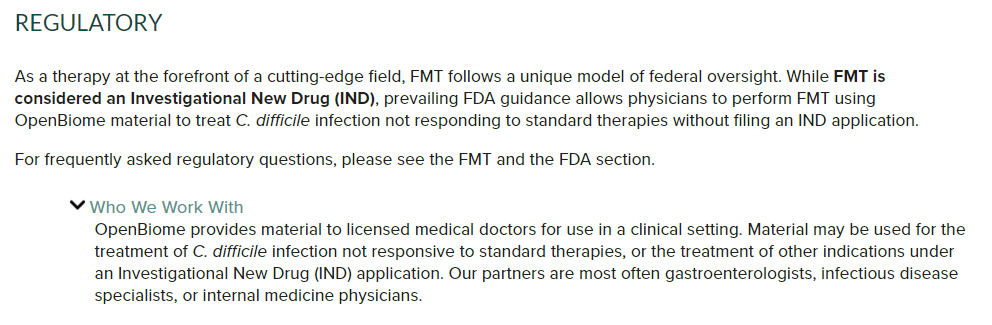
This reader cites, Microbioma.org. It is based in the Principality of Asturias, an autonomous community in northwest Spain, I suspect that this is to avoid government oversight (i.e. “off-shore unregulated havens”). I could not find either hospital or universities or similar that are associated with them — there were no studies on PubMed citing this organization.
Ideally, this firm would provide 16s strain level data on all available donors. They claim using AI to match. While, having done AI for decades, I would want to see their algorithms because AI often is biased or simply wrong. With no publications (and thus peer review), there is no evidence that their AI works. Citing AI is a good marketing strategy.
A few years ago, the Dove Clinic for Integrate Medicine in the UK offered FMT for CFS. They no longer do but for leaky gut offers “Gut Flora Replacement Therapy“
ME-Pedia on FMT
This page is current on FMT for ME/CFS. Australia allows it to occur for ME/CFS with Thomas J. Borody, MD and Paul Froomes, MD being the best known. I observe the following:
- 2012 – Borody did the sole paper on FMT with CFS (some reviewers question some results) Bacteriotherapy in chronic fatigue syndrome: a retrospective review [abstract]. Am J Gastroenterol 2012;
- 2014 in his paper Therapeutic faecal microbiota transplantation: current status and future developments cites the earlier paper with no report on any subsequent results.
- In dozens (like 80+) papers 3 published in 2021, CFS is not mentioned.
- This smells like an approach that failed to deliver expected results and thus left to fade away….
Some of their patients have shared their experiences. It was not uncommon to hear “almost immediate remission that lasted about 6 weeks and then ME came back” followed by many additional FMT attempts.
Large treatment effects were observed for the intention-to-treat sample with a reduction in Streptococcus viable count and improvement on several clinical outcomes including total symptoms, some sleep (less awakenings, greater efficiency and quality) and cognitive symptoms (attention, processing speed, cognitive flexibility, story memory and verbal fluency). Mood, fatigue and urine D:L lactate ratio remained similar across time. Ancillary results infer that shifts in microbiota were associated with more of the variance in clinical changes for males compared with females.
Open-label pilot for treatment targeting gut dysbiosis in myalgic encephalomyelitis/chronic fatigue syndrome: neuropsychological symptoms and sex comparisons [2018]
- Drug-Resistant E. coli Bacteremia Transmitted by Fecal Microbiota Transplant [2019]
- Systematic review: the global incidence of faecal microbiota transplantation-related adverse events from 2000 to 2020 [2020]
- Fecal Transplant Is Linked to a Patient’s Death, the F.D.A. Warns
- Naturopath banned from selling [FMT] pills, enemas made from feces after complaint they were made in ‘household lab’
“Based on the selected studies, the Adverse Effects(AE) rate of FMT is 39.3%, with most AE being mild and self-limiting. Severe Adverse Effects (SAE) were uncommon at 5.3%, and many were only possibly related to the FMT. ” i.e. 1/20 odds of SAE Adverse events of fecal microbiota transplantation: a meta-analysis of high-quality studies [2021]
“However, while current FDA regulations permit use of FMT for treating C. difficile infections that
Fecal Microbiota Transplantation, Washington State Health Care Authority
have not responded to standard antibiotic therapy, use of FMT for any other indication requires
submittal and approval of an IND (investigational new drug) application to the FDA.”
“[FMT Capsules] is an unapproved new drug and unlicensed biological product, which was introduced or delivered for introduction into interstate commerce in violation of the Federal Food, Drug, and Cosmetic Act (FD&C Act) [21 U.S.C. § 331(d)] and the Public Health Service Act (PHS Act) [42 U.S.C. § 262(a)(1)]. …statements indicate that your product is intended for use in the mitigation, treatment, or prevention of disease, your product is a drug under section 201(g)(1)(B) of the FD&C Act [21 U.S.C. § 321(g)(1)(B)].
From existing FDA warning letters for other biological products
Please be advised that to lawfully market a drug that is also a biological product, a valid biologics license application (BLA) must be in effect [42 U.S.C. § 262(a)]. Such licenses are issued only after a demonstration that the product is safe, pure, and potent. While in the development stage, such products may be distributed for clinical use in humans only if the sponsor has an investigational new drug application (IND) in effect as specified by FDA regulations (21 U.S.C. § 355(i); 42 U.S.C. § 262(a)(3); 21 CFR Part 312). “
IMHO: Both the seller and any medical person involved would likely have no viable defense against lawsuits (all types). Remember, ignorance of the law (and the FDA) is not an acceptable excuse to the courts. If someone attempts to sell, ask for a copy of their BLA.
Bottom-Line
As with clostridium difficile (C.diff), FMT should only be done after repeated attempts with antibiotics have failed. My preference for antibiotic protocol would be that of Cecile Jadin, MD. Alternatively, determine the antibiotics via a microbiome analysis and using Microbiome Prescription for suggestions (see this recent post on a 20 y.o, CFS male— the antibiotic suggested agreed with the Jadin protocol).
The idea of using FMT for ME/CFS is correct in my opinion. The problem is the naïve attempts done without approaching typing and matching of the “organ” to be transplanted. Current attempts are almost like saying – oh he has lost a lot of blood, just give him blood — from an human, a race horse, a pig, a cow etc. Blood is blood…
Remember that FMT for C.diff has around 70% success rate. That is trying to dislodge a single bacteria. With ME/CFS there are likely dozens to be dislodged…. if it is 70% success for one, then it may be 50% success for two, 35% for three etc.
Personally, I prefer going the 16s microbiome analysis route, ideally with antibiotics and diet/supplement changes. FMT is too experimental and prone to trial and error. The reported success rate for the Jadin protocol is higher than that reported for FMT.
Some prior posts on this topic:
- Fecal Transplants – not for the herx adverse! [2016]
- A case study of a fecal transplant for CFS [2018]
- Current State of Fecal Matter Transplants [2018]
- uBiomes before and after a Fecal Microbiota Transplant [2017]
- Review: The poop on Fecal Transplants [2014]
- Fecal Microbiota Transplantation (FMT) [2016]
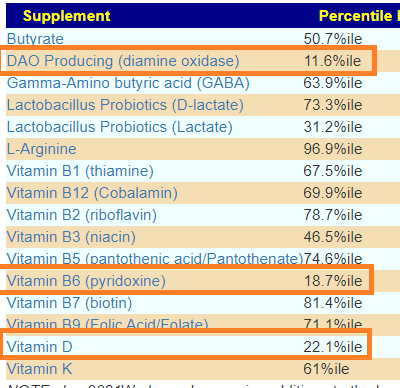


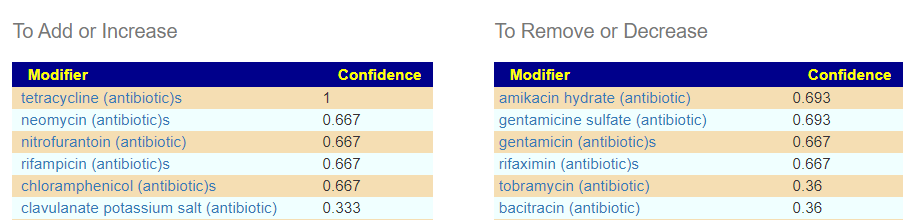
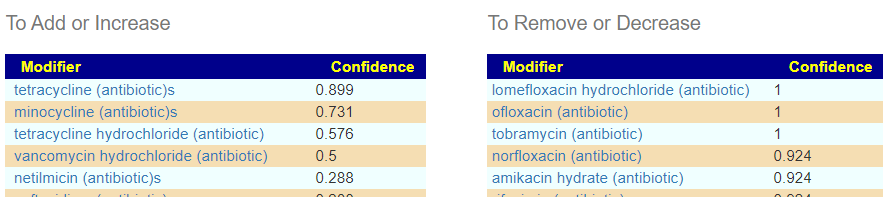
 CFS Remission