Arthritis = DNA + Microbiome?

This is a continuation of my last post looking at other conditions where there is evidence of DNA + Microbiome shift causing a disease. With CFS, the shift has started and may progress into other diseases.

Rheumatoid Arthritis

Microbiome

  • “colonization of particular intestinal bacteria was sufficient to induce arthritis.” [2016]
  • “A growing number of microbiota constituents such as Prevotella copri, Porphyromonas gingivalis, and Collinsella have been correlated or causally related to rheumatic disease.” [2016]
  • “The results of biological research of colon microbiota of patients with rheumatoid arthritis (RA) is in article presented. The signs of III degree dysbiosis, by reducing the concentration of Bacteroides spp., Bifidobacterium spp., Lactobacillus spp. populations, typical strain E. coli. But over growth of populations Klebsiella spp., Proteus spp., Staphylococcus spp., atypical forms of E. coli, Candida spp. The scheme for the correction of the colon microflora of patients with (RA) by was proposed bifiform. Increasing of populations concentration of Bifidobacterium spp., Bacteroides spp., Lactobacillus spp., typical E. coli, Enterococcus spp. and selective decontamination of Enterococcus (Hly+), Klebsiella spp., Proteus spp., Staphylococcus spp., lactosonegative and E.coli (Hly+) confirmed after using of this eubiotics.” [2014]
  • Treatment of adjuvant-induced arthritis with the combination of methotrexate and probiotic bacteria Escherichia coli O83 (Colinfant) [2009].
  • “Our results indicate that Enterococcus faecium may increase the preventive effect of methotrexate treatment in rat adjuvant arthritis by improving its anti-inflammatory and antiarthritic effects.” [2005]
  • ” A growing body of evidence has shed light on the association of dysbiosis of gut microbiota with RA. Certain gut microbial strains have been shown to inhibit or attenuate immune responses in RA experimental models, suggesting that specific species among intestinal commensal bacteria may play either a pathogenic or a protective role in the development of RA.” [2016]
  • “Patients with RA exhibited decreased gut microbial diversity compared with controls, which correlated with disease duration and autoantibody levels.A taxon-level analysis suggested an expansion of rare taxa, Actinobacteria,…The abundance of Collinsella correlated strongly with high levels of alpha-aminoadipic acid and asparagine as well as production of the proinflammatory cytokine IL-17A.  A role for Collinsella in altering gut permeability and disease severity was confirmed in experimental arthritis.” [2016]
  • “A subpopulation of patients with early RA harbored intestinal microbiota dominated by Prevotella copri;” [2016]
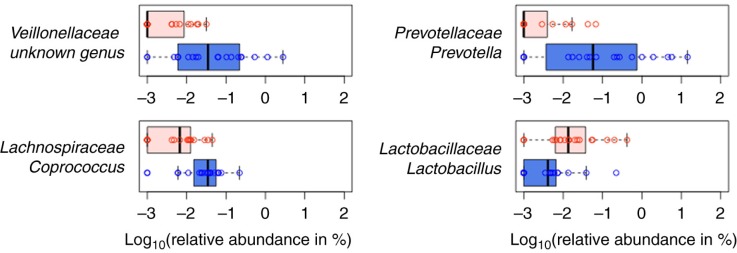
  • “Mice susceptible to collagen-induced arthritis (CIA) showed enriched operational taxonomic units (OTUs) affiliated with the genus Lactobacillus as the dominant genus prior to arthritis onset. With disease development, the abundance of OTUs affiliated with the families Bacteroidaceae, Lachnospiraceae, and S24-7 increased significantly in CIA-susceptible mice….Due to the extreme complexity and diversity of the gut microbiome, it is unlikely that differences in the abundance of a single species are responsible for differences in RA susceptibility. Rather, these differences most likely result from context-dependent interactions among the multiple species constituting the gut microbiota.” [2016]
  • “The results of this study indicate that the oral intake of probiotic B. coagulans and prebiotic inulin can improve the biochemical and clinical parameters of induced RA in rat.” [2016] [2010]
  • Conclusion: Lactobacillus casei 01 could not improve serum lipids in RA patients.” [2017]
  • probiotics — Lactobacillus rhamnosus GR-1 and Lactobacillus reuteri RC-14 capsules administered orally.  — did not clinically improve RA as measured by the ACR20,”
  • “Subjects who received probiotic capsules – Lactobacillus acidophilus (2 × 10(9) colony-forming units [CFU]/g), Lactobacillus casei (2 × 10(9) CFU/g) and Bifidobacterium bifidum (2 × 10(9) CFU/g) for 8 weeks. —  experienced borderline statistically significant improvement in total- (P = 0.09)” [2016]
  • “there were no statistical significant differences in the activity of RA, more subjects in the Lactobacillus rhamnosus GG (LGG) group reported subjective well being.” [2003]

DNA / SNP

Bottom Line

The over abundance of Lactobacillus immediately before onset, and no really significant results from any Lactobacillus probiotics strongly suggests that all Lactobacillus probiotics should be avoided.

E.Coli probiotics [Colinfant, Symbioflor-2, Mutaflor] and Bacillus probiotics are what studies suggest are most likely to help. Second line would be: Bifidobacterium spp., Bacteroides spp., Enterococcus spp.
BPA, Autism and the Microbiome

A reader has CFS and also an autistic child. An extension of my model is that DNA + microbiome shift results in a wide variety of difficult to treat conditions falling under autoimmune. This is a drill down into one of these conditions.

Microbiome Shifts

  • “Certain intestinal bacteria have been observed in abundance and may be involved in the pathogenesis of ASD; including members of the Clostridium and Sutterella genus” [2017]
  • ” At the species level, a relative decrease in abundance of two Bacteroides species and Escherichia coli was found in autistic individuals…. but also may represent a more pervasive dysbiosis that results in metabolites that impact the behavior of autistic children.” [2016]
  • “A significant increase in several mucosa-associated Clostridiales was observed in ASD-FGID, whereas marked decreases in Dorea and Blautia, as well as Sutterella, were evident.” [2016]
  • “Autistic subjects also harbor statistically significantly (p = 0.015) higher counts of beta2-toxin gene-producing C. perfringens in their gut compared to control children, and the incidence of beta2-toxin gene-producing C. perfringens is significantly higher in autistic subjects compared to control children (p = 0.014). Alpha toxin gene was detected in all C. perfringens strains studied. C. perfringens” [2017]
  • “MTT involved a 2-week antibiotic treatment, a bowel cleanse, and then an extended fecal microbiota transplant (FMT) using a high initial dose followed by daily and lower maintenance doses for 7-8 weeks. The Gastrointestinal Symptom Rating Scale revealed an approximately 80% reduction of GI symptoms at the end of treatment, including significant improvements in symptoms of constipation, diarrhea, indigestion, and abdominal pain. Improvements persisted 8 weeks after treatment. Similarly, clinical assessments showed that behavioral ASD symptoms improved significantly and remained improved 8 weeks after treatment ended. Bacterial and phagedeep sequencing analyses revealed successful partial engraftment of donor microbiota and beneficial changes in the gut environment. Specifically, overall bacterial diversity and the abundance of Bifidobacterium, Prevotella, and Desulfovibrio among other taxa increased following MTT, and these changes persisted after treatment stopped (followed for 8 weeks).” [2017]
  • “unlike those of healthy infants, feces of ASD infants had significantly higher and lower abundance of genera Faecalibacterium and Blautia, respectively.” [2016]
  • “from stool samples of children with diagnosed or suspected ASD… Among the species identified, intrinsically fluconazole-resistant Candida krusei (19.8 %) and Candida glabrata (14.8 %) with elevated MICs were remarkable. Overall, C. albicans (57.4 %) was the most commonly isolated species..” [2016]
  • “Children with PDD-NOS or AD have altered fecal microbiota and metabolomes (including neurotransmitter molecules)…. Our study indicates that the levels of free amino acids (FAA) and volatile organic compounds (VOC) differ in AD subjects compared to children with PDD-NOS, who are more similar to HC. [2015]
  • From a detail study [2015]
    doi:10.3402/mehd.v26.26914

DNA – SNPs

  • “Our findings that WNT2 and FOXP2 may moderate the clinical phenotypes of ASD provide evidence to support the possible universal effect of WNT2 and FOXP2 on neurodevelopmental symptom dimensions.” [2017]
  • “A haplotype of WNT2 (rs2896218-rs6950765: G-G) is significantly associated with ASDs in our trios samples,” [2011]
  • “Cytogenetic abnormalities at the 15q11-q13 locus are fairly frequent in people with autism, and a “chromosome 15 phenotype” was described in individuals with chromosome 15 duplications. Among other candidate genes are the FOXP2, RAY1/ST7, IMMP2L, and RELN genes at 7q22-q33 and the GABA(A) receptor subunit and UBE3A genes on chromosome 15q11-q13. Variant alleles of the serotonin transporter gene (5-HTT) on 17q11-q12 are more frequent in individuals with autism than in nonautistic populations.” [2004]

BPA – Danger

Interesting that a considerable number of articles returned from the PubMed search reference BPA. ” But BPA lines an estimated 75 percent of canned foods in North America,” [Mother Jones]

  • “Short-term feeding of canned dog food increased circulating BPA concentrations in dogs comparable to amounts detected in humans, and greater BPA concentrations were associated with serum chemistry and microbiome changes.” [2017]
  • Gut dysbiosis may result in various diseases, such as metabolic and neurobehavioral disorders. Exposure to endocrine disrupting chemicals (EDCs), including bisphenol A (BPA) and ethinyl estradiol (EE), especially during development, may also increase the risk for such disorders…., BPA and EE exposure may disrupt the normal gut flora, which may in turn result in systemic effects. ” [2016]


Kijimea IBS Probiotic

This is a new one on the market that a reader asked me about. It is a single strain: Bifidobacteria bifidum MIMBb75

Going to PubMed to see if there is documentation, I found 8 articles. A good start.

  • “Bifidobacterium bifidum MIMBb75 effectively alleviates global IBS and improves IBS symptoms simultaneously with an improvement of quality of life. Considering the high efficacy of MIMBb75 in IBS along with the good side-effect profile, MIMBb75 is a promising candidate for IBS therapy…. Overall responder rates were 57% in the bifidobacteria group but only 21% in the placebo group ” [2011]
  • “These findings suggest that probiotic properties of B. bifidum MIMBb75 may partially depend on its ability to at least transiently colonize the intestine and impact on the resident microbial communities at various intestinal loci.” [2013]

Bottom Line

For IBS, I would favor Prescript Assist and Equilibrium as better choices. It is expensive, $50 for 56 capsules.

The Amazon site claims “Only bacteria strain in the world clinically shown to significantly reduce IBS and to simultaneously improve patients’ quality of life.” This is false. They have a 57% response rate, where as Prescript assist “the rate of remissions was 81.5% to 100% (P < 0.003).” [2007]  The studies only show improvement of symptoms, not remission.


Coconut Oil aka Monolaurin

In my post summarizing survey results, coconut oil featured high. One form of coconut oil is monolaurin this I have mentioned in several posts. “Monolaurin is found in coconut oil and may be similar to other monoglycerides found in human breast milk.[1]” 

So what is the difference? Coconut oil have additional active compounds which may come into play.

  • Monolaurin has antibacterial, antiviral, and other antimicrobial effects in vitro.[2][3][4][5][6][7] Wikipedia
  • Monolaurin also shows promising effects against bacteria (both gram-positive and gram-negative), yeast, fungi, and protozoa. Bacteria including E. Coli,[13]yeast including Candida alibcans,[14] Helicobacter pylori (H. pylori),[15] Giardia lamblia,[16] Staphylococcus aureus (Staph),[17] and other microbials have all been neutralized by monolaurin in scientific studies. [Wikipedia]
  • Coconut oil alters the microbiome [1998]
  • “we showed that adding coconut oil to the diet could become the first drug-free way to reduce Candida albicans in the gut.” [2015]
  • fermented drinks from coconut palm, produced toxins against “Bacillus subtilis, Listeria monocytogenes, Listeria innocua, Streptococcus agalactiae, Staphylococcus aureus, Escherichia coli, Klebsiella pneumoniae, Salmonella typhimurium, and Salmonella spp” [2015]
  • “In vivo, the groups receiving vancomycin, monolaurin, or the combination showed some protection–50-70% survival, whereas the protection from the coconut oils were virtually the same as control–0-16% survival.” [2013] – monolaurin seems superior.
  • “In time-kill studies, lauric acid and monolaurin + lactic acid combinations added at their minimum inhibitory concentrations produced a bactericidal effect…n contrast, virgin coconut oil (10%) was not active against S. aureus.” [2012]
  • “Monolaurin has statistically significant in vitro broad-spectrum sensitivity against Gram-positive and Gram-negative bacterial isolates from superficial skin infections. Most of the bacteria did not exhibit resistance to it.” [2007]
  • “the minimum inhibitory concentrations for monolaurin were 25 microg/mL against Escherichia coli, 12.5 microg/mL against Staphylococcus aureus, and 30 microg/mL against Bacillus subtilis….The interaction with food components revealed that the antibacterial effectiveness of monolaurin was reduced by fat or starch while the monolaurin activity remained unchanged in the presence of protein. ” [2009]
  • “Monolaurin was cidal to S. aureus and M. terrae but not to E. coli and K. pneumoniae. Unlike the other two gram-negative organisms, H. pylori were extremely sensitive to monolaurin. …Because of their longstanding safety record, … monolaurin, alone or combined with antibiotics, might prove useful in the prevention and treatment of severe bacterial infections, especially those that are difficult to treat and/or are antibiotic resistant.” [2005]
  • Anti-inflammatory and antioxidant effect of Kerabala: a value-added ayurvedic formulation from virgin coconut oil inhibits pathogenesis in adjuvant-induced arthritis [2017]. “Kerabala (CB) is a novel ayurvedic formulation used for treating various inflammatory diseases. This formulation was made from virgin coconut oil and it comprises extracts of Sida cordifolia (Bala), coconut milk and sesame oil…has an antioxidant, anti-inflammatory and anti-arthritic activity in experimental arthritic model. CB as an anti-arthritic drug has beneficial effect for treating inflammation, tissue damage and pain associated with arthritis.”
  • Antibacterial synergy of glycerol monolaurate and aminoglycosides in Staphylococcus aureus biofilms[2014].
  • ” The most effective antimicrobial compounds against all morphological forms of the two tested Borrelia sp. [causing Lyme disease] were baicalein and monolaurin. ” [2015]
    • Inhibits doxycycline effectiveness against Lyme [2016]
    • “acted synergistically with gentamicin and streptomycin” [2014]
    • “In vivo, the groups receiving vancomycin, monolaurin, or the combination showed some protection–50-70% survival, whereas the protection from the coconut oils were virtually the same as control–0-16% survival.” [2013]

Bottom Line

  • Monolaurin should definitely be used periodically, since it is similar to other monoglycerides found in human breast milk it likely has a significant impact on forming a healthy gut.
  • Monolaurin should not be taken with fat or starch, including milk. Fats inhibits its effectiveness.
  • Do not take bacillus probiotics at the same time.


Glutamine

Glutamine, an amino acid, has been cited in several studies dealing with CFS as an abnormality. For example, “zinc + glutamine.. was associated with highly significant reductions in initially increased IgM-mediated autoimmune responses” [2014][2008] and many studies for IBS.

  • “Patients with higher Fibromyalgia Impact Questionnaire (FIQ) scores showed increased levels of glutamine,” [2017]
  • Fibromyalgia patients exhibited a differential expression of 421 genes (p<0.001), several relevant to pathways for pain processing, such as glutamine/glutamate signaling and axonal development.” [2016]
  • “In comparison with healthy controls, patients with FM showed higher levels of glutamate/glutamine (Glx) compounds” [2010] i.e. more glutamate than glutamine..
  • ” Our results showed a significant reduction of glutamine (P=0.002) and ornithine (P<0.05) in the blood of the CFS samples." [2012]
  • Reduced hippocampal glutamate-glutamine levels in irritable bowel syndrome: preliminary findings using magnetic resonance spectroscopy[2011].
  • Dietary L-glutamine supplementation modulates microbial community and activates innate immunity in the mouse intestine [2014].
    • “In the jejunum, glutamine supplementation decreased the abundance of Firmicutes, while increased mRNA levels for antibacterial substances in association with the activation of NF-κB and PI3K-Akt pathways.”
    • “In the ileum, glutamine supplementation induced a shift in the Firmicutes:Bacteroidetes ratio in favor of Bacteroidetes, and enhanced mRNA levels for Tlr4, pro-inflammatory cytokines, and antibacterial substances participating in NF-κB and JNK signaling pathways. These results indicate that the effects of glutamine on the intestine vary with its segments and compartments.”

This effect is not desired:

  • “in the stool samples there was a higher relative abundance of Bacteroidetes and lower abundance of Firmicutes observed in ME/CFS patients compared to healthy controls.” [2015]
  • “IBD patients have increased bacteroides, adherent or invasive Escherichia coli, and enterococci, and reduced Bifidobacteria and Lactobacillus species”.[40][Medscape]

I was unable to find any published studies on glutamine supplementation of CFS/FM/IBS. In 2010, there was trial sponsored by NIH (link), but no apparent publication resulted (which implies no benefit was found, and could imply that it may have had a negative effect) – with 2015 status stating no study result posted.

Bottom Line

The available evidence suggests that glutamine supplementation may worsen the shift of bacteria seen in CFS/FM/IBS.  The absence of study results being posted suggests there were no positive results seen. In FM, higher levels are associated with worst symptoms. Conclusion: do not supplement with glutamine.

For early notes on other amino acid supplementation, see this post.

NOTE: if you have uBiome results, supplementing with glutamine may be good for some bacteria genus overgrowths. See this post . For example: Dorea, Pseudobutyribibrio and Oscillospira overgrowths