What is the ideal probiotic for CFS / IBS / FM patients?

I have yet to find the magical ideal — I do know the characteristics that it should have.

  • Human sourced with evidence of taking up residency.
  • Does not produce histamine (implicated in a subset of CFS), ideally converts histamine to other chemicals
  • Does not produce d-lactic acid (implicated in a subset of CFS), ideally converts d-lactic acid aggressively
    1. Best documented to date is Miyarisan
  • Resistant to many antibiotics
  • Effective against Candida
  • Encourages microbiome diversity
  • Create toxins against bad bacteria strains but not their good cousins
  • Produces B12
    • Best documented is L.Reuteri — but human strains produce histamines and lactic acid also!
  • Produces chemicals that are anticoagulants
    • “Strong acidification and coagulation activities of Lactic acid bacteria strains were recorded.” [2009] i.e. Lactobacillus in general encourages coagulation! There are exceptions

Problem with most commercial probiotics

  • The source is never identified (i.e. a chicken strain is very unlikely to take up residency)
  • The strain is rarely identified, i.e.
    • Lactobacillus Casei — is a family
    • Lactobacillus Casei Shirota — is the strain
  • Often the family is incorrect (especially for Bifidobacteria) if no strain is given
  • There is no independent certification agency for the content of probiotics
  • Even with strains that have PubMed studies published, only a few answers to the above questions are found. The rest is guessing!
  • Often health professional will make up answers about it being “high quality” etc and there is zero evidence based research supporting the benefits they claim.
Myths of Chronic EBV and Lyme

People with those diagnosis are ill, often very ill. The name is what is very incorrect. In some cases, doctors and patients cling to the name for reasons such as “Lyme can be treated, but Chronic Fatigue cannot!” – just as they will say “You will be all right (when they know the odds are that the patient will not live)”.

A year ago, I did a review of Chronic Lyme, and stated ” I believe that Post Infection Fatigue Syndrome is a better approach for treatment success.” The key factor is there is no ability to tell these different ascribed names  via lab tests — especially with long term patients.

“This post-infective fatigue syndrome phenotype was stereotyped and occurred at a similar incidence after each infection. The syndrome was predicted largely by the severity of the acute illness rather than by demographic, psychological, or microbiological factors.”  [2006Post-infective and chronic fatigue syndromes precipitated by viral and non-viral pathogens: prospective cohort study.

This has been in the literature since at least 1987 Post-infectious fatigue. “an illness characterized by persisting fatigue and disability after apparent acute infections. In most cases the illness is attributed to a chronic Epstein-Barr virus infection.

In the literature on PubMed you will find:

I have personally met a post-leprosy chronic fatigue patient (leprosy is cause by the same family of bacteria as lyme).

Retreating Treatment rarely has success

With so many different diseases — what is in common?

The answer is simple — the diseases alter the microbiome. This alteration causes many of the symptoms. If this alteration get ‘stuck’, the symptoms will continue.

” However, the altered microbiome, in turn, may aggravate the disease, as it has the potential to overproduce toxic substances such as ammoniac and GABA, and to impact manganese metabolism; all three are thought to play a role in hepatic encephalopathy [11]. Interestingly, treatments that are currently used, laxatives, antibiotics, and enemas, actually target the microbiome. The benefits are only temporary, likely because they do not prevent the reconstitution of the harmful microbiome; a more permanent modulation could be sought as a novel way to treat this disease.” [2016]

Microbiome-wide association studies link dynamic microbial consortia to disease [2016]

Shifts of the microbiome also happens with stress.

So what is the right name?

  • Post-infection… is not correct, because it excludes those that slipped into CFS from stress…
  • Chronic Fatigue .. this name is already problematic.
  • “Off-stomach” .. while better, people will not the persistent aspect
  • Microbiome Dysfunction Disease .. unfortunately, Crohn’s, IBD would be included.
  • “Bell-Cheney Disease” — after Dr. Bell and Dr.Cheney!  This is my favorite suggestion.


Candida albicans, probiotics and CFS

The microbiome shift seen in CFS can result in prior health issue becoming active. Candida issues as well as EBV, CMV and other virus may be come active. The unfortunate side effect is that these infections often reinforce the microbiome dysfunction making CFS even harder to treat. In my prior posts on Valganciclovir and Valacyclovir, we looked at antivirals.

A reader contacted me because of severe issues with candida and asked about probiotics that could help. The following is what I found:

  • “The sparsity of currently available antifungals and the plethora of proposed anti-candidal therapies is a distinct indication of the urgent necessity to develop efficacious therapies for candidal infections. Alternative drug delivery approaches, such as probiotics, reviewed here is likely to be a reality in clinical settings in the not too distant future.” [2016]
  • ” prevalence of Candida species was 69.2% in children with decayed teeth and 5% in caries-free subjects.” [2016] – dental health is essential!!
  • Increased number of Candida albicans in the faecal microflora of chronic fatigue syndrome patients during the acute phase of illness.[2007]
  •  Yeast metabolic products, yeast antigens and yeasts as possible triggers for irritable bowel syndrome[2005].
    • “The change in mean log10 colony-forming unit (CFU)/ ml of C. albicans in
      • A) probiotics was 0.43 ± 0.72,
      • B) 0.2% chlorhexidine digluconate oral rinse. 0.68 ± 1.05 and
      •  C) herbal oral rinse(neem etc) 0.22 ± 0.66 CFU/ml respectively.”
  • Inhibitory effects of Lactobacillus rhamnosus and Lactobacillus casei on Candida biofilm of denture surface[2016].
    • “The results suggest that Lact. rhamnosus is able to influence the expression of virulence factors by C. albicans and can alter its antifungal sensitivity profile.” [2016]
  • “All Lactobacillus fermentum strains tested, namely LF5, LF09, LF10, and LF11, have the ability to significantly inhibit the growth of the five species of Candida of at least 4 logarithms (10000x). Furthermore, the best result obtained with miconazole on C. parapsilosis is still 2 logarithms lower.(100)” [2016] See this post about this very special probiotic type.
    • “Furthermore, L. fermentum LF5 showed a significant activity after both 24 and 48 hours ….A significant dose-dependent growth inhibition was recorded in particular after 48 hours of incubation [of L. Fermentum], even achieving a 80% inhibition of G. vaginalis growth.” [2016]
  • “Bacillus subtilis exhibited clear zones of inhibition for Candida albicans and Candida parapsilosis but not for Candida krusei.” [2016]
  • “Bifidobacterium animalis subsp. lactis (DSM 10140) and Lactobacillus spp. (Lactobacillus casei R-215 and Lactobacillus acidophilus R-52)..were only affected by TTO concentration ≥ 4% v/v, while, at concentrations < 2% v/v, they remained viable.” [2015] – i.e. high dosages are required.
  • “Thus, daily use of probiotic lozenges(Lactobacillus reuteri (DSM 17938 and ATCC PTA 5289) may reduce the prevalence of high oral Candida counts in frail elderly nursing homes residents” [2015]

Bottom Line

Lactobacillus Fermentum inhibits by a logarithm 4 fold while the tested alternative best was just 0.68 — very minor in comparison. I would suggest taking Bacillus subtilis with it — while not effective against all species, it is effective against many. Both of these are available in the US.

As always consult with your knowledgable medical professional first.

Valganciclovir, HHV-6, EBV and CFS

Valganciclovir is another antiviral similar to Valacyclovir which I reviewed in an earlier post.

According to PubMed:

  • “Thirty CFS patients with elevated IgG antibody titers against HHV-6 and EBV… statistically significant differences in trajectories between groups were observed in MFI-20 mental fatigue subscore (P = 0.039), FSS score (P = 0.006), and cognitive function (P = 0.025)…patients experienced these improvements within the first 3 months and maintained that benefit over the remaining 9 months…Further investigation with longer treatment duration and a larger sample size is warranted” [2013] – The term statistically significant (with P > 0.001) usually mean minor improvement.
  • Valganciclovir treatment, independent of the baseline antibody titers, was associated with self-rated improvement in physical and cognitive functioning for CFS patients who had positive HHV-6 and/or EBV serologies. Longer valganciclovir treatment correlated with an improved response.” [2012]
  • “Twelve patients with long-standing symptoms of central nervous system (CNS) dysfunction were found to have elevated antibody titres to human herpesvirus-6 (HHV-6) and Epstein-Barr virus (EBV)…Nine out of 12 (75%) patients experienced near resolution of their symptoms, allowing them all to return to the workforce or full time activites.” [2006] Note: these patients did NOT have a Chronic Fatigue Diagnosis, just long term fatigue.

Only Impacts a small percentage of IBD/IBS patients

  • “The prevalence of cytomegalovirus disease in our inflammatory bowel disease  cohort (study group of 1023 people) was 1.37%.” [2016]
  • ” the prevalence of CMV infection was 22.7% in ulcerative colitis and 16.0% in Crohn’s disease… Immunuosuppressive therapy and age older than 30 years were identified as the main risk factors for the development of CMV infection in exacerbated IBD. ” [2015] CMV does not cause IBS/CFS, rather IBS/CFS increases the odds of getting a CMV infection.
    • “Most cases of cytomegalovirus (CMV) colitis that develop in patients with inflammatory bowel disease (IBD) are caused by reactivation of a latent virus.” [2010]
  • “The link between cytomegalovirus (CMV) infection and inflammatory bowel diseases remains an important subject of debate…Some treatments, notably steroids and cyclosporine A, have been shown to favor CMV reactivation, [2016]
  • [This is from the most recent study]”Multiple previous studies have sought evidence for ongoing, active infection with, or reactivation of, Herpesviruses in patients with chronic fatigue syndrome (CFS), with conflicting results….these did not differ between CFS cases and control patients…. data do not support the hypothesis of ongoing or reactivated EBV, HHV-6, or CMV infection in the pathogenesis of CFS. [2010]

Bottom Line

The theory of ongoing or reactivated EBV, HHV-6, or CMV infection in the pathogenesis of CFS has been abandoned by researchers since 2010. This theory continues to be circulated in many CFS support groups.

If a person with CFS happens to also have re-activation of a virus, that reactivation should be treated because such activation was reported to decreases the effectiveness of treatment with IBD. Reactivation will cause some symptoms to increase.

This drug should only be taken upon confirmation of active EBV, HHV-6, or CMV. 

Rerum – old snake oil with a new name?

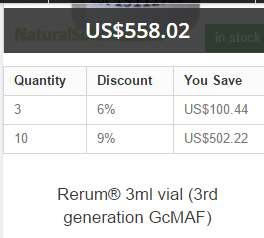
Rerum is another product that was developed by the same person that created Bravo probiotics, Marco Ruggiero MD. PhD. This is even more expensive

rerum

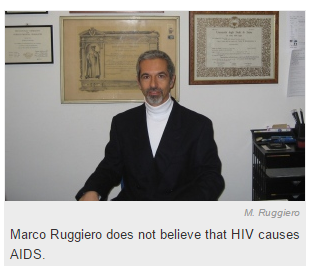
This person has been the subject of inquiries over some of his unorthodox ideas.

md

“In the video below (which opens in a new tab), Dr Marco first dismantles the Goleic hypothesis one piece at a time, and then he re-assembles the evidence to reveal a whole new picture, culminating in a new product, called RerumPerhaps the biggest shock, is that it contains NO GcMAF AT ALL! As you will see, the remarkable results originally attributed to GcMAF turn out to be due to the other ingredients in the Goleic protocol.  Firstly the Goleic contains Oleic Acid, originally discovered in olive oil.  This is a known anti-tumor factor.  Then there is the high dose vitamin D3 and thirdly there it the Bravo Yoghurt, which contains significant levels of Chondroitin Sulphate.” from http://thehealtharchive.com/the-end-of-gcmaf/

I am very much in favor of taking Vitamin D, Oleic acid — just not paying $600 for 3ml!

“Prof Ruggiero has written several papers on the efficacy of gcmaf, alongside his wife Stefania Pacini, and other employees of First Immune including David Noakes.  He was one of the founders of the cancer clinic in Laucerne, Switzerland, that was closed by the authorities for not having the correct permits.  The authorities became aware of this clinic after 5 people with terminal cancer died there.  They did not take any notice of the 85% of terminal cancer cases that showed improvement.  He was with the company as the laboratory and production facility in the UK was raided and closed down. ” http://gcmafblogspot.weebly.com/blog/rerum-the-successor-to-gcmaf

Bottom Line

This has the appearance of all hype with no evidence. He appears to have been forced to leave Italy, Switzerland, England and appears to be based in Arizona at the moment.