Symbioflor-2 at risk of being taken off market

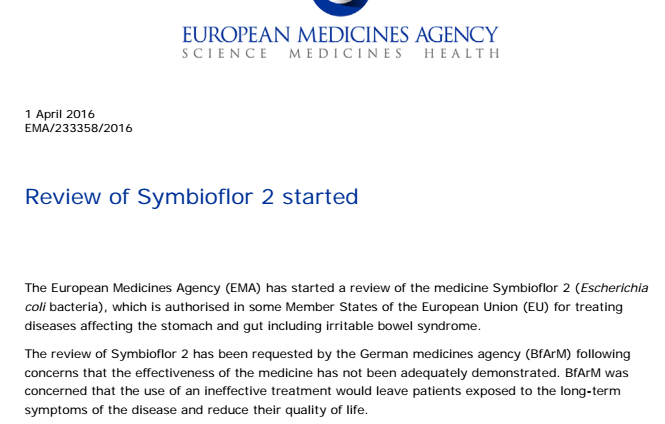
A reader forward this pdf — at first, I suspected a joke — because it was dated April 1,2016. It is not. Symbioflor has been reported effective for improving IBS and also causing patients with ZERO E.Coli to establish an E.Coli population.

EMA

There are actually two risks:

  • The claims of effectiveness are not sufficient and it is taken off the market in Europe
  • The claims of effectiveness are validated, this now makes it a medical drug and thus FDA may attempt to control access to it (for example, preventing shipments to the US — which is what happened with Mutaflor, E.Coli Nissle 1917).

The best outcome is that it is not deemed sufficiently documented (and thus not of interest to the FDA) but is not taken off the market — pending further studies.

If you on sitting on the fence about this probiotic, the opportunity could disappear quickly.

IF YOU HAVE TRIED IT — please post as comments, your response and observations.


Probiotics while taking Minocycline

A reader asked, what probiotics can I take while taking minocycline. Minocycline and tetracyclines are members of the same family — so the same general rules apply. The good news is that not all probiotics will be killed, the bad new is we do not know which strains will be killed or survive.. Some brands may be 100% kill, other brands perhaps 25-35% will survive.

Bifidobacterium

As many species as possible since most will be killed, but 14% is expected to survive.

  • Susceptibility to trimethoprim, trimethoprim/sulfamethoxazole, ciprofloxacin, clindamycin, tetracycline and minocycline was variable. Thetet(W) gene was responsible for tetracycline resistance in 15 strains including 7 probiotic isolates belonging to the taxa Bifidobacterium animalis subsp. lactis and Bifidobacterium bifidum. ” http://jac.oxfordjournals.org/content/58/1/85.long

Lactobacillus Reuteri

Note: Some commercial L.Reuteri are very sensitive to minocycline according to FDA filings…. being sensitive is a PLUS for the FDA.

  • “Acquired resistance percentages to these antibiotics( tetracycline and minocycline) were extremely high for L. crispatus, L. reuteri, L. gallinarum, and L. salivarius subsp. salivarius (75%-100%). L. amylovorus on the contrary, displayed lower resistance percentages (25%) toward minocycline and tetracycline. In several strains, resistance against the tetracycline antibiotics was associated with the presence of the resistance genes tet(K), tet(L), tet(M), tet(W), and tet(Z).” [2006]
  • “93 Lactobacillus strains isolated from domestic geese raised on Polish farms… strains were resistant to… 23.6% to tetracycline (MIC ≥ 32 μg/ml), …. 18.3% to doxycycline (MIC ≥ 32 μg/ml),
  • “Antimicrobial activity and antibiotic susceptibility were tested for 23 Lactobacillus and three Bifidobacterium strains isolated from different ecological niches… All strains were susceptible to ampicillin, gentamicin, erythromycin and tetracycline.” [2015]

E. Coli

I could not find anything specific for Mutaflor or Symbioflor-2

  • “We conducted a study of Escherichia coliisolates obtained from human and food samples to assess the prevalence of antimicrobial resistance and to determine the genotype and clonal relationship of 84 E. coli isolates (48 from humans and 36 from foods). An antimicrobial susceptibility test was performed using the disk diffusion method.All isolates were susceptible to ceftriaxone. Overall, 26%, 20.2%, 15.4% and 6% of the isolates were resistant to tetracycline, ampicillin, sulfamethoxazole/trimethoprim and cephalotin, respectively. [2015]

Prescript Assist and GeneralBiotics Equilibrium

Both of these are very heavy species (150 in combination) so resistance of many species would be expected.


Cannabis and CFS

I have been asked this question several times, today on facebook a CFS suffer shared her experience and an article. The two pieces of information resulted in my researching this post.

Experience: “Hi Ken, I’ve been using cannabis for pain and neuroinflamation management for some years now. After feeling a lot better in these aspects I’ve stopped using it and I’m missing some gut relieve I got from it so I decided to check its antibiotic properties as I remembered some traditional uses of cannabis (much less psichoactive in the past) were mostly because of them.”

Research: “showed potent activity against a variety of methicillin-resistant Staphylococcus aureus (MRSA) strains of current clinical relevance.” [2008]

Staphylococcus aureus keeps showing up in connection with CFS and I view it as a probable maintainer of CFS. It also has many antibiotic resistant species. See this blog post.

There are reports of it being effective for Lyme from user groups, but no published studies on PubMed.

PubMed

Antibacterial

  • “The latter [cannabis] compound showed moderate anti-MRSa (IC50 10.0 μg/mL), moderate antileishmanial (IC50 14.0 μg/mL) and mild antimalarial activity against Plasmodium falciparum (D6 clone) and P. falciparum (W2 clone) with IC50 values of 3.4 and 2.3 μg/mL, respectively.” [2015]
  • ” CBD also displayed powerful activity against methicillin-resistant Staphylococcus aureus (MRSA), with a minimum inhibitory concentration (MIC) of 0.5–2 µg·mL−1 (Appendino et al., 2008)…. CBN demonstrated anticonvulsant (Turner et al., 1980), anti-inflammatory (Evans, 1991) and potent effects against MRSA (MIC 1 µg·mL−1). Pinene is a major component of Sideritis spp. (Kose et al., 2010) and Salvia spp. EOs (Ozek et al., 2010), both with prominent activity against MRSA (vide infra)…. Amongst terpenoids, pinene was a major component of Sideritis erythrantha EO that was as effective against MRSA and other antibiotic-resistant bacterial strains as vancomycin and other agents (Kose et al., 2010). ” [2011]

Coagulation

Coagulation is the suspected cause of much of the neurological symptoms of CFS

  • ” The study thus shows that Cannabis sativa and the cannabinoids, THC and CBN, display anticoagulant activity and may be useful in the treatment of diseases such as type 2 diabetes in which a hypercoagulable state exists.”
  • Blood glucose and fibrinolytic activity were significantly increased [by hashish].” [1975]

Bottom Line

There are no suitable studies on PubMed,which means that I cannot clearly recommend it. There is evidence that it could theoretically help because of it’s impact on MRSA and other bacteria as well as coagulation thus I do not have grounds to question it’s use. The CFS suffer experience is consistent with the PubMed studies above.

Talking with a CFS user that have used cannabis, I would suggest using a juicer and making a smoothie out of the leaves. The logic is simple, this will likely result in the best delivery to the gut.

Side-effects of positive results

The obvious ones are to try to get a full coagulation workup, especially for inherited factors. There may be better treatments.

Check for what Staphylococcus species  that are in your system (mouth, bowel) – again, there may be better treatments, possibly ones that could lead to remission.

Mineral water as treatment?

While researching this post, I found a 2015 study where the microbiome of healthy controls were significantly altered by consuming a liter of mineral water each day. This was unexpected, but in reflection totally reasonable. The minerals in the water would likely have significant impact on some bacteria.

  • “Additionally, microbiomeanalysis demonstrated that composition of lean-inducible bacteria was increased after bicarbonate-rich mineral water consumption. Our results suggested that consumption of BMW has the possible potential to prevent and/or improve type 2 diabetes through the alterations of host metabolism and gut microbiotacomposition.” [2015]

While I was shopping today, I tried some mineral water (Gerolsteiner from Germany) and found that my body responded strongly (feeling good/better) after 8 oz. I selected this brand at the co-op because it listed the contents, the level of bicarbonate was below that of the water used in the study, but it is at the top of the brands available in the US.

This post is for anyone else that is intrigued about the use of mineral water. Dosage is always important — in talking with people about the positive results of Vitamin B1, I found most people were taking lower dosages than the threshold to see results in the study that I cited (i.e. 1500 mg/day). Yes, “Vitamin B1 had no effect” because the dosage was too low (which the study reported too!). For mineral water, it is important to see how any supplier compare to the study cited above. For example, with Acquaua Panna, you would need to drink 18 liters of water a day!

If you have an Android phone, there is a sweet application available https://play.google.com/store/apps/details?id=de.gerolsteiner.meinwasser that provide over 500 waters.

The following is a report using the common mineral waters in the US, and an “electrolyte water” which many would believe is equivalent. They are not. Gerolsteiner  looks by far to be the closest to the water used in the study.

  Study Tap Water Gerolsteiner San Pellegrino Perrier Fiji Acqua Panna Smart Water
Bicarbonate 2485 28 1800 239 445 0 106 n/a
Chlorine ion 182 11 40 54 25 9 9 4
Sulfate ion 355 7 38 445 46 1 21 n/a
Magnesium 291 2 108 52 6 15 6 n/a
Sodium 412 10 118 33 11 18 6 0
Potassium 80 0 11 0 0 0 0 n/a
Calcium 177 6 348 179 155 18 32 n/a
  • “Among the natural mineral waters available on the market, only a few feature the optimum calcium-magnesium proportion (2:1).” [2016]

Mineral Supplements Help with CFS

I believe that minerals already dissolved in water is more easily absorbed than mineral supplements. Part of this is basic chemistry — stomach pH and volume of liquid determines how much gets dissolved and how fast. If the minerals are already in solution, then they can be readily absorbed with the water without any additional processing.

  • “This study is only the second study done on multivitamin mineral supplementation in CFS that used both biochemical and subjective markers of treatment success…Treatment with a vitamin and mineral supplement could be a safe and easy way to improve symptoms and quality of life in patients with CFS.”[2014]

Further Readings

Diabetes Microbiome – CFS aspects

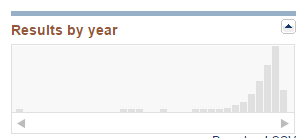
My last post dealt with a patient with both diabetes and CFS.  There are likely more patients with that combination. Today, I am going to try to assemble what I can from PubMed on diabetes and the microbiome (without CFS — I suspect studies of that combination are none existent). This is an area of growing interest in the last few years:

  • Capture
  • “Oral microbiota is also correlated with many systemic diseases, including cancer, diabetes mellitus, rheumatoid arthritis, cardiovascular diseases, and preterm birth. ” [2015]  See  Oral Probiotics post as well an hydrogen peroxide, etc mouth rinses
    • Typically, I waterpic my teeth at night, rinse with a germ killing mouth wash and then go to sleep with a oral probiotic in the mouth…
  • “The co-occurrence of the three disease entities, inflammatory bowel disease (IBD), colorectal cancer (CRC), type 2 diabetes mellitus (T2DM) along with inflammation and dismicrobism has been frequently reported.” [2015]
  • “Type 2 diabetes (T2D) is associated with dysbiosis of the gut microbiota, though diabetes treatment regimens, including metformin, may confound the results.” [2016]
  • “The present analysis showed, for the first time, a limited association between Functional gastrointestinal disorders and T2D risk in a large prospective cohort, and supports the hypothesis of a relationship between gastrointestinal function and diabetes” [2015]
  • Clostridium butyricum attenuates cerebral ischemia/reperfusion injury in diabetic mice via modulation of gut microbiota. [2016] – thumbs up for Miyarisan!
  • ” L. brevis DPC 6108 attenuated hyperglycaemia induced by diabetes” [2016]
  • “S. aureus was isolated in 72 % of culture-positive samples, whereas the most commonly detected bacteria in all ulcers were Peptoniphilus spp., Anaerococcus spp. and Corynebacterium spp., with the addition of Staphylococcus spp. in new ulcers.”[diabetic foot ulcers, 2016]
  • “We found changes both in composition and in function of the sub-clinical gut microbiome, including a decrease in Akkermansia muciniphila suggesting a role prior to the onset of [diabetes] disease,” [2016]
  • “. Additionally, microbiomeanalysis demonstrated that composition of lean-inducible bacteria was increased after bicarbonate-rich mineral water consumption. Our results suggested that consumption of BMW has the possible potential to prevent and/or improve type 2 diabetes through the alterations of host metabolism and gut microbiota composition.” [2015]
  • “The five most abundant phyla identified were: Bacteroidetes, Firmicutes, Proteobacteria, Verrucomicrobia, and Actinobacteria. Class Chloracido bacteria was increased in preDM compared to T2DM (p = 0.04). An unknown genus from family Pseudonocardiaceae was significantly present in preDM group compared to the others (p = 0.04). Genus Collinsella, and an unknown genus belonging to familyEnterobacteriaceae were both found to be” [2015]
  • ” The gut microbiota in individuals with preclinical Type 1 diabetes mellitus is characterized by Bacteroidetes dominating at the phylum level, a dearth of butyrate-producing bacteria, reduced bacterial and functional diversity and low community stability.” [2016]
  • Gut microbiota: Antidiabetic drug treatment confounds gut dysbiosis associated with type 2diabetes mellitus. [2016]
  • “Specifically, lower stool Bacteroidaceae, Clostridiales XIV, Lachnospiraceae, Ruminococcacae and higher Enterococcaceae and Enterobacteriaceae were seen in hospitalized patients.” [2015]
  • ” We provide support for microbial mediation of the therapeutic effects of metformin through short-chain fatty acid production, as well as for potential microbiota-mediated mechanisms behind known intestinal adverse effects in the form of a relative increase in abundance of Escherichia species. Controlling for metformin treatment, we report a unified signature of gut microbiome shifts in T2D with a depletion of butyrate-producing taxa. These in turn cause functional microbiome shifts, in part alleviated by metformin-induced changes. Overall, the present study emphasizes the need to disentangle gut microbiota signatures of specific human diseases from those of medication.” [2015] again Miyarisan is implied.
  • Microbiota in the samples was predominantly represented by Firmicutes, in a less degree by Bacteroidetes. Blautia was a dominant genus in all samples. The representation of Blautia, Serratia was lower in preD than in T2D patients, and even lower in those with normal glucose tolerance.”[2016] Blautia was formerly part of Ruminococcus until DNA analysis found that they were different see this 2008 article or this 2013 PDF

Take Aways

The most interesting take-away was the use of bicarbonate-rich mineral water. This is actual clinical study confirmation of the health-loosing aspect of using soft water (see this post). The details of the water (from Japan) (Bicarbonate ion, 2485 mg/kg (i.e. per litter) – roughly 100x higher than in tap water. Second, CFS/FM/IBS has an increase diabetes risk (and likely also cancer risk – the latter may be connected with low Vitamin D levels). Third, the typical medication used for diabetes increases E.Coli and alters the microbiome, but not necessarily the right strains.

Last, there appear to be specific families (for example Blautia) that may be strongly associated with diabetes risk.