Microbiome, Ischemic Stroke and SPECT

This week there was a new article published in nature “Commensal microbiota affects ischemic stroke outcome by regulating intestinal” [2016]. A news story in Spanish is here. “The possibilities being considered are focused on stroke prevention, which could be achieved with probiotics to strengthen beneficial microorganisms for these diseases, the implementation of appropriate diets or even applying transplants fecal for patients who have suffered a heart attack cerebral.”

I have know CFS suffers who frequently had Transient Ischemic Strokes(TIA) prior to antibiotic treatment. They disappeared afterwards (and have stayed away for 10+ years). Additional studies include:

In terms of CFS patients we have:

  • Hypercoagulation, see this post for links to studies
  • SPECT:
    • “Radiological imaging studies (SPECT, Xe-CT, and MRS) revealed decreased blood flow in the frontal and thalamic areas, and accumulation of choline in the frontal lobe.” [2004]
    • ” Regional blood flow studies by single photon-emission computerized tomography (SPECT) have been more consistent. They have revealed blood flow reductions in many regions, especially in the hind brain. Similar lesions have been reported after poliomyelitis and in multiple sclerosis–in both of which conditions chronic fatigue is characteristically present. In the well-known post-polio fatigue syndrome, lesions predominate in the RAS of the brain stem. ” [1997]
    • ” Patients with chronic fatigue syndrome had significantly more defects throughout the cerebral cortex on SPECT scans than did normal subjects (7.31 vs 0.43 defects per subject, p < .001). SPECT abnormalities were present in 13 (81%) of 16 patients, vs three (21%) of 14 control subjects (p < .01). SPECT scans showed significantly more abnormalities than did MR scans in patients with chronic fatigue syndrome(p < .025).” [1994]
    • “Compared with the Normal Control  group, the CFS group showed significantly lower cortical/cerebellar rCBF ratios, throughout multiple brain regions (P < 0.05). Forty-eight CFS subjects (80%) showed at least one or more rCBF ratios significantly less than normal values. The major cerebral regions involved were frontal (38 cases, 63%), temporal (21 cases, 35%), parietal (32 cases, 53%) and occipital lobes (23 cases, 38%). The rCBF ratios of basal ganglia (24 cases, 40%) were also reduced.” [1992]

Bottom Line

The microbiome impact on the brain is being recognized more and more recognized. Many of the autoimmune diseases that has cognitive issues are also ones with significant shifts of the bacteria in the gut. Reversal of those shift may result in reversal of cognitive issues — my own experience is that I had a SPECT that a radiologist read as early Alzheimer’s Disease during the last relapse of CFS, I was having severe memory issues. With remission, the brain returned to normal and memory is fine today — working as a senior information technologist..
Cats, Canines and CFS – Connections

A reader forward me CHRONIC FATIGUE SYNDROME (C.F.S.) IN A FAMILY OF DOGS,

DIAGNOSIS AND TREATMENT OF 3 CASES First Published in Vet On-Line August 21 2000.  The probable cause was two vancomycin-resistant strains of Staphylococcus xilosus, The treatment was with thiacetarsamide sodium, an organic trivalent arsenical given intravenously in low dosages (0.1/mlk/Kg/day) for 3 days.

Staphylococcus aureus appears to be maintainer of CFS, see this earlier post. The vaccine against this almost eliminates CFS for a period of time, see a forgotten treatment post and can cause a low SED rate.

comparison

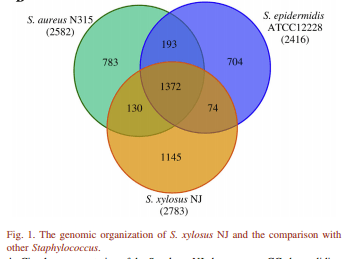
Above you see how closely they are related in terms of genomic data, “Their differences mainly exist in genes associated with virulence and pathogenicity, such as adhesins, superantigens, resistance to antibiotics, capsular polysaccharide synthesis enzymes, pathogenicity islands, quorum sensing and biofilm formation. This study can help reveal how commensal S. xylosus strains evolved into invasive strains.”  [2015]

There are no studies for detecting in CFS/IBS/FM patients, however, there was a study dealing with cat bites and humans…

” Samples were collected from 200 clinically healthy cats and processed by standard bacteriological methods and tested for susceptibility to a panel of 16 antimicrobials. A total of 212 staphylococci isolates were obtained from 141 of the 200 cats (70.5%), and more than one colony was recognized in 53 cases. Coagulase-negative species were most frequently found (89.6%) distributed among Staphylococcus xylosus (50.9%), Staphylococcus felis (27.4%), Staphylococcus simulans (6.1%) and Staphylococcussciuri (5.2%). Coagulase-positive species (10.4%) were distributed among Staphylococcus aureus (4.7%) and Staphylococcus intermedius group (SIG) (5.7%). Regarding to antimicrobial resistance, 178 isolates (83.9%) were resistant to at least one antimicrobial, and rifampicin showed the best results with 100% of sensitive strains. Conversely, high rates of resistance were observed for penicillin and tetracycline (56.1%). The 212 staphylococci isolates and 30 (14.1%) strains were resistant to methicillin (on the disc susceptibility test) and may be preliminarily considered as methicilin-resistant staphylococci. In conclusion, this study reports important rates of antimicrobial resistance among the species of Staphylococcusisolated from clinical specimens of cats, which must be considered for the treating of cats’ bites in humans” [2013]

” Three other species (S epidermidis, S xylosus, and S aureus) comprised 32.2% of the isolates,” [1985]

Note: a cat (or dog) licking a hand or a face could easily transfer these bacteria to humans.

Bottom Line

This present an interesting line of investigation that begs a researcher to do a study of the staphylococci species (and strains) in CFS patients. These bacteria are found in the oral microbiome (mouth bacteria) which may easily transit to the gut. As I have stated before, this family of bacteria is very hard to treat because it easily develop resistance to an antibiotic (which is why rotation of antibiotics is likely the best course).

In 2001, The National Forum indicates studies were on going but their results were never published (or completed???) “The National CFIDS Foundation has funded in-vitro testing of arsenic trioxide.  We hope to be able to report results to you in a future Forum”

A 2007, forum post “.Micrococci bacteria, that cause CFS/ME. Antibiotics have not eradicated this condition, but Arsenic treatment has, both in Dr Tarello and his wife, plus patients at the clinic in Denmark.”


Milk Thistle and CFS

A reader asked me about silymarin AKA milk thistle, while I have made passing references to it, I have not done a drill down on PubMed, so it is time to do so. Search on PubMed found for milk thistle….

  • and IBS: no articles
  • and CFS: no articles
  • and fibromyalgia: no articles
  • and coagulation: no relevant articles
  • and bacteria: 38 articles.
    • ” Affecting the microenvironment of the gut, including SM-bacteria interactions, awaits future investigations.” [2015]
    • “Gram-positive bacteria were inhibited at concentrations between 60 and 120 μg/mL. Gram-negative bacteria were not inhibited by the silymarin concentrations included in this study.. . We demonstrated that silymarin shows antibacterial and antiadherent/antibiofilm activity against certain standard bacterial strains which may be beneficial when used as a dietary supplement or a drug” [2015] – no significant effect, no information on whether the shift would be for the better or the worst.
      • “The results showed that silybin inhibited RNA and protein synthesis on gram-positive bacteria.” [2003]
  • “Potentially toxigenic molds from the Aspergillus sections Flavi and Nigri as well as Eurotium, Penicillium, Fusarium and Alternaria species were isolated from Milk Thistle supplements (sold in the US). The predominant molds were Eurotia (E. repens, E. amstelodami and E. rubrum), A. flavus, A. tubingensis, A. niger and A. candidus. To our knowledge, this is the first study reporting on fungal contamination profiles of MT botanicals.” [2013]
    • “A total of 83 Milk Thistle samples from the US market were analysed. The aflatoxigenic fungus Aspergillus flavus were detected in 19% of the samples with levels ranging from 0.04 to 2.0 µg kg(-1).” [2012]

Bottom Line

No demonstrated benefit for CFS/IBS/FM patients have been reported. There is a 1 in 5 risk of toxigenic molds.

Impacts  gram-positive bacteria at high dosages which may includes: Bacillus (in some probiotics), Clostridium (Miyarisan probiotic),  Steptococcus (Enterococcus) and Straphylococcus. Other uses, per wikipedia,  “Milk thistle has been used for a number of purposes including liver disease, and cancer; however, clinical studies are largely heterogeneous and contradictory”

I cannot put this on a recommended list – no demonstrated benefit, risks

Vitamin D and the Microbiome

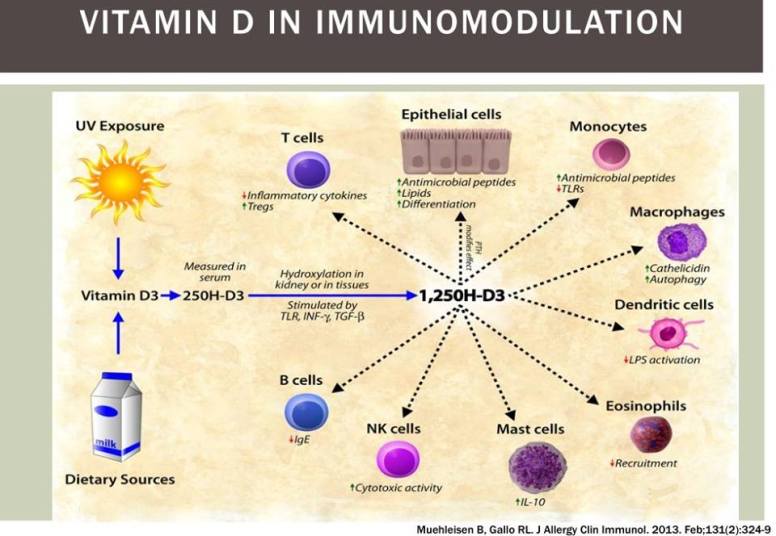
In my last post, one of the studies had a surprise — Vitamin D supplementation alters the microbiome.  I have advocated Vitamin D based on observation studies published on PubMed for CFS — “it improves symptoms, the mechanism is a matter of speculation”

  • “Compared with the other groups, untreated patients with multiple sclerosis had an increase in the Akkermansia, Faecalibacterium, and Coprococcus genera after vitamin D supplementation.” [2015]

That lead me to do a more detail search on Pub Med.

vitD

Bottom Line

Sufficient vitamin D intake impacts microbiome (and been documented to reduce symptoms in CFS see this post). That is, it alters the microbiome in the right way!  If you have VDR, then two probiotics are recommended because of that, Lactobacillus rhamnosus strain GG (LGG) and Lactobacillus plantarum (LP).

If you do not know if you have VDR but have done 23AndMe Dna analysis, there are several pages on the web that may help you to determine that.

Copaxone or Glatiramer acetate impacts on the gut

Cort Johnson posted the story of someone that was misdiagnosis as MS but went into remission from Copaxone or Glatiramer acetate. I am always interested in such stories to see if my model is confirmed, contradicted or the information is insufficient to come to any conclusions.

As the article (and wikipedia) states: “Like many drugs the mechanism or mechanisms by which Copaxone is somewhat mysterious.” and also “The MS drug worked very well for 6 weeks until she began developing what looked like an allergic reaction to it.”

  • Glatiramer acetate-treated patients with multiple sclerosis showed differences in community composition compared with untreated subjects, including Bacteroidaceae, Faecalibacterium, Ruminococcus, Lactobacillaceae, Clostridium, and other Clostridiales…..  Glatiramer acetate and vitamin D supplementation were associated with differences or changes in the microbiota.” [2015] — this is from an on humans study

Concerning MS as a whole:

Bottom Line

Since MS has recently been identified to involve dysbiosis (bad gut bacteria mixtures), then any effective MS drug may also modify the microbiota. In this specific case, we have had a human study demonstrate that this drugs does alter gut bacteria — which may account for the change. The evidence hints that her story supports the model that I am using.