Reflections on sequencing probiotics

A reader sent me a list of the probiotics that she took every day. The list is a nice collection, but she disclosed that she was taking ALL of them every day, with about 2 hours between each. She was legitimately concerned that one probiotic was reducing the effect of others. The size of the list shows that there are many PubMed studied probiotics available without prescriptions — but only a few available in your local health food store…

Bifidobacterium Longum BB536
Femdophilus (Lactobacillus thramnosis GR-1 and Lactobacillus reuteri RC-14)
Securil (Propionibacterium freudenreichii)
Mutaflor (E.Coli Nissle 1917)
Yakult ( Lactobacillus casei Shirota strain)
Probiotic 3 AOR (Streptococcus faecalis T-110, Clostridium butyricum TO-A, Bacillus mesenericus TO-A)
Align (Bifidobacterium infantis 35624)
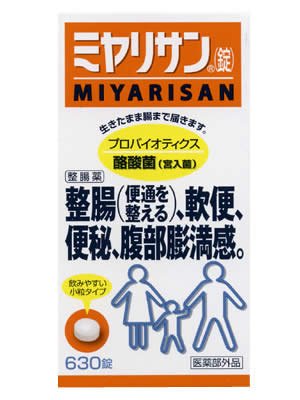
Miyarisan (clostridium butyricum MIYAIRI 588)
Culturelle (Lactobacillus Rhamnosus GG)
Prescript Assist (many families and species)
DanActive (L.Casei Immunitas aka L.Casei DN-114 001, L. Bulgaricus, S.Thermophilus)
Microbiome Plus (L.Reuteri NCIMB 30242)

What we know

There is a lot of “common sense” out there — separate them by 2 hours from antibiotics, etc. As readers are aware, I tend to check common sense — because it is often wrong. The reality is that therapeutic probiotics such as the above produces antibiotics effective against other species. The bacteria in probiotics actually tries to build a consensus of like-minded bacteria – think of a political party – you may get some Mormons, Jews, Blacks, Spanish, Asians etc in the party. Many may actually be working against the “common or dominating behavior” of their ethic community. The same things happen with bacteria.

The ideal situation is when there have been studies of two probiotics taken together: Have there been an amplification or reduction of observed changes? For drugs, this happen, for example Heparin + Piractem has greater effect than adding the effect of Heparin and Piracetam taken separately.

With 9 bacteria, it means doing 9 x 8 = 72 PubMed searches to see if there have been ANY studies. I removed the stains to do a wider search. I did get some hits, of which the significant ones are below:

  • Propionibacterium freudenreichii and Lactobacillus reuteri both impact Meticillin-resistant Staphylococcus aureus [2013]
  • Lactobacillus reuteri, Lc. lactis and P. freudenreichii reduced viability of adherent Staph. aureus by 27-36%, depending on the strain,“[2006]

  • “Some trials showed a significant improvement of irritable bowel syndrome-related constipation via Lactobacillus casei Shirota and E. coli Nissle 1917.” [2005]

  • “data suggests a favourable effect of treatment with Bifidobacterium lactis DN-173 010, Lactobacillus casei Shirota, and Escherichia coli Nissle 1917 on defecation frequency and stool consistency.” [2010]
  • “heat treatment increased the adhesion of Propionibacterium freudenreichii and gamma-irradiation enhanced the adhesion of Lactobacillus ç.”[2000]
  • Bifidobacterium longum subsp. infantis M-63 and B. longum subsp. longum BB536..was significantly higher than that in the one-species group at weeks 1 and 6. [2013]
  • “The antimicrobial activity of the intraurethrally administered probiotic Lactobacillus casei strain Shirota against Escherichia coli …L. casei Shirota exerted significant antimicrobial effects… L. reuteri JCM 1112(T), had no significant antimicrobial activity.” [2001]
  • “Bifidobacterium infantis 35624 preferentially induced IL-10. Escherichia coli Nissle 1917 induced both IL-10 and IL-12p70.. When combining these microorganisms with the Th1-promoting cocktails, E. coli Nissle 1917 and B. infantis 35624 were potent suppressors of IL-12p70 secretion in an IL-10-independent manner, indicating a suppressive effect on Th1-inducing antigen-presenting cells.” [2011]
  • The rat strain Lactobacillus reuteri R2LC, but not the human strain Lactobacillus rhamnosus GG, is of benefit in reducing the severity of acetic acid-induced colitis in rats. [2001]

  • Two strains (Lactobacillus rhamnosus strain GG and L. reuteri) were found to exhibit disease-specific adhesion to intestinal tissue. All tested strains, with the exception of L. rhamnosus strain GG, displayed disease-specific adhesion to intestinal mucus. [2003]

  • while both Lb. reuteri and Lb. rhamnosus GG reduced the acetaldehyde to ethanol [2004]

  • We found that mice that received GG and PJS[Propionibacterium freudenreichii] exhibited significantly lower numbers of intestinal mast cells compared with control mice.[2013]

  • Shirota and GG similar impact on bladder tumors [2010]
  • “This is reflected in the solid evidence for the effect of E. coli Nissle 1917 (Mutaflor) in the maintenance of remission of ulcerative colitis, and of VSL#3(contains L. Bulgaricus, S.Thermophilus)  in preventing the recurrence of pouchitis.”[2006]
  • “Four probiotic bacteria, Lactobacillus rhamnosus, Propionibacterium freudenreichii subsp. shermanii 56, P. freudenreichii subsp. shermanii 51, and P. freudenreichii subsp. freudenreichii 23, were evaluated individually or in coculture with traditional yogurt cultures (Lactobacillus delbrueckii subsp. bulgaricus and Streptococcus salivarius subsp. thermophilus)…Texture and flavor attributes of fermented milks produced with propionibacteria were significantly different than the fermented milks processed with yogurt cultures.. in coculture with yogurt cultures demonstrated similar acidity, texture, and flavor as the fermented milk produced with yogurt cultures.”[2005] i.e. evidence that the yogurt cultures may have eliminated the others…

From the above, I concluded that the following groups are more likely to be friendly to each other than fight each other (based on similarity of action in many cases – same action implies similar chemicals being produced):

  • Propionibacterium freudenreichii x Lactobacillus reuteri x Lactobacillus casei Shirota x Lactobacillus rhamnosus GG
  • E. coli Nissle 1917 x Lactobacillus casei Shirota x Lactobacillus reuteri B. infantis 35624 x Lactobacillus rhamnosus GG
  • Bifidobacterium longum infantis M-63 and B. longum subsp. longum BB536

Suggested schedule

The goal is to get healthy bacteria established. Many PubMed studies used a 14 day study to detect impacts of probiotics [2014][2014] suggesting that clinical study experience has been that this duration is essential.

Do each for 1-2 weeks:

  • Mutaflor with Yakult and Femdophilus and Culturelle and Microbiome Plus and DanActive
  • Securil with Yakult and Femdophilus and Culturelle and Microbiome Plus but NOT DanActive or any yogurts
  • Bifidobacterium Longum BB536 and Align
  • Probiotic 3 AOR and Miyarisan
  • Prescript Assist

Why are strains important?

Only six probiotic Lactobacillus strains isolated from human intestinal microbiota, i.e., L. rhamnosus GG, L. casei Shirota YIT9029, L. casei DN-114 001, L. johnsonii NCC 533, L. acidophilus LB, and L. reuteri DSM 17938, have been well characterized with regard to their potential antimicrobial effects against the major gastric and enteric bacterial pathogens and rotavirus.” [2014]

Taking a different strain may have zero effect (except for reduced bank account). Also, as a FYI “Lactinex(®), Align(®), Bio-K+(®), and Culturelle(®) had viable colony counts that were similar to those stated on the package.” [2014]
Megasporebiotic – Preliminary Review

Several people have commented about this probiotic available at http://www.gomegaspore.com/ and I am in correspondence with them to get more information.

My usual criteria is PubMed studies on the actual probiotic (by brand) or the strains in the probiotics. With reports of herx and the mixture of species (and some potential characteristics), I thought that should do a preliminary review simply because it is easily available in the US (and the last two cited require a European facilitator to obtain).

Pure Bacillus Mixture

First, in terms of lactic acidosis, there are no major lactic acid producing species (i.e. no lactobacillus). I received an email from the manufactorer stating that it contained

  • Bacillus Indicus, HU36
  • Bacillus Subtilis, HU58
  • Bacillus Clausii (no strain specified)
  • Bacillus Coagulans (no strain specified)
  • Bacillus Licheniformis (no strain specified)

Histamine Risk

Two of the above (no strain specified) are known to be high histamine producers [2013] and thus if you are in (or close to) the subset of CFS patients with histamine issues, this should be a DO NOT USE.

Alternative Sources

There are actually many manufacturers who have licensed some of these(HU36,HU58) from from Royal Holloway London University

Bacillus Indicus HU36

  • A pigmented marine bacteria [2015]
  • “carotenoids from Bacillus indicus HU36 and Bacillus firmus GB1 were found to be interesting antioxidants to fight postprandial oxidative stress in the stomach.”[2013]
  • “suggests that the two pigmented Bacilli are adapted to the intestinal environment and are suited to grow in and colonize the human gut.” [2011]
  • No Wikipedia or MicrobeWiki page on family

Bacillus Subtilis, HU58

  • “B. subtilis examined here were HU58, a human isolate…Compared to a domesticated laboratory strain of B. subtilis both isolates carried traits that could prove advantageous in the human gastro-intestinal tract. This included full resistance to gastric fluids, rapid sporulation and the formation of robust biofilms.” [2012]

Bacillus Licheniformis

  • “The optimal temperature for enzyme secretion is 37°C.” – 98.6F (from wikipedia)
  • “has proven to be an unexpected tooth decay fighter as it has the ability to cut through plaque or a layer of bacteria
  • Bacillus licheniformis is commonly associated with food spoilage and poisoning. It causes bread spoilage, or more specifically, a condition called “ropy bread” (1). Contamination with this bacterium will make the bread sticky and stringy; the ropy bread will also start to develop a strong odor after contamination. Rope spores is what causes the spoilage; unfortunately these spores do not get killed during the baking process.B. licheniformis can also cause food-borne gastro-enteritis, which is infection of the gut that can lead to a life threatening condition called septicaemia. Septicaemia is blood poisoning, and is classified as having a large amount of bacteria in the blood. Dairy products are at increased risk of being contaminated with toxin-producing isolates of B. licheniformis. Cooked meats, raw milk, vegetables, and processed baby foods are also at risk. (4)The symptoms include stomach pains, (acute) diarrhea, and possible vomiting. These have an onset time of 2-14 hours and last no longer than 36 hours.B. licheniformis, although usually associated with the gut and gastrointestinal tract, can also cause distress in other parts of the body. It can cause ophthalmitis, which is the inflammation of the eye. It can even go as far as causing abortions in pregnancies and impair sperm motility. The toxins produced by B. licheniformis can cause damage to cell membranes, deplete cellular ATP, and cause the acrosome to swell; it is not found to have any damaging effects on the mitochondria.” microbewiki

Bacillus Coagulans

  • is a lactic acid-forming bacterial species…separately isolated in 1935 and described as Lactobacillus sporogenes in the fifth edition of Bergey’s Manual, [wikipedia]
  • No MicrobeWiki page

Bacillus Clausii

  • Bacillus clausii, has been found to produce antimicrobial substances that are active against gram positive bacteria including but not limited to Staphylococcus aureus, Enterococcus faecium, and Clostridium difficile. [wikipedia]
  • “The protease from Bacillus clausii strain 221, the H-221 protease, was the first enzyme to be identified in an alkaliphilic Bacillus. [1] The alkaliphilic nature of the organism has also proved it to be useful in preventing and treating various gastrointestinal disorders as an oral bacteriotherapy. [2] This organism can be found in many alkaline environments, including soil and marine habitat…Bacillus clausii resistance to many antibiotics makes it seem capable of harm to humans, but Bacillus clausii sporulated strains are actually used in the treatment of gastrointestinal illnesses to restore intestinal flora because of their antibiotic resistance and ability to stimulate immune activity” [WikibeWiki]

Bottom Line

The two strains that are listed are newly discovered which carries the risk of unknown side-effects (just like a new drug carries the same risks). I prefer strains that have been in use for 20+ years. Bacillus Licheniformis (without strains) raises the question whether any herx like effect is actually a herx and not toxins or histamines that some people may be sensitive to. Bacillus Coagulans being the rare member of the bacillus family that is a lactic acid producer raises concern if lactic acidosis is a significant part of CFS for some patients. Bacillus Clausii (without strain) has the appearance of being safe and good.

My preference is the 4 bacillus Clausii mixture, Enterogermina. Far less uncertainty and risk of unexpected side-effects.

In terms of closeness in genetic distance

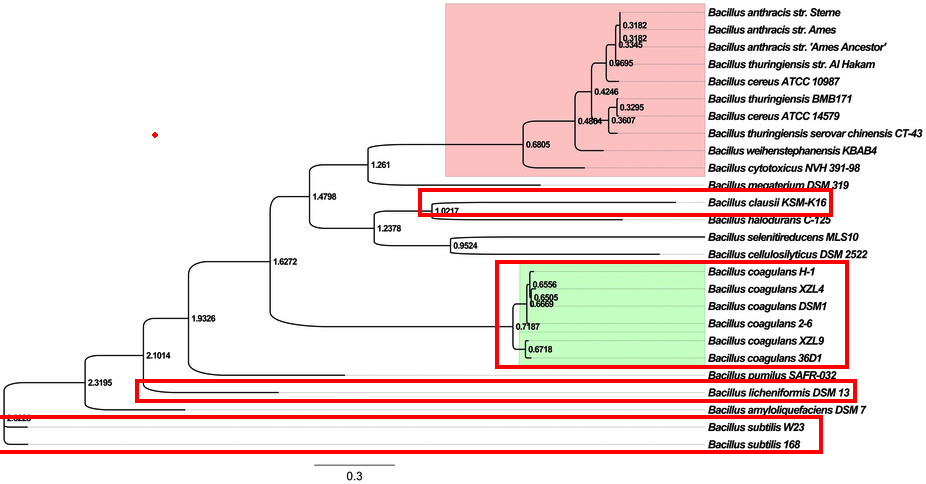
I came across a diagram showing how close (or far) apart the different ones are from each other in terms of genetics, The best one (IMHO) is clausii and it is a considerable distance from the rest.

Genetic Distance Apart

Genetic Distance Apart

Diagram source: Genomic analysis of thermophilic Bacillus coagulans strains: efficient producers for platform bio-chemicals [2014]

Enterogermina – Four Bacillus clausii Strains

A niece happen to be vacationing in Italy and every time that a friend or family goes to a different country, I start looking for established probiotics that may be marketed only in that country which has PubMed studies. Enterogermina in Italy is one such treasure (in theory). Originally, the species was classified as Bacillus subtilis, which was later corrected to Bacillus clausii [“Bacillus clausii sporulated strains are actually used in the treatment of gastrointestinal illnesses to restore intestinal flora because of their antibiotic resistance and ability to stimulate immune activity…They have shown that B. clausii in Enterogermina can in fact colonize for brief periods of time on the intestinal wall of the gut, and provoke immune response in mice to rid of pathogenic bacteria. “]

https://www.enterogermina.it/ is their site. It does not require refrigeration, thus nice for mailing around the world. (As a FYI, back in 2000, I arranged with a CFS patient in the Czech republic to buy and send my Piracetam tablets — they were over the counter there and not obtainable in the US. I paid her 2x her cost for the effort. We were both happy!)
There are 9 studies on PubMed on this specific brand and 83 studies on Bacillus clausii (B. clausii strains (OC, NR, SIN, T) typically)
  • Bacillus clausii treatment showed a significant decrease of IL4 levels (p=0.004) and a significant increase of IFNgamma (p=0.038), TGFbeta (p=0.039), and IL10 (p=0.009) levels. In conclusion, this study shows that the Bacillus clausii may exert immuno-modulating activity by affecting cytokine pattern in allergic subjects and confirms previous study conducted in allergic children. [2005]
  • “In conclusion, this study shows that the B. clausii may exert immunomodulating activity by affecting cytokine pattern at nasal level in allergic children with recurrent respiratory infections.” [2004]
  • “DNA led to the finding that all of the Enterogermina strains belong to a unique genospecies, which is unequivocally identified as the alkalitolerant species Bacillus clausii…in contrast to several reference strains of B. clausii, the strains constituting Enterogermina are characterized by a notable low level of intraspecific genome diversity and that each strain has remained the same for the last 25 years.” [2001]
  • “This review describes the therapeutic activity of Bacillus subtilis spores (Enterogermina) in the treatment of intestinal disorders associated with alterations in the qualitative and quantitative composition of the normal human intestinal flora.” [1994]
  • “The immunomodulatory and stabilizing effect of Bacillus subtilis spores on the intestinal flora is probably responsible for this improvement.” [1985]
  • “We examined two commercial B. subtilis probiotic preparations, Enterogermina and Biosubtyl. Surprisingly, physiological and genetic characterization of the bacteria contained in each of these preparations has shown that neither contains B. subtilis.” [1999]
  • Bacillus clausii spores survive transit through the human gastrointestinal tract. They can undergo germination, outgrowth and multiplication as vegetative forms. Bacillus clausii strains can have different ability to survive in the intestinal environment.” [2015]
  • “B. clausii strains release antimicrobial substances in the medium. Moreover, the release of these antimicrobial substances was observed during stationary growth phase and coincided with sporulation. These substances were active against Gram-positive bacteria, in particular against Staphylococcus aureus, Enterococcus faecium, and Clostridium difficile.” [2004]
  • Bacillus clausii as a treatment of small intestinal bacterial overgrowth [2009].

Bioflorin – Enterococcus faecium SF 68

This is the latest discovery of an unusual probiotic, it is used for acute adult diarrhea. Availability is in Germany (unfortunately Amazon.de does not carry it). On line German pharmacies do,  for example at this site.

What do we know about it? There are 13 PubMed articles:

  • “Probiotic enterococci a widely used by pediatricians and infection diseases doctors in Russia as means for the treatment of dysbiosis, irritated bowel syndrome and in the treatment and prevention of different functional and chronic intestinal diseases. Strains E. faecium M74 and E. faecium SF-68 are included in several probiotic drugs and have been proved as effective and safe.” [2013]
  • “Enterococcus faecium SF 68 (sensitive to penicillin, tetracycline, virginiamicin and tylosin, but resistant to streptomycin)” [1994]
  • “An antagonistic activity of Enterococcus faecium SF 68 towards Plesiomonas shigelloides, Aeromonas sp., enteropathogenic Escherichia coli and Yersinia enterocolitica has been studied and demonstrated.’ [1990]
  • Efficacy of SF 68 in the treatment of acute diarrhea. A placebo-controlled trial.[1996]

  • “All treatments were continued for 7 days. Enterococcus SF 68 was shown to be effective in reducing the incidence of antibiotic-associated diarrhoea in comparison with placebo (8.7% compared with 27.2%, respectively). Patients with acute enteritis showed a significantly faster resolution of bowel abnormalities during treatment with Enterococcus SF68 compared with placebo.” [1989]

NOTE: It appears to be available in the US as a probiotic for dogs — “FORTIFLORA® CANINE NUTRITIONAL SUPPLEMENT”


Miyarisan (Clostridium butyricum) – Revisited

When I last looked at Miyarisan, it was available in Japan only. In the last month I discovered that it is now available in the US and EU — thus it is a good time to revisit it.

2020 Update

One of the characteristics that is connected with a lot of the stuff that my model suggests, is that they are often used for diarrhea and other digestive discomfort. In other words, been show effective against common disruptive bugs in the gut. Mutaflor (E.Coli Nissle 1917) and Miyarisan are both traditionally used for that — not as regular daily probiotics, but as probiotics when symptoms require the gut to be fixed. The interesting aspect is this:

  • Mutaflor — the only E.Coli probiotic (and many E.Coli are nasty)
  • Clostridium butyricum – the only Clostridium probiotic that I am aware of (and many Clostridium are Difficult (i.e. difficile))
4115XV4D8TL

Clostridium butyricum MIYAIRI 588® (CBM 588®), an anaerobic spore-forming bacterium, has been developed as a probiotic for use by humans and food animals.

Do NOT take with E.Coli Probiotics

“1.1 C. butyricum MIYAIRI antagonistic effects on toxinogenic Escherichia coli and 20 E. coli strains isolated from live stocks (cows, pigs and chickens) were evaluated by the plating method. C. butyricum MIYAIRI inhibited the growth of all E. coli strains tested” [Source]

Anxiety

  • “Reduced anxiety levels from 19.8 to 10.2 in the HAMA Attenuated the increase in CRF and HR pre op” [2015] [2014]

Histamines

This probiotic produces butyric acid (BTA) which is a histamine antagonist [source].

“An important mechanism by which butyrate causes biological effects in colon carcinoma cells is the hyperacetylation of histones by inhibiting histone deacetylase” [2011]

“In humans, the effects of BA can be subdivided into intestinal and extra-intestinal. Intestinal effects include: regulating transepithelial transport, improving the inflammatory and oxidative states of the intestinal mucosa, reinforcing the mucosal barrier, modulating visceral sensitivity and motility, and preventing and inhibiting colon carcinoma. Extraintestinal effects are less well known; they have been studied in vitro and in animal models and sometimes even in humans. Currently investigated effects include: haemoglobinopathies, hypercholesterolaemia, reducing resistance to insulin (in animal studies), and reducing ischemic stroke (in animal studies).” [2012][2011]

Butyrate Studies with IBS

Butyrate is produced by Miyarisan.

“Butyrates represent a potential new IBS therapy. To date, a few trials have been performed to evaluate the effectiveness of sodium butyrate on clinical symptoms and quality of life in patients with IBS. Banasiewicz et al. performed a double-blind, randomized, placebo-controlled study in which 66 adult patients with IBS received microcapsulated butyric acid at a dose of 300 mg per day or placebo as an adjunct to standard therapy. At four weeks, there was a statistically significant decrease in the frequency of abdominal pain during defecation in the butyric acid group (p = 0.0032). At 12 weeks, decreases in the frequency of spontaneous abdominal pain (p = 0.0132), postprandial abdominal pain (p = 0.0031), abdominal pain during defecation (p = 0.0002) and urge after defecation (p = 0.0100) were observed [9, 10]. In a preliminary report, Tarnowski et al. demonstrated an improvement of abdominal pain, abdominal discomfort and defecation rhythm in patients with IBS treated with microcapsulated sodium butyrate for 6 weeks, compared to those treated with placebo. In the same study, higher quality of life was noted in patients treated with butyrate [11].” [2013]

Addendum on Brain Injury

Personal Observations

Both my wife and I found we slept hard when we started taking this. By hard, I mean sleeping thru four(4) alarm clocks. For myself, I woke with less adrenalin than usual, more relaxed. As usual, your experience may be different due to different microbiome.