Combating an Infection Defense Mechanism: Biofilms

Bio-films are an effective defense mechanism of both bacteria and viruses. A 2010 paper states “these extracellular infectious structures may protect viruses from the immune system and enable them to spread efficiently from cell to cell. “Viral biofilms” would appear to be a major mechanism of propagation for certain viruses. ” [2011 article] If you have reason to suspect that your CFS is related to EBV, HHV6 or other viruses, you should include treatment against biofilms. 60% to 85% of all microbial infections involve biofilms [2010]. Most, if not all, bacteria (and fungi) are capable of forming biofilms [2011]. There is evidence that HHV virus may use existing biofilms[2007]. Microorganisms growing in a biofilm are highly resistant to anti-microbial agents by one or more mechanisms [2002].

If you break down bio-films, more infections may be exposed and symptoms may increase. This is commonly called die-off or a herxheimer reaction. At the same time, having the infection exposed means that both your immune system and anti-infection agents can kill off the infections.

Classic Biofilm Breakers

  • N-acetylcysteine (NAC) is an effective biofilm breaker[Articles].  You should not take acetaminophen (Tylenol,  Anacin-3) with it(it is used for overdoses of acetaminophen). Available as a supplement. It has a half-life of 6 hours suggesting one capsule per  day. Given the long half-life, it may be taken within a few hours of any anti-infection agents.
    • WARNING: This increases histamine release
  • Ethylenediaminetetraacetic acid (EDTA) is another effective biofilm breaker [ Articles]. It can make some antibiotics up to 1000x more effective[2006]. Available as a supplement. This decreases histamine release. It has a half-life (time for the blood concentration to become half) of 45 minutes which suggesting a capsule before each meal. It should be taken with any anti-infection agents.

Why is histamine release relevant? One model of CFS is that it caused by histamine intolerance (due to overproduction).  Both Enterobacter and Klebsiella are known (major) overgrowth bacteria in CFS, and both are known to result in a high conversion of the essential amino acid histidine(found in eggs, chicken, beef, etc) to histamine. If you are interested in this, see my own blog [1] [2].

Always have the dosage and frequency of all supplements reviewed by a knowledgeable health professional before making any changes.

Herbal Biofilm Breakers

There are some herbs that have been demonstrated to inhibit biofilm formation. It appears that they are not as effective as the two supplements listed above.

Pattern for Anti-biofilms and Anti-pathogens

Continuous anti-pathogens is no recommended by same CFS Physicians, in particular, Dr. Cecile Jadin, who applied a treatment protocol to CFS that was originally developed for occult rickettsia infections in Africa half a century ago.  I discovered an interesting article from 2012  entitled “Optimal control strategies for disinfection of bacterial populations with persister and susceptible dynamics”.

“It is well-known that bacteria tend to attach to most surfaces and that this attachment becomes irreversible in the case of a biofilm colony. We have included transient attachment of the bacteria to the walls of the chemostat to incorporate this process. As the attachment rate increases, the time that it takes to eliminate the bacteria increases, which accords with intuition (since fewer bacteria are being washed out per unit time). Our results indicate that this makes constant dosing less effective since preventing growth (or keeping the bacteria in the persister state by never withdrawing the antibiotic) can eliminate the bacteria if they are washed out of the system.”

This is echoed in a 2008 article, Multidrug tolerance of biofilms and persister cells:  “Other approaches to the problem include … cyclical application of conventional antimicrobials.”

Histamine intolerance – a possible CFS mechanism

In reviewing many sites dealing with histamine intolerance as well as PubMed articles, there is more speculation than fact (especially well constructed studies).

My approach is simple to the issue of reducing histamine levels:

  • Avoid foods that are already high in histamines before entering the mouth (which is the common wisdom out there)
  • Avoid food that with the wrong bacteria in your gut, would generate histamines in the guts (this does not appear to be commonly discussed).

To understand the histamine environment, I put together a simple diagram below

histamines

The second approach means reducing eating foods in histidine, an amino acid.  Unfortunately, there is no RDA for histidine, the WHO recommends 700 mg/day. To get this:

  • 33 gm (1/3 serving) of Soy protein isolate (1 oz)
  • 50 gm of Beef (2 oz of beef)

Additionally, encourage the breakdown of histamine by encouraging the DAO reaction on histamine.

Treatment

A 2013 study found that diamine oxidase (DAO) levels are significantly low with histamine intolerance,  “our results showed the benefit of a histamine-free diet because after the diet the majority of symptoms disappeared and the serum DAO activity significantly increased.” More detail is available here. A 1993 study states that “diamine oxidase cannot be supplemented” and describe the low histamine diet as avoiding:

  • “Fish, cheese, hard cured sausages, pickled cabbage and alcoholic beverages had to be avoided.”

A 2007 article in Clinical Nutrition is available as full text and explains the process well and identifies histamine-N-methyltransferase (HNMT)  as another eliminator of histamines. A table of some foods with histamine content as well as troublesome drugs is also included.

  • “histamine intolerance seems to be acquired mostly through the impairment of DAO activity caused by gastrointestinal diseases or through the inhibition of DAO, “ which suggest that gut bacteria may be a factor for DAO levels.

Supplements that were shown effective are:

  • Vitamin C
  • Vitamin B-6 (which leaves the to supplement or to avoid question unclear)
  •  Flavonoids “Fisetin, kaempferol, myricetin, quercetin, and rutin inhibited …histamine release” [2008]

There is table of foods that release histamines (i.e. reduces the body stores of them). This list was actually confusing as several items are included that are the recommended CFS list of foods/supplements:

  • Liquorice,
  • Spices,
  • Chocolate
  • Pineapple (i.e. Bromelain!)
  • My old favorite foods during relapse:
    • nuts and
    • peanut butter!

Doing some further digging, it appears that these have not been confirmed by any clinical studies as having negative impact, rather they appear to be speculative beliefs.

A 2010 study, also available in full text, add further information such as:

  • “Some natural additives like glucose, spices, milk, vanillin, starch, orange juice, ascorbic and citric acids, showed an effective effect on disappearance of histamine and tyramine.”
  • “it was found that tomato showed a decrease in histamine and tyramine concentrations by adding spices. Strawberry and banana showed a clear decrease in histamine and tyramine concentrations by treating them with ascorbic acid [Vitamin C].”

This suggests that a proactive approach may be to soak meats and other foods with a high histamine risk in orange juice to reduce the risk or amount of histamine.

EDTA

An old 1973 article reports: “The characteristics of histamine release induced by human leukocyte lysates were determined. Intact human leukocytes released histamine during incubation with leukocyte lysates. Maximal release occurred under physiological conditions of temperature and pH, and both Ca(2+) and Mg(2+) were required. The addition of ethylenediaminetetraacetic acid abruptly inhibited release.” and this 1976 article: “The activation of human serum complement by incubation with zymosan generates C5a which releases histamine from autologous basophils. The characteristics of the C5a-induced histamine release were investigated. It is similar to IgE-mediated reactions in requiring Ca++ and in being inhibited by EDTA.

Mangosteen, a Thai medicinal plant

A 2002 article reports: “These results suggest that the 40% ethanol extract of mangosteen has potent inhibitory activities of both histamine release and prostaglandin E2 synthesis.”

Histidine Intake Reduction

Histamine is produced from histidine. This suggests that consuming low histidine foods is beneficial. A low histidine diet with a low histamine diet should be considered. We are fortunate to have detail information of histidine levels available at various sites, including:

Probiotics

In my prior post, it is clear that you wish to avoid Lactobacillus bacteria (typically in yogurt and common probiotics) because they produce L-histidine decarboxylase which converts histidine into histamine.

  • Bifidobacterium infantis and Bifidobacterium longum reduces histamine levels [2008]
  • Bifidobacterium lactis Bb-12 also reduces [2000]

My inference is that the probiotics demonstrated to be effective for IBS are likely also histamine reducers.

Green Acres – Information

My last source of information is actually one that often has been very helpful — agriculture research . We find:

  • “higher diamine oxidase activities, transforming growth factor-α, trefoil factor family and MHC-II concentration occurred when feeding 10% wheat bran fibre (WBF) or 10% pea fibre (PF).” [2013]
  • “Tributyrin (TBU) is a good dietary source of butyrate … increases… diamine oxidase” [2014]
  • ” the activities of diamine oxidase .. higher with high fermentable protein (fCP)” [2013]
  • “Zinc … decreases  diamine oxidase” [2013] Zinc dosage: 30-40 mg/day see this post
  • Fish oil ..”decreased plasma diamine oxidase (DAO) activity and increased mucosal DAO activity’ [2012]
  • Copper deficiency associated with low DAO levels [2007] [1998]
  • “Glycinin, the main storage protein in soybean,…indicating that more histamine had been released in glycinin-fed piglets than in control” [2008]

The last study suggests that soy products should be avoided totally.

Major Histamine Producing Bacteria

A 2009 paper lists some species that produces a lot of histamines.

  • Morganella morganii
  • Providencia rustigianii
  • Proteus mirabilis
  • Raoutella planticola
  • R. ornithinolytica
  • Enterobacter aerogenes
  • E. gergoviae
  • Photobacterium damselae
  • Klebsiella oxitoca
  • Hafnia alvei
  • Vibrio alginolyticus
  • Citrobacter freundii

Both Enterobacter and Klebsiella are known overgrowths for CFS.  Streptococcus thermophilus(common in many yogurts)  isolates have the ability to form biogenic amines, especially histamine, and tyramine [2013].

Some Lactobacillus do not produce significant amount, for example Lactobacillus plantarum [2012] used in some cheeses.

The Acid-Basic Connection

  • “The alkalinity of the urine excreted after histamine injection, reaching pH 7.1 to 8.0, was high compared with 5.4 to 6.9 before the injections. ” [1926] This suggests that histamine producing bacteria favors higher (alkaline pH) and suggests that an alkaline biased diet may be beneficial. See this post for more details (the post could be retitled, how does excessive histamine production starts!)

The histamine production model of CFS

Some researchers believe that over production of histamines contributes significantly to CFS. The article Freshness Counts: Histamine Intolerance gives a nice simple description with just enough technical details to make me happy, especially since it was written by a MD. One section caught my eye

To turn a garden variety amino acid into a powerful biogenic amine, you need to remove its carboxyl group. To accomplish this you need a special enzyme called a decarboxylase (fancy word for “enzyme that chops off carboxyl groups”).

Many species of bacteria and yeast contain the enzyme histidine decarboxylase(HDC), which turns histidine into histamine. So, when meat (or fish) is not immediately consumed or frozen, bacteria get straight to work breaking down the amino acids within it, and one of the by-products is histamine.

The MD focused on bacteria and yeast before it was consumed – that is, acquired during the storage and preparation process of the food. I find myself asking the opposite question — what about those after it is consumed.  The microbiome (gut bacteria etc) contains bacteria and yeast too!

So over to PubMed, and the first article(2014) was shockingly on target.

“The model probiotic organism Lactobacillus reuteri ATCC PTA 6475 is indigenous to the human microbiome, and converts the amino acid L-histidine to the biogenic amine, histamine.”

Is this why some CFSers have very severe reactions to probiotics? They may increases an already elevated level of histamines? The article continues onward to describe how a specific gene (eriC) is involved. Another 2013 article look at other aspects of L.Reuteri species and histamine production.

This also has been seen with a strain of streptococcus thermophilus as described in this 2012 article. This species is common in yogurt.

Another article(2013) found “species were identified as Bacillus licheniformis A7 and B. coagulans SL5. ” The species Bacillus Coagulans is found in commercial probiotics – however, I do not believe they use this strain.  As a reminder to readers, bacteria is broken down into families, species. strains equivalent to Humans, Italians, Mafia. There are good strains (Michelangelo, Galileo, etc) and bad strains (Mafia god-father).  Be very careful not to think that “All italians are in the mafia” or “All italians are great artists”. Both are incorrect. Similarly, with bacteria:  Some species are very good (like E.Coli Nissle 1917) and some are very bad (many other E.Coli strains).

A 2010 article reports: “Lactobacillus plantarum, L. brevis and L. casei/paracasei, and Enterococcus faecium and Enterococcus faecalis were identified as tyramine/histamine producers in the sausages.” These are all common in typical commercial probiotics.

There are 200+ article on pubmed dealing with this area.

So how to deal with this issue?

A 2013 article looked at the use of spices and found clove oil, lemongrass and sweet basil oil were effective against one species. A 1996 study found “Cinnamon and clove exhibited a significant inhibitory effect,  whereas turmeric and cardamom had a moderate effect.”

How does this relates to the Microbiome Model?

It actually agrees completely. If the stable dysfuctional gut bacteria is rich in strains that produces histidine decarboxylase(HDC) we are in complete agreement. The model states that the symptoms are due to a stable dysfunction (which will vary from person to person). This is just such a subset where histamines are the inducer of the symptoms.

CFS: Appropriate Brain Scans

Brain Scans

Brain “fog” and cognitive issues have often resulted in brain scans being done of CFS patients. A brain scan does not usually help with treatment; it simply suggests why some symptoms occur. The typical report conclusion is hypoperfusion, meaning too little blood getting to the brain tissue. CFS patients have frequently had several types of brain scans with modern technology. The main methods are:

  • Magnetic Resonance Imaging (MRI)
  • Positron Emission Tomography (PET)
  • Transcranial Doppler Sonography (TDS)
  • Single-photon emission computerized tomography (SPECT)

SPECT scans have been the most consistent for finding issues with the CFS patients, with 80% finding distinct abnormal results.

Magnetic Resonance Imaging

Magnetic resonance imaging (MRI) studies are hit-and-miss for showing abnormalities. Approximately 27% – 32%  of CFS patients show abnormal scans. Approximately 14% of chronic Lyme patients show abnormal scans. MRIs are often normal and of limited usefulness (except to exclude other conditions). MRIs are affected by Jarisch-Herxheimer Reactions (JHR); this implies MRI results will change as symptoms wax and wane. Similarly, if the patient has done fatiguing tasks recently, the MRI results may change.

MRI scans are useful; one study found that 35% of abnormal scans (10% of CFS patients scanned) suggest other known medical causes. CFS subjects with MRI brain abnormalities report being more physically impaired than those patients without brain abnormalities. MRIs are useful for excluding other possible causes for the fatigue.

MRI studies found varying issues (i.e. lack of consistency) for CFS patients.

  • Abnormalities seen in 78% of EBV-associated CFS patients
  • Abnormalities in 14% of chronic Lyme patients
  • Decrease in grey matter volume, 1% decrease per year with CFS. (2011)
  • Decrease in white matter volume with level of fatigue, also seen with chronic Lyme
  • Greater effort—exertion—to process auditory information
  • Greater activity in several cortical and subcortical regions during the fatiguing cognitive task
  • Increased activation in the occipito-parietal cortex, posterior cingulate gyrus and parahippocampal gyrus, and decreased activation in dorsolateral and dorsomedial prefrontal cortice
  • MRI abnormalities consisted of foci of T2-bright signal in the periventricular and subcortical white matter and in the centrum semiovale
  • No abnormal patterns in rate and extent of brain atrophy, ventricle volume, white matter lesions, cerebral blood flow or aqueduct CSF flow
  • Significant differences in brain activation between two groups as the demands of the task increased
  • “CFS, as diagnosed by Centers for Disease Control and Prevention criteria, is not a clinical entity reliably associated with reduced GMV [using MRI] “. [2017]
  • “We found a significant decrease in WM volumes in the left inferior fronto-occipital fasciculus (IFOF) in CFS while in normal controls it was unchanged [comparing MRI results taken 6 years apart” [2016]
  • “Abnormal regressions were detected in nuclei of the brainstem vasomotor centre, midbrain reticular formation and hypothalamus, but also in limbic nuclei involved in stress responses and in prefrontal white matter [of individual patients]. Group comparisons of CFS and NC did not find MRI differences in these locations” [2016]
  • “changes of uncertain significance were identified by MRI and lumbar puncture in a few patients.” [2016]
  • Other studies found changes in state when MRI was done doing challenges etc. i.e. speed of response was different from normal controls

As an unexpected fact, Crohn’s disease also shows MRI variations. Results for irritable bowel syndrome are mixed.

References:

Example of one CFS patient — below is same patient with a SPECT scan

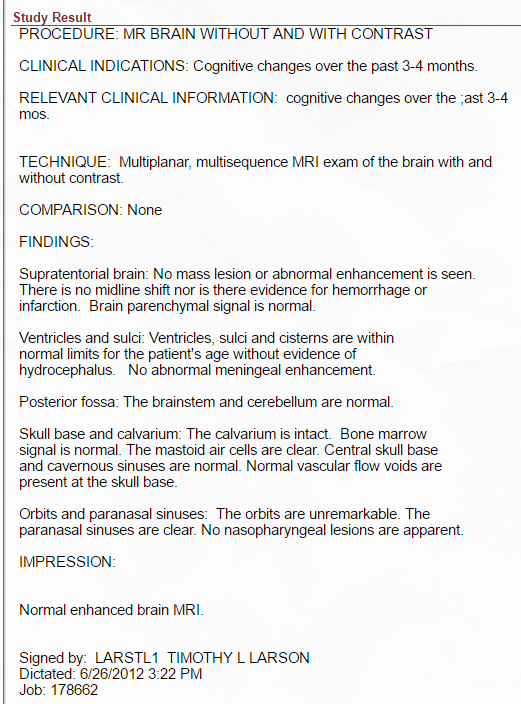
MRI

Positron emission tomography

Reference

Transcranial Doppler Sonography

  • Cerebral blood flow is less effective with POTS (slower response)
  • Less cerebral blood flow in patients with CFS than controls
  • Shorter time to orthostatic symptoms in patients with CFS

Reference

SPECT

Single-photon emission computerized tomography (SPECT) scans are the most reliable for CFS.

  • 80% of CFS patients show abnormal scans
  • 70% of chronic Lyme patients have abnormal scans

    • Abnormalities in perfusion to the frontal, temporal, and parietal lobes
  • SPECT abnormalities appeared to correlate with clinical status
  • Defects were located predominantly in the frontal and temporal lobes. Midcerebral uptake index was found to be significantly lower
  • Lower cortical/cerebellar rCBF ratios in CFS patients
  • In monozygotic twins (one with CFS, one without CFS), the same patterns were seen
  • 80% of CFS patients had lower than average global cerebral blood flow
  • CFS patients had diffuse regional cerebral blood flow
  • Abnormal cerebral perfusion patterns in CFS patients
  • CFS patients had reduced absolute cortical blood flow in rather broad areas
  • CFS patients had reduced cortical blood flow in the distribution of both right and left middle cerebral arteries
  • Blood flow in the left basal ganglia and thalamus was markedly higher in CFS patients
  • Serum TGF-beta and cerebral blood flow abnormalities were accentuated after exercise in CFS patients

Similar results were seen with Chronic Lyme Disease.

Reference

Below is the SPECT scan of the CFS person that had a normal MRI

SPECT

My own experience

Family member had > 60% abnormalities with SPECT (done by Dr. Daniel Amen himself). My MRI was completely normal, my SPECT was not.

IMHO: Obtaining a SPECT scan is one of the best diagnostic tests for CFS for two reasons:

  • 80% chance of getting a positive result if you have CFS
  • It shows that the issue is a physical neurological issue and not a psychological issue.

Do not get talked into a MRI with claims that it is “equivalent or better”.

NEW STUDY: SPECT IS BEST FOR BRAIN INJURY DIAGNOSIS AND TREATMENT

Treatment?

My model is that this abnormality/symptom is caused by fibrin or fibrin like deposit that prevents delivery of oxygen to brain tissue. How to deal with this? IMHO Fibronolytics are a start.

Bottom Line

With the microbiome shift as the maintainer (not cause) of CFS/FM/IBS, the difference in brain scans likely depends on how the shift happens on an individual patient. A 2017 study found that CFS without IBS, CFS with IBS can be reliably determine from critical shifts of just a few bacteria families. Similarly, Dr. Mayer reported in May 2017, that “For people with IBS research shows for the first time that there is an association between the gut microbiota and the brain regions involved in the processing of sensory information from their bodies. The results suggest that signals generated by the brain can influence the composition of microbes residing in the intestine and that the chemicals in the gut can shape the human brain’s structure.” [2017]

What we really need is a study done where:

  • Each of the above scans are done on a group of patients, with their microbiome done at the same time.
    • Neurological testing at the same time would be a nice to have
  • Every year this is repeated.
  • All of the data is pushed thru big data/ai analysis and we identify which bacteria causes which shifts on which scans…

Lazy diagnosis: You have Chronic Fatigue Syndrome!

Recently I saw this posted:

World-renowned Ehlers-Danlos Syndrome (EDS) expert, rheumatologist Professor Rodney Grahame (University College London) points out that, in America, almost 650,000 cases of EDS are missed ANNUALLY, based on studies that suggest almost 95% of cases presenting to clinics are missed, most often diagnosed with other things (Fibro/ME/csf, etc.). 

The reality (or challenge) of CFS research is that many people are misdiagnosis and walk around believing they have CFS because their MDs have not done due diligence. It is likely a good time to list conditions that can present similar to CFS. An item like EDS can be tested (in fact, with 23andMe.com, you may be able to determine if you have the genetic mutation for less than the cost of a single MD appointment)

Autoimmune Disease Interstitial Pneumonia

This was first seen with the onset of interstitial pneumonia spread in Nagoya, Japan in 1995 with 313 chronic pneumonia patients

  • Deemed the same as CFS by some
  • Recurrence of active pneumonia was seen

Chronic Cerebrospinal Venous Insufficiency

  • A CFS diagnosis is often seen prior to this diagnosis
  • Prevalence is 62.5% for patients with multiple sclerosis, 45.8% for patients with Other Neurological Diseases (CFS?), 42.1% for patients with Clinically Isolated Syndrome, and 25.5% for Healthy Controls
  • Associated with IBS, CMV and inflammatory factors

Chronic Epstein Barr virus infection

This was an early name for CFS. Some researchers separate out a subgroup based on specific symptoms seen.

Chronic Lyme

  • 37% of candidate CFS-diagnosis patients tested positive for Lyme
  • Late persistent Lyme disease or Post-Treatment Lyme Syndrome overlaps with CFS
  • Both Lyme and CFS lack reliable tests with the desired accuracy

PO: Some of the Lyme tests will give a false positive if EBV is active (which is often seen in CFS). Neither condition has definitive tests. See Chronic Lyme – A Review

Chronic Post-SARS Syndrome

Professor Emeritus Moldofsky has identified striking similarities with CFS. This is likely just a variation of Post Infection Syndrome.

Ciguatera poisoning

In some cases, symptoms are matches for other conditions, for example, chronic ciguatera fish poisoning, which exhibits similar symptoms and laboratory manifestations as CFS.

Endometriosis

There is some overlap with this condition. Both CFS and endometriosis patients have the following:

  • Higher rates of:
    • Hypothyroidism
    • Fibromyalgia
    • Chronic Fatigue Syndrome
    • Rheumatoid arthritis
    • Systemic lupus erythematosus
    • Sjogren’s syndrome
    • Multiple sclerosis

Eosinophilia-myalgia syndrome

Eosinophilia-myalgia syndrome is indistinguishable from Chronic Fatigue Syndrome.

Gulf War Syndrome

  • GWS patients more often experience headache, diarrhea, and night sweats than others
  • Gulf War illness exhibits similar characteristics to macrophagic myofaciitis, which is caused by aluminum in vaccinations
  • Gene expression in GWS, however, is different from CF

Macrophagic myofasciitis

This condition was first reported in 1998 and is associated with aluminum hydroxide in various vaccines. This syndrome meets both Center for Disease Control and Oxford criteria for Chronic Fatigue Syndrome in about half of macrophagic myofasciitis patients. Aluminum levels are high in many CFS patients.

Young-Onset Monogenetic Parkinsonism

A misdiagnosis of CFS has been seen. On the flip side, since 2015, Parkinson has been associated with microbiome shifts. See PubMed.

Pfisteria

This is also known as Possible Estuary Associated Syndrome (PEAS). Characterized by multiple-system symptoms similar to CFS, deficits in neuropsychological tests of cognitive function, and rapid and severe decrements in visual contrast sensitivity

Phosphate Diabetes

This presents with symptoms similar to CFS; one study found that 10% of CFS patients had been misdiagnosed and had phosphate diabetes.

Sarcoidosis Remission

Clinical remission (47%) of sarcoidosis can result in symptoms matching CFS.

Sjogren’s syndrome

  • Fatigue is often seen
  • 32% of patients with CFS meet criteria
  • Associated with Fibromyalgia
  • Affected population (mainly female, onset at ages 40 to 50) similar
  • B-cells are important player (see Rituximab and CFS remission)
  • Falls into Fibromyalgia/Chronic Fatigue Syndrome disease spectrum
  • Remission reported from Rituximab and immunoglobulin

Traumatic Brain Injury

CFS has been described by some as a disease-caused brain injury. Brain infection and injury can result in over-production of cytokines including TNF. TNF is produced by glia in the brain, and the appropriate level is required for the correct operation of the brain.

Fatigue level was significantly correlated with the following three factors in traumatic brain injury:

  • 55% of patients with TBD have poor sleep quality
  • 36% of patients with TBD have anxiety disorders
  • 65% of patients with TBD have vitamin D deficiency

Misdiagnosis

The following conditions appear to be distinct from CFS but may receive a CFS diagnosis if there is not sufficient due-diligence.

Differential Diagnoses

The Canadian Definition explicitly cites that the following conditions should be excluded before a CFS diagnosis is given:

  • Addison’s disease
  • Cushing’s Syndrome
  • Hypothyroidism
  • Hyperthyroidism
  • Iron deficiency
  • Other treatable forms of anemia
  • Iron overload syndrome
  • Diabetes mellitus
  • Cancer
  • Treatable sleep disorders:
    • upper airway resistance syndrome
    • obstructive or central sleep apnea
  • Rheumatological disorders:
    • rheumatoid arthritis
    • lupus
    • polymyositis

There are a variety of illnesses which are suggested as being different from CFS in the medical literature. These include:

  • Chiari Malformation
  • Chronic anemia
  • Chronic heart disease
  • Chronic infections (e.g., AIDS)
  • Chronic Lyme Disease
  • Connective tissue diseases
  • Drug abuse
  • Endocrine diseases: Addison disease, hypothyroidism
  • Fibromyalgia
  • Inflammatory bowel disease
  • Liver disease
  • Multiple Chemical Sensitivities
  • Multiple Sclerosis
  • Neoplastic disease
  • Primary haemochomatosis (2% probability)
  • Psychiatric Disorders
  • Renal disease
  • Thyroid disease

IACFS/ME lists over sixty differential diagnoses. Some of these are not strictly exclusory. As an example, Vitamin B12 or D deficiency is seen in CFS patients; if CFS resolves when the deficiency is treated, then it is differential.