MAST CELL ACTIVATION SYNDROME (MCAS) and the Microbiome

A reader from Romania requested that I do a post on MCAS. It’s of special interest to me because some close friends appear to have this issue. I know from prior posts that there is limited professional knowledge that is effective, and most of it is symptom relief and not addressing the underlying cause.

I recently added a major component to my microbiome analysis site – enzymes from Kyoto Encyclopedia of Genes and Genomes. Witg this, we have had a significant number of microbiome samples shared to the site reporting Comorbid: Histamine or Mast Cell issues. One of the challenges is that there may be some fuzz since this is self reported.

In this post you will see that enzyme imbalances from a microbiome sample can lead to a root cause of some symptoms. In some cases, lead to actions that may moderate the symptom.

The process that I going to use, is simple:

  • Look at each species reported in each of 224 people microbiome (over 10,000 different bacteria species)
  • Look up the genes in each one of these species.
  • Look up which ones of 1600+ Enzymes each gene produced. Most bacteria produces many many enzymes – they have a lot of genes.
  • Look at statistically significant oddities in the enzymes of those reporting a certain symptom

When this data is pushed thru some artificial intelligence, one enzymes leaps out for MCAS, lipopolysaccharide 3-alpha-galactosyltransferase.

Actually the number is closer to 1200 — many of those with this symptom have zero of the bacteria producing this enzyme.

Four other enzymes are also suspect (and low) but without as strong statistical significance at present, as the one above.

We can also walk this bacteria-to-enzyme path backwards, from the enzymes that are low, we look up the genes that produces it, then from the genes identify the bacteria; as a final step, we see if any commercially available probiotics produces this enzyme. The thinking is simple: if you are short of an enzymes, then increasing enzymes may calm down the processes causing MCAS. We come up with two of them:

This looks like AI magic, machine learning of other evils of technology. Not quite, we can look for studies dealing with allergies and/or MCAS and see if either of these have been studied. First, we discovered that is not a single study on using the above to treat MCAS. For allergies, histamine reactions, we find significant literature

There are additional studies of these two lactobacillus species with other probiotics being effective with allergies (unfortunately with multiple probiotics being involved, things are unclear as to which part is helping). Note that most lactobacillus species do NOT produce this enzyme.

This is a Novel Approach

The body’s circulating metabolites/chemicals imbalances causing symptoms is well accepted. At present, there is testings of a few of the chemicals that can identify to a medical person that there is an imbalance. They do not provide a clear answer on what the source is. With the use of the microbiome down to the species (and strain) levels, we can estimate levels of over 1600 enzymes. If we have a sufficient reference population, we can identify major shifts. We also jump to an understanding of the root cause — which has eluded us before — our microbiome is not producing enough of certain chemicals due to the current composition of the bacteria population.

In the case of MCAS, it is too little of one specific enzyme. This enzyme happens to be produced by two probiotic species. We have also confirmed that these same two species are known to help allergies (but the exact method of helping is often speculated on).

People often want a simple explanation of how it is connected. Unfortunately when dealing with KEGG, we enter the world of a ton of biological wiring as shown by the chart below. This does not means that we can’t use this information; it just means that for most people, the how may be above their formal education and bandwidth.

From: https://www.kegg.jp/kegg-bin/show_pathway?ec01100+2.4.1.44

Let us return to this LOW enzyme for a moment and see what is in the literature about it or what is influenced by it: lipopolysaccharide 3-alpha-galactosyltransferase.

In other words. this enzyme seems connected to mast cells and its activation. Artificial Intelligence magic applied to a large data store of facts, gave us this enlightenment as to cause and suggestions on how to improve MCAS. We lack any case studies — but given the low risk, it is likely worth trying after consulting with your medical professional.

This same pattern can be applied to dozens of individual symptoms (see this page), or across a microbiome sample as a whole.

Addendum

A comment pointed me to Human diamine oxidase is readily released from activated neutrophils ex vivo and in vivo but is rarely elevated in bacteremic patients [Sep 2020] which contains interesting relevant information:

. DAO antigen levels were also determined in three different subcohorts of patients with culture-proven bacteremia and high C-reactive protein (CRP) levels. DAO concentrations were elevated in a time-dependent manner in serum but not in EDTA or citrate plasma (P < 0.01). Neutrophil activation using phorbol myristate acetate (PMA) and zymosan dose-dependently caused DAO concentrations to be elevated more than 10-fold at both 22°C and 37°C (both P-values <0.001). Administration of LPS to healthy volunteers released DAO from neutrophils (P < 0.001). Of the 55 different bacteremic patients selected from three independent cohorts only 3 (5.4%) showed highly elevated DAO concentrations. Serum DAO concentrations do not accurately reflect circulating enzyme levels but coagulation-induced neutrophil activation and consequently DAO release. Only a few bacteremic patients show high DAO concentrations able to degrade histamine rapidly.

Human diamine oxidase is readily released from activated neutrophils ex vivo and in vivo but is rarely elevated in bacteremic patients [Sep 2020]

Lipopolysaccharide are endotoxins. ” Gram negative pathogens may secrete outer membrane vesicles containing lipopolysaccharide endotoxin and some virulence proteins in the bounding membrane along with some other toxins as intra-vesicular contents,” This drops a scent in this direction:

It also leads to a hypothesis that could be tested easily: MCAS is associated with lower or non-existent levels of gram-negative bacteria in the microbiome.

CAUTION: What is claimed to be in a probiotic may not be

This is a long standing problem with commercial probiotics — there is no effective regulation that what is advertised is actually in the bottle. In this case, we want specific species — ideally just those species.

My family’s usual source is Custom Probiotics – because their products have no filler, single species usually, and single strains. Unfortunately, they only sell one of these species: Lactobacillus Acidophilus with a recommended adult dosage of 160 BCFU/day. A list of commercial probiotics with claimed species is here, unfortunately L.H. is almost always in mixtures except for one UK source, Metabolics, species LMG 26307 (they also sell Lactobacillus Acidophilus, species LMG 8151) so an ideal single source for a MCAS person in the EU who wish to trial these suggestions.

If you an “off the shelf” probiotic mixture, your odds are better of actually getting the right species when the probiotic does not just say “lactobacillus helveticus” but gives a strain, i.e. one of these: ATCC:15009,  CCUG:30139,  CIP:103146,  DSM:20075IFO:15019JCM:1120,  BCCM/LMG:13555 BCCM/LMG:6413 NBRC:15019NRRL:B-4526 CGMCC:1.1877. It is available from manufacturers, i.e. creative enzymes.

  • “A new study by scientists at the University of California has found that contents of many bifidobacteria probiotic products differ from the ingredients listed….16 products.. only one matched the ingredient list .. Some products also contained non-label species” [Source 2015
  • “Current trademark law and the lack of stringent regulation of probiotic manufacturing mean that the trademark owner can commercialize any formulation under the same brand, even if significantly different from the original.” The Unregulated Probiotic Market
  • My earlier post: Deceptive Probiotic Labels

Genome Sequence of Lactobacillus helveticus, an Organism Distinguished by Selective Gene Loss and Insertion Sequence Element Expansion tells how unique this species is.
YouTube on the process used

Update on postural orthostatic tachycardia syndrome (POTS)

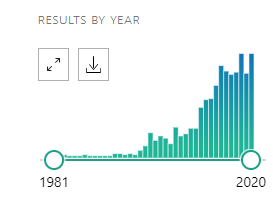
I have done prior posts on POTS (POTS Revisited) and been requested to check the latest research. Checking PUBMED statistics, we see there have been many papers in the last few years

From https://pubmed.ncbi.nlm.nih.gov/?term=+Postural+orthostatic+tachycardia+syndrome+&sort=pubdate&sort_order=asc

Trying Citizen Science

We have 55 samples annotated with POTS and we recently added enzymes to the system. Time to go on a statistical fishing expedition… and we found some fish, all of them small one (i.e. too low production)

EnzymeNamePOTS AverageNo POTS AverageTest StatisticObs
crotonobetainyl-CoA reductase1741500-5.3151128
L-carnitine CoA-transferase1771381-5.0420431
D-apionate oxidoisomerase5731541-4.5786129
nitrite reductase (NO-forming)531117941-4.4625451
5-aminopentanamidase590016862-4.3163151
phosphatidyl-myo-inositol alpha-mannosyltransferase552317379-4.1609450
cysteinylglycine-S-conjugate dipeptidase561117868-4.1582348
polyphosphate—glucose phosphotransferase562117638-4.0976448
8-oxo-dGDP phosphatase572517788-4.0517347
8-oxo-(d)GTP phosphatase593017351-3.9343248
lactocepin14118104-3.9051450
formyl-CoA transferase599817156-3.8491146
oxalyl-CoA decarboxylase623418799-3.8026339
galactofuranosylgalactofuranosylrhamnosyl-N-acetylglucosaminyl-diphospho-decaprenol beta-1,5/1,6-galactofuranosyltransferase571414910-3.6073450
lipid II isoglutaminyl synthase (glutamine-hydrolysing)829222101-3.593754
galactan exo-1,6-beta-galactobiohydrolase (non-reducing end)687619457-3.5312935
N-acetylhexosamine 1-kinase687619434-3.5263735
dehydrogluconokinase671018931-3.5200736
Pup amidohydrolase571815393-3.5116647
prokaryotic ubiquitin-like protein ligase571815393-3.5116647
all-trans-retinol dehydrogenase (NAD+)648417326-3.4796641
gamma-glutamyl hercynylcysteine S-oxide hydrolase687619217-3.4786735
glucosyl-3-phosphoglycerate phosphatase780418811-3.47450
isopenicillin-N epimerase636717710-3.4454638
2-acetylphloroglucinol acetyltransferase629515991-3.4397145
phosphatidylinositol dimannoside acyltransferase889920502-3.3803350
dolichyl-phosphate-mannose—protein mannosyltransferase815617812-3.3424654
sorbose reductase614415938-3.2934941
tRNA (adenine57-N1/adenine58-N1)-methyltransferase809318743-3.2685348
tRNA (adenine58-N1)-methyltransferase809318743-3.2685348

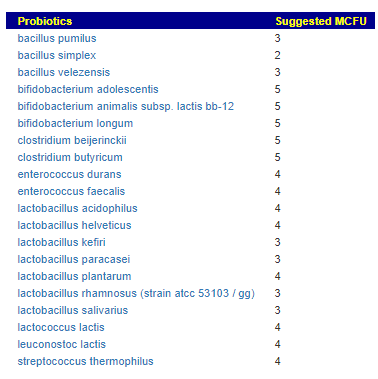
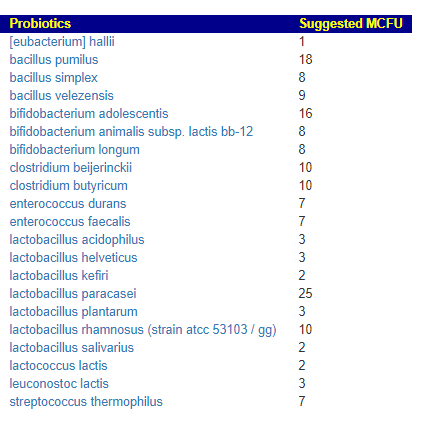
This is actually a happy path because for too low, we can identify probiotics that produces these missing enzymes. Three bifidobacterium are at the top of the list. Custom Probiotics daily recommended dosage for these are 350-400 BCFU /day.

bacillus pumilus8
bacillus simplex2
bacillus velezensis8
bifidobacterium adolescentis26
bifidobacterium animalis subsp. lactis bb-1226
bifidobacterium longum26
clostridium beijerinckii5
clostridium butyricum5
enterococcus durans1
enterococcus faecalis1
lactobacillus acidophilus4
lactobacillus helveticus4
lactobacillus kefiri2
lactobacillus paracasei2
lactobacillus plantarum1
lactobacillus rhamnosus (strain atcc 53103 / gg)2
lactobacillus salivarius2
lactococcus lactis3
leuconostoc lactis2
streptococcus thermophilus3

Bottom Line

We have deduced which probiotics should help POTS (if taken in sufficient dosage) by using citizen science on the annotated-with-symptoms uploads, the KEGG Enzyme data and statistics. We may not know the why’s of these enzymes missing causing POTS, but we have some ideas of where to start looking for explanations. Until then, we at least know what to try.

There have been NO STUDIES using Bifidobacterium probiotics with POTS published.

Again consult with your medical professional first.

Another Microbiome Analysis of a ME/CFS person

This person has an interesting set of symptoms for ME/CFS. 40 yo male. I am following the same pattern as the two previous analysis. Every ME/CFS person share some factors and are different in other factors. There is nothing that works for all ME/CFS people.

  • Symptoms
    • Depression
    • Irritability
    • Brain fog
    • Post exercise malaise
    • Tinnitus
    • Post nasal drip
    • Stuffy nose
    • Cold extremities & insensitivity to cold
    • Fragmented sleep
    • Low libido
    • Low appetite
    • Frequent bowel movements
  • I’ve had different tests and bloodwork done over the years and these were the common outliers:
    • Low DHEA-s
    • Very high B12
    • High Vitamin D despite not supplementing
    • Low Estradiol (E2)
    • Mild blood coagulation
    • High(ish) eosinophils% (~5%)

Looking at Naive Predicted Symptoms From Bacteria table, we have:

There are more hits than the last person (who reported that fatigue has improved) – and gender prediction is wrong.

Enzyme Analysis

The awesome results in a past post on an autism child, where the enzymes were identified as coming from bacteria species constantly reported as high with Autism, is causing me to look at enzymes shifts as a good strategy to identify the key bacteria to look at.

So the next step is to look for probiotics that can also produce these enzymes.

Any of the probiotics with a 5 is good and sufficient. A higher BCFU is desired.


The easiest combination to obtain retail from the above are clostridium butyricum (Miyarisan ) which produces all 5 enzymes! or any of bifidobacterium adolescentis, bifidobacterium animalis subsp. lactis bb-12, and bifidobacterium longum. The latter ones (without additives) are available at Custom Probiotics (with a recommended daily dosage of 320-400 BCFU/daily) at the lowest cost per BCFU that I have seen.

KEGG Module Analysis

This is another way to evaluate the functions of the bacteria in a microbiome sample. There are less items then with Enzymes and, to be honest, I have not examined the results much after adding the code and data to compute them. There was nothing there.

End Product Outliers

Nothing was found outside of the ranges, and looking at Core Supplements there was one item of concern, high d-lactate production. High D-lactate is associated with neurological issues. (See these posts: Killing Lactobacillus to improve Brain Fog, Approaches to D-Lactic Acidosis). We also see that the microbiome suggests high B-12 (at 76%ile) which the labs report.

Unlike my last post on an autism child, there were no high enzymes to indicate the troublesome bacteria.

We turn to the Advance Suggestion engine and apply some filters.

Pass 1 for suggestions

First from Citizen Science we look at filtering for neurological decision making and drive a blank until we widen the search as shown below

The prior ME/CFS person require a 9% level to get any suggestions

Looking at the suggestions, we only find one item in common with the prior ME/CFS person: inulin (prebiotic).

Vitamin B12 is called out explicitly as a to-avoid.

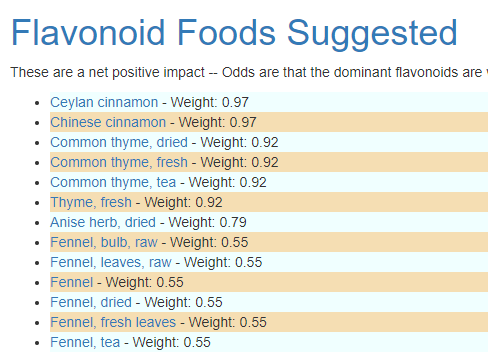
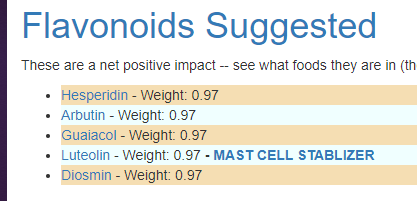
Top probiotics suggestions all contain  saccharomyces boulardii. Flavonoids are a short list

This is close to my usual breakfast for many months: Barley porridge with walnuts!

Pass 2 for suggestions

We change the filtering to CFS/ME and drop back to the most extreme 3% – where we get results

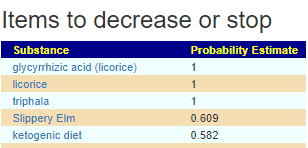
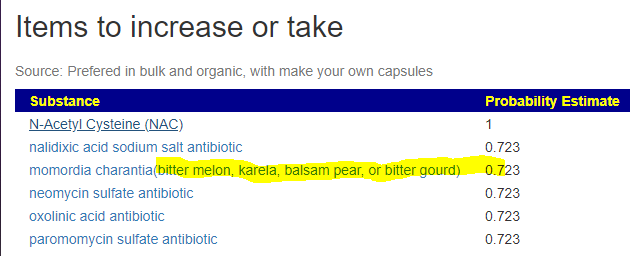
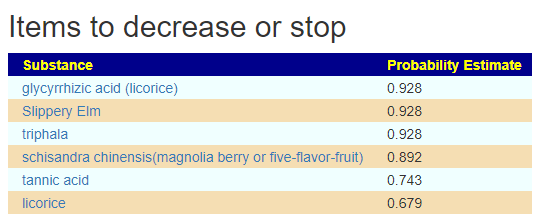
There was no items over 0.5 for to take, we just have a critical list of items to decrease,

We have a conflict on triphala. One subset of bacteria says to use it, a different subset says not to use it. Given that it’s the highest value in both cases we need to do an experiment. I would advocate doing triphala for 4-6 weeks to see if it improves neurological issues, then stop it and re-evaluate.

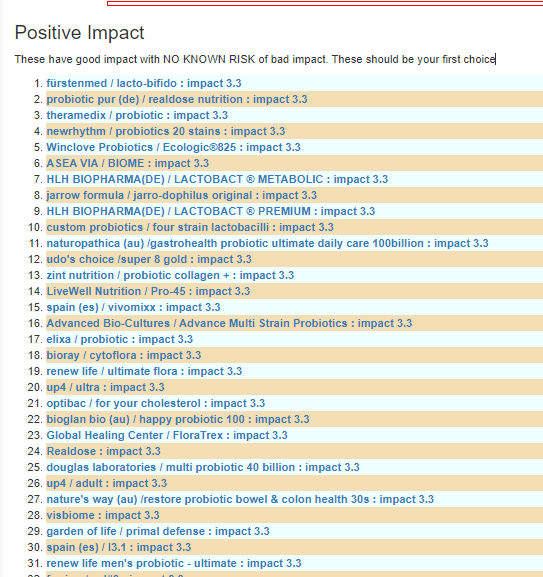
We have a long list of probiotics, all with appropriately the same value

Rerunning with only probiotics, we find just one lactobacillus plantarum (probiotics)

Bottom Line

Remember this is strictly on the basis of the microbiome and our current state of knowledge in interpreting and being able to act on it. It is important not to view microbiome analysis as a magic silver bullet. A summary of suggestions to discuss with your medical professional.

In summary, clinical studies have tested some substances on various conditions which have been reported on PubMed. Microbiome analysis is based on microbiome shifts reported on PubMed by consuming some substances (ignoring medical conditions usually). If you construct a full list of both sets of substances, you will likely have only 10-20% of the substances in common. What has been studied in one context, has not been studied in the other context. Microbiome analysis is complimentary, not a replacement.

As always, to be reviewed with your medical professional before starting. There are algorithm/artificial intelligence generated suggestion based on data that has been entered (usually from gold standard sources).

Postscript on High Vitamin D

See these posts:

Feed back from person

” Indeed very insightful! Strangely enough, walnuts, tea and inulin both made me feel better despite not knowing why and your analysis make a lot of sense.”

Microbiome Analysis of a ME/CFS person

This person has an interesting set of symptoms for ME/CFS. 34 yo female

  • Neurological
    • Visual agnosia (inability to interpret sensations and hence to recognize things, typically as a result of brain damage.)
    • Severe hyperphagia ( abnormally strong sensation of hunger or desire to eat often leading)
    • Severe sleep circadian rhythm disturbance (only thing it responded to shortly was methylated Bs)
    • social anxiety (was severe now mild)
    • brain fog 
    • intermittent prosopagnosia ( the inability to recognize the faces of familiar people)
    • sensory overload – can’t stand showers, need darker room often
  • Many of the above responds in some way to antibiotics 
  • Official Diagnosis: autonomic/small fiber neuropathy, POTS, Hashimoto and now Sjogrens sicca with swollen parotids.

The positive response to antibiotics suggests that the microbiome pays a significant factor.

Looking at Naive Predicted Symptoms From Bacteria table, we have:

This is based on machine learning from people adding their symptoms to their microbiome uploads

For predicted medical conditions from PubMed studies, we had one good match, Hay Fever — and for that it was due to no Clostridium butyricum being found. Note that bacteria because it reoccurs as an issue using an entirely different analysis path.

Enzyme Analysis

The awesome results in my last post on an autism child, where the enzymes were identified as coming from bacteria species constantly reported as high with Autism, is causing me to look at enzymes shifts as a good strategy to identify the key bacteria to look at.

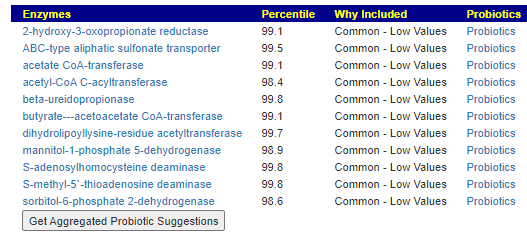
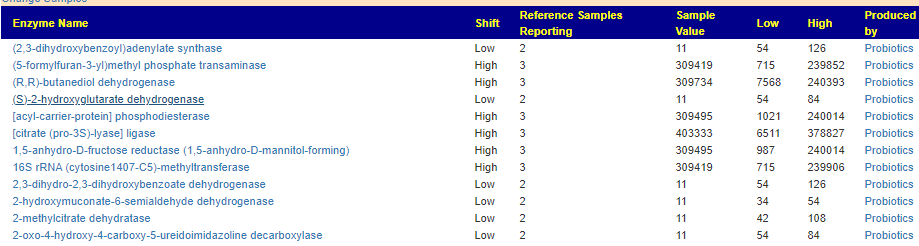
We have a good number of low level items.

So the next step is to look for probiotics that can also produce these enzymes.

there are 11 enzymes low, those with 11 produces all of the missing enzymes.

The easiest combination to obtain retail from the above are clostridium butyricum (Miyarisan ) which produces all 11 enzymes! and streptococcus thermophilus (which produces 10/11) and is available without other things at Custom Probiotics (with a recommended daily dosage of 320 BCFU). Miyarisan is cited in my 2017 post, What is the ideal probiotic for CFS / IBS / FM patients? As always, start with a low dosage and increase to a therapeutic dosage (typically 3x the normal dosage) after consulting with your medical professional.

Note that the prior analysis of a ME/CFS person’s microbiome also have these two probiotics being the first choice.

KEGG Module Analysis

This is another way to evaluate the functions of the bacteria in a microbiome sample. There are less items then with Enzymes and, to be honest, I have not examined the results much after adding the code and data to compute them. So here goes….

It was a little surprise to see only two

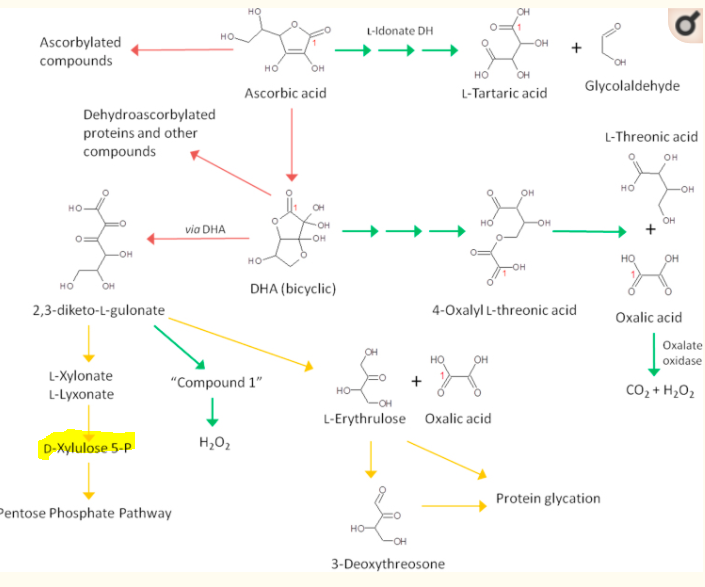
The first item above is associated with Vitamin C (Ascorbate) and influences gene expression [2018]. Looking at the chart below, I notice that H2O2 (hydrogen peroxide) is associated with it. Hydrogen peroxide is a major player for controlling some bacteria. It also feeds the Pentose phosphate pathway which cites “The PPP is one of the three main ways the body creates molecules with reducing power, accounting for approximately 60% of NADPH production in human”

From Ascorbic acid metabolism and functions: A comparison of plants and mammals [2018]

Unfortunately, none of the bacteria producing this exist as probiotics.

End Product Outliers

Nothing was found outside of the ranges, but looking at Core Supplements there are two suggestions (low values, i.e. between 3 and 10ile%) Vitamin D, DAO Producing (diamine oxidase) with Cobalamin (Vitamin B12) and Gamma-Amino butyric acid (GABA) sitting around 15%ile. These are commonly used with ME/CFS and helpful to many. Because this person has cognitive issues, I did a little research on possible dosages.

The above are compensating items that should be taken daily (or broken in every 8-12 hrs) which attempts to create a more healthy/normal environment for the rest of the microbiome and body to be living in. They are symptom relief and likely not cause relief — which takes us to the next step: Clostridium butyricum:

Unlike my last post on an autism child, there were no high enzymes to indicate the troublesome bacteria.

We turn to the Advance Suggestion engine and apply some filters.

Pass 1 for suggestions

First from Citizen Science we look at filtering for neurological decision making and drive a blank until we widen the search as shown below

Flavonoid Foods (Most important first): Pomegranate, Apples, Nuts, almonds ,Coconut (and water), Bananas, Cinnamon, and Dates, deglet noor 

Pass 2 for suggestions

We change the filtering to CFS/ME and drop back to the most extreme 3% – where we get results

I usually cut off items at 0.5 rounded
Mutaflor is E.Coli Nissle 1917. E.Coli was reported low in Australian Studies on ME/CFS back in 1998

Flavonoid Foods was similar to above, but apples and banana were dropped off.

Bottom Line

Remember this is strictly on the basis of the microbiome and our current state of knowledge in interpreting and being able to act on it. It is important not to view this as a magic silver bullet. This person has some symptoms where the existing medical literature has suggestions (and which I have done posts summarizing and cited sources for ME/CFS) including the following:

In summary, clinical studies have tested some substances on various conditions which have been reported on PubMed. Microbiome analysis is based on microbiome shifts reported on PubMed by consuming some substances (ignoring medical conditions usually). If you construct a full list of both sets of substances, you will likely have only 10-20% of the substances in common. What has been studies in one context, has not been studied in the other context. Microbiome analysis is complimentary, not a replacement.

From the Microbiome

We have two set of items from above

  • Items that will help shift the microbiome to a better state (fixing the root problem) – this is based on one of dozens of possible filtering of bacteria into subsets.
    • Number 1 item is Cocoa — as in 85% – 92% Chocolate daily (or more often)… a rough prescription
    • Several different probiotics (if you get a mixture — make sure that it is on the positive list. Some species of probiotics will make things worse for some people).

Oops — we forgot antibiotics

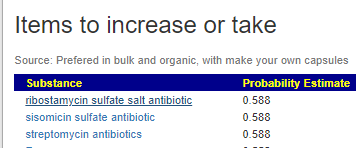
This user had improvement on antibiotics, so which ones are suggested? Back to the suggestion page and checking/unchecking items.

And more important, which ones to avoid!

I must admit that tetracyclines was a surprise, because Dr. Jadin and Dr. Botello had good success with them (70+%). This reader may fall into the 30% that were unsuccessful with that protocol.

As always, to be reviewed with your medical professional before starting. There are algorithm/artificial intelligence generated suggestion based on data that has been entered (usually from gold standard sources).

An Autism Analysis via Enzymes

A reader has been kind and granted permissions to use their samples for another analysis. The samples were done by Thryve, and the FASTQ files processed thru Biome Sight. There was also a GI-MAP result available.

The medical diagnosis is Seizures Lennox-Gastaut syndrome to be exact. And severe low functioning autism. It is suspected/speculated that the cause was vaccine injury.

Enzyme Analysis

First I am going to look at the last sample and then do a comparison to the three prior ones. I am starting to feel that the Enzyme analysis is a good indicator of microbiome dysfunction. It measures thousands of enzymes using the genes found in the bacteria found.

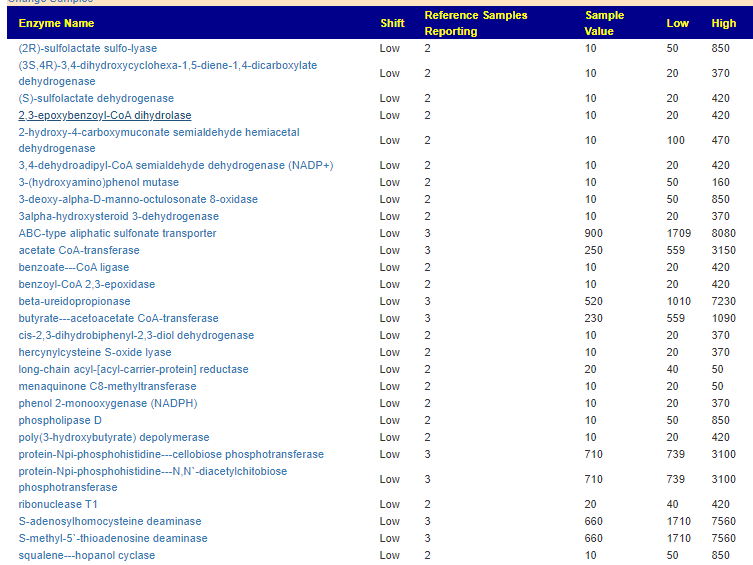
  • Thryve: Literally 139 Items, all HIGH VALUES
  • BiomeSight: 131 items most high with 9 low and 12 low.

Probiotic suggests are only for LOW values (i.e. bacteria that produces the enzymes that you are low in). The list looks similar to prior analysis with lactobacillus paracasei being prominent.


Comparing latest to prior, we found

  • Thryve: Literally 190 Items being outside of the earlier ranges. Some increasing and some decreasing, the general pattern is ones with high ranges are going higher, and those with low ranges are going lower 😦
  • BiomeSight: 36 items all showing lower values than the 3 prior samples

In short, there appears to be a major dysfunction for the enzymes being produced, and it seems to be getting worst.

But…. For End Products, with both samples, there was no change from prior samples. Thryve alone reported possible outliers — all of them them high values (thus no sense in taking supplements for these)

For Bacteria Changes:

GI MAP Report

The following abnormalities were reported.

  • Escherichia spp. – 50% below low bound – Not reported by Thryve or Biomesighe
  • Akkermansia muciniphila – 4700% above high bound (between 30-65%ile on samples)
  • Firmicutes – slightly above high bound (between 20-70%ile)
  • Bacillus spp. – 7800% above high bound (all between 50-75%ile, except for one at 15%ile)
  • Enterococcus faecalis – 8230% above high bound (none reported)
  • Pseudomonas spp. – 132% above (all between 50-70%ile)
  • Streptococcus spp. -2920% above (all between 28%-60%ile)

In short, none of the samples are in agreement with the report from GI-MAP. Personally, I do not have GI-MAP on my reliable/useful lab reports — the above differences are just too troubling.

Approach: Backtrack from Enzymes to Bacteria

These samples are a problem for traditional analysis. Individual bacteria may well be in the normal range, but may be in the high end of these ranges, causing too much enzymes to be produced when a bunch occur at the same time.

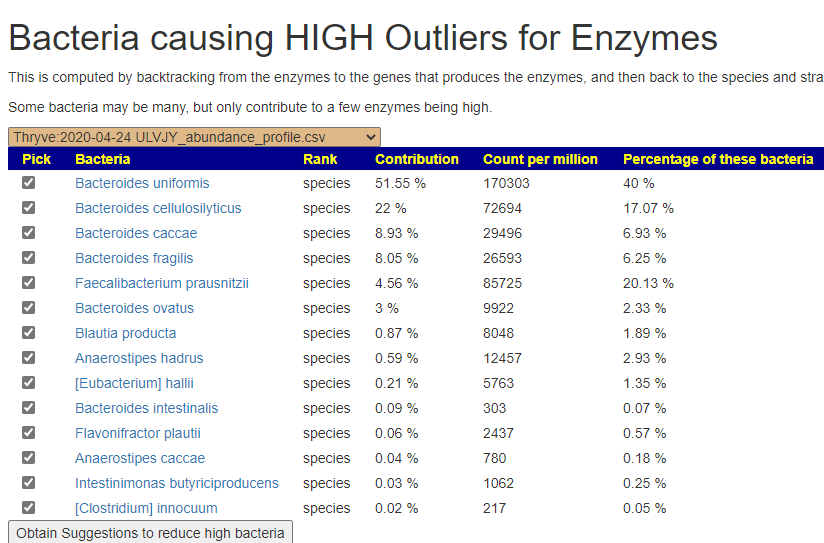
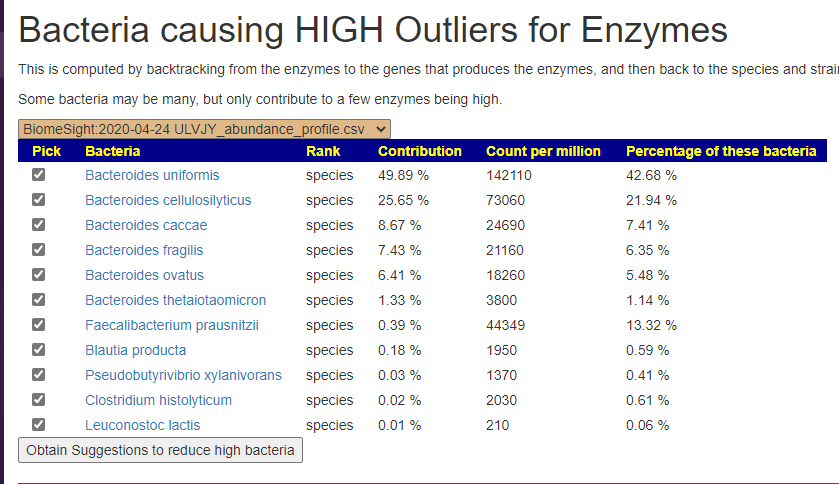
The result was my creating a novel analysis process: Compute by backtracking from the enzymes to the genes that produces the enzymes, and then use these genes to backtrack to the species and strains that have those enzymes. From both labs reading of FASTQ files, we get the same dominant players as shown below. Faecalibacterium prausnitzii was interesting — because of the high count, many will assume it to be a major player… it’s not (remember the counts for this bacteria will be different from each lab).

I then wired this into the existing suggestion system using the hand-picked bacteria approach (all are pre-selected on this page). You will now see a new button on the sample pages.

You can then custom tune the suggestions you wish to receive. For example, restricting to drugs and herbs, we have:

Note that the top ones are not prescription nor antibiotics
This is the complete list, we asked for 20 and only got these
There were NO PROBIOTICS suggested

Pass 2

Since we are entirely at the species level, we may wish to include items that modify the genus these species are in. This is a simple change.

Suggestions were very similar without significant changes. Including probiotics, nothing showed a reasonable confidence (i.e. lactobacillus paracasei (probiotics) was a 0.038, I usually stop at 0.5)

Bottom Line

There are many paths for getting suggestions. For this person, the usual paths had been tried before with little success from experts that I know. When I saw the Enzyme madness, I realized that the first goal, a measurable goal in subsequent samples, is reducing these high enzyme levels.

To do this, I had to add more algorithms to the site to allow a backtrace from enzymes to bacteria.

In checking the literature for Epilepsy, I found the following articles which may be worth reviewing

Of interest/concern is that with KD diets, “after KD therapy and revealed significantly decreased abundance of Firmicutes and increased levels of Bacteroidetes.” In this case HIGH Bacteroidetes appear to be the issue, at least specific species, changing the Bacteroidetes species may result in positive results — speculation.

Now going to the other aspect, Autism

My conclusion, for these samples, is that looking at the enzyme shifts lead us back to the same bacteria already identified for autism. What we’ve added is that a contributing factor for autism may be the overproduction of specific enzymes which may lead to alternative treatment approaches. Using this as an assumption, we also can rank order the most important ones to change (i.e. Bacteroides uniformis – links to a list of items that inhibits this specific bacteria)

Recipe book to discussion with Medical Professional

None of the following: Licorice, resistant starch , tannic acid (cranberries, strawberries, blueberries, apricots, barley, peaches, mint, basil, rosemary), stevia, saccharin

Toss up on apples — some of its ingredients may help or make worse. Do as an experiment when he is stable.

Remember this is not medical advice, before doing any changes make sure that you review them with your medical professional. This is what a data nerd logically deduced (showing their logic), and not a qualified medical professional.