SIBO Testing with Lactulose

“The findings of the lactulose breath test in irritable bowel syndrome patients have been used to suggest that most patients have small intestinal bacterial overgrowth (SIBO), and this association has spawned the widespread use of antibiotics in IBS. The study by Bratten and colleagues demonstrates that this test does not discriminate between IBS patients and healthy controls when criteria from recent clinical IBS studies are applied. ” [2008]

I recently added some more studies and found that the list of bacteria that will consume lactulose is quite large — with both good and bad listed.

Taxonomy Rank Effect
Bifidobacteriaceae family Increases
Lactobacillaceae family Increases
Streptococcaceae family Increases
Bifidobacterium genus Increases
Lactobacillus genus Increases
Streptococcus genus Increases
Aerococcus viridans species Increases
Bacteroides fragilis species Increases
Bacteroides ovatus species Increases
Bacteroides thetaiotaomicron species Increases
Bacteroides uniformis species Increases
Bacteroides vulgatus species Increases
Bifidobacterium adolescentis species Increases
Bifidobacterium bifidum species Increases
Enterobacter aerogenes species Increases
Enterococcus faecalis species Increases
Escherichia coli species Increases
Lactobacillus acidophilus species Increases
Lactobacillus brevis species Increases
Lactobacillus casei species Increases
Lactobacillus rhamnosus species Increases
Parabacteroides distasonis species Increases
Peptoclostridium difficile species Increases
Peptostreptococcus anaerobius species Increases
Proteus mirabilis species Increases
Proteus vulgaris species Increases
Streptococcus thermophilus species Increases

Bottom Line

Recently I posted about another probiotic that gave positive lactulose breath test when given to healthy individuals. I look at the list above and see many bacteria that are often in yogurt or available as probiotics.

In short, not only have studies on human discredited this test — but logic also discredit it. It is totally unclear which bacteria is overgrown!
Probiotics News – June 2018

This is a continuation of my trying to get caught up on reviewing interesting news. Sometimes a new dimension appears that results in enhancements of the analysis site; other times, it is just interesting events happening. The quality of the items can be questionable (marketing literature), often the reviews reveal some interesting gems.


  • Gigantic study of Chinese babies yields slew of health data
    “The Chinese team has so far avoided similar problems. Its rich collection of 1.6 million biological samples includes specimens of stools, blood, placental tissue and umbilical cords. Extensive surveys also record participants’ eating habits, mental health, and other lifestyle factors, such as the amount of mould in their house.”
  • “Gut microbiota modulate neurobehavior through changes in brain insulin sensitivity and metabolism”[src]
  • ‘Social microbes’ critical to brain development…Absence linked to reduced sociability in people with autism spectrum disorders”[src]
  • From src
    nha-4-nha170030-g001
  • PowerPoint ?????????
  • nha-4-nha170030-g003
  • nha-4-nha170030-g004
  • Designing large-scale gut microbiome studies – 10 essential considerations<http://blog.dnagenotek.com/microbiome/designing-large-scale-gut-microbiome-studies-10-essential-considerations>
  • An analysis of faecal metabolites ( molecules in stool produced by microbes) found that less than a fifth (17.9 per cent) of gut processes could be attributed to hereditary factors, but 67.7 per cent of gut activity was found to be influenced by environmental factors, mainly a person’s regular diet. [src]
  • Triclosan (TCS) is a high-volume chemical used as an antimicrobial ingredient in more than 2000 consumer products, such as toothpaste, cosmetics, kitchenware, and toys. We report that brief exposure to TCS, at relatively low doses, causes low-grade colonic inflammation, increases colitis, and exacerbates colitis-associated colon cancer in mice. Exposure to TCS alters gut microbiota [src]
    • “Triclosan exposure is practically unavoidable in the United States, but little is known how ingestion may affect our health” [src]
    • Why Is Triclosan in Toothpaste? [Consumer Reports]

  • Bacteria Survive in NASA’s Clean Rooms by Eating Cleaning Products [src]
  • When three groups of mice received a custom diet supplemented with porphyrin-rich seaweed (a kind of microbiota-accessible carbohydrate (MAC) found in nori) seven days after inoculation with B. ovatus NB001, a robust increase of up to six orders of magnitude was detected in the strain’s density in feces, irrespective of background microbiota.  [src]
  • As reported on November 17, 2017 a randomized, double-blind, placebo-controlled study in 90 older women showed that supplementation of the probiotic strain Lactobacillus reuteri ATCC PTA 6475 decreased bone loss compared to placebo [src]
  • Daily supplementation with the probiotic strain Bacillus subtilis C-3102 may improve stool frequency and consistency in healthy people, says a new study. [src] always note the “may” is not a “will”/ Speculation
  • Researchers from Japan are using the findings of studies on centenarians in the country to try and produce new products that will replicate the beneficial aspects of their microbiota. [src]
  • Here we report that our routine use of mock communities as internal standards allowed us to discover highly aberrant and strong biases in the relative proportions of multiple taxa in a single Illumina HiSeqPE250 run. [src]
  • No clear evidence probiotics can help with human anxiety, study finds
  • The University of Otago, Christchurch, researchers found a toxic form of a bacteria called Bacteroides fragilis in the gut of almost 80 percent of people with a pre-cancerous lesion — a precursor to the disease.[src]
  • Dr Costello led a faecal microbiota transplantation (FMT) study the results of which demonstrate the ability to induce remission in UC, without significant side-effects. [src]


Symptoms Explorers and Bacteriocins

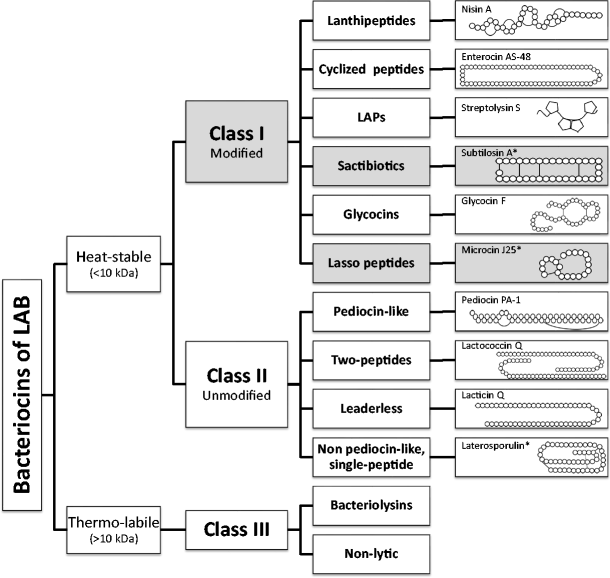
Bacteriocins are natural antibiotics produced by bacteria against other bacteria. I have just added these to the end products. I would expect a microbiome dysbiosis may result from or be seen as a shift in bacteriocins.

Looking at a few of the symptoms subsets, for example: Neurocognitive: Can only focus on one thing at a time I see some significant shifts for a population of 46″

bact1

When I tried Join pain alone.  The significance numbers dropped a lot.

In the above cases, the amount of these 2 bacteriocins were a lot higher then those seen in our health reference subset.

I will leave my readers to explore, I just wanted to call out this addition.

This study provided this sweet chart

253_2016_7343_fig1_html

Probiotic News – Nov, 2017

Prebiotics:

  • Polysaccharides from Aloe vera may boost the growth of beneficial gut bacteria such as Bifidobacterium spp. and Lactobacillus spp., says a new study from Chile that supports the prebiotic potential of the compounds. [src]

Disease

  • “An international team of researchers has found evidence that suggests certain types of oral bacteria may cause or exacerbate bowel disorders. In their paper published in the journal Science, the group describes testing the impact of introducing bacteria found in the mouths of humans to mice models.” [src]
    • “In the first experiment, the researchers introduced human saliva from people with Crohn’s disease into the guts of mice with a sterilized . Doing so, they found, led to gut inflammation in some cases. A closer look revealed the bacteria responsible for the inflammation was Klebsiella pneumoniae, “
  • Analyses in mice suggest that dietary salt increases blood pressure partly by affecting some of the microbes that inhabit the gut. The implications of this work for hypertension warrant further study in humans [src]
    • “High salt may additionally drive autoimmunity by inducing T helper 17 (TH17) cells, which can also contribute to hypertension. Induction of TH17 cells depends on gut microbiota; however, the effect of salt on the gut microbiome is unknown. Here we show that high salt intake affects the gut microbiome in mice, particularly by depleting Lactobacillus murinus. Consequently, treatment of mice with L. murinus prevented salt-induced aggravation of actively induced experimental autoimmune encephalomyelitis and salt-sensitive hypertension by modulating TH17 cells. In line with these findings, a moderate high-salt challenge in a pilot study in humans reduced intestinal survival of Lactobacillus spp., increased TH17 cells and increased blood pressure. Our results connect high salt intake to the gut–immune axis and highlight the gut microbiome as a potential therapeutic target to counteract salt-sensitive conditions.”
  • “They compared mice with different variants of the APOE gene, which is strongly linked to Alzheimer’s risk in people. Once again, the researchers found distinct differences in the microbial profiles of the mouse strains, suggesting that “gut microbiome is associated with APOE genotype,” at least in this particular mouse model, ” [src]
  • “Recent studies into the microbiome have provided support to the concept that altered gut flora could promote the development and maintenance of symptoms in IBS.(1)<https://www.ncbi.nlm.nih.gov/pmc/articles/PMC4734998/> It has been reported that IBS subjects have a lower diversity of gut microbiota compared to healthy controls.(2)<https://www.ncbi.nlm.nih.gov/pmc/articles/PMC4202342/> A seven week study of healthy subjects found that those who experienced abdominal pain had significantly less of the beneficial bacteria Bifidobacterium compared to those without pain.(3)<http://journals.plos.org/plosone/article?id=10.1371/journal.pone.0023035>
  • Gut bacteria may be responsible for age-related inflammation, mouse study suggests. Young mice developed low-grade chronic inflammation after receiving gut bacteria transplanted from old mice, reported a new study in Frontiers in Immunology [Src]
  • A new study highlights the link between sleep habits, gut microbiome composition and cognitive flexibility in healthy older adults, but could probiotics benefit sleep-related cognitive issues? [src]
  • “Molecular biologists from Stellenbosch University analysed microbial DNA that they extracted from stool samples of people with PTSD and those who experienced trauma but haven’t developed the disorder. They found that individuals with PTSD had lower levels of three specific gut bacteria.The bacteria, called Actinobacteria, Lentisphaerae and Verrucomicrobia, support the functioning of the immune system. ” [src]
  • “The results revealed that the bacterial compositions of the pancrelipase-treated mice were significantly different from those of the control samples. Akkermansia muciniphila, a key beneficial bacterium in the intestinal tract, showed a higher relative abundance in the pancrelipase-treated samples than in the control samples. Lactobacillus reuteri, a widely used probiotic bacterium known to relieve intestinal inflammation, also showed a higher relative abundance in the pancrelipase-treated samples. ” [src]
  • “<p>When the subjects were divided by their level of intestinal bacteria, it was found that people with a high proportion of Prevotella  bacteria in relation to Bacteroides bacteria lost 3.5 kg more in 26 weeks when they ate a diet composed by the New Nordic Diet principles compared to those consuming an Average Danish Diet. [src]
    • “Probiotic supplementation with various strains of Lactobacillus have been shown to induce a small but statistically significant weight loss in the obese and overweight, according to a new review and meta-analysis.” [src]

Probiotics

  • “Lactobacillus reuteri suppresses inflammation-associated colon carcinogenesis in mice by histamine production “[Src]


Probiotic News Review August, 2018

I have not been keeping up with my review of the latest news.  It’s time to do some catch-up. This covers news from July and August.

    • The most interesting is this study looking at the bacteriocins (antibiotics produced by bacteria against other bacteria)
      253_2016_7343_fig1_html

Table 1

Number of putative bacteriocin gene cluster identified in 238 complete genomes

Genera

Class I

Class II

Class III

Total

Lanthipeptide I

Lanthipeptide II

Cyclic peptide

Sactipeptide

Glycocin

Lasso peptide

LAP

Aerococcus (1)

0

Bifidobacterium (31)

2

2

4

Carnobacterium (3)

1

6

1

8

Enterococcus (12)

3

1

1

13

7

25

Lactobacillus (59)

16

23

3

86

76

204

Lactococcus (13)

3

7

1

20

1

32

Leuconostoc (8)

1

6

7

Oenococcus (1)

1

1

Pediococcus (3)

1

2

3

Streptococcus (105)

16

22

15

7

5

4

33

388

10

500

Tetragenococcus (1)

1

1

Weisella (1)

0

TOTAL

19

29

41

15

29

4

37

514

97

785

Numbers in parentheses () indicate the number of genomes analyzed per genus


  • Small intestine bacteria key in fat uptake, suggests mouse data
  • A Dietary Fiber-Deprived Gut Microbiota Degrades the Colonic Mucus Barrier and Enhances Pathogen Susceptibility [src]
  • Consuming 25 grams of cricket powder per day may alter specific populations of beneficial gut bacteria, a double-blind, randomized crossover trial conducted at Colorado State University indicated. [src]
  • High Dose Vitamin D supplementation alters faecal microbiome and predisposes mice to more severe colitis [src]
  • “Drinking tart cherry juice may improve gut health, says new study (5 days, 8 oz. daily) “[src] NOTE: Difference of impact:
    ” In the human study, two distinct and inverse responses to tart cherry consumption were associated with initial levels of Bacteroides. High-Bacteroides individuals responded with a decrease in Bacteroides and Bifidobacterium, and an increase of Lachnospiraceae, Ruminococcus and Collinsella. Low-Bacteroides individuals responded with an increase in Bacteroides or Prevotella and Bifidobacterium, and a decrease of Lachnospiraceae, Ruminococcus and Collinsella.”
  • Lactobacillus murinus could protect against the damaging effects of a high-salt diet. [src]
  • ” by feeding indigestible starch, involved a species that cannot itself degrade the starch (Bifidobacterium animalis) but cohabits with a species that can (Bifidobacterium pseudolongum). B. pseudolongum has the characteristics of a keystone species in the community because it had low abundance but high ability to perform a critical function, the hydrolysis of resistant starch.” [src]
  • Scientific Analysis Shows Probiotic Use is Associated with Fewer Antibiotic Prescriptions [src]
  • ” the mechanisms that gut bacterial species use to jostle for space and resources and maintain their populations in the face of intense and varied competition. Bacteria have evolved a range of antibiotics, bacteriocins, toxins, and delivery devices to enable interspecies conflict. These interbacterial weapons possess a spectrum of specificities and range from those that target strains of their own species to broad-acting bacteriocides.” [src]
  • Disease
    • “Does Parkinson’s Begin in the Gut? – Scientific American
    • A new study has shown that a single genetic change in a bacterium of the gut microbiome can lead to metabolic diseases such as obesity. [src]
    • Probiotics for Depression | Psychology Today