FMT Trial via capsule is available for C.Diff

A reader forward the announcement to me. Unfortunately, the trial is limited  for C.Diff

Criteria:

  • Are 18 years of age or older
  • Are experiencing recurrent Clostridium difficile infection (C. diff or CDI)
  • Have responded to CDI antibiotic therapy for the most recent CDI episode
  • Do not have a history or diagnosis of inflammatory bowel disease (IBD) or irritable bowel syndrome (IBS)

As with many trials, you must be in an appropriate location.

Outside of the trial (i.e. with a cooperative physician):

Pricing: Each recommended dose of 30 capsules plus a safety test capsule costs $635. OpenBiome’s standard shipping charges and policies apply. [src]

 

Probiotic News Review – Sept 2018

I have been very busy with the http://microbiomeprescription.azurewebsites.net and have not had time to do my usual review (I have several partial drafts waiting which I will try to get finished soon).

  • “The results indicate a total of seven single or multiple-strain formulations favoring the probiotic treatment group, with the strain Lactobacillus rhamnosus GG being the most effective [relative risk ratio of probiotic versus placebo 0.30 (95% CI 0.16–0.5) ]. ” i.e. 30% of patients do better.[Src]
  • “probiotic strain Bifidobacterium breve B-3 may help reduce body fat levels in healthy pre-obese adults” [src] i.e. not proven
  • ” clinical trials on probiotics for depression and anxiety have been heterogeneous in terms of dosing, probiotic strain selection and length of treatment”[src]
  • “Fructophilic Lactic Acid Bacteria, a Unique Group of Fructose-Fermenting Microbes<https://aem.asm.org/content/84/19/e01290-18?etoc>
    Fructophilic lactic acid bacteria (FLAB) ” [src]
  • ” the authors develop a low-cost, paper-based synthetic biology platform that allows species-specific quantification of bacterial mRNAs and clinically relevant host biomarkers.” [src]
  • ” the primary gallate-decarboxylating microbial phyla in the intestinal microbiota were Firmicutes (74.6%), Proteobacteria (17.6%), and Actinobacteria (7.8%). These reads corresponded to 53 genera, i.e., 47% of the bacterial genera detected previously in these samples. Among these genera, Anaerostipes and Klebsiella accounted for the majority of reads (40%)…no gallate decarboxylase homologs were identified from representatives of Bacteroidetes. .” [src]
  • ” key findings from studies that investigate the impact and benefits of HMOs, with a focus on 2’-fucosyllactose (2’-FL), the most abundant HMO found in human milk.”[src]
  • An 85 gram (g) serving of white mushrooms may be enough to trigger a prebiotic, gut health-boosting action that could lower the risk of Type 2 diabetes [src]
  • Physical activity and the affect on maternal and fetal gut microbiome<http://blog.dnagenotek.com/microbiome/physical-activity-and-the-affect-on-maternal-and-fetal-gut-microbiome>
  • The Complete Guide to the Science of the Microbiome<https://endpoints.elysiumhealth.com/microbiome-explainer-e345658db2c>
  • FMT
    • “‘Good bacteria’ found in infant faeces could form the basis of a probiotic supplement that could help lower disease risk as researchers point to babies’ good health and absence of age-related diseases as good starting points.”[src] Baby faeces for FMT?????
    • “Twenty-one subjects were analyzed, with a median age of 12 years, of whom 57% and 28% demonstrated clinical response at 1 and 6 months post-FMT, respectively. ” [src]  In other words. FMT have poor odds of persisting.
    • Could an East Bay startup’s ‘poop pill’ reset your pet’s gut? [src]
    • The brave new world of DIY faecal transplant – BBC News<https://www.bbc.com/news/magazine-27503660>
  • Disease and
    • “Patients with Parkinson’s disease (PD) often have non-motor symptoms related to gastrointestinal (GI) dysfunction, such as constipation and delayed gastric emptying, which manifest prior to the motor symptoms of PD.. Increasing evidence indicates that changes in the composition of the gut microbiota may be related to the pathogenesis of PD” [src]
    • Acne vulgaris was first proposed to have a gastrointestinal mechanism in 1930 by dermatologists Stokes and Pillsbury,  [src]
    • Antibiotics as Instigators of Microbial Dysbiosis: Implications for Asthma and Allergy [src]
    • Oral microbiome disparity linked to pneumonia amongst elderly:  [src]
    • Genetic risk, dysbiosis, and treatment stratification using host genome and gut microbiome in inflammatory bowel disease<https://www.nature.com/articles/ctg201758>
  • Probiotics — Good or Bad?
  • DNA – inherited microbiome
    • “In Goodrich et al. (2014), we increased the power to detect heritable microbiota with a 16S rRNA gene-based analysis of 416 twin pairs. As observed for the Missouri twin studies, the UniFrac distances for MZ twins were slightly less than for DZ twins, but due to the greater sample size, the difference reached statistical significance. Importantly, the greater number of subjects allowed us to identify taxa with significant heritabilities. Among common taxa (those found in at least 50% of samples), the most heritable was the family Christensenellaceae (phylum Firmicutes), ” [src]
    • Human Genetics Shape the Gut Microbiome – ScienceDirect<https://www.sciencedirect.com/science/article/pii/S0092867414012410>


InVitaLab Medizindiagnostik Added

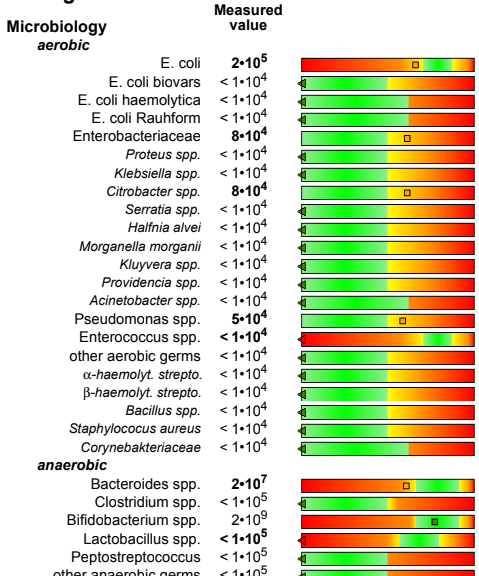
A reader forwarded me a lab result from InVitaLab Medizindiagnostik and I have encoded as a new Lab on the site.

lab1

The report section on the microbiome is shown below

Lab2

The Entry Form

As usual, I have tried to follow the sequence and do the best matches when things are fuzzy. In some case, like for E. Coli Rauhform, there was no match so it was omitted.

http://microbiomeprescription.com/labs/definition?key=C

lab3

Bottom Line

If you have a Lab result that is not a match for the existing ones, please send me a PDF of the results and I will add it. To see the current list of clinical labs supported visit:
http://microbiomeprescription.com/Labs

Also, I am working on the ability for user to save these lab reports so you can return and get updated suggestions as the database of modifiers grows.

Recent Studies on Lyme

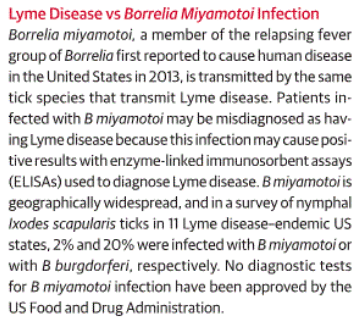
This is a review of recent studies recorded on PubMed. The focus is on new information – so studies reporting prior information will rarely be mentioned. Cases are now being reported from Nepal to New York City proper.


Recent Studies on Chronic Fatigue Syndrome

This is a review of recent studies recorded on PubMed. The focus is on new information – so studies reporting prior information will rarely be mentioned.

Bottom Line

It was nice reading of success addressing the lactic acid aspect of CFS with antibiotics (erythromycin – a macrolide) on patients with high streptococcus count. It was the coming together of multiple threads — if you want to understand better or get a better background, see these posts: