Another (dead) E.Coli source

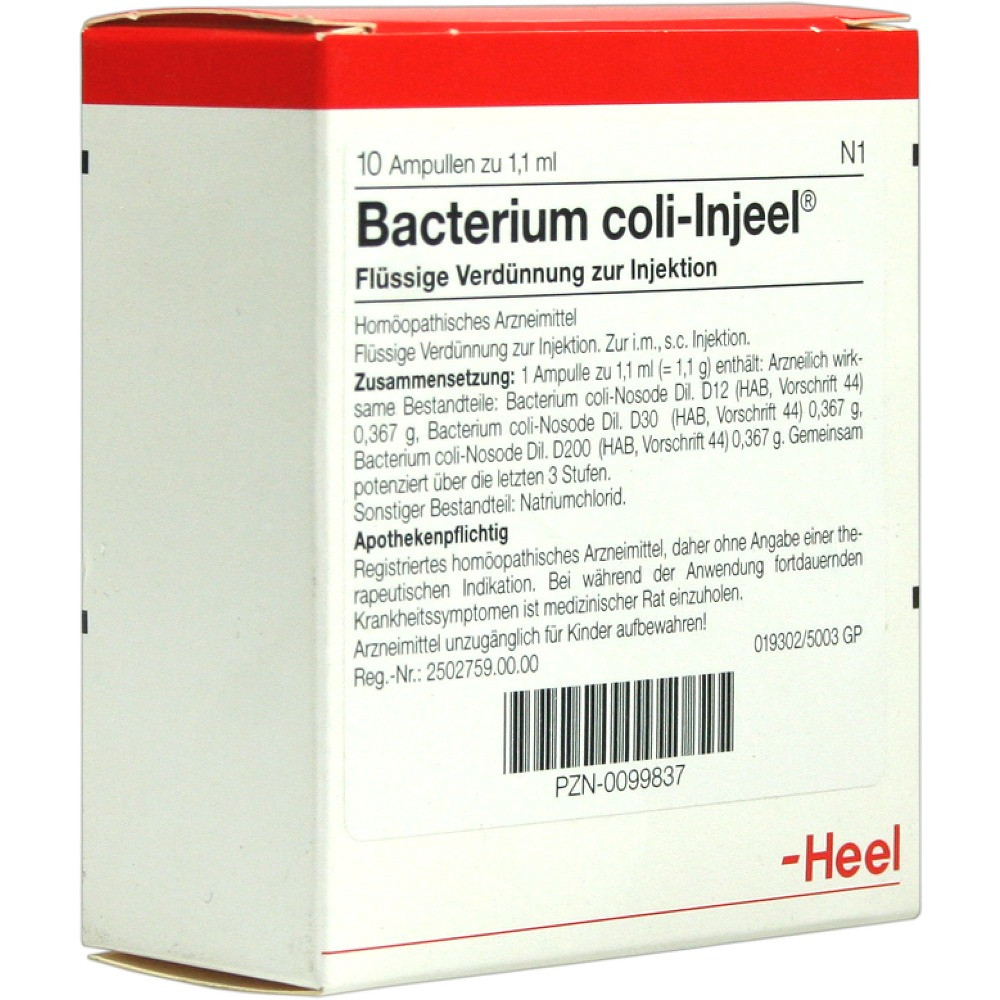
A reader forwarded me a link to “Escherichia coli-Nosode” which is available on German Apotheke (ships world wide) This is a sterilized/dead E.Coli. The manufacturer’s page is here.

(Translation by Google)

“Fatigue. Physical and mental exhaustion. Use of wrong words. Memory loss for recent events. Timidity and indecisiveness, often associated with meteorism. Shivering after the meal. Tongue white-yellowish with red line in the middle. Also with urinary problems and cloudy, nauseating urine. Aggravation by damp cold. Julian points to good effects in salpingitis, cystitis, kidney stones, cholangitis and in depressive psychoses.”

It appears to come in ampules — I assume for oral consumption and is described as homeopathic.

A 1991 article on it. There is negative press claim it is quack medicine.

It appears to have a similar history as another killed E.Coli product Colibiogen (see post) which had a few positive studies on pubmed. There appear to be many more suggesting that Colibiogen does have positive effects.

For this specific product we found:

  • “Piglets of the homeopathic treated group had significantly less E. coli diarrhoea than piglets in the placebo group (P < .0001). Especially piglets from first parity sows gave a good response to treatment with Coli 30K. The diarrhoea seemed to be less severe in the homeopathically treated litters, there was less transmission and duration appeared shorter.” [2010] – Homeopathy Journal
  • ” None of the homeopathically treated groups differed significantly with respect to any of the parameters from the non-medicated, infected control group. It is concluded that the results of this study do not justify use of these homeopathic remedies for treatment of colibacillosis in broilers. ” [2004] Research in Veterinary Science Journal

Bottom Line

No firm evidence of benefit. No evidence of risk (except to pocket book). In theory, the metabolites could have a positive effect, especially if a person cannot tolerate Symbioflor-2 or Mutaflor (live E.Coli).


Reducing Thalassospira genus

For updated information see Microbiome Prescription

DataPunk.Net Data

Nothing

PubMed Data

There are 50+ studies on PubMed. Many dealing with it in sea water.

  • Diet
    • “Berbine reduces, high fat diet reduces ” [2017]

Bottom Line

Avoid

Take

  • Berbine
  • High Fat Diet

Enhanced uBiome analysis of person from Europe

This is my second enhanced uBiome analysis. The main difference is that I no longer rely only on DataPunk.Net data but have extended that by reviewing more recent studies on PubMed etc.

Patient Background

Travel to the US in 2013 and got a difficult virus,  returned home

  • took 4 weeks to recover
  • start exercising/working as soon as I felt a little better
  • exercise/work too hard, get sick again
  • Then ME/CFS symptoms arose
    • 3 months later I’m slowly getting better
    • Then get a stomach bug with all sorts of weird symptoms
      • Can’t sleep
      • constipation with a lot of gas
      • Cortisol starts crashing
      • lots of fatigue
      • brain fog gets worse and worse
    • Tried all remedies under the moon
      • eventually try fecal transplants, and symptoms start improving
        • sleep & energy production especially
        • increased energy
        • can work and exercise again
        • but cognitive problems still very strong
        • spect scan shows bad results
          • brain doesn’t look good
          • bad blood flow in a lot of areas.

CFS Diagnosis confirmed by one of Europe’s leading CFS Researchers/MD.

Standard Items

This set of improvements agrees with the improvements he described above.

Hit List for Bacteria

Prime List

Bacteria > 1.5x all samples
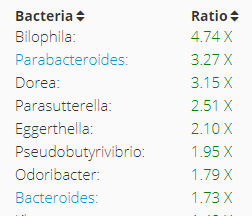
hitlist1

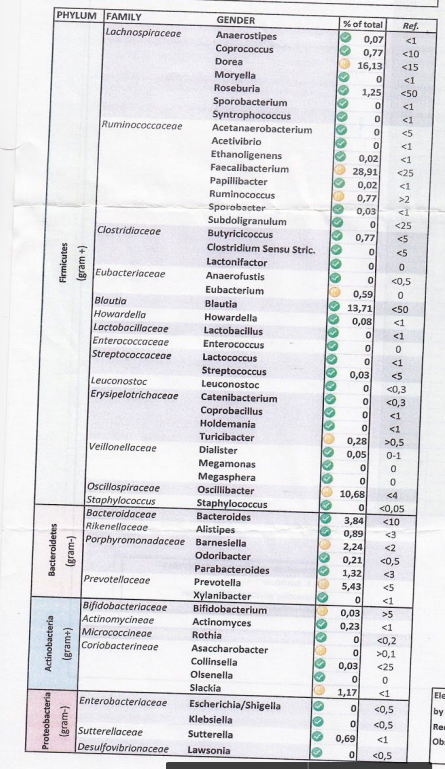
Items with {X} below were also see as abnormal on their RED Metagenomics Stool Analysis Report done earlier. {-} indicated normal. {?} indicated not tested.

So 50% of the genus reported by uBiome are NOT reported by RED test. Only 25% of those tested by both were in agreement.
The transplant etc could account for the difference (they were not done at the same time). I would put greatest emphasis on the bacteria genus in common with both of tests: Dorea https://atomic-temporary-42474220.wpcomstaging.com/2017/10/18/reducing-dorea-genus/

Avoid

Take

  • Galactooligosaccharides 
  • Vitamin D3
  • Oral Iron Supplements
  • l-glutamine – 1 gram capsules with 3 each night came from their physician
  • β-glucan
  • Flaxseed [parent]
  • Polymannuronic acid

Secondary List

Bacteria that are found in < 5% of samples
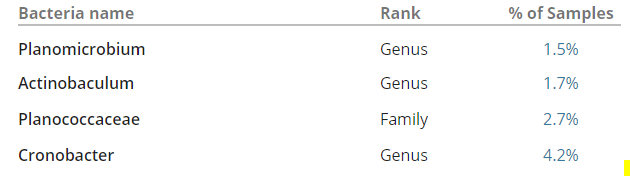
list2

Bottom Line Theoretical Items

The lists below are done by merging the lists from the deep dives. Some items may encourage one genus and discourage another genus — those are placed in inconclusive. The impact on Lactobacillus, Bifidobacterium and E.Coli are intentionally ignored[See this post for the logic]. This is all based on applying logic to the results of studies — thus theoretical.

Inconclusive:

In general, should try to avoid (helps some, inhibits some — we do not know the balance). These could be tried in isolation to other changes to infer their impact on your own uBiome.

Avoid:

Take:

  • Lactobacillus reuteri
  • Lactobacillus kefiri
  • Lactococcus lactis
  • Bacillus licheniformis
  • Bifidobacterium bifidum
  • Possibly: B. infantis, B. adolescentis or B. breve
  • L-glutamine
  • β-glucan
  • Vitamin C
  • Black Tea
  • Tea Tree Oil
  • Oral Iron Supplements
  • Flaxseed
  • Capsaicin (chili peppers)
  • high-fat diet
  • Ketogenic diet
  • Vitamin D3
  • Metronidazole antibiotics
  • Alchohol
  • Oligosaccharide prebiotics
  • Walnut
  • Sucralose (Splenda)
  • Garlic
  • Chitosan
  • Tea
  • Cinnamon,
  • Lemongrass,
  • Oregano,
  • Clove

Personal Note

This reader brain’s scans sounds very much like what my own SPECT scan, and my daughter’s (done by Dr. Daniel Amen) saw. What helped me the most with brain fog actually came from a Russian study of pilot functioning in low oxygen: heparin and piracetam taken together. Regular heparin (low dosage) is taken sublingual (instead of injection) and held in the mouth for 2-4 minutes and then spitted out. The heparin will improve the lactobacillus (I suspect the anticoagulant action may also apply to some bacteria) according to this  [2013] study.

Other items taken for brain function was minocycline, see this post for more discussion.

This is an education post to facilitate discussing this approach with your medical professionals. It is not medical advice for the treatment of CFS or any other condition. Always consult with your medical professional before doing any  changes of diet, supplements or activity. Some items cites may interfere with prescription medicines.

Decreasing Cronobacter genus

This is a rare bacteria occurring in only 4.2% of all uBiome samples. Any bacteria genus < 5% I view as a probable overgrowth that should be reduced as a secondary target.

“Cronobacter spp. were isolated from:

  • 15% of 33 spice and herb samples and
  • 3% of 36 taste foods,
  •  fresh vegetables were detected in 12% of field vegetables and 13% of hydroponic vegetables.
  • shredded vegetables were detected from 44% of 9 samples,” [2017]

For updated information see Microbiome Prescription

DataPunk.Net Data

INHIBITED BY

ENHANCED BY

PubMed Data

There are 750+ studies on PubMed. Many studies deal with contaminated milk formula in China. This dive is not fully done yet.

  • Disease:
  • Diet:
    • “Ketogenic diet poses a significant effect on imbalanced gut microbiota… decreases” [2017]
    • ” tea polyphenols  had an effective bactericidal effect against C. sakazakii,” [2016]
    • “. Both strains were susceptible to thymol, carvacrol, thymoquinone, p-cymene, linalool, camphor, citral, eugenol, and trans-cinnamaldehyde as well as cinnamon, lemongrass, oregano, clove, and laurel essential oils; their minimum inhibitory concentrations varied between 0.1 and 2.0 mg/mL” [2014]
    • “, combinations of commercial Nisaplin and the food additive citric acid reduced C. sakazakii numbers markedly in infant formula within the same 3 h period. ” [2017]
    • “Citral (lemon oil) substantially reduced the adhesion and invasion of C. sakazakii to Caco-2 cells and decreased bacterial survival and replication ” [2017]
  • Probiotics:
  • Antibiotics:
    • Cronobacter strains identified in this study were not susceptible to third-generation cephalosporins, aminoglycoside, and/or trimethoprim-sulfamethoxazole. ” [2017]
    • “showed very high resistance to ampicillin, amoxicillin, tetracycline, chloramphenicol and sulfamethoxazole/trimethoprim.” [2015]

Bottom Line

Avoid

  • shredded vegetables

Take

  • Vitamin C
  • Lactobacillus plantarum
  •  Bifidobacterium bifidum ,
  • Lactobacillus rhamnosus
  • Nisaplin (from  Lactococcus lactis )
  • Ketogenic diet
  • Tea
  • Cinnamon,
  • Lemongrass,
  • Oregano,
  • Clove

Logic for selecting what to act on or ignore on uBiome results

I started this blog taking as gospel (well, being a mathematician by training, a postulate) the results of a 1998 study from Australia. Faecal Microbial Growth Inhibition in Chronic Fatigue/Pain Patients”  The key items were simple:

  • Low or no Lactobacillus
  • Low or no Bifidobacterium
  • Low or no E.Coli

With overgrowth in other bacteria including Enterococcus. Working from this and PubMed studies, I found that the antibiotics that I had been given in my last two sessions with CFS were appropriate to address overgrowth and undergrowth. Recently, I found that heparin which was prescribe for hyper-coagulation (thick bl0od), also “increased Lactobacillus spp. and decreased Enterococcus sp” [2013]. In short, my remission could be ascribed with my correcting the reported dysfunction of the microbiome — not mycoplasma infection, chronic EBV, richettsia infection, chronic lyme etc. The third time around, I added E.Coli probiotics, Bifidobacteria etc to the fix and made a very fast recovery.

Current Reasoning

In examining many CFS/IBS/MCS uBiomes, I constantly see the same three low or no bacteria in the results — not just from uBiome, but from other tests kits. In examining the highs (which vary greatly from one uBiome to the next – which is why results vary so much from one patient to the next), I found that they are all listed on DataPunk.Net as inhibiting Lactobacillus, Bifidobacterium and/or E.Coli.   You want to get rid of these thugs, these killers as an early step.

“But can’t you just take probiotics instead?” is a common question. “Well, your own lactobacillus, bifidobacterium and E.Coli already went to war with them —- and lost badly!”

What about trying to build up the low ones? Conceptually sounds reasonable — but the problem is that you have a bunch of bullies in the class room of your gut. As long as the bullies are not constrained, all of the shy bacteria will keep getting pushed down.

Battle Plan

  • Supplement what was being produced by missing bacteria to reduce symptoms (see this post)
  • Use your uBiome results and my deep dives on each genus (see the same post for links to all that I have done so far) to reduce all high genus
    • Emphasis taking specific probiotics listed in the deep dive when practical
  • When the high bacteria genus are shown to be eliminated or greatly reduced on a repeat of uBiome, work on increasing the low genus associated with being anti-inflammatory.
    • My hope is that once the thugs are eliminated, everything will auto-correct.


This is an education post to facilitate discussing this approach with your medical professionals. It is not medical advice for the treatment of CFS or any other condition. Always consult with your medical professional before doing any  changes of diet, supplements or activity. Some items cites may interfere with prescription medicines.
Bifidobacterium INHIBITED BY