Summary of Lipkin Analysis

As readers know, I have been on a deep dive into the results reported by Lipkin etc, doing one post a day on each of their findings over the last two weeks. The goal was to find patterns of what will help correct the shift. Below are my limited findings — based on very very limited published knowledge about each of the bacteria species.

Besides using PubMed, I have also obtain a copy of the 5 volume set Bergey’s manual of systematic bacteriology seeking additional fragments of knowledge.

In our review we found several weaknesses in this study:

  • Constipation-predominant irritable bowel syndrome(C-IBS) and plain IBS breakdowns should have been included. [See Parabacteroides Distasonis post]
  • Male and Female breakdowns should have been included. [See Parabacteroides Distasonis post]

My working hypothesis on the bacteria shift is simple, keeping with Osler’s Principles and Practice of Medicine. There is a risk of over-interpreting this data trying to find answers.

The over or under production of food is likely cause by an “island of stability” of other bacteria. My hope is that while we are attempting to  correct these bacteria that we destabilize this island and drift back to a normal situation. Everything is intertwained and cross-supported.

  • “Most of B. vulgatus [High], B. fragilis [High], B. ovatus and P. distasonis [Low] produced bacteriocins.[Natural antibiotics against other bacteria]”.  P.Distasonis appears to have a different bacteriocin profile — this the two high producers may be surpressing it.

High Bacteria

It appears that we can classify almost all of the HIGH bacteria to consumers of two food: Lactic Acid or Xylan.

Producers of Lactic Acid

  • Clostridium asparagiforme [HIGH] ” The organism produced acetate, lactate, and ethanol as the major products of glucose fermentation.” [2006]

Consumers of Lactic Acid

High d-lactic acid is a known characteristic for CFS. This is why I say to avoid lactic acid producing probiotics like Lactobacillus Acidophilus.

“The phylogenetic relationships of these nine lactate-utilizing, butyrate-producing strains based on their 16S rRNA sequences are summarized in Table 1. Four strains (from three individuals) are related to E. hallii, two (from two individuals) are A. caccae, and three (from two individuals) are distantly related to Clostridium indolis.” Lactate-Utilizing Bacteria, Isolated from Human Feces, That Produce Butyrate as a Major Fermentation Product [2004]

So bacteria that consume lactic acid are expected to be well fed and likely high. This is true for:

Consumers of Xylan

“Bacteroides Xylanisolvens, one of the species involved in breaking down xylan in the human gut, along with Bacteroides ovatus and ”Bacteroides fragilis” subspecies A.”[microbewiki]

So if we have levels of Xylan, we would expect well fed and likely high. This is true for:


“xylose increased the ileal butyric acid proportion, whereas arabinose increased the fecal butyric acid proportion. Moreover, chicory pectin increased the acetic acid proportion in both ileal digesta and feces.”[2014]

Bottom Line

I am really disappointed by their report. They reported only on a subgroup and appear not to have attempted to include in their scope, bacteria families reported prior (as far back as 1998!)

Lipkin Scope

  • Low
    • Pasteurellales [Order]
      • Lachnospiraceae [Family],
      • unclassified Bacillales[Family] and
      • Pasteurellaceae[Family]
    • Faecalibacterium [Genus],
    • Roseburia[Genus],
    • Coprococcus[Genus],
    • Gemella [Genus],
    • Dorea [Genus], and
    • Haemophilus [Genus]
  • High
    • Clostridiaceae [Family]
    • Clostridium [Genus],
    • Pseudoflavonifractor [Genus],
    • Anaerostipes [Genus]
    • Coprobacillus [Genus]

Prior Reports

These were not examined by them for some strange reason:

  • Lactobacillus (low) [1998]
  • Bifidobacteria (low) [1998]
  • E.Coli (low) [1998]
  • Klebsiella/Enterobacter (High) [1998]
  • Enterococcus (High) [1998]
  • Akkermansia (Low)
  • Firmicutes/Bacteroides ratio

These shifts have been repeatedly seen in uBiome and other lab results posted here. As a holder of a M.Sc. doing medical statistics — the design and approach appears very heavily suspect.
Pediococcus Pentosaceus Probiotics

This probiotic can be ordered in bulk from Korea.  It is often used in food processing. It’s Korean manufacture has some other rare probiotics which I will look at in the future. It is also available in Spain with Bifidobacterium longum.

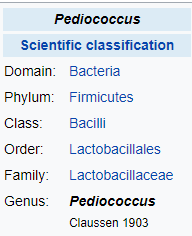
Pediococcus is a Firmicute, which is the phylum that CFS/IBS/FM patients are too high in. This does not exclude it — but raises the bar to require known benefits.

Pedio

Microbewiki describes it as

“Pediococcus pentosaceus are categorized as a “lactic acid bacteria” because the end product of its metabolism is lactic acid [5]. Pediococcus pentosaceus, like most lactic acid bacteria, are anaerobic and ferment sugars. Since the end product of metabolism is a kind of acid, Pediococcus pentosaceus are acid tolerant[1]. They can be found in plant materials, ripened cheese, and a variety of processed meats[4]. Pediococcus pentosaceus is industrially important due to its ability as a starter culture to ferment foods such as various meats, vegetables, and cheeses[6]. Pediococcus pentosaceus bacteria is being cultured and researched for its ability to produce an antimicrobial agent (bacteriocins) as well its use in food preservation [6]…P. pentosaceus can produce an antimicrobial agent known as bacteriocins [3] “against several species of Lactobacillus, lactococcus, leuconostoc, pediococcus, staphylococcus, enterococcus, bacillus and listeria””

  • Adding another lactic acid produce is usually not desired because lactic acidosis is common with CFS/IBS/FM.
  • The antimicrobial agent it produces may be too widely targeted (kill the good and the bad).

The Known Science

Bottom Line

At this point of time, it is not recommended. It definitely has benefits in the food industry to stop spoilage. It has a very wide range of antibiotic action against both good and bad — and run a risk of doing more harm than good.


High ammonia levels in blood

A reader wrote: “I got some new results one that is really “exciting” is that I have very high Ammonia in my blood. What do you make of it? Normal range ends with 3, I have 7 Ammonia.

According to WebMd, “An ammonia test measures the amount of ammonia in the blood. Most ammonia in the body forms when protein is broken down by bacteria in the intestines camera.gif. The liver camera.gif normally converts ammonia into urea, which is then eliminated in urine.”

The same protein intake will produce different amounts of ammonia in different people because what the protein is broken down to is determine by the bacteria.  Think of it this way, protein is like trees — people break them down and the outcomes are not the same: it may be houses, furniture or paper.  It depends on the people (bacteria) involved.

The best assumption is hyper-ammonia producing bacteria. [2004] identifies Klebsiella and Pseudomonas as ones. High Klebsiella was reported in the 1998 study of CFS Microbiome.

  • “The largest amounts of ammonia were generated by gram-negative anaerobes, clostridia, enterobacteria, and Bacillus spp.” [1980] High enterobacteria was also reported  in the 1998 study of CFS Microbiome.
  • “The effect of lactulose in reducing ammonia concentration is attributed to its role as a bacterial substrate in either increasing bacterial assimilation of ammonia or reducing deamination of nitrogenous compounds. The effect of low pH in reducing generation of ammonia appears to be part of a general reduction in bacterial metabolism.” [1978]

Bottom Line

High ammonia level in the blood has not been reported as a dominant CFS lab result  [1994]. It is unclear how often it is tested for when a CFS diagnosis is given.

It has been associated with Sjögren syndrome[2013] [2008]. Ammonia is a neurotoxin [2014] (thus may be a factor for brain fog) . This article cites some specific treatments (which likely would be helpful to many CFS patients):

  • “The nonabsorbed antibiotic rifaximin, when added to conventional therapy with lactulose, increases the rate of total reversal …” [2014]
  • “A combination of B. longum and FOS82 or a cocktail of four freeze-dried, nonurease-producing bacteria (Pediacoccus pentoseceus, Leuconostoc mesenteroidesLactobacillus paracasei ssp. paracasei, and Lactobacillus plantarum) mixed with beta glucan, inulin, pectin, and resistant starch83 had similar effects. [2014]

Lactipro — having a cow looking for remission….

I reader asked me about Lactipro. This is an unusual probiotic for cattle, hence the title! Because it has not been tested on humans, I cannot advocate its use. I can research it potential impact if it is approved for human use somewhere in the world at some future time. I know of CFS patients who have order doxycycline from Vet Supply stores online because of frustration trying to get it prescribed, so I suspect some ‘dark-cure web‘ types will try it. So for their sake, I am doing this review.

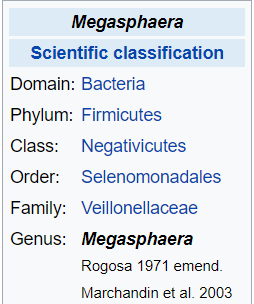
 Megasphaera elsdenii

From the manufacture web site, we read

Effect of antimicrobials on Megasphaera elsdenii

Read about the effect of common antimicrobial agents on the growth and metabolism of Megasphaera elsdenii NCIMB 41125, a lactate utilising probiotic for ruminants.

Ability of Megasphaera elsdenii to prevent lactic acid buildup

Capability of Megasphaera elsdenii strain NCIMB 41125 and other probiotics to prevent accumulation of lactic acid in a rumen model.”

Since d-lactic acidosis is strongly associated with CFS, a probiotic that reduces lactic acid is ideal with my model.

The Science

From wikipedia we see that it is a Firmicutes, and CFS microbiome usually are high in firmicutes which means some caution and this may be a choice of the lesser of two evils.

There are some 240+ PubMed citations (most dealing with cattle)

Bottom Line

Don’t try it!  It is only found in humans suffering from gastrointestinal disorders. With my model CFS is a gastrointestinal disorder that may not manifest itself with gastrointestinal symptoms.

Further more, it pushes you further in the wrong direction.


A review of DigestaCure Autoimmune-X

A reader posted

“I can hardly find anything on the internet warning about RESTORE. I was tempted to try this for my autoimmune condition but after reading your post, decided against it for now.

Was wondering if you have heard about DigestaCure Autoimmune-X (https://store.digestaqure.com/)?

Like RESTORE, it seems too good to be true and I’m not sure how much of their testimonies are fabricated.

Any help will be much appreciated!”

If you have a medical condition, you may wish to try this look up page to identify the best probiotics and supplements suggestions. Just click on the condition(s) on the page.

This post attempts to gather up all of the objective evidence for or against this product. As a former member of the American Statistical Association, I know that for any product sold, you will find miracle cures for a percentage. The cure may be real, and just incidental, but not actually connected to the product. Working on detecting fraud reviews for Amazon a few years ago, I know the huge volume of pay-for-hire reviews that happens in today’s market place.  On the flip side are the rare product that are actually useful but poorly advertised.

First impression of the site: ALARM BELLS — it implies 50 millions americans are currently using this product…. FAKE NEWS #1.

implied

Contents: “Stabilized long-chain polymannan and polysaccharide molecules, stabilized mannose molecules, stabilized glucomannans, stabilized glucopolymannans, stabilized medium and short chain polysaccharides (Oligosaccharides), stabilized mucopolysaccharides, stabilized glycoproteins, and stabilized glycolipids.” –my oh my…. so very very stable, 

Interesting that the term “stabilized mannose” seems only to be associated with their product.  The main (perhaps only content) is Aloe botanical powder.

FDA WARNING LETTER

Jan 21, 2015 states “Your product is not generally recognized as safe and effective for the above referenced uses and, therefore, this product is a “new drug” under section 201(p) of the Act [21 U.S.C. § 321(p)]. New drugs may not be legally introduced or delivered for introduction into interstate commerce without prior approval from the FDA, as described in section 505(a) of the Act [21 U.S.C. § 355(a)]; see also section 301(d) of the Act [21 U.S.C. § 331(d)]. FDA approves a new drug on the basis of scientific data submitted by a drug sponsor to demonstrate that the drug is safe and effective. “

The FDA letter cites and is very critical of the web site “The Code of Life” as part of this firms literature. It is written by a Dr. Brucker, oh… he’s a Doctor of Chiropractic… citing experience with Homeopathy, Trigger Point Therapy, etc…

Legal Background

The site digestaquere.com was obtained in 2008. A trademark was filed for in 2013.

Checking the state of Florida official records, we see it is registered via a Steven Sciarretta, an attorney — keeping who owns it a secret.

Aloe and Autoimmune

Moving past questionable business presentation, we know the main item, Aloe, which is “scientificized” by listing it components. Say, I have the perfect supplement for your health issues, it contains beta-lactoglobulin, alpha-lactalbumin, lactoferrin, lysozyme, beta casein, …. and some 20 more important items established to be essential for your health…  Just $50 for a one quart bottle!!! … (Shhhh don’t tell anyone that it is a bottle of cow’s milk!).

Now to move from humor to hard science…  There are 46 articles on PubMed dealing with Aloe and Autoimmune unfortunately most are by a researcher named L. Aloe!

  • Not effective against Psoriasis [2016]
  • “These data indicate that Aloe vera therapy (at 120 mg/kg/day Aloe vera) can attenuate the disease progression in experimental model of MS.” [2010] So a 110 lb person would need to consume 14 grams/day (i.e. 26 capsules per day). Note attenuate means lessen, not cure.

That’s it. I did a review of Aloe and Microbiome on Pubmed without any significant findings.

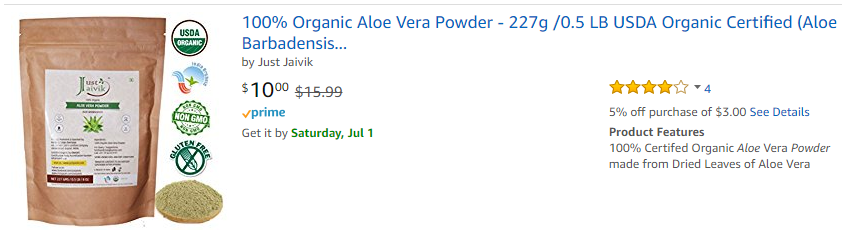
Cost: 1/2 lb – 227 gram of Organic Aloe Vera powder or the equivalent of 450 capsules of Digestacure, will cost you $10.00 on Amazon versus $318 from this site.

Aloe

Bottom Line

No studies showing it helps, profit margin is likely 95% for this business…


A better approach for restoring gut health is to get tested for the bacteria shift and then adjust your diet appropriately. The cost of getting the best test, uBiomeExplorer is $90, does not require a doctor prescription and provide details of your gut bacteria down o the species level (I have no affiliation to them). From this specific recommendations can be made to fix the gut, based on your own specific gut bacteria and published scientific studies. For an example of a report see this post