I have made viewing the citations (sources of information) easier. At present, there is at least one academic research using my site to find the articles of interest and validating my encoding of the information into the database.
I have been asked this often. My answer is extremely logical but not what you will get from most health experts (and unfortunately, may not be easy to determine for some).
The Diet….
Very simple — the type of diet that your ancestors ate 300+ years ago! Diet changes gene expression, i.e. microbiome AND dna adapts.
Last year, researchers discovered that these kinds of environmental genetic changes can be passed down for a whopping 14 generations in an animal – the largest span ever observed in a creature, in this case being a dynasty of C. elegans nematodes (roundworms)…. Usually, environmental changes to genetic expression only last a few generations. … studies have shown that both the children and grandchildren of women who survived the Dutch famine of 1944-45 were found to have increased glucose intolerance in adulthood.
My wife gave me “Danish Cookbooks” by Carol Gold. This is NOT a cook book, but rather an academic study of cookbooks published in Denmark. I’m 100% Danish and very interested in history.
I have always been inclined towards going for ancestral diet patterns, and did Paleo for a while. My problem with Paleo is that it is more idealogical based than actual (scientific) archeologically based. It is also trying to jump the diet back thousands of years which effectively ignores how our bacteria evolved to meet our changes of diet.
A diet based on typical diet of your ancestors 400 – 1400 years ago is likely a better choice. You avoid the newly introduced foods, for example, potatoes. You also avoid process foods and modern additives. On the plus side, your gut bacteria is likely closer to the optimized bacteria your ancestors evolved from eating the same food for a thousand years.
In this book, I found two gems from the historical records:
We have decreased the use of spice considerably — in 1600, the common spices were:
“The issue here is … the use of seasonings in general slackens” p.47
Many of these spices (like wormwood and ginger) have strong antibacterial characteristics which would have kept some gut bacteria families in control well.
“Their most common food was meat” p. 122
White (wheat) bread was very uncommon, expensive, and typically seen only in upper class homes on special occasions(not as part of the regular menus). It appears that most of the carbohydrates came from Rye Bread.
I am sure that some readers who favor a diet that is vegan or vegetarian on ideological grounds would object to these suggestions. My response is simple, if your ancestors were vegetarians for centuries or millenniums (as some friends who were born in India can validly claim), then that is the right diet without any doubts.
Evidence shows that gut bacteria is inherited through generations — hence it is good to know what your ancestors ate because your gut bacteria have likely adapted to that diet.Given my heritage (which likely applies to people from the UK, Poland, northern France and Germany etc), this boils down to:
Rye Bread without any wheat flour
Meat and Fish (especially since the family seemed to always been within 5 miles of the coast back to 1500..)
No potatoes — they really did not enter my ancestor dies until the early 1800’s – after one of my great-grandfathers was born. Little or no sugar (“Worldwide through the end of the medieval period, sugar was very expensive[1] and was considered a “fine spice“,[2] but from about the year 1500, technological improvements and New World sources began turning it into a much cheaper bulk commodity.” – Wikipedia)
The last item needs to be taken with a touch of salt and sung: “A spoonful of soil helps the microbiome recover!” We have become hyper-hygienic. See the Hygiene hypothesis. This comes from a post in 2016:
“The Amish and Hutterites are U.S. agricultural populations whose lifestyles are remarkably similar in many respects but whose farming practices, in particular, are distinct; the former follow traditional farming practices whereas the latter use industrialized farming practices….Despite the similar genetic ancestries and lifestyles of Amish and Hutterite children, the prevalence of asthma and allergic sensitization was 4 and 6 times as low in the Amish” – i.e. industrialized farming practices resulted in six times (600%) the rate of asthma and allergies. See Innate Immunity and Asthma Risk in Amish and Hutterite Farm Children(2016). This is also echoed in their farm products!!! Amish and Hutterite Environmental Farm Products Have Opposite Effects on Experimental Models of Asthma [2016]. Given a choice of buying groceries from a Hutterite farm or a Amish farm, buy the Amish (non industrialized) groceries!!!!
So I advocate not a Paleo diet, but a regional medieval-food diet (modified for modern nutritional needs). No prepared foods (talk about being extremely unnatural!), so food prepared from scratch — ideally organic with heritage seeds.
Engineer Foods versus Heritage Food
For the last 100+ years, food has been breed for profitability, not health or nutrient content. Some examples:
Shelf Life
Time to market (especially animals — how long to get X pounds of meat at cheapest cost)
Appearance
Using heritage, not just organic, seeds and stock. Simple example: Most modern milk are A1 milk, historical milk was A2.
A video on the typical bread for last 1000+ years
It does an in-depth review of nutritional contents
Update from Archeology on Viking Diets
My DNA shows well where my ancestries lived or settled (i.e. Eastern England, a.k.a. DaneLaw). Map from https://mytrueancestry.com/ using my DNA. Using DNA is an awesome substitute for family history, especially for “Heinz 54” people
During the Viking age (800-1300 AD), we see a tighter pattern.
A reader asked about the “Viking Diet”. It may be a starting fad somewhere. For me to answer that, I use the result of archeological studies. Perplexity sums it us as: ———–
Archaeological evidence provides significant insights into the Viking diet, revealing a diverse and adaptable food culture:
Staple Foods
Vikings relied heavily on fish, particularly cod, plaice, herring, and halibut, caught along the Scandinavian coastline1. These were often dried for preservation and trade. Livestock such as pigs, cattle, sheep, and goats were kept for meat and dairy products1.
Plant-Based Foods
Vegetables like turnips, shallots, beans, peas, and goosefoot (similar to kale) were commonly consumed1. Cereals, especially barley, were found at most excavation sites across Scandinavia and used for bread, porridge, and beer1. Berries, fruits, and honey provided sweetness in their diet5.
Dietary Composition
Analysis of bone samples from Greenland Viking colonies indicates a shift in diet over time. Around 1000 CE, their diet was predominantly terrestrial, but by 1450 CE, it had become mostly marine-based3. This change is evident from stable carbon isotope analysis of bone collagen.
Nutritional Breakdown
Based on common Scandinavian foods, the Viking diet is estimated to have consisted of:
Vikings adapted their diet to seasonal availability, preserving foods through smoking, drying, and fermentation2. This allowed them to maintain a varied diet throughout the year.
Regional Variations
Archaeological finds show differences in diet based on location. Coastal Vikings had more access to fish, while inland populations relied more on livestock and crops13.
Cooking and Eating Habits
Evidence of cooking equipment, tools, and food remains at archaeological sites provides insights into food preparation and storage methods1. Communal eating was important, as suggested by references to shared porridge in Viking sagas1.
This archaeological evidence paints a picture of a Viking diet that was diverse, adaptable, and more sophisticated than often portrayed in popular culture.
Bottom Line
For me porridge every morning is part of my preferred diet with a preference for fish.
This was posted 7 years ago. My test results from keeping to this is shown below
A reader asked me to add some more conditions (and nicely supplied some links to pubmed articles for those conditions reporting the microbiome shifts). So if you want additional ones, just do the same — send me the conditions and pubmed articles for those conditions reporting the microbiome shifts
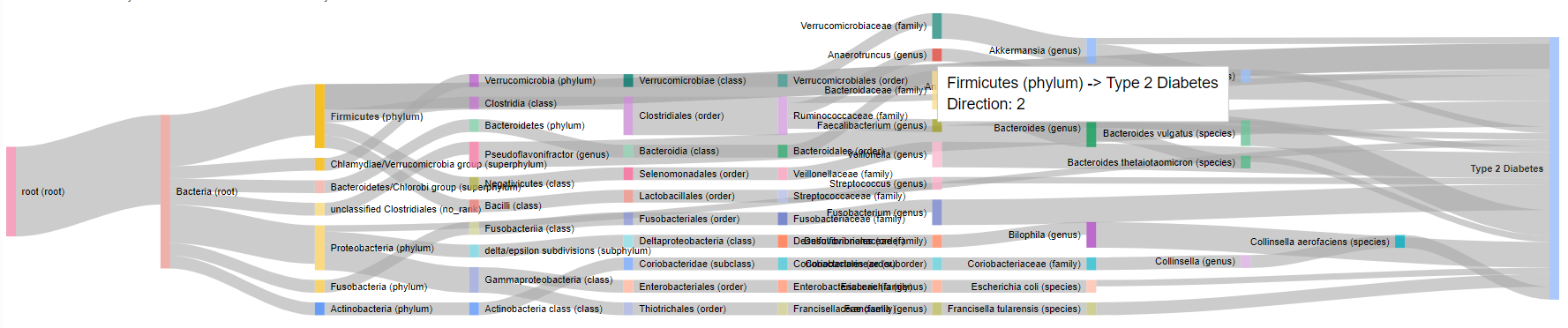
Above you see “View Taxonomy Layers” which I spent most of today coding and testing. Some examples below. The reason is simple, some data is by species, other by genus, other by family — these charts connect the data better in a visual fashion. (Click on image below to see it better)
There are many reasons to manipulate the microbiome. Some simple reason may be to treat a condition like Psoriasis (see this post) where a reader wrote:
Ken – my head has stopped itching and I have only been taking the Align for 2 days!!!!!!!!!!!!!! I can’t believe it – but at the same time it makes sense – I had a severe gastrointestinal issue over a year ago for 6 months, and then I stopped eating yogurt because the soy yogurt maker went out of business…..and then the psoriasis started in last August…. Wow…. I will keep taking the Align and hopefully this will be permanent!! I am so grateful Ken! Thank you for writing the blog!!
For others, it is striving to optimise physical performance or mental performance.
Evidence for benefit manipulating
There are a large number of medical conditions that have microbiome shifts associated with it. I have created a chart of these relationship here. Many believe that these shifts either contribute to the conditions (or some of the symptoms) and in some cases may be the main cause.
The strongest evidence that microbiome shifts may be causing some of these medical conditions comes from dramatic results from Fecal Microbiota Transplants. Some reports include:
Fecal Microbiota Transplantation Induces Remission in Patients With Active Ulcerative Colitis [2017]
Fecal microbiota transplantation induces remission of infantile allergic colitis [2017]
“In Crohn’s disease, there has been no randomized,placebo-controlled trial evidence to date involving FMT. There are only observational data, which showed that approximately two-thirds of people went into remission with FMT.” [2018]
Fecal microbiota transplantation for managing irritable bowel syndrome [2018]
Fecal Microbiota Transplantation for Fibromyalgia: A Case Report and Review of the Literature [2017]
Fecal microbiota transplantation in metabolic syndrome: History, present and future [2017]
Dutch Clinical Trial Points to Fecal Transplant as Diabetes Treatment [2017]
“There are preliminary reports on the use of FMT therapy in a wide range of disorders including Parkinson’s disease, fibromyalgia, chronic fatigue syndrome, myoclonus dystonia, multiple sclerosis, obesity, insulin resistance, metabolic syndrome, and childhood regressive autism” [2016]
FMT is the most extreme form of microbiome manipulation — and not something you can get at your local pharmacy — or even in many jurisdictions. For example, in the US — the FDA has taken a strong position (see this statement). Many people have done DYI FMT (with several reporting positive effects) — which have risks.
How to Manipulate
There are some major challenges when it comes to manipulation. These include:
We do not what the right microbiome should be. Microbiome depends on both DNA and diet — and every one is different
Any change may impact dozen of different types of bacteria in different ways
What are the tools of manipulation?
The most common ones for intentional manipulation are:
prebiotics
probiotics
antibiotics
The most common ones for unintentional manipulation are:
diet (including going vegan or gluten free)
other prescription drugs
supplements
The chart [2017] show that different types of protein have different effects.
Influence of diet on the gut microbiome and implications for human health
Attempting to balance all reputable information
The site http://microbiomeprescription.com/ attempts to take all of the known information about how hundreds of substances influence thousands of bacteria types using an Artificial Intelligence Engine.
No one knows which way is best, the choices available at this site are:
You have a condition with common known shifts, what can I do to correct these shifts? No testing require.
You suspect that some prescription drugs are responsible for symptoms and want to compensate for their impact.
Just go this this page and click what you are taking
You have a common (non-detail) stool report. You trust their standards.
Just go to this page, select the lab and fill out the reports.
You have done a uBiome, American Gut or Thryve detail analysis. You trust the ‘normals’ used by uBiome.
Just go to this page and upload your data download.
You have done a uBiome, American Gut or Thryve detail analysis and your family also. You do not trust the ‘normals’ used by anyone
See this post on how to use family members to establish good norms..
Suggestions are not doctrine nor guaranteed
The suggestions are based often on a single study. In many cases, the study was not on humans. They are the best information that we have.
You can limit the scope of what you want to change on the suggestions page.
Yes, things are complex. Unfortunately, there is no simple “just take this pill” — actually, if it is the right FMT pill then that may be true.
Lacking this solution, it becomes changes of diet, supplements and probiotics — avoiding somethings and adding new things in.
Remember that many items will affect only some people (there is an average benefit — but you may not be in the average!). One small study found 50% are resistant to some probiotics.
My usual advice is to be systematic in trying things and keeping detailed notes.








 CFS Remission