Vivomixx Probiotic – A review

Update – Feb 2016

A reader raised the issue if Vivomixx and VSL#3 are actually the same. She was unable to clarify this via Mr. Google. On VSL#3, see this 2017 review — it does not have any evidence of being beneficial for CFS/FM/Etc.

According to this site VSL#3 was renamed Vivomixx in New Zealand.

Vivomixx Clinical Trial NCT02508844Vivomixx Clinical Trial NCT02508844

Vivomixx® 112.5 Billion CFU / Capsule

  • Bifidobacterium breve,
  • Bifidobacterium longum,
  • Bifidobacterium infantis,
  • Lactobacillus acidophilus,
  • Lactobacillus plantarum,
  • Lactobacillus paracasei,
  • Lactobacillus bulgaricus and
  • Streptococcus thermophilus

According to the VSL#3 site. 8 strains of live freeze dried bacteria [112.5 billion CFU] containing

  • Bifidobacterium breve,
  • Bifidobacterium longum,
  • Bifidobacterium infantis,
  • Lactobacillus acidophilus,
  • Lactobacillus plantarum,
  • Lactobacillus paracasei,
  • Lactobacillus bulgaricus and
  • Streptococcus thermophilus.

They are the same product under two different names.

Original

A user asked about a specific (expensive) probiotic for histamine issues. It is produce in Switzerland and thus available to European readers, in the US it appears to be called VSL#3.
http://www.vivomixx.eu/eng/what-is-vivomixx.htm

What I am going to do for this review is to decompose this blend into it parts, then research each part.

First, on the good side — the specific strains are listed (if specific strains are not listed, then probiotics are usually high risk and should be avoided until there are studies for the actual product!)

Query #1:

  • Are there any pubmed studies for this specific brand product? The answer is NO.
    Screen Shot 2015-06-14 at 5.23.50 PM
  • Decompose into strains in a table
Strain Pubmed for Histamine
Streptococcus thermophilus DSM 24731,
  • nothing for strain.
  • “a total of 69 Streptococcus thermophilus strains screened, two strains, CHCC1524 and CHCC6483, showed the capacity to produce histamine.” [2010] – likely neutral.
bifidobacteria (B. breve DSM 24732,
  • nothing for strain
  • nothing for species
B. longum DSM 24736,
  • nothing for strain
  • nothing for species
B. infantis DSM 24737
  • nothing for strain
  • nothing for species
Lactobacilli acidophilus DSM 24735,
  • nothing for strain
  • nothing clear for species
L. plantarum DSM 24730,
  • nothing for strain
  • “Lactobacillus plantarum Tensia did not produce potentially harmful biogenic amines, such as histamine”[2012]
  • Appears to be histamine neutral
L. paracasei DSM 24733,
  • nothing for strain
  • Suggestion that some of the species may produce histamine [2011]
L. delbrueckii subsp. bulgaricus DSM 24734
  • nothing for strain
  • nothing for species

Addendum

VSL#3, the alternative name has a variety of benefits for: Pouchitis, Ulcerative colitis, IBS and Allergy

Bottom line

Nothing suggests that it would produce histamines. Alternatively there is no public published peer-reviewed information on PubMed suggesting any positive impact from any of the strains. Recommendation — you are paying to toss some dice with a real possibility of zero benefit. See https://atomic-temporary-42474220.wpcomstaging.com/2016/07/10/first-survey-results-on-probiotics/ for experience. I will add this in the next survey list.

Post Script

A reader pointed out that Vivomixx is also known as VSL #3.  This lead to just one article being found:

  • “Oral therapeutic administration of VSL#3 to ST-sensitized mice significantly reduces symptom score and histamine release in the faeces following allergen challenge, as well as specific IgE response.” [2011]

Endocrine disruptors

Background

Some CFS and other autoimmune conditions may be caused by Endocrine disruptors. “Endocrine disruptors are chemicals that may interfere with the body’s endocrine system and produce adverse developmental, reproductive, neurological, and immune effects in both humans and wildlife.” [National Institutes of Health] “Endocrine disruptors can:

  • Mimic or partly mimic naturally occurring hormones in the body like estrogens (the female sex hormone), androgens (the male sex hormone), and thyroid hormones, potentially producing overstimulation.
  • Bind to a receptor within a cell and block the endogenous hormone from binding. The normal signal then fails to occur and the body fails to respond properly. Examples of chemicals that block or antagonize hormones are anti-estrogens and anti-androgens.
  • Interfere or block the way natural hormones or their receptors are made or controlled, for example, by altering their metabolism in the liver.”[National Institutes of Health]

Epigenetics is the turning on or off of DNA due to environmental influences such as the endocrine disruptors. This means that the complexity of treating some conditions is far from trivial. In terms of classic CFS research, Dave Berg’s work on hypercoagulation (too much coagulation) could be associated with endocrine disruptors impacting control of coagulation.

Thyroid Hormones

Thyroid issues are common with CFS, with naive treatment of this symptom in isolation of the panorama of other associated symptoms being too common. Our knowledge is very limited, researchers state that these complexities “render human studies very difficult”[2012]. A few of the known or strongly suspected disruptors include:

“A high individual exposure to one chemical was often associated with a high exposure to other of the chemicals and the possibility of combination effects of multiple simultaneous exposures…. 100-500-fold higher than the median level were seen in some participants.” [2013]

What to do?

The ideal first thing is to get measured for your levels of the known disruptors. This can be a challenge because most of the results were done with research test. There is a lot of literature [NIH][EPA] on how to determine if a substance is a disruptor as well as citizen-science initiatives. There are significant problems with getting a clinical lab to accurately test even some of these chemicals (and even thyroid levels are a problem to test). There appears to be only a single lab claiming appropriate testing across a range: NMS labs. Genova Diagnostics offers some testing of BPA via urine sample. Reduction can present a challenge. Some of them appear to be reduced by fasting, but that also means that after the fast, extreme care need to be taken to not re-introduce them. Some, like PCBs and dioxin’s, are prone to concentrating in fat and may require alternative approaches, for example, Olestra has been shown to be unusually effective in removing these [1999] [1999] [2002][2005]. Colestimide has been effective in another study [2007]. Olestra is preferred as it does not require a prescription, and is used in certain brands of potato chips(labelled as Olean chips). Personal experience with several people that are chemical sensitive has been much faster recovery and less symptoms using Olestra after a triggering exposure (although there was resistance eating these “gross chips that produce smelly farts”).

Diet Impact

  • “Grains, flour and dry mixes and total fish consumption were positively associated with BPA… Non-fresh vegetables and poultry were both positively associated with BPA” [2014], i.e. reduce
  • phthalates were associated with consumption of certain foods (i.e. chocolate and ice cream)”[2014] – note that this is standard commercial products being cited. For craft products, be very careful they may use contain these chemicals still.
  • “We observed that fasting status significantly affects the concentrations of MEHP, MEHHP, MEOHP, and MCPP metabolites analyzed in this study.” [2013]

Environmental Impact

  • phthalates were higher among mothers and children… due to higher presence of PVC in floorings and wall coverings [2014]
  • “statistically significant (p<0.05) positive associations in boys for cologne/perfume use… girls for colored cosmetics use… conditioner use… deodorant use… and other hair products.. We demonstrated that personal care product use is associated with exposure to multiple phthalates in children.” [2013]
  • “Urinary concentrations of MEP[monoethyl phthalate] showed a positive relationship with the number of personal care products used” [2011]
  • the use of a few specific products including liquid soap, hair care products and sunscreen was positively associated with urinary concentrations of some phenols or phthalate metabolites.”[2015]
The largest contributors to the exposure are products that are left on the skin for a long time such as body lotion, face cream and sunscreen and which contain ethylhexyl methocinnamate and propylparaben. Even though triclosan has only been used in two products the substance can contribute to the overall exposure if present.{BEUC]

Alternative Heath Suggestions

The typical suggestion is for a “cleanse” of some form. It is a panacea treatment for almost everything with roots in religious beliefs: ” You are ill because you need to cleanse your soul and your body” and is often religiously believed by some alternative health practitioners. My typical attitude is simple: “show me the peer review studies showing that this specific cleanse is effective for this specific study?” I agree with Harvard Medical School and researchers who tried to find any supporting evidence for any conditions. With that said:

  • Yes, fasting (or any type) appears to reduce these disruptors, it is simple to understand: the body eliminates toxins naturally and ongoing. Stopping the addition of new disruptors by not eating will drop the level
  • Chinese herbs for nourishing Shen-yin and removing Xiang-fire (NYRF) may be effective [2010]

Eating Suggestions

Many endocrine disruptors come from food wraps. The longer that the wrap is on something, the more the disruptors will leach. Avoid food packaged in boxes (which will often be coated on the inside) or in plastic containers. Avoid anything which has a emulsifier (often ice cream, many chocolates). Eating out may be a high risk activity.

Supplement Conflicts: Tumeric and Mutaflor

A reader just shared with me a recent experience. They had restarted Mutaflor, a strong probiotic, taking it right after breakfast, with little difference noticed. One morning she had forgot to put turmeric on her breakfast eggs and 1 hour later she felt the significant impact of the probiotic –  Mutaflor (E.Coli Nissle 1917).

Checking pubmed, reveal that this was in agreement of the literature:

  • “Water extracted samples of turmeric stored at room temperature inhibited the growth of Escherichia coli” [2015
  • Compared to standard antibiotics, C. longa[Turmeric], Z. officinale and T. cordifolia were more effective in killing these microbes as evident from MIC and MBC values (5 to 125 μg/mL).” [2014]
  • Curcuma longa (turmeric) was shown to inhibit the biofilm formation of uropathogens, such as Escherichia coli,” [2014]

This illustrates one of the challenges in constructing a treatment plan. Two items, each of which have major benefits, do not play well with each other.

In the above case, the kick from Mutaflor was far more desired/wanted than turmeric which did not have any apparent “kick” and had been taken for months.  In general, keep probiotics about 12hrs apart from anti-pathogen herbs. If you are noticing significant changes from a probiotic, then you may wish to reduce or eliminate other supplements while the changes are happening.

Treatment: Where do I go from Here #2

Synopsis To Date

Patient “M” has had progressive deterioration over 8 years with a single respite caused by the first of three fecal transplants. The relief lasted for only a few weeks.  To quote their own words:

The extreme severity of the condition combined with acknowledging:

  • my long history of complex and involved GI problems,
  • the fact I have now entered my eighth year of this illness
  • have been and remain in a free-falling overwhelmingly steep and ongoing decline
  • the evidence of the most ‘wrong-in-every-way’ stools of my life (indescribable but newish, hitherto unseen strands/strings of more jelly like stool amidst undigested matter and a mass of other ‘just wrongly’ textured mess’ )
  • near daily gut-pressure attacks that prevent eating for 17+ hours  and so much more

The goal of this post is try modelling the current state and thus the best path forward — suggestions to discuss with their health professional, not guaranteed solutions. Does the patient has Chronic Fatigue Syndrome — I really do not care, they have a gut dysfunction, a severe deteriorating dysfunction.

Model

The simplest model is that a particularly virulent infection has became established in the mouth. Bacteria produces toxins against other bacteria and this bacteria toxins (sometimes called antibiotics – which is what they are) seems very effective against normal healthy bacteria. Usually evil bacteria tolerate each other, that is, are often immune to the toxins of each other. It is simple a case of like supporting like. This bacteria encouraged the settlement of other bacteria (the model of this one bacteria being out of control and being the sole source is naive – there is a shift across dozens of bacteria, some reduced, some increased).

Which bacteria could it be? I haven’t a clue, and likely no amount of testings will currently reveal it:

Cultural studies indicate that more than 500 distinct microbial species can be found in dental plaque. However, molecular methods of 16S rDNA amplification reveal an even more diverse view of the subgingival bacterial flora and suggest that a large proportion of even this well-studied and familiar microbial environment remains uncharacterised.” [2005]

There is a criteria that can be tested for and which branches the route taken:

  • If you have low or no E.Coli, then the “classic” CFS path is likely the best – it avoids all herbs that adversely impact E.Coli
  • If you have high E.Coli, then the path that I suggest for Crohn’s and other IBD is likely best. The suggestions below are for high E.Coli people,

Unless you take an extremely aggressive healthy probiotic (if one exists), it is unlikely that will dislodge the evil bacteria. The most probable path is to “nuke” the bacteria and then aggressively resettle afterwards. My usual path of encouraging the good and discouraging the bad may need to be abandoned for severe cases.

So, the suggestion for a game plan is to hit the infection hard first; perhaps seeing a Jarisch Herxheimer reaction (herx).  If a herx occurs, then wait until it weakens, switch to another anti-pathogen agent  and repeat. This was the path that I did with my 2nd round of CFS – I was in a state of herx for 6 out of 8 hours after each antibiotic (which was taken every 8 hours..). When the antibiotics did not produced it, I used potenators-fibrinolytic (see below) and biofilm breakers to increase the herx. Once a herx cannot be produced by any herb/splice/antibiotic then it is time for the probiotics.

Patient Experience Prior

Patient  “M” does not recall herxing from anything, Nystatin, Erythromycin, Mutaflor- with the possible exception of Allicin (from garlic)

Supplements that causes worst problems that persisted

  • Flaxseed and Linseed mixture

Inference:

  • Linseed can cause severe problems have been reported back to 1903 in the Lancet [1903] [2013]
  • Appears to impact gut bacteria in sheep and cattle, no human studies [1961][2003] [2009]
  • Linseed and Flaxseed has antibiotic properties [2014]

The pattern appears to be that natural antibiotics did not impacted the evil bacteria but may have reduced some of those that kept them in check.

Battle Plan

The first goal is to try for a herx — simple as that, alternatively, because we have a visible symptom, a fuzzy tongue, would be improvement of that symptoms. In general, 4 days on an anti-pathogen is sufficient to produce a herx, if one is likely to happen.

Antibiotics

Getting long term antibiotics, especially different ones in rotation, is getting harder and harder to have prescribed. I have known desperate people in the US who have exploited animal antibiotics (especially for dogs and cats) which do not always require prescriptions if done mail order[sample site that requires a prescription]  out of frustrations with MDs. It is not a recommended approach.

  • Often dentists will prescribe low dosage long-term antibiotics(from the tetracycline family) for gum disease –

My preference would be using the Jadin/Pasteur Institute schema of rotating antibiotics as a starting point.

Doxycycline (Tetracycline)
Ciprofloxacin (Quinolones)
Minocycline (Tetracycline)
Azithromycin (Macrolides)
Zithromax (Macrolides)
Clarithromycin (Macrolides)
Biaxin (Macrolides)

A uBiome report on the mouth bacteria may provide guidance for further antibiotics, but as stated above — the bacteria could in the uncharacterized biosphere.

Mouth infections – treatments

Since the origin is assumed to be the mouth, extra focus needs to be on this, in terms of conventional medical treatment (see below for teas/rinses)

  • A 0.2% chlorhexidine solution for two minutes daily [1995]

“Limited data exist regarding the effect of antibiotic use alone in treating periodontitis” (mouth bacteria) [2005]

Herbs

At this point we have a decision point: is this the classic CFS Dysfunction with the typical shifts in certain families or is it “bacteria gone wild!”

I am inclined towards the latter and thus would advocate trying the Crohn’s herbs described in a prior post

  • Wormwood (Artemisia absinthium) [2014] – as effective as rifaximin 1200 mg daily
  • Rheum officinale: Rhubarb Root
  • Chitosan
  • Zingiber officinale: Ginger Root (Inji root)
  • Epilobium angustifolium: Fireweed or Willow Herb
  • Rosmarinus officinalis: Rosemary
  • Chrysanthemum lavandulifolium: Daisy
  • Scutellaria baicalensis: Chinese/Baikal Skullcap
  • Terminalia chebula: Haritaki
  • Cuminum cyminum: Cumin
  • Punica granatum: Pomegranate
  • Hibiscus sabdariffa L: Roselle or Sorrel
  • Withania somnifera: Ashwagandha
  • Salvia Plebeia
  • Trianthema decandra: Gadabani
  • Quercus infectoria: Oak Gall Tree
  • Allium hirtifolium Boiss: Persian shallot

To the above add the CFS herbs

  • Neem
  • Tulsi

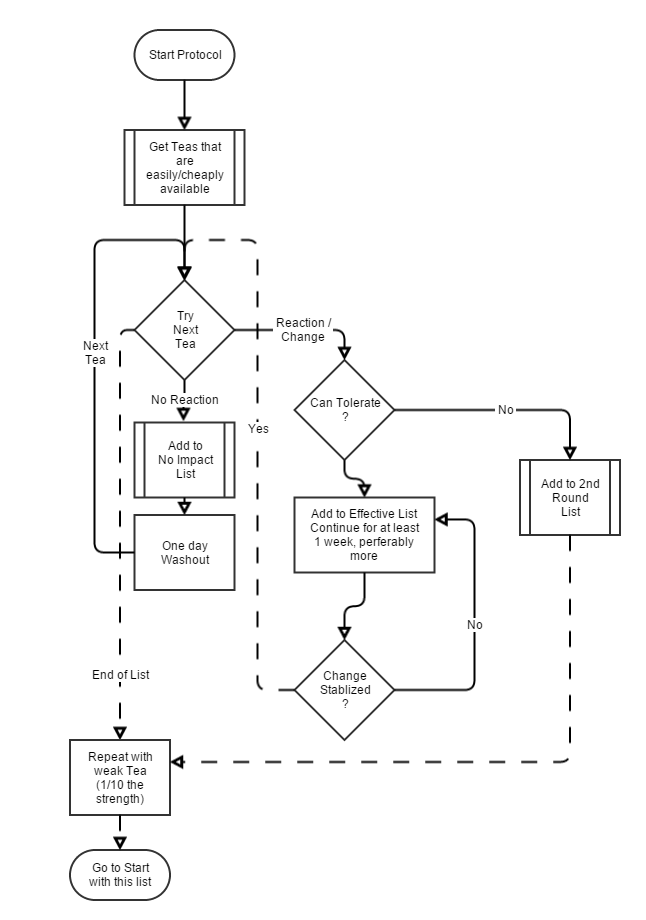
The suggested flow is shown below:

lucy1

The best starting point may be those that are easily available as teas — because there is likely a reserve in the mouth. Assuming the fuzzy tongue is a symptom of the main infection, you would want a few days drinking a lot of one tea to see if it makes any difference (visual on the tongue or otherwise). Teas are effectively water based extracts. This should be done as a systematic trial and error — recording results. Do not try everything at once — it is slow and systematic, taking notes constantly.

  • If you react strongly — make notes oh how and then make a call to continue or not. The notes can become a detective game to identify what may be involved.
  • If you do not continue, we will try with lower dosages later.
  • If it works for the good and you continue, wait until it’s impact stabilizes and then try the next tea (while continuing this one). Alternatively, you could stop it, and move on to the next — there can be arguments favoring both approaches.

I know for myself, we have found many as teas in Indian, Chinese or Russian Groceries at very reasonable prices (assuming you don’t mind the packaging being in Polish, Russian or Hindi). Eastern European suppliers often have much lower costs that is reflected on shelf prices when being sold to immigrants from those countries.

Mouth infections – treatments

  • Honey(any type!) has had positive result in PubMed [2014][2014][2013]
  • Teas (see above)

The Reinforcements

The reinforcements are items that increase the effectiveness of anti-pathogen agents.

” Bacterial biofilms cause chronic infections because they show increased tolerance to antibiotics, desinfective  chemicals and resist phagocytosis and other components of the defense system of the  body” [2009]

A few human bacteria that uses biofilms [2005] include:

  • Acidogenic Gram-positive cocci (Streptococc us sp.)
  • Gram-negative anaerobic bacteria
  • Non-typeable Haemophilus influenzae
  • Pseudomonas aeruginosa, Burkholderia cepacia Endocarditis
  • Viridans group streptococci, staphylococci
  • Group A streptococci
  • Gram-positive cocci
  • Enteric bacteria
  • Gram-negative rods Bacterial prostatitis Escherichia coli and other Gram-negative bacteria

In short, you should assume that biofilms is a major defense mechanism and make sure you are taking supplements to break them down.


Treatment: Where do I go from Here #1

A new reader emailed me and provided a very detailed medical history and asked for suggestions. The reader knows that the issue is in the gut very well, is well educated in health issues and have seen several of the leading medical authorities. Almost all treatments failed to have any positive results.

Reader Beware

Before I go through my analysis of the information and make proposals to discuss with their health professionals. I should clarify that I am not a MD, nor a health professional. My current job title is Principal Software Engineer for a rapidly growing company that has received over $140 million in venture capital over the last year or so. In the past I have held Senior software positions for both Amazon and Microsoft; I get regular ongoing contact from Google HR to join their team (which would be a trifecta for my curriculum vitae). I was in a gifted child program and started to read medical journals at 14 yo, My Master of Science in Commerce topic was actually analysis of treatment effectiveness for different conditions by emergency service My particular strengths are:

  • Modelling systems, especially reduction of complexities to get to a reduced core model. I need to do this often when triaging problems with software systems, I have recycled that skill looking at auto-immune issues.
  • Not getting overwhelmed by complexities – if anything, I like to work with “rich-complex issues”
  • A systematic logical, disciplined mind — expected from doing a Honors Mathematics undergrad program. Nit-picking is a trait, which can be good or bad (depending on the people that you are working with).

And yes, I have had Chronic Fatigue Syndrome three times and recovered each time. I know and remember the helplessness of having a condition with no known effective treatment. Today, I have a working model that appears to be effective for me, I am in remission and believe that I can stay there by minimizing the risk of relapse be selected probiotics, herbs and prioritizing the appropriate lifestyle and life-decisions.  It is not a matter of what I want to do, but what is good for me.

A special class of CFS Patients

With the model of CFS being rooted in a gut bacteria dysfunction, there are thee main paths that could result:

  • The dysfunction auto-corrects (about 5% of patients at 6 months, 4% of the reminder in the next 6 months, with decreasing odds onward)
  • The dysfunction become stable and the patient stays in a stable pattern that waxes and wanes
  • The dysfunction increases, perhaps ending with a diagnosis of Crohn’s or other inflammatory bowel diseases. Typically once those diagnosis are made, the patient no longer qualifies for a CFS diagnosis.

This reader is in this latter class that has seen continuous deterioration over the years. It is dealing with these out of control microbiome that this and subsequent posts are looking at. These suggests are unproven, they are suggestions arising out of my model that I am look at.

Short Summary of Significant Factors for Patient “M”(IMHO)

Skipping over the common symptoms and focusing on the more unusual ones:

  • Three Stool/Fecal Transplants — first one “worked” but only for a few weeks, subsequent transplants did not
  • Distinguished list of world-class CFS specialists seen, and recommendations followed
  • Have gone to the most severe form of CFS, effectively bed-ridden
  • “furry tongue” – “was very much a feature of my symptoms when i had fairly severe gut problems aged 16-19”

The classic starting point is always the simplest model that explains most of the history.

Preliminary Analysis

What appears to bubble up as a model from my analysis is that there is a reserve of the bad bacteria is in the mouth, or between the mouth and the stomach.  This is consistent with re-population of evil-bacteria after a fecal transplant, and the logical flow: bacteria move from the mouth to the gut and not the reverse.

There could be two things happening : the mouth bacteria issue may be independent and simply thrive on the chemicals that the gut bacteria pumps into the system. Keeping to the simplest model, we will assume the mouth bacteria has repeatedly recolonized the gut [Reference]

Furry Tongue is associated with constipation according to WebMd. High numbers of staphylococcus and streptococcus was found on “M” before the first fecal transplant and different analysis at different time produced different results. Recent studies have found a high variability of populations of a person microbiome according to the time of day — the assumption of the population being stable over days may be incorrect.

Logical Course

Postulate: The root cause is bacteria in the mouth, with staphylococcus and streptococcus being significant contributors/support for other evil bacteria. The reader may have to address both gut bacteria and mouth bacteria. In an earlier post, I raised the issue that for some people there may be a significant reserve of evil bacteria in the mouth and/or sinus region. This should be assumed here.

Attacking the reserves

There are two ways of fighting the evil bacteria:

  • killing them off by herbs, antibiotics, etc
  • displacing them with healthy bacteria

The preferred sequence appears to be kill and then re-settle with healthy bacteria when dealing with major dysfunctions of gut bacteria. The evil bacteria should be assumed to be “thugs” and the good bacteria being very polite and civilized. A heavy hand seems like the best course.

Reducing the Reserve

The ideal situation would be herbs, spices, teas that can be kept in the mouth for a while. There are a number of them that are known to be effective, including (listed according to my preference):

  • Tulsi
  • Haritaki
  • Neem
  • Tumeric [2013]
  • Ashwangandha

There are some 60+ articles available on Pub Med for herbs and staphylococcus,  and just 19 articles for herbs and streptococcus. Many of the herbs are used in traditional Asian medicine and may be easy to obtain in locations with large Asian populations (and a challenge elsewhere).

Making teas or heated drinks of the above may take a little creativity. If the source is coarse enough, teas may be easy to make (or ready as tea bags – unfortunately, often at a much higher cost), or by boiling (effectively making a water extract) and then pouring thru a paper coffee filter.

An old “medicine” Licorice

As I am writing this, I am dealing with a sore throat and sucking away of Spezzata, a form of licorice. It seems to be a natural suggestion here, as this early post describes its action.This form is slowly dissolved in the mouth and thus saturates it.

Another old “medicine” Altoids

Altoids second ingredient is acacia gum a.k.a  gum arabic (right after the sugar 😦 ). This is very much in agreement with it’s intent in 1780, by Smith Kendon, founder of Smith & Co., developed an exceptionally strong lozenge known as Altoids® mints, originally marketed to relieve intestinal discomfort, let alone a remedy for bad breath. Almost none of the newer equivalent products have gum arabic in it.

  • “The action of acacia gum against suspected periodontal pathogens and their enzymes suggests that it may be of clinical value.”[1993]
  • “Ten grams of gum arabic may produce a prebiotic effect in humans by boosting gut populations of specific bacteria”[2008]

On the down side, the EU Study group deem any impact has not been proven sufficiently[2002]. For a more recent review see this [2009] review.

Oral Probiotics

There are now available an increasing number of oral probiotics

  • Now Foods OralBiotic on Amazon (60 capsule for $14) – Streptococcus salivarius BLIS K12
  • Oragenics Evora Plus Probiotic on Amazon (30 mints for $16) – Streptococcus oralis, Streptococcus uberis, and Streptococcus rattus
  • Swanson Oral Probiotic: Blis K12® S. salivarius, L. rhamnosus, L. plantarum, L. reuteri, L. paracasei, L. salivarius
    • This one was a delight to find because it contains L.Reuteri which is hard to find in a probiotic. This one looks the most promising of all of the Oral Probiotics.

In terms of species available in these, they include:

  • Streptococcus salivarius BLIS K12
  • Streptococcus oralis
  • Streptococcus uberis
  • Streptococcus rattus
  • Streptococcus salivarius
  • Lactobacilus. rhamnosus,
  • Lactobacilus plantarum,
  • Lactobacilus reuteri,
  • Lactobacilus paracasei,
  • Lactobacilus salivarius

Taking the Herbs

The longer that the spices are in the mouth, the more bacteria should be reduced. There is a gotcha, the bacteria defends itself with biofilms so doing an oral mouth rinse of biofilm breakers such as EDTA and NAC should be part of the treatment(See this earlier post). Since these are both consumable, they could be added to teas described below (assuming the taste is not too bad!). Some teas are know to be effective (Ginger and Tulsi teas I like,  Garlic tea would be an experience!)

  • Ginger tea and Garlic tea – based on [2015] results for mouth bacteria.
  • Tulsi tea – demonstrated as an effective mouth wash [2014], and appear very effective [2014] [2011]

The above is intended to reduce the reserves, the items below can/should also be taken as capsules to address the gut bacteria.

Cost Savings

I usually advocate buying herbs such as Tulsi, Neem, Haritaki, Turmeric in bulk (typically $10-$20/lb) and making your own capsules. It is one way you can get certified organic supplements 🙂 at a very reasonable cost . The cost difference per capsule can be as high as 20x — which makes a huge difference for the budget.

In the above case, one could follow a similar pattern (instead of buying tea bags):

  • If the grind/herb is coarse enough, make tea in the old, pre-tea-bag method.
  • If the grind is too fine – consider getting coffee filters or reusable tea bags [Example, Amazon.Uk]

Is it working?

This is always the greatest challenge with any supplement — how to determine if it is effective, especially when it has a slow mechanism of action. For example, Vitamin D supplements may have no noticeable effects for months. We could hope to see a change of the fuzzy tongue. perhaps by taking “selfies” of the tongue daily (ideally with the same light conditions).

Bottom Line

Whether the mouth is really the reserve or not is immaterial with the targeting of the mouth above — whatever goes into the mouth, ends up in the gut! In my next post, I will explore a much more aggressive approach — taking off the boxing gloves of assuming only a CFS style of bacteria shift.