ME/CFS Patient – First Microbiome Sample

The Ask

I’ve been reading the cfsremission.com site for a few years now and respect and appreciate your work very much! Today I received results from my first test with Biomesight and have uploaded to microbiomeprescription.com, however I’m struggling to know where to go from here.

It looks like I have high F. prausnitzii which goes against some of the CFS research. I can also see zero E. coli (I think) and low bifidobacteria/lactobacillus, but not sure there are strep/staph/klebsiella/other pathogens which I was expecting to see, owing to my issues with histamine/bloating, am I correct?

I’m reluctant to go ahead with taking herbal antimicrobials as I’m not sure exactly what I should be trying to kill off. The suggestions that come up mostly seem to be fibres/prebiotics which I haven’t typically responded well to in the past (worsened bloating and oily skin).

My backstory:

My issues started with the persistent abdominal bloating and sneezing/nasal congestion about 5 years ago. The bloating never goes away, and now I’ve progressed into a state of moderate but unrelenting fatigue, muscle pain and inflammatory issues (dry eyes, etc.), made worse by COVID and then the Pfizer jab last year which pushed my ’steady state’ in terms of energy to a lower level than it ever has been. I know that the root cause of this all is my gut. For example, I can eat regular yoghurt and the next day I will wake up with a back ache, 50% more tiredness and very sneezy. I did test positive for SIBO around 3 years ago but multiple rounds of rifaximin did nothing to help, neither did herbal antimicrobials. The bloating seems to be inflammatory/mast cell related rather than actual gas.

Symptoms:

  • – Crushing fatigue/muscle weakness/PEM (do not have a CFS diagnosis but the symptoms fit)
  • – General inflammation/muscle pain
  • – Freezing cold hands/feet all the time
  • – Sneezing/nasal congestion/itchy throat especially after histamine containing foods
  • – Persistant abdominal bloating which never goes away 
  • – Brain fog
  • – Acne/very oily skin
  • – Dry eyes

For other analysis of the microbiome of people with ME/CFS, see this index.

First Questions Researched

Low Faecalibacterium prausnitzii is seen in several studies for ME/CFS. This person’s level is at a huge 23.7% of the microbiome — the 93%ile. However, for ME/CFS sibling (Long COVID) we have two studies reporting high levels for Long COVID (with 4 reporting Low) and three for COVID being high and one being low. In other words — atypical levels are to be expected. Note that he had COVID and then the Pfizer jab – so Long COVID is likely a better diagnosis than ME/CFS (at this point). The two tend to merge over time.

Usual Analysis Approach

The percentile x percentage breakdown shows the typical pattern for ME/CFS and Long COVID: Over representation on the low percentiles and under representation of the high percentiles.

PercentileGenusSpecies
0 – 92122
10 – 192225
20 – 291822
30 – 391718
40 – 49919
50 – 591623
60 – 691214
70 – 791016
80 – 8997
90 – 9959

The likely causes suggested are: Faecalibacterium prausnitziiPhocaeicola coprocola and Bacteroides stercoris. The top one was already flagged by the reader.

Going over to Dr. Jason Hawrelak Recommendations, we see a lot out of range.

TaxonomyRankLowHighYour ValueStatus
Bacteroidiaclass03537.029Not Ideal
Akkermansiagenus130.003Not Ideal
Bacteroidesgenus02033.827Not Ideal
Bifidobacteriumgenus2.550.349Not Ideal
Blautiagenus5104.049Not Ideal
Desulfovibriogenus00.250.002Ideal
Eubacteriumgenus0150Ideal
Lactobacillusgenus0.0110.002Not Ideal
Methanobrevibactergenus0.00010.020Not Ideal
Roseburiagenus5102.658Not Ideal
Ruminococcusgenus0158.32Ideal
Proteobacteriaphylum043.705Ideal
Bilophila wadsworthiaspecies00.250.265Not Ideal
Escherichia colispecies00.010Ideal
Faecalibacterium prausnitziispecies101523.71Not Ideal
Overall Percentile Ranking56.5% 

Looking at PubMed matches we see that he is somewhere between these two siblings

  • Long COVID   (45 %ile) 10 of 204
  • COVID-19   (18 %ile) 3 of 118
  • Chronic Fatigue Syndrome   (66 %ile) 4 of 64

Going Forward

He wrote “For example, I can eat regular yoghurt and the next day I will wake up with a back ache, 50% more tiredness and very sneezy. ” Most yogurt contains large amount lactobacillus acidophilus (probiotics) which is high on his to avoid list. In general lactobacillus should be avoided with brain fog because many species produces d-lactic acid (See my 2019 post Reminder of D-Lactic acidosis and ME/CFS – which contains the name of bacteria that may contribute to the issue). If you cannot find a yogurt free of these bacteria, you may wish to give yogurt up. I would suggest the following probiotics as likely being good choices:

He wrote ” multiple rounds of rifaximin did nothing to help, neither did herbal antimicrobials.” Well, that antibiotic is a negative, and like the lactobacillus yogurt above is likely to contribute to the microbiome issues. He did not specify the herbs that he tried.

-75.8rifaximin (antibiotic)s

Typical herbs used for SIBO [Src] are below. Having no results (or negative results) is not surprising.

  • Allicin – positive
  • Oregano – positive
  • Neem – negative
  • Berberine –  negative
  • Peppermint – negative

The top herbs suggested

He wrote “The suggestions that come up mostly seem to be fibres/prebiotics which I haven’t typically responded well to in the past (worsened bloating and oily skin).’ We see that almost all of the prebiotics are below 100 priority (item #170), so they would not make it into my preferred list (I prefer to keep to the to 100 or less). 25% of these are actually below a -200 priority. We also see low fiber diet is high priority. So his experience and the computations are in agreement

Other Items

In terms of common antibiotics for ME/CFS, near the top we see metronidazole (see this 2017 post) and erythromycin (See Azithromycin in Chronic Fatigue Syndrome (CFS), an analysis of clinical data [2006], where 58% improved). If you can persuade your MD to prescribe.

Supplements of note: Taxifolin (See 2021 post dealing with histamine), glutamine (The Role of Glutamine in the Aetiology of the Chronic Fatigue Syndrome [2011] ). Nothing in the flavonoids, polyphenols list stand out. In terms of prefer sugars: chitosan,(sugar),sucraloseraffinose(sugar beet) – most sugars are marginal or negatives. In terms of Vitamins: Iron and magnesium.

Bottom Line

In my years of reviewing literature on ME/CFS, the typical results are similar to the Azithromycin study above: it works for X% of the people and has no or negative effect for the rest. It is my hypothesis/belief that the microbiome determines if a substance works or not.

Above, you see my preferred approach — look at the top 5-10% of suggestions and then cross reference the literature to see which are known to help some. The alternative of working from studies (without reviewing the microbiome) has failed to produce consistent positive results over the decades that it has been tried. The other key item is to look at the bottom 20% of suggestions and eliminate as many of them that you can.

For “Just give me suggestions”, I prefer the priority to be over 150 if possible for takes, and below 0 for avoids.

Remember this is a multiple path journey. Keep on the suggestions for 6-12 weeks and then retest. The suggestions may shift a bit with each course correction.

Postscript – and Reminder

I am not a licensed medical professional and there are strict laws where I live about “appearing to practice medicine”.  I am safe when it is “academic models” and I keep to the language of science, especially statistics. I am not safe when the explanations have possible overtones of advising a patient instead of presenting data to be evaluated by a medical professional before implementing.

I cannot tell people what they should take or not take. I can inform people items that have better odds of improving their microbiome as a results on numeric calculations. I am a trained experienced statistician with appropriate degrees and professional memberships. All suggestions should be reviewed by your medical professional before starting.

The answers above describe my logic and thinking and is not intended to give advice to this person or any one. Always review with your knowledgeable medical professional.
Sudden Illness Triggered ME/CFS

For more Analysis Posts on Long COVID and ME/CFS click here.

Back Story

I’m male, 5’ 10”, currently 145 lbs, 60 years old. I first became ill suddenly in 1987, with what at the time seemed to be food poisoning or a stomach bug. The nausea, stomach upset and loss of appetite lasted months after, I became bedridden. Dozens of tests, doctors, revealed nothing.

Gradually over time, the symptoms subsided and I began to eat and gain weight again. After about a year and a half, I became functional, but never recovered to my previous state. This has been the course of life since. The symptoms would reoccur, last several months, then subside. With no definitive cause for beginning, nor treatment for ending.

The ongoing fatigue over the years was relentless. I somehow managed to complete a 30 year carrier, and took retirement at first opportunity. Doctors speculated that my work was a stress factor responsible for my condition, and retirement would solve it. It didn’t.

For the past several years, I’m mostly housebound, able to go outside and do minor tasks on occasion. Currently, my worst of symptoms are LPR/ reflux related. Not in the traditional sense, mine is a gas/ aero, that I believe is being caused by severe dysbiosis/ imbalance.

I cite this study as an example,

Accompanied with voice loss, throat and chest pain, severe at times.

A recent endoscopy showed “mild gastritis”. Doctors offer me benzodiazepines and antidepressants, stating my symptoms do not correlate with their findings.

Previous endoscopes/ colonoscopies were unremarkable. Gastric empty test normal.

I have tested negative for SIBO several times. IBS Smart test, h pylori, celiac, mast cell (MCAS), all negative.

Numerous diets, eliminations, supplements, herbs, prescribed medications have brought no help or relief. Most have made symptoms worse.

I did manage to have a biopsy taken and sent to Dr John Chia, to test for entero virus. It came back highly positive, however, I am somewhat skeptical that it could be a red herring. My vague attempts with pre/ probiotics resulted with increased gas and/ or diarrhea.

One clue, on two occasions (1995, 2014) after having colonoscopy, I mysteriously had remissions afterwards, that lasted several months. The speculation, is that the prep somehow created a reset of bacteria/ flora. I recently tried to replicate, by doing a prep cleanse. However, despite drinking a full gallon plus, I ran out of solution before being completely cleared out. I felt a brief improvement, but have suffered with horrid lower gas/ flatulence since.

Not the result I was after.

Initial Comments on Back Story

For myself, stress was the trigger of each of my ME/CFS episode so the speculation by his MDs was reasonable. The 1987 event, and the resulting cascade of the microbiome is the root concern. The microbiome evolves, just like society evolves. In 1987, most homes had a VCR and a few lucky people had digital pagers. Today, very few have VCRs (in use) and almost every one has a smart cellular phone. In 2023, arguing whether the right choice should be BetaMax or VHS has become irrelevant. Similarly, focusing on the cause in 1987 is really irrelevant. It may have been a virus, Lyme disease or a dozen other culprits – it is very unlikely to be relevant to addressing today’s microbiome.

Analysis

Looking at the distribution by frequency, we see an over-population of bacteria with low levels.

The Bacteria over 90% and Bacteria under 10% are a simple statistic to understand. If you have 188 different genus and true randomness then you would expect around 19 in each group. We has 12 over 90%, close, but a whopping 61 under 10% — that 32% of all bacteria, not 10%!!! In other words, we have a massive number of different bacteria at low levels. It is not a problem of a few bacteria being too high.

PercentileGenusSpecies
0 – 96176
10 – 192016
20 – 291416
30 – 3998
40 – 491520
50 – 591414
60 – 691620
70 – 791022
80 – 891722
90 – 1001221

Looking at Dr. Jason Hawrelak Recommendations for levels, he was at the 99.7%ile and the very few misses for being ideal.. they were border line.. (i.e. 15.1 versus 15; 0 versus 0.0001). In short, almost an ideal microbiome by that criteria.

Going Forward

Doing the usual 3 suggestions sets, we

The list of top suggestions look very close to what I was taking for my own remission (pre-microbiome analysis days).

  • rosmarinus officinalis (rosemary)
  • thyme (thymol, thyme oil)
  • peppermint (spice, oil)
  • lactobacillus paracasei (probiotics)
  • lemongrass oil
  • Human milk oligosaccharides (prebiotic, Holigos, Stachyose)
  • neem
  • syzygium aromaticum (clove)
  • Sumac(Rhus coriaria)
  • cinnamon (oil. spice)
  • Ajwain (trachyspermum ammi)
  • Curcumin
  • lactobacillus casei (probiotics)
  • thiamine hydrochloride (vitamin B1)
  • aloe vera
  • ashwagandha (withania somnifera)
  • garlic (allium sativum)
  • olea europaea (olive leaf)

Looking at the to-avoid

  • vsl#3 (probiotics)
  • walnuts
  • lactulose
  • amaranth
  • barley, oat
  • arabinoxylan oligosaccharides (prebiotic)
  • fish oil
  • saccharomyces cerevisiae (probiotics)
  • low protein diet : typically seen when B-vitamins are wanted.

The full details are below

foodPoison_ConsensusDownload

SimpleSuggestionsFoodPoisson-Download

Going over to the Food Site we see:

  • Chicken and Turkey Liver being at the top of the list
mg per 100 gramsSignificant amountNutrient
25800SignificantProtein
13.925SignificantNiacin
12.9SignificantIron, Fe
4.293SignificantRetinol
2.313SignificantRiboflavin
0.84SignificantPyridoxine (Vitamin B6
0.56SignificantFolic acid
0.02113SignificantVitamin B-12

The key nutrient components typically from Livers

Pass 2 — Looking at Prescription items

One non-prescription showed up near the top, an item that I have used with good effect: monolaurin. The top antibiotics list include:

The above have various risks, and should be review carefully. My own preferences would be minocycline first, then hyoscyamine [because IBS is a factor for this patient]. I should note that using a different algorithm without consensus (Special Reports for your MDs) reports contrary results.

Feedback on Antibiotics

Another freak incident that resulted in a five month remission. In 2011, I had one tonsil that became huge. The other remained completely normal. Doctors were suspect of cancer, and both were removed. Thankfully, it was not cancer. So they didn’t look any further to determine the cause.

But at 49 year old, this was no picnic. Rough surgery and recovery, but it followed with probably the most significant remission of all. It was an amazing turn around, all symptoms backed off, energy returned to nearly normal. After 5 months though, symptoms began to return, and within the year I was back to my previous state

I was on amoxicillin for several weeks after the surgery. When the symptoms began to return, we became suspect that it was the amoxicillin that had done something. My doctor put me back on it, but there was no improvement. Whatever had taken place, was a random-chance occurrence. Maybe the amoxicillin was responsible, by creating a shift in bacteria balance.

I found that Cecil Jadin’s protocol is what I tend to advocate. One of the key reason is that it was it was tuned from many years of clinical experience at the Pasteur Institute for Tropical Medicine for what they termed as an “Occult Rickettsia” infection. The basis of it is rotating different families of antibiotics. The mathematics are simple — first round may eliminate 90% of the issues with 10% being resistant. A different antibiotic usually require a different type of resistance, so 90% of the remaining 10% is eliminated.. leaving just 1%. Doing a third round, takes us down to 0.1%

I speculate that the few survivors from your first round of amoxicillin slowly rebuild . Because these bacteria were the survivors, those with resistance genes. The repopulated gut was largely resistant, hence no effect from this antibiotic later. Think of it as a boxing match. You landed a good punch — but instead of landing more punches, the opponent was able to recover and block the same punch later.

Later, discussion of this story with a well-meaning gastrologist, he had me do a week of xifaxan. He felt certain, based on my story, it would get me back to the previous gains. It made me horrid sick, lasting for weeks after stopping it. There was no improvement.

My preference is not to pick antibiotics by symptoms (or what worked for the prior patient), but from the bacteria results that are desired. Results are not guaranteed — rather, IMHO this approach has higher probability of being successful.

Looking at Probiotics

First, using KEGG data: as is typical for most ME/CFS people (and consistent with the ME/CFS conference reports from 1998): Escherichia coli (Symbioflor-2 or Mutaflor). The next common one is Bacillus subtilis (natto), Clostridium butyricumLacticaseibacillus caseiEnterococcus faecalis.

From the consensus list we see a good overlap and have in order:

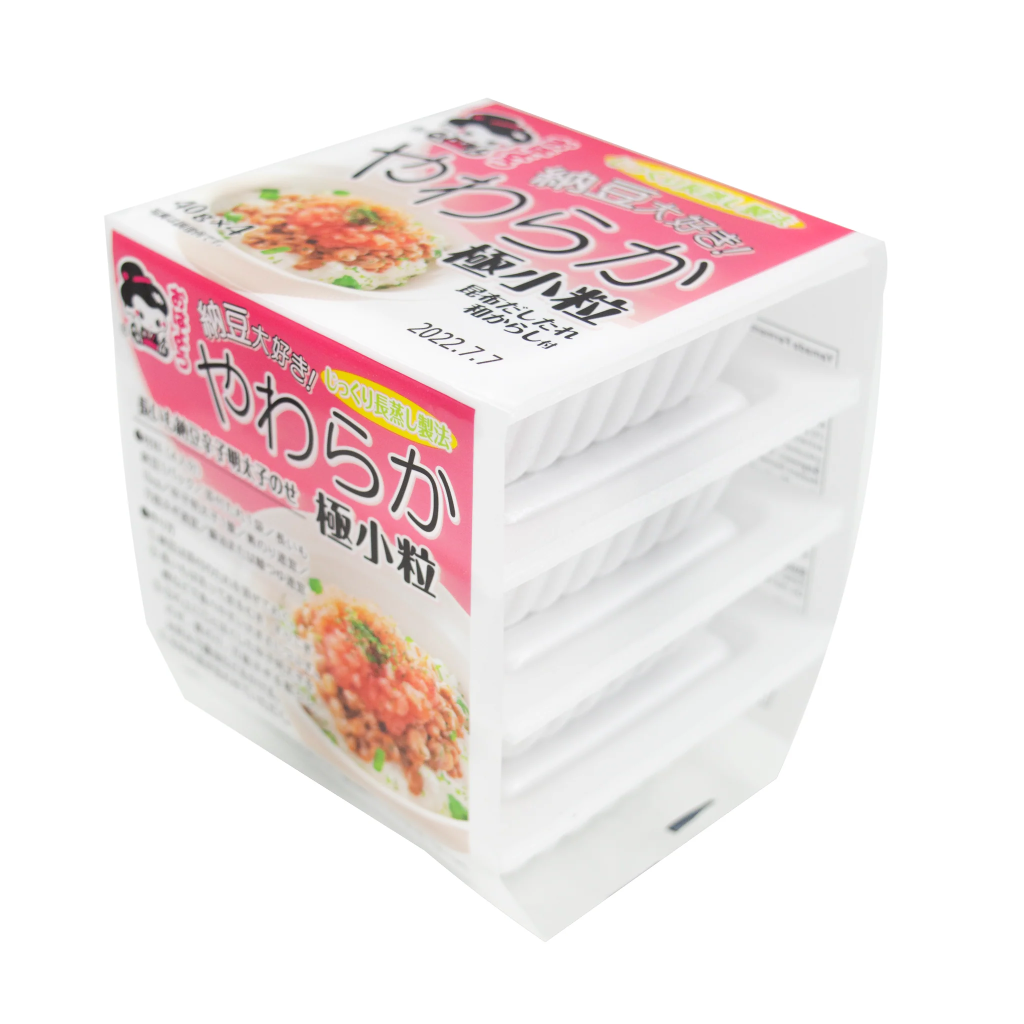
bacillus subtilis natto is the source for a supplement called nattokinase, which dissolves fibrin deposits and also an anti-inflammatory [2021]. It is also available not as a probiotic, but in a Japanese Dessert Food called Natto. Natto is an acquired taste.

Natto: Available in some Japanese groceries stores

My probiotic suggestions would be the following (at sufficient dosage, see this page):

  • 2 weeks of Bacillus subtilis (perhaps 10 BCFU daily)
  • 2 weeks of lactobacillus casei (perhaps 48 BCFU daily)
  • 2 weeks of one of the E.Coli probiotics (Mutaflor: 4 capsules per day, starting at 1 and slowly increasing)

Then repeat. Note that some probiotics are strong avoid, for example: saccharomyces cerevisiae saccharomyces boulardii.

Taking Herbs

There are a large number of herbs cited above. In keeping with my philosophy of avoiding resistance, take some of herbs for 2 weeks and then change to others herbs for the next two weeks. The question is how to take it? I know that some will claim that tinctures are more effective; IMHO, tinctures are very effective for reducing back accounts!

My personal practice is to take herbs in one of two ways:

  • Buying them in bulk, organic and making our own 000 capsules. Most store purchased herb capsules do not appear to be organic, often with additional ingredients “to make them better” – which is often marketing hype.
    • We take them immediately prior to meals so that the stomach acid produced to handle the meal, also dissolves the active ingredients from the herbs.
  • Taking them as a hot tea. Some herbs are horrible tasting… those tend to end up as capsules.

Many, but not all, herbs have documented dosages with links to studies (which can be informative for how to take). For example: Neem: 120 mg/day, Olive Leaf: 700 mg/day, Curcumin: 3 gm/day. My general rule of thumb is one 000 capsule with each meal.

Questions

Q: Curious to know, do you think there may be an advantage of using this method with probiotics, to deliver past the stomach, farther down the gut?

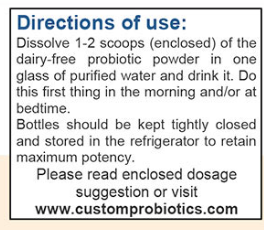
A: I know this common belief, but have not seen any clinical studies demonstrating it. What I have seen is probiotics delivered as a liquid in water, are documented to persist for weeks after a single dose. That is, the specific strain delivered was not detected before but was detected in subsequent weeks. This indicates that this belief is very questionable. Personally, I tend to use single documented strains of probiotics from Custom Probiotics and follow their directions. I do keep food at least a hour away from taking probiotics so stomach acid production will be quiet.

https://www.customprobiotics.com/l-casei-probiotic-powder.html

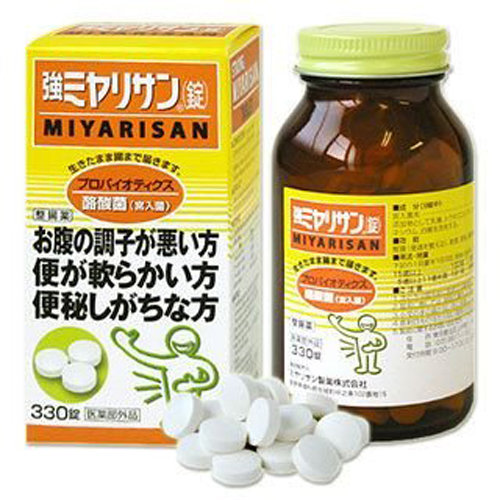
On a related issue, remember that the gut is downstream from the mouth and nasal passages. The source of bad bacteria may be there and may account for repopulation over time. One probiotic that has been shown effective for the nasal passages etc is Symbioflor-1. There are a few hard tablet probiotics out there (for example, Miyarisan — Clostridium butyricum). I have often just put them in my mouth and let them dissolve there.

NOTE: I will be doing a follow up post on The oral microbiome, coming soon!

8 Pathways to get ME/CFS

The Dice of Health – A game of craps

My uber focus for the last few years has been on the microbiome. The reasons are simple: relatively rich amount of data to work from, detail tests can be done without a Physician’s Order, and treatment can often be done without a prescription.

In no way am I saying that the microbiome is the complete picture. It is simply the easiest to doddle in.

The analogy of a dice is good to get the entire picture. Actually two dice … because often you feel like crap as a result of a roll of the die in the craps game of life.

Some Sides of The Die

The following are the sides that come quickly into mind, they are likely more

  1. SNP/DNA issues. Many conditions have associations with specific DNA mutations.
  2. Infections (Past or Present)
  3. Environment
  4. Minerals
  5. Vitamins
  6. Organic Acid and Other Metabolites
  7. Microbiome
  8. Epigenetics

Chances are that a condition will develop when two (or more) die are rolled with bad values

Worked Example

I am using Chronic Fatigue Syndrome (CFS) / Myalgic Encephalomyelitis (ME) because I am most familar with the existing literature. The same can be done for many other conditions – for example Autism.

SNP/DNA for ME/CFS

A few examples of findings

Infections (Current or Past)

Side Note: Many cancers are associated with specific virial infections.

Environment

Minerals

This can be a function of environment, diet, water quality.

Vitamins

Organic Acid and Other Metabolites

Within this, stomach acid and pH is included.

Microbiome

A quick copy and paste. For many other conditions, see this page.

📓 Potential role of microbiome in Chronic Fatigue Syndrome/Myalgic Encephalomyelits (CFS/ME).
Scientific reports (Sci Rep ) Vol: 11 Issue 1 Pages: 7043
Pub: 2021 Mar 29 Epub: 2021 Mar 29 Authors Lupo GFD , Rocchetti G , Lucini L , Lorusso L , Manara E , Bertelli M , Puglisi E , Capelli E ,
Summary Html Article Publication
📓 Gut Microbiota Interventions With <i>Clostridium butyricum</i> and Norfloxacin Modulate Immune Response in Experimental Autoimmune Encephalomyelitis Mice.
Frontiers in immunology (Front Immunol ) Vol: 10 Issue Pages: 1662
Pub: 2019 Epub: 2019 Jul 23 Authors Chen H , Ma X , Liu Y , Ma L , Chen Z , Lin X , Si L , Ma X , Chen X ,
Summary Html Article Publication
📓 Correction to: Open-label pilot for treatment targeting gut dysbiosis in myalgic encephalomyelitis/chronic fatigue syndrome: neuropsychological symptoms and sex comparisons.
Journal of translational medicine (J Transl Med ) Vol: 16 Issue 1 Pages: 39
Pub: 2018 Feb 23 Epub: 2018 Feb 23 Authors Wallis A , Ball M , Butt H , Lewis DP , McKechnie S , Paull P , Jaa-Kwee A , Bruck D ,
Summary Html Article Publication
📓 Potential role of dengue virus, chikungunya virus and Zika virus in neurological diseases.
Memorias do Instituto Oswaldo Cruz (Mem Inst Oswaldo Cruz ) Vol: 113 Issue 11 Pages: e170538
Pub: 2018 Oct 29 Epub: 2018 Oct 29 Authors Vieira MADCES , Costa CHN , Linhares ADC , Borba AS , Henriques DF , Silva EVPD , Tavares FN , Batista FMA , Guimarães HCL , Martins LC , Monteiro TAF , Cruz ACR , Azevedo RDSDS , Vasconcelos PFDC ,
Summary Html Article Publication
📓 Human Gut-Derived Commensal Bacteria Suppress CNS Inflammatory and Demyelinating Disease.
Cell reports (Cell Rep ) Vol: 20 Issue 6 Pages: 1269-1277
Pub: 2017 Aug 8 Epub: Authors Mangalam A , Shahi SK , Luckey D , Karau M , Marietta E , Luo N , Choung RS , Ju J , Sompallae R , Gibson-Corley K , Patel R , Rodriguez M , David C , Taneja V , Murray J ,
Summary Html Article Publication
📓 Fecal metagenomic profiles in subgroups of patients with myalgic encephalomyelitis/chronic fatigue syndrome.
Microbiome (Microbiome ) Vol: 5 Issue 1 Pages: 44
Pub: 2017 Apr 26 Epub: 2017 Apr 26 Authors Nagy-Szakal D , Williams BL , Mishra N , Che X , Lee B , Bateman L , Klimas NG , Komaroff AL , Levine S , Montoya JG , Peterson DL , Ramanan D , Jain K , Eddy ML , Hornig M , Lipkin WI ,
Summary Html Article Publication
📓 A Pair of Identical Twins Discordant for Myalgic Encephalomyelitis/Chronic Fatigue Syndrome Differ in Physiological Parameters and Gut Microbiome Composition.
The American journal of case reports (Am J Case Rep ) Vol: 17 Issue Pages: 720-729
Pub: 2016 Oct 10 Epub: 2016 Oct 10 Authors Giloteaux L , Hanson MR , Keller BA ,
Summary Html Article
📓 Support for the Microgenderome: Associations in a Human Clinical Population.
Scientific reports (Sci Rep ) Vol: 6 Issue Pages: 19171
Pub: 2016 Jan 13 Epub: 2016 Jan 13 Authors Wallis A , Butt H , Ball M , Lewis DP , Bruck D ,
Summary Html Article Publication
📓 Chronic fatigue syndrome patients have alterations in their oral microbiome composition and function.
PloS one (PLoS One ) Vol: 13 Issue 9 Pages: e0203503
Pub: 2018 Epub: 2018 Sep 11 Authors Wang T , Yu L , Xu C , Pan K , Mo M , Duan M , Zhang Y , Xiong H ,
Summary Publication Publication
📓 Gut-associated lymphoid tissue, gut microbes and susceptibility to experimental autoimmune encephalomyelitis.
Beneficial microbes (Benef Microbes ) Vol: 7 Issue 3 Pages: 363-73
Pub: 2016 Jun Epub: 2016 Feb 3 Authors Stanisavljevic S , Lukic J , Momcilovic M , Miljkovic M , Jevtic B , Kojic M , Golic N , Mostarica Stojkovic M , Miljkovic D ,
Summary Publication Publication
📓 Increased d-lactic Acid intestinal bacteria in patients with chronic fatigue syndrome.
In vivo (Athens, Greece) (In Vivo ) Vol: 23 Issue 4 Pages: 621-8
Pub: 2009 Jul-Aug Epub: Authors Sheedy JR , Wettenhall RE , Scanlon D , Gooley PR , Lewis DP , McGregor N , Stapleton DI , Butt HL , DE Meirleir KL ,
Summary

Epigenetics

This is where an event, like stress, causes the behavior of DNA to change. Your DNA is the same, just a “switch” is turned on or off.

Going Forward with Treatment

My attitude is evidence based action with testable models. If you walk into a physician’s office, it is unlikely that they will be aware with the many sides of the dice. Usually, they want simple “follow the recipe book” cases where what to do is clear.

For myself, I had the luxury of unbelievable, unlimited, medical coverage for a few years. I found some of the DNA issues, and to quote a physician “You are extremely lucky with that mutation, it is very treatable” — I became a piracetam addict when needed. Most people do not have that luxury.

Looking at 8 items above, I ask the same question:

  • Is it objective measurable?
    • Can you get the test (willing MD, cost)
  • Is it treatable?
    • Do we have actual clinical studies showing treatment is effective?
      • Is the treatment just symptom relief or remission?
    • What are the risk of side-effects?

If getting information from a test is not clearly actionable, then it does not help with treatment and not worth the expense. Testing for testing sake is a luxury for the rich.

My Criteria in evaluating new proposed models.

Many people will advocate that just one of these 8 sides of the die needs to be done for a cure. IMHO, if the model does not address most of these factors, it is likely to work for only a few.

For me, the Microbiome model appears the best to use.

  • Microbiome tests are cheap and do not require a MD to be involved — Objective
  • We have hundreds of studies showing substances alters the microbiome
  • Risk of side-effects with non-prescription items is low
  • Using the free site, Microbiome Prescription, people can get their test results translated into a list of supplements/food/diet to take or avoid based on studies from the US National Library of Medicine.

And it is connected to the other factors above well.

  • Many of the organic acid and metabolites are produced by the microbiome. Thus correcting the microbiome is likely to resolve this I compute many of these using Kyoto Encyclopedia of Genes and Genomes data.
  • Vitamins and Mineral absorption is deeply influences by the microbiome too!

If you have DNA information, for example on your methylation, this impacts your microbiome and the reverse. Being tested for DNA SNPs that do not have effective treatment is a waste of money. The individual’s microbiome is greatly influenced by their DNA. They co-exist and co-operate. In some cases, the microbiome bacteria can produce anticoagulants and fibrinolytic which can counter some coagulation issues.

WARNING ON PEOPLE PROPOSING MODELS

Over the last 30 years, I have constantly seen people proposing this model or that model. Usually the model is focusing on a single aspect of one the die sides above. For ME/CFS, it was the search for an occult virus that was the root cause of this condition. This often comes out of a need to reduce to the simple in whatever specialty that the researcher or physician is trained in. The wages of over-specialization in modern medicine. Be wary of any model that does not offer a concrete explanation for all of the laboratory results in the literature. Often models will cherry-pick studies and ignore the majority of other studies, or do vague hand waving.

The cause is almost never just one of the above factors, but typically many.

Some Feedback from using Microbiome Prescription

Recently I have been getting several emails from people with status updates. I thought that I should share a few of them. I have not gotten any negative feedback (Are all of my readers Canadians who are too polite to complain?)

Also good news. I’ve managed to correct much of my microbiome. I’ve reversed the NIH gnavus ans prausnitzii signature that is very common in ME. My prausnitzii is now 21%! It was something like 0.2 two years ago.

And my lactobacillus and bifido are in the very bottom range of healthy for the first time in two years. Also three lactobacillus strains from vivomixx appeared on my 16s for the first time. Proving that even artificial probiotics can populate the gut albeit temporarily. 

I intend to continue and get another test in three months. While my physical symptoms have improved a lot my light sensitivity and brainfog are still not great to be honest and I have no idea why. Leaky gut can I think be ruled out becuass gnavus is so low and I barely react to eggs anymore (I’ve had issues with eggs since I was a kid). But I have some work to do still.

I really love the website and get a ton of use out of it.  I hope you stick with it and keep updating it and making it better.

Mold is what got me initially too.  Retrospectively.  When we moved to our new house is when my decline actually started.  And then when we redid our master bath, there was a bunch of mold, and I got real sick real fast.

In essence, I had all the triggers.  Every single one of these:

  1. Viral or bacterial exposure (listed in order of severity) – COVID and RSV
  2. Trauma – to intestines
  3. Food poisoning – Bacterial and fungal
  4. Prolonged Stress – Luxonis.com startup, I’m the founder
  5. Environmental Toxins – Mold in our MASTER BEDROOM

Oh forgot to mention I took lactobacillus Rhamnosus based my my research before I noticed your big red note to not take it and other lactobacillus because they block the impact of heparin.  I think that’s what really got me!

Haven’t pooped for 3 days since that mistake!  Before that pooped every day for 14. 

As an update, I’m nearly 5 weeks in and am beginning to feel better.  My energy levels are perhaps the best they’ve been in the last 5 years.  I’ve still got a very long way to go but the results thus far are promising!

I’m taking 5-7 foods/ supplements, 2-3X a day.  And every 2 weeks I’m rotating all of it to prevent antibiotic resistance.  In another month I plan to retest myself and make the necessary adjustments to my protocol.  

The other reason I’m writing is that a friend with similar fatigue issues and a histamine intolerance has just gotten tested and is joining my journey to recovery. 

Awesome backstory and progress for Very Severe Long COVID

This is an Awesome 2-part post on recovering from ME/CFS – Long COVID.

First part is several dozen pages on this person’s own high quality research
Long COVID: From last days to real hope…

Second part is an analysis of his microbiome
Once More, a Long COVID patient