A CFS Patient after 35 years

A reader asked me to review their microbiome and test results, for items to discuss with their medical professional. As always this is not advising what to do; suggestions should always be reviewed by your medical before implementing.

The Person

This woman developed CFS around Lake Tahoe in 1987. Lyme and Mold issues.

  • Adverse effects from:
  • Resulting in MD prescribed Iron supplements, resulting in
    • 23 lb gain (heaviest ever!) (fat gain)
    • High cortisol,
    • Insulin resistance,
    • Bloating
  • Antifungals and antibacterial herbs for the past 3 years for mold and Lyme. history of off and on antibiotics for Lyme and coinfections for decades etc.
  • Cytomegalovirus and Epstein Barr (common with ME/CFS)
  • Tried resistant starch(oatmeal and green banana) and my bad microbes tripled (unclear which ones were deemed bad)
  • Gluten-free for years
  • Food poisoning 5 years ago
  • Feels hypoxic (low oxygen to brain) – likely caused by Protein S deficiency that is part of the coagulation change (according to tests)
  • Genetic issues processing phenylene, leucine and lysine. And also oxalate issues

Markov Cascade Model

This chart shows how overtime the microbiome can recover or continue to cascade (evolve). It is not a one step change, it’s a series of changes over time caused by diet, treatment attempts, age etc. This is essential to understand why things change and that it is not a one-step recovery.
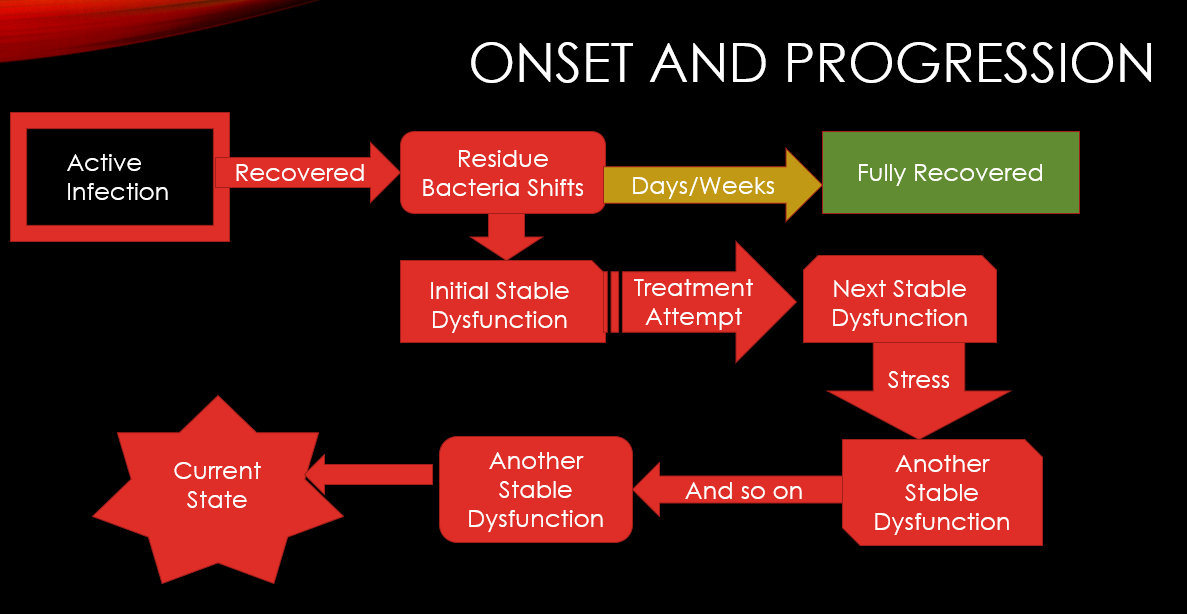
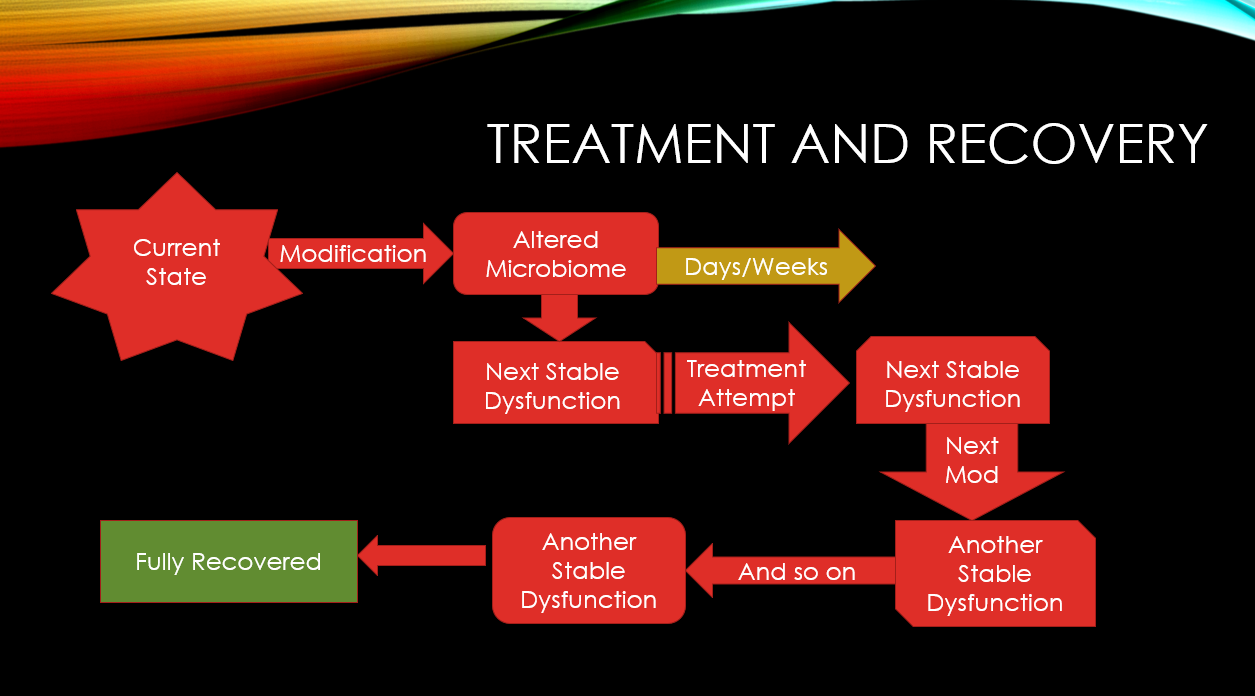
Over time, the stable dysfunction microbiome develops a unique evolution
Path to recovery can be many steps

The Samples

We have five samples from Dec 2020 until May 2021. Multiple samples is a short period of time allows the daily variation to be minimize. Due to age, we do not have to be concerned with time in cycle impacting her microbiome (a key factor for females doing comparison samples)

Initial Notes

Going to comparing multiple samples, I walked thru each of the outliers and jolt down concerns

There are a few more, but we should call out that one species of a genus(Blautia) is very high and another is very low.

  • Medical Condition (PubMed)
    • No matches – this may indicate that the person has moved outside of the typical ranges

Building Suggestions

The numbers for the recommendations are among the highest that I have seen!!! This implies taht a lot of enzymes are not being produced. I would suggest the three easiest to obtain for a start, single Species with research (as shown below with the Books emoji)

For dosages, start low and slowly increase to the common therapeutic dosages
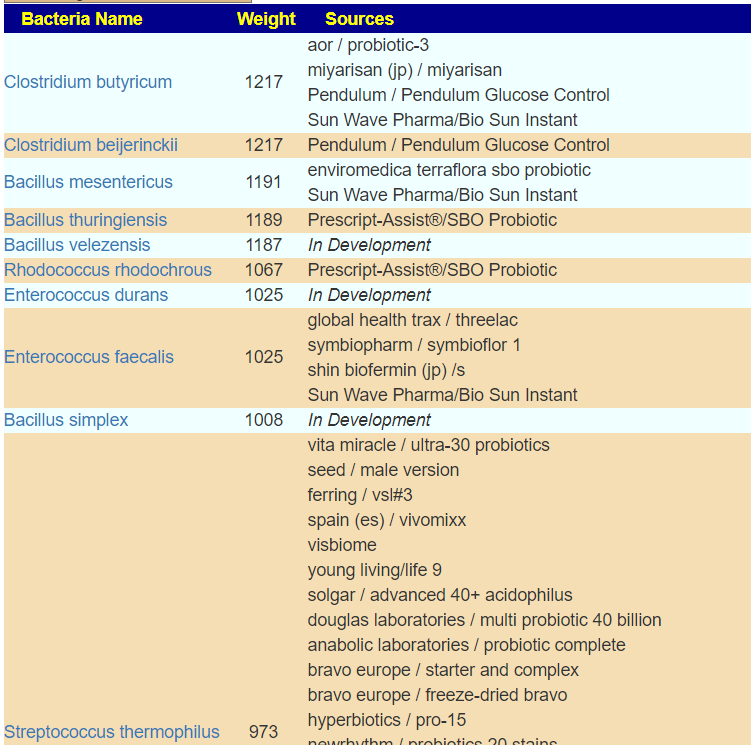
KEGG supplement list is long, even when reduced to just 3%ile

  • Amylase (Enzyme)
  • beta-alanine
  • D-Ribose
  • Glycine
  • L-Cysteine
  • L-glutamine
  • L-Histidine
  • L-Lysine
  • L-methionine
  • L-Serine
  • NADH
  • Selenocysteine

Prior to suggesting any of this list, i want to look at advance suggestions. The options that I picked

First, out of curiosity, given the experience with antibiotics, I looked at only antibiotics. Only a few of several hundred in the database made it on the possible list and at low confidence. The top 3 are often suggested with ME/CFS patients. the avoid list is massive. My impression is no antibiotics, but we need to confirm other paths are more probable to help.

I played with the other prescription options and the results were similar. So returning to the default suggestions we end up with an interesting list of do and don’ts

What makes it interesting is that a lot of to avoid are common suggestions from MDs treating ME/CFS with one-recipe fits all for ME/CFS. For example

  • Avoid all B-vitamins
  • No vitamin C
  • No Melatonin
  • No quercetin
  • Avoid Lactobacillus probiotics and likely bifidibacterium

The top item to avoid is luteolin. The foods that contain it are listed here and include celery seed, thyme, parsley, peppermint, rosemary and olives.

On the plus side I see my favorite ‘antibiotics herb’ being listed,   triphala. Changing the diet to resistant starches and away from high gluten food. Care must be taken to make sure you do not destroy the resistant starch as shown below:

Using Resistant Starch Content in Foods Commonly Consumed in the United States: A Narrative Review [2020], we see that Lima (butter) beans and Kidney beans should become part of your regular diet.

Antibiotics for Fusobacterium

The reader is interested in antibiotics for fusobacterium. I usually try to discourage single-bacteria focus because side-effects on other bacteria may make the person worse. Often this approach leads to frustrations because things “did not work“.

We start by looking at the antibiotics (this link) where we find 103 different antibiotics that reduces it. Just below this section of the page we also see the bacteria that encourages or discourage; for her latest sample, none of these appear to be in play.

Looking at the suggestions for antibiotics only, and turning all the 🔬 Show links to studies used for suggestions and setting the number of suggestions high, we see all antibiotics with probable positive impact, we end up with this list only.

We then click each  link to see what each suggestion actually modifies, on #2, we encounter success. It reduces this bacteria AND increases a different bacteria in the wrong direction (Pediococus is TOO high). This illustrates the challenge of being focused on one bacteria.

Remember that we balance good and bad impact — so remember to check each items

There is no option to model what will probably happen. My goal is to increase the probability of a suggestion being helpful. This is a decision that the medical professional needs to make (ideally after being made aware of side-effects).

Bottom Line

This person is not the usual pattern with pretty extreme shifts in the microbiome. My suggestion for a course of action to discuss with your medical professional would be

  • reduce/eliminate any supplements/drugs not listed above for a month
  • shift over to the diet style above, with the few probiotics suggested
  • start at a low dosage of Triphala (we buy it organic bulk and make our own capsules) and increase it slowly to at least 2 grams/day, ideally 8 grams/day [basis of dosages]

To me the key thing is to simplify the influences on the gut and allow it to stabilize and then proceed from there with changes followed by re-test and a new set of changes.

Piracetam – A Recap

I have often recommended Piracetam for cognitive issues. I have personally observed dramatic improvement within minutes in others, and observed it with myself. Unfortunately in the US it is not directly available because of FDA rulings (the same situation as for Mutaflor — E.Coli Nissle 1917 probiotic). Mutaflor is well documented (citations) with over 240 studies, and safely used in Europe for over a century — and works far better than any probiotic approved by the FDA.

Today, when I mentioned it, a facebook user wrote “Piracetam seems to come with warnings:” and linked to a JAMA article from 2019.

Our findings demonstrate that even after the FDA rejected an application to market piracetam as a new supplement ingredient,3 the drug was nevertheless introduced into the marketplace. Despite FDA warning letters,6 the products remain on the market. Until the law governing supplements is reformed such that products adulterated with drugs can be effectively removed from the market, clinicians should advise patients that supplements marketed as cognitive enhancers may contain prohibited drugs at supratherapeutic doses.

This was not a warning of the dangers of this substance — but a warning of the sale of a substance direct to retail as a supplement ignoring FDA rulings in some products (which seems like a very American attitude 🙂 )

Originally marketed by UCB Pharma in 1971, piracetam was the first nootropic drug to modulate cognitive function without causing sedation or stimulation 1. It is not approved for any medical or dietary use by the FDA. In the UK, piracetam is prescribed mainly for myoclonus, but is used off-label for other conditions such as learning difficulties in children, memory loss or other cognitive defects in the elderly, and sickle-cell vaso-occlusive crises 4. Evidence to support its use for many conditions is unclear.

Piracetam, DrugBank

What is known from studies

Checking PubMed, I found over 3700 studies on it! You do not get that volume of studies from something that does nothing. A few randome studies:

The JAMA was concerned about supratherapeutic doses, i.e. above 1500 mg. Going over to DrugBank Pharmacology resource we read


The cases of overdose with piracetam is rare. The highest reported overdose with piracetam was oral intake of 75g which was associated with diarrhea and abdominal pain; the signs were most likely related to the extreme high dose of sorbitol contained in the used formulation

Piracetam, DrugBank

Bottom Line

I suspect that the FDA ruling for piracetam is similar to that for Mutaflor. The decision was influenced by established american industries with a vested interest in selling their existing (ineffective often) products.

Long Covid IS Me/Cfs

This week’s New Scientist is focused on it. Unlike medical professionals which are renowned for telling dying patients “You will be alright”, science journal writers tend to call spades — tools to bury the dead.

New Scientist Default Image

“Long covid: We have ignored post-viral syndromes for too long”

Read more: https://www.newscientist.com/article/mg25033403-400-long-covid-we-have-ignored-post-viral-syndromes-for-too-long/#ixzz6z0JaBI1h

I have taken the liberty to copy their full leader section below.

IN JUNE last year, we first reported in detail on the “strange and debilitating” coronavirus symptoms that were crippling some people’s health for months after infection. Long covid, as we now know it, is indeed strange and mysterious in many ways, as we report on page 10.

But it isn’t surprising. Post-viral syndromes, which often involve extreme, lasting fatigue and other symptoms, are common after many infections. About 1 in 10 people infected with SARS-CoV-2 seem to get lasting symptoms, a similar proportion to those infected with Epstein-Barr virus, one of the most common human viruses. The SARS virus, another coronavirus, left as many as 30 per cent of survivors meeting diagnostic criteria for chronic fatigue syndrome, also known as CFS/ME, four years later.

Based on this knowledge, some doctors, scientists, and people who are already living with CFS/ME, have been warning of a tsunami of long-term debilitating symptoms at the hands of the new coronavirus since early in the pandemic.

“There are no treatments, in part due to a lack of investment in research into chronic fatigue”

Sadly, governments and health systems have taken too long to pay attention. England now has 83 long covid clinics, which are indispensable for some patients, but there is a notable absence in the rest of the UK (see “Inside the UK’s first long covid clinic: ‘It was life-changing”). Clinics are unable to cope with the number of cases and waiting lists run long. This is especially problematic because early action – such as resting rather than taking on too much physical activity – could expedite recovery. Also notable is the absence of public health campaigns on long covid, to reach those who don’t know what is wrong with them or what to do about it.

For now, there are no treatments, in part because we are decades behind where we could be due to a lack of interest and investment in researching post-viral syndromes and CFS/ME.

This must change, and we now need a similar effort for treatments of long covid and other post-viral syndromes that we have seen in the race for a vaccine. In the meantime, people with long covid symptoms must be taken seriously, and given the financial and social support they need to allow them to get better.


My own model is that post-viral syndrome are supported by a stable microbiome dysfunction. Whatever the mechanism is, it needs the altered metabolites mixture from this dysfunction to maintain the syndrome. Correct the microbiome and the severity of the syndrome will decrease, frequently disappear entirely.

Dihydroquercetin and mast cells/histamine issues

Dihydroquercetin (sold as Taxifolin) was suggested in a comment on Fisetin and praised that it worked better for the reader than other items, etc. A friend tried it, as to date, noticed a distinct improvement after just a few days — especially in not having histamine issues after a meal. It’s time to review and summarize what is known about it.

Taxifolin (3,5,7,3,4-pentahydroxy flavanone or dihydroquercetin) is a flavonoid commonly found in onion, milk thistle, French maritime pine bark and Douglas fir bark. It is also used in various commercial preparations like Legalon™, Pycnogenol®, and Venoruton®….
Modulated NF-κB activation Suppressed the NF-κB activation, protein kinase activation by C-Fos and mitogen, and reduced the expression of osteoclast-specific genes, including Trap, Cathepsin K, Mmp-9, Nfatc1, C-Fos and Rank
Inhibited the osteoclast differentiation induced by RANKL Suppressed the NF-κB signaling pathway and inhibited the osteoclastogenesis

Taxifolin (3,5,7,3,4-pentahydroxy flavanone or dihydroquercetin) is a flavonoid commonly found in onion, milk thistle, French maritime pine bark and Douglas fir bark. It is also used in various commercial preparations like Legalon™, Pycnogenol®, and Venoruton®….

An insight into the health-promoting effects of taxifolin (dihydroquercetin) [2019]

Now, for histamines we find “low concentrations of H2O2[Hydrogen Peroxide] appeared to augment … histamine release induced by anti-IgE…. Since taxifolin inhibited Hydrogen Peroxide generation but had little inhibitory effect
on histamine release indicates that H202 generation is not a prerequisite for anti-lgE-induced histamine release….By contrast, taxifolin caused a large inhibition of H202 formation but had a much smaller effect on histamine release. ” [1986].

Reading thru several studies [most from the 1980’s], we find that it was inactive against some forms of histamine release. I suspect that it dropped off the radar of people suffering with mast cell and histamine issues because of these studies (using older methodologies)

  • “There was a remarkable correspondence of inhibitory activity for each of these flavonoids against TF’A-, teleocidin-and aplysiatoxin-induced histamine release. Taxifolin was essentially inactive against each tumor promoter,” [1987]

However we also read “Dihydroquercetin in the capacity of antioxidant may be compared or exceeds many synthetic and natural antioxidants and, in particular, known bioflavonoids (quercetin) [1997]”

The status changed in a more recent study specific to mast cells and not generic histamine.

Taxifolin inhibited degranulation, generation of leukotriene C4 (LTC4), production of interlukin-6 (IL-6), and expression of cyclooxygenase-2 (COX-2) through blocking intracellular Ca2+ mobilization, phosphorylation of phospholipase Cγ (PLCγ) and mitogen-activated protein kinases (MAPKs), translocation of cytosolic phospholipase A2 (cPLA2) and 5-lipoxygenase (5-LO), and Akt/IKK/NF-κB pathway, in BMMC cells. 

Inhibitory effect of taxifolin on mast cell activation and mast cell-mediated allergic inflammatory response [2019]

An earlier study also point to too narrow a focus with these “no effect” studies

” Dihydroquercetin (taxifolin), previously considered as inactive, showed an interesting cromoglycate-like behaviour. [1985]”

What is this behavior??

“Cromoglicic acid — also referred to as cromolyn, cromoglycate, or cromoglicate — is traditionally described as a mast cell stabilizer, and is commonly marketed as the sodium salt sodium cromoglicate or cromolyn sodium. This drug prevents the release of inflammatory chemicals such as histamine from mast cells….The underlying mechanism of action is not fully understood; ” Wikipedia

Bottom Line


This compound seems to act in a different way than antihistamines. It does not require a prescription. In some ways it acts like cromolyn (which some people take for other conditions “in Crohn’s disease … 60% improved clinically”[1978] ). IMHO, it is likely worth trying one bottle of it. A related suggestion is to take Catelase to reduce hydrogen peroxide (and thus lower histamine release).

Comparing Microbiomes around a CFS/ME flare

I recently got this email (with samples uploaded to Microbiome Prescription). I am going to compare these samples to see if I can gain any insight.

Just this morning received the new Thryve results. ***** was in really bad shape when this sample was taken – full crash. For reference he would have been a “5” for the first sample and a “1” or “2” for this one.

First Impressions

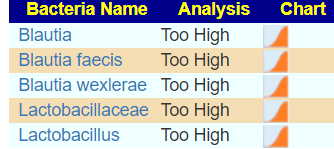
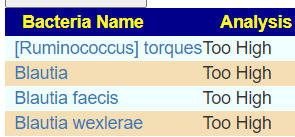
The top one was for “5” and bottom for “1”. There was an apparent drop in ‘rare’ bacteria. With “5”, we have 16.3% in the top 16% (i.e. expected) and with “1” we are down to just 5%. This implies some bacteria have become intolerant or bias against others. In the video below, I am going to walk thru my explorations (i.e. playing hide and seek with the cause). The fact that these two samples were taken close to each other means discovery is a lot easier because microbiome drift is greatly reduced.

Do we have genocide happening?

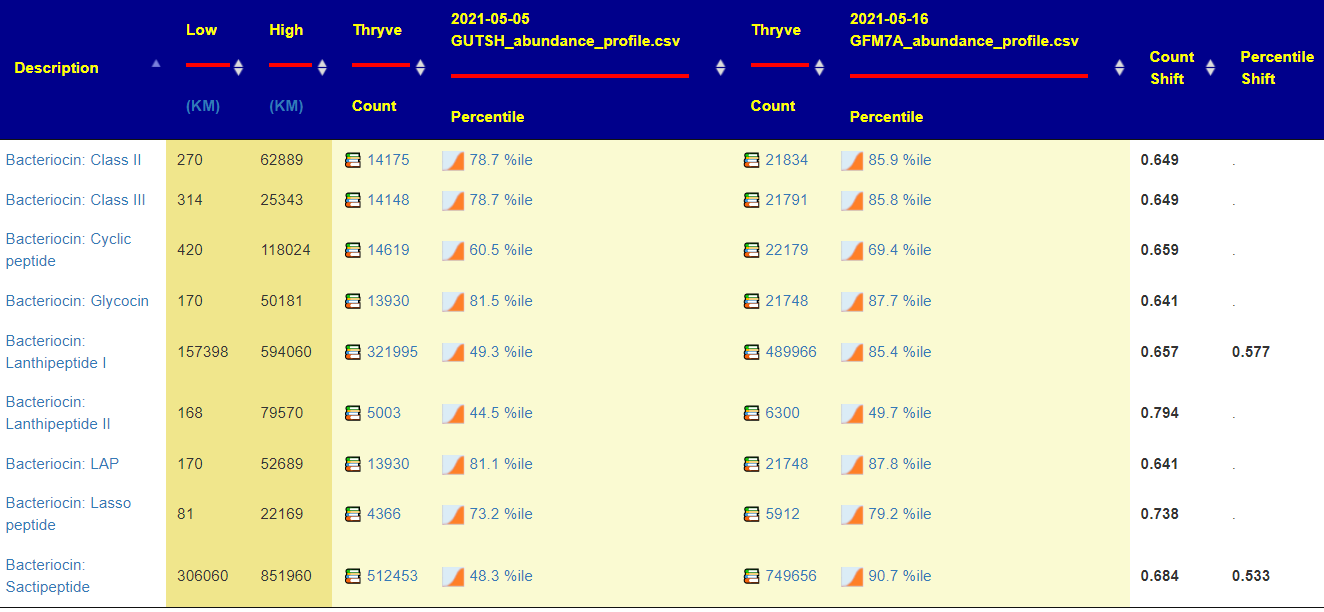
The above leads us to look at natural antibiotics, we see some very dramatic shifts – especially in bacteriocins (a protein produced by bacteria of one strain and active against other strains). As we saw above, the natural “push and shove” between bacteria has been suppressed with lots of bacteria dropping off the radar.

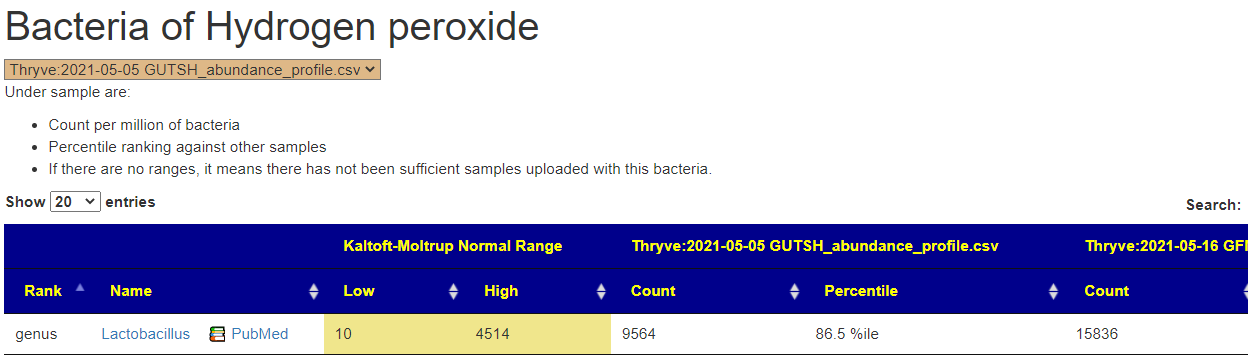
Hydrogen peroxide is another known bacteria killer, it too had a similar increase of amount

By clicking on the numbers, we can see the bacteria responsible — for example, Hydrogen Peroxide, we see that it’s main producer is Lactobacillus where we went from double the upper normal range to triple the upper normal range .

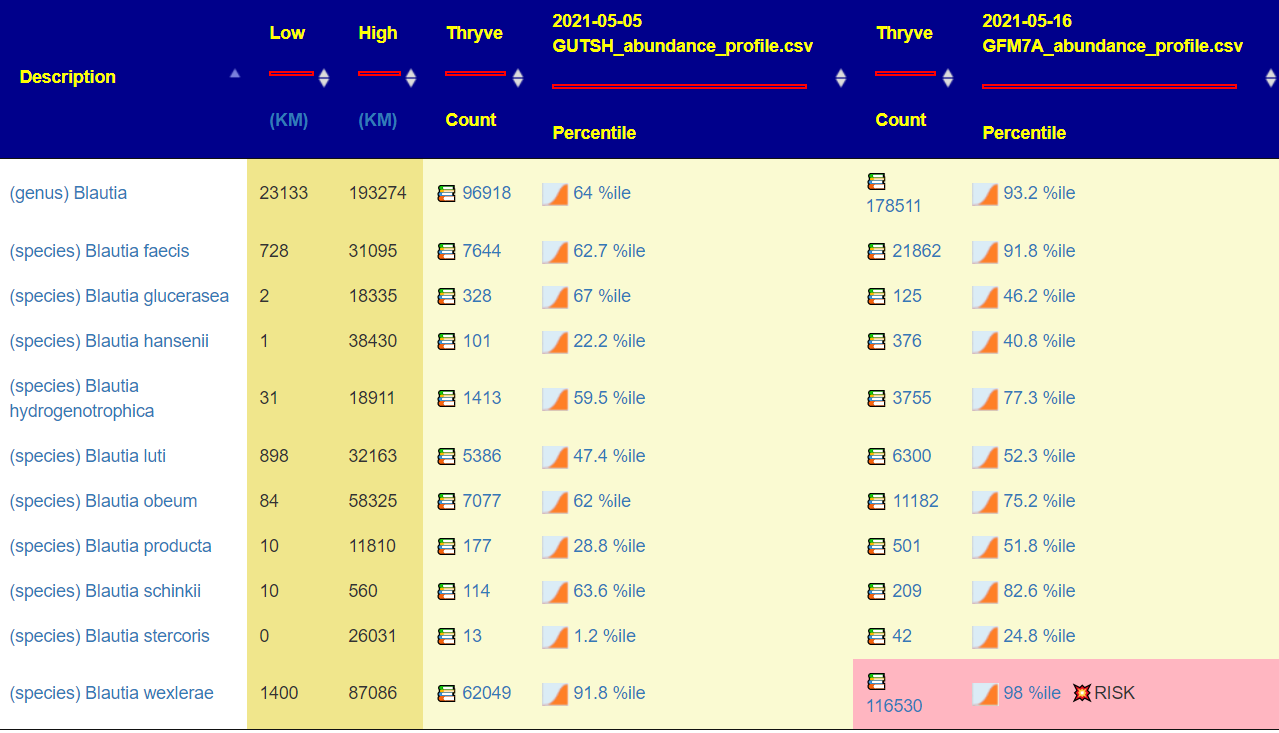
We can do this for the others (see video for a walk thru). The biggest impact at a genus, was Blautia  (from 64%ile to 93%ile)

We see that Lactobacillus is sitting at the 90th %ile with “1” and was at the 86%ile with the “5”. Almost all of the Lactobacillus is Lactobacillus rogosae. Here was have a catch — it is not a lactic acid producer but one of the greatest hydrogen peroxide (H2O2) producer! it was also high in “5” but much less.

Keeping Focus on the recent change and not the long term condition

There was some shifts that were surprising — for example KEGG computed supplements decreased with the “1” sample. Probiotic suggestions were similarly reduced with less weight.

“5” sample“1” Sample
beta-alanine
D-Ribose
Glycine
iron
L-asparagine
L-Cysteine
L-glutamine
L-Lysine
L-Phenylalanine
L-Proline
Molybdenum
NADH
Phytase (Enzyme)
L-Phenylalanine
Molybdenum

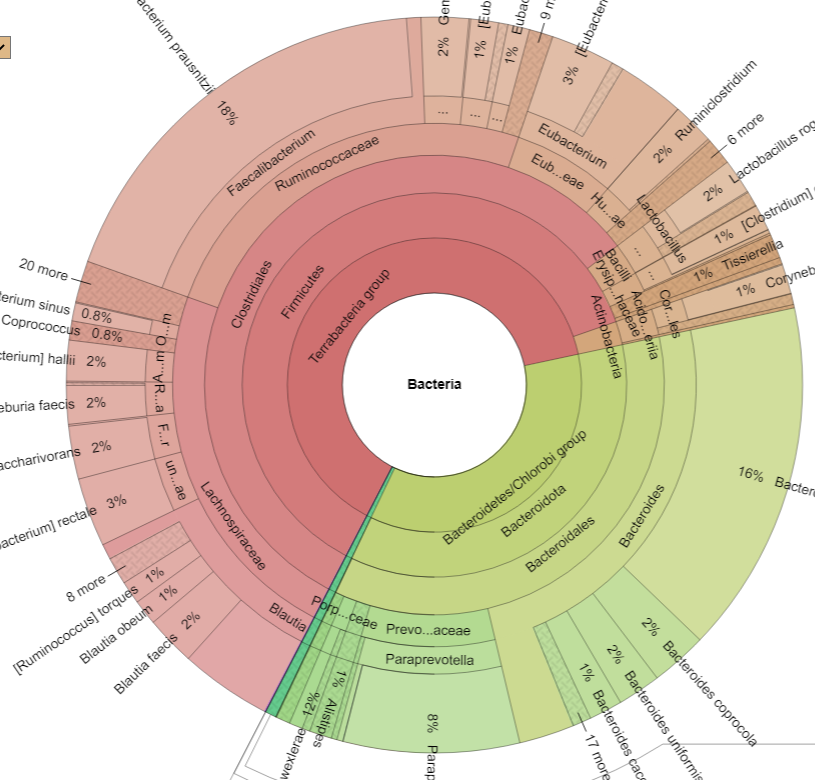
Using the Krona Charts, we see the overall shift well. First the “5” sample

Then the “1” sample, notice that the green area took a major decrease.

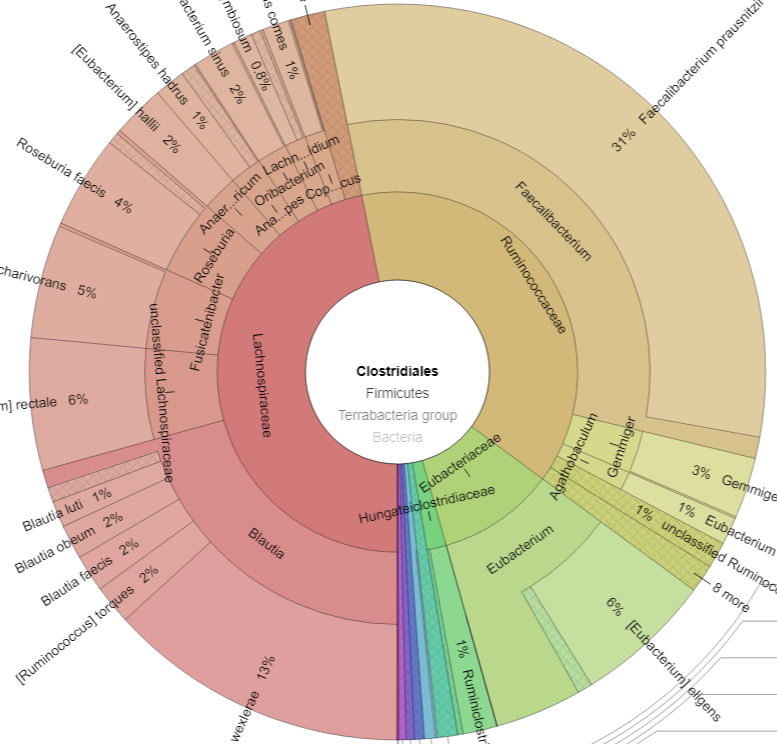
With the Krona Charts, we can drill down by just double clicking. Below are the drill downs on Clostridia , again “5” first and then “1”. Drilling down allows us to see how the composition of a group changed.

The main item was an increase of Blautia, especially Blautia wexlerae (91%ile to 98%ile) and Blautia faecis (63%ile to 92%ile). Most of the Blautia species increased — resulting in a lot of bacteriocins being produced.

Suggestions

Because Blautia and Lactobacillus appears to be a major players, we hand picked for them:

The suggestions were no lactobacillus probiotics (obvious)

tea0.361
  glycyrrhizic acid (licorice)0.306
  licorice0.306
  saccharin0.278
  salt (sodium chloride)0.278
  cranberry (flour, polyphenols)0.222

I am not too happy with these, because of the dominant item, Lactobacillus rogosae , having no known modifiers, so the items are generic lactobacillus modifiers — which may or may not apply. I went back and just picked the high blautia.

In the suggestions, we have a slight dilemma, lactobacillus rhamnosus (probiotics) was a to avoid (TOP of the list to avoid) but a mixture was a to take.   lactobacillus rhamnosus gg,lactobacillus,rhamnosus,propionibacterium freudenreichii,bifidobacterium breve (probiotics) . The logical conclusion is that propionibacterium freudenreichii is a to take. I happen to recall having taken this as a probiotic, single species or eat lots of  Emmental cheese! This is the product Nutricology, Securil, Propio-Fidus-Based. For Licorice, my usual favorite source is not tea or supplements, but Spezzatina which Cap’t’ Dave Williams introduced me to back in the 2000’s on CfsFmExperimental (originally on egroup). He too (like myself) went into remission.

Modifier To Add or increaseConfidence
  licorice1
  glycyrrhizic acid (licorice)1
  resveratrol (grape seed/polyphenols/red wine)0.56
  lactobacillus rhamnosus gg,lactobacillus,rhamnosus,propionibacterium freudenreichii,bif (probiotics)0.483
  lactobacillus rhamnosus gg,lactobacillus,rhamnosus,propionibacterium freudenreichii,bifidobacterium breve (probiotics)0.483
  triphala0.439
Modifier To Remove or DecreaseConfidence
 lactobacillus rhamnosus (probiotics)0.841
 cocoa0.747
 resistant starch0.72
 bifidobacterium longum bb536 (probiotics)0.561
 barley0.56
 lactobacillus plantarum (probiotics)0.56
 Slippery Elm0.527
 vitamin a0.483
 iron (Note that Iron disappeared with KEGG from “5” to “1”0.483

Lactobacillus rogosae – What do we know?

There is painfully little data on it, just five studies. In fact, it is “not available in any established culture collection; therefore, they cannot be included in any scientific study.” [2004] [2014]

  • It is reduced by going to space 🙂 [2021]
  • It is reduced by Methicillin-resistant Staphylococcus aureus  [2017]
  • “The species most frequently related to vaginal health were Lactobacillus jensenii and Lactobacillus rogosae.” [1992] This actually hints at why other bacteria appeared to be suppressed — it is a strong hydrogen peroxide producer.

Some interesting nodes:

  • “. The hydrogen peroxide-producing colonic bacteria have been also suggested as causative agents of IBD in young adults (107).” and “hydrogen peroxide … are dangerous to mucosal cells, easily penetrating through membranes and causing, depending on their concentration, their apoptosis and necrosis[death]”
    • IBS is often comorbid with CFS/ME

Blautia wexlerae – What do we know

We have more data, some fourteen.

  • High in prediabetics [2020]
  • Increases with body mass index (BMI) [2021]

KEGG Data

“Resistance to hydrogen peroxide is proportional to pyruvate oxidase expression.” [2003] This is Enzyme 1.2.3.3 in KEGG – which we can look up! The count increase from 12%ile in “5” to 29%ile in “1” indicating an increase of bacteria that tolerates hydrogen peroxide. The following appear in the new sample that have this enzyme: Weissella ceti, Aerococcus urinae and a doubling of Staphylococcus haemolyticus.

Unfortunately, KEGG data applies only to those that are fully sequenced, so data is incomplete and often is only for one strain of a species.

Bottom Line

We can see the probable cause, increase of L.Rogosae which may have saturated the gut with hydrogen peroxide killing off or reducing many other bacteria. Hydrogen Peroxide tolerant bacteria grew. I was unable to find any explicit information on B. Wexlerae being hydrogen peroxide tolerant. However we do find B. Wexlerae, and Blautia in general are “catalase-negative, indole-negative and produced acetate and succinate as end products of metabolism” [2008]. Since catalase breaks down hydrogen peroxide — it implies that they may be tolerant (at least not consuming).

I should note that Staphylococcus aureus is heavily implicated with ME/CFS and is also catalase-negative [2010]. Also see early post: Staphylococcus aureus – the CFS maintainer? and A forgotten treatment for fibromyalgia/chronic fatigue syndrome?

The logical way would be to reduce or eliminate L.Rogosae — but we have no information on what effects it which is acceptable (or affordable!). Contrary to general opinion, Hydrogen Peroxide: the body’s best defence system, too much is not desired.

Strategy to reduce the Hydrogen Peroxide

The basic concept is that the environment and other bacteria are symbiotic (a mutually beneficial relationship). If you alter the environment, then the bacteria will change. We want to shift it away from high Hydrogen Peroxide levels and consuming bacteria. We do not know how to alters those identified — but we do know how to break down the Hydrogen Peroxide.

  • Catelase [Wikipedia] breaks down hydrogen peroxide (H2O2) and is available as a supplement. It appears to be the simplest path forward.
    • There have been NO STUDIES of this supplement with ME/CFS. It is a novel approach.
    • It is being investigated for treating IBD [2021]
  • Additional possibilities include: manganese oxide [Src], yeast (contains catelase)[src],  

As a side note: high hydrogen peroxide (H2O2) is associated with loss of hair color. It was during a ME/CFS relapse that I lost most of my color (older brother and both parents retained their hair colors until they were decades older).

Videos

Video walk thru (more details) of this post

Below is the original analysis

and for the walkthru for this post